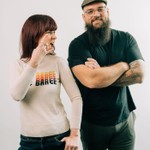
Maker Division is a podcast for designers, illustrators, photographers, filmmakers, and makers building businesses they love — without burning out, selling out, or pretending we have it figured out.
Hosted by Ben Burns and Stephanie Owens, two creatives who've spent the last decade-plus in the trenches: freelancing for scraps, growing studios from zero, leading creative teams, and learning the hard lessons that nobody talks about at design conferences.
Each episode brings honest conversations about pricing, positioning, portfolios, lead generation, client work, hiring, and the messy middle of running a creative business. Sometimes we go deep on tactics. Sometimes we get into mindset. Always, we keep it real.
No hype. No gurus. No "take massive action today." Just real frameworks, hard-earned lessons, and straight talk from people who've actually built the kind of businesses you're trying to build.
New episodes weekly. Welcome to the Division.
Site
RSS
Apple
Data updated on 26/09/2026
Recent rankings
Latest chart positions across Apple Podcasts and Spotify rankings.
Shared links between episodes and podcasts
Links found in episode descriptions and other podcasts that share them.
Discover shows related to Maker Division, based on actual content similarities. Explore podcasts with similar topics, themes, and formats, backed by real data.
What turns a logo project into a professional branding process—and when does that process become too much?
In this episode, Steph and Ben trace the different paths shaping how they approach branding today. Ben’s first branding project involved endless logo options—and by the time he reached something close, the team had disbanded. Steph entered branding with contracts, client systems, discovery experience, and a one-logo solution that some clients still use today.
From $50 logos and four-hour discovery calls to mood boards, strategy, revision boundaries, and presentations, they unpack the lessons that transformed their work.
The central takeaway? A branding process should never be one-size-fits-all. Discovery needs to match the client, project, and budget. Strategy should support the creative execution. And presenting your work is often just as important as designing it.
They also explore what AI could change about branding—from research and production to entry-level design opportunities—and why human taste, perspective, and point of view may become more valuable than ever.
If this episode has you rethinking how you run branding projects, Project Branding was built for you. It’s our workshop on building, presenting, and selling brand identity projects—from discovery through the final presentation.
Join The Dispatch for the upcoming Project Branding announcement:
03:03 How Steph entered branding with systems in place
05:43 The one-logo solution
10:02 Learning to work directly with clients
13:49 The $50 logo years
19:58 Discovering proposals and a better sales process
21:06 The creative brief that changed Ben’s work
26:39 Learning from other designers’ processes
27:12 Build a process that fits your studio
29:03 Discovering strategic facilitation
32:34 When discovery becomes overkill
34:22 Scale discovery to the client and budget
37:01 Your clients aren’t obsessed with your process
39:23 Treat discovery like a toolbox
41:29 Can a client questionnaire actually work?
43:53 Matching the experience to the price
49:59 How long should a branding project take?
55:12 The free strategy session that went nowhere
56:27 Why strategy alone isn’t enough
58:36 Discovery should serve the creative execution
1:02:05 The most impactful process improvements
1:03:37 Translate your client’s words into visuals
1:05:37 Mood boards, concept suites, and brand worlds
1:07:37 Finding the insight nobody else noticed
1:10:23 Can you skip the mood board?
1:13:53 Contracts and revision boundaries
1:14:26 Why you need to present the work
1:18:20 AI and the future of branding
1:19:50 Where AI can improve the process
1:21:59 Why AI still has terrible taste
1:24:39 Let AI handle the work you hate
1:26:00 Using AI as a brainstorming partner
1:28:07 What happens to entry-level design work?
1:29:59 Taste may be your greatest advantage
Ready to dial in your branding process? Check out Project Branding - Maker Division’s workshop for building, presenting, and selling brand identity projects with a repeatable process from discovery through the final presentation:
In this episode, Steph and Ben share the stories behind their first paying clients—from competing for underpaid interior-design projects to creating an endless logo for an ultimate Frisbee team that disbanded before the project was finished.
Those early experiences lead to a larger conversation about creative marketplaces, pricing, profitability, AI, and earning beyond traditional client work.
Steph explains how her career expanded from teaching and interior design into branding, consulting, courses, memberships, licensing, sponsorships, and education. Ben traces how one disastrous first project created his obsession with process, efficiency, and profitable creative work.
They also explain why multiple income streams don’t mean starting everything at once. A stable primary income can give you room to experiment, but creating a meaningful new stream still requires focus.
IN THIS EPISODE:
• What Steph and Ben earned from their first clients
• The problems with creative marketplaces and speculative work
• What AI is—and isn’t—taking from creatives
• Why revenue doesn’t determine whether a business is successful
• When a $500 project can beat a $50,000 project
• How smaller income streams can save the month
• Why dabbling prevents new income streams from succeeding
• Choosing an income stream that fits your skills, identity, and life
Creative Coaching | Ep 09
Friday, September 4, 2026 • Duration 01:12:19
The thing holding your creative business back may not be the problem you think it is.
In this episode, Steph and Ben pull back the curtain on the work at the heart of Maker Division: coaching creative business owners through the obstacles they can’t always see for themselves.
Sometimes the stated problem is a website, an LLC, lead generation, pricing, confidence, or an unclear direction. But beneath it may be a limiting belief, a “noble obstacle,” an old experience, or fear of something that hasn’t even happened yet.
Steph and Ben discuss how they uncover the real problem, why coaching is often more about asking questions than giving answers, and what separates coaching from mentorship, consulting, and therapy. They also explain why clarity rarely arrives before action—and why you may need to move forward while still feeling afraid, uncertain, or unprepared.
In this episode:
• Why the answer may already be right in front of you
• Recognizing limiting beliefs and noble obstacles
• Coaching versus mentorship and consulting
• Where coaching ends and therapy begins
• Why you don’t need a perfect step-by-step plan
• Moving forward despite fear and imposter syndrome
• Why your newest tactic may not be your best opportunity
• The difference between needing clients and needing money
• What makes someone genuinely coachable
• Why seeking validation is not the same as seeking guidance
• One-on-one coaching versus small-group support
• How accountability and group momentum create follow-through
• Making a decision, testing it, and allowing action to create clarity
Running a Creative Studio with Your Spouse | Ep 08
Friday, August 28, 2026 • Duration 01:02:46
Could you build a business with the person you share your life with—or would working together wreck the relationship?
Steph and Ben have both started working full-time with their spouses, but under very different circumstances. Nathan joined Steph at Maker Division after more than a decade of creative collaboration, while Elise’s growing micro-bakery has changed how she and Ben divide their work, home, and family responsibilities.
In this episode, they discuss the conversation couples need to have before mixing marriage and business: Will you both be creatives? Will one person lead the creative while the other manages the business? Whose work gets prioritized—and who handles everything else?
They also get honest about creative equality, protecting your partner from toxic clients, knowing when to step in, sharing household responsibilities, handling perfectionism, and keeping two distinct creative voices alive within one studio.
In this episode:
• Why a solid relationship must come before the business
• Choosing between equal creative roles and creative/business roles
• Why at least one partner needs a business mindset
• Avoiding the “supporting act” dynamic
• Giving honest feedback without bringing ego into it
• Deciding who leads each client project
• Protecting your partner when clients cross the line
• Dividing business, household, and family responsibilities
• Managing two different creative identities under one studio
• Knowing when your partner needs a push—or permission to stop
• How the person closest to you can see what you cannot
Working with your spouse will not solve problems already present in the relationship. But with trust, communication, clear roles, and an equal playing field, your partner may become the best business partner you could have.
Which Kind of Studio Should You Build? | Ep 07
Friday, August 21, 2026 • Duration 01:02:00
Artist or problem-solver—which kind of creative studio should you build?
Steph and Ben approach their Solo Studios from very different directions. Ben is drawn to business, systems, education, products, and creatively solving problems. Steph wants to make personal work that creates emotion, conversation, and human connection.
In this candid episode, they challenge each other’s assumptions—and confront the temptation to believe that someone else’s studio is more legitimate, profitable, meaningful, or enjoyable than their own.
They also explore the opportunities hiding inside personal work. What if the concept in your portfolio became a real product, event, or business? What if you stopped apologizing for making something “silly” and started asking what it could become?
In this episode:
• Artist-led versus problem-solving studios
• Why creativity doesn’t always have to produce “art”
• The insecurities that exist on both sides
• Why teaching isn’t the only path to a Solo Studio
• Identifying the advantages and superpowers you take for granted
• Balancing creative expression with serious business decisions
• Promoting personal work without making everything about yourself
• Why copying another creator’s studio can lead you in the wrong direction
• Turning portfolio concepts into real products and experiences
• Building a studio around who you actually are
The goal isn’t to decide which studio model wins. It’s to recognize your natural strengths, interests, experiences, and obsessions—and build from those instead of constantly looking at someone else’s paper.
Explore Maker Division:
You Don’t Need a Big Audience to Run a Retreat | Ep 06
Friday, August 14, 2026 • Duration 42:44
You don’t need a huge audience — or a famous name — to create an in-person experience people will value.
In this episode, Steph and Ben pull back the curtain on planning profitable, small-group retreats and workshops for creatives. They share what they learned from Maker Division’s Las Vegas events, why intimate gatherings can be more transformative than large conferences, and how a retreat can become another income stream for your Solo Studio.
They also get honest about the work involved: choosing the right location, setting attendance thresholds, vetting participants, designing an experience around what people actually need — and preparing for those last-minute food allergies.
In this episode:
• Why five to twenty attendees may be the ideal retreat size
• How to validate an event with a small audience
• Retreats versus conferences — and what each does best
• How to make a small event financially viable
• Why teaching should be 20% delivery and 80% support
• How to lead a workshop without positioning yourself as a guru
• Turning your existing creative skills into an in-person experience
• Starting small, learning from the first event, and improving as you go
If you’ve ever thought, “I’m not big enough to do this,” Steph and Ben want to challenge that. You don’t need to rent a hotel ballroom, hand out lanyards, or plan trust falls. Start with something useful, invite the right people, and see who shows up.
Interested in joining Maker Division’s next Las Vegas retreat?
The Niching Advice That’s Hurting Creatives | Ep 05
Friday, August 7, 2026 • Duration 01:04:16
Should every creative pick a niche — or has that advice done more harm than good?
In this episode, Steph and Ben put their decade-plus experience helping creatives build and grow their practices on the record. They break down the important differences between specializing, niching, and positioning — and explain why treating them as interchangeable can lead to what they call the “niching nightmare.”
They also share their own experiences falling into profitable niches, why they eventually chose to leave them, and how niching can pull creatives away from the craft they originally loved.
Maker Division is coursework, coaching, and community for creatives building a business around their craft. Big fall ahead, including our retreat in Vegas on scaling your studio beyond clients. Everything gets announced to the newsletter first: https://www.makerdivision.com
Why it's so hard to create | Ep04
Episode 4
Tuesday, July 28, 2026 • Duration 48:06
Creatives go into business to create... and then resist creating unless somebody else is paying for it. Ben and Stephanie get into why.
They break the resistance into four camps: the ROI camp who won't spend an unbillable hour, the identity camp who don't see themselves as artists, the people for whom making is genuinely painful, and the perfectionists sitting on an idea they're too scared to ruin. Then they hand over the receipts. The internship Ben landed with a portfolio he faked overnight. The Chewbacca illustration that turned into Star Wars, Marvel, and DC licensing deals. Five figure lettering work that started with free online workshops taken for no reason at all.
The honest answer to "how do you know it will work" is that you don't. The alternative is a sure zero.
Maker Division is coursework, coaching, and community for creatives building a business around their craft. Get on the newsletter at makerdivision.com. Everything about this fall, including our Vegas retreat on scaling your studio beyond clients, goes there first.
Some creative work sells itself. Some needs a story | Ep 03
Season 1 · Episode 3
Friday, July 10, 2026 • Duration 43:50
Not every project needs a case study or a cap deck. Some of your best work just needs to be seen.
Ben and Steph break down the three ways creatives show their work to clients: the lookbook, the capabilities deck, and the case study. When each one wins, when it costs you the job, and why it all comes down to who's hiring you and what they're really buying. Two very different careers, one shared conclusion: there's no single right way to do this.
You just need the work to prove it.
Off-Season, our 8-week summer accountability cohort, is open now. Doors close July 11, cohort runs July 22 to September 9. → makerdivision.com/off-season
The Solo Studio | Ep 02
Episode 2
Tuesday, June 23, 2026 • Duration 50:12
FREE WORKSHOP: Design Your Lookbook Join us this Tuesday for a free workshop, Design Your Lookbook, taught by Stephanie Owens:
This episode is brought to you by Maker Division, our community for creatives building real businesses around their craft. https://makerdivision.com
Ben Burns and Stephanie Owens kick off a conversation they've been circling for a while: the solo studio. The idea is simple. You put your craft at the center and build a handful of income streams around it, client work, products, licensing, teaching, events, sponsorships, so you get to keep making the work you actually care about.
This one's a little rambly on purpose. Ben and Steph are both running their own solo studios right now and figuring this out in real time, so you're getting two creatives thinking out loud, changing their minds, and pulling from recent examples in their own careers. If you've ever felt like your personal work matters less than your client work, this episode is for you.
You'll hear us get into:
Why your "personal work" is really studio work, and why that reframe changes everything
The income streams that support a craft instead of replacing it
Why client work is a one-time payout and studio work compounds
How nearly every good opportunity comes from sharing the work and staying open
Why focus, one project at a time, makes or breaks the whole thing
Chapters
(00:00) The solo studio, defined
(01:55) Why client services is the easiest first stream
(04:27) Reframing personal work as studio work
(06:15) One-time payouts vs. work that compounds
The goal isn’t to build every income stream the internet recommends. It’s to understand your strengths, interests, experience, and capacity—then focus on the opportunity that makes sense for you now.
Client work may be where your studio begins. What else could it become?
CHAPTERS
00:00 A $50 logo and a $300 room
01:24 Steph’s first creative work
03:53 Competing for interior-design clients
06:30 Designing an entire room for $300
09:43 Building a business through creative platforms
13:21 When a marketplace serves creatives
18:14 Could AI bring speculative pitching back?
19:05 What AI is taking from creatives
22:35 Revenue versus profitability
25:45 A $20,000 project—or a $500 project?
27:29 When smaller income streams save the month
28:39 Steph’s income-stream journey
35:52 Ben’s infamous $50 logo
41:44 Should clients arrive with ideas?
46:53 How failure created Ben’s obsession with process
50:10 Why stable income creates room to experiment
51:52 The danger of dabbling in everything
55:35 Process, profitability, and creative identity
1:00:45 Choosing your next income stream
1:02:19 What makes you lean in?
1:03:29 Final lessons and the Birthday Bash
What did your first client pay you—and what did the experience teach you? Share the good, the bad, or the completely unpaid in the comments.
#CreativeBusiness #IncomeStreams #MakerDivision
September is Maker Division’s Birthday Bash month, which means our best offers of the year on new workshops, the Division membership, and more. Join the weekly newsletter to get the details:
The internet makes successful creative businesses look effortless. They aren’t. You don’t need complete confidence or a guaranteed outcome—you need a direction, enough stable ground for the next step, and the willingness to learn from what happens.
Sometimes the best way to figure out what you want is simply to move.
September is Maker Division’s Birthday Bash month, which means our best offers of the year on new workshops, the Division membership, and more. Join the weekly newsletter to get the details:
(10:05) Why sharing the work attracts the opportunities
(12:27) Show what you make, not just what you think
(14:23) Ben's "client work desert" and staying in the game
(15:35) Hobbies vs. craft: protecting the joy
(20:31) Stop stacking services, dig deeper into one
(22:02) Not wanting employees and the shadow artist trap
(24:00) Inside Ben's studio: design, Maker Division, Watson, speaking, Circle
(27:44) Inside Steph's studio: physical work and her rock-song cocktail project
(33:16) Focus: why "one at a time" matters
(35:08) Getting comfortable with content when you make what you love
(39:48) Make cool stuff, show people, share the journey, stay open
(40:49) How the Adobe and Show It opportunities actually happened
(50:27) Stop measuring everything by ROI
(51:08) Meaningful work, meaningful money
Mentioned in this episode Matthew Encina, Young Jerks, House Industries, Hoodzpah, DKNG, Invisible Creatures, Aaron Draplin, Chris Misterak and Show It, Adobe, Circle, Domestica, and Julia Cameron's The Artist's Way (the shadow artist idea).