LOOPED IN with Carl Warkentin – Details, episodes & analysis
Podcast details
Technical and general information from the podcast's RSS feed.
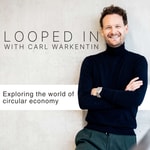
LOOPED IN with Carl Warkentin
Carl Warkentin
Frequency: 1 episode/14d. Total Eps: 12

The podcast about understanding, building and managing circular business models - this is the place where we dive deep into the future of business, sustainability, and circular economy. After a decade of entrepreneurial experience as a founder and investor, Carl had countless, meaningful behind-the-scenes conversations about how we can reshape industries, close the loop, and create real impact. And now, we want to bring these conversations to you.
On Looped In, Carl sits down with entrepreneurs, business owners, venture capitalists, and policymakers who are at the forefront of change. Together, we’ll explore innovative business models, breakthrough technologies, and the regulations shaping the circular economy.
Recent rankings
Latest chart positions across Apple Podcasts and Spotify rankings.
Apple Podcasts
🇩🇪 Germany - entrepreneurship
22/08/2025#80🇩🇪 Germany - entrepreneurship
29/04/2025#95🇩🇪 Germany - entrepreneurship
13/03/2025#93
Spotify
No recent rankings available
Shared links between episodes and podcasts
Links found in episode descriptions and other podcasts that share them.
See all- https://wornwear.patagonia.com/
25 shares


- https://regeneration.vc/
10 shares
- https://hmfoundation.com/
6 shares


RSS feed quality and score
Technical evaluation of the podcast's RSS feed quality and structure.
See allScore global : 83%
Publication history
Monthly episode publishing history over the past years.
Intro
lundi 10 mars 2025 • Duration 01:11
Contact Us
This is interactive content - send us your questions to the guests and we record another session just focusing on your questions!
You have suggestions for new guests or want to sponsor the show?
- Contact Carl via LinkedIn
Thanks for listening and keep podcasting!
The Future of Textile Recycling with EEDEN Co-Founder & CEO Steffen Gerlach
Season 1 · Episode 4
lundi 28 avril 2025 • Duration 56:42
Join us in this insightful episode as we engage with Steffen, the dynamic co-founder of Eeden, a pioneering startup in the textile recycling sphere. In this episode, we delve deep into how Eeden leverages innovative recycling technologies to reclaim the two most common materials in textiles: cotton and polyester.
Steffen shares his perspectives on the current state of the textile recycling market, unpacking the implications of rising regulatory pressures, investor sentiments, and macroeconomic trends. He contemplates the relationship between supply, demand, and pricing dynamics, stressing the pivotal role regulations play in shaping investor confidence in sustainable solutions. Throughout our conversation, we explore various recycling methods, showcasing the innovations that allow companies like Eeden to effectively manage mixed-fiber waste and create new textile solutions.
As we navigate through the intricacies of recycling technology, Steffen emphasizes the necessity for a holistic approach to sustainability. Effective recycling cannot be just about recycling alone; it requires addressing the entire textile lifecycle to ensure meaningful environmental improvement. We conclude with Steffen's vision for the future of textile recycling, where market acceptance, regulatory support, and technological advancements come together to drive the industry towards a sustainable, circular future. Tune in to learn more about how we can collectively revolutionize the textile landscape for a brighter, greener tomorrow!
Contact Us
This is interactive content - send us your questions to the guests and we record another session just focusing on your questions!
You have suggestions for new guests or want to sponsor the show?
- Contact Carl via LinkedIn
Thanks for listening and keep podcasting!
Investing in the Circular Economy with Regeneration VC partner Martijn Lopes Cardozo
Season 1 · Episode 3
lundi 14 avril 2025 • Duration 01:02:00
In this conversation, Martijn Lopes Cardozo shares his journey from a corporate career to becoming a successful entrepreneur in Silicon Valley, discussing the challenges and lessons learned along the way. He reflects on his return to Europe, the struggles he faced in replicating his success, and how he found purpose after setbacks. Martijn emphasizes the importance of focusing on purpose over traditional success metrics and discusses his role in the circular economy, particularly through his leadership at Circle Economy Foundation. The conversation also touches on the significance of the Circularity Gap Report and the ongoing challenges in achieving a circular economy. In this conversation, Martijn Lopes Cardozo discusses his work at Regeneration VC, focusing on the excitement of working with entrepreneurs in the impact investing space. He shares insights on the challenges and opportunities within the circular economy, the importance of a solid investment thesis, and the criteria for selecting investments. Martijn emphasizes the significance of geographical focus, particularly in the US market, and highlights innovative solutions to pressing issues like food waste (Orbirsk). He also addresses the need for measurable impact in investments and the challenges of scaling impact startups while balancing financial returns with social and environmental impact.
Carl and Martin already met two years ago creating the first Circular Gap Report on city level with CIRCULAR REPUBLIC. In the conversation, Carl mentioned a circular economy database called Easy Match.
Contact Us
This is interactive content - send us your questions to the guests and we record another session just focusing on your questions!
You have suggestions for new guests or want to sponsor the show?
- Contact Carl via LinkedIn
Thanks for listening and keep podcasting!
Challenging the system - Circular Economy as a solution to CSR & ESG with Kaitlyn Allen
Season 1 · Episode 2
lundi 31 mars 2025 • Duration 01:00:19
The landscape of corporate responsibility is changing, and in this episode, we explore how businesses are navigating the transition from Corporate Social Responsibility (CSR) to Environmental, Social, and Governance (ESG) practices. Join us as we speak with Kaitlyn Allen, a serial impact entrepreneur and sustainability expert, who shares her valuable insights on how these frameworks are evolving and the ways they can enhance corporate accountability.
Kaitlyn discusses the pivotal role of the Paris Agreement, which has shifted the narrative around sustainability from marketing fluff to essential business strategy. She explains how ESG practices address the risks associated with climate change and how companies are now compelled to integrate these metrics into their financial reporting. Delving deeper, we explore the repair economy—an emerging field that seeks to redefine consumer behavior by emphasizing the importance of product longevity and sustainability. Through Kaitlyn's work with Mend It, we learn how businesses can implement repair services as a core offering, aligning profit with purpose.
This episode is a call to action for businesses to think differently about their societal impacts and the importance of viewing sustainability as interdependent with their operations. It’s about not just doing good but being structured to create lasting value for all stakeholders involved. Join us as we uncover the future of corporate responsibility and how companies can thrive by prioritizing sustainable practices. Don't forget to engage with us—leave your feedback, questions, or insights, and let's continue this important conversation together!
Please check out Kaitlyn's sites:
www.mendit.app
Contact Us
This is interactive content - send us your questions to the guests and we record another session just focusing on your questions!
You have suggestions for new guests or want to sponsor the show?
- Contact Carl via LinkedIn
Thanks for listening and keep podcasting!
Transforming a highly optimized industry with textile recycling pioneer Luke Henning from Circ
Season 1 · Episode 1
lundi 17 mars 2025 • Duration 01:11:31
In a world increasingly burdened by textile waste, the urgency for sustainable practices in the fashion industry has never been more pressing. Join us for an engaging conversation with Luke Henning, Chief Business Officer at Circ, as we tackle the complexities of textile recycling and the vision behind establishing a true circular economy. Luke shares his in-depth expertise and insights on how Circ aims to reinvent the way we view clothing waste and recycling through innovative technology and proactive industry strategies.
This episode dives into the essence of Circ's mission, emphasizing that striving for circularity goes beyond merely recycling materials. Luke sheds light on the intricate relationships between brands, suppliers, and technologies that drive successful recycling initiatives. Discover how their unique approach to hydrothermal processing sets them apart from traditional recycling methods and why this could be the key to unlocking a sustainable future for textiles.
We also explore the vital role that regulation and EPR schemes play in transforming the industry. Luke explains how these structures can incentivize brands toward greater sustainability while simultaneously addressing economic realities in implementing circular systems.
As we look to the future, Luke shares his optimistic vision for the textile industry's shift toward circularity by 2030, highlighting milestones that can propel us into a new era of environmentally responsible fashion. Tune in to gain a deeper understanding of the pressing issues at hand and what needs to be done to drive long-lasting change. Subscribe, share, and join the conversation on how we can collectively move toward a more sustainable textile industry!
Contact Us
This is interactive content - send us your questions to the guests and we record another session just focusing on your questions!
You have suggestions for new guests or want to sponsor the show?
- Contact Carl via LinkedIn
Thanks for listening and keep podcasting!
From Pilot to Scale: Why Circularity Is Europe’s Next Competitive Advantage with Matthias Ballweg
Season 1 · Episode 11
lundi 11 août 2025 • Duration 32:10
What if the most sustainable business model was also the most profitable? In this eye-opening conversation with Mazze Ballweg, we dive deep into why circular economy has evolved from an environmental nice-to-have to an economic imperative for businesses across Europe.
Mazze takes us on his journey from traditional consulting at McKinsey and strategy work at Volkswagen to the moment sustainability "hit him" in 2019, prompting his career pivot toward circularity. With refreshing clarity, he explains why material circularity tackles multiple planetary boundaries simultaneously - revealing how 90% of biodiversity loss and 50% of climate impacts stem from material extraction and processing.
The heart of our discussion centers on CIRCULAR REPUBLIC's groundbreaking work transforming supply chains by connecting large corporations with innovative startups. Their battery recycling pilot perfectly exemplifies this approach: combining startups specializing in reverse logistics, automated disassembly, and advanced recycling technologies to create a more profitable alternative to traditional processes. This isn't just theory - it's practical implementation that's changing how businesses operate.
What makes this conversation particularly compelling is Mazze's economic framing of circularity. "No one needs to care about planetary health to invest in circular economy - the business case alone is compelling," he explains. As global supply chains fragment and resource security becomes increasingly uncertain, circular approaches like urban mining and regenerative materials become essential for Europe's competitiveness.
Whether you're a business leader seeking new opportunities, an entrepreneur developing circular solutions, or simply curious about how our economy is evolving, this episode offers valuable insights into how circularity is reshaping business models across industries. Listen now to understand why circular economy isn't just good for the planet - it's vital for future business success.
Contact Us
This is interactive content - send us your questions to the guests and we record another session just focusing on your questions!
You have suggestions for new guests or want to sponsor the show?
- Contact Carl via LinkedIn
Thanks for listening and keep podcasting!
Building circular ecosystems and urban mining for textiles with Cyndi Rhoades (Circle 8)
Season 1 · Episode 10
lundi 21 juillet 2025 • Duration 42:49
What if our old clothes could become the foundation of an entirely new industry? Cindy Rhoades, a filmmaker who pivoted to become a textile entrepreneur, takes us on her remarkable journey from music videos to pioneering circular solutions for the fashion industry.
Rhoades' story begins with creative nightclub events that made social and environmental issues accessible and engaging. When one such event focused on ethical fashion, she discovered her passion for solving textile waste challenges, leading her to found Worn Again in 2005. The company's evolution from upcycling discarded airline seat covers into handbags to developing groundbreaking molecular recycling technology perfectly illustrates the learning curve of circular innovation.
But technology alone doesn't solve systemic problems. As Rhoades discovered, even the most promising recycling methods face a critical infrastructure gap. Her newest venture, Circle 8, addresses this challenge through automated sorting facilities designed specifically to prepare non-rewearable textiles for chemical and mechanical recycling. What makes her approach unique is the emphasis on ecosystem building – creating collaborative relationships between brands, recyclers, and existing sorters that connect waste streams with future manufacturing needs.
The most compelling insight Rhoades shares is reframing textile waste as an economic opportunity. For countries that don't produce traditional textile raw materials, circular systems enable "urban mining" – transforming domestic waste into valuable resources and establishing entirely new industries. With Circle 8's automated sorting line arriving in March and plans for a 25,000-ton facility underway, Rhoades is turning this vision into reality.
Whether you're fascinated by sustainability innovation, circular business models, or the future of fashion, this conversation offers a masterclass in how ecosystem thinking can transform waste challenges into economic opportunities. Listen now to discover how your discarded clothes might fuel tomorrow's textile revolution.
Contact Us
This is interactive content - send us your questions to the guests and we record another session just focusing on your questions!
You have suggestions for new guests or want to sponsor the show?
- Contact Carl via LinkedIn
Thanks for listening and keep podcasting!
Regulating the Future of Fashion: The Impact of California’s Textile EPR on the U.S. with Rachel Kibbe from American Circular Textiels
Season 1 · Episode 9
lundi 7 juillet 2025 • Duration 48:25
How do you build a circular textile system in a country that lacks the infrastructure to collect, sort, or recycle at scale?
In this deep dive conversation, Carl is joined by Rachel Kibbe, founder of American Circular Textiles and Circular Services Group, to unpack the complexities of Extended Producer Responsibility (EPR) in the U.S. and draw sharp comparisons with Europe’s more established systems.
Together, they explore:
- The current white spots in U.S. textile collection and why Europe’s 20+ year head start matters
- How the California SB707 EPR bill could redefine circularity—if implemented with the right incentives
- Fee structures, eco-modulation, and the need to finance not just design, but also infrastructure
- The risk of monopolization in Producer Responsibility Organizations (PROs) and what it means for innovation
- Why voluntary, collaborative blueprints—like the one Carl is helping pilot in Germany—could shape future regulation
This is not just another podcast on sustainability. It’s a rare, behind-the-scenes dialogue between two people on the front lines of system change—blending entrepreneurial urgency with deep policy knowledge.
If you’re working in fashion, waste management, policy, or investing in circular solutions, this episode will challenge your assumptions and offer a grounded roadmap for what real circularity looks like at scale.
Contact Us
This is interactive content - send us your questions to the guests and we record another session just focusing on your questions!
You have suggestions for new guests or want to sponsor the show?
- Contact Carl via LinkedIn
Thanks for listening and keep podcasting!
Funding What Business Can’t: Inclusive Circularity through Philanthropy with Fernanda Drumond from H&M Foundation
Season 1 · Episode 8
lundi 23 juin 2025 • Duration 01:01:52
Fernanda Drummond brings a refreshing perspective to the textile industry's sustainability challenges as Head of Collective Action at the H&M Foundation. In this illuminating conversation, she dismantles common misconceptions about philanthropy's role in creating systems change and reveals how the foundation operates as an orchestrator—not just a funder—of transformative collaborations.
Diving deep into the foundation's unique approach, Fernanda explains how they identify critical gaps where philanthropic funds can spark innovation and collective action. Unlike project-based interventions that create limited impact, the H&M Foundation implements comprehensive programs that simultaneously address multiple barriers.
The shocking revelation that the textile industry is only 0.3% circular serves as a sobering backdrop to the conversation. Fernanda emphasizes that no single solution—whether circular business models, recycled materials, or sustainable fibers—will move the needle significantly when implemented alone. Only through orchestrated, multi-stakeholder approaches can we hope to transform this deeply linear system.
Perhaps most compelling is Fernanda's expanded definition of "just transition" beyond merely reskilling workers. Through programs like Operadita in Bangladesh, the foundation recognizes that garment workers facing automation need more than technical training—they need childcare, family support, safe transportation, and shifts in community perception to truly advance. This human-centered approach acknowledges workers as complete individuals with dreams, needs, and aspirations beyond their job functions.
For entrepreneurs and businesses developing circular solutions, Fernanda offers invaluable advice: recognize and include the millions already working in circular economies through informal sectors. These waste pickers, sorters, and collectors possess generations of knowledge that should be built upon rather than bypassed in our rush toward formalized circularity.
Connect with Fernanda on LinkedIn to share insights or learn more about the H&M Foundation's work in catalyzing inclusive circularity across the textile ecosystem.
Contact Us
This is interactive content - send us your questions to the guests and we record another session just focusing on your questions!
You have suggestions for new guests or want to sponsor the show?
- Contact Carl via LinkedIn
Thanks for listening and keep podcasting!
From Patagonia to Archive: Scaling Re-Commerce with Alex Kremer
Season 1 · Episode 7
lundi 9 juin 2025 • Duration 01:14:00
Alex Kremer takes us on a journey through the rapidly evolving world of branded resale, sharing hard-won insights from his pioneering work launching Patagonia's Worn Wear program and his current role as VP at Archive, which recently secured $30 million in Series B funding.
What truly sets branded resale apart from generic marketplaces is the trust factor. Customers consistently pay premium prices when buying secondhand directly through a brand they trust, knowing the items have been properly inspected and authenticated. This creates a powerful value proposition for brands looking to capture revenue that would otherwise flow through third-party platforms like eBay or Poshmark.
One of the most fascinating insights? Resale attracts customers nearly a decade younger than the typical buyer. These “aspirationalists” find an entry point to premium brands they couldn’t otherwise afford — and often become long-term loyalists. At the same time, existing customers use resale to responsibly manage and refresh their wardrobes, creating a truly circular ecosystem where community and commerce intersect.
We also dive into the operational reality: from product identification and pricing models to warehouse processing, software integration, and returns management. Archive’s technology is helping brands treat resale not as a side project, but as a profitable business channel — and the results are proving it.
Surprisingly, Alex shares that even smaller brands with strong communities are seeing success in resale. It’s not only about scale — it’s about engagement, product quality, and brand trust.
We close with a global perspective: why Germany’s existing sorting and collection infrastructure gives it a unique head start, how return culture and customer expectations vary sharply between regions, why the U.S. is leading in resale innovation and brand adoption, and how Asia’s vintage obsession may unlock a different type of circular opportunity altogether.
Ready to discover how branded resale can drive growth, loyalty, and real environmental impact? This episode is a masterclass in turning circularity into a competitive advantage.
Contact Us
This is interactive content - send us your questions to the guests and we record another session just focusing on your questions!
You have suggestions for new guests or want to sponsor the show?
- Contact Carl via LinkedIn
Thanks for listening and keep podcasting!
Related Shows Based on Content Similarities