Food Lives: Food History Tour of Tower Hamlets â Details, episodes & analysis
Podcast details
Technical and general information from the podcast's RSS feed.
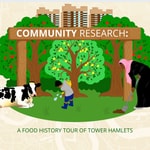
Food Lives: Food History Tour of Tower Hamlets
Elaine Swan, Sajna Miah and Shazna Hussain
Frequency: 1 episode/7d. Total Eps: 3

Did you know that Cable St was home to the largest confectionery and jam factory in the world? Or that cafes like the Somali run Club Rio offered âpockets of survivalâ or âculinary safe havensâ (Sabar & Posner, 2013 and Wills, 2017 in Swan et al., 2023) against a backdrop of racism, exclusion and social impoverishment.
In 2022, community researchers from the Womenâs Environmental Network (Wen) and the University of Sussex co-produced a Food History Tour of Tower Hamlets as part of the Food Lives project (itself part of a larger inter-university research project called FoodSEqual and led by Reading University). âOur project is based in Tower Hamlets and we have partnered with the Womenâs Environmental Network. We want to understand the food systems in everyday life and in particular, weâre very interested in women and their foodwork.â
Over 3 episodes, community researchers Sajna Miah and Shazna Hussain, and Sussex University food and feminist specialist, Dr Elaine Swan, take us on a journey through time and racial and ethnic spaces, with insights into the food systems of the past and present day.
The tour takes in Watney Market, Cable Street, the original site of CafĂ© Rio, Wombatâs City Hostel, Wiltonâs Music Hall, the former dairies and sugar factories of Wellclose Square and Swedenborg Gardens, and ends in an urban orchard in the heart of the St Georgeâs Estate. âWhile mainstream culinary tours might skip over the fraught histories of exclusion and struggle in Tower Hamlets,...alternative narratives...bring these elements to the forefront.â (Swan et al., 2023)
Collectively, we produced a map of the tour with artist Nasima Sultana (see images here) drawing on community, public and academic history illustrating the food histories of Tower Hamlets. We designed the tour map to enable local people and visitors to carry out their own exploration of the rich social, cultural and economic history of food and food production and the newer food economies in the area. These histories have shaped food production and consumption for over 150 years and flavour what locals buy, grow or eat in their own kitchens, local cafes and restaurants today.
Historical analyses matter for a present day understanding of food systems, they inform an understanding of inequalities in contemporary food production and consumption. â...our research underlines the significance of historic non-white contributions to the food system within a context of racial inequality. The cafĂ© owners and workers created what today we would call âcommunity assets,â providing cultural and material nourishment, commensality, welfare, and feelings of convivialityâ. (Swan et al., 2023)
ReferencesÂ
Mullally, G. et al. (2022). âWalking, talking, [Re-]imagining socio-ecological sustainability: Research on the move/moving researchâ, Irish Journal of Sociology, 31(1), pp. 37-62Â
Swan, E. et al. (2023). âMapping Pockets of Survival: CafĂ© Society in Post-war Cable Streetâ, Portal Journal of Multidisciplinary International Studies, 19(1). Available at: https://doi.org/10.1080/02619761003602246.Â
Â
This research was supported through the Transforming UK Food Systems for Healthy People and a Healthy Environment Programme, a UKRI Strategic Priority Fund, as part of the project FoodSEqual.Â
Funding for this podcast was provided by University of Sussex Participatory Research Network.
We would like to thank Helen New and Paul Wilson from East End Homes, the Womenâs Environmental Network and Nasima Sultana for making this podcast possible.Â
Recent rankings
Latest chart positions across Apple Podcasts and Spotify rankings.
Apple Podcasts
đŹđ§ Great Britain - socialSciences
03/07/2026#65đŹđ§ Great Britain - socialSciences
14/03/2026#85đŹđ§ Great Britain - socialSciences
04/05/2025#91đŹđ§ Great Britain - socialSciences
03/05/2025#73đŹđ§ Great Britain - socialSciences
02/05/2025#47đŹđ§ Great Britain - socialSciences
26/03/2025#99đŹđ§ Great Britain - socialSciences
25/03/2025#77đŹđ§ Great Britain - socialSciences
24/03/2025#45đŹđ§ Great Britain - socialSciences
20/12/2024#89đŹđ§ Great Britain - socialSciences
19/12/2024#75
Spotify
No recent rankings available
Shared links between episodes and podcasts
Links found in episode descriptions and other podcasts that share them.
See allRSS feed quality and score
Technical evaluation of the podcast's RSS feed quality and structure.
See allScore global : 48%
Publication history
Monthly episode publishing history over the past years.
Part Two of our Food History Tour: Wiltonâs Music Hall, Wellclose Square and Swedenborg Gardens and Orchard.
lundi 25 mars 2024 âą Duration 33:32
In our final episode we start at the beautiful Wiltonâs Music Hall where Elaine explains more about its original food-related purpose. Shazna and Sajna then take us back to the time of the former dairies and sugar factories that dominated the area. We take in Wellclose Square and learn about the historical importance of Swedenborg Gardens and finish the tour at an urban orchard in the heart of the St Georgeâs Estate where we learn how it serves the community today.Â
Part Two of our food history tour of Shadwell and its environs, this episode is for those wishing to know more about the food systems and food histories of Tower Hamlets.Â
Helen New interviews Elaine Swan, Sajna Miah and Shazna HussainÂ
Podcast artwork by Nasima SultanaÂ
We would like to thank Sanjida Alam from the Tower Hamlets Local History Library and Archive for her help with our research into Tower Hamlets food histories.Â
Â
About the Food Lives ProjectÂ
Food Lives is part of a 5 year research programme funded by UKRI and led by University of Reading, FoodSEqual. Food Lives Tower Hamlets is run by Wen and University of Sussex and is taking place on the St Georgeâs Estate, Shadwell. The project looks at the role food plays in our lives and the importance of history, culture and heritage to our food habits.  Â
Â
Related Links
Servings: Feminist Food Studies
The Womenâs Environmental Network (Wen)
Tower Hamlets Local History Library and Archive
Contact Info
If you would like to find out more about our project or to let us know where weâve missed something or where weâve got something wrong (some of the history is difficult to âproveâ) please get in touch.
Elaine: e.swan@sussex.ac.uk or via the contact page on the Servings website.
Part One of our Food History Tour: Watney Market, the Cable Street Mural, CafĂ© Rio and Wombatâs City Hostel.
lundi 18 mars 2024 âą Duration 44:41
In episode two, we begin at bustling Watney Market, the founding place of J Sainsburyâs, and discover its valuable culinary contribution to communities past and present. We move on to Cable Street where we learn more about how the humble wooden spoon played a significant role in the campaign for justice. We visit the original site of CafĂ© Rio which provided comfort and familiarity for new immigrants and finish at Wombatâs City Hostel gaining an understanding of the importance of these spaces to food and community along the way.Â
Part One of our food history tour of Shadwell and its environs, this episode is for those wishing to know more about the food systems and food histories of Tower Hamlets.Â
Helen New interviews Elaine Swan, Sajna Miah and Shazna Hussain
Â
Podcast artwork by Nasima Sultana
Â
We would like to thank Sanjida Alam from the Tower Hamlets Local History Library and Archive for her help with our research into Tower Hamlets food histories.
About the Food Lives Project
Food Lives is part of a 5 year research programme funded by UKRI and led by University of Reading, FoodSEqual. Food Lives Tower Hamlets is run by Wen and University of Sussex and is taking place on the St Georgeâs Estate, Shadwell. The project looks at the role food plays in our lives and the importance of history, culture and heritage to our food habits. Â
Related Links
Servings: Feminist Food Studies
The Womenâs Environmental Network (Wen)
Tower Hamlets Local History Library and Archive
Contact Info
If you would like to find out more about our project or to let us know where weâve missed something or where weâve got something wrong (some of the history is difficult to âproveâ) please get in touch.
Elaine: e.swan@sussex.ac.uk or via the contact page on the Servings website.
Food Lives, Tower Hamlets and the role of the Community Researcher
lundi 11 mars 2024 âą Duration 40:46
In our first episode, Elaine explains how the tour came about and its connection with a wider project, FoodSEqual, looking at food systems across the UK. Sajna and Shazna share more about the vital role of the community researcher and we get a flavour of what to expect from the tour and the next few episodes.Â
âSometimes you can hear that the stories they're sharing- you can feel that they've wanted to share this story for a long time.â Shazna Miah.Â
An introduction to Food Lives in Tower Hamlets and to Community Research, this episode is for those wishing to know more about walking tours as a research method and the food systems and food histories of Tower Hamlets.Â
Helen New interviews Elaine Swan, Sajna Miah and Shazna HussainÂ
Podcast artwork by Nasima SultanaÂ
We would like to thank Sanjida Alam from the Tower Hamlets Local History Library and Archive for her help with our research into Tower Hamlets food histories.
About the Food Lives Project
Food Lives is part of a 5 year research programme funded by UKRI and led by University of Reading, FoodSEqual. Food Lives Tower Hamlets is run by Wen and University of Sussex and is taking place on the St Georgeâs Estate, Shadwell. The project looks at the role food plays in our lives and the importance of history, culture and heritage to our food habits.  Â
Related Links
Servings: Feminist Food Studies
The Womenâs Environmental Network (Wen)
Tower Hamlets Local History Library and Archive
Contact Info
If you would like to find out more about our project or to let us know where weâve missed something or where weâve got something wrong (some of the history is difficult to âproveâ) please get in touch.
Elaine: e.swan@sussex.ac.uk or via the contact page on the Servings website.