Emerging Litigation Podcast – Details, episodes & analysis
Podcast details
Technical and general information from the podcast's RSS feed.
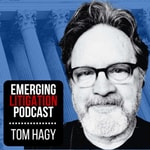

Litigators and other legal and risk professionals share their thoughts on ELP about new legal theories or areas of litigation that plaintiff attorneys, defense counsel, corporations, risk professionals and others will want to be aware of. The host is Tom Hagy, long-time legal news enthusiast, former editor and publisher of Mealey's Litigation Reports, current Editor-in-Chief of the Journal on Emerging Issues in Litigation, and owner of HB Litigation Conferences and Critical Legal Content. ELP is a co-production of HB, CLC, Law Street Media, and vLex Fastcase. Contact Editor@LitigationConferences.com.
Recent rankings
Latest chart positions across Apple Podcasts and Spotify rankings.
Apple Podcasts
🇩🇪 Germany - newsCommentary
31/03/2025#78
Spotify
No recent rankings available
Shared links between episodes and podcasts
Links found in episode descriptions and other podcasts that share them.
See all- https://988lifeline.org/
1921 shares
- https://lawstreetmedia.com/
216 shares
RSS feed quality and score
Technical evaluation of the podcast's RSS feed quality and structure.
See allScore global : 68%
Publication history
Monthly episode publishing history over the past years.
Wildfire Litigation: Building a Case and Establishing Liability with Ed Diab
Season 1 · Episode 100
jeudi 20 mars 2025 • Duration 25:12
Southern California’s wildfire season has turned into a year-round crisis, and with it comes a surge in litigation. On this episode of the Emerging Litigation Podcast, we explore the aftermath of the devastating January 2025 wildfires, including the high-profile Eaton and Palisades fires, and the complex legal battles now unfolding.
My guest, Ed Diab, is a founding partner of Diab Chambers LLP, a boutique law firm with a sharp focus on wildfire litigation. Ed and his team have worked alongside national firm Baron & Budd to represent over 100 public entities in wildfire cases dating back to 2015. His deep experience in this area, combined with an insider’s perspective on utility liability, makes him uniquely qualified to discuss the challenges and strategies involved in these high-stakes cases.
As of early 2025, more than 100 cases have been filed against utilities like Southern California Edison, with public entities, individuals, and insurance carriers seeking damages for widespread destruction. In this conversation, Ed breaks down the causes of these fires, the legal strategies in play, and the uphill battle plaintiffs face when going up against major power utilities.
Ed walks us through California’s unique inverse condemnation doctrine, negligence claims, and how utility companies defend themselves—challenging liability, infrastructure management, and fire prevention efforts. We also discuss the challenges of evidence preservation, particularly when transmission towers remain critical to the state’s power grid.
From the legal wrangling over the Eaton Fire to the complexities of the Palisades rekindle, Ed shares the latest developments and what litigators should expect moving forward. His insight into the coordination between local and national firms and how they’ve successfully pursued wildfire claims makes this a must-listen episode for anyone following disaster-related litigation.
🎧 Tune in for insights on:
✅ Common causes of wildfire litigation and liability determination
✅ How plaintiffs build cases against utilities through expert investigations
✅ Strategic use of inverse condemnation and negligence claims
✅ Key defenses raised by utilities and how plaintiffs respond
✅ The current status of major wildfire cases and emerging litigation trends
If you have comments or wish to participate in one our projects please drop me a note at Editor@LitigationConferences.com.
Tom Hagy
Litigation Enthusiast and
Host of the Emerging Litigation Podcast
Home Page
LinkedIn
Appellate Lawyers at Trial: Don't Wait Until Your Ox is in the Ditch with Jeff Doss
Season 1 · Episode 99
lundi 27 janvier 2025 • Duration 22:18
Whopping jury verdicts from 2024 illustrate why trial teams sometimes include appellate counsel, because including them -- even as you prepare to defend a high stakes case at trial -- can improve your chances on appeal should a jury hand you a half-billion-dollar verdict.
But what functions do appellate attorneys perform at trial? Are they listening for errors or proactively guiding trial counsel? Do they ever address the court or sit quietly at the defense table or maybe in the back row?
To answer these questions and more is Jeffrey P. Doss, a partner in the White-Collar Criminal Defense & Corporate Investigations practice group at Lightfoot, Franklin & White LLC, a civil defense litigation firm. Jeff has served as appellate counsel for an automobile manufacturer for 10 years. In this role, he has supported trial teams pre-trial, at trial, and post-verdict through appeal. Jeff has developed and implemented strategies to address a range of legal issues, from jury selection errors to expert exclusions, evidentiary objections, and post-verdict challenges to punitive damages awards.
Thanks to Jeff for taking the time to share his insights on this, and for entertaining my curiosity about the efficacy of beards in the practice of law.
If you have comments or wish to participate in one our projects please drop me a note at Editor@LitigationConferences.com.
Tom Hagy
Litigation Enthusiast and
Host of the Emerging Litigation Podcast
Home Page
LinkedIn
President Biden's Critical Infrastructure Cyber Memo and CrowdStrike's Whoopsie Daisy with Elizabeth Burgin Waller
Season 1 · Episode 90
mercredi 31 juillet 2024 • Duration 35:08
How secure is our nation's critical infrastructure? One recent event serves as a cautionary tale. In this episode, we tackle this pressing question in the context of cybersecurity. We'll address President Biden's recent National Security Memorandum on Critical Infrastructure Security and Resilience, and its implications for sectors like energy, water, and transportation.
Our guest, Elizabeth Burgin Waller, from Virginia's WoodsRogers law firm, brings her extensive knowledge in privacy and cybersecurity law to the discussion.
Join us as we discuss ransomware as a service, shedding light on its franchise-like model and the significant challenges in tracking and prosecuting these cybercriminals, especially those hiding in countries like Russia. We discuss the recent takedown of the LockBit ransomware gang under Operation Kronos, and the persistent and growing complications of IoT security.
CrowdStrike's recent software glitch, while not a malicious attack, serves as a stark reminder of the importance of testing and transparency around cyber incidents, and the vulnerability of the systems that drive critical industries. Tune in for expert insights and reflections on the evolving regulatory landscape and what it means for mitigating risk in the Digital Age.
Beth is Principal and Cybersecurity & Data Privacy Practice Chair at WoodsRogers. In addition to a J.D. from William and Mary School of Law, she is certified as a Privacy Law Specialist by the International Association of Privacy Professionals (IAPP), which is accredited by the American Bar Association, a Certified Information Privacy Professional with expertise in both U.S. and European law (CIPP/US & CIPP/E), and a Certified Information Privacy Manager (CIPM), also from the IAPP. Beth also graduated magna cum laude with a B.A. in creative writing, so maybe I should have let her write the show notes.
*******
This podcast is the audio companion to the Journal of Emerging Issues in Litigation. The Journal is a collaborative project between HB Litigation, a brand of Critical Legal Content (a custom legal content service for law firms and service providers) and the vLex Fastcase legal research family, which includes Full Court Press, Law Street Media, and Docket Alarm.
If you have comments, ideas, or wish to participate, please drop me a note at Editor@LitigationConferences.com.
Tom Hagy
Litigation Enthusiast and
Host of the Emerging Litigation Podcast
Home Page
Follow us on LinkedIn
Subscribe on your favorite platform.
Cannabis Industry Competition Law with Ausra Deluard and Jennifer Oliver
Season 1 · Episode 2
mardi 29 décembre 2020 • Duration 43:00
What can legitimate cannabis companies do to level the playing field, not only against others who walk the straight and narrow, but dealers still thriving on the black market?
It was my pleasure to interview Ausra Deluard and Jennifer Oliver for what was an informative and even surprising podcast. It’s based on their article — Clearing the Haze: State Laws and Private Plaintiffs Critical to Preserve Competition in Cannabis — which will be featured in the inaugural issue of the Journal on Emerging Issues in Litigation, which will release in January 2021.
Ausra, who is an attorney with the global law firm Dentons LLP, has spent more than a decade advising clients in a range of antitrust matters including merger investigations, competitor collaborations, and pricing and distribution policies. She works closely with cannabis clients to help them navigate the rapidly evolving cannabis laws and regulations throughout the U.S.
Jennifer is a partner at national antitrust boutique MoginRubin LLP, where she litigates and advises clients on competition issues. Her work includes representing classes of plaintiffs in class actions, risk mitigation and regulatory advice in mergers and acquisitions, and other complex business litigation. Check out the MoginRubin Blog.
The Journal is a collaborative project between HB and the Fastcase legal research family, which includes Full Court Press, Law Street Media, Docket Alarm and, most recently, Judicata. If you have comments or wish to participate in one our projects, or want to tell me how awesome Ausra and Jennifer are, drop me a note at Question@LitigationConferences.com.
We hope you enjoy the interview.
The Age of Social Disparagement with Charlie Kingdollar
Season 1 · Episode 1
jeudi 26 novembre 2020 • Duration 29:34
Are the risks posed by social media — which has added jet fuel to one person’s ability to smear another — adequately addressed by the insurance market?
It was my pleasure to interview Charlie Kingdollar for our first episode of the Emerging Litigation Podcast.
Charlie spent more than four decades with General Reinsurance, three-quarters of which as the company’s Emerging Issues Officer. One colleague described him as “one of the most prescient and gifted industry futurists I have met in my 36 year professional career within the insurance industry. Entertaining and insightful, his ability to digest and communicate complex issues, many before they are readily apparent, is both a gift and a talent.”
This interview is based on his article on social disparagement coming out in the inaugural issue of the Journal on Emerging Issues in Litigation in January 2021. The Journal is a collaborative project between HB and Fastcase. If you have comments or wish to participate in one our projects, or want to tell me how awesome Charlie is, drop me a note at Editor@LitigationConferences.com.
We hope you enjoy the interview.
Trademarks, Copyrights, Brands, T-Shirts, and Champagne with Tiffany Gehrke and Kelley Gordon
Season 1 · Episode 89
mardi 23 juillet 2024 • Duration 37:09
Listen as intellectual property attorneys Tiffany Gehrke and Kelley Gordon of Marshall Gerstein in Chicago share their insights into three matters relevant anyone watching copyright and trademark law, or anyone fond of branded t-shirts and fancy French beverages.
I talk to Tiffany Gehrke about two cases. One is Vidal v. Elster, better known as the “TRUMP TOO SMALL” case. Just decided by the Supreme Court, this deals with whether a mark containing criticism of a government official or public figure – which is barred by the “names clause” of the Lanham Act – violates free speech. Justice Thomas wrote the majority opinion, which Tiffany outlines.
The other case is Penn State v. Vintage Brands, which is pending in Pennsylvania federal court and is expected to have wide-reaching implications for retailers and brand owners alike. Vintage Brand uses Penn State’s registered Nittany Lions trademarks on t-shirts, hats, and other goods, and argues that use of the trademarks constitute a defensible “ornamental use.” We shall see!
Finally, I ask Kelley Gordon for her take on a dispute between a popular Instagram influencer, Lauren Holifield, and champagne brand Veuve Clicquot. Holifield temporarily and surprisingly lost her IG account after Veuve Clicquot raised trademark infringement concerns on three of Holifield's videos. This was a big deal for her. She was earning six figures. OMG. Hear what Kelley has to say.
*******
This podcast is the audio companion to the Journal of Emerging Issues in Litigation. The Journal is a collaborative project between HB Litigation Conferences and the vLex Fastcase legal research family, which includes Full Court Press, Law Street Media, and Docket Alarm.
If you have comments, ideas, or wish to participate, please drop me a note at Editor@LitigationConferences.com.
Tom Hagy
Litigation Enthusiast and
Host of the Emerging Litigation Podcast
Home Page
Follow us on LinkedIn
Subscribe on your favorite platform.
Algorithmic Software-Facilitated Price Fixing with Jonathan Rubin
Season 1 · Episode 88
mardi 2 juillet 2024 • Duration 34:06
Everyone knows that price fixing is against the law, chiefly Section 1 of the Sherman Act.
Competitors may not collude, i.e., agree, to keep prices where they want them, but there are relatively new pricing platforms that some companies maintain take them out of the equation, so they do not have to share private information directly with competitors. Instead, they claim, they feed their data to a third-party which uses algorithms to come up with pricing for these competitors based on data they all contribute. The subject has been getting a lot of attention as cases mount against a company called RealPage, a firm that provides shared pricing services for landlords. The company faces dozens of suits in multidistrict litigation and has also captured the attention of federal antitrust law enforcers. But they are not the only company finding themselves in litigation.
As our guest recently wrote: “When pricing algorithms are used by individual firms, such as airlines, e-commerce platforms, ride-share and room-share companies, stock traders, and others, there are unlikely to be anti-competitive consequences. It is when market competitors avail themselves of the same algorithmic program or service that the specter of unlawful collusion arises.” That risk increases as markets become more concentrated, he says.
He is Jonathan Rubin, Partner and Co-Founder of MoginRubin LLP, a widely recognized competition law attorney, economist, and commentator who has presented at antitrust conferences in the United States and Europe, testified before several congressional committees, and before the Directorate General for Competition of the European Commission.
“The fact that these services employ an algorithm is not central to what's going on in this scenario,” he told me, “because what's important is the conduct of the businesspeople involved.”
Listen to my interview with Jonathan Rubin as we discuss what algorithmic or software-facilitated pricing is, what the law says about price collusion, how this new pricing mechanism violates that law, and recent developments in litigation.
*******
This podcast is the audio companion to the Journal of Emerging Issues in Litigation. The Journal is a collaborative project between HB Litigation Conferences and the vLex Fastcase legal research family, which includes Full Court Press, Law Street Media, and Docket Alarm.
If you have comments, ideas, or wish to participate, please drop me a note at Editor@LitigationConferences.com.
Tom Hagy
Litigation Enthusiast and
Host of the Emerging Litigation Podcast
Home Page
Follow us on LinkedIn
Subscribe on your favorite platform.
Mitigating Greenwashing Litigation Risks with Ramya Ravishankar
Season 1 · Episode 87
mercredi 12 juin 2024 • Duration 27:01
Companies are grappling with how to market the eco-friendly, people friendly, and animal friendly characteristics of their products and services, while also not getting in trouble with the law. Some have learned this the hard way. Some have wisely consulted experts. (That's foreshadowing.)
ESG – or Environmental, Social and Governance – reporting and so-called greenwashing litigation have implications for a wide range of stakeholders. Companies face significant financial and reputational risks, while investors, regulators, advocacy groups, and consumers all have an interest in ensuring the accuracy and transparency of ESG information.
Last year the SEC adopted amendments to the Investment Company Act with the “Names Rule,” which addresses fund names that are likely to mislead investors about a fund’s investments and risks.
On the consumer side, the FTC has been on the case as it stalks misleading advertising claims. Violations have real consequences. In 2022 the FTC reached multimillion dollar settlements with store chains Kohl’s and Walmart over claims that certain products were eco-friendly and made from bamboo, when they were really made from rayon.
More recently, a class action was filed in federal court in New York over the "carbon neutral" branding on bottled water. But there are some important court decisions our guest wants to know about, involving shoemaker AllBirds and beauty products company Sephora.
She is Ramya Ravishankar, General Counsel & Corporate Secretary of the HowGood company, an independent research firm that helps the world’s largest food brands meet their sustainability commitments. Ramya is a former environmental biologist turned attorney who is – as you will soon hear -- passionate about the intersection of food and sustainability. Previously, Ramya was Associate General Counsel at Bowery Farming – producer of pesticide free lettuce, other leafy foods and herbs. Before that she was a regulatory enforcement associate at Skadden Arps. Ramya earned her J.D. from Columbia Law School in New York and a B.S. from Queen’s University in Ontario, Canada.
Enjoy the interview!
*******
This podcast is the audio companion to the Journal of Emerging Issues in Litigation. The Journal is a collaborative project between HB Litigation Conferences and the vLex Fastcase legal research family, which includes Full Court Press, Law Street Media, and Docket Alarm.
If you have comments, ideas, or wish to participate, please drop me a note at Editor@LitigationConferences.com.
Tom Hagy
Litigation Enthusiast and
Host of the Emerging Litigation Podcast
Home Page
Follow us on LinkedIn
Subscribe on your favorite platform.
Automation Comes to Our Litigation Nation with James Lee
Season 1 · Episode 86
jeudi 6 juin 2024 • Duration 33:53
In this episode we talk about litigation automation, and another case in which innovators are using artificial intelligence to transform legal operations.
We also speak with our guest about his transformation from a litigator to a tech entrepreneur, and how the company he co-founded is using modern tools to do in minutes what used to take hours. These tasks include responding to demand letters, complaints, and discovery requests, and executing matter profiling and data analytics, all of which are traditionally rote and repetitive and time-consuming undertakings.
He is James M. Lee, co-founder and CEO of LegalMation. James conceived the idea behind LegalMation -- which is to leverage the power of generative artificial intelligence to transform litigation and dispute resolution -- while managing a litigation boutique. An experienced and recognized litigator and trial attorney, James received his J.D. from Stanford Law School.
Also joining me, I’m pleased to say, is the ever-inquisitive and always attentive Sara Lord, legal analytics professional extraordinaire, who raised questions from the litigator's perspective.
I hope you enjoy the conversation!
*******
This podcast is the audio companion to the Journal of Emerging Issues in Litigation. The Journal is a collaborative project between HB Litigation Conferences and the vLex Fastcase legal research family, which includes Full Court Press, Law Street Media, and Docket Alarm.
If you have comments, ideas, or wish to participate, please drop me a note at Editor@LitigationConferences.com.
Tom Hagy
Litigation Enthusiast and
Host of the Emerging Litigation Podcast
Home Page
Follow us on LinkedIn
Subscribe on your favorite platform.
Biometric Privacy Litigation and Coverage Disputes with John Leonard and Cort Malone
Season 1 · Episode 85
vendredi 31 mai 2024 • Duration 29:50
Biometric data is big business. It many cases it even helps make our lives better. It also presents significant risks for a variety of parties, in addition to those of us who surrender our data. Companies collecting, storing, utilizing, and monetizing the data face penalties and litigation bolstered by the increasing number of states enacting biometric information privacy acts, or BIPAs, the first of which was in Illinois.
Biometric information -- fingerprints, facial and retinal scans, and DNA -- it's all used in many ways we don’t even think about, like building security, banking access and online payments, smartphone access, patient identification in healthcare, employee tracking, law enforcement, air travel security and hotel check-ins, consumer tracking and customer experience analysis, border security, validating recipients of government welfare benefits, identifying students taking exams, and more.
I just finished hosting a webinar titled “Litigation After Biometric Privacy Law Violations” with attorneys John M. Leonard and Cort T. Malone of Anderson Kill. They spoke extensively about the state of biometric privacy litigation, the regulatory landscape, insurance coverage considerations, and recent rulings. They're both shareholders at Anderson Kill and they are both graduates of the Fordham University School of Law.
John M. Leonard is co-chair of the firm's biometric liability group. He has recovered millions of dollars for policyholders in a full spectrum of insurance coverage matters, including disputes over business interruption, D&O and E&O, defense and indemnity, general liability losses, and environmental liability.
Cort T. Malone, chair of the firm's Biometric Liability Insurance Recovery Group, is an experienced litigator who focuses on insurance coverage litigation and dispute resolution, with an emphasis on commercial general liability insurance, cyber insurance, employment practices insurance, advertising injury, D&O, E&O, and property insurance. He's also a member of the firm's practice groups relating to restaurant, retail and hospitality; environmental law; cyber insurance recovery; and COVID litigation.
Following the webinar (coming soon to the West LegalEdcenter), Cort and John stuck around to answer some of my questions about a couple of recent cases I thought illustrated the types of underlying and coverage matters we’re seeing out there.
I hope you enjoy it.
*******
This podcast is the audio companion to the Journal of Emerging Issues in Litigation. The Journal is a collaborative project between HB Litigation Conferences and the vLex Fastcase legal research family, which includes Full Court Press, Law Street Media, and Docket Alarm.
If you have comments, ideas, or wish to participate, please drop me a note at Editor@LitigationConferences.com.
Tom Hagy
Litigation Enthusiast and
Host of the Emerging Litigation Podcast
Home Page
Follow us on LinkedIn
Subscribe on your favorite platform.
Related Shows Based on Content Similarities