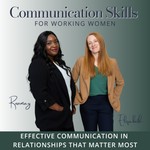
We’re Elizabeth and Rosemay, women, mothers, spouses, friends. Rosemay is a therapist and current PhD candidate, and Elizabeth is a facilitator and coach.
Over the last 20 years, we’ve lived, worked, and studied across different industries and cultures, and one thing has become clear: there’s no substitute for communication. Skill gaps can be fixed, connection is a basic human need, and when you learn to communicate with clarity, you can truly thrive.
We look forward to meeting you!
This podcast is designed to help you do just that. Each week, we share practical, communication skills you can apply right away, at work, at home, and in the relationships that matter most.
🎧 Hit play to learn a new skill you can start using today.
A simple structure (Present–Past–Future) to confidently introduce yourself
Why accomplished women often undersell themselves—and how to change that
How to think about personal brand as “being yourself on purpose”
Guest:
Dr. Andrea Wojnicki is an executive communication coach, Harvard Business School doctorate, and author of one of the most downloaded Harvard Business Review articles, “A Simple Way to Introduce Yourself.” She helps leaders build confidence and communicate clearly through practical frameworks.
How clothing can support confidence, regulation, and self-expression
Why connection to yourself impacts how you communicate
A new way to think about presence, embodiment, and influence
Guest:
Dr. Sweta Chawla is a leadership coach, speaker, and facilitator who helps professionals reconnect to themselves and lead with greater impact through her Leadership Beyond the Ladder framework.
Why your setbacks are not disqualifications—but qualifications
How to stop hiding your story and start using it as an advantage
Guest:
Dr. Rene Roberts is a board-certified Family Medicine physician and transformational speaker who empowers individuals to turn setbacks into their greatest advantage. Through her L.Y.M.I.T.S. Method™, she helps people communicate their worth even when the system says no.
Episode Summary:
Have you ever been put on the spot in a meeting or conversation and suddenly your mind goes blank?
You know the moment.
Someone turns to you and says, “What do you think?”
And instantly, the pressure hits.
Your brain starts racing:
“Say something smart…”
“Don’t mess this up…”
“Why can’t I think right now?”
So you either overthink, ramble, or say something you don’t fully mean only to think of the perfect response hours later.
For many working women, this experience creates communication anxiety, especially in high-pressure moments at work or in important relationships.
In this episode, we break down why your brain freezes when you’re put on the spot and give you a simple, practical mental script you can use in real time to respond with clarity and confidence.
What You’ll Learn:
Why your mind goes blank when you’re put on the spot in meetings or conversations
How pressure and communication anxiety affect your ability to think clearly
The difference between reacting and responding under pressure
A simple 3-step mental script to organize your thoughts quickly
How to stop rambling and speak clearly in high-stakes moments
057 I What to Say When You Don’t Agree (Without Over-Explaining)
Go-To Phrases:
👉 “I see it differently.”
👉 “I don’t think this is the right direction.”
👉 “I think [clear point] because [one reason].”
👉 “That’s my perspective.”
Action Step:
Use the 3-part disagreement structure in your next conversation.
056 I How to Speak Up in Meetings Without Second - Guesing Yourself
Episode Title:
How to Speak Up in Meetings Without Second-Guessing Yourself
What You’ll Learn:
Why second-guessing stops you from speaking up
How to move from thought → speech faster
What to say when you’re unsure
How to stay clear even when doubt shows up
Go-To Phrases:
👉 “I want to add something here.”
👉 “One thought I have is…”
👉 “I’m not fully sure—but here’s what I’m seeing…”
👉 “That’s the main point I wanted to share.”
Action Step:
Speak once early in your next meeting using a simple entry phrase.
Episode Summary:
Do you ever hold back from saying what you really mean because you don’t want to sound harsh, rude, or “too much”?
For many working women, this is one of the biggest communication challenges especially in moments that matter most. You know what needs to be said, but instead of being direct, you soften your message, over-explain, or hedge your words.
And the result?
You leave the conversation feeling frustrated… misunderstood… or like you didn’t fully say what you meant.
In this episode, we break down why being direct feels so uncomfortable, how communication anxiety and people-pleasing habits affect your delivery, and how to speak clearly at work and in your relationships without damaging trust or connection.
You’ll learn 3 simple shifts that help you communicate with clarity and confidence, so you can be both direct and respectful in real conversations.
What You’ll Learn:
Why working women struggle to be direct in conversations and feedback
How fear of sounding harsh leads to unclear communication
The difference between clarity and tone (and why they matter)
3 simple communication shifts to help you speak clearly and confidently
How to stop overexplaining and say what you mean in fewer words
054 I Why Your Ideas Get Ignored (Even When You Say Them Right)
Episode Summary:
Have you ever walked away from a conversation thinking, “I said exactly what I meant… so why didn’t they listen to me?”
For many working women especially those navigating career transitions, leadership growth, or evolving relationships the frustration isn’t a lack of good ideas. It’s that your ideas are being overlooked, dismissed, or not fully heard in meetings and important conversations.
And over time, that leads to something deeper: communication anxiety, second-guessing, and overthinking every interaction.
In this episode, we break down what we call the Communication Gap the space between what you’re thinking and how you actually speak up in the moment.
You’ll learn why people don’t listen even when you’re saying the right thing, how overexplaining and people-pleasing habits weaken your message, and what to do differently so you can speak clearly, build communication confidence, and be heard at work and in your relationships.
What You’ll Learn:
Why working women often feel unheard in meetings and everyday conversations
How communication anxiety and overthinking impact how others respond to you
What creates the gap between your ideas and how they’re received
3 common communication habits that cause your ideas to be ignored
053 I Why You Can’t Stop Replaying Conversations (And What It’s Really Costing You)
Episode Summary:
Do you ever find yourself replaying a conversation long after it’s over analyzing what you said, what they meant, and what you should have done differently?
For many working women navigating life and career transitions, this pattern of overthinking can feel constant. It shows up after meetings, difficult conversations, or even everyday interactions leaving you feeling anxious, uncertain, and emotionally drained.
In this episode, we break down why your brain replays conversations, what’s really driving that anxiety, and how to stop the Overthinking Loop in the moment. You’ll learn simple, practical tools to help you move from second-guessing yourself to feeling clear, grounded, and confident in your communication.
What You’ll Learn:
Why women overthink conversations especially during stressful transitions
How anxiety impacts communication in relationships and at work
The difference between reflection and the “Overthinking Loop”
Why your brain replays conversations to manage perception and acceptance
A simple 3-step process to stop overthinking in real time
How to build self-trust and emotional clarity after difficult conversations
This episode is for working women who:
052 I 3 Ways to Speak So People Actually Listen (Even If You’re Overthinking It)
Episode Summary:
If you’re a working woman navigating a career transition, shifting relationships, or increased anxiety at work or home, this episode will help you understand why you’re not being heard, even when you know exactly what you want to say.
So many women between find themselves second-guessing their words, softening their message, or over-explaining in important conversations. Not because they lack confidence but because they are trying to be thoughtful, likable, and emotionally aware.
In this episode, we break down the subtle communication habits that are quietly undermining your clarity and what to say instead so you can feel more confident, respected, and understood in the moments that matter most.
What You’ll Learn:
The “Acceptability Trap” and how it keeps you from being heard
3 common indirect communication habits that weaken your message
Simple, in-the-moment phrases to help you speak clearly and confidently
How to communicate with clarity without sounding harsh or aggressive
This episode is for working women who:
Are navigating a transition (career change, leadership role, family shift, identity growth)
Feel anxious speaking up in meetings or important conversations
Related Shows Based on Content Similarities
Discover shows related to Communication Skills for Working Women Podcast:Effective Communication, Healthy Relationships, Direct Communication, based on actual content similarities. Explore podcasts with similar topics, themes, and formats, backed by real data.
Practical phrases to help you feel more confident speaking up at work
Who This Episode Is For:
This episode is for working women who:
Freeze or feel anxious when asked to speak unexpectedly
Struggle with overthinking or rambling under pressure
Want to improve communication skills in meetings and professional settings
Are navigating leadership roles, career transitions, or increased visibility
Want to feel more confident, clear, and in control when speaking in the moment
Key Takeaways:
1. You’re not bad at thinking, you’re overloaded under pressure
When you’re put on the spot, your brain shifts into protection mode. It’s trying to avoid judgment, mistakes, or saying the wrong thing which is why your mind either goes blank or into overdrive.
👉 The goal isn’t to think faster. It’s to have a simple structure to follow.
2. Buy yourself a moment before you respond
Pausing is one of the most powerful communication skills you can use in high-pressure situations.
👉 Try:
“That’s a good question—let me think for a second.”
“Give me a moment to think about that.”
This creates space to think clearly and signals confidence not hesitation.
3. Give one clear thought don’t say everything at once
When you’re overwhelmed, you may try to organize your thoughts while speaking which leads to rambling or overexplaining.
👉 Try:
“My initial thought is…”
“The key thing I’m seeing is…”
Focus on one clear point. You can always add more later.
4. Stay grounded don’t weaken your response
After you speak, silence can feel uncomfortable. That’s when people often backtrack or soften their message.
👉 Try:
“That’s my initial take.”
“That’s where I’d start.”
“Curious what others are thinking.”
This keeps you engaged without undoing your clarity or confidence.
The Core Shift:
When you’re put on the spot, the pressure you feel isn’t a sign that you’re unprepared.
It’s a signal that your brain is trying to protect you from judgment.
But you don’t need to perform perfectly in the moment.
You need a simple way to respond clearly.
When you use a structured approach, you move from panic → to clarity and start building real confidence in how you communicate at work and in your relationships.
Action Step:
Before your next meeting or conversation, write down one simple sentence:
👉 “My initial thought is…”
Practice saying it out loud.
So when you’re put on the spot, you’re not starting from scratch—you have something steady to rely on.
Go-To Phrases:
“Let me think for a second.”
“My initial thought is…”
“The key thing I’m seeing is…”
“That’s my take.”
Connect & Share:
If this episode resonated with you, share it with a friend who feels pressure when speaking up or struggles with communication anxiety in meetings.
Leaving a review helps more working women learn how to think clearly, speak confidently, and respond with clarity in the moments that matter most.
Closing Thought:
Speak Clearly and Listen Bravely.
Practical phrases to help you be direct without feeling rude
Who This Episode Is For:
This episode is for working women who:
Hold back from speaking clearly because they don’t want to sound harsh
Struggle with people-pleasing, overexplaining, or softening their message
Want to improve communication skills at work and in relationships
Are navigating leadership, feedback conversations, or difficult discussions
Want to feel more confident, respected, and understood when they speak
Key Takeaways:
1. Clarity, not harshness, is what creates strong communication
Most women try to make their message sound nicer—but the real issue isn’t tone.
👉 It’s lack of clarity.
When your message is unclear, people feel it and that’s what creates tension in conversations.
2. Lead with clarity instead of cushioning your message
Starting with phrases like “I don’t want this to sound harsh…” or “This might be nothing…” weakens your message before you even say it.
👉 Try:
“I want to be direct…”
“I noticed something I want to address.”
“Here’s what I’m seeing.”
Clear communication is respectful communication.
3. Separate what you say from how you say it
Many women believe being direct will automatically sound rude but clarity and tone are not the same thing.
👉 Try:
“I’d like us to try a different approach here.”
“I have a concern I want to talk through.”
Keep the message clear and let your tone carry warmth and respect.
4. Say less and trust your message
Overexplaining often comes from trying to manage how others will react. But more words don’t create more understanding they create confusion.
👉 Try:
“This approach isn’t working.”
“We need to change direction here.”
Then pause.
This is how your message actually lands.
The Core Shift:
Being direct does not damage relationships.
Being unclear does.
When you speak clearly without overexplaining or softening you create trust, reduce confusion, and build confidence in how you communicate.
You don’t need to say it perfectly.
You need to say it clearly.
Action Step:
In your next conversation, try this simple formula:
👉 “I want to be direct…”
👉 [Say your clear sentence]
👉 Pause
No cushioning.
No overexplaining.
Just clarity with calm delivery.
Go-To Phrases:
“I want to be direct…”
“I noticed something I want to address.”
“Here’s what I’m seeing.”
“This approach isn’t working.”
“We need to change direction here.”
Connect & Share:
If this episode resonated with you, share it with a friend who struggles to speak up clearly or worries about sounding harsh.
Leaving a review helps more working women build communication confidence and learn how to express themselves clearly in the relationships that matter most.
Closing Thought:
Speak Clearly and Listen Bravely.
How to speak clearly at work without overexplaining or softening your message
Practical ways to build communication confidence and stop second-guessing yourself
Who This Episode Is For:
This episode is for working women who:
Feel like people don’t listen or take their ideas seriously
Want to improve communication skills in both work and relationships
Are navigating career transitions, leadership roles, or personal growth
Struggle with overthinking, overexplaining, or people-pleasing communication patterns
Want to feel more confident speaking up and being heard in meetings and important conversations
Key Takeaways:
1. The problem isn’t your ideas it’s how they come across in the moment
When you’re managing how you’re perceived, your communication shifts in real time. This is why strong, thoughtful ideas sometimes get overlooked or ignored.
👉 This is the Communication Gap and it’s especially common for women navigating leadership and career growth.
2. Stop burying your point lead with clarity
When you overexplain or build up to your point, people stop listening before you ever get there.
👉 Try:
“Here’s my recommendation.”
“The key issue is…”
Leading clearly is one of the most important communication skills for being heard at work.
3. Remove language that weakens your message
Softening phrases like “I just think,” “maybe,” or “I feel like” can make your communication sound uncertain even when you’re confident internally.
👉 Try:
“I think we should…”
“This isn’t working.”
Clear, direct language builds trust and helps others respond to what you’re actually saying.
4. Say it once then let it land
Overexplaining is one of the most common communication habits that causes people to tune out or miss your point.
👉 Try:
“That’s my recommendation.”
“That’s the main point.”
Then pause. This is where being heard actually happens.
The Core Shift:
If people aren’t hearing you, it’s not because you’re not capable, intelligent, or prepared.
It’s because overthinking, communication anxiety, and people-pleasing are changing how your message is delivered in real time.
When you learn to speak clearly without overexplaining or softening you close the Communication Gap.
And that’s how you move from feeling ignored… to being heard, respected, and understood in both your work and your relationships.
Action Step:
In your next meeting or conversation, practice this:
👉 Say your point in one clear sentence:
“Here’s my recommendation…”
Then stop.
No overexplaining.
No softening.
No second-guessing.
This is how you begin building real communication confidence—and start getting your ideas heard.
Connect & Share:
If this episode resonated with you, share it with a friend who feels overlooked or struggles with communication anxiety.
Leaving a review helps more working women learn how to speak up, reduce overthinking, and be heard in the conversations that matter most.
Closing Thought:
Speak Clearly and Listen Bravely.
Replay conversations and struggle to “turn off” their thoughts
Feel anxious about how they’re perceived in relationships or at work
Are navigating a transition (career shift, leadership growth, family changes)
Tend to overthink, people-please, or second-guess themselves
Want more peace, clarity, and confidence in their communication
Key Takeaways:
1. Overthinking is about perceived acceptance not clarity
When you replay conversations, you’re not actually improving your communication.
👉 You’re trying to manage how you were perceived.
2. Name the Overthinking Loop to interrupt it
When you label the pattern, you create space between you and your thoughts.
👉 Try:
“This is the Overthinking Loop.”
“I’m replaying, not problem-solving.”
3. Separate facts from the story your brain is telling
Your brain fills in gaps with assumptions but those are not facts.
👉 Try:
“What do I actually know happened?”
Then label the rest:
“That’s a story not a fact.”
4. Close the loop instead of waiting to feel done
Overthinking doesn’t resolve itself you have to decide to stop.
👉 Try:
“I’ve thought about this enough.”
“There’s nothing else to solve.”
“I’m choosing to move on.”
The Core Shift:
Overthinking isn’t helping you communicate better.
It’s trying to protect you from judgment.
But what you actually need is closure not more analysis.
When you learn to stop the loop, you reduce anxiety, strengthen self-trust, and show up more confidently in your relationships and workplace.
Action Step:
The next time you catch yourself replaying a conversation, use this 3-step reset:
👉 “This is the Overthinking Loop.”
👉 “What do I actually know happened?”
👉 “I’m done thinking about this.”
Then intentionally move on shift your focus, your body, or your environment.
Connect & Share:
If this episode resonated with you, share it with a friend who overthinks their conversations or struggles with communication anxiety.
Leaving a review helps more women find the tools to communicate clearly and confidently.
Closing Thought:
Speak Clearly and Listen Bravely.
Struggle with overthinking, people-pleasing, or fear of being misunderstood
Want stronger, more confident communication in their relationships and workplace
Key Takeaways:
1. Disclaimers weaken your message
When you say things like “I could be wrong” or “just a thought,” you unintentionally signal uncertainty.
👉 Try instead:
“Here’s what I’m seeing.”
“Here’s my recommendation.”
2. Over-explaining dilutes your clarity
When you lead with too much context, your main point gets lost.
👉 Try instead:
“I recommend we move forward with option B.”
(Pause. Let that be enough.)
3. Softening language invites others to override you
Turning statements into questions or adding “maybe” reduces your authority.
👉 Try instead:
“Let’s move forward with this.”
“What questions do you have?”
The Core Shift:
Clarity is not rude.
Clarity is respectful, especially in relationships that matter most.
When you communicate clearly, you reduce anxiety, strengthen connection, and build trust in both professional and personal relationships.
Action Step:
In your next conversation, practice saying one clear sentence without softening or disclaiming:
“Here’s what I’m seeing.”
“I recommend…”
Then pause.
Let your words stand.
If this episode resonated with you, share it with a friend who is navigating a transition or struggling to be heard.
Leaving a review helps more women find the tools to communicate clearly and confidently.