Blindspot – Details, episodes & analysis

Podcast details

Technical and general information from the podcast's RSS feed.

Podcast Blindspot

Blindspot

The HISTORY® Channel and WNYC Studios

History
Society & Culture

Frequency: 1 episode/51d. Total Eps: 26

Hosting podcast Simplecast
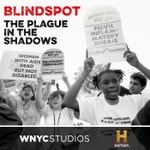
HIV and AIDS changed the United States and the world. In this series, we reveal untold stories from the defining years of the epidemic, and we’ll consider: How could some of the pain have been avoided? Most crucial of all, what lessons can we still learn from it today? Blindspot is a co-production of The HISTORYⓇ Channel and WNYC Studios.
Site
RSS
Apple

Recent rankings

Latest chart positions across Apple Podcasts and Spotify rankings.

Apple Podcasts

  • 🇺🇸 USA - history

    21/09/2024
    #87
  • 🇺🇸 USA - history

    19/09/2024
    #92
  • 🇺🇸 USA - history

    18/09/2024
    #80
  • 🇺🇸 USA - history

    17/09/2024
    #93
  • 🇺🇸 USA - history

    16/09/2024
    #89
  • 🇺🇸 USA - history

    15/09/2024
    #73
  • 🇺🇸 USA - history

    14/09/2024
    #75
  • 🇺🇸 USA - history

    13/09/2024
    #76
  • 🇺🇸 USA - history

    12/09/2024
    #68

Spotify

    No recent rankings available


RSS feed quality and score

Technical evaluation of the podcast's RSS feed quality and structure.

See all
RSS feed quality
To improve

Score global : 63%


Publication history

Monthly episode publishing history over the past years.

Episodes published by month in

Latest published episodes

Recent episodes with titles, durations, and descriptions.

See all

There Was Love Here

Season 3 · Episode 6

jeudi 22 février 2024Duration 38:00

In this final episode, we turn to people living with HIV today — longtime survivors of a plague who, despite their pain, frustrations and desires to just be done with it, realize they can’t be done with it. These are people like Kia LaBeija, an artist born HIV-positive, who turned to photography at 16, a couple years after her mother died, to help make sense of her story. And they are people like Phill Wilson, an activist who still bears the scars of his decades fighting in the HIV and AIDS trenches; Valerie Reyes-Jimenez, the proudly positive woman we met in the first episode, who talks about what it’s like to age as a HIV-positive woman; Victor Reyes, one of the children who went through Harlem Hospital and lived long enough to grow up and start a family of his own; and Lizzette Rivera, who lost her mother to AIDS in 1984 and spent decades trying to find her mother’s burial spot so that she could properly mourn and honor her. Together, these five remind us that the HIV and AIDS epidemic is not over — and there is still so much we need to do to bring it out of the shadows.

Voices in this episode include:

Kia LaBeija, a former mother of the House of LaBeija, is an image-maker and storyteller born and raised in Hell’s Kitchen in the heart of New York City. Her performative self-portraits embody memory and dream-like imagery to narrate complex stories at the intersections of womanhood, sexuality and navigating the world as an Afro Filipina living with HIV.

Warren Benbow is a drummer who has worked with Nina Simone, James “Blood” Ulmer, Betty Carter and Whitney Houston, among others. He grew up in Bed-Stuy, Brooklyn, and went to the High School of Performing Arts. Warren is Kia’s father.

Phill Wilson is the founder of the Black AIDS Institute, AIDS policy director for the city of Los Angeles at the height of the epidemic, and a celebrated AIDS activist in both the LGBTQ+ and Black communities since the early 1980s.

Valerie Reyes-Jimenez is a HIV-positive woman, activist and organizer with Housing Works. She saw the AIDS crisis develop from a nameless monster into a pandemic from her home on New York City’s Lower East Side.

Victor Reyes was born at Harlem Hospital Center and spent much of his childhood receiving treatment and care at the hospital’s pediatric AIDS unit. He is the director of an after school program at a grade school in Washington, D.C. He also does research at the Global Community Health Lab at Howard University.

• Lizzette Rivera is a data analyst who remains haunted by her mother’s death in 1984. Rivera spent years trying to find the whereabouts of mother’s burial site on Hart Island. She finally succeeded in 2020. She now visits her mother’s grave regularly.

Blindspot is a co-production of The HISTORY® Channel and WNYC Studios, in collaboration with The Nation Magazine.

A companion photography exhibit by Kia LaBeija featuring portraits from the series is on view through March 11 at The Greene Space at WNYC. The photography for Blindspot was supported by a grant from the Economic Hardship Reporting Project, a nonprofit organization that promotes coverage of social inequality and economic justice.

What If I Could Have Grown Old With My Brother?

Season 3 · Episode 5

jeudi 15 février 2024Duration 39:55

In 1985, doctors at a methadone clinic in the South Bronx made the harrowing discovery: 50 percent of its patients had HIV. Three years later, in the same neighborhood, a pair of epidemiologists estimated that as many as one in five young men were positive for the disease. Those numbers made the South Bronx one of most critical hotspots for HIV in the country.

Joyce Rivera was born and raised in the South Bronx. She watched as heroin flooded into her neighborhood followed by HIV. When Rivera’s brother died in 1987, she decided to do something. Working with a heroin dealer and a local priest, she defied the law and set up an illegal needle exchange in an attempt to prevent the transmission of HIV among injection drug users. And she largely succeeded. But what if this country had treated drug addiction like a public health issue instead of a criminal problem?

Voices in this episode include:

Don Des Jarlais has been a leader in the field of HIV and AIDS research among persons who inject drugs (PWID) for nearly 40 years. A professor of epidemiology at New York University, he served as the principal investigator of the “Risk Factors” study, which was instrumental in tracking the HIV and AIDS epidemic in New York City, among numerous others.

Sister Eileen Hogan was the first female chaplain in the Department of Correction in New York City.

Dr. Arye Rubinstein is an immunologist and allergist on the faculty at Albert Einstein Medical Center and Montefiore Medical Center. An early pioneer in AIDS research and treatment for children, he founded the pediatric AIDS center at Einstein in the early 1980s.

Joyce Rivera is the founder of St. Ann’s Corner of Harm Reduction, one of the first syringe-exchange programs in New York City. A National Science Foundation Fellow from 1981 to 1984, Rivera has been a leader in the field of AIDS and substance use for 35 years.

Father Luis Barrios is a priest and a professor of Latin American and Latinx studies and sociology at both John Jay College and the CUNY Graduate Center.

Robert Fullilove is associate dean for community and minority affairs at Columbia University’s Mailman School of Public Health, as well as a professor of clinical sociomedical sciences and the co-director of the Cities Research Group.

Blindspot is a co-production of The HISTORY® Channel and WNYC Studios, in collaboration with The Nation Magazine.

A companion photography exhibit by Kia LaBeija featuring portraits from the series is on view through March 11 at The Greene Space at WNYC. The photography for Blindspot was supported by a grant from the Economic Hardship Reporting Project, a nonprofit organization that promotes coverage of social inequality and economic justice.

Episode 5: The Body

Season 2 · Episode 5

vendredi 25 juin 2021Duration 31:39

This episode contains descriptions of graphic violence.

Ignored, erased, silenced… But Greenwood’s trauma from 1921 persists. Resmaa Menakem — a therapist and expert on healing from conflict and violence — explains how generations of people pass down the experiences of historical events, and how racialized trauma affects us all, no matter our skin color. He and KalaLea ask, how might healing happen for the descendants of survivors and perpetrators of the massacre? 

Episode 4: The Massacre

Season 2 · Episode 4

vendredi 18 juin 2021Duration 39:44

This episode contains descriptions of graphic violence and racially offensive language.

Over two days — May 31 and June 1, 1921 — a mob of white attackers systematically looted Greenwood and burned it to the ground. Estimates vary, but reports say the marauders killed 100 to 300 people; and they left thousands homeless, faced with the daunting task of rebuilding. We experience the attack through the eyes of lawyer B.C. Franklin and reporter Mary Elizabeth Jones Parrish — each left personal, comprehensive written accounts of those terrible days. 

We also hear how their experiences have affected their descendants. “They had a lot of family trauma,” says Parrish’s great-granddaughter Anneliese Bruner. “Some of these are behaviors that arise because of the chaos that is passed down from generation to generation. The responses and the symptoms are just the outward manifestation of the suffering that people are enduring and carrying around.”

Episode 3: The Two Wars

Season 2 · Episode 3

vendredi 11 juin 2021Duration 39:17

This episode contains descriptions of graphic violence and racially offensive language.

When the U.S. entered World War I, W.E.B. DuBois and Tulsa lawyer B.C. Franklin saw a rare opportunity: Black Americans serving in the military might finally persuade white citizens that they deserved equal respect. But the discrimination they faced in civilian life continued in the trenches and on the homefront. After the war, white mobs plundered and burned Black neighborhoods throughout the country. And during the “Red Summer” of 1919, whites lynched more than 80 people, including Black veterans. Groups like the African Blood Brotherhood responded by urging people to defend themselves — with force, if necessary. On May 31, 1921 the fight arrived in Greenwood.

Episode 2: The Rise of Greenwood

Season 2 · Episode 2

vendredi 4 juin 2021Duration 35:19

The people beyond Greenwood’s borders ensured that the neighborhood could not prosper for long. To understand how and why, we travel back to the Trail of Tears and the forced resettlement of five Native American tribes. We examine the racist laws and policies that shaped the area. Despite Jim Crow segregation, the district flourished -- it even came to be called “Black Wall Street.” “The story of Greenwood is so complex,” says writer Victor Luckerson. “There's so much tragedy and trauma as part of it, but also so much inspiration.” We also meet the journalist A.J. Smitherman, legendary publisher of The Tulsa Star (one of the first Black daily newspapers in the United States) and a fierce advocate for his community.

Episode 1: The Past Is Present

Season 2 · Episode 1

vendredi 28 mai 2021Duration 35:05

This episode contains descriptions of graphic violence and racially offensive language.

On May 31, 1921, Tulsa, Oklahoma’s Greenwood District was a thriving Black residential and business community — a city within a city. By June 1, a white mob, with the support of law enforcement, had reduced it to ashes. And yet the truth about the attack remained a secret to many for nearly a century.Chief Egunwale Amusan grew up in Tulsa — his grandfather survived the attack — and he’s dedicated his life to sharing the hidden history of what many called “Black Wall Street.” But Dr. Tiffany Crutcher, also a descendant of a survivor, didn’t learn about her family history or the massacre until she was an adult. Together, they’re trying to correct the historical record.  As Greenwood struggles with the effects of white supremacy 100 years later, people there are asking: in this pivotal moment in American history, is it possible to break the cycle of white impunity and Black oppression?

Introducing Blindspot: Tulsa Burning

Season 2

vendredi 21 mai 2021Duration 01:00

On May 31, 1921, the Greenwood District of Tulsa, Oklahoma was a thriving city within a city -- a symbol of pride, success and wealth. The next morning, it was ashes. What happened remained a secret for almost a century.

Voices featured in this trailer include: KalaLea, Chief Eguwale Amusan, Quraysh Ali Lansana, Raven Majia Williams, and Dr. Tiffany Crutcher.

The first episode drops Friday, May 28. Subscribe now.

Episode 8: The Ghost

Season 1 · Episode 8

mercredi 21 octobre 2020Duration 52:29

“The Ghost” is the nickname that Port Authority Detective Matthew Besheer and FBI Special Agent Frank Pellegrino give to the man they’ve been hunting for years but can’t quite catch: Khalid Sheikh Mohammed -- also known as KSM. He’s the uncle of Ramzi Yousef, and he picks up his plot to hijack planes and fly them into buildings. Without knowing his specific plans, Pellegrino and Besheer are acutely aware of the scope of KSM’s ambition, and the danger he presents to both military and civilian targets. But once again, a carefully considered plan to diffuse the threat goes awry and he melts into the ether. Soon he’ll take a meeting with Osama bin Laden and lay out the framework for what will become known as the attacks on 9/11/2001. In this final episode of the series, we trace the final steps to that fateful day.

Episode 7: The Falcon Hunt

Season 1 · Episode 7

mercredi 14 octobre 2020Duration 55:00

It’s the late 1990s and the question tying policy makers at the highest levels of the U.S. government into knots: How should we respond to a relatively scattered group that is pulling off bloody attacks on our foreign installations and soldiers? In other words, how to deal with Al Qaeda? This is the group responsible for terror attacks such as the deadly bombings of the U.S. embassies in Kenya and Tanzania. And its leader, Osama bin Laden, has promised more attacks. In this episode, we hear from officials at the center of the debate about what to do. We tell the story of a time when the CIA was sure it had bin Laden in their sights, but couldn’t get the go-ahead from the White House to pull the trigger. It’s a tale of bureaucratic hesitation and excruciating near misses … as the clock winds down toward the biggest attack of all. 


Related Shows Based on Content Similarities

Discover shows related to Blindspot, based on actual content similarities. Explore podcasts with similar topics, themes, and formats, backed by real data.
Podcast Radiolab
Podcast 10% Happier with Dan Harris
Podcast The One You Feed | Personal Growth, Emotional Resilience & Purpose
Podcast Cancer.Net Podcast
Podcast Holistic Life Navigation
Podcast Les Chat Podcast - LGBTQ+ - Lesbian Latinas
Podcast The Yarniacs: A Knitting Podcast
Podcast On the Media
Podcast NYC NOW
Podcast Therapy Chat
© My Podcast Data