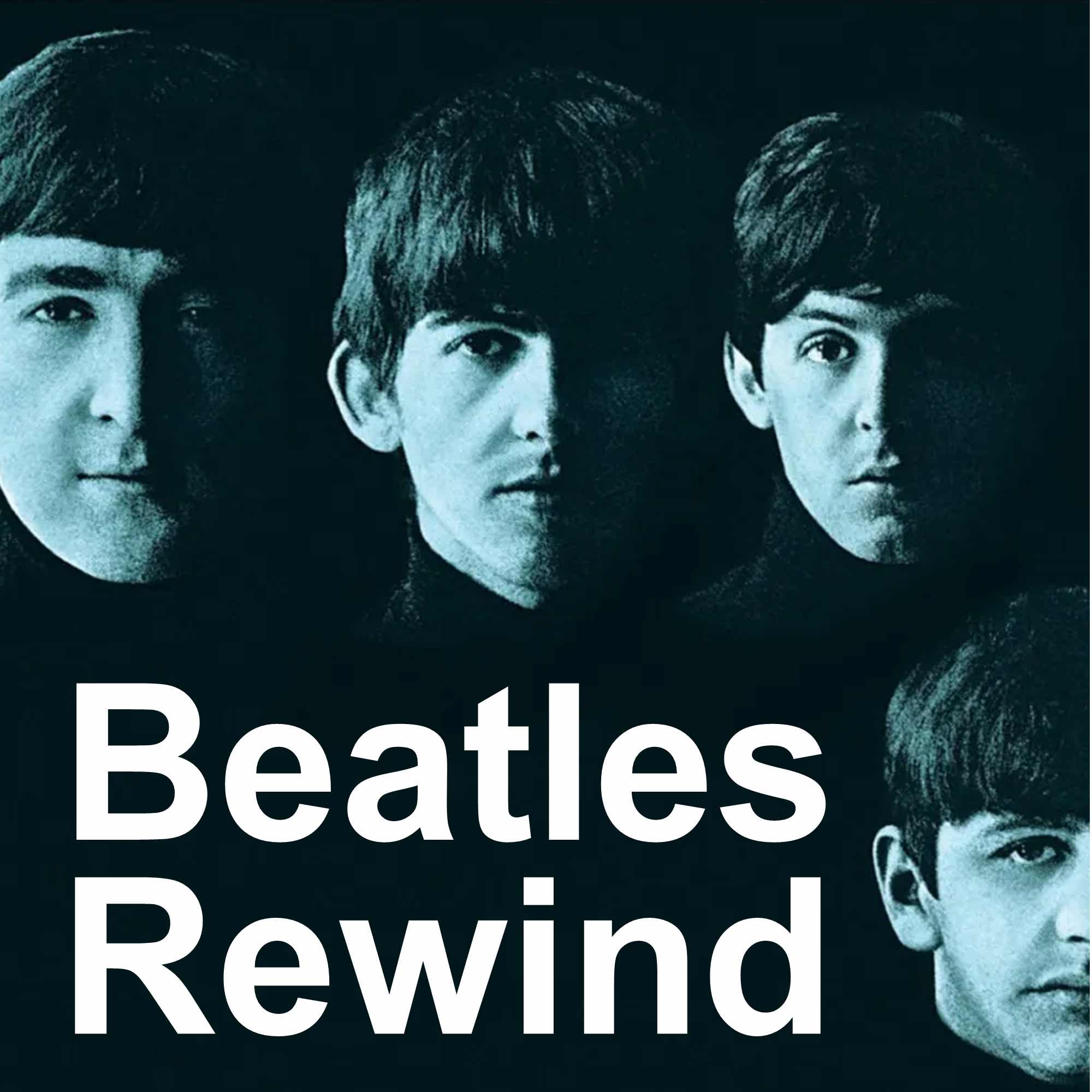
Beatles Rewind Podcast – Details, episodes & analysis
Podcast details
Technical and general information from the podcast's RSS feed.

Recent rankings
Latest chart positions across Apple Podcasts and Spotify rankings.
Apple Podcasts
🇬🇧 Great Britain - musicHistory
08/06/2026#68🇬🇧 Great Britain - musicHistory
07/06/2026#52🇺🇸 USA - musicHistory
04/06/2026#98🇬🇧 Great Britain - musicHistory
19/04/2026#97🇬🇧 Great Britain - musicHistory
18/04/2026#83🇺🇸 USA - musicHistory
02/04/2026#94🇬🇧 Great Britain - musicHistory
01/04/2026#92🇬🇧 Great Britain - musicHistory
30/03/2026#84🇬🇧 Great Britain - musicHistory
29/03/2026#70🇺🇸 USA - musicHistory
29/03/2026#100
Spotify
No recent rankings available
Shared links between episodes and podcasts
Links found in episode descriptions and other podcasts that share them.
See allRSS feed quality and score
Technical evaluation of the podcast's RSS feed quality and structure.
See allScore global : 53%
Publication history
Monthly episode publishing history over the past years.
🎸 Four Beatles, Four Different Favorite Albums: What Their Choices Reveal About the Band 🎸
mercredi 3 décembre 2025 • Duration 26:39
What’s your favorite Beatles album? If you ask four different fans to name their favorite, you might get four different answers. 🎵 Some swear by Revolver‘s innovation, others by the raw energy of the early albums, still others by the perfection of Abbey Road. It’s a band with such a deep catalog that reasonable people can disagree about which record represents their peak. And, of course, favorites change over time—as we grow older, and are exposed to more music, and as life goes on.
But what happens when you ask the Beatles themselves? 🤔 As it turns out, the four members of the greatest band in rock history couldn’t agree either. When pressed to name their favorite Beatles album over the years, John Lennon, Paul McCartney, George Harrison, and Ringo Starr each chose a different record—and their selections reveal as much about their individual personalities, artistic priorities, and relationships with each other as they do about the albums themselves.
Here’s what might surprise you: the Beatles’ own choices don’t necessarily align with what fans might expect, nor do they match up with the albums that typically top fan polls and critical rankings. 🎭 While Abbey Road, Revolver, and Sgt. Pepper routinely dominate “greatest Beatles albums” lists, and while casual fans might assume each Beatle would favor the album where their own contributions shined brightest, the reality is far more interesting and revealing. Their picks tell us about moments of creative freedom, artistic vision, collective growth, and simple musical joy—sometimes in ways that might seem counterintuitive at first glance.
Briefly, before we mention the Beatles’ favorites, here’s what fans say:
THE TOP 5 BEATLES ALBUMS, ACCORDING TO FANS:
* Abbey Road - Frequently ranks #1 in fan polls (including Rolling Stone readers poll, Ranker poll with 6,900+ votes.
* Revolver - Often trades the #1 spot with Abbey Road; Rolling Stone readers voted it their favorite Beatles album in one major poll
* Sgt. Pepper’s Lonely Hearts Club Band - While historically considered THE Beatles masterpiece by critics, it typically ranks #2-3 in fan polls (although it is the best-selling Beatles album with 32 million copies sold)
* Rubber Soul - Consistently appears in the top 5 across multiple polls
* The White Album (The Beatles) - Rounds out most top 5 lists, often tied with other albums depending on the poll
🎹 John Lennon: The White Album (1968) 🎹
In a 1971 interview marked by his usual candor and caustic wit, John Lennon didn’t hesitate when asked about his favorite Beatles album: The Beatles, better known as the White Album. 💥 His choice was deliberate, defiant, and—perhaps not coincidentally—a direct rebuke to his primary songwriting partner.
“I always preferred it to all the other albums, including Pepper, because I thought the music was better,” Lennon declared. 🗣️ “The Pepper myth is bigger, but the music on the White Album is far superior, I think.”
That swipe at Sgt. Pepper’s Lonely Hearts Club Band—Paul McCartney’s pet project and widely considered the Beatles’ masterpiece—wasn’t accidental. 🎯 Lennon had his theories about why McCartney liked the White Album less, stating bluntly: “[Paul] wanted it to be more a group thing, which really means more Paul. So he never liked that album.”
There’s something revealing about Lennon’s choice. 🔍 The White Album, recorded in 1968 during one of the band’s most fractious periods, represents the Beatles at their most individualistic. Ringo temporarily quit during the sessions. The group recorded with beds in the studio and people visiting for hours. Business meetings interrupted creative work. As McCartney later recalled, “The White Album was the tension album... We were about to break up—that was tense in itself.”
But for Lennon, that fragmentation was a feature, not a bug. 💡 The double-album gave him space to pursue his darker, more experimental instincts without having to accommodate Paul’s more commercial sensibilities (like his “granny music”). Songs like “Dear Prudence,” “Happiness Is A Warm Gun,” “Yer Blues,” and “Glass Onion” showcase Lennon at his most creative, direct, and uncompromising. The album was, in many ways, his answer to the polish and unity of Sgt. Pepper—a rawer, more rock-focused record that let each Beatle’s individual voice emerge.
Abbey Road recording engineer Geoff Emerick, who temporarily quit working with the Beatles during the White Album sessions due to the band’s constant fighting, recalled Lennon telling him that Sgt. Pepper was “the biggest load of s**t we’ve ever done.” 😮 Emerick understood that the insult wasn’t really aimed at him, it was Lennon’s way of taking a shot at McCartney while expressing his preference for the White Album’s rawness over Pepper‘s meticulous production.
Lennon’s choice reveals an artist who valued authenticity over perfection, individual expression over group cohesion, and rock and roll grit over pop sophistication. ⚡ The White Album let him be John Lennon without apology, and that mattered more to him than any concept or unified vision.
🎺 Paul McCartney: Sgt. Pepper’s Lonely Hearts Club Band (1967) 🎺
If John’s favorite album was the one that let him escape Paul’s influence, it’s perhaps unsurprising that Paul’s favorite was the one where he had the most control. 🎨 In multiple interviews over the years, McCartney has identified Sgt. Pepper’s Lonely Hearts Club Band as his favorite Beatles album—and for good reason. It’s essentially his artistic vision, executed at the highest level.
The concept for Sgt. Pepper came from McCartney’s musings during a flight home from Kenya in November 1966. ✈️ During a snack, road manager Mal Evans asked for the salt and pepper, and McCartney misheard it as “Sgt. Pepper.” The pun sparked an idea: what if the Beatles created alter egos and recorded an entire album as a fictional band? It would free The Beatles from the chains of being the Fab Four and allow for more experimental work.
As McCartney later confirmed, “If records had a director within a band, I sort of directed Pepper.” 🎬 While the album is officially credited to the Lennon-McCartney partnership, McCartney was the driving force behind the concept, the arrangements, and much of the production. He worked closely with producer George Martin to realize his vision of what a rock album could be.
Released on June 1, 1967, Sgt. Pepper represented everything McCartney valued: meticulous craftsmanship, conceptual ambition, genre-hopping creativity, and pop sophistication. 🌟 The album incorporated rock and roll, vaudeville, big band, piano jazz, blues, chamber music, circus music, music hall, avant-garde, and Indian classical influences. It was the first Beatles album conceived specifically for the studio rather than for live performance, allowing the band to explore sounds and arrangements that would be impossible to recreate on stage.
McCartney’s favorite tracks showcase his melodic genius and his ability to blend whimsy with substance. 🎼 “Getting Better” radiates optimism. “Lovely Rita” displays his gift for character-driven storytelling. “When I’m Sixty-Four,” which he’d written as a teenager, emerged as one of the album’s most celebrated moments. And “A Day in the Life,” co-written with Lennon, stands as perhaps the greatest Lennon-McCartney collaboration—a masterpiece that combines Lennon’s wistful verses with McCartney’s jaunty middle section and a groundbreaking orchestral climax.
Not everyone in the band shared Paul’s enthusiasm for the project. 😕 George Harrison was skeptical of the alter-ego concept, thinking it gimmicky. He feared the groups was regressing to the “Fab Four territory.” Harrison later said he had “little interest in McCartney’s concept” and that after his spiritual awakening in India, “my heart was still out there... I was losing interest in being ‘fab’ at that point.” He also noted that the recording process became “an assembly process” where “a lot of the time it ended up with just Paul playing the piano and Ringo keeping the tempo, and we weren’t allowed to play as a band as much.”
Ringo was “largely bored” during the sessions, later lamenting: “The biggest memory I have of Sgt. Pepper... is I learned to play chess.” ♟️
But for McCartney, Sgt. Pepper represented the pinnacle of what the Beatles could achieve. 🏆 In a 1991 interview, he explained why it remained his favorite: “It wasn’t entirely my idea. But to get us away from being ‘The Beatles’ I had this idea that we should pretend we’re this other group... It stands up. It’s still a very crazy album. It still sounds crazy even now, after all these years. You would think it would have dated... but I don’t think it does.”
This essay continues below. Click on the title of this product to view on Amazon. As an Amazon Associate, I earn from qualifying purchases.
The Beatles: 1 (Remixed/Remastered)
🎸 George Harrison: Rubber Soul (1965) 🎸
While John and Paul’s choices reflected their artistic rivalry and diverging visions, George Harrison’s selection of Rubber Soul as his favorite Beatles album reveals something different: a moment when he felt the band was truly evolving together, discovering new sounds as a collective unit. 🌱
“Rubber Soul was my favorite album, even at that time,” Harrison said in a 1990s interview. 💬 “I think that it was the best one we made; we certainly knew we were making a good album. We did spend a bit more time on it and tried new things.”
Harrison’s reasoning is telling: “But the most important thing about it was that we were suddenly hearing sounds that we weren’t able to hear before.“ 👂 “Also, we were being more influenced by other people’s music and everything was blossoming at that time; including us because we were still growing.”
Released in December 1965, Rubber Soul represented a pivotal moment in the Beatles’ evolution. 🍃 The album marked their move away from pure pop toward more sophisticated, introspective songwriting. It incorporated folk rock influences (particularly Bob Dylan), explored more complex emotional territory, and featured Harrison’s growing interest in Indian music—most famously on “Norwegian Wood (This Bird Has Flown),” where he played sitar—a first for a rock record.
For Harrison, who was just beginning to emerge as a songwriter in his own right, Rubber Soul represented possibility. 🚪 The album included his compositions “Think for Yourself” and “If I Needed Someone,” showing he was developing his own voice alongside the dominant Lennon-McCartney partnership. The album’s openness to experimentation and non-Western musical influences would pave the way for Harrison’s later contributions, including his White Album masterpiece “While My Guitar Gently Weeps” and his Abbey Road classics “Something” and “Here Comes the Sun.”
There’s something touching about Harrison choosing the album that represented the Beatles “burst[ing] out of their pop cocoon,” as one observer noted. 🦋 Unlike John’s deliberately contrarian choice or Paul’s selection of his own magnum opus, George picked the moment when the Beatles were discovering new territory together—before egos and business pressures and artistic differences pulled them in different directions.
Harrison’s choice reveals an artist who valued growth, exploration, and collective creativity. 🌿 He picked the album where the Beatles were still genuinely listening to each other and building something together, before the creative democracy began to fracture.
🥁 Ringo Starr: Abbey Road (1969) 🥁
If there’s a most likeable Beatle—and let’s be honest, Ringo Starr has a strong claim to that title—his choice of favorite album perfectly suits his persona. 😊 Ringo picked Abbey Road, the Beatles’ penultimate release (though recorded after Let It Be), and specifically cited his affection for the very section that many critics and even some of his bandmates dismissed: the Abbey Road Medley.
The medley, on the entire second side of the album, strings together “You Never Give Me Your Money,” “Sun King,” “Mean Mr. Mustard,” “Polythene Pam,” “She Came In Through the Bathroom Window,” “Golden Slumbers,” “Carry That Weight,” “The End,” and the hidden track “Her Majesty.” 🎶 It’s a 16-minute suite that showcases the Beatles at their most ambitious, with complex arrangements, multiple key changes, and recurring musical themes that tie the disparate songs together.
While Lennon couldn’t stand what he considered “scraps” and unfinished ideas stitched together, Ringo felt differently. 💙 “’She Came In Through The Bathroom Window,’ and all those bits that weren’t songs... I mean, they were just all the bits that John and Paul had around that we roped together,” Starr explained. Rather than seeing this as a weakness, he viewed it as a showcase of the band’s versatility and talent.
Ringo’s affection for Abbey Road makes sense when you consider what the album represented: the Beatles, despite their deteriorating relationships, coming together one more time to make music as a band. 🤝 “We ended up being more of a band again and that’s what I always love. I love being in a band.”
McCartney, Starr, and George Martin all reported positive recollections of the recording, and even Harrison said, “we did actually perform like musicians again.” Lennon and McCartney had enjoyed working together on the non-album single “The Ballad of John and Yoko” earlier in 1969, and some of that camaraderie carried over.
The album also gave Ringo his one and only drum solo in the Beatles’ entire catalog—featured in “The End” and mixed in “true stereo” across two tracks, unlike most releases of the time. 🥁 It was Ringo’s moment to shine, a rare showcase of his instrumental prowess that many felt he deserved more of throughout the Beatles’ career.
Ringo’s choice reveals a musician who valued collaboration, camaraderie, and the simple joy of playing music with his mates. 🎸 While John wanted freedom, Paul wanted control, and George wanted growth, Ringo just wanted to be in a band—and Abbey Road gave him that one last time.
🎼 What These Choices Tell Us About the Beatles 🎼
The fact that all four Beatles chose different albums as their favorites isn’t just a fun bit of trivia—it’s a window into why the band worked as well as it did, and why it ultimately couldn’t last.
John Lennon’s preference for the White Album reveals his need for artistic autonomy and his rejection of the group-think mentality that Paul favored. 🔓 He valued raw expression over polished production, and he resented any attempt to sand down his rougher edges in service of a unified sound. His choice was essentially a declaration of independence.
Paul McCartney’s selection of Sgt. Pepper shows his commitment to ambitious, conceptual work and his belief in the power of a strong creative vision executed with meticulous attention to detail. 🎨 He wanted to push boundaries while maintaining craftsmanship, and he wasn’t afraid to take the lead in making it happen. His choice was a statement of artistic confidence.
George Harrison’s love for Rubber Soul reflects his appreciation for the moment when the Beatles were genuinely growing together, before egos and business complications made collaboration difficult. 🌳 He valued collective evolution over individual achievement, and he picked the album that represented possibility and openness. His choice was an expression of nostalgia for better times.
Ringo Starr’s fondness for Abbey Road demonstrates his essential humanity and his commitment to the core experience of being in a band. 🤗 He didn’t care about concept albums or artistic statements or creative control—he just wanted to make music with his friends. His choice was a celebration of camaraderie.
These four perspectives—autonomy, ambition, evolution, and community—defined the Beatles as both a creative force and a fractious unit. 🎭 When these different priorities aligned, as they often did in the early and mid-1960s, the Beatles created transcendent music that changed popular culture forever. When they diverged, as they increasingly did by the late 1960s, the band struggled and eventually collapsed. Although they recorded a beautiful swan song.
🎵 The Beauty of Disagreement 🎵
There’s something both sad and beautiful about the fact that the Beatles couldn’t agree on their best work. 💔 It’s sad because it reflects the fundamental tensions that tore the band apart—four talented individuals with different artistic visions and personal needs, eventually unable to compromise or collaborate effectively.
But it’s also beautiful because it shows us that the Beatles weren’t a monolith. ✨ They were four distinct artists who happened to find each other at the right moment, whose different strengths and perspectives complemented each other in ways that created something greater than any of them could achieve alone. John’s edge, Paul’s melody, George’s spirituality, and Ringo’s steadiness—these weren’t just personality traits, they were musical philosophies that shaped their work.
When fans debate which Beatles album is the best—Revolver or Abbey Road, Rubber Soul or the White Album, Sgt. Pepper or something else entirely—they’re essentially asking which of these four perspectives resonates most strongly with them. 🤔 Do you value John’s rawness? Paul’s ambition? George’s exploration? Ringo’s joy in collaboration?
There’s no wrong answer, just as there was no wrong choice among the Beatles themselves. 🎯 Each album they selected represents a legitimate artistic peak, a moment when the band achieved something remarkable. John was right that the White Album contained some of their most powerful and uncompromising music. Paul was right that Sgt. Pepper represented an unprecedented achievement in pop music ambition and execution. George was right that Rubber Soul captured them at a moment of genuine creative discovery. And Ringo was right that Abbey Road showed them functioning as the world-class band they’d always been.
The Beatles made thirteen studio albums in seven years, an astonishing pace that would be impossible for any band today. ⚡ Across those records, they moved from “I Want to Hold Your Hand” to “A Day in the Life,” from “She Loves You” to “I Am the Walrus,” from “Please Please Me” to “Come Together.” They reinvented themselves repeatedly, pushed boundaries constantly, and refused to be contained by anyone’s expectations—including each other’s.
That four men with such different tastes and priorities managed to work together for as long as they did is remarkable. 🌟 That they produced such an extraordinary body of work in the process is miraculous. And that they each have different favorite albums from that catalog? That’s just further proof that the Beatles contained multitudes—and that their music is deep enough, varied enough, and powerful enough to mean different things to different people, even when those people are the Beatles themselves.
In the end, maybe the most Beatles thing of all is that they couldn’t agree on which Beatles album was best. 🎸 It’s a very rock and roll kind of democracy: everyone gets a vote, nobody has to compromise, and the fans are left with more great music to argue about than any other band in history.
And really, isn’t that the point? ❤️
Get full access to Beatles Rewind at beatlesrewind.substack.com/subscribe
“Love Me Do”: The Beatles’ First Tentative Step Toward World Domination 🎵
mardi 2 décembre 2025 • Duration 14:07
Love Me Do: A Hit, or Not?
When the Beatles released “Love Me Do” on October 5, 1962, nobody—least of all producer George Martin—expected it to change the world. Martin openly doubted the song’s commercial appeal, and the chaotic recording process involved three different sessions, three different drummers, and enough studio drama to foreshadow the tensions that would eventually tear apart the band’s original lineup. Yet this modest single, which peaked at a respectable but hardly spectacular #17 on the UK charts, became the first brick in the foundation of Beatlemania. The question: was it really a hit on its own merits, or did manager Brian Epstein’s alleged chart manipulation give it the boost it needed?
The chart performance tells a complicated story. In its initial UK release, “Love Me Do” entered the charts on October 13, 1962, at #49 and climbed steadily over eighteen weeks, finally reaching #17 in late December 1962—the peak position it would achieve during its first run. Sure, it was solid for an unknown Liverpool band, particularly one whose sound felt like “a bare brick wall in a suburban sitting-room” compared to the polished Tin Pan Alley productions dominating the airwaves. But was it truly a hit? 📊
By the standards of the day, absolutely. Anything that cracked the Top 20 counted as a hit, and “Love Me Do” gave the Beatles something they desperately needed: credibility with EMI and access to more studio time. As Paul McCartney later recalled, the moment they knew they’d “arrived” wasn’t playing the Cavern Club or even their Hamburg residencies—it was “getting in the charts with ‘Love Me Do.’ That was the one. It gave us somewhere to go.”
Three Drummers, Three Versions, One Chaotic Recording Process
The real drama surrounding “Love Me Do” wasn’t chart manipulation—it was the drummer controversy that has become one of rock’s most debated recording mysteries. The song was recorded on three separate occasions with three different drummers, creating multiple versions that have confused fans and collectors for decades.
The first recording took place on June 6, 1962, during the Beatles’ audition for George Martin, with Pete Best on drums. This version was slower in tempo, raw in execution, and ultimately rejected by Martin, who found Best’s drumming unsuitable for studio work. He told Lennon and McCartney that a professional session drummer would be needed from then on. Yet there was another problem: Paul McCartney was extremely nervous during this session, and his vocal performance suffered as a result. The combination of Best’s inadequate drumming and McCartney’s nerves made this take unusable. This version remained lost for decades until it appeared on Anthology 1 in 1995, giving fans their only chance to hear what the Beatles sounded like with their original drummer—and a very anxious young McCartney struggling to find his confidence.
Best was fired in August 1962—officially because Martin didn’t approve of his drumming, though personal dynamics within the band also played a role. His replacement, Ringo Starr, had barely two weeks to rehearse with the band before they were called back to Abbey Road on September 4, 1962, to record “Love Me Do” again. They completed the track in fifteen takes, and this version—with Ringo on drums—was pressed as the original UK single release.
But Martin still wasn’t satisfied. A week later, on September 11, the Beatles returned to Abbey Road for yet another attempt. This time, Martin’s assistant Ron Richards had booked session drummer Andy White as insurance, having worked with him successfully in the past. When Ringo showed up expecting to drum, he discovered he’d been relegated to playing tambourine instead. As Ringo later recalled: “George Martin used Andy White, the ‘professional,’ when we went down a week later to record ‘Love Me Do.’ The guy was previously booked, anyway, because of Pete Best.” 🥁
The Andy White version became the standard, appearing on the Please Please Me album and most subsequent releases. But in a twist that suggests Martin’s concerns about the September 4 recording weren’t actually that serious, EMI chose the Ringo version for the original single release. As Beatles historian Mark Lewisohn noted: “Clearly, the 11 September version was not regarded as having been a significant improvement after all.”
The easiest way to distinguish the versions? Listen for the tambourine. If you hear it, that’s Andy White on drums with Ringo on tambourine. If you don’t, that’s Ringo on drums. Over the years, different releases have used different versions, creating a collector’s nightmare and ensuring that even casual fans debate which drummer they’re hearing.
This essay continues below. Click on the title of this product to view on Amazon. As an Amazon Associate, I earn from qualifying purchases.
Love Me Do (Mono / Remastered) (MP3 Music)
Paul’s Song, John’s Bridge, and a Stolen Harmonica
The song’s construction reflects the early stages of the Lennon-McCartney songwriting partnership. Paul McCartney was the primary writer, having started the song when he was about fifteen years old. The Beatles performed it in Hamburg long before the they became songwriters in any formal sense. Lennon acknowledged this: “’Love Me Do’ is Paul’s song... I do know he had the song around, in Hamburg, even, way, way before we were songwriters.”
McCartney wrote the verse and chorus, built around three simple chords: G7, C, and D. John Lennon contributed the middle eight (or bridge), making it a genuine collaboration even if the foundation was Paul’s. Yet McCartney later added: “’Love Me Do’ was completely co-written... It was just Lennon and McCartney sitting down without either of us having a particularly original idea. We loved doing it, it was a very interesting thing to try and learn to do, to become songwriters.”
The song’s structure is deceptively simple: a verse-chorus pattern with Lennon’s middle eight providing contrast. The lyrics are straightforward to the point of being stark—”Love, love me do / You know I love you / I’ll always be true / So please, love me do.” As one critic noted, the title itself was unusual, sounding like crisp, class-conscious English conversation rather than typical working-class Beatles patter.
But what gives “Love Me Do” its distinctive character is Lennon’s harmonica, which cuts through the track with bluesy urgency. Lennon had learned to play a chromatic harmonica his Uncle George had given him as a child, but the specific instrument used on the recording had a more colorful provenance: Lennon stole it from a music shop in Arnhem, Netherlands, in 1960, during the Beatles’ first journey to Hamburg by road. 🎶
The harmonica was directly inspired by Bruce Channel’s “Hey! Baby,” which featured a prominent harmonica intro and had been a UK hit in March 1962. Channel’s harmonica player, Delbert McClinton, had demonstrated the technique, and the Beatles absorbed it immediately. Brian Epstein even booked Channel to top a NEMS promotion at New Brighton’s Tower Ballroom in June 1962, placing the Beatles second on the bill—giving them direct access to study the sound that would define their debut single.
Originally, Lennon sang lead vocal on “Love Me Do,” but when they decided to add the harmonica part, there was a problem: Lennon’s mouth was full of harmonica. McCartney had to take over lead vocals during the harmonica sections, creating the song’s distinctive vocal arrangement where they trade off. This practical limitation actually enhanced the recording, giving it a back-and-forth dynamic that felt conversational rather than performative.
From #17 in Britain to #1 in America
The song’s legacy is complicated. It certainly wasn’t the hit that launched Beatlemania—that honor belongs to their second single, “Please Please Me,” which shot to #1 (or #2, depending on which chart you consulted) in early 1963 and ignited the phenomenon that would consume Britain and then the world. “Love Me Do” was more like a promising opening act that got people’s attention without quite delivering a knockout blow.
But here’s where the story gets interesting: “Love Me Do” eventually became a #1 hit in the United States, reaching the top of the Billboard Hot 100 on May 30, 1964. By that point, Beatlemania had already exploded following their Ed Sullivan Show appearance and the massive success of “I Want to Hold Your Hand.” The American release came via Tollie Records (a Vee-Jay subsidiary) in April 1964, using the Andy White version from the album. It became the fourth of six Beatles songs to hit #1 in America within a single year—a record that still stands.
The song also topped charts in Australia and New Zealand in 1964, and when it was re-released in the UK in 1982 for the 20th anniversary, it performed better than in 1962, reaching #4. Clearly, “Love Me Do” benefited enormously from the Beatles’ subsequent fame, becoming a hit retroactively in markets where it initially struggled or wasn’t even released.
Good Song or Just a Historic Artifact?
So how is “Love Me Do” remembered now? Is it a good song, or just a beginner’s record viewed charitably through the lens of what came after?
The critical consensus places it somewhere in between. Ian MacDonald, in his authoritative Revolution in the Head, described it as notable for its “blunt working class northerness” that “rang the first faint chime of a revolutionary bell” compared to the standard productions of 1962. It wasn’t sophisticated—three chords, simple lyrics, a borrowed harmonica riff—but it was authentic in a way that most British pop wasn’t.
Nobody argues that “Love Me Do” ranks among the Beatles’ greatest songs. It doesn’t have the melodic sophistication of “Yesterday,” the experimental ambition of “A Day in the Life,” or the emotional depth of “In My Life.” But it has something more important for understanding the Beatles’ trajectory: it’s the sound of identity being formed. You can hear them finding their voice, literally and figuratively, as they navigate the tension between covering American blues and rhythm & blues while trying to write original material that felt true to their Liverpool roots.
Paul McCartney and Ringo Starr have both spoken emotionally about what “Love Me Do” meant to them. Ringo said in 1976: “For me that was more important than anything else. That first piece of plastic. You can’t believe how great that was. It was so wonderful. We were on a record!” The physical reality of holding a record with their name on it—of existing as recording artists rather than just a club band—marked a psychological turning point.
The song also holds a special place in Beatles history for publishing reasons. “Love Me Do” and “P.S. I Love You” were the only two songs EMI’s publishing company Ardmore and Beechwood took when the Beatles first signed. Through subsequent deals, Lennon and McCartney were able to get these songs back, making them among the few Beatles compositions they actually controlled. As McCartney noted: “’Love Me Do’ was our first hit, which ironically is one of the two songs that we control.”
The Brian Epstein Mystery: 10,000 Copies or Urban Legend?
But there’s an asterisk attached to that #17 peak, and it comes in the form of persistent rumors about Brian Epstein’s chart manipulation tactics. The most explosive claim appeared in a 2012 BBC documentary marking the song’s 50th anniversary, where Epstein’s friend and business associate Joe Flannery alleged that Epstein personally bought 10,000 copies of “Love Me Do” and stored them in his NEMS record store storeroom at Whitechapel. Flannery claimed to have seen the stacks of records himself: “They were there, 10,000 copies.”
The documentary also featured Billy Kinsley of the Merseybeats, another Epstein-managed band, who admitted that Epstein would check their tour schedule and instruct them to buy copies wherever they played. “Go in this record shop and pick up a few copies? Don’t all go in at the same time,” Epstein allegedly told them. Kinsley later said, “I like to think that we did help the Beatles get to number 17.”
Epstein himself always adamantly denied these accusations. In an interview with writer Ray Coleman, he stated: “I did no such thing, nor ever have. The Beatles progressed and succeeded on natural impetus without benefit of stunt or backdoor tricks.” And there’s reason to believe him. As a sophisticated record store manager who understood how charts were compiled, Epstein would have known that buying 10,000 copies for his own stores would have been largely useless. 💡
The British charts in 1962 were compiled by trade magazines like Record Retailer and the New Musical Express through a sampling system—they contacted different record shops each week to prevent exactly this kind of manipulation. They varied which shops they called to make hyping the charts more difficult. For bulk purchases to significantly impact chart position, they would need to be distributed across many different shops that happened to be contacted that particular week—not stockpiled in a single storeroom.
The more likely scenario, if there was any manipulation at all, is that Epstein ordered extra copies to meet anticipated local demand in Liverpool (where Beatles fervor was already building) and perhaps encouraged other artists he managed to pick up copies during tours—a relatively minor form of promotion rather than massive fraud. The story of 10,000 copies grew over time, starting as rumors of 1,000 copies in Liverpool gossip circles before ballooning to the more dramatic figure in later accounts.
The First Piece of the Puzzle
Today, “Love Me Do” functions less as a standalone masterpiece and more as a historical artifact—the opening chapter of the most important story in rock and roll history. It’s the song that proved the Beatles could write their own material and have it connect with audiences. It’s the song that convinced EMI to give them more chances, more studio time, more rope to either hang themselves or climb to the top. And it’s the song that, for all its simplicity, contains the DNA of what would make the Beatles revolutionary: harmony vocals, distinctive instrumentation (that harmonica), and songwriting that felt personal rather than professional.
If you listen to “Love Me Do” expecting “Strawberry Fields Forever,” you’ll be disappointed. But if you listen to it as the sound of four young men from Liverpool announcing that they had something to say—something different, something urgent, something that would change everything—then it’s exactly what it needed to be.
The Beatles themselves recognized this. They rarely performed “Love Me Do” live after they became superstars, perhaps because it felt too raw, too simple compared to where they’d gone. But they never disowned it. It was their first step, their declaration of independence from cover versions and Tin Pan Alley formulas. It was the moment they stopped being a club band and started being the Beatles.
And whether or not Brian Epstein bought 10,000 copies, the world eventually bought millions. ✨
Get full access to Beatles Rewind at beatlesrewind.substack.com/subscribe
🎧 The Beatles' Secret Weapon: How "Till There Was You" Defined a Strategic Serenity 🎶
mardi 25 novembre 2025 • Duration 08:26
In the history of rock and roll, few moments are as seismic as The Beatles’ U.S. arrival in 1964. They were the mop-topped, leather-booted cavalry, bringing raucous energy, driving rhythms, and a sheer refusal to be quiet. Yet, nestled oddly within the track listing of Meet The Beatles!—between the joyous anarchy of “I Wanna Be Your Man” and the raw energy of “Hold Me Tight”—sits a piece of musical archaeology: “Till There Was You.” It’s an inclusion so charmingly out of place, so acoustically demure, that it forces the listener to ask: Was this song a sincere expression of early affection, or a brilliant, strategic move to win over every skeptical American parent in the room? The answer, delightfully, is both.
“Till There Was You” served a crucial diplomatic purpose. While “I Want to Hold Your Hand” captured the hearts of screaming teens, this track was the spoonful of sugar designed to make the parents swallow the pill of Beatlemania. Its acoustic, almost classical introduction, featuring George Harrison’s rare (for them) nylon-string guitar work, was an auditory olive branch. It demonstrated, unequivocally, that these boys were not just loud hooligans; they were musicians. They possessed range! They could play softly enough for your grandmother to knit to! 🧶
The structure itself is the straight man to the band’s comedic delivery. John and Paul harmonize with a sweetness that borders on saccharine, delivering a melody so clean and wholesome it could sell toothpaste. Imagine the television executives watching them perform this on The Ed Sullivan Show—a moment of strategic serenity amidst the swirling, hormone-fueled chaos. It was their way of saying, “We can rock, but we can also be nice boys who respect a traditional 3/4 time signature.”
This essay continues below. As an Amazon Associate, I earn from qualifying purchases.
Meet The Beatles (The U.S. Album)
The song’s origins immediately clash with the Liverpool band’s mythology. It was not birthed in a sweaty Hamburg club or a damp Cavern basement, but rather on Broadway, as a show tune from the 1957 musical The Music Man. For a band famous for writing their own generation’s anthems, covering a song about a wholesome romance and a library is, frankly, hilarious. 🤣
“Till There Was You” was written by Meredith Willson for his 1957 Broadway musical The Music Man, where it was originally performed by Barbara Cook and Robert Preston. The song became one of the show’s most memorable romantic ballads, expressing the moment when the protagonist finally recognizes love that had been present all along. When The Music Man was adapted into a hugely successful film in 1962, Shirley Jones took on the role and her rendition of the song reached an even wider audience. Jones’s warm, polished vocal performance in the film version helped cement the song as a popular standard beyond the musical theater world—although, in my opinion, the movie version of the song sounded a bit stilted.
When I was a kid, I even had the soundtrack to the movie, and used it mostly to listen to Shirley Jones’ rendition. (It was one of five records I owned at the time. Must have been my Mom’s originally.) Spoiler alert: I liked Paul’s cover better!
McCartney discovered the song through Peggy Lee’s 1961 jazz arrangement rather than directly from Shirley Jones’s film version, though he was certainly aware of The Music Man‘s popularity. McCartney recognized that the song’s sophisticated chord changes and romantic melody would allow the Beatles to demonstrate their versatility beyond rock and roll, appealing to a broader audience including parents and older listeners who might otherwise dismiss them as just another teen band. The song’s gentle, tasteful arrangement showcased the group’s musical range and Paul’s tender vocal abilities, making it a strategic choice that helped establish the Beatles’ credibility as serious musicians during their early career. The Beatles even had the guts to perform this song, night after night, in Hamburg.
Ultimately, the power of “Till There Was You” lies in its masterful contradiction. It is the respectful cover that proves their musicianship, the tender ballad that allows the subsequent racket to feel earned, and the unlikely show tune that became an essential stepping stone to rock supremacy. It proves that sometimes, the most revolutionary thing a band can do is quietly whisper a tune from a musical about marching bands. A truly legendary, and wonderfully weird, piece of the Fab Four’s canon. 🌟
Get full access to Beatles Rewind at beatlesrewind.substack.com/subscribe
🎵 Cover Songs that Beat the Beatles' Originals: Joe Cocker, Elton John, and Earth, Wind & Fire
mardi 25 novembre 2025 • Duration 14:02
The Beatles were so commercially dominant during their heyday that the very idea of a cover version outselling their original seems almost impossible. Their singles routinely topped charts worldwide, and many album tracks became instant classics. Yet in the annals of rock history, there are a handful of rare instances where other artists took Beatles songs and achieved chart success that matched or even exceeded the originals.
1. “With a Little Help from My Friends” - Joe Cocker (1968) 🎤
This is the clearest and most definitive example of a cover outselling a Beatles original. Joe Cocker’s version went to number one in the UK in November 1968, while the Beatles never released it as a single during their active years. The song originally appeared on Sgt. Pepper’s Lonely Hearts Club Band in 1967, with Ringo Starr on lead vocals as the character Billy Shears. When the Beatles finally released it as a single in 1978—more than a decade after the album—it only reached number 63 in the UK and number 71 in the United States.
Cocker’s transformation of the song was radical and complete. He took what was essentially a cheerful, bouncy tune sung by Ringo and turned it into a gritty, soulful rock anthem. His version featured Jimmy Page on guitar, B.J. Wilson from Procol Harum on drums, and a gospel-style arrangement influenced by Ray Charles and Aretha Franklin. The recording stretched from the Beatles’ two minutes and forty-four seconds to over five minutes, with an extended instrumental opening and dramatic vocal crescendos that showcased Cocker’s raw, emotional delivery.
The Beatles themselves were so impressed that they sent Cocker a telegram of congratulations and placed an ad in the music papers praising his version. Paul McCartney later said he was “forever grateful” for Cocker’s interpretation. The song became Cocker’s signature tune, especially after his iconic, spasmodic performance at Woodstock in 1969, which was captured in the documentary film. Decades later, it gained new life as the theme song for the television series The Wonder Years from 1988 to 1993, introducing it to yet another generation. In 2001, Cocker’s version was inducted into the Grammy Hall of Fame, and in 2014, a BBC poll voted it the seventh best cover ever. ✨
2. “Lucy in the Sky with Diamonds” - Elton John (1974) 💎
This is the only Beatles cover to hit number one on the US Billboard Hot 100. Elton John’s version topped the chart for two weeks in January 1975. However, there’s an important caveat: The Beatles never released “Lucy in the Sky with Diamonds” as a single. It was an album track on Sgt. Pepper’s Lonely Hearts Club Band, so there was no direct competition between the two versions in terms of single sales.
The story behind Elton’s cover is as compelling as the recording itself. John Lennon suggested the song, feeling it had been overlooked by other artists. Lennon even participated in the recording, playing guitar and singing backing vocals under his pseudonym “Dr. Winston O’Boogie” (Winston was his middle name). The session took place during a period when Lennon and Elton had become friends, following Elton’s guest appearance on Lennon’s “Whatever Gets You Thru the Night.”
Elton’s arrangement was theatrical rather than psychedelic, featuring an upbeat reggae feel in the choruses and extending the song to over five minutes. His high-flying production, courtesy of Gus Dudgeon, leaned into glam-pop sheen rather than the languid, dreamlike quality of the Beatles’ original. The cover has little patience for the spaced-out atmospherics that made the original so distinctive—it’s pure Elton John bombast, for better or worse. 🎹
The success of the song led to a historic moment: Lennon had promised to appear live with Elton if “Whatever Gets You Thru the Night” became a number one single. When it did, Lennon kept his promise and joined Elton on stage at Madison Square Garden on Thanksgiving night, November 28, 1974. Together they performed “Lucy in the Sky with Diamonds,” “Whatever Gets You Thru the Night,” and “I Saw Her Standing There.” It turned out to be Lennon’s last major public performance. The roar of the crowd when Lennon was introduced moved Elton to tears, and the moment has become legendary in rock history.
3. “Got to Get You Into My Life” - Earth, Wind & Fire (1978) 🔥
This third example requires some qualification, but it’s a strong case nonetheless. Earth, Wind & Fire’s version hit number nine on the Billboard Hot 100 and number one on the Soul Singles chart in 1978. The recording was certified Gold, meaning it sold over one million copies, and won a Grammy Award for Best Instrumental Arrangement Accompanying Vocalist. More importantly, it became the definitive version of the song for many listeners and had far greater cultural impact than the Beatles’ belated single release.
Here’s the context: “Got to Get You Into My Life” originally appeared on the Beatles’ Revolver album in 1966. It was never released as a single at the time, though Paul McCartney later revealed the song was actually “an ode to pot”—written when he had first been introduced to marijuana. The song featured the first use of a horn section on a Beatles recording, with soul-style brass that was heavily influenced by Stax and Motown.
When Capitol Records finally issued the Beatles’ version as a single in 1976—ten years after the album and six years after the band split up—it reached only number seven on the Billboard Hot 100. It was essentially a nostalgia single, and while it became the Beatles’ last top ten hit until “Free as a Bird” in 1995, it didn’t have the commercial punch of Earth, Wind & Fire’s version, which came two years later.
Maurice White, Earth, Wind & Fire’s leader, recorded the song for the 1978 Sgt. Pepper’s Lonely Hearts Club Band movie soundtrack. White admitted in his autobiography that he had completely forgotten about the commitment and waited until the last minute to choose a song. By then, many of the available Beatles tracks had been claimed by other artists cast in the film, but “Got to Get You Into My Life” was still available. Their funky, brass-heavy arrangement was a perfect fit for Earth, Wind & Fire’s style, and it became one of their signature covers. The movie itself was a notorious flop, but the soundtrack was a commercial success. 🎺
This essay continues below. Click on the title of this product to view on Amazon. As an Amazon Associate, I earn from qualifying purchases.
Across the Universe (Original Soundtrack)
This soundtrack features songs from the greatest songwriters of all time, performed by the cast including Evan Rachel Wood, Jim Sturgess, Dana Fuchs, Martin Luther McCoy, Bono, Joe Cocker and Eddie Izzard.
The Rarity of This Achievement
What makes these three examples so remarkable is how rare they are. The Beatles were simply too commercially dominant for covers to regularly match or exceed their success. Most of their singles were massive hits that no other artist could touch, and even their album tracks became so iconic that covers often paled in comparison. The songs that gave other artists the opportunity to shine were typically album tracks that the Beatles never released as singles—giving cover artists a clear field without direct competition.
Joe Cocker’s “With a Little Help from My Friends” is the only true head-to-head victory, where the cover demonstrably outsold and outperformed the Beatles’ eventual single release. Elton John’s “Lucy in the Sky with Diamonds” succeeded because there was no Beatles single to compete with. Earth, Wind & Fire’s “Got to Get You Into My Life” outsold the Beatles’ belated 1976 single release, though both versions were successful in their own right.
The fact that we can only identify three strong examples—and even then with qualifications—speaks to the Beatles’ extraordinary commercial dominance. They weren’t just the most influential band of their era; they were virtually untouchable in terms of sales. When other artists did manage to match or exceed their success, it required perfect timing, inspired arrangements, and often the participation or blessing of the Beatles themselves. 🏆
These three covers also demonstrate the enduring strength of Lennon-McCartney compositions. Even when stripped of their original arrangements and reimagined in completely different styles—Joe Cocker’s bluesy soul, Elton John’s glam theatrics, Earth, Wind & Fire’s funky disco—the underlying songs remained powerful enough to top charts and define careers. The Beatles may have been nearly impossible to outsell, but their generosity in allowing other artists to interpret their work, and the quality of the songs themselves, occasionally allowed lightning to strike twice.
Get full access to Beatles Rewind at beatlesrewind.substack.com/subscribe
🎹 “Let It Be”: Paul McCartney’s Gospel of Grief and Comfort
lundi 24 novembre 2025 • Duration 09:28
Among the Beatles’ vast catalog of revolutionary songs, “Let It Be” stands apart as their most overtly spiritual moment—a hymn-like meditation that has comforted millions of listeners for over half a century. But the story behind the song reveals something more intimate than a religious anthem. It’s a son’s conversation with his deceased mother, transformed into a universal message of solace during one of the darkest periods in the Beatles’ history.
Mother Mary, Not the Virgin
Paul McCartney has been remarkably consistent over the decades about the song’s origins. In January 1969, as the Beatles gathered at Twickenham Film Studios for what would become the fraught Get Back sessions, the band was unraveling. The cameras were rolling to document what was supposed to be their return to live performance, but instead captured four men who could barely stand to be in the same room together. The creative partnership that had conquered the world was collapsing under the weight of business disputes, artistic differences, and personal tensions.
During this turbulent time, Paul had a dream that brought him unexpected peace. His mother, Mary McCartney, who had died of cancer when Paul was just fourteen years old, appeared to him with words of comfort and reassurance. The dream was so vivid, so consoling, that Paul woke up and immediately began writing “Let It Be.”
When Paul sings “Mother Mary comes to me, speaking words of wisdom, let it be,” he means it literally—this is his mother Mary, not the Virgin Mary. Yet Paul has acknowledged the deliberate ambiguity in his lyric. He’s said in interviews that he didn’t mind if listeners heard religious meaning in the words, and he even appreciated the double meaning. The song works on both levels: as a personal memorial to his mother and as a spiritual message of acceptance and faith.
The Gospel Sound Was Always Paul’s Vision
One of the persistent myths about “Let It Be” is that its gospel feel came from Phil Spector’s later production work on the album. The truth is far more interesting: Paul conceived the song with that churchy, hymn-like quality from the very beginning.
Listen to the bootlegs and official releases from the January 1969 Get Back sessions, and you’ll hear Paul already playing “Let It Be” on piano with that spiritual, Ray Charles-influenced feel. He’s cited both Ray Charles and Aretha Franklin as inspirations for the song’s arrangement—artists who brought gospel fervor to secular music. Paul wanted “Let It Be” to sound like a hymn, like something you might hear in a church, because that’s what the song fundamentally is: a prayer, a meditation, an appeal for peace in troubled times.
The piano part itself is deliberately simple and repetitive, mimicking the steady, grounding quality of gospel piano. Paul’s vocal delivery has that testifying quality you hear in spiritual music—not showy or performative, but earnest and comforting. Even in those rough early sessions, with the band barely functional, “Let It Be” emerged as something different from their other work: a song that offered solace rather than experimentation, acceptance rather than rebellion.
This essay continues below. Click on the title of this product to view on Amazon. As an Amazon Associate, I earn from qualifying purchases.
Let It Be (Special Edition)[Deluxe 2 CD] (Audio CD)
The Let It Be album has been newly mixed by producer Giles Martin and engineer Sam Okell. All the new Let It Be releases feature the new stereo mix of the album as guided by the original “reproduced for disc” version by Phil Spector and sourced directly from the original session and rooftop performance eight-track tapes. The Special Edition Deluxe 2CD also includes a disc of outtake highlights and a 40-page booklet.
What Phil Spector Actually Added
Phil Spector didn’t enter the picture until early 1970, more than a year after “Let It Be” was written and first recorded and then languished. By then, the Beatles had abandoned the Get Back project in frustration, recorded and released Abbey Road, as the group’s finale—and essentially called it quits. The Get Back tapes sat in limbo until manager Allen Klein brought in Spector to salvage something releasable from the hours of footage and recordings, the stuff the Beatles didn’t have the stomach to revisit.
Spector did what Spector always did: he applied his “Wall of Sound” production technique. He added orchestral overdubs, brought in a choir for the final choruses, layered on strings and brass, and generally made everything bigger and more dramatic. The result was the lush, almost cinematic version that appeared on the Let It Be album in May 1970.
Many Beatles fans—and Paul McCartney himself—have mixed feelings about Spector’s treatment. While it certainly made the song more grandiose, it also arguably buried some of the intimacy that made the original so powerful. This is why the 2003 release Let It Be... Naked, which stripped away Spector’s embellishments, resonated with so many listeners. The simpler arrangement lets Paul’s original gospel vision shine through more clearly.
McCartney’s famous dispute with Phil Spector was about “The Long and Winding Road,” not its production style, but rather Spector’s heavy orchestral and choral overdubs. Paul felt Spector had buried his intimate piano ballad under layers of strings, brass, and a choir, turning what he’d envisioned as a simple, sparse arrangement into something overwrought and syrupy. McCartney was reportedly furious when he heard the final version—he felt Spector had taken his song and made it unrecognizable from his original intent.
The irony is that “The Long and Winding Road” didn’t need a gospel feel imposed on it—it already had a melancholic, almost hymn-like quality in Paul’s original demo. Spector didn’t make it more gospel; he made it more Phil Spector—adding his signature “Wall of Sound” production with a 50-piece orchestra and choir recorded at Abbey Road.
It’s also worth noting that the single version of “Let It Be,” released in March 1970, features a different, simpler mix with less of Spector’s production. This version—produced by George Martin—often feels more emotionally direct than the album version.
A Song Born from Crisis
Understanding “Let It Be” requires understanding just how desperate things had become for the Beatles by January 1969. The group that had been inseparable friends and collaborators for over a decade, but now, could barely communicate. George Harrison actually quit the band briefly during the Get Back sessions. John Lennon was increasingly distant, more interested in his relationship with Yoko Ono than in being a Beatle. Ringo felt marginalized. And Paul, who had taken on the role of trying to keep the band together and functioning, was exhausted and frustrated.
In this context, “Let It Be” wasn’t just a song—it was Paul’s way of coping. The message “when I find myself in times of trouble” wasn’t abstract; these were very real times of trouble. The advice to “let it be”—to accept things you cannot change—was something Paul desperately needed to hear, even if it had to come from a dream about his long-dead mother.
There’s something poignant about the fact that Paul wrote this song of acceptance and peace while sitting in a room with three men he was losing, working on a project that would ultimately document the end of the Beatles rather than their triumphant return. The song was a gift to himself as much as to the world.
The Legacy
“Let It Be” became the title track of the Beatles’ final official album release (though it was recorded before Abbey Road). It’s been covered countless times, adopted as a hymn in some churches, and played at funerals and memorial services around the world. Its message of finding peace in acceptance has resonated across cultures and generations.
But at its heart, “Let It Be” remains what it always was: a son remembering his mother’s wisdom, transforming personal grief into universal comfort, and using the language of gospel music to express something deeply human. The spiritual feel wasn’t an accident or an afterthought—it was Paul McCartney’s deliberate choice to honor both his mother’s memory and the healing power of faith, whether religious or simply faith in the possibility of peace.
In the end, “Let It Be” stands as proof that sometimes the most personal songs become the most universal, and that the simplest messages—let it be, things will get better, there will be an answer—can be the most profound.
Get full access to Beatles Rewind at beatlesrewind.substack.com/subscribe
🎸 The Songs the Beatles Gave Away: Their Top 3 Unrecorded Gifts 🎁
lundi 24 novembre 2025 • Duration 12:33
The Beatles’ songwriting partnership between John Lennon and Paul McCartney was remarkably prolific, even by the standards of the hit-driven 1960s. Between 1963 and 1966 alone, they released six UK albums, multiple non-album singles, and still had songs left over. This wasn’t just quantity—their hit rate was extraordinary. Nearly everything they touched turned to gold, which meant they had more quality material than they could reasonably use.
This abundance created an unusual problem: what to do with perfectly good songs that weren’t “Beatles songs” because they didn’t quite fit their current direction? Enter Brian Epstein’s stable of artists. The Beatles’ manager represented numerous acts who desperately needed hit material, and the Beatles—particularly in their early years—were happy to help. Sometimes these were older songs from their Hamburg days or Quarrymen era that Paul had lying around. Other times they were newer compositions that simply didn’t feel right for the band’s evolving sound.
Some of the giveaways were written quickly as favors and never seriously considered for Beatles albums. Others were attempted in the studio but abandoned when they couldn’t capture the right feel—a testament to the band’s perfectionism ✨. A few were simply deemed too conventional or not adventurous enough as the Beatles pushed into new sonic territory. What’s remarkable is that these “rejects” became major hits for other artists, proving just how high the Beatles’ standards were for their own work.
Here are the three most significant songs the Beatles gave away and never properly recorded themselves:
1. “World Without Love” 🌍 (Peter & Gordon, 1964) This is probably the most successful Beatles giveaway - it hit #1 in multiple countries. Paul wrote it when he was about 16, and it’s a genuinely great song with a memorable melody. The fact that he considered it not good enough for the Beatles (or just wanted to help Peter Asher, Jane’s brother) is remarkable. It would’ve fit just fine on one of the early Beatles albums. However, Lennon cracked up laughing when he heard Paul’s opening line for the song: “Please, lock me away. …”
2. “Bad to Me” 💔 (Billy J. Kramer, 1963) A Lennon composition that’s quintessentially early Beatles - catchy, melancholic, with that ascending melody in the chorus. It went to #1 in the UK. John apparently wrote it quickly during a Spanish vacation with Brian Epstein. The Beatles recorded a demo, but it’s striking they never properly released it given its quality.
3. “That Means a Lot” 🎹 (P.J. Proby, 1965) This one’s particularly interesting because the Beatles actually tried recording it during the Help! sessions but abandoned it. Paul’s composition has that mid-period Beatles sophistication, and their dissatisfaction with their own version (you can hear it on Anthology) makes this a revealing choice - it shows their perfectionism.
This essay continues below. Click on the title of this product to view on Amazon. As an Amazon Associate, I earn from qualifying purchases.
All The Songs: The Story Behind Every Beatles Release
In this lively and fully-illustrated work, two music historians break down every album and every song ever released by the Beatles, from “Please Please Me” (U.S. 1963) to “The Long and Winding Road” (U.S. 1970).All the Songs delves deep into the history and origins of the Beatles and their music. This first-of-its-kind book draws upon decades of research, as music historians Margotin and Guesdon recount the circumstances that led to the composition of every song, the recording process, and the instruments used.
Here are five strong honorable mentions for Beatles songs given to other artists:
1. “Step Inside Love” (Cilla Black, 1968) Paul wrote this specifically for Cilla Black’s TV show theme, and it became a UK Top 10 hit. It’s quintessential late-60s McCartney—melodic, optimistic, with that music hall influence he loved. The Beatles never recorded it, though Paul did perform it live in later years. It would’ve fit beautifully on albums like “The White Album” era.
2. “Goodbye” (Mary Hopkin, 1969) Another Paul composition, written and produced for Mary Hopkin (whom the Beatles discovered on a talent show and signed to Apple Records). It’s a gorgeous, wistful ballad that hit #2 in the UK. Paul played on the recording himself, and the song has that classic McCartney melancholy that made “Yesterday” and “The Long and Winding Road” so powerful.
3. “Come and Get It” (Badfinger, 1969) Paul wrote and demoed this in under an hour during the “Abbey Road” sessions, then gave it to Badfinger with specific instructions on how to perform it. It became their breakthrough hit. The Beatles’ demo (available on “Anthology 3”) shows it was a fully realized McCartney pop gem—he just had no room for it on Beatles albums at that point.
4. “I’m in Love” (The Fourmost, 1963) A Lennon composition from the peak Beatlemania era that went to #17 in the UK. It’s pure early Beatles energy—driving rhythm, catchy hook, harmony vocals. John apparently wrote it quickly as a favor to Brian Epstein, and it captures that 1963 raw excitement perfectly. The Beatles never needed it because they had dozens of similar songs at their disposal.
5. “Love of the Loved” (Cilla Black, 1963) Paul’s first major song donation, written even earlier than the others—possibly during the Cavern Club days. Cilla’s version was produced by George Martin and became her debut single. It’s early McCartney through and through: earnest, melodic, with those ascending chord progressions he favored. The Beatles recorded a BBC version in 1963, but never released it officially.
What’s remarkable about all five of these is that they were genuinely good songs that became hits for other artists—further proof of just how much quality material Lennon and McCartney were generating during those years.
Get full access to Beatles Rewind at beatlesrewind.substack.com/subscribe
🎹 The Untrained Genius: How Paul McCartney Became History’s Most Successful Songwriter
dimanche 23 novembre 2025 • Duration 16:27
The Impossible Résumé
The numbers are staggering, almost absurd. 📊
Paul McCartney has written or co-written a record 32 songs that have topped the Billboard Hot 100—more than any songwriter in history. He is one of the best-selling music artists of all time, with estimated sales of 100 million records. With 129 of the songs he has written or co-written charting in the UK, McCartney lays claim to the most songs to feature in the UK singles chart. An astonishing 91 of his singles reached the Top 10, with 33 of those making it to No. 1. 🏆
His Beatles song “Yesterday” remains popular today and, with 2,200 cover versions, is one of the most covered songs in the history of recorded music. It was voted the best song of the 20th century in a 1999 BBC Radio 2 poll of music experts and listeners and was also voted the No. 1 pop song of all time by MTV and Rolling Stone magazine. 🎵
According to ASCAP, Paul has penned 1,059 songs—an output that spans six decades, multiple genres, and collaborations with everyone from John Lennon to Michael Jackson to Kanye West and Rihanna. ✨
And here’s the twist that makes all of this seem impossible: Paul McCartney cannot read or write music.
The Secret He’s Never Hidden
“None of us did in the Beatles,” McCartney told 60 Minutes. 🎤 “We did some good stuff though. But none of it was written down by us. It’s basically notation. That’s the bit I can’t do.”
This wasn’t a failure of education—it was a choice, made early and never regretted. 🎹 McCartney’s father was also a musician, and Paul often asked him to teach him piano. But his Dad refused, saying Paul needed a professional teacher. “Dad was a pretty good self-taught pianist, but because he hadn’t had training himself, he always refused to teach me” McCartney recalled.
So, Paul agreed to take lessons, but they didn’t last long. 👃 “I did then take lessons, but I always had a problem; mainly that I didn’t know my tutor, and I wasn’t very good at going into an old lady’s house—it smelt of old people—so I was uncomfortable.”
“In the end, I learnt to play by ear, just like him, making it all up.” 👂
What emerged from this unconventional education was something remarkable: a songwriter who operated entirely on instinct, memory, and an almost supernatural ear for melody. None of the Beatles could read or write conventional musical notation—what McCartney sometimes refers to as “dots on a page.” This was largely through choice and was not too unusual in guitar-based pop music. 🎸
The Method Behind the Magic
So how does someone who can’t read music write over a thousand songs? 🤔
“If I was to sit down and write a song, now, I’d use my usual method,” McCartney has explained. “I’d either sit down with a guitar or at the piano and just look for melodies, chord shapes, musical phrases, some words, a thought just to get started with.” 🎼
“You just sit down and start. You start blocking stuff out with sounds—I do anyway—and eventually, you hear a little phrase that’s starting to work, and then you follow that trail.” 🛤️
The physical instrument matters. “Guitar is interesting because you kind of cradle it. You kind of almost cuddle it. You hold it to you, and you play. That gives you a certain kind of feeling. With piano, you almost push it away. It’s just two different attitudes.” 🎸
McCartney’s approach is deliberately unstructured at the start. 🌀 “I don’t think about what I’m writing about, it spoils the magic for me. So I don’t often come to writing a song with much of an idea; maybe a title, maybe just a phrase, or just a thought I’ve had.”
“I think structure’s great. But I also like to start with chaos in order to get the freedom.” You know, if you structure too early it’s like [makes hitting the brakes noise]. But if you’re just creating, just free and flowing from chord to chord and idea to idea, something then sort of lands that you think is a good idea. Then I think it’s a good idea to structure it. 💡
But once he starts, he pushes through to completion. ✅ “Try and get to the end in one go, and it’s normally, then, pretty much written. You may then look at it and go ‘oh that line’s a bit ropey’. If you’re lucky, more often than not, you find that you’ve just sort of done it.”
The Dream That Changed Everything
The most famous example of McCartney’s intuitive process is “Yesterday”—and it literally came to him in his sleep. 😴
The song was written at 57 Wimpole Street, London, where Paul lived in attic rooms at the top of the family home of his girlfriend, the English actress Jane Asher. As Paul has testified many times over, he wrote it in his sleep: “I woke up with a lovely tune in my head. I thought, That’s great, I wonder what that is? There was an upright piano next to me, to the right of the bed by the window. I got out of bed, sat at the piano, found G, found F sharp minor seventh—and that leads you through then to B to E minor, and finally back to G.” 🎹
When asked about how he writes songs, McCartney has said he doesn’t have any set process. 🎲 “I tell students all the time, ‘Look, I don’t know how to do this.’ Every time I approach a song, there’s no rules. Sometimes the music comes first, sometimes the words—and if you’re lucky, it all comes together.”
For “Yesterday,” the melody arrived complete, but the lyrics took months. 📅 Lennon later indicated that the song had been around for a while: “The song was around for months and months before we finally completed it. Every time we got together to write songs for a recording session, this one would come up. We almost had it finished. Paul wrote nearly all of it, but we just couldn’t find the right title. “ The song’s working title was “Scrambled Eggs” and it became a joke between Lennon/McCartney.
“Scrambled eggs / Oh my baby how I love your legs.”
🍳 McCartney played it for everyone he met, half-convinced he must have unwittingly stolen it from somewhere. “Yesterday” almost never saw the light of day because McCartney found it so easy to write, he thought he had cribbed it from someone.
The Catchiness Test
Without the ability to write music down, McCartney and Lennon developed a ruthless quality-control system: if they couldn’t remember a song the next day, it wasn’t worth keeping. 🧠
From the beginning they applied a “catchiness” test on every new song. Could they remember the tune at their next session? If not, they abandoned work on it. Only memorable melodies would survive the ruthless jukebox jury of teenage radio listening. 📻
This forced them to write songs that stuck—melodies so compelling they couldn’t be forgotten even without notation to preserve them. 💪 It’s a counterintuitive advantage: the inability to write music down meant every song had to be memorable enough to survive in the mind alone.
And, of course, when Lennon and McCartney started writing songs, it’s not just that they didn’t know how to “write” down the music, they didn’t have a tape recorder, either. Not many people did back then.
The piecemeal nature of the Beatles’ musical education appeared inefficient but it encouraged resourcefulness and innovation. 🔧 They developed an effective methodology, based on an implicit understanding of essential concepts like keys, scales, chord progressions and time signatures. The theoretical foundations were there, though they often did not use the standard technical terms to describe them. Nor were they bound by the “rules” that inhibited experimentation.
This essay continues below. Click on the title of this product to view on Amazon. As an Amazon Associate, I earn from qualifying purchases.
The Collaboration with Lennon
The Lennon-McCartney partnership remains the most celebrated songwriting collaboration in music history—and it worked precisely because neither man was formally trained. 🤝
“We came together through a common interest of songwriting and then just started having sessions—normally at my house—where we’d just try and write something. We wrote our earliest ones which were very innocent. We didn’t think they were good enough, but it was a start and an exciting thing to do. We just gradually started to get a little bit better.” 📈
“Our original songs were all very personal and they all had a personal pronoun in them: ‘Love Me Do’, ‘P.S. I Love You’, ‘From Me To You’, ‘She Loves You’. We were directly trying to communicate with the people who liked us. As it went on we felt that we didn’t have to do that. That was the nice thing, we actually started to climb the staircase and feel that we could get a little bit more complicated.”
The partnership had a productive friction. ⚡ “I’d say, ‘It’s getting better all the time,’ and he’d say, ‘It can’t get much worse,’” McCartney told students in a college lecture. “I would have never thought of that.”
“I miss working with John because that was something very special and it’s very difficult to replicate that. In fact it’s almost impossible because we met each other as teenagers and went through a lot of life together: hitchhiking to Paris and holidays and working together and being in Hamburg together with The Beatles. So we were very intimate, we knew each other intimately as only teenage friends can.” 💔
The 10,000 Hours
McCartney attributes his success not to natural talent alone, but to relentless practice—even if that practice was unconventional. ⏰
“You have to do it a lot. It’s that Malcolm Gladwell theory of 10,000 hours. He says that’s why The Beatles were famous. We did, without knowing it, probably put in about 10,000 hours. I think the more you do it, the more you start to get the hang of it.” 📚
“That is my advice for when kids say to me, ‘What would you do?’ I just say, ‘Write a lot!’ Don’t just write three songs and say, ‘I’ve written three songs,’ because it’s not enough. Write four and then continue with that.” ✍️
For Lennon and McCartney, those hours came in Hamburg’s clubs, in Liverpool’s Cavern, in hotel rooms and tour buses and recording studios. 🌍 The Beatles played eight-hour sets, night after night, learning their craft the only way available to them: by doing it until they couldn’t do it wrong.
How the Music Got Written Down
If McCartney couldn’t write notation, how did his songs get preserved for others to play? 📝
According to a former arranger of the Beatles’ publications, Todd Lowry, Paul McCartney and his bandmates simply jotted down the lyrics with the appropriate chord to remember their tunes. A typical McCartney song sketch might look like:
C Yesterday, Bm all my troubles seemed so E7 far away... 🎶
No staff lines, no quarter notes, no key signatures. Just chords above words—the barest skeleton of a song that McCartney could flesh out from memory. 🦴
When Paul was commissioned to write Liverpool Oratorio, he relied on classical conductor/composer Carl Davis to translate his work into formal musical notation for the musicians and singers who performed it. 🎻
Most famously, Beatles producer George Martin—a classically trained musician—frequently translated Lennon/McCartney’s musical ideas into formal notation for the classical musicians who sometimes played on their songs. For “Eleanor Rigby,” “Yesterday,” and “A Day in the Life,” George Martin served as the translator between McCartney’s intuitive compositions and the orchestral players who needed precise instructions. McCartney would hum, play, and describe what he wanted; Martin would write it down in a language trained musicians could read. 🌉
The Subconscious Songwriter
Perhaps the most fascinating aspect of McCartney’s process is how much of it seems to happen below conscious awareness. 🧩
“I wrote ‘Yesterday,’ the lyrics, and I now think it was about the death of my mum. I didn’t then. It was a kind of psychological thing. She died, I think, about six years previously. So sometimes you don’t know why things are coming. I think you put your feelings into it and it can sometimes get rid of your ‘blues.’” 💜
“It’s just you and your angst, or your love, or your desires, or whatever. You’re putting that in your song.” ❤️
The writing of “Golden Slumbers” illustrates this perfectly. 🌙 The inspiration came from Paul McCartney seeing his stepsister’s piano music—an arrangement of the folk song “Cradle Song” laid out for a lesson. Paul looked at the unintelligible sea of black dots on the page. He then imagined the tune they might represent. He couldn’t read what was written, so he invented something new—something that became one of Abbey Road’s most beautiful moments.
They don’t teach that in composition class. 🎓
The Range
What makes McCartney’s achievement even more remarkable is the sheer diversity of his output. 🌈 He hasn’t just written pop songs—he’s composed in virtually every genre imaginable.
The discography of Paul McCartney consists of 26 studio albums, four compilation albums, ten live albums, 37 video albums, two extended plays, 112 singles, seven classical albums, five electronica albums, 17 box sets, and 79 music videos. 📀
In addition to rock and pop music, McCartney has experimented with different genres since the 1990s. He has released five albums in the classical music genre, beginning in 1991 with Liverpool Oratorio up until 2011’s Ocean’s Kingdom, based on the ballet of the same name. 🩰
He collaborated with producer Youth under the name the Fireman, recording three electronica albums. 🔥 He wrote the James Bond theme “Live and Let Die.” He composed orchestral works, electronic experiments, and—at 78—collaborated with Rihanna and Kanye West on “FourFiveSeconds.”
When “Say Say Say” hit number one, McCartney became the first artist to hit number one on the Billboard charts under five different names: the Beatles, Paul & Linda McCartney, Paul McCartney & Wings, Wings, and Paul McCartney and Michael Jackson. 🏅
Songwriting as Craft
Despite his intuitive approach, McCartney also appreciates songwriting as a craft—something that can be approached with discipline and professionalism. 🔨
“I kind of liked it—number one because growing up as a songwriter one of the things a lot of songwriters aspire to doing is writing a ‘Bond’ song. I read the book—I think it was on a Saturday—I read the Ian Fleming book to see what I was getting into and then sat down on Sunday and wrote the song.” 🎬
“I quite like songwriting sometimes as a craft where you’re given an idea and you’ve got to make it work.” 🛠️
This flexibility—between pure inspiration and professional craftsmanship—has allowed McCartney to remain productive across decades. He can wait for a melody to arrive in a dream, or he can sit down on assignment and deliver a Bond theme by Monday. ⚖️
The Verdict
Even Paul McCartney sometimes seems a little caught up in amazement at his own process. He has written: “One of the things I always thought was the secret of The Beatles was that our music was self-taught. We were never consciously thinking of what we were doing. Anything we did came naturally. A breathtaking chord change wouldn’t happen because we knew how that chord related to another chord. We weren’t able to read music or write it down, so we just made it up.“
“There’s a certain joy that comes into your stuff if you didn’t mean it, if you didn’t try to make it happen and it happens of its own accord. There’s a certain magic about that. So much of what we did came from a deep sense of wonder rather than study. We didn’t really study music at all.” ✨
The lesson of Paul McCartney’s career isn’t that formal training is worthless—George Martin’s classical expertise was essential to realizing many of McCartney’s visions. 🎯 The lesson is that there are multiple paths to mastery, and the inability to read “dots on a page” is no barrier to becoming the most successful songwriter who ever lived.
John Lennon put it simply: “I think Paul and Ringo stand up with any of the rock musicians. Not technically great—none of us are technical musicians. None of us could read music. None of us can write it. But as pure musicians, as inspired humans to make the noise, they are as good as anybody.“ 🙌
Thirty-two number ones. Over a thousand songs. The most covered composition in history. Six decades of music that shaped the world. 🌍
All from a man who never learned to read a note. 🎵✨
Get full access to Beatles Rewind at beatlesrewind.substack.com/subscribe
🥁Is Ringo Starr a better drummer than John Bonham? Keith Moon? Ginger Baker? Neil Peart?
samedi 22 novembre 2025 • Duration 12:27
The Comparison Game
Rolling Stone’s list of the 100 Greatest Drummers placed Ringo Starr at number 14. John Bonham topped the list at number 1. Keith Moon came in at number 2.
On paper, that ranking makes sense. Bonham was a madman, a force of nature—thunderous, improvisational, playing like he was teetering on the edge of a cliff. Dave Grohl spent years in his bedroom trying to emulate Bonham’s swing and behind-the-beat swagger. “No one has come close to that since,” Grohl wrote, “and I don’t think anybody ever will.”
Keith Moon was chaos personified—explosive, unpredictable, theatrical. He treated the drum kit like an instrument of controlled destruction, abandoning the traditional timekeeper role to become a lead voice in The Who’s sound.
And Ringo? Ringo was neither of those things. He wasn’t trying to be.
This is where the debate gets interesting. For sixty years, a question has followed Ringo Starr like a shadow: Is he actually any good? The question seems absurd—here is a man who drummed on some of the most important recordings in popular music history, whose fills are instantly recognizable across generations, who was inducted into the Rock and Roll Hall of Fame twice.
Here’s the full list of the Top 13 Drummers who Rolling Stone ranked ahead of Ringo:
* John Bonham (Led Zeppelin)
* Keith Moon (The Who)
* Ginger Baker (Cream)
* Neil Peart (Rush)
* Hal Blaine (session drummer—appeared on ~35,000 recordings)
* Clyde Stubblefield and John “Jabo” Starks (James Brown)
* Gene Krupa (jazz legend)
* Steve Jordan (session drummer, The Rolling Stones)
* Mitch Mitchell (Jimi Hendrix Experience)
* Al Jackson Jr. (Booker T. & the M.G.’s, Stax Records)
* Benny Benjamin (Motown’s Funk Brothers)
* Charlie Watts (The Rolling Stones)
* D.J. Fontana (Elvis Presley)
The Buddy Rich Test
If you want to understand how professional drummers view Ringo, start with Buddy Rich.
Rich was a jazz legend, a technical virtuoso, and famously one of the most brutally honest critics in music. He pulled no punches about anyone. When asked about Ringo’s playing, Rich offered what sounds like faint praise: “Ringo was adequate, no more than that.”
Coming from Buddy Rich, that’s actually a compliment.
What Rich understood—what many critics miss—is that “adequate” for the music Ringo was playing meant something very specific. The Beatles weren’t a jazz combo requiring improvisation and technical fireworks. They were a pop-rock band creating songs that needed to breathe, to groove, to serve the melody. Ringo’s job wasn’t to show off. His job was to make the songs better.
And at that, he was a genius.
Grohl, Keltner, and the Gospel of Feel
Dave Grohl knows something about drumming. The Nirvana and Foo Fighters founder is widely considered one of the finest rock drummers of his generation, often compared to his own heroes: Bonham, Moon, Neil Peart.
When asked to define the “best drummer in the world” for Ringo’s Rock and Roll Hall of Fame tribute, Grohl cut right to the heart of the debate: “Is it someone that’s technically proficient? Or is it someone that sits in the song with their own feel? Ringo was the king of feel.”
This distinction matters enormously. Technical proficiency is measurable—speed, precision, complexity. Feel is something else entirely. It’s knowing what a song needs and providing exactly that, nothing more. It’s the difference between a drummer who plays a song and a drummer who makes a song work.
Jim Keltner, one of the most revered session drummers in history—he’s played on everything from John Lennon’s Imagine to Tom Petty’s Full Moon Fever—put it this way: “Everything Ringo played had such great, deep natural feel. He’s a song drummer. Guys that sit down and they hear the song and they play appropriately for that song.”
Lupe Flores, who drums for Wild Powwers, made the same point more bluntly: “Your job as a drummer, or any musician, is to serve the song—not yourself. Ringo epitomizes exactly that. Try and replace him with any other drummer, and the Beatles wouldn’t have sounded like the Beatles.”
Paul McCartney put it this way: “Not technically the best by a long shot, but for feel and emotion and economy, they’re always there, particularly Ringo.”
Bonham vs. Moon vs. Ringo: Three Philosophies
To understand Ringo’s place in drumming history, you have to understand what separates him from the drummers typically ranked above him.
John Bonham played like a man possessed. His kick drum was a weapon, his fills were avalanches, and his sense of swing—that infinitesimal delay behind the beat—gave Led Zeppelin’s music its enormous, lumbering power. Listen to “When the Levee Breaks” and you hear a drummer who dominates the song, who is the song in many ways. Bonham’s playing demands attention. You can’t ignore it any more than you could ignore a thunderstorm.
Keith Moon took a different approach to domination. He abandoned the traditional role of timekeeper entirely, treating his kit as a lead instrument. Moon filled every space, crashed through every quiet moment, and created a wall of percussion that competed with Pete Townshend’s guitar for sonic real estate. His playing was technically messy but emotionally overwhelming. You couldn’t take your ears off him.
Ringo did the opposite. He played inside songs rather than on top of them. His fills were economical, his grooves were steady, and his ego was nowhere to be found. You could listen to a Beatles song a hundred times and never think about the drumming—until you tried to imagine the song without it and realized the whole thing would collapse.
The Beatles weren’t Led Zeppelin or The Who. They were a band built on melody, harmony, and songcraft. A Bonham would have been too showy. A Moon would have been too chaotic. What they needed was exactly what they had: a drummer with impeccable feel who made every song better without drawing attention to himself.
This essay continues below. Click on the title to view on Amazon. As an Amazon Associate, I earn from qualifying purchases.
The Quote That Wouldn’t Die
“He’s not even the best drummer in The Beatles.”
You’ve heard it attributed to John Lennon. Everyone has. It’s become shorthand for Ringo skepticism, a devastating putdown from his own bandmate. There’s just one problem: Lennon never said it.
The line was actually delivered by British comedian Jasper Carrott in 1983, three years after Lennon’s death. It was a joke, not a critique. But it stuck because it confirmed what many people already believed—that Ringo was the lucky one, the affable sad-eyed drummer who happened to be in the right place when the original Beatles drummer, Pete Best, got fired.
The reality is that Lennon continued working with Ringo throughout the 1970s. He wouldn’t have done that if he didn’t rate him. When the Beatles needed a drummer for their big recording audition with producer George Martin, they insisted on Ringo. When Martin wanted to use a session drummer for “Love Me Do,” the band fought back. Ringo was their man.
The Unorthodox Style
Part of what makes Ringo’s drumming so distinctive—and so hard to replicate—is that he’s a left-handed drummer playing a right-handed kit.
Think about what that means. When a right-handed drummer executes a fill around the toms, they lead with their right hand, and the sticking flows logically around the kit. Ringo leads with his left hand, crossing over his right, creating patterns that sound and feel different from what any typical drummer would play.
Listen to the opening of “Come Together.” That iconic tom-tom intro is played in an ascending pattern—floor tom to rack tom—because Ringo is essentially playing “backwards.” It shouldn’t work. But it absolutely works. You can hear it in the first two seconds and know exactly who’s playing.
Then there’s his hi-hat technique. Most drummers play straight up-and-down quarter notes on the hi-hat. Ringo developed what’s been called the “windshield wiper” technique, playing in a figure-eight pattern with the hi-hats slightly open. The result is a sizzling, swinging feel that turned the hi-hat into something almost like a ride cymbal. You can hear it on “I Want to Hold Your Hand,” “Please Please Me,” and “All My Loving”—songs that swing even though they’re not jazz.
Even when a Beatles song has a straight eighth-note feel, Ringo tends to swing his fills. Listen to “Strawberry Fields Forever.” That unpredictability, that looseness, is intentional. It adds texture and humanity to songs that could otherwise feel mechanical.
The Standout Moments
Ringo himself has named “Rain” as his best Beatles performance, and most critics agree. The 1966 B-side found him moving all around the kit with precision while remaining firmly in the pocket—a technical showcase that still served the song. It’s the track that proves he could play with complexity when the music called for it.
But some of his most brilliant work is subtler. On “A Day in the Life,” Ringo doesn’t just keep time—he plays melodically, using his toms to provide counterpoint to Paul McCartney’s descending bass line. It’s incredibly difficult to replicate because it requires thinking like a melodic instrumentalist, not just a timekeeper. The drummer as musician.
“Ticket to Ride” showcases what fans call the “Ringo shuffle”—a wildly swung groove that John Lennon called “one of the earliest heavy-metal records.” If you programmed that beat into a drum machine, it would sound like J Dilla. The wonkiness is the point.
And then there’s “Tomorrow Never Knows,” where Ringo’s lopsided breakbeat essentially invented a new way of thinking about drums in psychedelic music. His unexpected twitching snare pattern emphasizes the song’s feel of psychedelic discombobulation. It’s not complex, but it’s perfect.
The Son Who Chose Moon
Here’s where the story takes an unexpected turn.
Zak Starkey, Ringo’s eldest son, grew up to become one of the most respected rock drummers of his generation. But his style is nothing like his father’s. Where Ringo is subtle and song-serving, Zak is powerful and aggressive. Where Ringo influenced drummers toward restraint, Zak channels the bombast of classic rock.
The reason is simple: Zak’s primary influence wasn’t Ringo. It was Keith Moon.
Moon was Ringo’s best friend and Zak’s godfather. When Zak was a child, Moon would babysit him. “Keith was like an uncle, really,” Zak has said. “We would just hang out and talk about anything—girls, surfing, bands, drums. He was a really fantastic guy to hang out with. He wasn’t crazy in any way, except for that look in his eye. I was hanging out with my hero.”
Ringo didn’t push Zak toward drums. In fact, he expected his son to become a doctor or lawyer. But when Zak was six years old, he saw The Who perform, and his life changed. He became obsessed with drumming, spending hours listening to Keith Moon, John Bonham, and Billy Cobham. Ringo bought him a Ludwig kit for his eleventh birthday and gave him basic lessons in keeping time, but from there Zak was largely self-taught, developing his skills by playing along with records.
The irony is rich: the son of the most famous “feel” drummer in rock history grew up worshipping the most anarchic, technically explosive drummer of the same era.
Two Drummers, Two Legacies
Father and son represent two fundamentally different philosophies of drumming—philosophies embodied by the two greatest British bands of the 1960s.
Ringo Starr proved that serving the song is its own form of genius—that feel, economy, and musicality matter as much as technical virtuosity. He wasn’t Bonham. He wasn’t Moon. He was something else entirely: a drummer whose restraint made room for melody, whose grooves made songs swing, and whose fills became as recognizable as guitar riffs. He changed what drummers could be in rock music.
Zak Starkey proved that you can honor a legacy without imitating it. He took Keith Moon’s explosive energy and channeled it through his own meticulous precision, filling the biggest shoes in rock drumming while still being himself. His thirty years with The Who validated everything Moon saw in him as a child.
Both approaches are valid. Both require mastery. And both produced some of the most important drumming in rock history.
The Verdict
So is Ringo Starr actually any good?
The question misses the point. Ringo isn’t “good” in the sense that John Bonham was good—technically overwhelming, improvisationally brilliant. He’s good in a different and equally important way: he understood what songs needed and provided exactly that, creating parts that elevated the music without calling attention to themselves.
Dave Grohl understood this. Jim Keltner understood this. Even Buddy Rich, in his backhanded way, understood this.
There are plenty of drummers with chops. There are plenty who can play faster, louder, more impressively. But there’s only one Ringo—a drummer who made the Beatles sound like the Beatles, who invented a style by playing “wrong,” and whose influence echoes through every drummer who’s ever chosen the song over the solo.
And there’s only one Zak—a drummer who grew up in his father’s shadow, chose his godfather’s style instead, and proved himself worthy of both legacies.
The debate about Ringo will probably never end. But anyone who’s actually listened—who’s heard the swing on “Ticket to Ride,” the melodic toms on “A Day in the Life,” the perfect fills on “Rain”—knows the truth.
He was exactly the drummer the Beatles needed. Which is to say, he was exactly the drummer rock and roll needed.
Peace and love. 🥁✌️
Get full access to Beatles Rewind at beatlesrewind.substack.com/subscribe
🎸 George Harrison's Top 10 Songs, and How He Surpassed Lennon & McCartney ☀️
samedi 22 novembre 2025 • Duration 23:08
What are George Harrison’s most popular songs? Here’s the answer: ranked by both record sales and streaming, here are the loudest monsters by the Quiet Beatle. (If you’d like to know more about the methodology used for these rankings, there’s an explanation at the bottom of this essay.)
1. ☀️🎸 “Here Comes the Sun” (1969, Abbey Road)
The undisputed champion of Harrison’s catalog—and indeed, the entire Beatles catalog (Beatles era and post-Beatles). As of today, the remastered 2009 version of “Here Comes the Sun” has 1.6 billion streams on Spotify, making it one of the most-streamed classic rock songs in history. It became the first Beatles song to reach 1 billion Spotify streams in May 2023, and notably, the first song from the 1960s to achieve that milestone. In 1994, BMI reported it had been played more than 2 million times on US radio, and it’s certified triple platinum in the UK.
Harrison wrote the song in Eric Clapton’s garden on a sunny spring day, playing truant from a tedious Apple Corps business meeting. The track features his acoustic guitar work, a Moog synthesizer (which Harrison had introduced to the band), and intricate time signature changes influenced by Indian classical music. Its message of hope after darkness has resonated with every generation since, and music journalists have cited its streaming dominance as evidence that Harrison has emerged as “Gen Z’s favorite Beatle.”
Indeed, the song is timeless. When I first played it for my daughter, who was about twelve years old at the time, she knew it already—but had assumed that it was a current song, not a Beatles song from decades ago.
And, for perspective, what is the all-time most-streamed song on Spotify? It’s “Blinding Lights” by The Weeknd, with 5,142,522,381 streams. So, The Weeknd’s 2019 synth-pop anthem has more than three times that total of “Here Comes the Sun.”
Last year, the race for number-one was remarkably close: Billie Eilish’s “Birds of a Feather” became the most-streamed song on Spotify, just barely topping Sabrina Carpenter’s “Espresso.”
2. 💕🎵 “Something” (1969, Abbey Road)
Frank Sinatra called it “the greatest love song of the past fifty years,” and it remains one of the most covered songs in pop history, with over 150 recorded versions by artists ranging from Sinatra himself to James Brown to Elvis Presley. It appeared as a double A-side with John Lennon’s “Come Together” in the US, where it reached number one—the first Harrison composition to top the American charts. George wrote the song for first wife, Pattie Boyd, and it features one of his most elegant guitar solos, a melody he said came to him during a session break while working on the White Album. Combined with “Here Comes the Sun,” it finally earned Harrison recognition as a songwriter on par with Lennon and McCartney. The track consistently ranks among the most-streamed Beatles songs on Spotify and remains a staple of wedding playlists worldwide.
3. 🙏✨ “My Sweet Lord” (1970, All Things Must Pass)
Harrison’s signature solo song has accumulated approximately 666 million streams on Spotify. With 7.75 million physical sales, “My Sweet Lord” stands as one of the best-selling singles of the 1970s and was the first number one hit by any ex-Beatle. The song blends Hindu chants of “Hare Krishna” with the Hebrew “Hallelujah,” reflecting Harrison’s desire to transcend religious boundaries—he wanted listeners to be singing a mantra before they realized what was happening. The track features Eric Clapton, Billy Preston, Ringo Starr, and members of Badfinger, all wrapped in Phil Spector’s Wall of Sound production. Its success was later shadowed by a plagiarism lawsuit—Harrison was found to have “subconsciously” copied the melody from “He’s So Fine” by the Chiffons—but the song’s spiritual sincerity and gorgeous slide guitar work have kept it beloved for over five decades.
4. 🎸😢 “While My Guitar Gently Weeps” (1968, The White Album)
One of the most beloved Beatles deep cuts and a showcase for Harrison’s maturing songwriting during the band’s later years. The song features an iconic, weeping guitar solo performed by Eric Clapton—the only time a guest musician played lead guitar on a Beatles recording. Harrison wrote it after opening a book randomly and seeing the phrase “gently weeps,” and he decided to write a song based on the concept that everything in the universe is connected. The track exists in multiple versions, from the stripped-down acoustic demo (later released on Anthology 3) to the lush, orchestrated album version. It consistently ranks among the top-streamed Beatles tracks on Spotify and has been covered by artists from Santana to Jeff Healey to Prince, whose blistering live version at the 2004 Rock and Roll Hall of Fame induction remains legendary.
5. 🎹🔥 “Got My Mind Set on You” (1987, Cloud Nine)
Harrison’s triumphant comeback single after a five-year hiatus from recording became his third US number one hit and reached number two in the UK. The song is actually a cover of an obscure 1962 R&B track by James Ray, reworked by Harrison and producer Jeff Lynne into a propulsive, radio-friendly pop gem. The accompanying music video, featuring Harrison in a room full of animatronic animals and furniture, became an MTV staple and introduced him to a younger audience unfamiliar with his Beatles and early solo work. The Cloud Nine album marked a creative renaissance for Harrison, pairing him with Lynne’s pristine production style and leading directly to the formation of the Traveling Wilburys the following year. The single’s success proved Harrison could compete on contemporary radio alongside artists half his age.
6. 🕊️🌍 “Give Me Love (Give Me Peace on Earth)” (1973, Living in the Material World)
This gentle prayer of a song knocked Paul McCartney’s “My Love” off the top of the US charts in 1973, giving Harrison his second solo number one. Remarkably, it held the top spot on Billboard’s singles chart simultaneously with its parent album at number one on the albums chart—a feat Harrison had also accomplished with “My Sweet Lord” and All Things Must Pass. The song reflects Harrison’s deepening spiritual practice, with lyrics about being freed from karma and the cycle of rebirth. Musically, it’s built around his signature slide guitar and a simple, ascending melody that makes the plea feel both personal and universal. Harrison later described it as “a prayer and personal statement between me, the Lord, and whoever likes it.”
7. 🎺💫 “What Is Life” (1970, All Things Must Pass)
A top ten hit on both sides of the Atlantic, “What Is Life” opens with one of Harrison’s most electrifying guitar riffs before exploding into a wall of horns, strings, and the catchiest chorus he ever wrote. Phil Spector’s production is at its most exuberant here, layering multiple guitars (including contributions from Eric Clapton), a driving string arrangement, and Harrison’s impassioned vocal into something approaching pop perfection. The song walks the same path of personal reflection as much of All Things Must Pass but wraps it in an irresistible pop hook. It has appeared in numerous films and commercials over the decades. The track exemplifies his gift for balancing spiritual searching with pure musical joy.
8. 🍂🌅 “All Things Must Pass” (1970, All Things Must Pass)
The title track of Harrison’s landmark triple album—the most successful solo album by any ex-Beatle—is a meditation on impermanence that has only grown more poignant since his death in 2001. Harrison wrote the song during the Beatles years, but Lennon and McCartney vetoed it, forcing George to stockpile it along with dozens of other compositions that would eventually launch his solo debut. The lyrics, inspired by Timothy Leary’s adaptation of the Tao Te Ching, reflect Harrison’s acceptance that both suffering and joy are temporary states. The production is more restrained than much of the album, letting the acoustic guitar and Harrison’s weary vocal carry the weight of the message. It has become something of an anthem for loss and resilience, frequently played at memorials and moments of reflection.
9. 💔🎹 “Isn’t It a Pity” (1970, All Things Must Pass)
Released as the B-side to “My Sweet Lord,” this sprawling seven-minute track appears twice on All Things Must Pass in different versions, reflecting Harrison’s belief in its importance. The song laments how people hurt each other and fail to appreciate what they have—themes that resonated with the Beatles’ acrimonious breakup earlier that year. The arrangement builds gradually from sparse piano and guitar to a massive, swirling coda that echoes the fade-out of “Hey Jude,” complete with backing vocals chanting “isn’t it a pity” over and over. Harrison had written the song years earlier and offered it to the Beatles multiple times, but Lennon and McCartney always passed on it. Its inclusion on his debut solo album felt like vindication, proof that he had been sitting on material equal to anything his bandmates had released.
10. 🕯️💔 “All Those Years Ago” (1981)
Harrison recorded this moving tribute to John Lennon less than a year after John’s murder in December 1980, and fittingly, it became an unofficial Beatles reunion: Paul McCartney provided backing vocals, Ringo Starr played drums, and the song reached number two on the Billboard Hot 100. Harrison had originally written the track for Ringo to sing on his own album, but after Lennon’s death, George rewrote the lyrics to address his fallen friend directly. Lines like “you were the one who imagined it all” reference Lennon’s “Imagine” while gently chiding those who dismissed John’s message of peace. The single was rush-released to capitalize on the public’s grief, but its emotion feels genuine rather than exploitative. It remained the closest thing to a Beatles reunion recording until “Free as a Bird” and “Real Love” emerged from Lennon’s demos in the mid-1990s.
Honorable mentions: 🌏 “Bangla Desh” (a Top 30 charity single and pop music’s first major benefit record), 💨 “Blow Away,” 🎩 “When We Was Fab” (a nostalgic look back at Beatlemania produced with Jeff Lynne), and his Traveling Wilburys collaborations like 📦 “Handle with Care” and 🛤️ “End of the Line.”
A Note on Sources and Methodology
These rankings are based on sales, not necessarily fan favorites—although they match up pretty well. Anyway, this list is based on multiple industry sources that track music sales and streaming data. Spotify, the world’s largest audio streaming platform, provides real-time play counts that have become the primary metric for measuring a song’s contemporary popularity. Historical sales data comes from organizations like the Recording Industry Association of America (RIAA), which certifies gold, platinum, and multi-platinum records based on physical units shipped and sold. The UK’s Official Charts Company and BMI (Broadcast Music, Inc.) track radio airplay and chart performance. ChartMasters, a music analytics site, aggregates streaming data across platforms and calculates equivalent album sales (EAS), which combines physical sales, downloads, and streams into a single metric. These numbers shift daily as streaming continues, but the rankings reflect the most current data.
Get full access to Beatles Rewind at beatlesrewind.substack.com/subscribe
⚡️ Capturing Lightning: The Beatles’ First US Visit 🇺🇸🎤
vendredi 21 novembre 2025 • Duration 12:15
The Maysles Brothers’ documentary capturing The Beatles’ first visit to the United States in February 1964 holds exceptional historical significance, primarily because it offers a rare, intimate, and authentic record of the band at the very peak of their ascent and the nascent Beatlemania phenomenon in America.
The Beatles’ First US Visit: How the Maysles Brothers Captured Lightning
One of the great frustrations of being a Beatles fan is the scarcity of quality video footage from their peak years. Here was the most famous, most charismatic, most documented, most photographed four people of the twentieth century—and yet so much of what survives is fragmentary, poorly shot, or maddeningly incomplete. Most of what we have left is snippets from television appearances and grainy concert footage where the band is barely visible or audible through the chaos. But sustained, intimate film of the Beatles simply being themselves? That’s remarkably rare.
Which is precisely what makes the Maysles Brothers’ documentary of the Beatles’ first American visit so extraordinary. For two weeks in February 1964, Albert Maysles (cinematographer) and David Maysles (sound recordist) had virtually unlimited access to John, Paul, George, and Ringo—and they used it to create one of the most authentic and invaluable records of Beatlemania’s birth in America.
This essay continues below. As an Amazon Associate, I earn from qualifying purchases.
The Beatles – The First U.S. Visit
The Right Filmmakers at the Right Moment
The Maysles brothers were pioneers of Direct Cinema, a documentary movement that rejected the conventions of narration, staged scenes, and directorial interference in favor of capturing life as it unfolded. Their approach was simple in concept and radical in execution: point the camera, roll film, and observe. No interviews. No voice-over. No narration. No asking subjects to repeat actions for a better angle. Just reality, unmediated. Simple and plain, real life.
That approach was perfect for filming the Beatles at that moment in 1964. Unlike the hordes of press photographers asking the band to pose, to smile, to hold up products, to ape for the camera, the Maysles simply watched. And because they weren’t demanding anything, the Beatles relaxed around them. The cameras became furniture. The brothers became invisible, and the Beatles simply continued living their surreal life.
The result was unprecedented access. The Maysles were there when the Pan Am flight touched down at John F. Kennedy Airport on February 7, 1964, capturing the band’s genuine shock at the massive, screaming crowds waiting on the tarmac. They filmed the chaotic press conferences where John, Paul, George, and Ringo deployed their quick wit against the often inane questions of the American press. They followed the band back to their suite at the Plaza Hotel and kept rolling as the four young men from Liverpool talked, joked, gave a roadie a close-up shave, and received haircuts—completely unscripted moments of camaraderie that reveal who they actually were when the performance stopped.
The Last-Minute Job Assignment
The Maysles Brothers’ assignment to film the Beatles’ first American visit came together at the eleventh hour, almost by accident. Granada Television, the British company that had commissioned the documentary, originally hired a different crew to cover the visit. But just days before the Beatles were set to land at JFK, that arrangement fell through. Granada scrambled for a replacement and landed on the Maysles, who were already established in New York as innovative documentary filmmakers. But the brothers had virtually no time to prepare—they simply showed up with their equipment and started shooting. In retrospect, the last-minute nature of the assignment may have worked in everyone’s favor. A more elaborately planned production might have come with more restrictions, more oversight, more pressure to shape the footage into something conventional. Instead, the Maysles arrived with nothing but their cameras and their wits, and the Beatles—who hadn’t had time to develop wariness toward them—let them in. It’s one of those happy accidents of history: the right filmmakers, available at the right moment, given access they might never have received if anyone had thought too hard about it.
The Ed Sullivan Workaround
Perhaps the most ingenious moment in the Maysles’ footage came from a limitation rather than an opportunity. The CBS television network, which broadcast The Ed Sullivan Show, prohibited the brothers from filming the Beatles’ historic live performance—a broadcast that would draw 73 million viewers, the largest television audience in American history at that point.
Rather than accept defeat, the Maysles improvised. They took their film equipment out onto the streets of New York, found an apartment building where they could hear the Beatles’ music playing, knocked on the door, and filmed a family watching the broadcast on their television set. The result captures something arguably more important than another angle on the band: it captures America watching, America reacting, America falling in love. The footage documents not the performance but the phenomenon—the precise moment when Beatlemania crossed the Atlantic and took hold.
The Paradox of Beatles Footage
The Maysles’ work throws into sharp relief how little comparable footage exists from the rest of the Beatles’ career. Consider the paradox: from 1964 to 1970, the Beatles were arguably the most famous human beings on the planet. They were constantly surrounded by cameras, photographers, journalists, and film crews. And yet we have so little sustained, quality footage of them during this period.
Part of this was technological—film was expensive, video primitive, and the infrastructure for constant documentation didn’t exist the way it does today. Part of it was strategic—the Beatles and Brian Epstein carefully controlled access, and most of what was filmed served promotional purposes rather than documentary ones. And part of it was simply that no one thought to do what the Maysles did: embed with the band and capture the unguarded moments.
The concert footage that survives is particularly frustrating. The Beatles stopped touring in 1966, which means their live performances span only about three years of intensive activity. Much of what was filmed suffers from the same problems: distant cameras, poor sound (often just the screaming crowd), and angles that make it difficult to see the band actually playing. The Hollywood Bowl audio recordings weren’t released for decades because the screaming overwhelmed the music, and the quality of the existing film of those concerts is poor, to put it mildly. The Shea Stadium footage, while historic, shows tiny figures on a distant stage. We know the Beatles were electrifying live performers—we have testimony from everyone who saw them—but the visual evidence is maddeningly inadequate.
This is why the Maysles footage feels so precious. It’s not just that it’s well-shot, it’s high-quality, and intimate; it’s that it captures something we can’t see anywhere else: the Beatles at the absolute peak of their early fame, before the exhaustion set in, before the touring became a grind, before they retreated to the studio. They’re young, they’re thrilled, perhaps naive, and slightly bewildered by what’s happening to them, and they’re genuinely enjoying each other’s company. The footage has a joy to it that would become harder to capture in later years.
Legacy and Restoration
The original 81-minute documentary, titled What’s Happening! The Beatles in the U.S.A., was compiled shortly after the visit. It was later re-edited and released for home video as The Beatles: The First U.S. Visit (1991), which became the definitive version for a generation of fans. More recently, the Maysles footage was restored and featured prominently in Beatles ‘64 (2024), introducing these remarkable images to new audiences.
The footage remains an invaluable primary source—not just for Beatles historians, but for anyone interested in documentary filmmaking, celebrity culture, or the 1960s. It influenced the style of rockumentaries that followed, demonstrating that you could make compelling cinema by simply pointing a camera at interesting people and letting them be themselves.
What We Have, What We Lost
Watching the Maysles footage today, the overwhelming feeling is gratitude mixed with regret. Gratitude that these two filmmakers happened to be there, happened to have the right sensibility, happened to gain the access they did. Regret that no one did the same thing during the Revolver sessions, or the Sgt. Pepper sessions, or the rooftop concert, or any of the other moments we can only imagine.
The Beatles were so thoroughly documented in photographs and interviews that it’s easy to forget how much we’re missing. We have their music, of course—the recordings are the definitive record of who they were as artists. But the human beings behind the music, the dynamic between them, the way they moved and laughed and worked? That’s captured only in fragments.
The Maysles Brothers gave us one sustained, beautiful fragment. For two weeks in February 1964, they preserved lightning in a bottle. Every Beatles fan owes them a debt of gratitude—and a lingering wish that someone, anyone, had done the same thing in all the years that followed.
Get full access to Beatles Rewind at beatlesrewind.substack.com/subscribe
Related Shows Based on Content Similarities