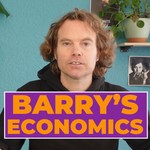
Diary Of A CEO podcast has 50 million listeners. Any of these Success podcasts - the Steven Bartlett or Chris Williamson types all promise you the secrets, strategies and frameworks of the world's most successful people. How to be Successful.Here's the problem: The science says it can't deliver on that promise. And not only that - if you look closely you can see that the business model shows that it was never designed to.This episode isn't about tearing down Steven Bartlett. It's about a structural problem with how success is sold to us - it's about Survivorship Bias, The Dunning Kruger effect, and why the most popular podcasts about success might be the very things standing between you and actually achieving it.Covered in this video:1- Philip Tetlock's 20-year study of 284 experts and 82,361 predictions — and what it reveals about confident people with frameworks2 - The Dunning-Kruger Effect and why the loudest voices are often the least informed3 - Duncan Watts' MusicLab experiment: 14,341 participants, and what it proves about how random success actually is4 - Benjamin Libet's neuroscience research on decision-making — and why successful people genuinely can't tell you how they succeeded5 - Survivorship bias, Abraham Wald, and why studying winners teaches you almost nothing6 - The business model that needs you to stay anxious, keep consuming, and never quite arriveThe Special Sauce doesn't exist. But there's a lot of money in making you believe it does.Sources referenced:Tetlock, P. - Expert Political Judgment, 2005Kruger, J. & Dunning, D. - Unskilled and Unaware of It, Journal of Personality and Social Psychology, 1999Watts, D. - MusicLab experiment, Science, 2006Libet, B. - Unconscious cerebral initiative, Brain, 1983Soon, C.S. et al. - Unconscious determinants of free decisions, Nature Neuroscience, 2008I’m Barry Ferns is a comedian whose personal journey through failure, homelessness, and rebuilding led me to explore the socio and behavioural economics of inequality.This channel digs into how systems of power shape our identity, behaviour, and beliefs, and how we can shift the stories we tell ourselves and each other about poverty, inequality, and who’s to blame.How to Support Barry’s EconomicsHelp us stay independent and keep making videos like this.https://www.buymeacoffee.com/barryseconomicshttps://ko-fi.com/barryseconomicshttps://www.patreon.com/barryseconomicsFollow and leave a review for future episodes! Join my mailing list: You can also follow me on Tiktok: tiktok.com/@barryseconomicsInstagram: instagram.com/barryseconomicsTwitter: twitter.com/barryseconomicsSubstack: Reddit: If you’re new to this, check out Gary's Economics first – his channel gives the structural and financial perspective. This one adds the lived, social and emotional side.Support Gary's Wealth Tax Campaign Here: Want to see the stand-up side of all this?Find my live comedy and storytelling here:To learn more about my comedy club, Angel Comedy, and buy tickets for shows head here: