Tiny Living Beings – Détails, épisodes et analyse

Détails du podcast

Informations techniques et générales issues du flux RSS du podcast.
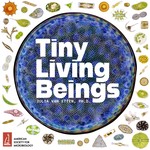
Podcast Tiny Living Beings

Tiny Living Beings

Julia Van Etten

Sciences
Sciences

Fréquence : 1 épisode/42j. Total Éps: 28

Hosting podcast Libsyn
Tiny Living Beings is a weekly podcast where listeners get to know a scientist, a weird microorganism they like, and why they think it's interesting. Our planet is full of billions of different microscopic organisms, most of which are still unknown to science. The ones we do know are diverse and strange. Microbiology knowledge is often gatekept by scientists who discuss this information in exclusive professional circles, but more of these topics need to be shared with the public! Although generally upbeat and fun, conversations often tangentially address frustrations with society or become existential, which, because of the time we are living through, is inherently connected to any discussion of topical scientific information. Content is geared toward all ages and backgrounds, anyone who is scientifically curious.
Site
RSS

Classements récents

Dernières positions dans les classements Apple Podcasts et Spotify.

Apple Podcasts

    Aucun classement récent disponible

Spotify

    Aucun classement récent disponible


Qualité et score du flux RSS

Évaluation technique de la qualité et de la structure du flux RSS.

See all
Qualité du flux RSS
Correct

Score global : 89%


Historique des publications

Répartition mensuelle des publications d'épisodes au fil des années.

Episodes published by month in

Derniers épisodes publiés

Liste des épisodes récents, avec titres, durées et descriptions.

See all

Introducing the Fire Amoeba - with Angela Oliverio and Beryl Rappaport

Saison 3 · Épisode 1

lundi 22 décembre 2025Durée 01:04:56

Eukaryotes are "complex" organisms with nuclei and membrane-bound organelles: plants, animals, fungi, and protists. Protists include many understudied lineages of fascinating organisms that challenge our understanding of cell biology, and so many protist species remain undiscovered. This week Dr. Angela Oliverio and Beryl Rappaport come on the podcast to discuss a new amoeba species called Incendiamoeba cascadensis that lives and reproduces at the highest temperature ever described for a eukaryote, earning the title of "fire amoeba". Angela and Beryl take us through their research and discovery process, highlighting the collaborative nature of their groundbreaking work. You can read about the structure, function, behavior, and genome of I. cascadensis in their recent preprint. On the episode, we discuss what this amoeba looks like, how it moves, its relatives, the volcanic lake it was found in, and current hypotheses for how it is able to survive in such hot temperatures. Angela explains how studying a novel species like this can leave us with more questions than answers which means that there is more exciting work to come! 

Angela Oliverio is an assistant professor of Biology at Syracuse University and Beryl Rappaport is a PhD student studying microbial eukaryote evolution and occasionally fermented foods in the Oliverio lab. You can follow them on Bluesky at @oliverio.bsky.social and @hbrappap@bsky.social, and learn more about their research at http://oliveriolab.org/ and their Google Scholar pages (Angela, Beryl). 

They've also provided some links and photos for further reading, and make sure to read their preprint!

  1. A great thread by Beryl
  2. A geothermal amoeba sets a new upper temperature limit for eukaryotes preprint
  3. Extreme environments offer an unprecedented opportunity to understand microbial eukaryotic ecology, evolution, and genome biology perspective paper 
  4. Lessons from Extremophiles: Functional Adaptations and Genomic Innovations across the Eukaryotic Tree of Life article
  5. Popular media articles about the fire amoeba in Nature and Scientific American
  6. More about amoebozoan amoebas: Wikipedia
  7. Brief history about Thermus aquaticus (bacteria) and the advent of PCR from USGS

For more info on microbes and to follow updates of this podcast, find @couch_microscopy on Instagram or visit www.couchmicroscopy.com/store for merch!

The views and opinions expressed on this program are those of the host and guests and do not reflect the views of any institution.

Parasites in our pets' poop - with Ben Alverson

Saison 2 · Épisode 8

lundi 26 mai 2025Durée 01:00:04

Microbes are everywhere, including inside our pets! This week, Ben Alverson comes on to give us a crash course in veterinary parasitology. He discusses the variety of worms and protists that can live inside mammals and cause problems ranging from being a mild nuisance to causing death. We talk about the different types of animals that get tested for these parasites including cats and dogs, zoo animals like big cats, and farm animals. Ben does a great job explaining how diagnoses are made from examining poop samples, what that process looks like, how identifications of different eggs and and parasites are made using microscopy, and treatment options. This episode showcases a non-academic career path in microbiology that's absolutely fascinating! (But it is not for the squeamish!)

Ben Alverson is a microbiologist with experience in the veterinary field. He runs the brilliant Instagram account @veterinary_parasitology_ where he posts photos of ova (eggs) and parasites found in his work. I HIGHLY recommend following him! You can also find him on Twitter.

Resources from this episode:

  1. Textbook recommendation: Diagnostic Parasitology for Veterinary Technicians (I posted the link from the publisher but I recommend looking for this used or free online)
  2. Vetpocket app

For more info on microbes and to follow updates of this podcast, find @couch_microscopy on Instagram or visit www.couchmicroscopy.com/store for merch!

The views and opinions expressed on this program are those of the host and guests and do not reflect the views of any institution or funder.

Choanoflagellates and animal evolution - with David Booth

Saison 1 · Épisode 17

lundi 17 avril 2023Durée 54:20

Choanoflagellates are unicellular protists but they also happen to be the closest living relatives to animals. This week, David Booth discusses what choanoflagellates are, where you can find them, and the connection to animal evolution. He also talks about how these microbes are interesting in their own right, impacting whole food webs and ecosytems and interacting with bacteria. We talk about the fossil record and cover a bunch of major evolutionary transitions and how microbial life was the precursor to the kingdoms of organisms we're most familiar with today.Dr. David Booth, PhD, is an assistant professor at University of California San Francisco. His lab investigates the ecological interactions and cell fate of choanoflagellates. You can follow him on Twitter (@dsboothacosta), Instagram (@bioboothlab) or find his work on his lab website or on Google Scholar.For more info on microbes and to follow updates of this podcast, find @couch_microscopy on Instagram, @CouchMicroscopy on Twitter, or visit www.couchmicroscopy.com/store for merch!Music is "Introducing Cosmic Space" by Elf Power and "Vorticella Dreams" by L. Felipe Benites.

Getting to know lichens - with Dennis Waters

Saison 1 · Épisode 16

lundi 10 avril 2023Durée 46:23

Do you ever walk past an old building or a tree or a big rock and notice splotchy green or orange or yellow blobs growing all over it? Well, these are probably lichens! Lichens aren't plants and they aren't even technically just fungi. They are actually many organisms living together and functioning as one unit. These "composite" organisms are fungi with symbiotic algae or cyanobacteria living inside them, providing them with sugars produced by photosynthesis. On this episode, Dennis Waters explains what lichens are, why we see them everywhere, what they do, and even what they taste like! We cover topics from symbiosis, to climate change to lichens living in space, suspended outside of the International Space Station. Dr. Dennis Waters, PhD is a lichenologist and is currently a visiting scientist at the Chrysler Herbarium at Rutgers University. He is also an author and his book "Behavior and Culture in One Dimension: Sequences, Affordances, and the Evolution of Complexity" is available here or on his website.Dennis has also provided some links to resources if you want to learn more about lichens: Music is "Introducing Cosmic Space" by Elf Power and "Vorticella Dreams" by L. Felipe Benites.

Fungi are everywhere - with Kaydubs the hiking scientist

Saison 1 · Épisode 15

lundi 20 mars 2023Durée 55:38

Is fungi everywhere? Is it on our eyeballs and in our nose hairs? Yes, yes, and yes! This week I talk to Dr. Kristen aka Kaydubs about fungi in general and forest fungi in particular. We discuss what these organisms are made of, why they're only now being studied in depth, and the devastating outcomes of American chestnut blight. We also talk about how to become a master naturalist and why it's okay to be weird and/or join a mushroom club!

Dr. Kristen, PhD is a plant pathologist and an amazing science communicator. You can follow her on instagram: @kaydubsthehikingscientist. I highly recommend following this account (it is hands down my favorite) because you will learn so much about all the organisms in the forest, from trees to insects to lichens. Lots of cool hiking info and adorable cat content as well. Also, here's a link to Kristen's linktree.

And here are links to the lists of North American mushroom societies and American native plant societies. Sorry people on other continents! I'm tired and this episode comes out in an hour and I didn't have time to look up your societies.

For more info on microbes and to follow updates of this podcast, find @couch_microscopy on Instagram, @CouchMicroscopy on Twitter, or visit www.couchmicroscopy.com/store for merch!

Music is "Introducing Cosmic Space" by Elf Power and "Vorticella Dreams" by L. Felipe Benites.

While some of the content on this podcast may be relevant to human or veterinary medicine, this information is not medical advice. The views and opinions expressed on this program are those of the host and guests and do not reflect the views of any institution.

Tardigrade takedown - with Chloé Savard

Saison 1 · Épisode 14

lundi 13 mars 2023Durée 43:40

Tardigrades aka water bears aka moss piglets are extremely popular! This is due to their tolerance of harsh environments and because of their perceived "cuteness". This week, I speak with Chloé Savard (@tardibabe) about what tardigrades are, what it actually means to "survive" in extreme conditions, and how to find them in nature. We also talk quite a bit about some of the tardigrade misinformation that's constantly circulating that paints these animals as indestructible or even immortal. Chloé uses her expertise on these charismatic microscopic animals to help debunk some strange clickbait claims. We had a lot of fun on this episode and if you have an interest in getting started with hobby microscopy, this is definitely a good episode to listen to!

Chloé Savard is a microbiology student and social media sensation. You can follow her work on Instagram, TikTok, and YouTube. She is also launching a website soon that will be selling prints so stay tuned!

Here is a great article she wrote about how to find and image tardigrades! https://moticmicroscopes.com/blogs/articles/tardigrades-waterbears

For more info on microbes and to follow updates of this podcast, find @couch_microscopy on Instagram, @CouchMicroscopy on Twitter, or visit www.couchmicroscopy.com/store for merch!

Music is "Introducing Cosmic Space" by Elf Power and "Vorticella Dreams" by L. Felipe Benites.

While some of the content on this podcast may be relevant to human or veterinary medicine, this information is not medical advice. The views and opinions expressed on this program are those of the host and guests and do not reflect the views of any institution.

The gut microbiome - with Haley Hallowell

Saison 1 · Épisode 13

lundi 27 février 2023Durée 58:39

What are the microbes in our gut up to? And how does their life affect our lives? This week, Dr. Haley Hallowell teaches us all about the gut microbiome and virome, that is, how microbes and viruses inside us affect each other and our own health! We also play a game on this episode where I make some bold claims that have gained traction on social media recently-some true, some ridiculous, some in between-and Haley becomes a professional myth-buster, using the latest science of course. Make sure to listen to the end because this episode wraps up with the two of us trying to figure out how much poop can fit in the human body.

Dr. Haley Hallowell, PhD is a postdoctoral researcher in the Suez lab at Johns Hopkins University where she studies how bacteriophages influence the microbiome and how the host immune system responds to these viruses. She is also a fabulous science communicator and you can follow her on Twitter and TikTok, where she sets the record straight on pseudoscientific health claims about the gut. Her videos are amazing! Definitely follow her!

Some resources we discuss on the episode for getting trustworthy scientific information: Pubmed, Nature, Elisabeth Bik's Microbiome Digest.

Some papers Haley mentions:

For more info on microbes and to follow updates of this podcast, find @couch_microscopy on Instagram, @CouchMicroscopy on Twitter, or visit www.couchmicroscopy.com/store for merch!

Music is "Introducing Cosmic Space" by Elf Power and "Vorticella Dreams" by L. Felipe Benites.

While some of the content on this podcast may be relevant to human or veterinary medicine, this information is not medical advice. The views and opinions expressed on this program are those of the host and guests and do not reflect the views of any institution.

Polar microbes - with Jaz Millar

Saison 1 · Épisode 12

lundi 20 février 2023Durée 51:52

Did you know there are microbes living in holes in glaciers? What are they doing there and what can we learn from them? Quite a lot actually! This week, Dr. Jaz Millar and I talk all about cryoconite holes which house polar microbial communities, how they're forms, and what they tell us about the past, present, and future conditions of life on Earth. We also learn that when a topic related to something unmicrobial like gasp animals gasp comes up, I'm totally clueless. Jaz tells us the harrowing tale of how they were stranded in Antarctica during the initial Covid-19 lockdowns, what it's like to work in vulnerable polar locations, and how issues of science impact indigenous communities around the world.

Dr. Jaz Millar, PhD is a postdoctoral researcher at the University of Bristol with expertise in microbiology, molecular biology, and extremophiles. You can follow them on Twitter: @JazzedUpScience and Instagram: @jazzedupscience.

Here are some links to more Jaz-related cool science stuff:

For more info on microbes and to follow updates of this podcast, find @couch_microscopy on Instagram, @CouchMicroscopy on Twitter, or visit www.couchmicroscopy.com/store for merch!

Music is "Introducing Cosmic Space" by Elf Power and "Vorticella Dreams" by L. Felipe Benites.

While some of the content on this podcast may be relevant to human or veterinary medicine, this information is not medical advice. The views and opinions expressed on this program are those of the host and guests and do not reflect the views of any institution.

The Great Oxygenation Event - With John Encarnacion

Saison 1 · Épisode 11

lundi 13 février 2023Durée 43:53

How do we know what the Earth was like billions of years ago? And where did all the oxygen come from? Spoiler alert: it's microbes! This week I speak with Dr. John Encarnacion about the Great Oxygenation Event (GOE) that changed our planet forever and is the reason we breathe today. We talk about the detective work of geologists and the evidence found in rocks that teaches us about ancient biological and geological processes!

Dr. John Encarnacion, PhD is a professor at Saint Louis University where he studies plate tectonics and hard rock geology. You can learn more about his work on his website and read his publications on Google Scholar. He is also an amazing science communicator and you can follow his fun geology page on Instagram: @a_geologist.

For more info on microbes and to follow updates of this podcast, find @couch_microscopy on Instagram, @CouchMicroscopy on Twitter, or visit www.couchmicroscopy.com/store for merch!

Music is "Introducing Cosmic Space" by Elf Power and "Vorticella Dreams" by L. Felipe Benites.

The views and opinions expressed on this program are those of the host and guests and do not reflect the views of any institution.

Hobby microscopy - with Lena Struwe

Saison 1 · Épisode 10

lundi 6 février 2023Durée 42:25

How can you get started with hobby microscopy? What products and practices do we recommend? Why do we have a conflict with the Unicode emoji consortium? And what on earth is a vinegar eel??? Find out all these things and more on this week's episode where I talk to Dr. Lena Struwe about our shared love of microscopy, answer questions from instagram followers, and cover topics that range from iNaturalist to community science to why I refuse to swim in a pond.

Dr. Lena Struwe, PhD, FLS is a professor at Rutgers University whose research focuses on plant evolutionary biology and systematics. She is the director of the Chrysler Herbarium and runs the Botanical Accuracy blog and Facebook group. You can follow her publications here

We discuss these specific resources on this episode:

  1. Freshwater Algae of North America book
  2. iNaturalist (follow Lena here)
  3. Amateur Microscopy Facebook group
  4. Global Biodiversity Information Facility, or GBIF

Lastly, Lena put together an AMAZING list of other online and in print resources that was too large to fit in the show notes, but you can access it here. This list includes both guides for identifying different types of microorganisms and links to different online communities to join to learn more about microscopy and cataloging organisms or to post your findings.

For more info on microbes and to follow updates of this podcast, find @couch_microscopy on Instagram, @CouchMicroscopy on Twitter, or visit www.couchmicroscopy.com/store for merch!

Music is "Introducing Cosmic Space" by Elf Power and "Vorticella Dreams" by L. Felipe Benites.

The views and opinions expressed on this program are those of the host and guests and do not reflect the views of any institution.


Podcasts Similaires Basées sur le Contenu

Découvrez des podcasts liées à Tiny Living Beings. Explorez des podcasts avec des thèmes, sujets, et formats similaires. Ces similarités sont calculées grâce à des données tangibles, pas d'extrapolations !
Podcast World of Mouth podcast
Podcast Japan Eats!
Podcast Special Sauce with Ed Levine
Podcast TheBoldWay
Podcast All-In with Chamath, Jason, Sacks & Friedberg
Podcast The Institute of Black Imagination.
Podcast This Is TASTE
Podcast BETTER! with Dr. Stephanie Estima | Strength, Body Composition & Perimenopause
Podcast 5komma1
Podcast En sci bons termes
© My Podcast Data