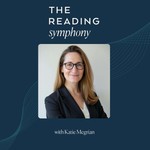
Hosted by Katie Megrian - literacy leader, former principal, and mom of two young readers - The Reading Symphony brings the science of reading to life for parents, teachers, and school leaders who want clarity, not confusion. Each episode blends research-based insight with real-world strategies for helping children thrive in reading, writing, and comprehension.
From phonemic awareness and decoding to fluency, vocabulary, and background knowledge, Katie demystifies what great instruction looks like and how families can support it at home. You’ll hear from expert guests in literacy education, cognitive science, and classroom practice - along with relatable stories from parents navigating the journey right beside their kids.
Whether you’re an educator implementing the Science of Reading, a school leader designing literacy PD, or a parent decoding report cards and assessments, this podcast is your roadmap to evidence-based reading success.
Topics include:
How children learn to read and why some struggle
What to look for in a strong school literacy program
The truth about reading assessments and progress reports
Strategies to build fluency, vocabulary, and comprehension
The role of knowledge building and background knowledge
Advocacy tips for parents and educators
Inspiring stories from classrooms and homes that got reading right
Site
RSS
Apple
Données mises à jour le 15/10/2026
Classements récents
Dernières positions dans les classements Apple Podcasts et Spotify.
Liens partagés entre épisodes et podcasts
Liens présents dans les descriptions d'épisodes et autres podcasts les utilisant également.
Exposure Is Not Instruction: How Children Really Learn to Read | Kim Lockhart
Épisode 30
mardi 13 octobre 2026 • Durée 51:32
In this episode of The Reading Symphony Podcast, Katie talks with Kim Lockhart, literacy educator and teacher trainer, about why exposure alone isn't enough to teach children how to read.
Drawing on 25 years of teaching experience, Kim discusses the Science of Reading, structured literacy, the myth of learning styles, and why explicit, evidence-based instruction is essential for struggling readers. They also explore oral language development, French immersion, and practical ways parents and teachers can support children's literacy.
About Kim Lockhart
Kim Lockhart, M.Ed., is a Lecturer in Education and Education Consultant with 25 years of experience in French Immersion and Special Education. She specializes in structured literacy, teacher training, and evidence-based reading instruction.
How to Build Your Child’s Curiosity Through Science and Reading | Rudo Kashiri
Épisode 29
mercredi 7 octobre 2026 • Durée 29:30
In this episode of The Reading Symphony Podcast, Katie talks with science educator, author, and former NASA educator Rudo Kashiri about bringing science, reading, storytelling and hands-on learning together. Rudo shares how her work with students and teachers at NASA inspired her to create children’s books that explain challenging science concepts through stories. She and Katie discuss why building science knowledge early matters, how misconceptions can make later learning more difficult, and how reading about science can strengthen children’s vocabulary, background knowledge and understanding.
Why Literacy Instruction Must Be Explicit and Coherent | Dr. Jen O’Sullivan
Épisode 28
mercredi 30 septembre 2026 • Durée 57:00
In this episode of The Reading Symphony Podcast...
Katie talks with Dr. Jen O’Sullivan, education researcher and lecturer, about what effective reading instruction looks like beyond phonics - and why strong literacy teaching needs to connect the different skills involved in learning to read.
About Dr. Jen O’Sullivan
Dr. Jen O’Sullivan is an education researcher and lecturer specializing in literacy education. A former primary school teacher, her work focuses on early reading development, early intervention for reading difficulties, teacher professional learning, and the role of children’s literature in literacy instruction.
00:00 – The Science of Reading vs. the Science of Teaching Reading
Crafting Reading Minds | Dr. Melissa Orkin
Épisode 27
mercredi 23 septembre 2026 • Durée 50:03
Katie talks with Dr. Melissa Orkin, educator and developmental psychologist, about dyslexia, structured literacy, reading fluency, and why the emotional side of learning matters.
Melissa explains how motivation, confidence, and a child’s willingness to make mistakes can affect reading development. They discuss intrinsic motivation, the RAVE-O approach, the Science of Reading, and practical ways parents and teachers can support struggling readers.
They also explore dyslexia screening, effective reading intervention, and how progress monitoring can help families understand whether instruction is actually working.
About Dr. Melissa Orkin
Dr. Melissa Orkin is an educator and developmental psychologist specializing in literacy achievement. She is Director of Crafting Minds Group, has taught at Tufts University and Harvard University, and is co-author of The Structured Literacy Playbook.
Why Writing Instruction Is Essential | Dr. Stephen Ciullo
Épisode 26
lundi 14 septembre 2026 • Durée 45:45
In this episode of The Reading Symphony Podcast, Katie talks with Dr. Stephen Ciullo, Professor of Education, about why writing instruction can get left behind and what effective writing instruction actually looks like.
They discuss why more writing practice isn't always enough, the importance of explicit instruction and modeling, and why teachers need more support in teaching writing.
Dr. Ciullo also shares practical advice for parents of struggling writers, including questions to ask at school, how reading comprehension can affect writing, and how to develop more useful IEP writing goals.
About Dr. Stephen Ciullo
Dr. Stephen Ciullo is a Professor of Education whose research focuses on writing instruction, students with learning disabilities, and helping teachers use evidence-based writing practices in the classroom.
Why do some students understand what they read more easily than others? Background knowledge may be a much bigger part of reading comprehension than we realize.
Katie talks with longtime history educator and education consultant Lauren Brown about why building knowledge through science, history, and social studies can help children become stronger readers.
They explore how background knowledge supports reading comprehension, why struggling readers benefit from knowledge-rich instruction, when memorization can be useful, and simple ways parents can build their child's knowledge at home.
About Lauren Brown
Lauren taught U.S. history for more than 20 years and spent another eight years working with future social studies teachers. Today, she works as an education consultant and writes about teaching, learning, and social studies.
Katie talks with reading specialist Dawn Jagannath about what happens when struggling readers aren't responding to traditional reading interventions.
They explore structured linguistic phonics, speech-to-print instruction, why older striving readers need meaningful "catch-up growth," and how parents can tell whether an intervention is actually working. Dawn also shares practical ways families can support struggling readers at home without turning home into another intervention session.
ABOUT DAWN
Dawn Jagannath is a reading specialist with more than 20 years of experience as a special educator, classroom teacher, and literacy specialist. She is an EBLI Certified Educator and is currently pursuing her Ed.D. in the Science of Learning at Gordon College.
Have you ever been told, "They're doing fine," even though you know your child is struggling to read?
In this solo episode of The Reading Symphony Podcast, Katie Megrian explains how to understand your child's reading assessments, why vague reassurance isn't enough, and the questions every parent should ask before accepting that answer.
Drawing on more than 20 years of experience as a teacher, principal, district literacy leader, and parent advocate, Katie shares four real stories from families whose instincts were right - and explains how understanding assessment data can completely change conversations with your child's school.
You'll learn:
• The difference between Screeners, Diagnostic Assessments, and Progress Monitoring Assessments
• When it may be appropriate to request a formal evaluation
• Which reading assessments are backed by research
• What parents can do before the school year begins
• The three questions every parent should ask when discussing their child's reading progress
Whether you're concerned about dyslexia, reading intervention, or simply want to better understand your child's progress, this episode will help you become a more informed and confident advocate.
Katie welcomes Sean Morrisey, creator of the Word Mapping Project, for an engaging conversation about vocabulary instruction, morphology, the Science of Reading, and why building "word wealth" is essential for every child's literacy development.
Drawing on his experience as both a former school psychologist and a fifth-grade teacher, Sean explains why vocabulary should be taught explicitly, how spelling strengthens long-term word learning, and why students can learn far more sophisticated language than we often expect. Together, Katie and Sean explore orthographic mapping, morphology, structured literacy, dyslexia, developmental language disorder, reading fluency, and practical strategies that parents and teachers can use immediately to help children become confident readers and writers.
They also discuss why vocabulary instruction shouldn't stop after the primary grades, how to create meaningful conversations around words, and why connecting sound, spelling, and meaning helps words become permanently stored in memory.
This episode is for parents, educators, literacy specialists, reading interventionists, school leaders, homeschool families, and anyone interested in the Science of Reading, the Science of Learning, vocabulary development, and evidence-based literacy instruction.
About Sean Morrisey
Sean Morrisey is a fifth-grade teacher at Pinehurst Elementary School in the Frontier Central School District near Buffalo, New York. A former school psychologist, Sean is the creator of the Word Mapping Project, a morphology-rich curriculum grounded in the Science of Reading and the Science of Learning. His work helps educators teach vocabulary, spelling, morphology, and word study through practical, evidence-based instructional strategies that improve long-term literacy outcomes.
Katie hosts Phyllis Hakeem, Professor of Education at Bay Path University, for a thought-provoking conversation about the science of reading, neuroscience, structured literacy, and why educators must embrace the principle of "do no harm" when teaching children to read.
00:00 – Do No Harm: Why Reading Instruction Matters
01:43 – Meet Phyllis Hakeem
05:18 – From Neuroscience to Literacy Education
08:38 – Finding Joy in Literacy Work
11:03 – Why Phyllis Says "Do No Harm"
12:54 – Practice Makes Permanent in the Brain
15:13 – Understanding Reading Assessment and DIBELS Data
17:24 – Fluency Is More Than Reading Speed
Podcasts Similaires Basées sur le Contenu
Découvrez des podcasts liées à The Reading Symphony . Explorez des podcasts avec des thèmes, sujets, et formats similaires. Ces similarités sont calculées grâce à des données tangibles, pas d'extrapolations !