News UK Home News.
Bug-eyed ‘fox head’ bought for £50 at market uncovered as priceless ‘holy grail’ antique. The ‘extremely rare’ Tasmanian tiger head was first bought for £50 at an antiques market. Harriette Boucher Tuesday 18 August 2026 13:01 BST.
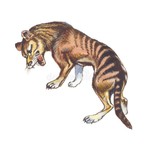
A taxidermy “fox head” bought for £50 at an antiques market has sold for £50,000 after it was revealed to be a rare Tasmanian tiger. The thylacine head saw a bidding war break out at a Bristol auction house last week . An anonymous seller had bought it at a West Country fair earlier this year because “the novelty googly eyes attached to it made them laugh”.
Andrew Stowe, the auctioneer at Auctioneum, said: “When we told the vendor how much it had sold for, I thought they were about to pass out. I actually had to offer them a chair – they couldn’t believe it!”
Successful bidder James Cranfield, who paid another £10,000 in fees, had gone to examine the head after seeing it in the catalogue and suspecting it did not belong to a fox, The Times reported .“It was sat on a table surrounded by all sorts of bric-a-brac and pottery. It confirmed exactly what I wanted to know,” he said . Mr Cranfield had hoped to buy it for the guide price of around £30-£50, but had to battle it out with other bidders who had also discovered it was the rare thylacine . “Unfortunately, someone else also had all the same suspicions as me, and therefore I had a battle to win it,” he said “The head I now own is the only one in existence. It is incredible.”
The extinct marsupial, which was unique to Australia and New Guinea, largely disappeared from the mainland around 2,000 years ago . An isolated population survived in Tasmania, but European settlers wiped out the species . The last officially recorded thylacine died in 1936 at a zoo in Hobart, Tasmania .“Complete mounted heads of the species are virtually non-existent outside of major national museums and scientific institutions. Only 756 specimens are known to exist and of those only 101 are taxidermy . Only one taxidermy head is believed to exist .” Mr Stowe said the find was “unbelievably rare”, adding: “To find a complete item like this is almost unheard of, especially here in the UK . It was quite a shock to discover we were sitting on something so special.” 🧬 Companion Review: The New Zealand Pelt & The DNA Blueprint
While the August 2026 UK auction discovery highlights how rare physical thylacine artifacts are, an older breakthrough from August 2020 in New Zealand directly connects these historical specimens to the modern mainland hunt. Discovered in a small gallery near Martinborough and verified by Te Papa curator Alan Tennyson, a pristine Tasmanian tiger pelt—originally acquired in 1923 by collector Archibald Robertson—turned out to be one of the best-preserved specimens in existence .This pelt provided an absolute goldmine for researchers. Unlike most historical specimens treated with DNA-destroying arsenic or mercury, this particular pelt was preserved using an alternative method that left long, intact fragments of DNA undamaged . Microscopic analysis also revealed that the thylacine possessed eight distinct hair types, including specialized hollow hairs designed to trap heat . This biological adaptation proves the animal was highly suited to cold, harsh climates—the exact type of terrain found in deep mainland wilderness corridors like the Strzelecki Ranges, Mainland Australia, Gippsland. This high-fidelity genetic data is exactly what modern researchers like Michael Moss rely on to deploy advanced environmental DNA (eDNA) water sampling across the Australian mainland. The 2026 UK find proves that priceless thylacine specimens are still hiding in plain sight. Quoted article
https://www.independent.co.uk/news/uk/home-news/taxidermy-fox-tiger-auction-bristol-b3034665.html
https://www.rnz.co.nz/news/world/424807/new-zealand-tasmanian-tiger-pelt-provides-dna-of-extinct-marsupial