Sculpting Lives – Détails, épisodes et analyse

Détails du podcast

Informations techniques et générales issues du flux RSS du podcast.
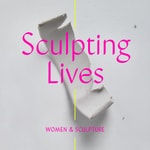
Podcast Sculpting Lives

Sculpting Lives

Jo Baring and Sarah Turner

Arts
Histoire
Éducation

Fréquence : 1 épisode/52j. Total Éps: 13

Hosting podcast Audioboom
Sculpting Lives is a podcast series written and presented by Jo Baring (https://www.jobaring.com/about) (Director of the Ingram Collection of Modern British & Contemporary Art) and Sarah Victoria Turner (https://www.paul-mellon-centre.ac.uk/about/people/sarah-victoria-turner) (Deputy Director at the Paul Mellon Centre for Studies in British Art in London). Dame Barbara Hepworth, Dame Elisabeth Frink, Kim Lim, Phyllida Barlow and Rana Begum – some of the most globally well-known British artists are women sculptors. Conversely, the profession and practice of sculpture was seen by many throughout the twentieth century (and before) to be very much a man’s world. Often using heavy and hard materials, sculpture was not typically viewed as suitable for women artists. Series one explores the lives and careers of these five women who worked (and are still working) against these preconceptions, forging successful careers and contributing in groundbreaking ways to the histories of sculpture and art. Series two features episodes on Dora Gordine, Gertrude Hermes, Veronica Ryan, Alison Wilding and Cathie Pilkington. At a moment when public sculpture is the subject of contentious debate, the final episode of the second series focuses on questions of gender, public sculpture and display, and explores women’s representation – both as subjects and artists – in our public spaces and exhibitions. Each episode is recorded in places that are significant for the women sculptors featured – their studios, as well as galleries and public places where their work is on display – and includes new interviews with curators, friends, family and the artists themselves, creating intimate soundscapes of their private and public worlds. The @SculptingLives Instagram (https://www.instagram.com/sculptinglives) feed contains more information about the podcast and the artists and artworks featured in it. Written and hosted by: Jo Baring and Sarah Turner Produced by: Clare Lynch Research by: Isabelle Mooney (Series One) & Chloe Nahum (Series Two) Music by: Pauline Oliveros, [Silence] (https://freemusicarchive.org/music/Pauline_Oliveros/EASY_NOT_EASY_Festival_Oct_8_2010/Silence_1082010) Visual identity by: Vanessa Fowler-Kendall This podcast has been made possible through support from the Paul Mellon Centre for Studies in British Art. We are also extremely grateful to Art UK (https://artuk.org/) and National Life Stories: Artists' Lives (British Library) (https://www.bl.uk/projects/national-life-stories-artists-lives) .
Site
RSS
Apple

Classements récents

Dernières positions dans les classements Apple Podcasts et Spotify.

Apple Podcasts

  • 🇬🇧 Grande Bretagne - visualArts

    30/06/2026
    #89
  • 🇬🇧 Grande Bretagne - visualArts

    03/06/2026
    #80
  • 🇬🇧 Grande Bretagne - visualArts

    02/06/2026
    #36
  • 🇬🇧 Grande Bretagne - visualArts

    01/06/2026
    #90
  • 🇬🇧 Grande Bretagne - visualArts

    31/05/2026
    #60
  • 🇬🇧 Grande Bretagne - visualArts

    30/05/2026
    #25
  • 🇬🇧 Grande Bretagne - visualArts

    16/04/2026
    #69
  • 🇬🇧 Grande Bretagne - visualArts

    09/03/2026
    #61
  • 🇬🇧 Grande Bretagne - visualArts

    13/02/2026
    #84
  • 🇬🇧 Grande Bretagne - visualArts

    12/02/2026
    #60

Spotify

    Aucun classement récent disponible


Qualité et score du flux RSS

Évaluation technique de la qualité et de la structure du flux RSS.

See all
Qualité du flux RSS
Correct

Score global : 89%


Historique des publications

Répartition mensuelle des publications d'épisodes au fil des années.

Episodes published by month in

Derniers épisodes publiés

Liste des épisodes récents, avec titres, durées et descriptions.

See all

S2 Ep6: Sculpting Lives: Making Sculpture Public

Saison 2 · Épisode 6

lundi 6 décembre 2021Durée 01:02:53

Over the last year public sculpture has become a hugely controversial issue. No longer passive objects that we simply walk past on our streets, public sculptures are part of a vigorous debate about contemporary society – who is commemorated and represented, and why. In this episode we delve further into this subject, interviewing the people associated with our most recent sculpture commissions of and by women, speaking to critics and researchers who are reflecting on the historical dimensions of this contemporary moment, and the contemporary sculptors who are making objects that occupy our streets and squares. Jo and Sarah also visit the Breaking the Mould Exhibition: Sculpture by Women Since 1945, organised by the Arts Council Collection, to talk to the curator and some of the artists involved in this landmark display. Together, they discuss the relevance of the public display and exhibition of the histories of women working with sculpture and broader questions about gender and representation in the art world and public sphere in 2021 .

Contributors: 

  • Hettie Judah, Art Critic and WriterNatalie Rudd, Senior Curator, Arts Council Collection
  • Kate MacMillan, King’s College, London
  • Bee Rowlatt, Chairwoman of the Mary on the Green campaign
  • Natalie Rudd, PhD Researcher and formerly Senior Curator, Arts Council Collection
  • Bianca Chu, Kim Lim Estate
  • Holly Hendry, Artist
  • Katie Cuddon, Artist
  • Permindar Kaur, Artist
  • Rosanne Robertson, Artist

Digital image: Maggi Hambling, Statue for Mary Wollstonecraft, 2020. Photography: Sarah Victoria Turner

S2 Ep5: Sculpting Lives: Cathie Pilkington

Saison 2 · Épisode 5

mardi 30 novembre 2021Durée 34:30

'The thing about my work is that there is a tension between a passionate love and engagement with the traditions of the past and a complete impatience with their irrelevance and it’s trying to hold those things in tension and trying to engage people in the complexities of that.' Cathie Pilkington, R.A.

Cathie Pilkington creates surreal, uncanny and ambivalent forms which are designed to unsettle and provoke. She employs a deliberate lack of hierarchy in her materials, using textiles and found objects alongside more traditional sculptural practices. Her work is often presented as an immersive installation, bringing themes of the domestic and everyday life into the language of sculpture.

During our interviews with Cathie Pilkington in the Royal Academy, her studio and a sculpture foundry, we discuss the barriers to women pursuing careers as sculptors, how sculpture can remain relevant and how an artist can make figurative sculpture that speaks to contemporary audiences. We met her at a pivotal point in her career, taking increasing control and asking questions about the future of sculpture. Pilkington (who was the first female Professor of Sculpture at the Royal Academy Schools) is Keeper at the Royal Academy and uses her role to ask questions about the history of sculpture and women at an institutional level.

Contributors:
  • Cathie Pilkington, R.A.
  • Simon Martin, Director, Pallant House Gallery
  • Chloe Hughes, Foundry Manager, A.B. Foundry
  • Anna McNay, writer and curator

Image: Portrait of Cathie Pilkington in the RA Keeper’s Studio, Digital image courtesy of Hayley Benoit

S1 Ep2: Sculpting Lives: Elisabeth Frink

Saison 1 · Épisode 2

mardi 31 mars 2020Durée 40:06

Dame Elisabeth Frink, R.A. (1930-1993)

“She respected herself. She took herself seriously and she took the work seriously, due to the nature of the work. She knew what it was she wanted to explore.” Annette Ratuszniak, Curator, Frink Estate.   In 1973 Elisabeth Frink became the first female sculptor to be elected as a Royal Academician.

Frink was born into an army family, and her childhood was overshadowed by the Second World War. This experience, and other upheavals of the 20th century, led her to ask fundamental questions about the nature of humanity in her work. In an artworld increasingly dominated by abstraction, Frink remained resolute in her commitment to working both figuratively and in bronze. When Frink died in 1993 she had created over 400 sculptures, many of which are well-known public commissions.    In Episode 2, we explore hidden narratives in Frink’s career, and consider how artists can be sidelined by the ‘art world’ yet remain popular with the public. We also consider the impact an artist’s family has on their posthumous reputation and how this is managed.     “A lot of her work resonates in a really contemporary way.” Cathie Pilkington, RA, First Female Professor of Sculpture at the Royal Academy.

With contributions from:

·      Simon Martin, Director, Pallant House Gallery ·      Annette Ratuszniak, Curator, The Elisabeth Frink Estate ·      Sam Johnston, Director, Dorset History Centre
·      Cathie Pilkington, R.A.
·      Clare Lilley, Director of Programme, Yorkshire Sculpture Park

The sound recordings of Elisabeth Frink (00.00.27-00.00.42) are from Artists' Lives run by National Life Stories in partnership with the British Library.  Audio (c) British Library Board 

With thanks also to Dorset History Centre  https://www.dorsetcouncil.gov.uk/libraries-history-culture/dorset-history-centre/dorset-history-centre.aspx
Image: Elisabeth Frink with Soldiers Head, courtesy of the Frink Estate

For works discussed in this episode and more photographs of Frink, see the @sculptinglives Instagram feed. 

S1 Ep1: Sculpting Lives: Barbara Hepworth

Saison 1 · Épisode 1

mardi 24 mars 2020Durée 49:42

“Hepworth... didn’t see herself as a feminist at all and didn’t see herself as ‘a pioneering woman’, she just felt she was a pioneering sculptor.” Stephen Feeke, curator and writer. 

Barbara Hepworth was born in Wakefield, West Yorkshire, in 1903. By the time of her death in 1975, she had become one of the most important artists of the century, creating a poignant and innovative sculptural language. She is extremely unusual for a woman artist in that she has two museums named after her. 

Although a lot has been written about Hepworth, there is still a great deal to find out – there is a mystique and there are assumptions made about her. In this episode, we challenge those ideas, go to the places she lived and worked, and explore why she remains such a powerful influence on artists today.    “A normal person from Wakefield, a remarkable artist but a remarkable woman.” Eleanor Clayton, Curator, The Hepworth Wakefield. 

With AMAZING contributions from:

·      Eleanor Clayton, Curator, The Hepworth Wakefield ·      Sara Matson, Curator, Tate St Ives ·      Stephen Feeke, Curator and Writer
·      Clare Lilley, Director of Programme, Yorkshire Sculpture Park

In the episode, we visit these incredible places associated with Hepworth's career and legacy:
The Hepworth, Wakefield
Barbara Hepworth Museum and Sculpture Garden (Tate), St Ives
Yorkshire Sculpture Park

For the art works discussed in this episode and more images related to our research on Hepworth, visit @sculptinglives on Instagram

Image: Dame Barbara Hepworth, Corymb, 1959, bronze, 33.7 x 34.5 x 25.6 cm. Collection Barbara Hepworth Museum and Sculpture Garden, Tate St Ives (T12281). © Bowness

S1 Ep1: Sculpting Lives: Trailer

Saison 1 · Épisode 1

lundi 16 mars 2020Durée 00:51

Dame Barbara Hepworth, Dame Elisabeth Frink, Kim Lim, Phyllida Barlow,  and Rana Begum - some of the most globally well-known British artists are women sculptors.   Conversely, the profession and practice of sculpture was seen by many throughout the 20th century (and before) to be very much a man’s world. Often using heavy and hard materials, sculpture was not typically viewed as suitable for women artists. 
The Sculpting Lives podcast series explores the lives and careers of these five women who worked (and are still working) against these preconceptions, forging successful careers and contributing in ground-breaking ways to the histories of sculpture and art.    Each 45-minute episode takes a woman sculptor as its subject, exploring the art works, networks, connections and relationships of these artists. Every programme is recorded in places that are significant for these women – their studios, as well as galleries and public places where their work is on display – and includes new interviews with curators, friends, family and the artists themselves, creating intimate soundscapes of their private and public worlds   Sculpting Lives is written and presented by Jo Baring (Director of the Ingram Collection of Modern British & Contemporary Art) and Sarah Turner (Deputy Director for Research at the Paul Mellon Centre for Studies in British Art in London). The pair bring their shared expertise and infectious enthusiasm for sculpture to this series, with each episode taking the form of an informal and lively conversation between Jo, Sarah and their interviewees.   

S2 Ep4: Sculpting Lives: Alison Wilding

Saison 2 · Épisode 4

mardi 23 novembre 2021Durée 31:17

Alison Wilding emerged into the art world in the 1980s making powerful sculptural statements out of a myriad of materials. Taking sculpture out of the museum and off the plinth, Wilding’s work is some of the most enigmatic and beguiling sculpture being produced, and in a candid interview in her studio we ask her about influences, materials and her experiences of art school. We also speak to art historians and commercial galleries to get different perspectives on the Turner Prize nominated sculptor. Taking to the art historian Jo Applin about where Wilding 'fits' within the histories of sculpture, she observed: 'You can always search for peer group comparisons or historical, where she might fit in a longer historical trajectory but there's something utterly idiosyncratic to the way in which she thinks in abstract terms that is, for me, one of the most rewarding things about her work.'

With contributions from:
  • Alison Wilding, R.A.
  • Jo Applin, Courtauld Institute of Art
  • Tom Rowland, Karsten Schubert
  • Madeleine Bessborough, New Art Centre
  • Jessica Smith, New Art Centre

Image: Alison Wilding, courtesy of Karsten Schubert, London.

S2 Ep3: Sculpting Lives: Gertrude Hermes

Saison 2 · Épisode 3

mardi 16 novembre 2021Durée 38:27

'She did cause a bit of a revolution in the Royal Academy, which has been only to the good,' Anne Desmet, R.A.

Gertrude Hermes was one of the most experimental sculptors of the twentieth century. She also changed the way women artists were treated at the Royal Academy forever – a story which had been overlooked until recently. Representing Britain at the Paris World Fair of 1937, selected for the British Pavilion at the 1939 Venice Biennale and the subject of a solo retrospective at the Whitechapel Gallery in 1967, Hermes’ reputation fell into obscurity and her reforming activism forgotten. In the 1920s she was part of a group of artists including Henry Moore, Barbara Hepworth and Eileen Agar who were invigorating traditional techniques with a modernist approach. Working not only across sculpture and printmaking, but a variety of decorative and architectural forms such as door knockers and fountains, Hermes imbued her work with a vital energy that often focused on the elemental forces of nature. This episode takes listeners to where she lived and worked along the Thames tracing her friendships and patrons, her art school networks and studios; and the work that remains around us. We speak to people who knew Hermes, worked with her, as well as contemporary artists who explain the allure of an artist they describe as a 'goddess'.

Image: Gertrude Hermes carving Diver at St Peter’s Square, 1937. Digital image courtesy of Leeds Museums and Galleries © Archive of Sculptors Papers, Leeds Museums _ Galleries Bridgeman Images,

S2 Ep2: Sculpting Lives: Veronica Ryan

Saison 2 · Épisode 2

mardi 9 novembre 2021Durée 36:51

'I have been preoccupied all my life with a "sense of belonging." Growing up with an awareness of "being apart" has certainly defined who I am now. However, that alienation was in part to do with constantly moving – my parents never stayed in one place when we were younger for very long, so there was little chance of continued friendships, or a feeling of being settled. Being “out of place” characterized my growing up.' Veronica Ryan

In October 2021 Veronica Ryan (born 1956) unveiled her first permanent public sculpture, the Hackney Windrush Art Commission, which will be the first public artwork in the UK to honour the Windrush generation.

In this episode we interview the artist as we walk with her through her exhibition Along a Spectrum at Spike Island, Bristol, recipient of the annual Freelands Award. The award enables an arts organisation outside London to present an exhibition by a mid-career female artist who may not yet have received the acclaim or public recognition that her work deserves and serves to highlight the continued under-representation of women artists in arts organisations in Britain. This is Ryan’s largest and most significant exhibition to date, and we discuss her approach to materials, myriad influences and how visibility and critical acclaim came to her later in life. Along with the artist, museum curators and art historians we talk about issues of invisibility, belonging and identity.

Photo: Lisa Whiting, Veronica Ryan, Digital image courtesy of courtesy of Alison Jacques, London, and Create, London

S2 Ep1: Sculpting Lives: Dora Gordine

Saison 2 · Épisode 1

mardi 2 novembre 2021Durée 39:55

“Sculpture has a vital, important message” Dora Gordine (1895-1991)
When Dora Gordine died in 1991 leaving her Studio House to the nation, many people, including museum curators, assumed she had been dead for many years. How did an artist described by art critic Jan Gordon in The Observer in 1938 as ‘very possibly becoming the finest woman sculptor in the world’ disappear from view?
Critically lauded and successful in her early years, Gordine was the first woman sculptor to enter the Tate collection when her ‘Mongolian Head’, 1928 was acquired. Born in Latvia, trained in Estonia and Paris, worked and lived in East Asia. During her career, she produced a significant body of sculpture, often focusing on portraiture and sculpted heads. Gordine’s work prompts contemporary observers to ask questions about her portrayals of people from other cultures and individual identities and we talk to artists and art historians who are grappling with Gordine’s legacy.
In this episode we investigate how Gordine deliberately built a mystique around her identity, frequently changing her age and birthplace to create an enigmatic artistic persona (even the Tate still lists her date and place of birth incorrectly). Taking a modern, professional approach to sculptural production, she established studio homes in Paris and Singapore before settling in Kingston, South London,  designing (without an architect) the purpose-built Dorich House to make and display her art. The monumental Dorich House is now a museum and one of the very few created by and dedicated to a woman sculptor. 

With contributions from:

  • Helen Bonett, Curator, Writer, Lecturer
  • Jonathan Black, Senior Research Fellow, Kingston University
  • Fran Lloyd, Kingston University
  • Cathie Pilkington, R.A.
  • Erika Tan, Artist, Writer, Lecturer, Central St Martins, UAL
 
Image: Dora Gordine and April Brummer at Dorich House, 1956. Digital image courtesy of Royal Society of Sculptors

S2: Sculpting Lives Season Two Trailer

Saison 2

lundi 25 octobre 2021Durée 00:56

Launching on 2nd November 2021, the second series of the Sculpting Lives podcast features episodes on Dora Gordine, Gertrude Hermes, Veronica Ryan, Alison Wilding and Cathie Pilkington. At a moment when public sculpture is the subject of contentious debate, the final episode of the second series focuses on questions of gender, public sculpture and display, and explores women’s representation — both as subjects and artists — in our public spaces and exhibitions.
Each episode is recorded in places that are significant for the women sculptors featured — their studios, as well as galleries and public places where their work is on display — and includes new interviews with curators, friends, family and the artists themselves, creating intimate soundscapes of their private and public worlds. 
The @SculptingLives Instagram feed contains more information about the podcast and the artists and artworks featured in it.
Sculpting Lives is a podcast series written and presented by Jo Baring (Director of the Ingram Collection of Modern British & Contemporary Art) and Sarah Victoria Turner (Deputy Director at the Paul Mellon Centre for Studies in British Art in London).

Podcasts Similaires Basées sur le Contenu

Découvrez des podcasts liées à Sculpting Lives. Explorez des podcasts avec des thèmes, sujets, et formats similaires. Ces similarités sont calculées grâce à des données tangibles, pas d'extrapolations !
Podcast Crochet Circle Podcast
Podcast Jo's Art History Podcast
Podcast SheerLuxe Podcast
Podcast 艺术叨叨
Podcast Creative Rituals
Podcast The Sound and Music Podcast
Podcast SheerLuxe Podcast
Podcast Time Sensitive
Podcast Let’s Talk Shop
Podcast The Exhibitionists
© My Podcast Data