Peace is Power – Détails, épisodes et analyse
Détails du podcast
Informations techniques et générales issues du flux RSS du podcast.
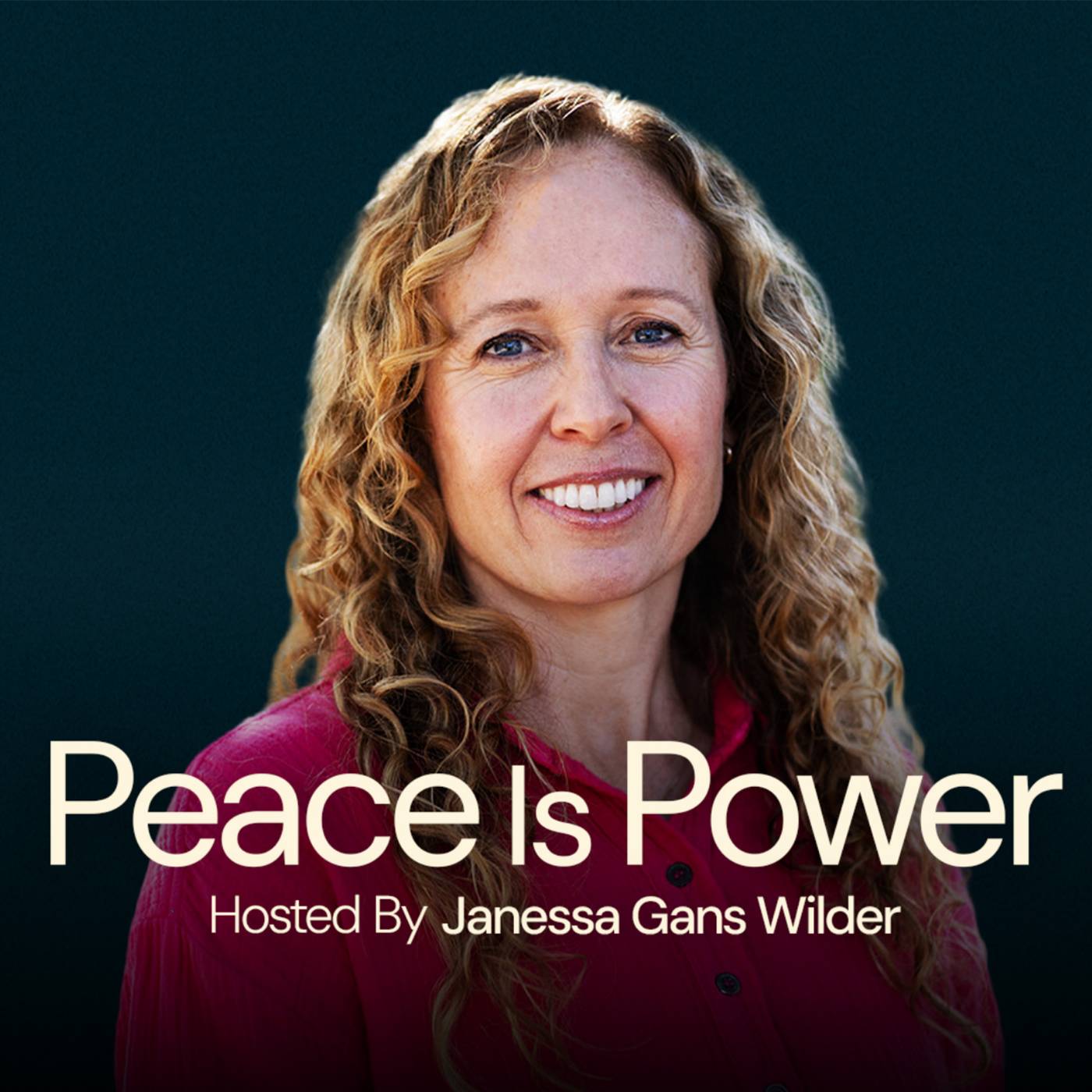
Peace is Power
Janessa Gans Wilder - Peacebuilder & Founder - Euphrates Institute
Fréquence : 1 épisode/33j. Total Éps: 3

Peace Is Power is a podcast for people who believe peace is not weakness or passivity — but one of the most powerful forces alive. Hosted by Janessa Gans Wilder — former CIA officer, peacebuilder, and founder of Euphrates Institute — the show features conversations with diplomats, artists, activists, veterans, spiritual leaders, and grassroots organizers working to build peace in a divided world.
Each episode asks a simple but urgent question: what does it look like to become a peacebuilder right where you are? Peace Is Power is an initiative of Euphrates Institute, which has trained peace leaders from more than 60 countries.
If war affects us all, peace must be built by all of us.
Classements récents
Dernières positions dans les classements Apple Podcasts et Spotify.
Apple Podcasts
🇬🇧 Grande Bretagne - government
25/06/2026#41🇬🇧 Grande Bretagne - government
22/06/2026#94🇬🇧 Grande Bretagne - government
21/06/2026#77🇬🇧 Grande Bretagne - government
20/06/2026#51🇺🇸 États-Unis - government
20/06/2026#86🇺🇸 États-Unis - government
19/06/2026#93🇺🇸 États-Unis - government
18/06/2026#88🇨🇦 Canada - government
17/06/2026#85🇺🇸 États-Unis - government
17/06/2026#74🇨🇦 Canada - government
16/06/2026#53
Spotify
Aucun classement récent disponible
Liens partagés entre épisodes et podcasts
Liens présents dans les descriptions d'épisodes et autres podcasts les utilisant également.
See all- https://peaceispower.org
4 partages
- https://rumiwithaview.com/
3 partages

- https://www.instagram.com/rumiwithaview
4 partages


Qualité et score du flux RSS
Évaluation technique de la qualité et de la structure du flux RSS.
See allScore global : 74%
Historique des publications
Répartition mensuelle des publications d'épisodes au fil des années.
Peace is Power - Trailer
mercredi 15 avril 2026 • Durée 01:58
Peace Is Power is a podcast hosted by former CIA officer and peacebuilder Janessa Gans Wilder. After serving 21 months in Iraq during the war, Janessa began asking a different question: What if real power is not force, domination, or control, but connection, courage, and the protection of life?
Through intimate conversations with diplomats, artists, activists, veterans, and spiritual leaders, Peace Is Power explores how peace can transform our inner lives, our relationships, and the world we share.
https://euphrates.org
Peace is not passivity. It is a moral, creative, and spiritual force. And the world needs you to find it; in your relationships, your community, and whatever corner of the world you call home.
This is your invitation. This is your moment.
Learn more at https://peaceispower.org
Peace is Possible: Lessons From an 8,000 Mile Journey with Satish Kumar
samedi 13 juin 2026 • Durée 49:39
In this episode of Peace is Power, Janessa Gans Wilder speaks with Satish Kumar, a lifelong peace activist, former Jain monk, and environmental thinker.
Satish shares powerful personal stories from his 8,000-mile peace pilgrimage, including his decision to travel without money as an act of radical trust. Drawing on the teachings of Mahatma Gandhi and Vinoba Bhave, he reflects on the idea that true power lies not in force or weapons, but in love, nonviolence, and human connection.
The conversation moves fluidly between global issues and personal responsibility, touching on political division, conflict, and environmental challenges. Satish highlights that while peace begins within, it must be carried outward through action, communication, and collective effort.
Key Takeaways:
Peace Is a Form of Power, Not Weakness
Nonviolence and love can mobilize entire populations and create lasting change, as seen in movements led by Gandhi and Martin Luther King Jr.
Trust Creates Connection
Satish’s journey without money demonstrated that trust often generates kindness in return. Human beings are more connected than divided.
Inner and Outer Peace Must Work Together
Personal transformation and societal change are interdependent. You cannot build a peaceful world without cultivating peace within.
Building a Peace Movement Requires Action
Satish outlines four steps: be the change, communicate effectively, organize collectively, and remain patient with results.
Peace Includes Our Relationship with Nature
True peace extends beyond human relationships. A sustainable future depends on recognizing that humans and nature are not separate.
Timestamps:
(00:00) Trust as the foundation of peace. Satish introduces the idea that peace comes from trust and shared humanity.
(02:00) Gandhi and the power of nonviolence. Historical examples of peaceful resistance that have shaped nations.
(06:30) Addressing modern political division. How opposing sides can move toward peace in polarized societies.
(11:00) Walking the world without money. A radical experiment in trust and human kindness.
(16:40) How to begin practicing trust and courage. Building inner strength through daily habits.
(23:40) Building and organizing peace movements. Practical steps for creating large-scale change.
(33:00) The “peace tea” story. A small act of kindness with a global ripple effect.
(35:00) Peace and environmental responsibility. Why peace must include harmony with nature.
(41:00) Inner vs outer transformation. Why are they necessary and inseparable?
Guest Bio:
Satish Kumar is an acclaimed activist, author, and speaker known for his lifelong commitment to peace, nuclear disarmament, and ecological sustainability. He is widely recognized for his extraordinary 8,000-mile peace walk across the world and for his long-standing role as editor emeritus of Resurgence & Ecologist magazine.
Over the years, Satish has been a Jain monk, pacifist, and advocate for nuclear disarmament. He is also the founder and Director of Programmes at Schumacher College, the internationally respected center for ecological studies.
One of his most remarkable achievements was completing, alongside his companion E. P. Menon, an 8,000-mile peace pilgrimage that began in New Delhi in 1962 and continued over two and a half years through Moscow, Paris, London, and Washington, D.C.—the capitals of the world’s earliest nuclear powers.
Throughout his work, Satish has consistently championed the belief that reverence for nature should be at the center of every political and social conversation.
This episode is sponsored by Euphrates Institute, a global community equipping everyday people to become peacebuilders through trainings, workshops, resources, and monthly calls. Join us at www.euphrates.org.
Peace is not passivity. It is a moral, creative, and spiritual force. And the world needs you to find it; in your relationships, your community, and whatever corner of the world you call home.
This is your invitation. This is your moment.
Learn more at https://peaceispower.org
What Bomb Can Touch the Human Spirit? Discussing War, Peace, and Nonviolence with Ari Honarvar
samedi 20 juin 2026 • Durée 59:07
In this episode of Peace is Power , Janessa Gans Wilder speaks with Ari Honarvar, an Iranian-American writer, artist, and founder of Rumi With a View. Ari reflects on growing up in Iran during the Islamic Revolution and the Iran-Iraq War, where women’s freedoms were stripped away, and fear became part of daily life.
After witnessing repression and violence firsthand, her parents made the heartbreaking decision to send her alone to the United States at age 14 for her safety.
The conversation explores exile, identity, trauma, and the emotional dislocation of leaving one’s homeland and family behind. Ari shares how poetry, music, art, and community became sources of sanctuary and resistance during war.
Together, Janessa and Ari discuss rehumanization, nonviolence, feminine leadership, and the challenge of keeping the heart open in times of destruction and division.
Key Takeaways:
Rehumanization Is an Act of Resistance
Ari explains how her work uses storytelling, art, and joy to reconnect people to the humanity behind war, displacement, and political violence.
Exile Leaves Both Emotional and Physical Wounds
Being separated from family, language, and culture created a profound sense of dislocation that shaped Ari’s understanding of trauma and resilience.
Beauty Can Sustain Us During Crisis
Ari describes how people found moments of sanctuary and dignity even during war and oppression.
Peace Requires Justice
The conversation challenges simplistic ideas of peace, emphasizing that peace without dignity, accountability, and collective liberation is incomplete.
Keeping the Heart Open Takes Strength
Ari speaks about developing the capacity to hold grief, anger, and compassion without losing one’s humanity.
Timestamps:
(00:12) Peace as connection, not domination. Janessa introduces the podcast's central theme and explores the idea that true power comes from connection rather than force.
(01:32) Growing up during revolution and war. Ari reflects on her childhood in Iran during the Islamic Revolution and the Iran-Iraq War.
(06:06) Leaving Iran alone at age 14. Ari shares the heartbreaking circumstances that led her parents to send her to the United States for safety.
(10:27) Rebelling against oppression. From dressing as a boy to writing anti-regime graffiti, Ari describes her early acts of resistance against gender restrictions.
(13:15) The trauma of exile and dislocation. The conversation explores the emotional toll of being separated from family, language, and homeland.
(17:16) Witnessing suffering from afar. Ari discusses the grief and helplessness of watching violence unfold in Iran while living abroad.
(24:37) Rehumanizing the victims of war. Ari explains her project highlighting the people, schools, and communities affected by bombings and political violence.
(31:07) Keeping the heart open during difficult times. Janessa and Ari reflect on the strength required to remain compassionate in the face of pain and destruction.
(36:29) What Iranian women are teaching the world. Ari discusses collective liberation, feminine leadership, and the broader meaning behind women-led resistance movements.
(37:05) Rooftops, missiles, and Rumi. Ari shares a childhood memory of neighbors reciting poetry during air raids, finding sanctuary in beauty and art.
(43:40) Violence, self-defense, and nonviolence. A nuanced conversation about whether violence can ever be justified in situations of oppression and survival.
(51:38) Joy and embodiment as resilience practices. Ari describes how breath, art, gratitude, and community help sustain people through trauma and overwhelm.
(52:24) The mirror poem and self-reflection. Ari shares a poem by Nizami Ganjavi about confronting ourselves instead of projecting blame outward.
(55:05) Why peace without justice is incomplete. The episode closes with a reflection on the relationship between peace, justice, and collective wholeness.
Guest bio:
Ari Honarvar is an award-winning writer, artist, and speaker whose work bridges the intersections of art, social justice, and collective well-being. As a presenter for the Solutions Journalism Network, her writing has been featured in The Guardian , The New York Times , Newsweek , Teen Vogue , and Yes! Magazine , among other publications.
A Girl Called Rumi , Ari’s award-winning debut novel, has garnered widespread acclaim as a BookFest and Nautilus Award winner, a Locus and Foreword INDIES finalist, and one of Kirkus Reviews ’ Best Books of 2022.
Her literary contributions extend to several anthologies and celebrated flash fiction. Additionally, she created the Rumi’s Gift Oracle Deck, which pairs her original translations and meditations with the evocative artistry of Carmen Costello.
In her capacity as the Iranian Musical Ambassador of Peace, Ari continues her mission to bridge divides across conflict-ridden borders through the power of poetry and music. She frequently dances with refugees and leads Resilience through Joy workshops for displaced individuals and healthcare professionals across Europe and the U.S.-Mexico border. Following the success of these initiatives, she now provides customized versions of these programs to educational institutions, nonprofits, and organizations committed to the work of social justice.
In her commitment to fostering connection through art, Ari established the Drop Poems Not Bombs initiative, which facilitates the exchange of musical love letters from American artists to the Iranian people. Additionally, she spearheads Dance for Freedom, a project dedicated to mobilizing international solidarity and support for protesters in Iran.
Follow Ari:
Website- https://rumiwithaview.com/
Instagram- https://www.instagram.com/rumiwithaview/
This episode is sponsored by Euphrates Institute, a global community equipping everyday people to become peacebuilders through trainings, workshops, resources, and monthly calls. Join us at www.euphrates.org.
Peace is not passivity. It is a moral, creative, and spiritual force. And the world needs you to find it; in your relationships, your community, and whatever corner of the world you call home.
This is your invitation. This is your moment.
Learn more at https://peaceispower.org
Podcasts Similaires Basées sur le Contenu