In Conversation with Janina Fisher: Wisdom Between Colleagues; Insights For Us All – Détails, épisodes et analyse
Détails du podcast
Informations techniques et générales issues du flux RSS du podcast.
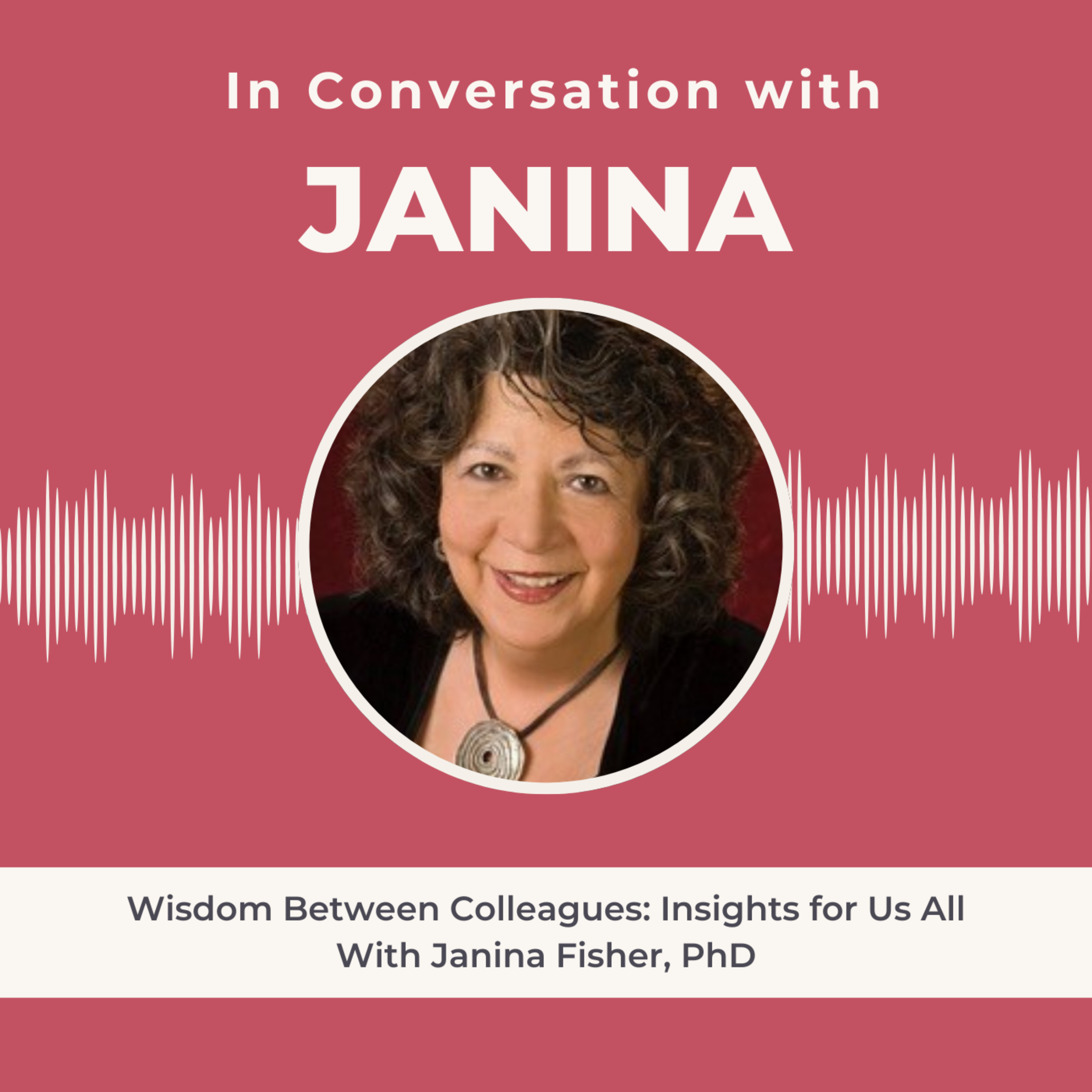
In Conversation with Janina Fisher: Wisdom Between Colleagues; Insights For Us All
Janina Fisher, PhD
Fréquence : 1 épisode/9j. Total Éps: 19

Classements récents
Dernières positions dans les classements Apple Podcasts et Spotify.
Apple Podcasts
🇬🇧 Grande Bretagne - mentalHealth
03/04/2026#97🇬🇧 Grande Bretagne - mentalHealth
01/11/2025#97🇬🇧 Grande Bretagne - mentalHealth
31/10/2025#72
Spotify
Aucun classement récent disponible
Liens partagés entre épisodes et podcasts
Liens présents dans les descriptions d'épisodes et autres podcasts les utilisant également.
See all- https://www.frankandersonmd.com/
41 partages
- https://drarielleschwartz.com/
35 partages
- https://embrace-autism.com/
8 partages

- https://www.facebook.com/drarielleschwartz/
18 partages
Qualité et score du flux RSS
Évaluation technique de la qualité et de la structure du flux RSS.
See allScore global : 62%
Historique des publications
Répartition mensuelle des publications d'épisodes au fil des années.
Be a Cook, Not a Baker: Lisa Ferentz on Integrative Trauma Therapy, Self-Compassion, and the Art of Clinical Flexibility
Saison 1 · Épisode 3
mercredi 29 octobre 2025 • Durée 40:40
In this episode of In Conversation with Janina Fisher: Wisdom Between Colleagues—Insights for Us All, Janina Fisher, PhD, sits down with longtime friend, collaborator, and trauma therapist Lisa Ferentz, LCSW-C, DAPA, for a spirited, heartfelt, and refreshingly honest conversation on the art of psychotherapy. Together, they explore what it means to truly work in an integrative, client-centered way—where healing is not prescribed from a manual but discovered collaboratively, through relationship, creativity, and humility.
Lisa reflects on her decades of experience as a therapist, educator, and founder of the Ferentz Institute, where she trains clinicians across modalities. She shares the philosophy behind her best-selling book Letting Go of Self-Destructive Behaviors and its accompanying workbook, as well as her more recent publication Finding Your Ruby Slippers, a guided journey in accessing one’s inner wisdom. Drawing inspiration from The Wizard of Oz, Lisa offers a deeply compassionate, empowering lens for understanding trauma survivors—not as broken or resistant, but as protectively adaptive.
This episode touches on:
Why integration beats allegiance to any single model
The difference between being a “baker” vs. a “cook” in therapy
How parts work, somatics, and expressive modalities intersect organically
Why terms like “resistant” and “avoidant” do more harm than good
The “phobia of vulnerability” and what it really signals
How clinicians can be creative, sneaky, and humble in equal measure
Why modeling self-compassion matters more than teaching it
Janina and Lisa’s shared belief: the client is always the expert on the client
With warmth, laughter, and remarkable alignment, Janina and Lisa discuss how they’ve both spent decades advocating for a strengths-based, non-pathologizing, and emotionally nuanced approach to trauma treatment. They reflect on the early days of their friendship (which began at an empty book signing table!), and why both believe in weaving rather than worshipping therapeutic modalities.
Whether you’re a seasoned clinician, a student just beginning the journey, or a survivor in search of hope, this conversation is filled with insight, validation, and encouragement. As Lisa puts it, “Be a cook, not a baker”—therapy isn’t about perfect recipes. It’s about presence, attunement, and the courage to trust both your client and yourself.
Lisa is a recognized expert in the strengths-based, de-pathologized treatment of trauma and has been in private practice for over 40 years. She presents workshops and keynote addresses nationally and internationally, and is a clinical consultant to practitioners and mental health agencies in the United States, Canada, the UK, Italy, Ireland, Spain, and Israel. She has been an Adjunct Faculty member at several Universities, and is the Founder of “The Ferentz Institute,” now in its eighteenth year of providing continuing education to mental health professionals and graduating thousands of clinicians from her two Certificate Programs in Advanced Trauma Treatment. In 2009 she was voted the “Social Worker of Year” by the Maryland Society for Clinical Social Work. Lisa is the author of “Treating Self-Destructive Behaviors in Traumatized Clients: A Clinician’s Guide,” now in its second edition, “Letting Go of Self-Destructive Behaviors: A Workbook of Hope and Healing,” and “Finding Your Ruby Slippers: Transformative Life Lessons From the Therapist’s Couch.” Lisa also hosted a weekly radio talk show, writes blogs and articles for websites on trauma, attachment, self-destructive behaviors, and self-care, teaches on many webinars, and is a contributor to Psychologytoday.com.
You can follow Lisa’s work on her website, theferentzinstitute.com, YouTube, LinkedIn and Twitter.
All Parts on Board: Frank Anderson on Psychopharmacology, Parts Work, and Making Trauma Healing Public
Saison 1 · Épisode 2
mercredi 22 octobre 2025 • Durée 36:47
In this engaging and heartfelt episode of In Conversation with Janina Fisher: Wisdom Between Colleagues—Insights for Us All, Janina Fisher, PhD, is joined by psychiatrist, author, and trauma specialist Frank Anderson, MD for a wide-ranging conversation that is both clinically insightful and deeply personal.
With over three decades in the field of trauma and dissociation, Frank reflects on his evolution from a young Harvard-trained psychiatrist to a pioneering voice in Integrating Internal Family Systems (IFS), neuroscience, and psychopharmacology. Now, with multiple bestselling books, a production company, and a growing public platform, Frank is on a mission to bring trauma healing beyond the therapy office—to the wider world.
Together, Janina and Frank explore:
How to prescribe medication with respect for parts and without re-enacting power dynamics
Why trauma-informed psychopharmacology must be collaborative, consensual, and education-focused
The healing power of internal consensus—“all parts must agree” before a script is written
The myth that antidepressants “fix” depression—and how they actually work to widen the window of tolerance
Why therapy that only targets memory, but not blended parts, misses the heart of complex trauma
Frank’s concept of medications as unblending agents, helping clients step out of reliving and into relationship with their experience
Stories of early trauma treatment missteps—and the lessons we’ve learned from them
The shift from regressive parts mapping to strategic, systems-informed integration
Frank also shares highlights from his books:
To Be Loved — a memoir and upcoming feature film exploring truth, trauma, and transformation
Transcending Trauma — a guide to treating complex PTSD with IFS and neuroscience
IFS Skills Training Manual — a practical workbook that became a foundational tool for clinicians
The episode also includes a moving discussion about Frank’s production company, Trauma-Informed Media, and their work developing a docuseries adaptation of The Body Keeps the Score in collaboration with Bessel van der Kolk. Frank speaks passionately about reaching trauma survivors around the globe who may never access therapy—and about the urgent need for accessible, accurate information at scale.
Throughout, Janina and Frank reflect on their 30-year friendship, their complementary clinical philosophies, and their shared reputation for helping the clients others fear to touch. Their chemistry is warm, funny, and real—and their insights speak directly to clinicians navigating the complex intersections of parts, trauma, and pharmacology.
This episode is for:
Therapists curious about how medication fits in trauma treatment
Clinicians working with blended, suicidal, or highly dysregulated clients
Survivors looking to understand the why behind their healing journey
Anyone seeking hope, humility, and clarity in the chaos of complex trauma
As Frank says:
“I educate. You decide. And no medication happens until all parts are on board.”
Whether you’re a therapist, survivor, educator, or just trauma-curious, this conversation offers validation, vision, and a gentle challenge: How can we take what we know—and share it with the world?
Frank Anderson, MD, is a Harvard-trained psychiatrist and psychotherapist, specializing in trauma and dissociation. He is a lead trainer for the IFS Institute and has a long-standing affiliation with Bessel van der Kolk’s Trauma Center. He also serves as an advisor to the International Association of Trauma Professionals. His most recent books include To Be Loved: A Story of Truth, Trauma, and Transformation, a memoir about his personal journey, and Transcending Trauma: Healing Complex PTSD with Internal Family Systems.
https://www.frankandersonmd.com/
Program with Janina: https://www.frankandersonmd.com/trauma-beyond-the-story
Nothing Is Not Nothing: Ruth Cohn on Neglect, Attachment, and the Invisible Wounds of Early Trauma
Saison 1 · Épisode 1
jeudi 16 octobre 2025 • Durée 43:10
In this powerful first episode of In Conversation with Janina Fisher: Wisdom Between Colleagues—Insights for Us All, Janina Fisher, PhD, is joined by longtime friend and colleague Ruth Cohn, MFT, for a deeply moving exploration of one of the most overlooked forms of trauma: neglect.
Ruth shares the origins of her groundbreaking work on neglect—what she calls “the trauma of nothing”—and invites listeners to rethink the invisible wounds carried by those who, on the surface, report no abuse or violence. Together, Janina and Ruth illuminate how missing experiences, in addition to overt events, shape our relationship templates, emotional regulation, and sense of self.
This episode touches on:
The origins of Ruth’s clinical curiosity about neglect
Why “nothing happened to me” can signal a profound trauma
Intergenerational transmission of disconnection and diffuse attention
Gendered vulnerability in attachment and emotional development
The survival strategy of caregiving in children with unmet needs
The importance of attuning to implicit memory and early relational absence
A compassionate reframing of “avoidant” clients and men in therapy
With warmth, clinical insight, and decades of experience between them, Ruth and Janina challenge the field to hold space for what has too often been dismissed: nothingness that shaped everything.
In Conversation with Janina - Trailer
lundi 13 octobre 2025 • Durée 01:32
In Conversation with Janina Fisher features intimate, unscripted dialogues between Dr. Janina Fisher and leading voices in trauma therapy. Each episode explores the nuances of healing—from attachment wounds and somatics to IFS, memory reconsolidation, and anti-oppressive care. Thoughtful, relational, and deeply human, these conversations offer insight and inspiration for clinicians and curious minds alike.
Grief, Trauma, and the Search for Meaning
Saison 3 · Épisode 1
mercredi 1 avril 2026 • Durée 31:49
In this moving conversation, trauma therapist Janina Fisher speaks with grief expert David Kessler about the evolving understanding of grief and its deep connection to trauma. Reflecting on his work with Elisabeth Kübler-Ross and his own personal loss, Kessler shares how the concept of a sixth stage of grief—meaning—emerged. Together, they explore why grief is never linear, how compassion supports healing, and how loss can gradually be integrated into a life that continues to hold love, purpose, and connection.
Key Takeaways:
Why grief is not a linear process
The meaning behind the “sixth stage” of grief
How trauma and loss intersect in healing
Why compassion and connection matter in grief recovery
David Kessler is one of the world’s foremost experts on grief and loss. His decades of experience with thousands of people on the edge of life and death has taught him the secrets to living a happy and fulfilled life, even after life’s tragedies. He is the author of seven books including his latest bestselling book, Finding Meaning: The Sixth Stage of Grief, as well as a new Finding Meaning Companion Workbook. He co-authored two books with Elisabeth Kübler-Ross, Life Lessons and On Grief and Grieving. He co-wrote You Can Heal Your Heart with Louise Hay and also wrote Visions, Trips and Crowded Rooms: Who and What You See Before You Die. His first book, The Needs of The Dying received praise from Saint (Mother) Teresa. His new online model of grief support, Tender Hearts, offers over twenty-five online grief groups. David leads one of the most respected Grief Educator Certification programs. He is the founder of Grief.com.
show notes
website
social media
instagram@Iamdavidkessler
facebook@Iamdavidkessler
Implicit States, Future Selves & the Rain Cloud of Knowing: Janina Fisher in Conversation with Nancy Napier
Saison 2 · Épisode 9
mercredi 4 mars 2026 • Durée 43:29
In this tender, wise, and delightfully expansive conversation, Janina Fisher reunites with longtime colleague, author, hypnotherapist, and teacher Nancy J. Napier—whose book Getting Through the Day shaped a generation of trauma clinicians and clients.
Together, they explore the evolution of their work across four decades: implicit states, parts, SE, hypnosis, spirituality, multidimensionality, and the deep privilege of accompanying clients back into their wholeness. Nancy shares the origins of her “future self” and “alternate self” work, her grandmother’s teaching of the rain cloud of knowable things, and how ideas emerge collectively across time. Janina reflects on why naming, noticing, and staying with implicit states is at the heart of healing.
Whether you’re a therapist, a client, or someone who loves Nancy’s or Janina’s work, this episode is a warm, soulful exploration of healing, wholeness, and what it really means to grow over a lifetime.
Implicit states are young body–mind states Nancy and Janina describe implicit states as pre-verbal, deeply embodied experiences carried by young parts of self. The clinical task is to help the adult nervous system stay present with those states, not become them.
Naming and noticing implicit states is itself an intervention The “noticing brain,” a term Nancy adopted from Janina, helps clients observe rather than drown in their experience. Noticing activates regulation, calms the amygdala, and brings more presence online.
Spirituality belongs in the therapy room Nancy shares how many clients historically had no safe place to speak about their spiritual lives without being pathologized. Both she and Janina affirm that spirituality and trauma work naturally intersect.
Future selves and alternate selves offer new templates for living Nancy’s “future self” and “alternate self” processes emerged from teaching, intuition, and synchronicity—what her grandmother called a “rain cloud of knowable things.” These practices help clients embody new possibilities, not just think about them.
Love and gratitude as healing frequencies Nancy frames love as a universal healing frequency and encourages daily gratitude toward the body and its “community of non-human entities,” as well as toward protective parts. Janina echoes the importance of thanking parts that helped clients survive.
Implicit healing changes how we grieve later in life Nancy shares how metabolizing an early implicit state of “I’m shattered” transformed her later grief over losing her cats—shifting from overwhelming, childlike collapse to grounded adult mourning.
Trauma therapy requires active guidance and co-regulation Both clinicians push back against overly neutral, hands-off models. They emphasize that trauma clients are “lost in the trauma world” and need the therapist’s nervous system, structure, and guidance to find their way out.
Nancy J. Napier, LMFT, is a psychotherapist and hypnotherapist in private practice in New York City, specializing in trauma resolution. She is author of Recreating Your Self: Increasing Self-Esteem Through Imaging and Self-Hypnosis; Getting Through the Day: Strategies for Adults Hurt as Children; Sacred Practices for Conscious Living, and co-author of Meditations & Rituals for Conscious Living.
She also has recordings of guided meditations on subjects including accessing your optimal future self, mindfulness, healing wounded child parts, and healing shame, to mention a few that may be downloaded from iTunes and CDBaby. She also has training videos for professionals on Vimeo.com Videos on Demand. In addition, she posts a monthly audio guided meditation on her website, www.nancynapier.com, as well as on her YouTube channel, along with “Videos on Multidimensional Living”, as well as videos from talks given on issues related to spirituality.
Enduring, Submitting, Surviving: Rui Cang on Trauma, Identity & Healing in Asian Communities
Saison 1 · Épisode 8
mercredi 3 décembre 2025 • Durée 40:15
In this rich and deeply personal episode of In Conversation with Janina Fisher: Wisdom Between Colleagues—Insights for Us All, Dr. Janina Fisher is joined by Rui Cang, LMFT, a Los Angeles–based psychotherapist, TIST facilitator, and Sensory Motor Psychotherapy practitioner whose clinical expertise is grounded in her own lived experience as a Chinese-born immigrant and bicultural therapist.
Together, they explore the complex and often unspoken challenges faced by Asian and Asian American clients—from navigating intergenerational trauma and collectivist family systems to reclaiming language for emotion, boundaries, and the self in a culture where those concepts have long been taboo.
Through stories from her practice and her own journey, Rui illuminates:
The role of shame and compliance in collectivist cultures—and how they can inhibit healing
Why the concept of “boundary” may feel foreign or even threatening to many Asian clients
How helicopter parenting, fear-based caregiving, and emotional withholding create patterns of anxiety and indecisiveness across generations
The cultural value of endurance (zhen)—and how it both protects and harms
The profound attachment trauma that can arise even in multi-generational, tightly bonded families
How enduring racism, war, and displacement have shaped bodies and nervous systems across Asian diasporas
The emotional toll of code-switching, assimilation, and survival-driven identity loss in Western contexts
How language itself can limit emotional expression—and how somatic and parts-based therapy helps bridge the gap
Janina and Rui reflect on what it means to offer culturally responsive trauma therapy that honors the beauty and pain of collectivist traditions. They discuss the paradox of Asian family systems that are close-knit and supportive—yet often silence individuality, emotional vulnerability, and self-expression. Rui shares how many of her clients, especially first- and second-generation immigrants, are caught between two worlds: Western individualism and Eastern collectivism—and how therapy can help them reclaim a self that belongs to both.
Throughout the conversation, Rui’s compassion and insight shine. She speaks candidly about:
Growing up in Beijing in the absence of emotional vocabulary
Training in psychology in China before such programs truly existed
The challenges of doing Mandarin-language therapy with clients whose native culture lacks words like “empathy,” “self-worth,” or “boundary”
Her clinical use of parts language (TIST) to help clients honor their loyal parts, submit parts, and protective parts without shame
This episode is not only a profound exploration of Asian cultural dynamics in therapy—it’s also a masterclass in attunement, humility, and the courage to question inherited beliefs.
Whether you’re a clinician working with Asian clients, an immigrant navigating dual identities, or simply someone interested in how culture shapes our inner world, this conversation offers nuance, validation, and a path toward integration.
“Our clients aren’t being resistant,” Rui reminds us. “They’re carrying centuries of survival strategy—and they’re doing the best they can.
https://www.thewholisticconnection.com/
Rui is a licensed marriage and family therapist with a deep passion for supporting individuals and families in healing from trauma. She specializes in PTSD, Complex PTSD, dissociative disorders, and attachment-related challenges, and is certified in both Sensorimotor Psychotherapy and Trauma-Informed Stabilization Treatment, and has advanced training in Attachment-Focused EMDR and Relational Life Therapy for couples.
Rui’s approach is warm, relational, and holistic—integrating mind, body, and spirit. She believes that healing happens through connection, compassion, and the discovery of inner resilience.
Who Decides What Works? Wendy D’Andrea on Research, Relationality, and Rethinking Evidence-Based Trauma Therapy
Saison 1 · Épisode 7
mercredi 26 novembre 2025 • Durée 42:01
In this thoughtful and provocative episode, Janina Fisher, PhD, sits down with Wendy D’Andrea, PhD—research psychologist, clinician, and Chief Scientific Officer of the Trauma Research Foundation—to explore a timely and often misunderstood question in the world of psychotherapy:
Who gets to define what healing looks like—and who is left out of the conversation?
Wendy and Janina unpack the persistent divide between researchers and clinicians, questioning how we define "evidence," who decides what counts as success, and why many trauma survivors don't benefit from the treatments that look most effective on paper.
With humor, warmth, and critical insight, they explore:
Why clinicians are often discouraged from participating in research—and how to change that
How research literacy makes better therapists, not just better scientists
The pitfalls of prolonged exposure therapy, especially for clients with complex trauma or multiple traumatic exposures
Why “reduction in PTSD symptoms” doesn’t always mean a better life
The disconnect between what gets measured in research and what actually matters to clients (like shame, intimacy, or feeling safe enough to hug your child)
How cultural mistrust and racial bias shape access to and outcomes in trauma care
The limitations of a one-size-fits-all approach to trauma treatment—and the urgent need for relational, nuanced, and individualized care
Why creating research that’s relational, co-created, and clinically relevant is the next frontier
Wendy shares her experience as a first-generation college student-turned-researcher, navigating a system that values intellectual authority over lived experience—and how that journey shaped her commitment to making research accessible, collaborative, and human.
Together, she and Janina imagine a future where:
Clinicians are empowered to ask research questions that come from the heart
Researchers speak in language that clinicians and clients can understand
Evidence-based practice doesn’t mean ignoring the client’s voice, culture, or nervous system
Therapeutic approaches are evaluated not just by symptom reduction, but by emotional resonance, relational impact, and lived transformation
As Wendy puts it:
“Researchers need clinicians to know what’s true in their data—and clinicians need research that respects the complexity of human suffering.”
This conversation is a must-listen for therapists, supervisors, and researchers who are ready to move beyond the tired binary of “data vs. intuition”—and instead build a bridge rooted in curiosity, collaboration, and compassion.
If you’ve ever wondered why the most “evidence-based” treatments don’t always work—or how we might build a better future for trauma therapy—this episode offers a critical, hopeful starting point.
Dr. Wendy D'Andrea is a clinical psychologist with expertise in trauma, psychobiology, and healing. After completing degrees at Oberlin College and the University of Michigan, and postdoctoral specialty training in trauma treatment with Bessel van der Kolk at the Trauma Center, she joined the New School for Social Research and Lang College in 2010. Since joining the New School, she has taught classes on psychopathology, trauma, research methods, and treatment, and her lab has become a vibrant working collective producing over 50 publications with student collaboration. She is also a thought leader in the field of trauma, working as the Chief Science Officer for the Trauma Research Foundation, leading forward the integration of science and practice, and brings a strong interest in understanding processes like embodiment, interpersonal connection, and self-expression in venues such as theater, dance, sport, humanitarian work, and therapy.
Lana Epstein on Attachment, Memory, and the Healing Power of Co-Creation
Saison 1 · Épisode 6
mercredi 19 novembre 2025 • Durée 36:07
In this tender and richly insightful episode of In Conversation with Janina Fisher: Wisdom Between Colleagues—Insights for Us All, Janina Fisher, PhD, welcomes friend, longtime collaborator, and trauma expert Lana Epstein, MSW, MA, LICSW. Together, they reflect on their 30-year journey as clinicians, supervisors, teachers—and kindred spirits working to understand the nuances of healing trauma.
From their days as board members of the New England Society for the Treatment of Trauma and Dissociation to co-teaching for Bessel van der Kolk’s early conferences, Janina and Lana recount their shared roots, deep clinical respect, and mutual influence. But this conversation is more than nostalgic—it’s a profound dive into the integrative work of healing both trauma and attachment wounds.
Lana brings a unique voice to the field as a hybrid clinician fluent in EMDR, Sensorimotor Psychotherapy, clinical hypnosis, and parts work (including IFS and TIST). She shares how she weaves these modalities into a deeply relational, body-informed practice—one that doesn’t fix clients, but co-creates with them the conditions for change.
Together, Janina and Lana explore:
Why attachment wounds are often the “last piece” clients can’t resolve through traditional therapy
The clinical challenge of teasing apart trauma from early relational injuries
How to work with clients who “armor up” even when they desperately want love
A powerful, somatic case vignette involving curling inward, reaching, and receiving
The role of bilateral stimulation in calming nervous system overwhelm—even before trauma processing
Why chunking down and co-regulating through presence matters more than technical mastery
The importance of right brain-to-right brain attunement and implicit communication
An accessible explanation of memory reconsolidation and how it rewires the emotional weight of trauma
Lana also shares a poignant personal story of her own breakthrough in a group therapy session—when, in the midst of crying about feeling unloved and alone, she instinctively bolted upright when others tried to offer physical support. That reaction, she says, taught her more than years of insight-oriented therapy. It was the moment she began to understand how to help clients unveil what they long for but push away.
Throughout the episode, Janina and Lana model the humility, humor, and humanity that defines truly effective trauma treatment. They speak candidly about not always knowing what they’re doing—and why collaboration, not clinical certainty, is the real key to healing.
Whether you're an EMDR-trained therapist wondering how to bring the body into the room, or a somatically trained clinician looking to integrate memory reconsolidation techniques, this episode is a masterclass in respectful integration.
If you would like to connect with Lana Epstein, please reach out to her at: lanaeps@verizon.net
Lana Epstein, MA, LICSW, has maintained a private practice in Lexington, MA, since 1984 and currently has office hours in NYC. Her focus has been on individual, couple, and group psychotherapies, specializing in the treatment of clients who have survived traumatic childhoods. She is a past supervisor at the Trauma Center, was a member of the New England Society for the Treatment of Trauma and Dissociation board for six years, and is a founding member of the New York City Association of Trauma Therapists. Integrating a number of therapeutic models, Lana presents internationally and is interested in the integration of Sensorimotor Psychotherapy and EMDR.
Show Notes:
When Healing Feels Impossible: Trauma Recovery and the Birth of Khiron Clinics
Saison 1 · Épisode 5
mercredi 12 novembre 2025 • Durée 53:11
In this powerful and deeply personal conversation, Janina Fisher, PhD, sits down with longtime friend and colleague Benjamin Fry, founder of the internationally renowned Khiron Clinics in the UK. What unfolds is a moving reflection on Fry’s descent into despair, his search for healing, and how his lived experience ultimately gave birth to a trauma treatment model that has helped countless others find their way home to themselves.
Benjamin shares how, despite being a trained psychotherapist with a thriving private practice and media presence, he was blindsided by a severe breakdown that left him nonfunctional and terrified. After exhausting conventional options—therapy, medication, even hospitalization—he discovered somatic and neurobiologically-informed trauma therapy at a small clinic in Arizona. That four-month stay, which included EMDR and Somatic Experiencing, not only saved his life, but planted the seed for what would become Khiron House, now part of Khiron Clinics: a residential and outpatient program rooted in presence, relationship, and embodied care.
Janina and Benjamin explore the core philosophy behind Khiron’s success: healing through community. Clients don’t just receive therapy—they cook together, clean together, participate in groups, share rooms, and show up for each other. The environment is intentionally non-institutional and non-hierarchical, creating opportunities for relational repair and nervous system regulation in real time.
They also discuss the vital role of Janina’s TIST model (Trauma-Informed Stabilization Treatment), which Khiron adopted early on. Clients began using parts language organically, even outside of sessions—deepening their capacity for self-understanding and co-regulation.
The conversation dives into:
Why acknowledging trauma—not just managing symptoms—matters
The therapeutic power of safe community as co-regulator
How Khiron responds to self-harm and dysregulation with relationship, not punishment
Why everyday activities like cooking and shopping can be profoundly therapeutic
The emotional toll and extraordinary reward of working in residential trauma care
The unique challenges of treating complex trauma and dissociation (including DID) in a shared environment
How Khiron staff manage risk through containment, collaboration, and compassion
The importance of “parts contracting” and providing multiple therapeutic relationships
Why many clients find healing at Khiron after being failed by every other system
As Fry puts it, “At the core of every damaged person is an undamaged place that’s just trying to find a way out.” This episode is a moving tribute to what happens when clinical innovation meets lived experience—and when care is offered with courage, nuance, and community at its heart.
Benjamin Fry is a leading voice in the field of trauma and relationships. He is the founder of Khiron Clinics, one of the world’s foremost residential centres for the treatment of trauma-related mental health issues, and of Televagal, an innovative mental health technology platform that supports nervous system regulation in therapy.
An accredited psychotherapist, couples therapist, speaker, author, and entrepreneur, Benjamin has written four books, including The Invisible Lion: How to Tame your Nervous System and Heal your Trauma, which explores how trauma shapes our behaviours, bodies, and relationships and how we can heal.
Benjamin’s new book, Re-Pair: How to Fix Any Relationship, is a practical guide to transforming the patterns trauma creates in love, helping us reconnect through awareness, communication, and care.
He now speaks internationally and delivers workshops on trauma recovery and relationship repair. His work raises awareness of nervous system-based therapies and helps individuals and couples understand how trauma disrupts connection and how to restore it.
Podcasts Similaires Basées sur le Contenu