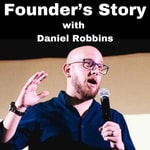
"Founder's Story" by IBH Media isn't a business show. It's the conversation founders don't get to have anywhere else.
Think 60 Minutes, but for entrepreneurs. We sit down with the most interesting people in business and go past the highlight reel, past the pitch, past the polished version they give every other podcast. We go into the mud with them. The 2 a.m. doubts. The bet that almost ended everything. The moment they wanted to quit and didn't.
You'll hear from household names like Gary V, Codie Sanchez, Rob Dyrdek, and Tom Bilyeu, and just as often from founders you've never heard of who are building something the world needs to know about. Either way, the goal is the same: a real conversation that makes you laugh, makes you think, and sometimes catches you off guard with how much it makes you feel.
This is where the story behind the success finally gets told. This is "Founder's Story."
Site
RSS
Spotify
Apple
Données mises à jour le 03/10/2026
Classements récents
Dernières positions dans les classements Apple Podcasts et Spotify.
Liens partagés entre épisodes et podcasts
Liens présents dans les descriptions d'épisodes et autres podcasts les utilisant également.
Marriage Expert: "After 20,000 Hours Of Counseling, I Know What Kills A Marriage" | Ep. 450 with Tim Arrigo Co-Founder of Beyond Driven Enterprises
Épisode 450
vendredi 2 octobre 2026 • Durée 40:16
Daniel opens the episode by asking Tim one direct question: what really kills a marriage? Tim answers that selfishness and self-centeredness are often at the root, but those patterns usually come from deeper issues formed long before the marriage began. He explains that intimate relationships are shaped by early attachment, family systems, trauma, and the way people learned to love, protect themselves, communicate, and survive. Pasted text
The conversation then moves into why so many people try to fix the marriage without fixing themselves. Tim says many men, especially business owners, wait until the house is burning down before they call for help. They look for communication hacks, date nights, vacations, or external fixes, but Tim argues that to change the marriage, a man has to change the man who shows up to the marriage. Pasted text
Daniel and Tim also explore how business success can distort identity. Tim explains that entrepreneurs often become so enmeshed with their companies that delegating feels like handing off part of who they are. That same control, fear, and constant problem-solving can damage marriages, health, emotional regulation, and the ability to be present with family. Pasted text
Key Discussion Points
Tim explains why selfishness, self-centeredness, resentment, contempt, unforgiveness, victimhood, and unresolved childhood patterns can slowly destroy a marriage. Pasted text
He breaks down the difference between feeling good and being happy, saying dopamine-driven pleasure is not the same as inner peace, healthy relationships, service, and shared life experience. Pasted text
Tim explains why men often come to counseling trying to fix the relationship externally, when the real breakthrough begins by changing the man who shows up to the marriage. Pasted text
The conversation explores how couples reinforce the exact patterns they complain about, often becoming so focused on what their spouse is doing wrong that they miss their own role in the cycle. Pasted text
Tim shares why aligned values, communicated needs, forgiveness, and emotional intelligence are foundational to healthier relationships and better dating choices. Pasted text
Daniel and Tim discuss how entrepreneurs can lose sleep, health, emotional stability, and marriage connection when business becomes fused with identity, control, and fear. Pasted text
Takeaways
Marriage is not about returning to who you used to be. Tim says a marriage is a living, breathing organism, which means both people are constantly changing and must learn how to keep choosing and loving each other in each new season. Pasted text
Many people confuse dopamine with happiness. Feeling good can come from food, shopping, drinking, achievement, or distraction, but Tim defines happiness as inner peace, soundness of mind, connection, service, and shared meaning. Pasted text
Your partner’s change will not automatically heal you. Tim explains that many people wait for their spouse to change, but the deeper work begins when someone looks at their own patterns, wounds, reactions, and contribution to the cycle. Pasted text
For entrepreneurs, business can become identity. Tim says many founders started their company for freedom, but eventually become enslaved to it because they cannot separate their self-worth from business performance. Pasted text
Emotional intelligence does not make men weaker. Tim argues that men with low emotional intelligence are often the most emotionally reactive, while emotionally intelligent men can name what they feel, regulate themselves, and respond with strength instead of reactivity. Pasted text
If you cannot name it, you cannot tame it. Tim’s first step for increasing emotional intelligence is learning to identify what is actually happening internally, whether it is guilt, shame, overwhelm, anger, loneliness, fear, or feeling triggered. Pasted text
Closing Thoughts
Tim Arrigo’s Founder’s Story episode is a powerful conversation about marriage, masculinity, healing, and the hidden cost of business success. His message is that the external problems in our marriages, businesses, and lives often reveal internal problems we have not yet faced. For founders and high-performing men, the breakthrough is not another tactic, hack, or external fix. It starts inside: naming what you feel, separating your identity from your business, taking ownership of your patterns, and becoming the kind of person who can create the relationship and life you actually want.
Today's Sponsor:
Turn live shopping into a real business with Whatnot, where sellers build relationships, move inventory in real time, and reach buyers across collectibles, electronics, luxury, beauty, and more. Search Whatnot in the App Store and start selling today.
Stop losing deals in spreadsheets and switch to Pipedrive, the AI-powered sales CRM built by salespeople for salespeople. Get an exclusive 30 days free with no credit card at https://www.pipedrive.com/founders
Hosted by Simplecast, an AdsWizz company. See pcm.adswizz.com for information about our collection and use of personal data for advertising.
Tony Hawk: "They Offered Me $500K For Everything, I Said No!" | Ep. 449 with Tony Hawk
Épisode 449
jeudi 1 octobre 2026 • Durée 41:00
Daniel opens the conversation inside Tony’s skateboarding room by asking which item he would keep if he could only hold on to one. Tony points to one of his first signature skateboards from 1982, a board he rode in competitions, gave away to an amateur skater, and eventually received back decades later. He also shares the story behind a prop skateboard from the movie Hook, used by Robin Williams’ character. Pasted text
The episode then moves into Tony’s early years, when professional skateboarding existed but was not a reliable career. Tony explains that when he started skating seriously at 11 or 12, being a professional mostly meant having your name on a board and maybe winning $100 at a contest. For him, skating gave his hyperactive energy somewhere to go and quickly became the center of his life. Pasted text
From there, Daniel and Tony explore the business side of his career: starting Birdhouse in 1992 when skateboarding was struggling, taking out a second mortgage, living lean, and learning how to protect his name after seeing low-quality products and even a toilet paper mockup with his branding. Those lessons shaped how Tony approached Activision, where he insisted on creative approval before attaching his name to what became a video game franchise with nearly $2 billion in sales. Pasted text Pasted text Pasted text
Key Discussion Points
Tony shares the story of one of his first signature boards from 1982 and why that piece of history still matters to him decades later. Pasted text
He explains why skateboarding did not feel like a career choice at first, because in the early days, even professionals were barely making money from competitions. Pasted text
Tony breaks down the risk behind starting Birdhouse in 1992, including taking out a second mortgage, downsizing his life, and living on instant noodles, Taco Bell, and peanut butter and jelly while keeping the company alive. Pasted text
The conversation explores brand control, including how a bad licensing deal and low-quality products taught Tony not to sign away his name without creative approval. Pasted text
Tony explains why he said no to a $500,000 buyout from Activision, choosing instead to let the video game royalties ride because he no longer felt desperate for cash. Pasted text
Franchise Expert: "I Got Laid Off, Bought ONE Franchise And Became Financially Free" | Ep. 448 with Gregory Mohr Founder of Franchise Maven
Épisode 448
lundi 28 septembre 2026 • Durée 29:39
Daniel opens the episode by asking Greg about one of the most surprising parts of his story: Greg reached financial independence by owning just one franchise in one territory. Greg explains that while some people may need multiple territories depending on their income goals, it is possible to build meaningful financial freedom from a single franchise if the model, territory, effort, and personal financial needs line up. Pasted text
The conversation then moves into how someone should choose a franchise. Greg says the decision starts with understanding your own skills, what you enjoy doing daily, what kind of life you want, whether you can afford the investment, and whether the franchise culture fits. He emphasizes that with thousands of franchises available, people can get overwhelmed quickly, which is why a good investigation process matters. Pasted text
Daniel and Greg also dig into the “Anti-Founder” idea: instead of starting from scratch and making every mistake yourself, franchisees can buy into a system where the founder already figured out what works. Greg explains that franchising is not for everyone, especially people who want to reinvent the system immediately, but it can be powerful for people who want a proven process, a clear playbook, and a faster path to building a business asset. Pasted text
Key Discussion Points
Greg explains how he achieved financial independence with one franchise and why the right number of territories depends on a person’s income goals, lifestyle, and long-term plan. Pasted text
He breaks down how to evaluate a franchise by looking at your skill set, what you enjoy doing, the required investment, the available territory, the culture, and the expected runway. Pasted text
Greg explains why franchises are not just restaurants, pointing to HVAC, plumbing, electrical, restoration, senior care, tutoring, medical, pest control, handyman, remodeling, and other essential service businesses. Pasted text
The episode explores why franchisees fail, with Greg saying the biggest mistake is not following the proven system and trying to get creative before understanding the model. Pasted text
Greg talks about corporate employees who want to leave their jobs, explaining that they need to know their financial runway, family support, desired lifestyle, and whether they want owner-operated or semi-absentee ownership. Pasted text
Financial Expert: "Owning 5 Tech Stocks Isn't A Portfolio" | Ep. 447 with Christopher Zook Chairman & Chief Investment Officer of CAZ Investments
Épisode 447
vendredi 25 septembre 2026 • Durée 29:05
Daniel opens the episode by asking Christopher about a defining moment in 1991, when he watched a Tony Robbins video series and wrote down a 10-year goal. Christopher explains that he and his wife listened to Tony’s 30-day cassette program, and during the goal-setting workshop, he wrote that he wanted to start a firm named CAZ Investments that would become one of the leading alternative investment firms on the planet. For the next nine years and nine months, he worked to prepare himself for that exact objective.
The conversation then moves into Christopher’s relationship with Tony Robbins. He shares that, outside of his faith and his wife, no one has had a greater impact on his life than Tony. What began as a cassette program eventually became a friendship, partnership, and co-authorship, culminating in The Holy Grail of Investing.
From there, Daniel and Christopher dive into how wealthy investors think, why private markets matter, how sports teams became a major investment theme, and why live sports content has become so valuable in a streaming world. Christopher also opens up about the personal cost of building CAZ, including lost sleep, constant intensity, and the challenge of shutting off when the mission is always on his mind.
Key Discussion Points
Christopher shares how a Tony Robbins cassette program led him to write down a 10-year vision to start CAZ Investments and build it into a leading alternative investment firm.
He explains why he does not believe in passive “manifesting,” but does believe in vision, intentionality, hard work, deadlines, and having a big enough why to endure difficulty.
Christopher breaks down what ultra-high-net-worth investors understand: diversification is the only free lunch, tax efficiency matters, discipline matters, and wealth is not just what you make but what you keep.
The conversation explores private markets, including why so many major companies remain private and why investors who only focus on public stocks may miss a large part of the economy.
Christopher explains why CAZ is heavily interested in professional sports, live content, media rights, cord cutting, and the long-term economics of owning stakes in sports franchises.
The Billion-Dollar Energy Drink No One Saw Coming | Ep. 446 with Scott Frohman Founder and CEO of Odyssey Functional Energy
Épisode 446
lundi 21 septembre 2026 • Durée 43:04
Scott begins by reflecting on his years working on Wall Street, where long hours, coffee, and traditional energy drinks became part of his daily routine. Eventually, the constant stimulation left him questioning whether that lifestyle was sustainable, leading him to search for a healthier way to maintain focus and energy. His discovery of functional mushrooms became the catalyst for what would eventually become Odyssey Functional Energy.
The conversation traces Scott's entrepreneurial evolution—from building successful businesses in vaping and CBD to launching Odyssey during the pandemic. Along the way, he explains why listening to customers is more important than protecting your original idea, how multiple pivots transformed Odyssey into a leading functional energy brand, and why he believes entrepreneurs should obsess over building products people genuinely love before spending heavily on marketing.
Scott also shares one of his biggest business failures, explains how he learned when to pivot instead of forcing an idea to succeed, and outlines his vision for the future of the energy beverage industry.
Key Discussion Points
Why years on Wall Street pushed Scott to search for healthier, longer-lasting energy and ultimately inspired Odyssey Functional Energy.
How Scott successfully built, scaled, and exited businesses in vaping and CBD before entering the functional beverage market.
The importance of listening to customers, pivoting quickly, and refining products instead of becoming emotionally attached to the original vision.
Why Odyssey abandoned coffee and tea to focus entirely on functional energy drinks after customer demand made the opportunity clear.
The lessons Scott learned from launching products that failed—and why knowing when to stop can be just as important as knowing when to persist.
How Odyssey built strong retail momentum through product quality and customer referrals before investing in influencer marketing and creator partnerships.
Takeaways
Build the product before building the hype. Scott intentionally delayed major marketing efforts until he knew customers genuinely loved the product and repeatedly came back to buy it.
Estate Attorney: "I'm Giving Away What My Industry Charges Thousands For" | Ep. 445 with Atty. William Funk
Épisode 445
vendredi 18 septembre 2026 • Durée 19:56
Daniel opens the episode by asking Bill why it is so important for someone to create a will. Bill explains that without one, the court can end up deciding how a person’s assets are distributed, often in ways that may not match what the person actually wanted. He says that taking just a few hours to draft a simple will can help protect a lifetime of accumulated assets and make the distribution process clearer for loved ones.
Bill then shares examples of high-profile estates, including Prince and Howard Hughes, where the absence of proper planning led to years of litigation. He emphasizes that people often avoid wills because they do not want to think about death, but avoiding the topic can create far more pain, cost, and confusion for the people left behind.
The conversation also dives into the practical details of writing a will, including choosing an executor, signing the document correctly, getting the right witnesses, and understanding that rules vary by state. Bill explains that a will can distribute assets, but a trust is needed if someone wants to control how money is managed or distributed over time.
Key Discussion Points
Bill explains why dying without a will can leave the court in control of how assets are distributed, which may not reflect the person’s actual wishes.
He shares why estate planning matters for entrepreneurs and business owners, especially when partnerships, business interests, property, and family members are involved.
Bill breaks down the role of the executor, saying this person must be trusted completely because they may have access to money, property, and major decisions after someone passes away.
The episode covers common will mistakes, including failing to sign the document, not having required witnesses, or using witnesses who are also beneficiaries.
Bill explains the difference between a will and a trust, especially for people who want to spread out distributions or protect wealth across generations.
The conversation also explores family fairness, including why explaining certain gifts or decisions inside a will can help reduce confusion, resentment, or conflict among heirs.
Takeaways
Burnout Expert: "I Became A Millionaire At 23 And Felt Nothing" | Ep. 444 with Brent Freeman
Épisode 444
mercredi 16 septembre 2026 • Durée 37:38
Daniel opens the episode by asking Brent about a defining moment at 23, when he closed a $10 million commodities deal after years of work and expected to feel fulfilled. Instead, Brent says he woke up not just hungover, but “emotionally hungover,” realizing that the money and celebration did not create the joy he thought success would bring.
From there, Brent explains the trap many founders fall into: deferring joy for a future milestone. He says money matters because it buys freedom, safety, food, shelter, and opportunity, but it becomes dangerous when people treat it as the final answer to happiness. His message is not that founders should stop building or making money, but that they should stop sacrificing health, relationships, presence, and meaning for an imagined “one day.”
The conversation then moves into Brent’s burnout, his mother’s death when he was seven, the trauma and core narrative that shaped him, and the moment in San Francisco when he considered taking his life despite looking successful from the outside. Watching the fog cover the sun, Brent realized his dark thoughts were temporary, went to the beach, watched his first sunset in years, and wrote his first “list of joy.” That moment became the foundation for the work he now calls The Alchemy of Joy.
Key Discussion Points
Brent shares how closing a $10 million deal at 23 made him a millionaire on paper, but left him feeling empty instead of fulfilled.
He explains why money is important, but dangerous when founders put it on a pedestal and defer their joy, health, family, and fulfillment for a future exit or milestone.
Brent breaks down burnout through the lens of neuroscience, explaining how high cortisol, fight-or-flight, constant pressure, and modern technology keep high performers stuck in overdrive.
He introduces practical tools from The Alchemy of Joy, including the reset breath, the one-minute window, and the “stop, see, soften” practice to calm the nervous system and return to the present moment.
The conversation explores Brent’s darkest chapter in San Francisco, when his business, relationship, and identity were falling apart while his social media made it look like he was “crushing it.”
Brent explains why the biggest lie in entrepreneurship is that happiness is waiting at the exit, and why founders must learn to experience joy along the way instead of chasing the pot of gold at the end.
Bitcoin Pioneer: I Was Paid 100 Bitcoin An Hour When It Was $10 | Ep. 443 with Charlie Shrem and Courtney Shrem "Prince of Bitcoin"
Épisode 443
lundi 14 septembre 2026 • Durée 54:23
Daniel and Kate open the conversation by reconnecting with Charlie and Courtney and asking whether Charlie’s early Bitcoin story was genius, luck, or simply being early. Charlie says it was a mix of luck, chasing crazy opportunities, and being willing to put everything on the line. He reflects on the surreal rise, from being on a Bloomberg cover throwing money in the air as a “Bitcoin millionaire” to becoming a founder of a Bitcoin exchange and one of the people Satoshi left Bitcoin to when he disappeared. Then came the crash: his arrest, prison, and the realization that the people around him were not all really his friends.
The episode then shifts into Charlie and Courtney’s relationship. Courtney says she did not know she was dating chaos, but knew very quickly that she loved him. She remembers meeting him while working at EVR, the nightclub that became one of Bitcoin’s first real-world cultural hubs, where Bitcoiners gathered, spent Bitcoin, and built community before the world was paying attention.
The conversation becomes deeply personal as Charlie and Courtney revisit his arrest at JFK, the darkest years that followed, and how Courtney stayed by his side while he was in prison. Charlie describes the arrest as the first “band-aid pull of darkness” in a seven-year stretch of struggle, while Courtney explains how she organized visits, letters, support, commissary money, and kept their relationship alive through one of the hardest chapters of their lives.
Key Discussion Points
Charlie says his early Bitcoin success came from luck, courage, and being willing to chase uncomfortable opportunities before the rest of the world understood them.
Courtney shares how she met Charlie at EVR, the New York City nightclub where she processed one of the first Bitcoin transactions accepted in a nightclub, helping turn Bitcoin into a real-world payment experience.
The episode revisits the wild early Bitcoin culture, when Bitcoin felt more like a social experiment and community of geeks, misfits, builders, and self-sufficient outsiders than a mainstream financial asset.
Charlie reflects on being arrested at JFK after returning from Amsterdam, being surrounded by federal agents, moved through multiple cells, and spending the first night in solitary confinement.
The Tax Strategy Billionaires Use That Almost Nobody Talks About | Ep. 442 with George Dimov, CPA and President of Dimov Tax
Épisode 442
lundi 7 septembre 2026 • Durée 29:37
Daniel opens the episode with the question many people wonder but rarely ask directly: how do the ultra wealthy pay less taxes? George explains that there is a major difference between people earning high income through work and the ultra wealthy whose net worth is tied to appreciated stock or other assets. The “working rich” may earn a lot, but they often still pay significant taxes because their income is active and taxable. Billionaires, by contrast, may see their net worth grow without triggering taxes because appreciation is not taxed until the asset is sold.
From there, George breaks down how wealthy people can borrow against assets instead of selling them, why real estate owners can reduce taxes through strategies like cost segregation, and why everyday employees often miss basic employer benefits like retirement contributions. For entrepreneurs, George highlights defined benefit plans, SEP IRAs, solo 401(k)s, bookkeeping reviews, and fraud prevention as major areas where business owners can save money or protect themselves.
The episode also moves beyond tax tactics into the future of accounting. George discusses why the CPA industry is facing a major shortage, why many younger professionals are leaving the field, and why AI still struggles with real accounting complexity. He argues that while tools like TurboTax can work for simple situations, complicated tax planning still requires experienced professionals who understand the client, the details, and the consequences.
Key Discussion Points
George explains that ultra wealthy people often build net worth through appreciated stock, which does not create a taxable event until they sell, while the “working rich” still tend to pay significant taxes on active income.
He breaks down the idea of borrowing against assets, where people may access liquidity through loans instead of selling appreciated securities and triggering taxes.
George says smart people often miss basic tax opportunities, including maxing out employer retirement benefits, using cost segregation for real estate, and setting up retirement plans like SEP IRAs, solo 401(k)s, or defined benefit plans.
For entrepreneurs and freelancers, George warns that fear of being audited can cause people to overpay, but he also cautions against reckless social media tax advice, especially extreme deductions like luxury vehicle write offs.
One Airbnb Condo Turned Into $1 Billion In Real Estate | Ep. 441 with Sky Mitchell Founder and CEO of Everwild Nordic Spa & Hotels
Épisode 441
vendredi 4 septembre 2026 • Durée 39:25
Daniel opens the episode by asking Sky about a major shift in consumer behavior: people wanting fewer material things and more meaningful experiences. Sky agrees, saying “more things, more problems,” and explains that people are increasingly choosing to spend on food, wine, hotel rooms, thermal cycles, spa experiences, wellness, and hospitality instead of accumulating more possessions.
From there, the conversation moves into Sky’s origin story. She explains how she was fired only 30 days into what she thought was her first big senior corporate role. She had just bought a BMW, believed she was stepping into the executive life she had worked toward after her MBA, and then was suddenly sent home with a cardboard box. Instead of looking for another job, Sky decided she was never going to work for someone else again.
The episode then follows Sky’s journey from one Airbnb condo to building Basecamp Resorts, then pivoting into Everwild Nordic Spa & Hotels. She shares how she raised money from everyday accredited investors instead of institutions, how a failed private equity commitment led to an Instagram ad that eventually helped raise over $100 million, and why the Nordic spa experience became the center of her next chapter.
Key Discussion Points
Sky explains why people are moving away from material things and toward experiences, especially in hospitality, wellness, food, wine, travel, and thermal spa culture.
She shares the painful moment she was fired 30 days into a senior corporate job and how that rejection convinced her she could never go back to working for someone else.
Sky breaks down how she started with one Airbnb condo, couch surfed after losing her job, partnered with her now-husband Tim, and turned a side hustle into a real hospitality company.
She explains how she creatively refinanced her BMW to free up cash for the first Basecamp Resorts deal after traditional funding options were not available.
The conversation explores how Sky raised money from everyday investors, including the moment a private equity deal fell apart and an Instagram ad helped launch a retail investor model that has since raised over $100 million.
Sky shares why she pivoted from hotel rooms to Nordic spas, saying her instinct told her saunas, thermal cycles, wellness, and social connection were where hospitality was going next.
Podcasts Similaires Basées sur le Contenu
Découvrez des podcasts liées à Founder's Story. Explorez des podcasts avec des thèmes, sujets, et formats similaires. Ces similarités sont calculées grâce à des données tangibles, pas d'extrapolations !
He reflects on landing the 900 after more than 10 years of attempts, describing it not as emptiness, but as relief after years of injuries, falls, and relentless pursuit. Pasted text
Takeaways
Tony’s story shows that obsession can build greatness, but it can also cost relationships, time, and physical health. He says skating demanded complete focus, and that kind of hyperfocus can cause someone to lose sight of everything else. Pasted text
Brand control matters. Tony learned that if someone else controls your name, likeness, or creative direction, they may not protect the values or quality that made the brand matter in the first place. Pasted text Pasted text
The Activision deal worked because Tony protected the integrity of skateboarding. He wanted approval over anything carrying his name, and when the game resonated with both core skaters and mainstream audiences, that trust became leverage for future partnerships. Pasted text
Entrepreneurship is exciting, but it does not always work. Tony talks about successful brands, failed bets, and learning the hard way that getting into a business you do not truly understand can create major risk. Pasted text
The 900 was about perseverance, not just spectacle. Tony says the move took more than 10 years of attempts, injuries, and painful falls, and finally landing it represented what skateboarding is really about: trying something until you make it happen yourself. Pasted text
A “steel mindset” means not giving up through pain and difficult attempts. For Tony, that mindset changed his life, but it also came with sacrifice, especially to his body. Pasted text
Closing Thoughts
Tony Hawk’s Founder’s Story episode is about far more than skateboarding. It is the story of someone who turned obsession into mastery, risked everything to build a company for skaters, protected his name when others tried to cheapen it, and helped bring an underground culture to the world without losing its core. Tony’s journey captures the cost of greatness: broken bones, failed deals, financial risk, relentless practice, and the constant question of what comes next. But it also shows the reward of a steel mindset. A skateboard, a dream, and the refusal to quit can change not just one life, but an entire culture.
Today's sponsor:
Turn live shopping into a real business with Whatnot, where sellers build relationships, move inventory in real time, and reach buyers across collectibles, electronics, luxury, beauty, and more. Search Whatnot in the App Store and start selling today.
Stop losing deals in spreadsheets and switch to Pipedrive, the AI-powered sales CRM built by salespeople for salespeople. Get an exclusive 30 days free with no credit card at https://www.pipedrive.com/founders
Hosted by Simplecast, an AdsWizz company. See pcm.adswizz.com for information about our collection and use of personal data for advertising.
The conversation also covers how franchises can become sellable assets, why Greg would choose doggy daycare if he were starting again, and the traits that make someone a strong franchisee. Pasted text
Takeaways
Franchising can be a path to financial independence without building everything from zero. Greg’s view is that the franchise founder already made many of the mistakes, built the systems, and created the playbook for the franchisee to follow. Pasted text
The best franchise is not just the hottest category. It should match the buyer’s skill set, financial situation, personality, preferred daily work, and long-term lifestyle goals. Pasted text
Following the system matters. Greg says people who immediately think they can improve everything may be better suited to starting their own business rather than buying a franchise. Pasted text
Franchising is much broader than food. Many of the strongest opportunities may be in essential services like home services, senior care, pet care, medical services, tutoring, and other categories people need regardless of trends. Pasted text
A franchise should be treated like an asset, not just a job. Greg says the goal should be building something that can operate without revolving entirely around the owner, making it more valuable and easier to sell. Pasted text
The strongest franchisees are self-starters, have some risk tolerance, and are willing to follow a proven system instead of constantly trying to reinvent it. Pasted text
Closing Thoughts
Greg Mohr’s Founder’s Story episode reframes franchising as a practical path for people who want business ownership without the full risk of starting from scratch. His “Anti-Founder” message is not anti-entrepreneurship; it is about knowing yourself, buying into proven systems, and using an existing playbook to build income, independence, and eventually a sellable asset. For corporate employees worried about layoffs, aspiring entrepreneurs unsure where to begin, or investors looking for cash-flowing business models, Greg’s message is clear: do the research, know your runway, pick the right system, follow the process, and build the business around the life you actually want.
Today's Sponsor:
Launch your online store before Black Friday with Shopify, the platform that helps entrepreneurs start selling in just a few simple steps with no e-commerce expertise required. Start your free trial today at https://www.shopify.com/foundersstory.
Start with Upwork, the platform to find, hire, and pay expert freelancers across marketing, design, development, and operations. Visit https://www.upwork.com to post your job for free and get matched with top talent.
Support longevity in business and life with CocoaVia, a daily cocoa flavanol supplement designed to support healthy blood flow, heart health, and brain function. Go to https://www.cocoavia.com/ and use code FOUNDERS for an extra 20% off, or find it at your local Sprouts.
Turn live shopping into a real business with Whatnot, where sellers build relationships, move inventory in real time, and reach buyers across collectibles, electronics, luxury, beauty, and more. Search Whatnot in the App Store and start selling today.
Stop losing deals in spreadsheets and switch to Pipedrive, the AI-powered sales CRM built by salespeople for salespeople. Get an exclusive 30 days free with no credit card at https://www.pipedrive.com/founders
Hosted by Simplecast, an AdsWizz company. See pcm.adswizz.com for information about our collection and use of personal data for advertising.
He opens up about the price of success, including years of limited sleep, building the firm through 9/11 and the global financial crisis, and learning to keep faith at the center of the journey.
Takeaways
A goal becomes more powerful when it has a deadline. Christopher says writing down a specific 10-year target gave him a clear path and forced him to prepare intentionally for almost a decade.
Manifestation without execution is not enough. Christopher’s view is that belief matters, but only when paired with a plan, hard work, intentional steps, and the willingness to be bruised along the way.
Ultra-wealthy investors think about risk differently. They focus on diversification, tax efficiency, discipline, and staying power instead of chasing whatever looks popular in the moment.
Private markets are a major part of the opportunity set. Christopher explains that many large companies are private, meaning investors who ignore private assets may be missing a significant part of the economy.
Sports are no longer just entertainment assets. CAZ views sports through the lens of live content, media rights, streaming, cord cutting, scarcity, and long-term demand for events people want to watch in real time.
Success has a price. For Christopher, that price has included sleep, intensity, and difficulty shutting off, but he says faith, family, and purpose helped keep the journey grounded.
Closing Thoughts
Christopher Zook’s Founder’s Story episode is about vision, discipline, investing, and the long road between writing down a goal and actually becoming the person capable of achieving it. His story begins with a Tony Robbins cassette program in 1991 and leads to CAZ Investments, The Holy Grail of Investing, and a career built around alternative assets, private markets, thematic investing, and purpose. Christopher’s message is not that success comes from simply putting something into the universe. It comes from knowing where you are going, building a plan, staying disciplined through crisis, keeping faith at the center, and having a why big enough to keep going when the road gets hard.
Today's Sponsor:
Start with Upwork, the platform to find, hire, and pay expert freelancers across marketing, design, development, and operations. Visit https://www.upwork.com to post your job for free and get matched with top talent.
Support longevity in business and life with CocoaVia, a daily cocoa flavanol supplement designed to support healthy blood flow, heart health, and brain function. Go to https://www.cocoavia.com/ and use code FOUNDERS for an extra 20% off, or find it at your local Sprouts.
Turn live shopping into a real business with Whatnot, where sellers build relationships, move inventory in real time, and reach buyers across collectibles, electronics, luxury, beauty, and more. Search Whatnot in the App Store and start selling today.
Stop losing deals in spreadsheets and switch to Pipedrive, the AI-powered sales CRM built by salespeople for salespeople. Get an exclusive 30 days free with no credit card at https://www.pipedrive.com/founders
Hosted by Simplecast, an AdsWizz company. See pcm.adswizz.com for information about our collection and use of personal data for advertising.
Customer feedback should drive your business—not your ego. Several of Odyssey's biggest successes came after Scott changed packaging, product positioning, flavors, caffeine levels, and branding based on retailer and consumer feedback.
Not every good idea becomes a good business. Scott openly discusses PhoneGuard, a texting-and-driving prevention app backed by Justin Bieber that ultimately failed, teaching him when to recognize that an idea isn't gaining traction.
Entrepreneurship requires constant adaptation. Odyssey began as mushroom coffee before evolving into teas and eventually becoming a functional energy drink company focused on a much larger market opportunity.
Winning starts with solving a real problem. Rather than creating another highly caffeinated beverage, Scott focused on sustained energy, improved focus, and eliminating the crash that many consumers experience from traditional energy drinks.
Long-term businesses are built through purpose. Scott believes founders perform at their best when they genuinely believe their products improve people's lives, making purpose the foundation of sustainable growth.
Closing Thoughts
Scott Frohman's entrepreneurial journey demonstrates that successful founders rarely follow a straight path. From Wall Street burnout to multiple exits, failed ventures, and continuous reinvention, he shows that building an enduring company often means letting customers shape the product, embracing pivots, and staying focused on creating genuine value. His story is a reminder that breakthrough businesses aren't built by chasing trends—they're built by solving real problems better than anyone else.
Today's Sponsor:
Start with Upwork, the platform to find, hire, and pay expert freelancers across marketing, design, development, and operations. Visit https://www.upwork.com to post your job for free and get matched with top talent.
Support longevity in business and life with CocoaVia, a daily cocoa flavanol supplement designed to support healthy blood flow, heart health, and brain function. Go to https://www.cocoavia.com/ and use code FOUNDERS for an extra 20% off, or find it at your local Sprouts.
Turn live shopping into a real business with Whatnot, where sellers build relationships, move inventory in real time, and reach buyers across collectibles, electronics, luxury, beauty, and more. Search Whatnot in the App Store and start selling today.
Stop losing deals in spreadsheets and switch to Pipedrive, the AI-powered sales CRM built by salespeople for salespeople. Get an exclusive 30 days free with no credit card at https://www.pipedrive.com/founders
Get locked in on game day with PrizePicks, where you pick 2–6 players and choose more or less on their projected stats across sports. Download the app and use code FOUNDERS to get $150 in lineups if you win your first $5 lineup.
Eat real food even when life gets busy with Factor’s chef-crafted, dietitian-designed meals ready in just 2 minutes with no prep or cleanup. Go to https://www.factormeals.com/founders50off and use code founders50off to get 50% off plus 1 free breakfast item per box for 1 year while supplies last.
Hosted by Simplecast, an AdsWizz company. See pcm.adswizz.com for information about our collection and use of personal data for advertising.
A will is not just for wealthy people. Bill’s message is that anyone who has assets, family, children, property, or business interests should think about how those things should be handled after they pass away.
The executor may be the most important decision in the will. This person needs to be trustworthy, responsible, and able to handle the estate without abusing access to the assets.
A will has to be executed correctly. If it is not signed or witnessed properly, it can become worthless or create major problems for the family later.
A will distributes assets, but a trust can control assets over time. Bill explains that people who want to protect wealth for children, grandchildren, or future generations may need a trust instead of relying only on a will.
Business owners should plan before there is a crisis. If someone owns part of a business, they should clearly document what happens to that ownership interest if they pass away.
Estate planning can prevent emotional damage, not just legal problems. Bill explains that writing down why certain people receive certain items can help family members feel seen, understood, and treated with care.
Closing Thoughts
William Funk’s Founder’s Story episode turns an uncomfortable topic into a practical conversation every founder, parent, business owner, and family member should hear. Bill makes the case that writing a will does not have to be mysterious, expensive, or overwhelming, but waiting too long can leave loved ones with confusion, legal fees, court involvement, and years of unnecessary conflict. His message is simple: take a few hours, make your wishes clear, choose the right executor, sign it properly, and protect the people and assets you have spent your life building.
Today's Sponsor:
Turn live shopping into a real business with Whatnot, where sellers build relationships, move inventory in real time, and reach buyers across collectibles, electronics, luxury, beauty, and more. Search Whatnot in the App Store and start selling today.
Start with Upwork, the platform to find, hire, and pay expert freelancers across marketing, design, development, and operations. Visit https://www.upwork.com to post your job for free and get matched with top talent.
Support longevity in business and life with CocoaVia, a daily cocoa flavanol supplement designed to support healthy blood flow, heart health, and brain function. Go to https://www.cocoavia.com/ and use code FOUNDERS for an extra 20% off, or find it at your local Sprouts.
Stop losing deals in spreadsheets and switch to Pipedrive, the AI-powered sales CRM built by salespeople for salespeople. Get an exclusive 30 days free with no credit card at https://www.pipedrive.com/founders
Hosted by Simplecast, an AdsWizz company. See pcm.adswizz.com for information about our collection and use of personal data for advertising.
Takeaways
Money can create freedom, but it cannot carry the full weight of happiness. Brent says money is important, but it is not the only element of a meaningful life.
Founders often confuse hustle with nervous system dysregulation. Brent explains that constant stress, urgency, and overdrive can feel like ambition, but eventually the body pays the price.
Joy is not a luxury. Brent frames joy as a skill, a practice, and an investment that compounds when someone intentionally returns to what makes them feel present and alive.
The nervous system needs safety before it can perform at its best. Brent’s reset breath uses a longer exhale to calm the body and create more space between stimulus and response.
Success can hide deep loneliness. Brent says he had the external signs of achievement, but inside he felt empty, disconnected, and alone until he began doing the deeper work.
The work is never “done.” Brent says healing, joy, meditation, and emotional regulation are part of a continuing upward spiral, not a finish line someone reaches once and never revisits.
Closing Thoughts
Brent Freeman’s Founder’s Story episode is a powerful reminder that building a successful business and building a joyful life are not the same thing. His story moves from a $10 million deal in Dubai to severe burnout, a dark night in San Francisco, and a free sunset that helped him remember what joy felt like. Through The Alchemy of Joy, Brent is challenging founders to stop treating happiness as something that arrives after the exit and start building presence, nervous system regulation, relationships, and meaning into the journey itself. His message is simple: money matters, ambition matters, but there is no dress rehearsal for life, and joy cannot wait for “one day.”
Today's Sponsor:
Support longevity in business and life with CocoaVia, a daily cocoa flavanol supplement designed to support healthy blood flow, heart health, and brain function. Go to https://www.cocoavia.com/ and use code FOUNDERS for an extra 20% off, or find it at your local Sprouts.
Turn live shopping into a real business with Whatnot, where sellers build relationships, move inventory in real time, and reach buyers across collectibles, electronics, luxury, beauty, and more. Search Whatnot in the App Store and start selling today.
Stop losing deals in spreadsheets and switch to Pipedrive, the AI-powered sales CRM built by salespeople for salespeople. Get an exclusive 30 days free with no credit card at https://www.pipedrive.com/founders
Hosted by Simplecast, an AdsWizz company. See pcm.adswizz.com for information about our collection and use of personal data for advertising.
Courtney explains how she stayed with Charlie through prison, gave up parts of her acting path at the time, worked to send him commissary money, coordinated visits, and mentally lived that chapter with him.
The conversation also explores Bitcoin’s future, quantum computing, marriage, loyalty, trust, and why Charlie says he would choose his life today over getting back a thousand Bitcoin and returning to his old life.
Takeaways
Charlie’s story shows how quickly success can turn into collapse. He went from being one of Bitcoin’s most visible early figures to getting arrested and watching his entire world change almost instantly.
Early Bitcoin was more than money. Charlie and Courtney describe it as a culture, a social experiment, and a community of outsiders building new financial infrastructure without help from banks or mainstream institutions.
Courtney’s role was central to Charlie’s survival and rebuilding. She did not just stand by him emotionally. She helped coordinate support, visits, money, letters, and the structure that kept him connected while he was inside.
Prison changed Charlie’s understanding of strength. He says going through darkness showed him how much capacity people really have and how much harder humans can push themselves when they have no other choice.
Bitcoin nearly destroyed Charlie, but Courtney says it also made him a better man. Their story is not just about crypto. It is about consequences, loyalty, growth, and choosing each other through chaos.
Charlie’s view of Bitcoin remains optimistic. Even when discussing quantum threats, he sees Bitcoin’s adaptable structure as a reason it can turn major technological threats into opportunities.
Closing Thoughts
Charlie and Courtney Shrem’s Founder’s Story episode is part Bitcoin history, part love story, and part survival story. In conversation with Daniel Robbins and Kate Hancock, Charlie and Courtney tell a story about the cost of being early, the danger of trusting the wrong people, the strength it takes to survive public collapse, and the kind of loyalty that can carry two people through prison, reinvention, and a life rebuilt on the other side. Charlie was there when Bitcoin was still a strange experiment run by geeks, misfits, and self-sufficient outsiders. Courtney was there when Bitcoin entered real life through a New York nightclub, and she was still there when everything fell apart. Together, their story shows that the biggest asset was not the Bitcoin they lost or the status that disappeared. It was the relationship, resilience, and love they chose to keep.
Today's Sponsor:
Start with Upwork, the platform to find, hire, and pay expert freelancers across marketing, design, development, and operations. Visit https://www.upwork.com to post your job for free and get matched with top talent.
Support longevity in business and life with CocoaVia, a daily cocoa flavanol supplement designed to support healthy blood flow, heart health, and brain function. Go to https://www.cocoavia.com/ and use code FOUNDERS for an extra 20% off, or find it at your local Sprouts.
Download Cash App Today: https://cash.app/ #CashAppPartner Terms apply. Bitcoin services by Block, Inc. See the Bitcoin disclosures at cash.app/legal/podcast
Upgrade customer support, sales, and marketing with AI voice and chat agents that actually listen, understand, resolve issues, and hand off to a real person when needed. Start with a demo at https://www.11labs.io/founders
Turn live shopping into a real business with Whatnot, where sellers build relationships, move inventory in real time, and reach buyers across collectibles, electronics, luxury, beauty, and more. Search Whatnot in the App Store and start selling today.
Hosted by Simplecast, an AdsWizz company. See pcm.adswizz.com for information about our collection and use of personal data for advertising.
The conversation explores the massive shortage of accountants, with George explaining that many baby boomers are leaving the industry while younger generations are choosing other career paths.
George argues that AI and tax software can help in simple cases, but complex tax situations still require professional judgment, responsiveness, and a strong client experience.
Takeaways
The ultra wealthy often pay less tax because much of their wealth grows inside assets, not through ordinary income. Taxes are usually triggered when assets are sold, not simply when they appreciate.
Business owners should regularly review their own bookkeeping. George says companies often find wasted subscriptions, unnecessary contractors, payroll issues, or even fraud when they actually audit their books.
Freelancers and gig workers may overpay because they are afraid to deduct legitimate business expenses. George’s point is not to be reckless, but to understand what is normal, documented, and defensible for your industry.
One person businesses need structure early. George discusses tools like entity setup, 83(b) elections, and tax advantaged planning that can dramatically affect outcomes if a company becomes valuable later.
The coming generational wealth transfer could create major tax and planning consequences, especially for families that do not set up trusts, estate plans, or clear structures in advance.
In professional services, customer experience is the real growth engine. George says the best marketing strategy is doing great work, being responsive, and creating the kind of experience that turns one engagement into a long term relationship.
Closing Thoughts
George Dimov’s Founder’s Story episode is a practical, revealing conversation about taxes, wealth, entrepreneurship, and the future of accounting. George makes clear that taxes are not just about what you earn, but how you earn it, how your assets are structured, what benefits you use, and whether you plan before the moment arrives. For founders, freelancers, investors, and families preparing for wealth transfer, the episode is a reminder that good tax strategy starts early, requires documentation, and depends on having the right experts around you. His biggest message is simple: do not rely on fear, social media advice, or AI alone when the stakes are high. Get the right structure, review the numbers, and build with strategy before the tax bill arrives.
Today's Sponsor:
Start with Upwork, the platform to find, hire, and pay expert freelancers across marketing, design, development, and operations. Visit https://www.upwork.com to post your job for free and get matched with top talent.
Support longevity in business and life with CocoaVia, a daily cocoa flavanol supplement designed to support healthy blood flow, heart health, and brain function. Go to https://www.cocoavia.com/ and use code FOUNDERS for an extra 20% off, or find it at your local Sprouts.
Limited Time Offer – Make healthy eating simple. Get Huel today with my exclusive offer of 15% OFF online with my code FOUNDER at https://www.huel.com/FOUNDER. New Customers Only. Thank you to Huel for partnering and supporting our show!
Stop overthinking your first sale and launch with Shopify, the platform that helps you build, sell, and keep your business running from day one. Start your free trial today at https://www.shopify.com/foundersstory.
Hosted by Simplecast, an AdsWizz company. See pcm.adswizz.com for information about our collection and use of personal data for advertising.
Takeaways
Sky’s story shows that getting fired can be the start of a founder’s real path, not the end of it. That moment taught her rejection, humility, and the danger of assuming any job is secure.
Experience is becoming more valuable than ownership. Sky believes people increasingly want to spend on meaningful, restorative, wellness-driven experiences instead of collecting more things.
Traditional investors do not always understand new categories. Sky says institutions struggled to understand branded Airbnb-style hotels and later wellness real estate, which pushed her toward retail investors.
Customer obsession created the original insight. Sky cleaned units, handled bookings, studied feedback, and built the early model around what guests actually wanted from Airbnb and hotels combined.
Intuition matters, but Sky says instinct has to be backed by facts, numbers, research, pro formas, and smart people who can pressure test the idea.
Her biggest rule for success is building the strongest possible team around you, because real scale only happens when people grow together in the same direction.
Closing Thoughts
Sky Mitchell’s Founder’s Story episode is about turning rejection into momentum and instinct into a category-defining business. After being fired from the corporate path she thought she was supposed to follow, Sky built her own path through Airbnb, hospitality, real estate, retail investors, and wellness. Her journey captures the reality of entrepreneurship: creative financing, near-bankruptcy moments, naysayers, pivots, risk, intuition, and relentless execution. With Everwild Nordic Spa & Hotels, Sky is betting that the future of travel is not just a room to sleep in, but a place to disconnect, recover, socialize, and feel better.
Today's Sponsor:
Start with Upwork, the platform to find, hire, and pay expert freelancers across marketing, design, development, and operations. Visit https://www.upwork.com to post your job for free and get matched with top talent.
Support longevity in business and life with CocoaVia, a daily cocoa flavanol supplement designed to support healthy blood flow, heart health, and brain function. Go to https://www.cocoavia.com/ and use code FOUNDERS for an extra 20% off, or find it at your local Sprouts.
Hosted by Simplecast, an AdsWizz company. See pcm.adswizz.com for information about our collection and use of personal data for advertising.