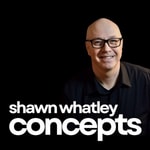
Concepts with Shawn Whatley – Details, episodes & analysis
Podcast details
Technical and general information from the podcast's RSS feed.

Recent rankings
Latest chart positions across Apple Podcasts and Spotify rankings.
Apple Podcasts
🇨🇦 Canada - philosophy
09/06/2026#73🇬🇧 Great Britain - philosophy
24/05/2026#62🇫🇷 France - philosophy
13/05/2026#86🇫🇷 France - philosophy
12/05/2026#75🇫🇷 France - philosophy
11/05/2026#52🇨🇦 Canada - philosophy
08/05/2026#100🇨🇦 Canada - philosophy
07/05/2026#71🇨🇦 Canada - philosophy
27/04/2026#63🇨🇦 Canada - philosophy
24/04/2026#97🇨🇦 Canada - philosophy
23/04/2026#71
Spotify
No recent rankings available
Shared links between episodes and podcasts
Links found in episode descriptions and other podcasts that share them.
See all- https://scetl.asu.edu/
320 shares
- https://www.rightsprobe.org/
14 shares
RSS feed quality and score
Technical evaluation of the podcast's RSS feed quality and structure.
See allScore global : 42%
Publication history
Monthly episode publishing history over the past years.
#23 Sean Speer: High Stakes Politics & Challenges for Canada's Next Prime Minister
Episode 21
jeudi 17 avril 2025 • Duration 34:57
Sean Speer, Editor at Large at The Hub, paints a stressful (dire?) picture of what faces the next prime minister. The need to secure a stable economic and security agreement with the United States may, paradoxically, compromise the Prime Minister’s political future. They might not be able to secure an agreement that any Canadians will like.
What will America want in return for an improved trade relationship? Will we have to change policies on supply management, internet regulation, and customs?
We end by discussing the shifting political dynamics among the so-called ‘tech bros' and their alignment with conservative politics, and what that might mean for Canada.
The stakes couldn’t be higher for this election. I hope you enjoy the episode.
#22 Preston Manning: The Origins and Impact of Canadian Populism
Episode 17
mardi 15 avril 2025 • Duration 49:22
Preston Manning knows populism like no one else. He says Western Canada might have the most experience with populist movements and governments worldwide.
United Farmers’ Associations, Social Credit, CCF, and Reform — they all shared a bottom-up, grassroots energy fuelled by frustration over disdain from elites and inattentive government.
Having spent his life giving speeches and talking about Canada, Preston can fire off enough details about Canada to make anyone feel inspired by what we have and humbled we do not know it better.
Preston combines passion and energy while remaining open to divergent ideas. He seems to just keep rolling forward, with alacrity!
Video of the episode is on youtube.com/@ConceptsWithShawnWhatley
#13 Bruce Pardy - Exploring Political Labels and Libertarian Philosophy
mardi 18 mars 2025 • Duration 01:20:04
In this episode, host Shawn welcomes Bruce Pardy, a Professor of Law at Queen's University, as they delve into various political labels and philosophies within Canadian politics. They discuss the misalignment of political party names with their actual values and the definition of conservatism in Canada. Bruce critiques the underlying collectivism in conservative principles and emphasizes the importance of individual liberty, distinguishing between classical liberalism, libertarianism, and conservatism. The conversation also covers the potential for Alberta's independence, the role of morality in governance, and the limitations of laws. Finally, Bruce shares insights from his think tank, Rights Probe, and his Substack writings, advocating for a minimalist state that prioritizes non-coercion and individual freedom.
Book mentioned:
Ecolawgic: The Logic of Ecosystems and the Rule of Law
Ecolawgic: The Logic of Ecosystems and the Rule of Law, (Fifth Forum Press, 2015)
147 Pages Posted: 27 Sep 2015
00:00 Introduction: The Misleading Names of Canadian Political Parties
00:29 Guest Introduction: Bruce Pardy
00:57 Defining Conservatism in Canadian Politics
01:30 The Role of Socialized Medicine in Conservatism
03:30 Classical Liberalism vs. Conservatism
05:03 Libertarianism and the Use of Force
10:21 Government Propaganda and the Use of Tax Dollars
17:56 Libertarianism vs. Anarchism
23:26 The Role of Cultural Norms in Libertarianism
39:00 The Legitimacy of Laws and Libertarian Principles
41:39 Discussing Alberta's Independence
44:18 Historical Context of Prairie Provinces
44:44 Representation Issues in Canadian Politics
45:44 Quebec's Unique Position
51:07 Philosophical Debate on Beauty and Liberty
55:14 Critique of the Canadian Constitutional System
01:04:25 Libertarianism and Rights Probe
01:19:02 Concluding Thoughts on Governance and Liberty
This is a public episode. If you would like to discuss this with other subscribers or get access to bonus episodes, visit shawnwhatley.substack.com#12: Caylan Ford - Exploring the Soul of Conservatism
jeudi 13 mars 2025 • Duration 01:02:26
In this deep and thought-provoking discussion, Shawn interviews Caylan Ford, a documentary filmmaker, writer, researcher, charter school founder, and former political candidate. They explore the moral responsibilities of individuals on all sides of the political spectrum. Caylan delves into the importance of guarding our souls against the moral perils of modern politics, the value of metaphysical questions, and the role of education in cultivating virtues. With references to thinkers like Plato, Voegelin, and Aristotle, Caylan and Shawn examine how society's focus on materialism and the rejection of traditional values contribute to contemporary crises. They discuss the profound impact of beauty, suffering, and silence on the human experience and the necessity of a common good in politics. The conversation highlights the inherent tension between the quantifiable and the ineffable in modern life and the importance of maintaining an openness to the transcendent.
00:00 Guarding Our Souls in Political Times
00:55 Introducing Caylan Ford: A Multifaceted Career
01:36 The Fundamental Question: Why Does Anything Matter?
02:55 Metaphysical Significance and Human Flourishing
04:45 Plato, Vogelin, and the Nature of Reality
10:28 The Role of Education in Apprehending Reality
12:45 The Importance of Silence and Inner Stillness
19:52 Modern Society's Relationship with Mortality
26:51 The Consequences of Avoiding Metaphysical Questions
31:23 The Enlightenment and the Rejection of Tradition
32:12 The Importance of Cultural Roots
32:55 The Dangers of Uprootedness
34:11 Totalitarianism and the Atomized Man
34:49 Defining the Common Good
37:00 Philosophical Undertakings and the Order of Being
38:23 Conservatism and the Human Experience
44:49 The Role of Beauty and Family in Conservatism
54:15 COVID-19 and the Impact on Society
58:23 Concluding Thoughts on Conservatism
Thanks for reading! Subscribe for free to receive new posts and support my work.
This is a public episode. If you would like to discuss this with other subscribers or get access to bonus episodes, visit shawnwhatley.substack.com#11: Revolutionary times, liberalism vs conservatism, & the quest for a better life
mercredi 12 mars 2025 • Duration 10:15
Times always change, but our time is changing faster than usual. We live in a rare moment of revolution — a paradigm shift in culture, politics, economics … everything. As Ginny Roth said in episode #3, “Nothing is settled.”
Since World War II, western countries have held a shared set of principles — a common operating system, if you will. Most people call it ‘liberal democracy’. It includes a long list of assumptions about freedom, the individual, rule of law, deference to reason and evidence, trust in science, respect for experts, and much more.
Those ideas are no longer assumed or shared. Many academics abandoned them long before I was born, but regular people never doubted them until recently. The 2008 financial crisis shook many people’s faith in liberal principles, but we hoped it was a blip, a black-swan event.
In hindsight, 2008 was one car on an accelerating train. Trump’s ride down the escalator in 2015, Brexit in June 2016, and then Trump’s first victory in November 2016 are all connected. Even so, diehards refused to doubt their faith in liberal first principles, while the train kept gaining speed.
In late 2019-early 2020, China welded doors shut on apartment buildings to contain a novel infection. Western countries soon declared a state of emergency for a new SARS virus. Borders closed. Police arrested families out walking in the park. By the summer, we had George Floyd, Black Lives Matters, Capital Hill Autonomous Zone in Seattle, and more.
Canada’ s Freedom Convoy in 2022 sparked similar events around the world. Prime Minister Trudeau’s Emergency Measures’ Act solidified his notoriety with citizens’ bank accounts frozen for donating $50, mounted policed trampling a disabled woman, and more.
All due to COVID, right?
But the train hasn’t slowed. Today, 98% of academic job postings discriminate based on DEI criteria. America has started to abandon identity-based employment discrimination, but Canada remains committed. Doctors must not question a teenager’s gender dysphoria to avoid breaking new law that bans ‘conversion therapy.’ Medical Assistance in Dying is now the 5th leading cause of death in Canada, in which most patients choose voluntary euthanasia with only a few choosing physician-assisted suicide.
It goes on with the Russia-Ukraine war. Hamas attacked a music event killing and kidnapping the old and very young. Canadian citizens celebrate Hamas with parties in the street. Students shut down universities in solidarity.
This long list is too short, of course. In isolation, each event might elicit a proper, liberal explanation. Citizens misunderstand freedom. Prime Minister Trudeau needs lessons on parliamentary democracy. Students mistake their own privilege. Conflict in the middle east would stop if we abandoned tribalism and historical grievances. Faith in the western liberal order need not waver. Except it does, and it should.
Leave aside the long list of events. The Israel-Hamas war by itself forces us to question our principled support for pluralism (see Sean Speer in episode #5). Given a decade of remarkable events, October 7 demands we reassess our assumptions about western liberal democracy.
Do our core assumptions still hold?
In a way, our revolutionary moment makes up for the unique, relative stability of the post-WWII liberal era. We are returning to a state more typical of modern human history: one that involves continual contest interspersed with moments of social order rarely enduring long enough to be taken for granted.
Revolutions awaken a search for ways to speak about things that most people already know to be true. Since the start of human history, children grow up, gain skills, develop interests, find mates, build homes, and raise families. This only sounds radical to modern, liberal minds — a tiny minority in human history.
Most Conservative parties and spokespeople have been, until now, essentially liberals (as many guests have noted on this show). But Conservative parties are changing. ‘Conservative’ political theory is shifting away from the basically liberal framework shared by other political parties. It is rediscovering a new conservatism (or a new, new-conservatism).
Roger Scruton, the late British philosopher, called conservatism a “work of rescue.” Many writers have noted how conservative ideas revive in times of crisis. People grow tired of a world that makes their heads spin. They abandon simple, ‘self-evident’ ideologies in favour of simple living. Regular people hunt for old habits and ideas that they can use to improve modern life. They rediscover meaning in a quest for a truly good life — a life well lived — instead of the limitless frenzy of late-stage liberalism.
Conservatism has no holy book. It has no prophet — no Oracle at Delphi. Instead it offers a messy library of trial and error.
Just to be clear, liberty predates liberalism by more than a thousand years. The rule of law, trial by jury, habeas corpus, private property, stable government and all the other key features of western civilization came about centuries before liberalism. Several thousand years of failures help us identify rare success. Things that work well almost never come de novo by genius and invention. The best ideas often appear to come by chance, after centuries of failure.
I created this podcast to tackle the massive shift we are experiencing in political theory, public policy, and modern culture. My starting hypothesis is that conservatism and liberalism are not the same thing. I hope to rediscover the differences between conservatism and liberalism in politics, culture, education, philosophy, economics, religion, history, and more. I think it holds the answer to a better life. I hope you will join me in the search!
This is a public episode. If you would like to discuss this with other subscribers or get access to bonus episodes, visit shawnwhatley.substack.com#10: Chris Milburn - Navigating Healthcare, Bureaucracy, and Free Speech
mardi 11 mars 2025 • Duration 49:26
In this episode, Dr. Chris Milburn, an emergency and family physician from Nova Scotia, shares his journey through medicine, public health, and politics. Dr. Milburn explains his evolution from a Green Party member to a vocal critic of expansive government regulations, recounting significant experiences including his firing during the COVID-19 pandemic. The dialogue touches on the challenges of modern medical education, the inefficiencies of a bureaucratic healthcare system, and the necessity of free speech in medical discourse. Key topics include the impact of governmental control on healthcare workers, the erosion of medical education quality, and the foundational beliefs in libertarianism and conservatism.
Free Speech in Medicine conference
Pairodocs’ Collection of Heresy Substack
00:00 Introduction and Initial Thoughts on Government Responsibility
00:19 Introducing Dr. Chris Milburn
00:50 Dr. Milburn's Green Party Experience
05:03 Challenges in Emergency Medicine Leadership
06:39 Public Health and COVID-19 Controversies
14:33 Medical Education: Then and Now
24:10 The Shift in Medical Education
25:07 Impact of Reduced Training Hours
26:27 Healthcare System vs. Patient Care
30:22 The Cost of Healthcare
35:29 Free Speech in Medicine Conference
45:48 Challenges in Rural Healthcare
48:45 Conclusion and Final Thoughts
Thanks for reading! Subscribe for free to receive new posts and support my work.
This is a public episode. If you would like to discuss this with other subscribers or get access to bonus episodes, visit shawnwhatley.substack.com#9: Andrea Mrozek - Why Marriage Still Matters
jeudi 6 mars 2025 • Duration 54:39
In this episode, we discuss with Andrea Mrozek her new book on marriage titled 'I... Do? Why Marriage Still Matters.' Andrea, a seasoned journalist and think tank expert, delves into the societal importance of marriage in today's secular, post-Christian society. We explore the strong link between marriage and fertility rates, the ongoing debate between the institutional and soulmate models of marriage, and the nuanced impacts of the sexual revolution on modern relationships. Drawing insights from historical contexts and recent survey data, Andrea emphasizes the need for a broader conversation about marriage, its benefits, and the societal trade-offs at play. Tune in to gain a deeper understanding of why marriage remains a cornerstone for flourishing communities.
00:00 Introduction and Guest Welcome
00:15 Discussing Andrea's Book on Marriage
00:50 Quotes from the Book
01:46 The Importance of Marriage in Society
03:58 Marriage and Fertility Rates
07:05 Cornerstone vs. Capstone View of Marriage
08:50 Sliding vs. Deciding in Relationships
16:11 The Institutional vs. Soulmate Model of Marriage
25:41 Trade-offs in Social Policies
27:53 Misapplying Postures in Personal Relationships
28:52 The Impact of the Sexual Revolution
29:42 The Birth Control Pill and Family Dynamics
30:55 Economic Perspectives on Marriage and Children
33:18 The Pressure of a Successful Marriage
36:25 The Role of Family Structure in Society
42:42 Philosophical Views on Marriage
45:04 The Importance of Stable Families
47:00 A New Message for Marriage
50:34 Concluding Thoughts on Marriage and Society
This is a public episode. If you would like to discuss this with other subscribers or get access to bonus episodes, visit shawnwhatley.substack.com#8: John von Heyking - Exploring Conservatism and Community
mardi 4 mars 2025 • Duration 01:02:46
In this episode, I welcome Dr. John von Heyking, Chair of the Department of Political Science at the University of Lethbridge in Alberta, to discuss the meaning of conservatism in Canadian politics. The conversation delves into the 2013 Alberta floods as an example of community response, the evolving nature of conservative movements over recent decades, differing ideologies within conservatism, and the importance of community and individual rights. We also cover philosophical perspectives from thinkers like David Walsh and Eric Vogelin, the dynamics between individual and collective values, and the current political landscape in Canada.
00:00 2013 Alberta Floods: Community Response
01:04 Introducing Dr. John von Heyking
01:58 Defining Conservatism in Canadian Politics
04:43 The Role of Community in Conservatism
09:06 Friendship vs. Community
10:40 The Concept of Individual Rights
20:02 The Common Good and Its Implications
25:16 Critiques of Liberalism and Conservatism
28:44 French Enlightenment and Its Influence
29:46 Locke, Hobbes, and Modern Liberalism
31:04 Hume's Radical Philosophy
31:50 Classical vs. Modern Political Philosophy
33:17 Virtue and the Liberal State
37:54 Religious Wars and Tolerance
42:59 Canadian Identity and Civic Responsibility
52:03 Philosophical Anthropology and Ideologies
01:00:16 Current Canadian Political Issues
This is a public episode. If you would like to discuss this with other subscribers or get access to bonus episodes, visit shawnwhatley.substack.com#7: Brian Lee Crowley - Exploring Canada’s Political and Social Fault Lines
mardi 4 mars 2025 • Duration 49:09
In this insightful episode, Dr. Brian Lee Crowley, founder and executive director of the Macdonald-Laurier Institute, joins Shawn to discuss his books and the critical issues facing Canada's political and social landscape. Dr. Crowley delves into the themes of his book 'Gardeners vs. Designers' to outline the deeper fault lines in Canadian politics beyond party lines. He provides a detailed account of the significant budget reforms during the Chrétien-Martin era, highlighting Canada's shift towards smaller government and its benefits. The discussion also touches on the adverse effects of expansive government policies on institutions like healthcare, drawing from history to suggest approaches for meaningful reform. The episode concludes with Dr. Crowley sharing his concerns about the current state of Canada's identity and its crucial relationship with the United States.
Books mentioned:
Gardeners vs. Designers: Understanding the Great Fault Line in Canadian Politics
Fearful Symmetry -- The fall and rise of Canada's founding values
The Canadian Century: Moving Out of America's Shadow
00:00 Introduction to Canadian Budget Reforms
00:57 Introducing Dr. Brian Lee Crowley
01:55 Gardeners vs. Designers: Understanding Canadian Politics
07:24 The Canadian Century: Moving Out of America's Shadow
15:43 Impact of Government Reforms on Citizenry
30:57 Challenges in Canadian Healthcare System
42:11 Concerns for Canada's Future
48:21 Conclusion and Final Thoughts
This is a public episode. If you would like to discuss this with other subscribers or get access to bonus episodes, visit shawnwhatley.substack.com#6: Lori Regenstreif - Navigating Addictions and Vulnerabilities
mardi 4 mars 2025 • Duration 47:09
In this episode, we delve into the complexities of addiction, treatment, and the balance between agency and intervention with Dr. Regenstreif, a family physician and national expert on addiction medicine. Dr. Regenstreif shares her experiences from working in inner-city Hamilton to the Northwest Territories, discussing the history and impact of opioid prescribing, the rise of fentanyl, and effective harm reduction strategies like naloxone distribution and supervised injection sites. The discussion also touches on the broader social issues intertwined with addiction, such as poverty and mental illness, and explores the contentious topic of decriminalizing drugs. Join us for an in-depth conversation on how to support vulnerable individuals while navigating the intricate landscape of addiction treatment.
00:00 Introduction: Balancing Autonomy and Support for Vulnerable Individuals
00:22 Concerns About Government Intervention in Vulnerabilities
00:40 Introducing Dr. Regenstreif: Expert in Addiction Medicine
01:20 The Evolution of Safe Supply in Addiction Medicine
01:41 The Impact of Purdue Pharma and OxyContin on Addiction
03:13 The Rise of Methadone Clinics and Business Models
04:17 The Emergence of Fentanyl and Its Consequences
07:00 Harm Reduction Strategies: Naloxone and Supervised Injection Sites
10:02 Trials and Evidence for Safe Injection Sites
17:36 The Shift in Homeless Population and Substance Use Disorders
22:15 The Role of Prescription Opioids in Addiction
23:57 Revisiting the Opioid Crisis
24:47 The Shift to Heroin and Fentanyl
26:09 Challenges in Pain Management
27:27 Harm Reduction and Decriminalization
28:58 Patient Autonomy and Tough Love
36:20 Legalization and Its Impacts
39:34 The Future of Addiction Treatment
42:46 Concluding Thoughts on Addiction Policy
This is a public episode. If you would like to discuss this with other subscribers or get access to bonus episodes, visit shawnwhatley.substack.comRelated Shows Based on Content Similarities