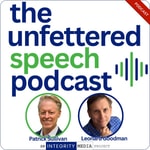
Integrity Media's Leonard Goodman and Patrick Sullivan talk to the biggest stars in independent journalism about the free speech and censorship issues of the day.
Site
RSS
Apple
Données mises à jour le 09/07/2026
Classements récents
Dernières positions dans les classements Apple Podcasts et Spotify.
Liens partagés entre épisodes et podcasts
Liens présents dans les descriptions d'épisodes et autres podcasts les utilisant également.
Découvrez des podcasts liées à The Unfettered Speech Podcast . Explorez des podcasts avec des thèmes, sujets, et formats similaires. Ces similarités sont calculées grâce à des données tangibles, pas d'extrapolations !
Omali Yeshitela: From FBI Raids to Censorship: The Cost of Speaking Out
mercredi 1 juillet 2026 • Durée 01:04:24
Neutral journalism is a comforting myth until you ask who it protects. We sit down with Omali Yeshitela, political activist, author, and longtime leader of the African People Socialist Party, to trace how Black journalism has functioned as a tool of liberation rather than a referee for “both sides.” From small community papers to global publications like Marcus Garvey’s Negro World, he argues that media has always carried a premise and the oppressed pay the price when that premise is hidden.
We also talk about what independent media looks like as a daily practice. Omali explains why the Burning Spear newspaper is built for organizing, not just informing: selling it person to person, using it to teach politics on front steps, and creating a direct line to the public without relying on mainstream media or platform gatekeepers. That direct line matters even more when dissent gets punished, from deplatforming to FBI raids and “foreign agent” accusations aimed at silencing anti-war speech.
The conversation widens into U.S. foreign policy and global realignment, including Iran’s impact on perceptions of U.S. military power, the ongoing Cuba blockade, pressure on Venezuela, and the Ukraine war as a proxy conflict shaped by NATO expansion. We bring it back home with a hard question: what keeps a movement speaking when the government makes clear it wants you quiet.
Subscribe for more long-form conversations on free speech, independent journalism, Black political history, and anti-colonial analysis. If this one challenged you, share it with a friend and leave a review, then tell us what part you disagreed with most.
Chapters:
0:00. Welcome And Guest Background
1:54. Black Journalism And Fake Objectivity
10:20. Garvey To Jet Media As Resistance
18:58. Burning Spear And Organizing Door To Door
25:40. The Obama Center And Political Mythmaking
38:05. Iran And Why The World Shifted
52:10. Cuba Blockade Venezuela And Internationalism
1:00:10 Ukraine Proxy War And Silencing Dissent
1:03:35. Closing Thoughts And Subscribe
Our theme music, Adventures In Jazz, was used with permission. Composed and performed by Bob Mamet.
UnchainedTV: Jane Velez-Mitchell's Free Speech Mission
mercredi 24 juin 2026 • Durée 51:57
The fastest way to understand what our media system rewards is to watch which stories never get finished. Veteran journalist Jane Velez-Mitchell joins us to explain why animal rights reporting so often disappears unless activists “get naked or get arrested,” and why she believes that kind of coverage gap is not random. We dig into open rescue, including the beagle laboratory controversy, and what it means when people document conditions openly, wait for arrest, and try to give animals their day in court.
From there, we zoom out to the bigger picture Jane keeps coming back to: animal agriculture, climate change, and public health are tied together, but most legacy outlets cover them as separate problems. We talk about advertiser incentives, fast food and pharmaceutical money, and how that shapes what gets framed as “normal,” what gets dismissed as “activism,” and what gets ignored entirely. Jane also shares the internal reality of corporate newsrooms, including the rare moments when she found room to run hard animal segments on CNN, and why she calls that freedom a fluke rather than a rule.
We also get practical about solutions and strategy. Jane points to technological alternatives to animal testing like AI and organs-on-a-chip, and she makes the case that a plant-based diet is a direct lever people can pull three times a day. Finally, she walks us through the real nuts and bolts of building Unchained TV, a nonprofit streaming network powered by donations and volunteers, plus her critique of subsidies and food policy that keep meat and dairy artificially cheap.
If you want more conversations like this on independent journalism, veganism, animal liberation, and the incentives behind what we all see and hear, subscribe, share this with a friend, and leave a review with the question you want us to tackle next.
Chapter Markers
0:00. Welcome And Guest Introductions
2:19 Open Rescue And The Beagle Case
4:34 What To Do When Voting Fails
8:32 Plant-Based Solutions For Climate And Health
16:41. Advertisers, Incentives, And Media Blind Spots
Alan MacLeod : The AI Security State, When Big Tech Merges With Government Power
samedi 13 juin 2026 • Durée 01:05:50
AI is starting to look less like a helpful tool and more like a new layer of governance: it can rank what you see, summarize what you’re “allowed” to know, and accelerate decisions that used to require human judgment. We sit down with investigative journalist Alan McLeod (MintPress News) to trace how Big Tech and the national security state are becoming hard to separate, from OpenAI politics to the defense contracts that quietly turn consumer platforms into military infrastructure.
We talk through the hype versus reality of large language models, and why people still treat AI as an authority even when they say they don’t trust it. Then we get into the darker uses: surveillance, content moderation, and the way AI can act as a reality filter on social media. Alan breaks down reporting on leaked DHS and FBI planning around domestic unrest tied to AI-driven job displacement, including the chilling concept of labeling critics as “anti-AI extremists.”
From there, we explore what massive AI data centers mean for communities, why these facilities demand so much power and water, and how similar systems are used for total information capture and control. We also discuss AI-assisted targeting, autonomous warfare, and why removing human hesitation can make war easier to sell at home. Finally, we look at the information economy itself: how independent media gets deranked, demonetized, and scraped, and why Google’s security-state ties and monopoly power matter for free speech worldwide.
If you care about AI ethics, digital privacy, surveillance, independent journalism, and the future of free speech, this conversation will stick with you. Subscribe, share this with a friend, and leave a review so more people can find it.
Chapter Markers
0:00. Welcome And The Tech Elephant
1:30 OpenAI Power Plays And Political Money
4:18 Is AI Breakthrough Or Overhyped
7:06 AI As Reality Referee Online
9:59 Feds Brace For AI Upheaval
16:39 How Surveillance Shaped The Internet
21:37 Why Data Centers Are Exploding
Kevin Gosztola : The Whistleblower’s Dilemma
jeudi 11 juin 2026 • Durée 01:03:11
War lies do not spread on their own. They move through incentives: access, career safety, secrecy laws, and a media culture that treats “official” as synonymous with “true.” We sit down with Chicago independent journalist Kevin Gosztola, editor of The Dissenter and author of *Guilty of Journalism*, to trace how whistleblowers and adversarial reporting collide with the modern national security state.
We start with the Iraq War as a formative media failure and follow Kevin’s path into covering WikiLeaks, Julian Assange, and the machinery that punishes disclosure. Kevin shares what it was like to report on the Chelsea Manning court-martial, including how the “Collateral Murder” video landed in that setting, why the “aiding the enemy” theory was so dangerous, and how even top-tier outlets sometimes walked into the room unprepared to understand what was happening. Along the way we challenge the comforting myth of “proper channels,” dig into how the Espionage Act reshapes journalism, and ask what it means when civil disobedience is treated as treason.
From there, we zoom out to the forces that make accountability reporting harder now: access journalism, newsroom profit pressures, and algorithmic gatekeeping that elevates legacy brands while drowning out independent work. We also connect censorship pressures across borders, from subpoenas and leak investigations in the United States to military censorship practices tied to wartime reporting abroad. If you care about press freedom, government secrecy, whistleblowers, and the public’s right to know, this conversation lays out what is at stake and what audiences can do to help.
Subscribe, share the episode with someone who still trusts anonymous briefings, and leave a review so more listeners can find the show.
Chapter Markers
0:00. Welcome And Guest Introduction
3:05 Iraq War And Becoming A Skeptic
12:05 Learning Activism And Media Reform
19:55 WikiLeaks Influence And Early Reporting
27:10 Inside The Chelsea Manning Court-Martial
38:15 Prestige Media Failures And Espionage Logic
“Don’t platform dissidents.” He did it anyway. Tucker Carlson on Free Speech and Independent Media.
mardi 2 juin 2026 • Durée 01:03:05
You can feel when a society loses its ability to talk and starts reaching for labels instead. Unfettered Speech brings on Tucker Carlson for a frank conversation about how he went from the top of corporate news to independent media, and why the most punished questions are often the most important ones: What are we doing overseas, who benefits, and what is it doing to us at home?
Leonard, Patrick, and Tucker get into the mechanics of modern propaganda, including how accusations like “racist” or “anti-Semite” can function less as arguments and more as social tools to shut down curiosity. From there, we talk diplomacy and dehumanization, why interviewing adversaries used to be normal journalism, and how the post-9/11 era hardened the idea that understanding an opponent is the same as defending them.
The conversation turns toward war ethics and public morality: euphemisms like “collateral damage,” the normalization of killing innocents, and the blowback that follows when a superpower stops caring what it does in other people’s countries. We also connect foreign policy to domestic reality: the shrinking middle class, globalization and union decline, corporate consolidation, and why free speech becomes fragile when ordinary people lose economic power.
We close with leadership, accountability, and unanswered questions around political violence and government secrecy.
Thanks for Watching or Listening to Unfettered Speech. Subscribe, share this with a friend, and leave a review. What claim in this conversation do you most agree or disagree with?
Chapter Markers
0:00. Welcome And Guest Introduction
0:56. From Corporate News To Independence
6:59. Smears That Block Real Debate
11:49. Diplomacy Dies When We Dehumanize
18:30. War Morality And Killing Innocents
25:52. Israel Policy And The Fear Trap
34:16. Economics Behind Censorship And Control
EP:41 [Guest] Wyatt Reed : A Week In Iran And Two Weeks Under Bombs In Lebanon
mercredi 27 mai 2026 • Durée 01:04:34
A ceasefire that gets violated every day isn’t a ceasefire, and that’s where our conversation starts. We’re joined by Wyatt Reed, an editor at The Grayzone, calling in from Beirut after spending about a week reporting inside Iran. He walks us through what he’s seeing in Lebanon right now: ongoing Israeli airstrikes, mass displacement, and a pattern of attacks that he says hits civilian infrastructure, medics, and journalists, not just fighters.
We dig into the biggest questions people have but rarely get answered with specifics: what Israel says it wants in Lebanon, what a “buffer zone” could really mean, and why Hezbollah remains the only force actively resisting Israeli troops in the south. Wyatt explains Hezbollah’s origins in the 1980s, its Shia base and ties to Iran, and how Lebanese public opinion can be skeptical of Hezbollah while still rejecting disarmament under threat of occupation or civil war. We also talk about how cheap FPV drones are reshaping asymmetric warfare by knocking out high-cost military hardware.
Then we shift to Iran, including how Wyatt entered after the skies closed and what he found on the ground in Tehran and Isfahan that clashes with the usual Western stereotypes. The hardest segment is Minab: Wyatt describes visiting the site of a school strike, the “double tap” dynamic, and why blaming AI targeting doesn’t remove human responsibility or the need for accountability under the laws of war.
If you value firsthand reporting, independent journalism, and clear-eyed analysis of Lebanon, Hezbollah, Iran, and U.S. foreign policy, subscribe, share this with a friend, and leave a review so more people can find the show.
Chapter Markers
0:00 Welcome And A Reporter In Beirut
2:08 No Ceasefire On The Ground
6:27 Israel’s Stated Aims In Lebanon
8:38 Lebanese Army Limits And Hezbollah’s Role
EP:40 [Guest] Melissa Witte "The Village Crazy Lady" - Follow The Money!
vendredi 15 mai 2026 • Durée 01:02:40
American politics isn’t just polarized, it’s profitable. We sit down with Melissa Witte (known online as Village Crazy Lady) to pull on the thread that connects forever wars, lobby power, and the strange reality that “safe” politicians still raise mountains of cash they don’t need to win. If you’ve ever wondered why Congress feels bought even when your representative runs unopposed, this conversation puts real numbers and real mechanisms on the table.
We start with the big picture Mel sees in the United States right now, then move into foreign policy: Iran, nuclear fear narratives, and how incentives shift when agreements like the JCPOA get ripped up. From there, Mel shares her own background as a military wife in North Carolina and how watching Gaza changed her worldview, pushing her to research, post, and challenge the stories both parties repeat.
Then we get technical and practical about campaign finance corruption: why most districts are safe, how fundraising exploded after 2016, and where the money actually goes. We talk political consulting, “digital advertising” spend, opaque LLCs, and the nonprofit pathways that can keep money moving long after a campaign ends. We also explore Christian Zionism and dispensationalism, why theology shows up in modern power politics, and how public pressure campaigns can shape what prominent voices feel safe to say.
If you care about transparency, anti-war politics, dark money, foreign lobby influence, and building real left-right coalitions, you’ll want to hear this one. Subscribe, share it with a friend who still thinks fundraising equals virtue, and leave a review with the one reform you’d demand first.
Chapter Markers
0:23. Meet Mel And The Big Picture
2:06 Iran War Talking Points And Reality
8:43 A Military Conservative Turns Anti-War
15:17 Where Campaign Money Actually Goes
21:49 Nonprofits As The Next Slush Fund
29:00 Christian Zionism And Prophecy Politics
37:19 The Israel Lobby And FARA Debate
40:14 Charlie Kirk Assassination Skepticism
E:39 - [Guest] Trevor Timm : If Truth Can Be Prosecuted What Comes Next?
lundi 11 mai 2026 • Durée 01:01:26
A single phrase can shut down scrutiny: national security. We sit down with Trevor Timm, co-founder and executive director of the Freedom of the Press Foundation, to unpack how the modern secrecy system works in practice and why it so often protects power instead of the public. From overclassification to the state secrets privilege, we dig into how courts and journalists can be boxed out, leaving voters with curated narratives rather than verifiable facts.
We also get concrete about the law that quietly shapes the entire landscape: the Espionage Act. Trevor explains how it’s been repurposed to target whistleblowers who speak to journalists in the public interest, and how defendants can be barred from telling a jury why they leaked or what wrongdoing they exposed. That legal structure doesn’t just punish individuals, it trains everyone watching to stay silent.
From there, we trace the rise of financial censorship through the WikiLeaks payment processor blockade and the origin story of the Freedom of the Press Foundation. We talk Julian Assange, why publishing truthful information should be First Amendment protected, and why the precedent set by prosecuting a publisher reverberates through every newsroom. Then we zoom out to today’s threats: jawboning, FCC pressure, lawsuits designed to drain resources, and the way surveillance narrows the space for future WikiLeaks-scale disclosures.
If you care about press freedom, whistleblowers, government transparency, and the future of investigative journalism, listen through and join the conversation. Subscribe, share this with a friend, and leave a review with the one free-speech line you think we cannot afford to cross.
Chapter Markers
0:00. Welcome And Guest Introduction
1:05 Guantanamo And Secrecy In Court
8:45. Classification Abuse And State Secrets
12:55 The Espionage Act As A Weapon
19:30 Why WikiLeaks Mattered In 2010
28:10 Financial Blockade And Press Freedom Fight
38:05 Assange Prosecution And 2018 Split
45:35 Jawboning FCC Threats And Lawsuits
EP:38: Prof. Richard Wolff: What Happens When The World Stops Trusting The Dollar
samedi 9 mai 2026 • Durée 01:11:42
The US dollar doesn’t just buy things, it buys time and power. We sit down with economist Richard Wolff to unpack the real mechanics behind reserve currency status and why it has allowed the United States to run massive national debt, import oceans of goods, and finance wars without asking households to pay the full price up front. Along the way, we get a clear history lesson on how reserve currencies rise and fall, why “trust” is political, and what changes when that trust starts to crack.
We also dig into how money printing actually happens in the modern US system through Treasury borrowing, financial intermediaries, and Federal Reserve purchases. Wolff connects those plumbing details to a reality many people feel every day: the stock market can soar even while most workers struggle, because new liquidity often inflates financial assets first. If you’ve wondered why headlines say “the economy is strong” while your costs rise and your options shrink, this conversation gives you a framework to make sense of it.
Finally, we turn to geopolitics and the Iran war, including the Strait of Hormuz, oil supply disruptions, and the uneven shockwaves that hit some countries faster than others. We talk de-dollarization, BRICS, yuan settlement, and why China and Russia may be positioned to reshape trade patterns if the current order keeps destabilizing. If any of this helps you see the economy with sharper eyes, subscribe, share the episode, and leave a review. What do you think would replace the dollar if the world finally moves on?
Chapter Markers
0:00. Welcome And Guest Introduction
1:28 Why Reserve Currency Status Matters
11:20 Borrowing, The Fed, And Money Printing
16:46 Nixon Breaks The Gold Link
20:23 The Petrodollar Deal With Saudi Arabia
27:39 Petrodollar Stress And OPEC Fractures
30:31 BRICS, Yuan Settlements, And Timing
36:25 Iran War Blowback And Market Denial
46:42 Strait Of Hormuz And Oil Shock
50:15 Russia, China, AI Bubble Risk
56:15 Can The New Deal Happen Again?
1:05:57 Why Stocks Rise While Most Struggle
EP:37 [Guest] Matt Johnson : Inside America’s Beagle Testing Pipeline And The Fight To Rescue Them
mardi 28 avril 2026 • Durée 57:46
A court finds probable cause for felony animal cruelty, the public shows up to help, and the response is riot police, rubber bullets, and tear gas. That’s the reality surrounding Ridgeland Farms, a major beagle breeding and testing facility in Wisconsin, and it raises an unsettling question: what happens when cruelty is visible, documented, and even acknowledged in court, yet the animals still remain in cages?
We’re joined by Matt Johnson of the Ridgeland Dog Rescue Coalition and Direct Action Everywhere to walk through what activists and whistleblowers say is happening inside the facility, why beagles are so often used in laboratory research, and why defenders of animal testing lean on claims of “medical value” that rarely come with clear proof. We also dig into modern alternatives like organ-on-a-chip technology, the role of government funding and university research grants, and how old regulatory habits can keep outdated animal testing methods alive.
Then we zoom out to the broader animal rights and animal liberation landscape: factory farming realities, misleading “free range” labels, ag gag laws that punish documentation, and the strategic shift from secrecy to open rescue where people put their names and faces behind direct action. If you care about animal welfare, free speech, investigative journalism, or how public pressure can move politicians, this conversation connects the dots in a way that’s hard to unsee.
Subscribe to Unfettered Speech, share this with someone who thinks dog testing is already illegal, and leave us a review with your take: should open rescue be protected under the law?
CHAPTERS
0:00. Welcome And Guest Introduction
1:01 A Viral Rescue Sparks Outrage
3:45 Inside Ridgeland Farms Conditions
7:42 Alleged Illegal Surgeries And Court Findings
9:55 Police Crackdown On Rescuers
14:54 Can Rescue Be Legal Necessity
16:53 Does Dog Testing Help Anyone
20:05 Organ On A Chip And Profit
19:40. Inside CNN And Editorial Reality
36:09 Building Unchained TV From Scratch
45:11. Donations, Volunteers, And Citizen Journalism
48:33. Subsidies, Corporate Power, And Food Policy
51:01 Closing Thoughts And Thanks
24:05 Israel’s Dragnet And Narrative Control
28:48 AI Kill Lists And Automated Targeting
36:37 Robotic War And Fewer Limits
41:36 Nuclear Risk And Machine Logic
43:24 Think Tanks, Arms Profits, Tech Contractors
47:49 How People Can Push Back
52:06 Independent Media Versus Platform Control
55:20 Google, The CIA, And A Global Filter
1:02:02 AI Search Eats The Open Web
1:04:31 Where To Follow Alan And Closing
46:55 Access Journalism And The National Security State
53:35 Algorithms And The Squeeze On Indies
58:50 Censorship Pressures From DC To Israel
1:01:55 Two-Party Paralysis And How To Help
44:34. Globalization Kills Unions And Loyalty
51:16. Trying To Stop War Up Close
57:38. Butler Shooting Mysteries And Hidden Files
1:01:01 Citizens As Shareholders Final Thoughts
14:24 Hezbollah Origins And Core Objectives
24:03 Drones And Asymmetric Battlefield Reality
27:31 Hospitals, Medics, And Journalists Targeted
38:30 Law Of War And Collective Punishment
40:19 Lebanon’s People Versus U.S. Narratives
43:46 Entering Iran After Skies Closed
45:46 Iran As A Normal Country
50:48 Minab School Strike And The Double Tap
1:00:19 Where To Follow Wyatt’s Reporting
Our theme music, Adventures In Jazz, was used with permission. Composed and performed by Bob Mamet.