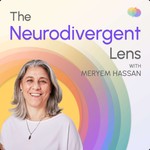
Let's keep the conversation going around neurodivergence.
If you've ever felt like the neurodivergent conversations you hear are skimming the surface of what you're actually living - this is the podcast we made for you.
Hosted by Meryem Hassan, a dyslexic psychotherapist and founder of the neurodiversity consultancy Dyscourse, The Neurodivergent Lens is where the honest, layered conversations happen. The ones that name what you already know, celebrate what you already are, and open up what's still possible.
The intensity of hyperfocus. The creativity of a mind that connects things others miss. The complicated art of masking, and the freedom of putting it down. Late diagnosis and the sense of finally coming home to yourself. The double empathy problem. Menopause and hormones colliding with a neurodivergent brain - and how to work with it, not against it.
Meryem brings both clinical insight and lived experience to every conversation - and in Season 2, she's joined by expert guests from sport, media, medicine, therapy, and education, all bringing their own hard-won wisdom. Including a dedicated episode on neurodivergent menopause, because that story deserves more than a footnote.
Whether you're neurodivergent yourself and ready to hear your experience reflected with honesty and respect, or you love someone who is and want to really understand them - you're in the right place.
Beyond the labels. Beyond the surface. Real conversations about what it means to be wired differently - and to build a life that works with that, not around it.
So let's keep the conversation going. Together.
New episodes every three weeks. Watch on YouTube, listen on Apple Podcasts or Spotify.
Hosted by Meryem Hassan | dyscourse.org
Site
RSS
Apple
Classements récents
Dernières positions dans les classements Apple Podcasts et Spotify.
Liens partagés entre épisodes et podcasts
Liens présents dans les descriptions d'épisodes et autres podcasts les utilisant également.
Découvrez des podcasts liées à The Neurodivergent Lens. Explorez des podcasts avec des thèmes, sujets, et formats similaires. Ces similarités sont calculées grâce à des données tangibles, pas d'extrapolations !
Why time feels different when you’re neurodivergent
Saison 1 · Épisode 4
mercredi 20 mai 2026 • Durée 19:06
Does time feel like your enemy? In Episode 4, we explore why neurodivergent individuals experience time so differently - from time blindness and hyperfocus to punctuality, executive functioning, and the shame of never quite keeping up.
We cover: time slippage vs time management, why the language matters, time blindness and the neurodivergent brain, hyperfocus and losing track of time completely, the shame around needing support with something "everyone else can do", practical strategies including the Pomodoro technique, contingency planning and setting alarms, how COVID changed workplace expectations, and how unstructured time can become a genuine neurodivergent strength.
👤 Guest: Emma Lord-Jenkins Founder of Rethink Inclusion - neurodiversity consultancy and training informed by lived and professional experience. As a late-diagnosed ADHDer, Emma is passionate about creating inclusive workplaces and removing barriers for neurodivergent people.
This episode is for neurodivergent individuals who've struggled with time and punctuality, and for employers, educators, and HR professionals wanting to better understand and support neurodivergent people.
📌 Brought to you by Dyscourse — empowering neurodivergent individuals and organisations. https://dyscourse.org
This content is for educational purposes and is not a substitute for professional support. Please seek qualified guidance where needed.
Why Do Neurodivergent Individuals Experience Decision Paralysis?
Saison 1 · Épisode 3
mercredi 29 avril 2026 • Durée 24:34
Why Do Neurodivergent Individuals Experience Decision Paralysis?
Do you freeze when faced with a decision? In Episode 3, we explore decision paralysis and the "don't knows" - unpacking why neurodivergent individuals are disproportionately affected, how alexithymia, shame, and anxiety intersect, and what self-understanding and psychological safety can unlock.
In this episode, we discuss: decision paralysis and alexithymia, nervous system shutdown and overwhelm, the duality of shutdown vs impulsive over-commitment, rejection sensitivity, shame and trauma, processing speed and working memory, the ADHD brain and decision-making, psychological safety, reasonable adjustments at work, and self-coaching strategies.
👤 Guest: Emma Lord-Jenkins Founder of Rethink Inclusion — neurodiversity consultancy and training informed by lived and professional experience. As a late-diagnosed ADHDer, Emma is passionate about creating inclusive workplaces and removing barriers for neurodivergent people.
This episode is for neurodivergent individuals who've felt frozen or overwhelmed, and for educators, leaders, and HR professionals wanting to better support neurodivergent people.
📌 Brought to you by Dyscourse - a consultancy, training, and mentoring organisation empowering neurodivergent individuals and organisations. https://dyscourse.org
Does the Shame of Being Neurodivergent Hold You Back?
Saison 1 · Épisode 2
mercredi 8 avril 2026 • Durée 24:10
Episode Summary
Does shame hold neurodivergent people back? In Episode 2, we unpack the links between shame, trauma, bias, disclosure, and self-worth, while also exploring resilience, creativity, advocacy, and what becomes possible on the other side of shame.
What We Cover
How shame can shape the neurodivergent experience
The link between shame, trauma, and the internal critic
Healthy shame vs toxic shame
Self-esteem, inferiority, and feeling held back
Visibility of traits, disclosure, and workplace challenges
Job interviews, communication differences, and body language
Cultural bias, affinity bias, and barriers to inclusion
Dyslexia, disclosure, and neurodivergence in employment
Intersectionality and overlapping lived experiences
Neurodivergence in prisons and wider systemic inequality
Medication, chemical sensitivity, and individual differences
Self-advocacy, finding your voice, and building confidence
Resilience and creativity
People pleasing and trouble saying “no”
Authenticity, reframing, and what can lie on the other side of shame
About the Guest
Emma Lord-Jenkins is the founder of Rethink Inclusion, providing consultancy and neurodiversity training informed by both professional and lived experience.
With a background in careers guidance and supported employment, and as a late-diagnosed ADHDer, Emma is passionate about creating inclusive workplaces and removing barriers for neurodivergent people across all areas of life.
In this episode of The Neurodivergent Lens, we explore how trauma shapes the neurodivergent experience — from masking, invisibility and toxic shame to dysregulation, brain fatigue and emotional intensity.
Alongside the challenges, we also uncover the often-overlooked strengths that can emerge through lived experience, including resilience, empathy, self-awareness, and the transformative power of diagnosis and community.
What We Cover
* The impact of trauma on neurodivergent identity and development
* Educational trauma, labelling, and long-term psychological effects
* Type 1 and Type 2 trauma
* Nervous system dysregulation, dissociation, and survival responses
* Masking, invisibility, and internalised shame
* Toxic shame vs healthy shame and the inner critical voice
* Rejection sensitivity and emotional intensity
* Brain fatigue, energy management, and burnout
* Social anxiety, depression, OCD and co-occurring experiences
* The role of curiosity before judgement
* The benefits of diagnosis, self-awareness, and community
* Resilience, empathy, and compassion as neurodivergent strengths
About the Guest
Emma Lord-Jenkins is the founder of Rethink Inclusion, providing consultancy and neurodiversity training informed by both professional and lived experience.
With a background in careers guidance and supported employment, and as a late-diagnosed ADHDer, Emma is passionate about creating inclusive workplaces and removing barriers for neurodivergent people across all areas of life.
Season 1 Trailer: Nemesis & Gifts
Saison 1
mardi 17 mars 2026 • Durée 00:53
What if the challenges of neurodivergence also hold hidden strengths?
Season 1 explores the Nemesis and Gifts of neurodivergence - unpacking trauma, shame, time, decision-making and empathy through lived experience.
With five episodes releasing every 3 weeks, subscribe so you don’t miss what’s to come and be part of the conversation.
This content is for educational purposes and is not a substitute for professional support. Please seek qualified guidance where needed.
Podcast Trailer
mardi 17 mars 2026 • Durée 01:42
Welcome to The Neurodivergent Lens - a podcast exploring neurodivergence through thoughtful conversations that challenge assumptions, centre lived experience, and reframe difference through a strengths-based lens.
New episodes drop every 3 weeks throughout Season 1. Subscribe so you don’t miss a conversation and let's talk neurodivergence!
This content is for educational purposes and is not a substitute for professional support. Please seek qualified guidance where needed.
The Truth About Neurodivergent Empathy
Saison 1 · Épisode 5
mercredi 10 juin 2026 • Durée 13:26
Do neurodivergent people lack empathy? It's one of the most damaging and persistent myths out there - particularly about autistic individuals. In Episode 5, we challenge that assumption head on, exploring how empathy is genuinely felt and expressed across neurodivergence, and why so much of the misunderstanding comes down to difference, not deficit.
What This Episode Covers
In this episode, we discuss:
The myth that autistic and neurodivergent people lack empathy
Why empathy is experienced and expressed in many different ways
The spectrum of neurodivergent traits - the "television pixels" analogy
How relating through your own example can be misread as self-centred
Cognitive empathy vs affective empathy explained
Heightened sensory responses and intuitive feeling
How lived experience can deepen empathic capacity
Why neurodivergent people often empathise easily with each other
The role of intuition in empathy
Reciprocal empathy - and the neurotypical expectations around it
Curiosity over judgement when empathy looks different
Expressive vs internalised empathy in relationships
How misunderstanding fuels conflict - and why communication matters most
This episode is for: Neurodivergent individuals who've been wrongly labelled as lacking empathy. Educators, leaders, and clinicians wanting to challenge outdated assumptions. Anyone exploring autism, ADHD, and the realities of neurodivergent emotional experience.
Guest: Emma Lord-Jenkins
Founder of Rethink Inclusion, Emma provides consultancy and neurodiversity training informed by both professional and lived experience. As a late-diagnosed ADHDer, she is passionate about creating inclusive workplaces and removing barriers for neurodivergent people.
Dyslexia, Stigma & Men's Mental Health: "Society Didn't Know How to Talk to Me" | Jon Salmon
Saison 2 · Épisode 2
jeudi 23 juillet 2026 • Durée 41:44
⚠️ CONTENT NOTE: This episode includes open discussion of suicide, bereavement by suicide, mental health crisis and hospitalisation. Please take care while listening - pause or skip if you need to. Support resources are listed below.
Jon Salmon kept his mental health experience hidden for almost 20 years - but the shame he felt about being dyslexic was even harder to talk about. Host Meryem Hassan is joined by award-winning Executive Producer Jon Salmon to explore dyslexia, late diagnosis, masking, grief, recovery, and what becomes possible when we remove shame and stigma from the conversation.
🔎 What This Episode Covers
A late dyslexia diagnosis and the "I must be thick" years; masking as survival at school; how education still fails neurodivergent children; losing his father to suicide at 17; "man up" culture and buried emotions; being sectioned early in his career; shame and stigma as the barrier to asking for help; speaking publicly for the first time through Heads Together; diverse teams and showing up as your true self at work; the "dyslexic thinking as a superpower" debate; and Listen Out, his new project using music to signpost people to support.
👤 Guest: Jon Salmon
Award-winning Executive Producer, Co-Founder of social impact agency Byte Entertainment, and Co-CEO of lived experience community Speakers Collective. Dyslexic, Jon has built his career by thinking differently - 25+ years leading digital and creative projects across entertainment, health, sport, government and the charity sector, from the first Reading Festival livestreams and the launch of BFI Player to NHS England's Opening Doors suicide prevention resources. Trustee of Let's Talk About Loss.
Find Jon here: https://www.linkedin.com/in/jcsalmon | https://www.instagram.com/j0nsalmon | https://www.twitter.com/jonsalmon | https://www.tiktok.com/@jonsalmon
Coaching, Culture & Neurodivergence in Women's Football | Carly Williams (Brentford FC Women)
Saison 2 · Épisode 1
mercredi 1 juillet 2026 • Durée 52:58
What does it take to build a football/soccer environment where neurodivergent players truly belong? In this episode, host Meryem Hassan is joined by Carly Williams - Head Coach of Brentford FC Women's First Team - to explore neurodivergence, elite coaching, player care, and the culture of belonging in the women's game of football/soccer.
Carly shares her journey from grassroots to elite football, the pioneering player care role she built from scratch at Arsenal Women's Academy, and how coaches can accommodate neurodivergent traits and support neurodivergent individuals. Together they discuss psychological safety, coaching to "the why", working with clashing neuro-styles in a team, Lucy Bronze and the bravery of disclosure in the spotlight, the barriers Carly faced as a female coach from a minority ethnic background, and how sport can be a powerful space for belonging, confidence and mental health.
Her advice to young neurodivergent women who dream of a career in the game? Find the environment that works for you, find your allies, and don't give up the love of the game.
Guest: Carly Williams Head Coach of Brentford FC Women's First Team. Former Arsenal Women's Academy coach and player care pioneer, England Schools U15s manager, FA coach, mentor and tutor, and two-time Football Black List Coaching & Management Award winner. Ex Tottenham Hotspur & Enfield Town player.
This episode is for neurodivergent individuals in sport, coaches and clubs building inclusive environments, and anyone interested in women's football and neurodiversity.
Neurodivergent individuals are too often misunderstood through deficit-based narratives and outdated assumptions. In this episode, we explore the relationship between shame and neurodivergence through lived experience, challenging stigma and inviting more inclusive ways of thinking.
About The Neurodivergent Lens
The Neurodivergent Lens is a video podcast exploring neurodivergence through thoughtful conversations and lived experience.
Through interviews with individuals of lived and professional insight, the podcast challenges assumptions, reduces stigma, and promotes a strengths-based understanding of neurodivergent identity.
This podcast is brought to you by Dyscourse — a consultancy, training and mentoring organisation working to change how society understands and supports neurodivergent people.
Neurodivergent experiences are often misunderstood through deficit-based narratives. This conversation offers a more nuanced perspective - exploring how trauma and neurodivergence intersect, while also highlighting the strengths, insight, and humanity within those lived experiences.
About The Neurodivergent Lens
The Neurodivergent Lens is a video podcast exploring neurodivergence through thoughtful conversations and lived experience.
Through interviews with individuals of lived and professional insight, the podcast challenges assumptions, reduces stigma, and promotes a strengths-based understanding of neurodivergent identity.
This podcast is brought to you by Dyscourse — a consultancy, training and mentoring organisation working to change how society understands and supports neurodivergent people.
The discussions in this podcast are intended for educational and awareness purposes only and are not a substitute for professional medical or therapeutic advice. Please seek support from a qualified professional where needed.
07:11 Neurotypical vs neurodivergent - relating to each other
07:55 Intuition and empathy
08:18 Autistic people do feel & have empathy
09:19 The importance of reciprocal empathy
09:45 Curiosity over judgement
10:39 Expressive vs internalised empathy
11:17 Empathy, relationships & misunderstanding
12:17 Communication & asking better questions
12:51 Outro
Why This Matters
The belief that neurodivergent people - and autistic people in particular - lack empathy is not only inaccurate, it's harmful. It shapes how people are judged, treated, and understood in workplaces, relationships, and society. This episode reframes empathy as something felt and expressed in diverse ways, challenging stigma and opening up a more compassionate, curious conversation.
About The Neurodivergent Lens
A video podcast exploring neurodivergence through conversations with lived and professional experience. We challenge assumptions, reduce stigma, and promote a more inclusive, strengths-based understanding. This podcast is brought to you by Dyscourse - a consultancy, training, and mentoring organisation empowering neurodivergent individuals and organisations. Find out more: https://dyscourse.org
Keywords
Neurodivergent empathy | Autism and empathy | Do autistic people have empathy | Cognitive empathy | Affective empathy | Empathy misconceptions | Double empathy problem | Neurodivergent vs neurotypical | Heightened sensory response | Reciprocal empathy | ADHD empathy | Autism myths | Neurodivergent communication | Neurodiversity | Lived experience
Special Thanks:
Sue McMillan - Strumhum Creatives (production, editing, music), Hannah Taylor - The Lens Box (filming, photography), Emma Lord-Jenkins (guest)
Hub of Hope — the UK's largest mental health directory: https://hubofhope.co.uk Samaritans — call 116 123, free, any time: https://www.samaritans.org/how-we-can-help/contact-samaritan/
🌍 These services are UK-based. If you are outside the UK, please seek support local to you — findahelpline.com lists free, confidential support in over 100 countries.
📌 About The Neurodivergent Lens
A video podcast exploring neurodivergence through conversations with lived and professional experience. Brought to you by Dyscourse - empowering neurodivergent individuals and organisations: https://dyscourse.org
🧠 Keywords
Dyslexia and stigma | Men's mental health | Mental health stigma | Dyslexic thinking | Late diagnosis | Neurodivergent masking | Shame and neurodivergence | Suicide prevention | Heads Together | Made By Dyslexia | Neurodiversity at work | Jon Salmon | Lived experience
👏🏻 Special Thanks:
Sue McMillan - Strumhum Creatives (production, filming, editing, music), Jon Salmon (guest)