The Biology of Trauma® With Dr. Aimie – Détails, épisodes et analyse
Détails du podcast
Informations techniques et générales issues du flux RSS du podcast.
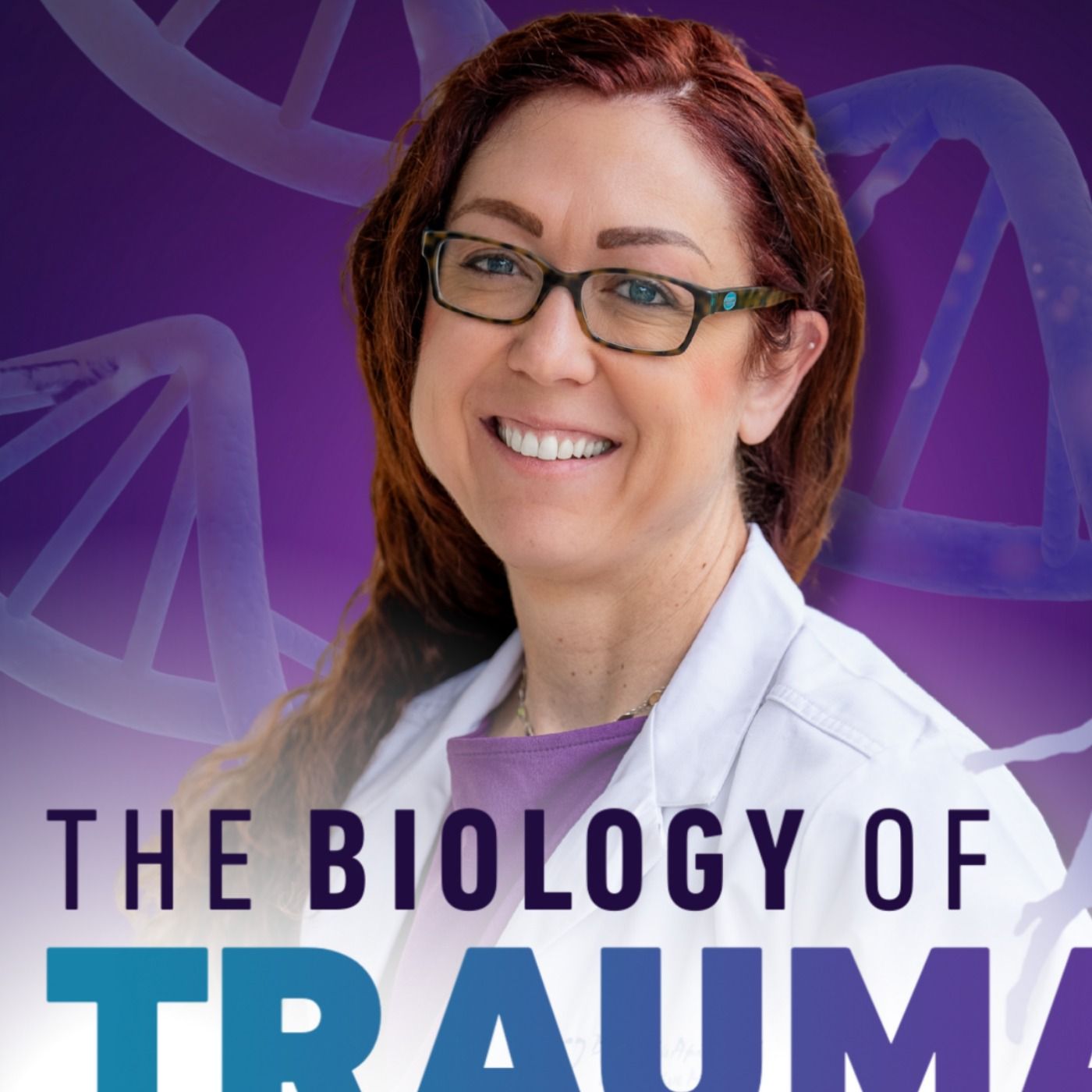
The Biology of Trauma® With Dr. Aimie
Dr. Aimie Apigian
Fréquence : 1 épisode/6j. Total Éps: 223

Classements récents
Dernières positions dans les classements Apple Podcasts et Spotify.
Apple Podcasts
Aucun classement récent disponible
Spotify
Aucun classement récent disponible
Liens partagés entre épisodes et podcasts
Liens présents dans les descriptions d'épisodes et autres podcasts les utilisant également.
See all- https://adamroa.com
75 partages
- https://www.instagram.com/drmariza
172 partages


- https://www.instagram.com/vibrantblueoils
163 partages
- https://www.instagram.com/draimie
82 partages
- https://amzn.to/4lVw3PL
48 partages
Qualité et score du flux RSS
Évaluation technique de la qualité et de la structure du flux RSS.
See allScore global : 63%
Historique des publications
Répartition mensuelle des publications d'épisodes au fil des années.
Why Fixing Someone You Love Is Destroying Your Nervous System
Épisode 162
mardi 24 février 2026 • Durée 41:42
When someone you love is struggling with addiction, your nervous system absorbs what theirs numbs out. Relational trauma repair therapist Karen Moser joins Dr. Aimie Apigian to explain why the families of substance users often carry deeper nervous system dysregulation than the users themselves. This episode reveals the biological cost of trying to control another person's healing and what it takes to reclaim the parts of yourself that got lost along the way.
In This Episode You'll Learn:
- (00:00) Why helping someone you love may be destroying your nervous system
- (02:00) What Relational Trauma Repair (RTR) is and how it works with the body
- (06:30) How Karen Moser brought Relational Trauma Repair (RTR) into addiction treatment and family work
- (08:00) Why the family's nervous system is often more dysregulated than the user's
- (11:00) Why sobriety alone does not resolve the family's nervous system patterns
- (15:00) Where relational trauma repair starts with families and self-relationship
- (19:00) How floor checks help name and locate emotions in the body
- (22:30) Why anger, shame, and even joy are emotions people learn to avoid
- (28:00) How childhood survival roles create adult role fatigue and burnout
- (38:00) A practical exercise to reconnect with the alive, strong parts of yourself
Resources/Guides:
- The Biology of Trauma book — Get your copy here
- Songs of the Inner World — Dr. Aimie’s YouTube channel for real, raw, honest words for your inner world.
- Nervous System Journal — Download at biologyoftrauma.com/book. Track how often you are in a survival state.
Related Podcast Episodes:
The Biology of Grief: Why Your Gut Holds What You Can’t Feel
vendredi 20 février 2026 • Durée 13:32
Grief, regret, loneliness, inflammation, pain. There are deeper layers than we are even aware of.
Dana was a family physician who had managed gut issues for years. Constipation. Bloating. Acid reflux. She had every tool available to her. She rotated medications, over-the-counter laxatives, and antacids. She pushed through. Then one brave question changed everything. I asked her: what happened that should not have happened? Her posture collapsed. The tears came. And she made the connection — that was when my gut issues started.
This is the biology behind what so many of us carry without knowing it. In the main episode this week, we explored how grief and gut health are connected. Now I’m taking you deeper into what’s actually happening in your body when grief goes unrecognized — and the three types of grief that are hardest to name.
In this episode you’ll hear more about:
- 00:00 Grief, Regret & Going Gently: Setting the Tone
- 00:33 Check-In: Where Are You With Grief Right Now?
- 01:07 Prepare Your Support Tools (So You Don’t Go Into Overwhelm)
- 01:51 Dana’s Story: When “Managing Symptoms” Isn’t Healing
- 04:21 The Brave Question: “What Happened That Shouldn’t Have Happened?”
- 05:03 When the Body Connects the Dots: Stored Grief & the Gut
- 07:33 The 3 Hardest Types of Grief: Absent, Attachment & Heart Shock
- 09:01 Grief Isn’t Stress: A Whole-Body Trauma Response
- 10:00 Guided Body Awareness: Hand on Heart, Hand on Gut
- 12:44 Stomach Support Practice + Closing Message to Your Belly
- 13:21 Wrap-Up: Completing the Session
Grief is more than an emotion. It is a whole-body response. It creates overwhelm in a way that stress does not. When grief is stored, the gut holds it. The posture holds it. The throat holds it. Dana didn’t just need to grieve what happened. She needed to grieve the silence, the years of self-blame, and the cost to her health she hadn’t seen. Most of us carry grief we haven’t named yet.
Resources/Guides:
- Download the 3 Most Common Biochemical Imbalances Guide — The biochemical patterns that disrupt normal nervous system function and keep the body stuck in overwhelm.
- Biology of Trauma book — Dana’s story begins in Chapter 7 and continues in Chapter 9. Available everywhere books are sold. Get your copy
→ Watch the video version on YouTube
→ Check out the main episode — EP 161: Dopamine and Depression: The Metabolic Link You Need to Know
Try this practice this week: Notice when your gut clenches, your posture collapses, or a lump forms in your throat. Before you push through, pause. Put one hand over your belly. Give it a message: “I see what you’ve been holding. We don’t have to go there today.” Presence interrupts the pattern of pushing through.
Leave a review on Apple Podcasts, Spotify, or YouTube. It helps others find trauma-informed care.
The Body Trauma Loop: Why Time Doesn't Heal Chronic Illness
Épisode 198
vendredi 9 janvier 2026 • Durée 17:31
What if the slogans we've trusted about healing are actually in conflict?
"The body keeps the score." "Time heals all wounds." We've heard both. They can't both be true.
Here's the tension. If time heals all wounds, staying busy should eventually work. Decades of pushing through should land us somewhere good. But that's not what happens. The body keeps the score whether we acknowledge it or not.
I go deeper into the research from my conversation with Dr. Karestan Koenen in Episode 155. She followed 100,000 women over twenty years. What she found confirms what I see clinically. Unresolved experiences don't fade with time. They become biology. That background sense of danger we can't quite name? That's our nervous system still on guard.
This was never about time. It's about what happens when we ask the nervous system to stay alert indefinitely.
In this episode you'll hear more about:
- Why staying busy creates allostatic load: When we push through without processing, we ask the nervous system to sprint forever. Dr. Hans Selye mapped what happens next. The body reaches a point where it cannot maintain that response. Then things fall apart.
- The difference between stress and trauma: Stress is a sprint. Trauma is what happens when we've sprinted as far as we can but the danger is still there. The terminology matters. Calling it all "chronic stress" doesn't capture the truth of breakdown.
- The body trauma loop: The cycle between activation and shutdown sits at the core of every chronic health condition. Stressed out, then breakdown. Activated, then burnout. This loop can never contribute to health.
- Where the body actually holds trauma: People ask if it's in their liver or pinky toe. The answer surprises them. The body holds trauma in patterns. The glass of wine. The procrastination. The exhaustion that won't lift.
- What I'm actually assessing: I don't ask for a checklist of how bad your childhood was. I ask what's going on now. How reactive are you? How adaptable? How long before you hit shutdown? Those patterns tell me what your body is still holding.
- Why there's hope in this science: When we recognize the body trauma loop, we know what to do. We untangle piece by piece. Step by step. We create a biology of healing.
The body holds trauma through its patterns of surviving. When we understand this, we work with our biology. Not against it.
Resources/Guides:
- Biology of Trauma book — Available now everywhere books are sold. Get your copy
- Free Guide: How Trauma Shows Up in the Body — A comprehensive starter guide to understanding the physical manifestations of trauma
🎙️ Check out the main episode this follows: Episode 155: Time Doesn't Heal—It Becomes Biology with Dr. Karestan Koenen
💭 Try this practice this week: Notice when you reach for your go-to survival strategy. Wine, scrolling, ice cream, overworking. Before you do, pause. Ask: "What am I feeling in my body right now? What am I trying to soothe?" That awareness is the first step.
Leave a review on Apple Podcasts, Spotify, or YouTube. It helps others find trauma-informed care.
Invisible Adoption and Attachment Pain: When High Achievement Masks Childhood Wounds with JJ Virgin
Épisode 107
mardi 28 janvier 2025 • Durée 24:04
What are common beliefs we form about ourselves that leave us unable to connect, trust and receive love later as adults?
Have you ever wondered why success doesn't automatically translate to feeling fulfilled?
Or why, despite all our achievements, there's still that nagging feeling that we need to prove ourselves? Today's episode sharing an adoption story might just explain why.
Today, JJ Virgin joins me to share a deeply personal story that is part of her reason for her remarkable professional success. In this episode, JJ talks openly about the challenges of growing up feeling like she had to rely only on herself, how those feelings drove her to professional success, and the breakthroughs she's experienced that have helped her heal old wounds, become a proud mom and find love.
Yet, this conversation isn't just for those who have been adopted— though it will help you understand yourself better if you have and help you understand anyone in your life who has been. Rather, this episode is about recognizing the unconscious pain that we carry from our childhood.
In this episode, you'll learn:
- How early experiences shape our beliefs about love, trust, and self-worth
- The conundrum of relying only on ourselves
- Simple ways to build trust when we haven't been able to trust others
- How to better support those in your life who have a history of being adopted
For more information and show notes, please visit our website: https://biologyoftrauma.com/biology-of-trauma-podcast/
How Mast Cell Activation, Histamines & Mold Toxicity Place You in a High-Risk Trauma Category with Beth O'Hara
Épisode 107
mardi 21 janvier 2025 • Durée 23:20
Have you ever wondered why you are so reactive - to people, foods, smells, sounds and stress - while other people around you seem completely fine?
You are going in overdrive or even going into overwhelm, and think you just must be having a bad day or looking for what triggered you.
The answer might surprise you. A specific cell of your immune system, mast cells, could be actually causing trauma responses in your body, putting you into emotional states, that have less to do with the people around you and more with a compound those cells release, histamine.
Today we're tackling a commonly overlooked underlying reason for anxiety. We will be answering the question, How do mast cell activation and mold toxicity keep us stuck in our responses and triggers to trauma?
Before we dive in, I want to dedicate this episode to the loving memory of our guest Beth O'Hara, who passed away in July 2024.
Beth was a pioneering functional naturopath who transformed countless lives through her work with Mast Cell 360, helping people understand and heal from complex cases of Mast Cell Activation Syndrome (MCAS), mold toxicity, and related conditions. She was a friend to me and I am sad to not have more time and conversations with her.
In this episode, you'll discover:
- How to recognize if histamine is driving your anxiety
- Why mold exposure can keep your body stuck in trauma responses long after exposure
- How mast cells bridge your immune system and emotional overwhelm
- Why and how mast cells will block your ability to create inner safety
- Practical tools to decrease reactivity and build resilience
For more information and show notes, please visit our website: https://biologyoftrauma.com/biology-of-trauma-podcast/
How Anxiety, Depression & Trauma Reactions May Be From Mold and Heavy Metals with Kirkland Newman
Épisode 106
mardi 14 janvier 2025 • Durée 29:16
How does mold and stored trauma in the body create a feedback cycle that makes us susceptible to the other?
Studies are confirming that common mental health symptoms, like depression and anxiety, are associated with brain inflammation. I want to share with you some two often overlooked sources of brain inflammation and emotional fragility, toxins from mold exposure and Lyme infection. More importantly, the feedback cycle that they create with stored trauma in the body.
This is important because we have a mental health crisis with unprecedented numbers of anxiety, depression and related effects like, burnout. While we usually assume a person, place or situation is causing us stress, we want to consider the increasing amount of mold exposure and undetected chronic Lyme disease. Many are unaware of the association between the two and without knowing to investigate, get on a recommended mood and sleep medications that cause problems and are difficult to get off of later, and are addressing the real problem.
My good friend Kirkland Newman, is my guest for this episode. She is a journalist, entrepreneur, and philanthropist, who faced postpartum depression and couldn't find answers in the traditional healthcare approach. So she did her own research and created Mindhealth 360 an integrative Mental Health website to be a resource on information for others also trying to find mental health solutions.
In this episode, you'll learn:
- How trauma responses from adverse childhood events cause brain inflammation
- How brain inflammation can pre-dispose you to a long-haul syndrome with mold or Lyme
- What mold does to our nervous system to lead to anxiety and depression
- How we might know if we have mold or Lyme toxins
- How to approach our trauma work or therapy when we also have mold or Lyme
- The different modalities we want to integrate for therapy
For more information and show notes, please visit our website: https://biologyoftrauma.com/biology-of-trauma-podcast/
How Trauma Fuels Addiction & The 4 Pillars for Recovery with Joe Polish
Épisode 105
mardi 7 janvier 2025 • Durée 39:29
Have you ever wondered if you have an addiction? Maybe you have openly struggled with one or know someone with one?
As an addiction medicine physician, there are more people than the studies estimate who live with an addiction, either because they don't know yet or because no one is asking them the questions to have it be documented.
People pull me aside at social events and want to ask me if they have an addiction to their prescription pills for sleep, anxiety or pain or to things like work, exercise and adrenaline.
I wanted to share this specific episode on addiction and its antidote connection because the risk for addictions is higher than ever.
Our modern world - with increased isolation, social media dependency, and decreased authentic community - creates conditions that make addiction more likely. The increasing rates of anxiety, depression, and overwhelm in our society mean more people are vulnerable to using addictive behaviors as coping mechanisms. In fact, it is a hidden epidemic. Many people are "functional addicts" without recognizing it because society normalizes various addictive behaviors. This makes it critical for each of us to understand the underlying patterns that drive addiction. Whether it is to be mindful of our own vulnerability or to navigate recovery with better success than the traditional approaches, addiction is something we all need to understand now.
I'm honored to share a powerful conversation with Joe Polish, founder of Genius Network® and Genius Recovery. Joe's journey from nearly losing everything to addiction to becoming one of the world's most connected entrepreneurs offers hope and practical wisdom for anyone touched by addiction - whether personally or through loved ones. We will be answering the question, "How does creating genuine connection and safety accelerate healing from addiction?"
In this episode, you'll discover:
- How addiction is a survival strategy to disconnect from the pain of stored trauma in the body
- The four essential pillars for sustainable recovery: community, biochemistry, environment, and trauma work
- Why unlearning harmful patterns is often more important than learning new ones
- Practical tools to move from shame into courage
- How to build genuine connections that will buffer us from an addiction and support long-term healing for those in recovery
For more information and show notes, please visit our website: https://biologyoftrauma.com/biology-of-trauma-podcast/
Addiction & 6-Step Felt Sense Polyvagal Plan to Revolutionize Traditional Treatment with Janet Winhall
Épisode 104
mardi 31 décembre 2024 • Durée 34:56
What does it mean that our behaviors, conscious and unconscious, serve as state propellers, actually giving us exactly what we need in the moment, whether energy or numbing and disconnecting?
By answering this question in this episode, you will not only come to understand yourself better, and why you reach for that second or third cup of coffee or binge watch T.V. shows, but it will give you new eyes to understand addictions and their recovery. It will be a window into your own inner world and felt sense of safety or danger.
We will explore emotional regulation and the states of the nervous system through the lens of addictions. One of the reasons I chose to become an addiction medicine physician was because of what I would be able to learn about trauma and the nervous system, and how the body adapts to survive and function despite inner pain.
That is why it was important for me to bring you this episode with my friend and guest, Dr. Janet Winhall, an author, teacher and psychotherapist. Author of 'Treating Trauma and Addiction with the Felt Sense Polyvagal Model.
In this episode, you'll learn:
- Why current pathologizing model for treating trauma and addiction is failing
- The important distinction between neuroception and interoception
- How behaviors and substances can be state regulation strategies
- Why it's important to include body-mind connection in addiction recovery treatment
- How to connect with your body and allow yourself to feel without numbing or disassociating
- How chronic conditions may be treated with the Felt Sense Polyvagal Model
- Practical strategies on how to apply the Felt Sense practice in everyday life
For more information and show notes, please visit our website: https://biologyoftrauma.com/biology-of-trauma-podcast/
Strategies for Empaths: How to Navigate Sensory Overload, Shame & Trauma with Dr. Judith Orloff
Épisode 103
mardi 17 décembre 2024 • Durée 38:31
Why are empaths more susceptible to experiencing trauma than most?
Are you a sensitive person? Are you an empath with a more sensitive and perceptive system?
What is happening is that our nervous system is more sensitive, receiving information that others don't, feeling things that others don't, which means having an uncontrollable body response to imperceptible changes in the environment.
Like being in a noisy crowd and not able to turn it off, our sensitivity can lead to overwhelm. Which leads to the hard truth, while being sensitive may be a superpower sometimes, it more often than not is overwhelming for our system and causes a trauma response in our body. Pretty soon we can be having emotional meltdowns, or physical health symptoms that are embarrassing or ones that we think are random.
In this episode, I chat with Dr. Judith Orloff to explore the ways in which this can lead to a greater susceptibility to trauma, as well as how to embrace the unique gifts that heightened sensitivity brings.
Dr. Orloff is a UCLA trained psychiatrist and has been called "the godmother of the empath movement". She synthesizes traditional medicine with cutting-edge knowledge of intuition, energy, and spirituality, and believes in the power of integrating this wisdom.
In this episode, you'll learn:
- Why highly sensitive people are more prone to trauma
- The different types of overwhelming situations an empath might encounter
- The hidden needs of empaths
- Why empaths are more vulnerable to physical health symptoms
- How this level of sensitivity can actually be a superpower
- Practical strategies for empaths, like sensory inventories and boundary setting, to not just survive but thrive
For more information and show notes, please visit our website: https://biologyoftrauma.com/biology-of-trauma-podcast/
Brain Inflammation: Addressing The Overlooked Gatekeeper To Trauma Release with. Dr Austin Perlmutter
Épisode 102
mardi 10 décembre 2024 • Durée 36:35
What can we do about the brain inflammation that holds us back in fog, fatigue and trauma responses?
To help answer that question and share brain inflammation with you is my guest, Dr. Austin Perlmutter, is a board-certified internal medicine physician, New York Times bestselling author, published researcher, and the executive director for Big Bold Health, a food-as-medicine company focused on helping people rejuvenate health through better immune function.
In the evolving field of trauma therapy, we're increasingly recognizing that healing isn't just about processing memories or changing thought patterns. The application of The Biology of Trauma lens is that it is just as much about addressing the impact trauma has had on our biology, which now keeps us stuck in our trauma responses.
One crucial aspect of this biological impact is brain inflammation. It is one of the most common yet most overlooked gatekeepers of trauma healing. Brain inflammation creates many of the symptoms that people attach to their trauma responses, yet often is what is triggering those trauma responses. Yes, you heard me right. It is not just people, places that can trigger our trauma response. It is also a specific immune cell in our brain - microglia.
In this episode, you'll learn why:
- Good insights from therapy seem to fade by the next day
- Small stresses feel overwhelming to your brain
- What you eat affects how well you can process emotions
- Relationship conflicts leave you mentally exhausted
- Your diet can dysregulate you just as much as your partner
- Your mind feels clearer in nature than in therapy
For more information and show notes, please visit our website: https://biologyoftrauma.com/biology-of-trauma-podcast/
Podcasts Similaires Basées sur le Contenu