The Art of Photography – Détails, épisodes et analyse
Détails du podcast
Informations techniques et générales issues du flux RSS du podcast.
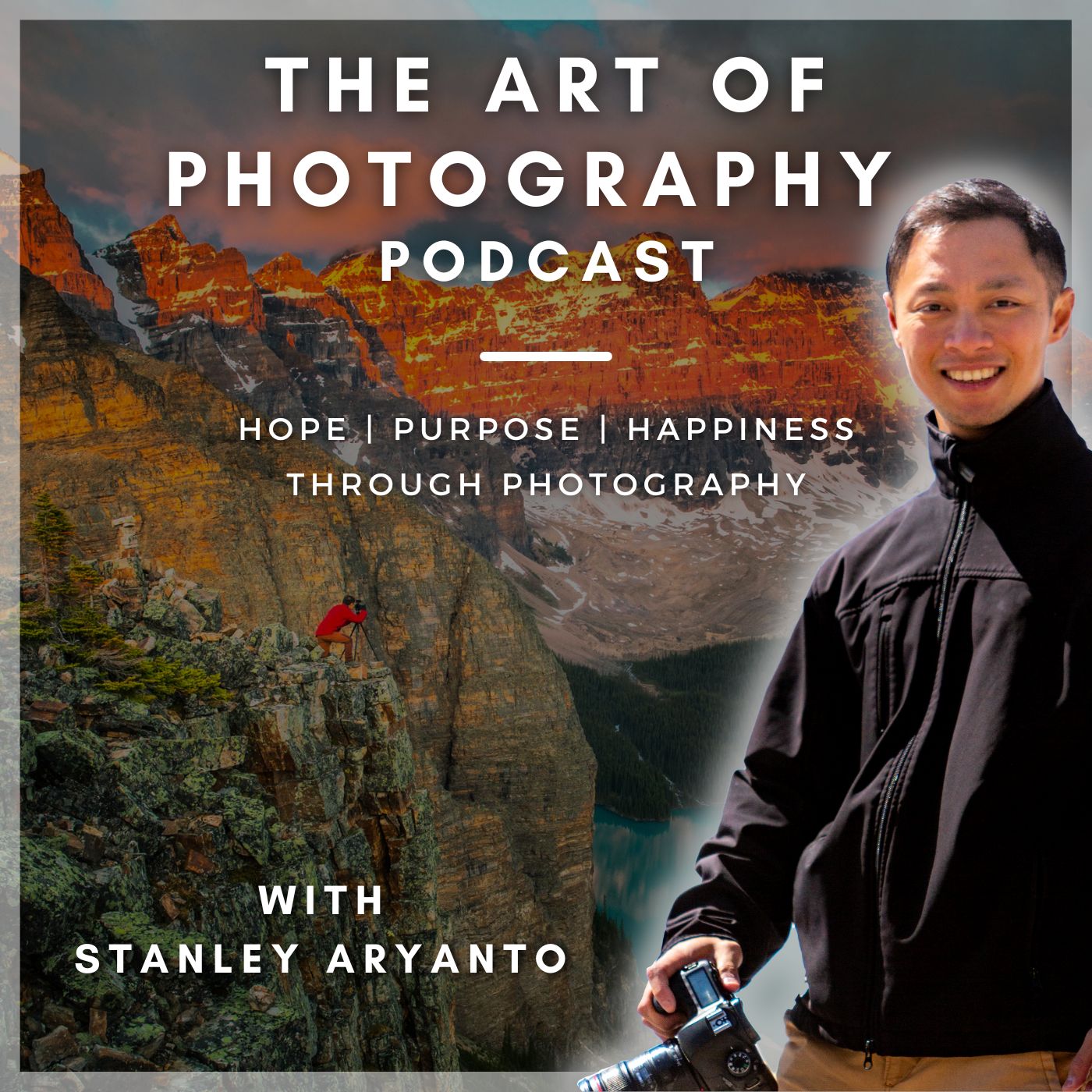
The Art of Photography
The Wicked Hunt Photography by Stanley Aryanto
Fréquence : 1 épisode/19j. Total Éps: 59

Classements récents
Dernières positions dans les classements Apple Podcasts et Spotify.
Apple Podcasts
🇨🇦 Canada - visualArts
27/05/2026#79🇨🇦 Canada - visualArts
26/05/2026#59🇨🇦 Canada - visualArts
02/04/2026#100🇨🇦 Canada - visualArts
01/04/2026#60🇨🇦 Canada - visualArts
11/03/2026#79🇨🇦 Canada - visualArts
10/03/2026#53🇨🇦 Canada - visualArts
25/01/2026#74🇨🇦 Canada - visualArts
24/01/2026#48
Spotify
Aucun classement récent disponible
Liens partagés entre épisodes et podcasts
Liens présents dans les descriptions d'épisodes et autres podcasts les utilisant également.
See all- https://otter.ai
645 partages
- https://www.TheWickedHunt.com/
98 partages
- https://travelmedialab.co/start
88 partages
- https://www.instagram.com/insearchofperfect
191 partages
- https://www.instagram.com/thewickedhunt
120 partages
- https://www.instagram.com/viktoriahaack
17 partages
- https://www.facebook.com/thewickedhunt/
117 partages
- https://www.facebook.com/viktoriahaack
10 partages
- https://www.facebook.com/paulzizkaphoto/
6 partages
Qualité et score du flux RSS
Évaluation technique de la qualité et de la structure du flux RSS.
See allScore global : 69%
Historique des publications
Répartition mensuelle des publications d'épisodes au fil des années.
Ep 59 - How to value your photography so that you’re not undercutting your own price with John Weatherby
Épisode 61
mardi 28 novembre 2023 • Durée 54:58
Hey Wicked Hunters, Excited to announce this week guest for The Art of Photography Podcast with John Weatherby.
John Weatherby, a skilled photographer from Tampa, embarked on his photographic journey while juggling waitering duties during his college years. His initial foray into photography began with managing social media accounts, which sparked an interest in enhancing his photographic skills. This newfound passion led Weatherby to invest in professional gear, including a DSLR camera and lighting equipment.
Breaking away from the hospitality sector, Weatherby turned his lens towards the scenic vistas of Tampa Bay. His unique captures of the city quickly garnered local admiration and underscored his potential to transform his hobby into a thriving career. In 2015, Weatherby established Weatherby Photography, a venture that has since collaborated with prominent names like Uber, the University of Tampa, and the Home Depot.
Renowned for his vibrant and innovative depictions of Tampa, Weatherby excels in presenting the city through a creative lens. His portfolio, however, is not limited to fine art; it also encompasses commercial and architectural photography. Weatherby's philosophy revolves around the gratification of turning a beloved hobby into a sustainable livelihood. He finds immense joy and fulfillment in not only pursuing his passion but also in adding value to the lives and businesses of others through his artistic talent.
You can connect and browse through more of John’s work below:
- https://linktr.ee/whereisweatherby
- Instagram: https://www.instagram.com/whereisweatherby/
- Website and prints: https://johnweatherby.com/
---
alternative ways to listen to the podcast:
- Spotify - http://bit.ly/twhspotify
- Apple Podcast - https://bit.ly/Theartofphotography
- Google Podcast: https://bit.ly/TheArtOfPhotographyWithStanleyAr
- Website: podcast.thewickedhunt.com
- Tune In (Alexa) - https://bit.ly/TuneInTheArtOfPhotographyPodcastWithStanleyAr
For those of you who want to connect with Stanley Aryanto, you can go to the following:
- Instagram: https://www.instagram.com/thewickedhunt/
- Facebook: https://www.facebook.com/thewickedhunt/
- Twitter: https://www.twitter.com/thewickedhunt/
- https://www.TheWickedHunt.com/
-----
Transcription
John Weatherby 0:00 It gets really confusing really fast. But having guidance from somebody who has experienced and who is like working professionally will help a lot. At the end of the day, you can price your art or your work at whatever you want.
Stanley Aryanto - The Wicked Hunt 0:25 Hey, wicked hunters Welcome back to The Art of Photography podcast, where we share artists journey and show how we can give hope, purpose and happy and today we have someone special, someone who's been in the photography, travel and landscape photography scene for a long, long time, someone who's been very respected in this place. And today, I want to introduce John Weatherby. John, welcome to the podcast, very excited to have you here. How things on your end, I know you're in New York, and at the moment, what's going on? Not much. i Yeah, I'm in New York right now, I taking a break from Van life, I'm usually travelling in my Sprinter van, for the most part, but I like to take a break now and then and rent a place in a big city like New York, because it's just the opposite of Van life. You know, like, you know, Van life can be very remote and inconvenient sometimes, which can be good. But if you're, you know, trying to check out from the busy world, but yeah, New York is like the opposite of that. So just striking a balance, and usually take this time to get caught up on work and filming and stuff like that, where I need like a consistent space. And that's awesome. I know you got I know, you have a really nice backdrop there. And Ben van life is awesome. It's something that is in my bucket list. You know, before COVID I was a wanted to drive down to South America as actually it was literally a week before everything closed down. You know, before I was gonna go out, so yeah, man, I'm, I'm gonna make it, make it back there one day, but that's awesome. So before we get into, you know,
Stanley Aryanto - The Wicked Hunt 2:16 depth into, you know, what are your journey, some of the things that you have been doing in the photography space, share with us a little bit about you? What got you into photography? Like, how do you fall in love with photography? And what make you stay? Yeah.
John Weatherby 2:32 Okay. So when I was finishing school, I was working as a waiter. And I,
John Weatherby 2:40 I've always been kind of entrepreneurial. So I made an arrangement with the restaurant that I worked at, to basically manage their social media, or not manage it, but posts on it periodically, and I would take photos of the food for the Instagram, basically. So I was taking photos of sushi at this restaurant. And then I worked out the tray basically, to where I could take photos of the food and then eat for free, basically. So
John Weatherby 3:09 a professional photographer came into the restaurant one day, and he took photos for the menu. And he had this whole elaborate setup. He had, you know, professional gear, Nikon prime lenses. He had the flash with the umbrellas and all this stuff. So when I saw the photos that he took, compared to my iPhone photos, I was like, blown away. So that was my first I guess, like exposure to photography. And then when I realised that like, I wanted to step my own game up, I reached out to him and got advice on what kind of camera to buy. So I started taking photos at the restaurant first with, you know, a DSLR. And then I started getting curious, and I started going out and taking photos of the skyline around Tampa. I'm from Tampa, Florida. And then people started noticing the photos that I was sharing of this Tampa skyline and asking to buy prints of them. So that you know, set up a light bulb like oh, well I can money from this. And then people started reaching out to me asking me to do photo shoots. So I would get asked to do like headshots for people or take, you know, real estate photos, family photos and stuff like that. So I started doing that as like a side hustle. And through the advice of a mentor. He told me basically if you really like photography, you know continue to work at the restaurant, post graduation and just take on more and more clients until you get so busy that you could leave the restaurant and do photography for work. So that's what I did. And I started doing commercial photography around Tampa Bay and you know, I realised I can make pretty good money with that. So I had a little studio space for a while, and I was doing work with clients like commercial stuff and lifestyle stuff. And then I started using those funds to travel. And, you know, through travelling, I fell in love with travel and landscape photography. So, you know, one, the commercial stuff became a means to the end, I was, you know, flying home to Tampa, you know, booking multiple shoots back to back within a week or two so that I can make money, and then travel, as long as I could on that money, go back and repeat the cycle, until I eventually realised how I can make money through landscape and travel photography, right. So I started doing workshops, I started booking shoots, in different places for commercial clients, to where I can, you know, go to Iceland and take some photos, you know, for example, of a product or work with a company to use their product to take photos or, you know, create content for their marketing and stuff like that in different places. And then, eventually, I started teaching photography more doing workshops and creating courses and created a plugin for Photoshop. And that's kind of where I'm at today.
Stanley Aryanto - The Wicked Hunt 6:24 Yeah, that's amazing. What What a journey it started with the Shushi you must have liked the shoe shoe there. Hey, started
John Weatherby 6:31 off sushi. Now. We're here and
Stanley Aryanto - The Wicked Hunt 6:34 fantastic. That is awesome. Honestly, I've heard a lot of stories how people started photography. Never ever I heard it started with a sushi. And that's just incredible how, you know, you go from taking photo with an iPhone at a sushi place to where you are today. Yeah, so
John Weatherby 6:51 that's where things will lead. It's, it's, it's crazy looking back all the dots connected, you know? But yeah,
Stanley Aryanto - The Wicked Hunt 7:00 and that's awesome. Because, you know, I think a lot of people are very impatient. And you know, when they're looking at, oh, man, I'm not there. And, you know, they just like, oh, I don't think I'm gonna make it or, you know, what's what's wrong with me? Or why? Why can I make it. But as you say, you know, looking back, connecting the dots and seeing how it all transpired to where it bring you today. I think that's a really powerful message. Now you say you were your post grad, you know, and you're working at the restaurant, and you are doing this as a side hustle. What, what were you studying back then?
John Weatherby 7:35 I was studying advertising and public relations. So my original plan was to become like, an account manager for like an ad agency. So that was kind of my idea. I actually did an internship while I was in school, and then, you know, I realised through that it was at a marketing agency. And I realised that's not really what I was interested in, you know, like, sitting in a desk nine to five every day was pretty dreadful. So I, yeah, I'm, I love, you know, the change of scenery, I love, you know, taking on different projects, and, you know, switching things up and not necessarily having a routine. So photography definitely provide that for me versus, you know, sitting at a desk and doing the same stuff every single day. I gotta came in imagine, yeah, that's awesome. And so, you know, advertising and photography and all that stuff. Content Creation. Yeah.
Stanley Aryanto - The Wicked Hunt 8:32 And so, you know, when, when it comes to you shared earlier that, you know, you were you're going through a different phase in photography, and started from just, I guess, you were kind of leaning in from that ad and, and PR side of it, doing it for someone else for that sushi restaurant, and then you kind of transition across, what are what were some of the biggest challenges that you have to making making this full time as a photographer?
John Weatherby 9:03 Yeah, so Well, first and foremost, you know, getting clients, right, which I luckily crack that piece kind of by accident, because, you know, realise I found out the power of social media. So when people started seeing me share my photos with Tampa, that gained exposure in my community, and made people in Tampa aware of my services, right. So luckily, I figured that out early on is that you know, social media is really powerful for getting in front of people organically and, you know, if you do it correctly, you can, you know, target people that are interested in your services specifically, right. So that's one piece to it. Another piece was just figuring out like business right? Like I'm a creative so learning the ins and outs of business, you know, being organised and learning price during negotiation, communication, all this stuff is something that doesn't come naturally to creatives, I feel like so, you know, you, you really do have to learn that stuff. But luckily, there's lots of resources online, you can take on mentor, I reached out to a lot of different photographers, when I was just starting out to get advice on pricing, and working with clients. So I had a service background, right, like, I worked in the service industry, I was a waiter. So luckily, I did have a lot of experience working with people, you know, talking to strangers, interacting and giving good customer service, you know, providing a good experience. So that was, that was something that came a little more natural, but even when I started actually working as a waiter, you know, I had no experience with that. And that was a very awkward and uncomfortable start. So I think if somebody who is getting into the industry and working with clients, you know, is just starting up, that can be a challenge as well. So, yeah, I think the biggest challenge really is figuring out how to make money, how to monetize your passions, and then how to price those, right, and also establishing the value, right, like believing in your value, how much you're worth, and what you can charge and all that stuff. That's all mindset. So I think mindset is a big piece to it, you know, your, your belief about what is possible, you know, needs to be huge. And you can work on that you can grow that and gain competence and charging and your, your abilities through practice and through reaching out to people who have experienced that can share their experience, right? Yeah, that's,
Stanley Aryanto - The Wicked Hunt 11:47 that's a really eye opener there. I know that it took me a long time to realise that the the entrepreneur mindset or a photo printer mindset, a lot of us like to call it versus the artistic mindset is direct opposite one of them is idealistic. One of them is trial and error, right? minimum viable product. And a lot of the whole mindset is is basically direct opposite of, you know, and this is probably one of the reasons why it's very difficult for artists to make it without having that business background. Now. I love what you say there. I think there's a couple of things that you say that really is three things actually, that that's really important, which is first you say believing in your value, the second, the mindset, and third, the confidence behind your product right behind what you're going to charge. Now. I could we, I guess everyone would argue that those three thing is probably one of the hardest thing that we need to do. You know, especially as a photographer, as a creator, as an artist, there's a lot of impostor syndrome, you know, a lot of yeah, just like this internal stuff going on. What would be? Let's, let's first talk about confidence, right? Because I think like, you know, value goes back to confidence, how do you gain that confidence? When you first start it? Right? How do you gain that confidence so that when you put yourself out there, when you put your value out there, people can actually see and believe the
John Weatherby 13:32 value, you gain competence through experience and knowledge, right? So like, the more that you do something, the better you're gonna get at it, the more comfortable you're gonna feel doing it and the more confident you're going to be right. So at first, you're going to need to fake it basically, right? I mean, you can you can learn so what I what I used to do is when somebody would reach out to me for service that I didn't have any experience with, I would find a tutorial, I would go on YouTube find videos, I would find somebody who's selling a course on architecture, photography, on headshot photography, on food photography, product photography, right? I would learn everything that I could, so that I could basically do that job as best as I could. But there is an element of like faking it till you make it as well, right? So you, you kind of have to just, you have to feel uncomfortable, you have to try and do the best you can. And then keep practising and as you learn more, and you practice what you learn, you're going to become better and as you become better, you're going to be more confident, right? So yeah, in my opinion, the confidence comes from the experience and the knowledge and the more that you can learn and the more you can implement what you learn, the more confident you're going to be. But yeah, there is kind of like a I honestly, like, felt so uncomfortable when people reach out to me for, you know, a service that I hadn't really learned or, or like become good at yet. But I would just have to be like, yeah, sure, I can do that, you know, and then I would just be freaking out in my mind. Well, I like learning everything I could and then, yeah, eventually, it just becomes comfortable.
Stanley Aryanto - The Wicked Hunt 15:25 Yeah, that's awesome. You know, I think that's the scariest thing for us to do is just to go out there put expose ourselves be uncomfortable and grow from actually taking action. Right. That's incredible. I love hearing that. Now, going back to the value side of things, right? So pricing, and valuing your service valuing your art, you know, whether it's brands, whether it's commercial service, how do you go about that? Because we see this a lot in the space where people are either undercutting their own price, because, you know, they don't, they either don't value their own product or their own self. Or sometimes they just even give it for free, right, with no strategy on how to monetize that. And for that reason, most creatives feel like, well, I can't make it in this industry, like what's going on? Like, you know, I don't know, this is not for me, etc, etc. So what are some of your take on, on value on building a value behind your product and services so that you can get paid for the value that you actually give?
John Weatherby 16:41 Yeah, well, okay, so going back to, like the experience and becoming better and better, the better that you get, the more you're going to increase your belief and how valuable you are. But something you have to remember, as well as is that, you know, you're creating value for for people, whether that's art on their walls, or photos for their business for marketing, you're creating value. And, yeah, I think you'd increase your value by becoming better, you know, through experience, but it's tough, because you're gonna look at other people in the industry and compare, and you're gonna think, oh, wow, they're way better than me, you know, I need to charge less than them. That's kind of how I looked at it. At first, I would look for people who were offering the same services as me, and see what they were charging and kind of like gauge myself, compared to them, and then charge accordingly, right? I don't think that's really the healthiest way, especially because your perception of your work is going to be different from other people's perception. I used to reach out to photographers in different fields and get advice, right. Like, when I first started doing commercial photography, I reached out to commercial photographers and asked about day rates, and you know, what to include in those, whether it was just the shooting, how many hours was like, include editing, if I was going to not include editing, how much was like charging for that how much was charging for licencing for different, you know, things and it gets really confusing really fast. But having guidance from somebody who has experienced and who is like working professionally will help a lot. At the end of the day, you can price your art or your work at whatever you want, whatever your you know, value think and I mean, people, people will pay you according to your own belief as well, like, you know, you can establish value through a lot of different ways you can demonstrate it right. You know, whether your services are in demand, who you've worked with, you know, your experience, the quality, that's subjective, but you know, everybody's gonna have a different perception of that. And honestly, I think that photographers have a higher perception of what quality is compared to the clients, right? Because I see a lot of bad work that's getting paid a lot of money for sometimes, you know, but I think that the value goes back to the self belief. What you believe your work is worth, is what you're gonna get and if you really truly believe and you can increase that that belief and that increase in your your value, you can warrant high prices for your art and your work. And people will gladly pay that. So there's no concrete you know, answer for that. There's licencing models, you know, there's like rates like standard rates and If you can tell people $400 for that parent behind you right now, and one person's gonna say, that's way too much and outside of my budget, and another person's gonna say, Great, I'll take five of them, you know, so it's just, there's no rhyme or reason. That
Stanley Aryanto - The Wicked Hunt 20:18 is awesome. And that is awesome. I mean, there's this couple of things that you say I was just like, busy typing here, you know, make sure I make note of this. But there's a couple of things that I really love what you say there that you can charge whatever you want for your art, I think a lot of a lot of people really benchmark themselves with other other, the benchmark in this in this space, and that kind of limit them to what is possible. And yeah, that's, that's just awesome. That's a really eye opener. And, you know, you say how, what you believe become your reality, how what you believe, and you're confident to put out there is basically what you can charge. And I really hope, you know, the audience really take note right here, because this is just incredible, man, that's awesome. And
John Weatherby 21:12 clarify something so are you'd made me think of something, I mean, you're you can increase your value in a lot of different ways, outside of the quality of your work, just like you can provide value in so many different ways, whether it's good customer experience, good, you know, customer service, maybe you're throwing in something extra that wasn't included in the quote, you know, maybe you know, you're sending a handwritten thank you note, after somebody buys a print, I mean, the more value you provide, the more you can charge, right. So like, I think it's creating a great experience for our client as well, whether that's art or photo shoot or anything, you can increase your value, and a lot of different ways. So sorry for that, because you can compare yourself to somebody else, but you might not be doing what somebody else is doing right, you could be providing a better service, you could, you know, be mixing your own personality and your own, like gifts and talents that this other person doesn't have into your services. And for that reason, you don't charge what other people charge, you know what I mean? Yes, look, don't
Stanley Aryanto - The Wicked Hunt 22:28 don't apologise, please, because these are golden nuggets right here. It's very, very important. You know, I, I always say to my students that what, who you are become what is your unique value proposition? And you really explained that very well. You know, and I think a lot of us as creators think that the value is always in the service and the photography, but what you say there is incredibly eye opening for many artists is that you can literally just by giving a better customer service than other artists, you can put your value a little bit higher, a little bit out there. So, man, I'm glad that you thought of that, because that was a great little advice right there. Now, I wanted to talk about the impostor syndrome a little bit. I know that, you know, we, as an artist, we're very perfectionist, and just like you say, you know, I had my own experience myself where I was, I thought I could never make money from my photography until I get every little pixel. Right? Yeah, and then and then you start looking at what people are selling and you're surprised how those artwork can sell how those services can sell. And it become an eye opener now what would you say to people that have that sort of doubts where and I don't know if I'm good enough to put my work out there and be able to charge for it?
John Weatherby 24:07 I would say that that it's um, that's a mindset thing. So for me, okay, so I did a deep dive into personal development when I first started working as a photographer. So some some books that come to mind are like thinking grow rich, you know, the, the Science of Getting Rich Wallace Wattles. You know, Tony Robbins, trying to think of some other off the top of my head Bob Proctor has been huge for me. I have every single book by Bob Proctor. I've done coaching through Bob Proctor and you know, if you go on YouTube and look up Bob Proctor just go down the rabbit hole of his videos and you're going to you're going to really develop your mind set, right. So, impostor syndrome, it's again, it's a lack of confidence. And I mean, it's, it's just, it's just building that confidence building that experience, and your, your belief and like, you know, the value you provide, and the quality. So, I saw something the other day, actually, that I really liked. And it had to do with imposter syndrome. Somebody posted a quote in their Instagram story. And it was like, whenever you're dealing with impostor syndrome, and like, your lack of belief of like, your value, just think somebody out there is doing something that's less quality than what you're doing and charging more. And they have no idea what they're doing. But they're, they're faking it, you know, they're failing their way through it successfully. So I don't think that was the exact quote, but yeah, basically, like, you kind of just have to fake it till you make it. So you really do make it and believe, right, like, going back to the waiting tables thing. I realised very quickly that when I was interacting with the table when I was a waiter, and I was nervous, that there was like, an uncomfortable feeling. And like, you know, the whole interaction was very awkward and uncomfortable. So I realised that I just had to just act comfortable, confident. And then it was reciprocated, like there was a comfortable feeling, right? So I really do believe it's just a matter of, you know, when those thoughts come up, you say, you know, cancel this thought, I choose not to believe this, I choose to believe that I am capable and valuable. And my work is amazing. And I know what I'm doing right. Like, you, you almost brainwash yourself through, you know, building the belief that, you know, you can do whatever you want that you eventually can, right.
Stanley Aryanto - The Wicked Hunt 27:03 Yeah, that's awesome. I'm glad that you mentioned that. Not that's great. I'm glad that you mentioned that, because I experienced that myself, where self development is really the cornerstone of success that most of the time is not our work is not our gear is not, it's not even the quality of our work is just who we are, and how our self limiting belief and, you know, all that names that you mentioned there, I came across all of them. And I studied them, I went to Tony Robbins, Unleash the Power Within as well. So I totally can relate with that. So 100% I'm glad that you mentioned that and share with that. Now, one of the thing that I'd like to to get your perspective from your, you know, how important it is, actually, before I go there, I want to ask, you know, you, you, you teach as well, right, there's your you, you have courses, you teach other photographers. Now, how is that, you know, I think back when you first started, it's, it's a lot more difficult to find people who teach photography, especially, you know, that structure course, there's a lot less option there, it's kind of like you go to university or you know, something like that, or learning on your own. Now, you have taken a lot of mentor and you you not worried about investing in yourself and upskilling your education, whether it is self development, whether it's business, whether it's photography, as just you mentioned, how important it is to have a mentor for your success journey.
John Weatherby 28:51 Oh, I think is huge. Because a mentor can help you in so many different ways. You know, like not only can you learn from them, you know, their experiences, right? Their successes, their failures, you know, they can also hold you accountable, you know, they can inspire you they can motivate you so a mentor doesn't necessarily even have to be somebody that you work with one on one like I consider Bob Proctor a mentor to me even though I've never met him or you know attended like a seminar by him or anything I've just experienced his his teachings through audiobooks and you know, physical books and YouTube and stuff like that. So a mentor is huge. And I do believe you get back what you invest, especially with like courses or something because it increases your value and increases your belief in yourself. Right, which then warrants you to charge more because you're providing more value, more quality. So yeah, mentors huge and they can shave off, you know, a lot of time in your journey. Because you, you know, you're not necessarily figuring things out on your own. Right? Like you're, you're learning from their experiences, what's worked, what hasn't, you know? I mean, you can, you can experience something just by reading a book, you know, like, you don't have to experience some trials and trial and error yourself, you know, waste of time, you can just read somebody else's and learn from it. You know,
Stanley Aryanto - The Wicked Hunt 30:34 that's awesome. Yeah, I totally agree with you. And that's a really good point that you have there. Now, if you were to pick one mentor, right, whether it's through a book through a master class, or even a one on one, is there a one mentor that really become the turning point of your career or become the linchpin of your career? Yeah,
John Weatherby 30:59 well, so going back to the waiting tables thing, I actually met a guy named Ryan Skinner, through a group at my school that I was going to so this guy, Ryan is the one who introduced me to think and grow rich. And that kind of started my whole, like, personal development journey. So you know, he told me to read power of positive thinking from Norman Vincent Peale, he told me to read the magic of thinking big, told me to read thinking grow rich. The Science of Getting Rich some other books as well. But yeah, I would say that he was like my first, you know, like, real mentor. And if I had to pick one that had the most impact on my life, I would say it's Bob Proctor, just because Bob Proctor got me to think in a different way, and realise that I could provide so much more value than I was providing, and multiply it through, you know, online courses, or basically multiply the value that I put out into the world through different ways and create multiple sources of income and do different things. And it really, Bob Proctor did have the most impact on my, my belief, like, and the person about personal development space, I think,
Stanley Aryanto - The Wicked Hunt 32:26 yeah, that's amazing. I mean, Bob, Proctor is really good at breaking the paradigm that we have, right, the thinking, just challenging the way our our thinking and really reshaping that. So that's incredible. Now, you know, I absolutely, I totally can see, and this is really incredible. I'm glad that I have you here today, because it really shows that you have work, not only in your photography, part of it, but also in yourself as well as the business bar. And that's, that's really show in your success in this industry. So I just want to say, first of all, congratulation for for making that happen, you know, it's incredible. Going forward to that, right. It's really cool that we talk about the business side of things, I know that people are a lot of people wanting to pursue their passion in photography, and be able to turn that into something that do full time. I'm going to kind of go back to the creativity side and your adventure side. Right. You are, you spend a lot of time on your Sprinter van, and you have this really cool Sprinter van as well. I know I've seen it and you know, it's literally my one of my dream is to be it to have something like that. What, what makes you what got you into the fan living, what makes you want to just explore in your sprinter, explore different places and just live from it. I know that there are a lot of challenges that comes with the fan living so it's not always comfortable. So yeah, I'd love to hear what is your inspiration and why you love to do that. Yeah,
John Weatherby 34:16 so this is actually funny because this is actually going back to kind of like mentors again. So gentleman reached out to me through Instagram actually, probably in like 2017 2018 His name was Josh the Burj. So he reached out and said he was doing VMI full time, and he's an entrepreneur. So this guy has a very interesting background, built a big real estate development company in Miami, a property management company and then sold it and you know, he had Maserati at the condo, he got everything, but he wasn't happy. So he sold all this things built a van And then started travelling the world. And you know, had a different philosophy of like his, his thing is The Boondock. Or you can look them up on Instagram. And his tagline is collect memories, not things. So he reached out to me and said he was passing through Tampa. And we met up, and he was a photography hobbyist. So we met up, and he talked about how he wanted our photography. So he offered to, you know, have me come out and travel with him, and teach him photography. So I did that a couple times. And when I travelled with him and his van, like, I realised the freedom that that offered, and you know, the ability to like, go somewhere, spend a week somewhere in one location, instead of the way that I was doing things, I would fly somewhere and then have one day at this location that I have to move to the next location. And like, if I didn't get the conditions that I wanted, you know, it was like tough luck, I gotta maybe come back another trip or something, right. So he introduced me to the van life and realised like, all the benefits of, you know, the travelling in the van and being able to go where you want on a whim, based off the weather, the conditions, the seasons, and all these things, right. So it was an eye opener for me. And it's, it started that, that, you know, goal in the back of my mind to like buy, build a van and travel on one. So he actually started a company building bands. And when I bought my sprinter band, I had his company build it out down in South Florida. So yeah, that's what got me into it. It's just all the, you know, the flexibility and the freedom for photography and like, going to different places that I wanted to, instead of having to, you know, buy plane tickets all the time and rent cars and all this stuff. So, but it comes to, you know, its perks and its cons for sure. challengers, like you said,
Stanley Aryanto - The Wicked Hunt 37:08 yeah, that's, that's cool, I might need his his contact when I'm ready to build one. It's interesting that you mentioned that, you know, the freedom is absolutely beautiful living in a car and just be able to stay wherever you want to. And you say that it does come with, you know, both the products as well as the challenges. What are some of the biggest challenges that you come across living in a van?
John Weatherby 37:35 Yeah, so Well, first off, you need to find a place to sleep every night. There's an app called I Overlander that you can use to find different campsites people are blowed, you know different places in different cities, it's like a it's like penned on a map, basically, you can see where to find a place to sleep, where to find showers, you know, where to find fresh water to refill your tanks and all that stuff. So those are the challenges. You know, basically, finding some places to sleep shower or finding water, right. You know, sometimes when you're in a remote area, there's not very many restaurants, grocery stores, and all that stuff, too. But another challenge that I faced is just having a routine, and a consistent workspace as well. So, you know, finding coffee shop and a different place, all the time to work at finding Wi Fi. That's challenging, also, just not having a routine, like, I, I like to go back and forth and like, you know, experience kind of this complete free freedom to where I can go do whatever I want, and I have routine, but I also like to you know, rent a place like an apartment to settle down for a little bit and get some work done and do have a consistent routine, you know, a consistent place to go, you know, to the gym and go to work and have a shower and all this stuff to like, yeah, it's van life is it's not for everybody. It's, it's, you know, it is definitely challenging. And I salute anybody that can actually do it full time. I did it full time. Probably for like a year. But this is probably my least productive.
Stanley Aryanto - The Wicked Hunt 39:33 I betcha it's the funnest year you had the Yeah, no, it's uh, yeah.
John Weatherby 39:40 You're gonna have a lot of places and experience a lot of things. I meet a lot of people you know, that's one of the pros. Yeah, and
Stanley Aryanto - The Wicked Hunt 39:48 I remember when I used to, I mean, I was like living in like a just a pathfinder, just you know, like put a bed on the back of it sort of thing, just like a small kid behind it, but our I remember I started to appreciate, you know fast food a lot more when you're in a band life because and you go to the all these remote places because yeah, it's just like reminds you of the CDN and all that. And yeah, that's awesome. So going back to your photography, you know, you captured man, like so many incredible photos from so many different places. What are some of your most memorable shot? From your journey so far?
John Weatherby 40:34 Um, yeah. So, I want to say Iceland. So, I mean, you're well aware that Iceland is like my second home. I've been there 17 times currently. And I teach workshops there. So I've had a lot of like, very, like, magical moments in Iceland, where, you know, I've like just had my mind completely blown, you know. So those are the first that come to mind. Lots of lots of spots around the US as well. But, you know, my first instinct is to say Iceland, you know, I've had some crazy auroras, I've had some very rare conditions, as well there.
Stanley Aryanto - The Wicked Hunt 41:17 Yeah, man, Iceland is such a beautiful place. I've never been myself, but it is on my bucket list. And it's just incredible. You know, I love seeing your aura photos, and all of this incredible shot from Iceland. It's just absolutely stunning.
John Weatherby 41:34 They're, you know, insane. I've gotten to see two eruptions there, and be there for the eruption. And, you know, the progression of the volcanoes changing as well. And, you know, they they morph into different landscapes and composition opportunities throughout their lifecycle. It's really cool. Yeah,
Stanley Aryanto - The Wicked Hunt 41:59 the, the volcano eruption is absolutely stunning. I mean, it's, it's insane. I love I love seeing your shots of it. And it's just, it's just breathtaking. You know, it's out of this world, man, it's been really great chat, I love you know, chatting to you about your photography or adventure, as well as the business side of things, you know, how people, what sort of thing that people need to do to if they want to pursue this for for a full time. Now, one thing that I would like to know from your end is that what are some of the most memorable moments from this journey as a photographer, and if you ever, like, if you ever, like thought to, you know, if you ever thought that there could have been another life for you, not being a photographer? Has that ever come through your mind? Yeah.
John Weatherby 42:56 So I mean, like, you know, just the journey, starting from taking photos of sushi with my phone to, you know, taking landscape shots and teaching photography and working with some amazing clients that like I can only dream of, you know, like, that's, that was never the plan. But it worked out. Amazingly, right. I did have a passion for music when I was younger, I've always been very entrepreneurial. Like, I have a real big passion now for just entrepreneurialism, like, just you know, like, solving problems, creating value, you know, creating freedom. Like, that's the biggest thing that I have, from my photography businesses is freedom. Like, I can just live my life on my terms like that is just priceless. You know, regardless of how much you're making, or you know, your successes or anything like that, if you can live life on your terms, and do what you want, when you want. That is success, in my opinion. So I like this, that we got to talk about the business because when I'm usually teaching photography and teaching, you know, through a conference or something, I'm always talking about the art part, right, like creating and, like technical stuff, but like the business is, is something that I'm super passionate about. I'm thinking of maybe actually starting to do Coaching for Business or coaching into personal development. Personal Development is also something I'm super passionate about to write, but they're tied together, you know, like, like, the personal development will lead to your success in business. I believe it's instrumental So yeah, if I could see myself in another life I would be teaching you People How to create business and freedom in their life probably,
Stanley Aryanto - The Wicked Hunt 45:04 yeah, that's incredible. I, I totally can see that how it's very difficult to succeed in business if you don't develop yourself as a person. And, you know, it goes back to what you said earlier, if you don't, if you can't build confidence for yourself and be able to value who you are, then you can't put the value out there big because people won't believe you. Right. And business is a lot about trust. So I love hearing that, you know, personal development is, I think, one of the most important thing to work on in our life. Well, Joy has been a really good conversation and really enjoy chatting with you about the entrepreneurial side of things as well. And I didn't know that you have that much passion for the entre. You know, being an entrepreneur. I mean, I know that you have the the pro panel, sort of plugin for, for Photoshop, to do luminosity masking, which is fantastic man, like, you know, it's it's just great. Now, do you want to talk a little bit about how do you get into to that, like, what makes you inspired, what inspires you to build this plugin to do to be able to edit faster and easier in Photoshop through luminosity masking? Yeah, so
John Weatherby 46:32 that that was actually a byproduct of the courses. So when I first was introduced to Luminosity masks and plugins, probably like 2017 2018, I started using a plugin called riot Pro. So I started creating courses and 2020 Actually, during in the shutdown, lock downs, and everything, all of a sudden, had all this free time, my partner in the courses had free time as well, he had no more workbooks, all this stuff was cancelled. So we created courses, I was teaching people in my workshops, and in the courses how to use, you know, Riot Pro. And I realised, like, you know, there's no reason that I should be promoting somebody else's product and my product. I mean, there's nothing wrong with that, obviously. And even better if you can get a kickback and, you know, get a commission or something that's a win win, obviously, but I realised that I could create a plug in myself, a better version of it, in fact, and sell that along with my courses. So I created my plugin based off my experience with Riot Pro, but also my experience with other plugins. And basically, I wanted to correct what I thought was flawed with these other plugins, and what was flawed based off of other people's feedback on these other plugins, I wanted to create a better version. Myself. So that's, that's what sparked the, you know, the idea. And then, yeah, I mean, it was just a matter of working with a developer or hiring him, and then we're working with him for about six months, it took to, you know, design everything and create all the functions and code it and everything like that, right. So, and that's been a trial and error process ever since. But the plugin, wound up being like, a huge hit for me, you know, like, that actually wound up doing a lot better than the courses and workshops and stuff like that, too. So you never know, like, how one idea can lead to another and, you know, like, create a ripple effect, you know?
Stanley Aryanto - The Wicked Hunt 49:04 Yeah, that's incredible. I really enjoy the plugin. It's really I love the interface I love you know, what are the different functions that the presets function that you've put in there? I myself never, never do when I first got into luminosity masking, you know, somebody told me it's like, oh, yeah, you gotta do luminosity mask and I was like, looking at that and just like, Whoa, I definitely know.
John Weatherby 49:31 And then yeah, on luminosity masks this week, because it's such a confusing topic you know, it's it's a it's really challenging but once you get a grasp on it and you practice just like Photoshop is super intimidating, you know to which is another reason why we developed the plugin is because, you know, to help people to use it easy to use Photoshop easier, but once you understand the luminosity masks and you start to learn and implement them. It's like a game changer, you know?
Stanley Aryanto - The Wicked Hunt 50:05 100%. I mean, I guess like, it's just the steps, right? There's so many steps to get there. And your plugin kind of just cut all of that into just like one or two clicks. So that's the big thing. And behind that, I feel like you know, so that's incredible. Really love. Thanks for sharing that, John. Thanks for building that. You know that that luminosity masking, it's, it's a game changer. Now, we're coming to the end of the podcast here. And one thing that I always ask my guests is, if there is one advice that you would give, either to your younger self or audience out there, what would that what would that advice be,
John Weatherby 50:46 if there was one advice, I would advise people to figure out what they want in life, and what they're passionate about. And then focus only on that, and building a life around your passion that is working towards what you want. Because I think a lot of people settle and you know, work a job they hate, or don't really have clearly defined goals. And then as a result, they kind of just drift and wander, and they don't really have a purpose in life. So I think, if you can find your passion and create businesses around that solve problems for people related to your passion, and have some type of purpose, some type of goal and vision of how you want to live, I think that you're gonna just continue to have success and be happy and fulfilled.
Stanley Aryanto - The Wicked Hunt 51:55 Amen to that. That is a great advice. I mean, one of the biggest advice, which was similar to what you said there that I got from my old boss was that he said, think about what sort of lifestyle you want and design what you do around that. And you basically summarise that very well. And that was just what a great advice, John, that is one thing that I feel like most people are missing in this life day, they start with the money, right? They needed the money, and then they looking for more money. But what they didn't realise is that money doesn't solve all the problem. You know, so So, yeah, amazing. That is great. Well, John, thank you very much for being in it's been a really good, it's been a pleasure having you here, having all of this advice for photographers, as well as for those photographers who want to become photo printer? And how will they be able to reach out to you how, what is the best way for them to find you?
John Weatherby 53:04 Yeah, so Instagram, I spend way too much time on there. My Instagram is where is whether it be so you can find me on Instagram. My website is John, whether it be.com. And that has links to courses, workshops, prints, pro panel, everything. So yeah, between those two, you can get in touch and you can find out anything you need. Fantastic.
Stanley Aryanto - The Wicked Hunt 53:32 Well, I'll make sure that I put that on the description below. So yeah, don't worry, just go to checkout on the description below if you do, if you want to get in touch with him. John, thank you very much for being here. Thank you very much for being generous, not only with your time but also with your knowledge and sharing the knowledge that you have accumulated over this past years. Right? Some of these things are the stuff that many Creatives or artists haven't even think about, you know, when they want to pursue their passion for the so thank you. Thank you very much for for sharing that and opening
John Weatherby 54:13 people's eyes. No problem. It's my pleasure. Well
Stanley Aryanto - The Wicked Hunt 54:17 we can do is there's a lot of golden nuggets there. Hopefully, you're taking a lot of notes and make sure to check out John's profile on Instagram as well as you know, check out his courses check out this pro panel plugin because they are incredible. I've used them myself, I really enjoy them. But with that being said, you know, I love what John shared on that last advice because that really go hand in hand with this. The theme of the podcast which is given people hope, purpose and happiness through photography. Well, with that being said, hopefully you enjoyed this episode, and I'll catch you guys next week.
Ep 58 - How Barry Sutton Sold Out One Of A Kind AI & Photography NFT Collection
Épisode 60
mardi 3 octobre 2023 • Durée 01:04:16
Hey Wicked Hunters,
I'm excited to be able to introduce Barry Sutton, an incredible artist who has pushed the boundaries of AI and photography.
Barry Sutton is an American artist and educator using photography and AI to pose questions about our notions of beauty and the nature of truth. His photography work over the past 30 years is largely focused on youth culture. Sutton has quickly become a leading voice in the field of synthetic photography. His figurative work uses AI to interpret photographic concepts, developing a new aesthetic language.
His work has been published in French Vogue, New York Times T-Magazine and others. His retrospective, “96° in the shade” was launched as NFTs in 2021. The collection of 100 images sold out on release. His acclaimed synthetic photography project Traces of Truth consisting 500 works generated using AI, sold out in 60 seconds.
Sutton is the Chair of the MPS Fashion Photography graduate program at the School of Visual Arts in New York City, working with young creatives to explore the concepts that underpin their photographic practice in the context of fashion.
You can find more of Barry Sutton's work on:
---
alternative ways to listen to the podcast:
- Spotify - http://bit.ly/twhspotify
- Apple Podcast - https://bit.ly/Theartofphotography
- Google Podcast: https://bit.ly/TheArtOfPhotographyWithStanleyAr
- Website: podcast.thewickedhunt.com
- Tune In (Alexa) - https://bit.ly/TuneInTheArtOfPhotographyPodcastWithStanleyAr
For those of you who want to connect with Stanley Aryanto, you can go to the following:
- Instagram: https://www.instagram.com/thewickedhunt/
- Facebook: https://www.facebook.com/thewickedhunt/
- Twitter: https://www.twitter.com/thewickedhunt/
- https://www.TheWickedHunt.com/
Don't forget to let us know your favourite part of the Podcast in the comment below and subscribe.
---
Transcription
Barry Sutton 0:00 Yeah, I understand that a lot of photographers are, are afraid of what AI might do to their career or TV or to the genre of photography. And I think some of those fears are real
Stanley Aryanto - The Wicked Hunt 0:11 Hey Wicked Hunters Welcome back to The Art of Photography podcast, where we share artists journey and our photography, giving them purpose and happiness. And today we have someone who's very special. And I know that topic around AI has been a lot of Converse, there has been a lot of conversation around AI and Barry had managed to create something that's truly unique with his NFT projects, as well as some of his photographs they have taken, you know, throughout the years. So very controversial, very fun, but also very educational. For those of you who want to learn a little bit more about it. Barry, welcome back to the podcast. Thank you very much for sparing your time. And, you know, to join this and share your story and inspire the listeners out there.
Barry Sutton 1:12 Thanks for having me here.
Stanley Aryanto - The Wicked Hunt 1:16 Yeah, so you know, it's been, I followed you, I saw your project and what you've done from a friend, and it's very inspiring to see how you have put together, you know, what you have put together and we'll go, we'll go into that a little bit later. I know you had massive success, you know, build a big community through this project as well. But before we get that, I'd like to know, how did you get started, you know, you were showing me your very first camera earlier, right? What makes you fall in love with photography and want to do more of it?
Barry Sutton 1:57 Well, that's a thanks for asking, it's a great place to start. You know, I was, I was studying, I was studying music, actually in college. And after the first semester, I I didn't know where that was going to take me. And after that first summer, my roommate was an amazing graphic designer. And I had always, I was always drawn and painted as a kid. And even from I think my mom saved portraits that I made when I was like two years old. And I had a real sense of like, capturing the world and I was a little kid. And and that year, I sort of changed my focus from, from music to the visual arts. And the next year, I packed up my car in the middle of the night and drove back to Los Angeles, and from school and decided I wanted to enrol in art school. And I studied graphic design for a couple of years and, and first picked up a Polaroid camera, which was just a revelation for me, because I was I was just the magic of this sort of instant gratification or making an exact replication of what you saw so quickly. Just really, it just really took off. And really, from that moment on, I think I was destined to, to pursue a path as sharper, rather than a graphic designer. And that took a few years to kind of like make its way full time into my, into my consciousness. But yeah, eventually ended up with a camera that was really never looked back.
Stanley Aryanto - The Wicked Hunt 3:41 That's incredible. And I know you, you know, you you spent the last three decades photography, youth culture, musicians celebrate these, celebrate these passion and all this stuff and what, you know what, what drawn you to that part of the geography because you know, there are we know, there's a lot of different photography photography in this world. And, you know, I myself, I love into the adventure astrophotography going out to, you know, in the middle of the night to the place that no one goes to. And so I'm interested in what interests you from from this path of the photography.
Barry Sutton 4:22 Well, you know, when, when I first got started with the camera I was very influenced by some of the partners who I was studying, like Edward Weston, and he made these beautiful, still like photographs that were beyond what the subjects were, if that makes sense, like his famous photograph of the pepper. It really looks it's so sculptural. It's such a local print. It goes beyond the picture. You wouldn't look at it and say, Oh, that's a picture of a pepper. It's almost like Good, it's almost like a spiritual experience to look at that photograph. And that was really interesting to me. But to get to that sort of level of technical skill, and understanding, like, you just really have to go out and take pictures. And so I think like most photographers, when I started out, I've just put a camera around my neck and walk in and taking pictures of what I saw, and, you know, elements of architecture and design and things like that, that really caught my eye and we're like, we're in this conversation together. But you know, the cool thing about photography is that it can be a passport to whatever you're really interested in, in the real world. And, and so, I was really interesting into seeing live concerts. And so you know, la being, you know, such a great city, we're for live music, on a, I would throw my camera around my shoulder, and just show up and, you know, sponsored I wanted to go to, and I would try to like, figure out how to weasel myself back the engine, people would see me with the camera, maybe like, okay, you can go in here. And, and so I really started photographing bands, when I when I first started and that's really what got me gotten started.
Stanley Aryanto - The Wicked Hunt 6:20 Wow, that's, that's awesome, man. Yeah, that's, that's always interesting. Interesting to hear where the interest come from now. You know, um, have you ever explore other genres of photography? And, um, you know, into travel landscape, very common ones? Or even, you know, more on the more like, macro side of things? Or have this always been the type of photography that you just find fulfilment in and never really interested on other? And trying other genre or one?
Barry Sutton 6:57 Yeah, that's a great question. I think, you know, for young photographers, I think it's really, really important to explore, and to experiment, and to really take the camera or whatever, you know, wherever you're inclined to go. And, and I think it's also important to try a lot of different things. I mean, I think as a photographer, you know, this sounds really rudimentary, but I mean, the first question of photographer has to answer is, what am I going to take a picture of, because it's such a big world, you know, we go outside and, and are we going to take pictures of like, insects on a leaf are we going to take pictures of, you know, the moon, and the stars are we going to take pictures of people on the streets, you know, there's just like, the whole world is out there. And it really just depends on what we're really drawn to. And so, you know, when I started photographing concerts, it really turned into a real obsession with photographing youth culture. And at that time, I was photographing a lot of people my own age. And as this, you know, the connection and understanding of youth culture, matured, as I got older, the subjects in my photographs remained the same. There's a very strange kind of, you know, as I get older, like, the subject matter is still the same, which I think is just a really interesting commentary on like, I don't know, my relationship with, you know, with ageing, and, you know, and, and, and the sort of, you know, you know, beautiful naivety of youth culture, and so that really became my focus, um, and it's been my focus for the past, it's hard to imagine 30 plus years, but at the same time, you know, I think, if you if you are a photographer, you photograph like, many, many things, you know, I take my camera on vacation with me, I'm always shooting landscapes and, you know, pictures you know, local things, people, objects, still rapes, all kinds of stuff. So, I mean, you know, I kind of I'm definitely one of those, like, very possessed photographers to just take the picture of everything. But, and that keeps me very, you know, interested in the world and I guess, you know, well rounded as an artist, but the focus of my work has largely built on youth culture.
Stanley Aryanto - The Wicked Hunt 9:32 Yeah, no, 100% and thanks for sharing that. Now. It's, it's really interesting. I want to hear this, this mistake from you, you know, I'll ask your perspective to youth culture. Or shifted or has it ever been shifted, you know, throughout your lifetime because like you say, you looking at it from a different lens, right. You started off as you know, you have this kind of like friends Then all sudden steer like, way, you know, as you grow older is like the gap is getting bigger and you know, the things that people do kind of shifted as well with the culture and the technology. Right? So how has that journey been of youth culture, from your perspective, but also from the world perspective, in terms of technological advance culture shift and all that stuff?
Barry Sutton 10:31 Yeah, well, what a great question, I think, you know, when I was when I was first taking pictures, and, and unbeknownst to me, my focus was on youth culture. Those were my peers. And these are the people I was hanging out with, and the bands that I was doing, they were all, like, my age, or a couple years older. And so I didn't really think about it. In that way, I just was photographing my world. And, you know, the truth is, I think, as I've gotten older, that world hasn't changed so much. I mean, it hasn't, it has, its, you know, this, the this pursuit of joy, or rapture, and this sort of feeling that, like, we'll never get old, we'll never, you know, we can do anything, anything is possible. This kind of naivety of like, I don't know that I can fail. Like, I just don't, if you don't know, that you can build, really, you have an idea that you can do anything. And I think it's this spirit of youth culture, that's so interesting, to me, it's so exciting. Again, you know, I didn't think about it so much when I was photographing my peers. But as I've gotten older, it really, there's some perspective that you get that that's really, you really see the beauty and and you just see the beauty of being young and having sort of, like, you know, the whole your whole life experience in front of you is, you know, it's really a unique perspective to have when you're that age. And so for me, you know, there's a lot of like, excitement and action are love and angst and other emotions that, you know, we have, and where that is that, for me, it's just so exciting to photograph and to capture. And, you know, you see that a lot of in 96 degrees in the shade. Which was really interesting. Because when people looked at that collection of photography, one of the overwhelming reactions to that was that it was very nostalgic. And so I can speak a little bit more about that, but, but I don't want to go on and on. But so I'll just kind of leave it there. But yeah, it was, I think it was, yeah, this is just something that my perspective has shifted. But I think that's only given me more sort of, of a broad view to, to, to gain an understanding of like, what that's about, and it just, you know, helps me every day in my, you know, in my practice on, and now and sort of extension of that into AI.
Stanley Aryanto - The Wicked Hunt 13:37 Yeah, have that perspective, you know, as you as you kind of age and go through more stages of life, you, you start seeing, like you say, right, if firstly was your world, and then you start kind of seeing it from a third person perspective, have that really have that helped you to captured or interpret the messages or the culture better in any ways? Or, you know, if it has, like, how has it helped you to do that?
Barry Sutton 14:11 That's a That's a tough one, I think. You know, as artists we're dealing with, we're creating things that are two dimensional, you know, they're really recreating, you know, flat art. And so, in a way, you know, what we're really constrained with, as artists is what's in the frame now. So I think there's a, I think there's a perspective about the subject matter that like allows me as a photographer as an artist to connect with the subject with more love and empathy. But I think, you know, as an artist, the a lot of that lot Have that learning relates to actually, like, out of fit, how to tell the story and how to fit what you eat, and what you want to say, within the confines of this of these borders. Right? So, you know, I suppose if I was a writer, I might be even more introspective, and, you know, having this sort of meditative experience of writing. But as a photographer, yeah, it's just, it's, it's, it's really given me, it's really giving me the experience to figure out how to fit, you know, the story inside the borders of France.
Stanley Aryanto - The Wicked Hunt 15:41 Yeah, yeah, that's, that's such an interesting take, you know, you know, sometimes this thought just come to my head, very interested to hear this sort of perspective. Yeah. And so you release, I think it was 100 collections of photos in the 90 on your first project, right, and it was called the 96 degree in the shade. And then now you have a follow up from there called the traces of truth, which is, I believe it was 500 works. And you have integrated AI into photography and have used the NFT, or the blockchain platform to as the medium to be able to sell your artwork and your collection and your perspective to the world. Now, before we get into all that, I'd like to hear a little bit. What. So you have been in photography for a while, you know, working as a photographer, now, what draw you into the web three, or the NFT space as a photographer?
Barry Sutton 16:54 Well, I was, you know, I'm very much a technophile may well, new technology, I'm like the first one in line to get the latest iPhone when it comes out. You know, I've always like, really looked at technology as just something that could help me do what I'm doing better and more efficiently. And I'm excited to like the I'm always on the bleeding edge of what's coming next. So when, when I heard about this app called clubhouse, I was, and this was back in the spring of 2021. I was really upset that I didn't get an invitation. And my girlfriend at the time, who's not my wife, but she, she got an invitation. And I was like, you know, maybe I can use her phone until I can get on clubhouse and, you know, make a profile and everything. And eventually, I mean, within a few weeks, somebody who I didn't even know invited me into clubhouse, you know, jumped on. And the first like, reason I saw were NF T's. I was like, What is. And so I just listened, and every day on my way to the office, I I put my headphones on and listen to clubhouse, and listen to these, you know, people talking about NF T's and just started investigating it. And that's how I sort of found out about what web three was about and, you know, desperately wanted to be a part of, but I wasn't seeing really any photography. So that was, so there was a learning process going on, while I was trying to figure out whether there was a place there for me.
Stanley Aryanto - The Wicked Hunt 18:34 And so that was so finding your broke club, cause I think, you know, it was very nostalgic. It's, it's all, it's where it all started for many of us in the web three and the NFT space. Now, when you listen to that, and then you kind of, you know, hear about it, how, what's your perspective of the web three, and how you feel you can fit in or make this technology help you or work with to be able to spread your story, you know, out there in this world?
Barry Sutton 19:10 Well, you know, the nice thing about clubhouse is that the My first goal was actually to like get on stage and talk. It was it was a moment where there were like just a few people. Just a few people talking about art in the NFT space. And it was really hard to get on stage and but you know, even if I got unsaved I didn't really know what I was talking about. So so, you know, like funnelling people in desperately like trying to be a part of the conversation. But I also then started to jump on open CDA, we'll look at what kind of NF T's were being sold. And it was a lot of like, it was a lot of moving picture. It was a lot of 3d automation stuff and it was like I don't know how to do this and so but really my you know, Oh, this isn't really my genre, I could participate. And, um, I somehow found my way onto a podcast with this guy named GMO. And, and, and oh, sorry, no, no, it was a podcast with Justin ever. Sano. And Justin, as you probably know, is, you know, a very well known photographer and web three space, a young guy, really beautiful young guy and just like, has a lot of heart and and did this big project on twin flames. And it was just, you know, years long project that photographing twins on the world. And that was really interested in that project hadn't really taken off. I mean, it's sort of how but it was, didn't sort of hit the stratosphere, as it did, you know, within six months from that time, but Justin was talking about his journey in the NFT space and talked about this guy named GMO, and who was his first collector and a real supporter of his at the time, so I'm enjoying it, it took notes, I was like, okay, gimana gonna find this guy. Like, right, right down, Justin, I reside on the farm, and both on Twitter. And that's how it started, I reached out to them both on Twitter, I must have had, like, 20 followers at the time. So I didn't think that either of them were gonna get back to me. And, and Justin, who hadn't started quantum yet. got back to me, you said, hey, you know, how can I help? And I said, Hey, well, you know, I'm, I want to put out this series of photographs. And I would just love to get your input. And so I said, Yeah, send send me some. So I went back, set up a web page with like, 20 pictures were what became 96 degrees in the shade. I don't even think it was called that at that time. And we'll give it a title. And I sent him this, this web page with 20 pictures on he was like, Oh, wow, he's like, I want one. These are really cool. So that was the start for me. And I thought, okay, maybe I have something interesting here. And literally, like, maybe a couple hours later, or maybe the next day, our G minor went back in. And, and of course I like I projected that no, not projected I, I let him know that Justin was really interested in my work. And I probably would wait it up a little bit. And, and, and he got, he must have gone back to just them to ask him like, Who is this guy? What is this? What's his story? And the next day, I was out of town with my girlfriend. And I get this note on Twitter that from G man who was really interested in the work and though, so we got on the phone right at that time. And he said, you know, how many pieces are going to be in this collection? And I just remembered the twin flames as 100 pieces stuff. I said, my feet 100 pieces. And, and, and he said, Oh amazing. He said, I really love what you're doing. What would you think about me buying 20 of those. And well, at that time, I just like, you know, I said to my girlfriend, we gotta get home, I got worked. And that's how it started. So you know, I mean, this is this was a real moment of what they say that like, success equals preparedness plus opportunity. And so I was somewhat prepared because I had some information and I had some, some some pictures that were ready to kind of show somebody and the opportunity came. And you know, it's sort of, it's sort of just really really rocketed from there.
Stanley Aryanto - The Wicked Hunt 24:00 Yeah, no, that's amazing. I love hearing that. And, you know, massive kudos for you for making that happen. So tell me, tell us a little bit about you know, what is the 9096 degree in the shade project? You know, what does it how did how did it come together as a collective and what it is about?
Barry Sutton 24:28 Well, I was I was living in Miami Beach at the time I had I left San Francisco, sort of as the.com era was imploding. Everybody was getting laid off. I was working as a tech in the tech industry as a marketing guy and and eventually led me to this to this photo studio called blue sky. And then I had an opportunity to go to Miami and and I took it in So I was in Miami. And you know, Miami is a very hot place. I mean, you, you know, I think I went for like, eight or nine months without putting on a pair of socks, it was just, I spent most of the day outside with my camera, most of the time on the beach, and they started meeting a lot of people, and we'd hang out the beach and start photographing people. And the more people I got to know and more time I spent, it started to really become. I didn't think of it as a project at the time, but it did become a project. And I slowly started to get some clients in the fashion industry. And so I started, rather than renting a studio for this shoot, I started bringing my clients to the beach, and we would just use the beach as the backdrop, the most beautiful light, really, you can stand by the water and have this incredible, like, light and incredible background that drains the subject so beautifully. And so that was so that's sort of sort of how it started. And so many of the people in the collection of 96 degrees in the shade, were models or other people that were on shooting with me. And other times, they were just people who I met at the beach and, you know, just said hey, do you mind if I take a photograph on you? So, so that's sort of how it started. The kind of the magical thing about that is those photographs were taken between 2003 2007 and, you know, we know NFS didn't start until you know, you will okay 20 2017 2018 But photography in the United States didn't start till 2021 So So those pictures were in Buxton. It was all shot on the home, most of his shot on a Pentax 6.7 camera, with Kodak by x max, one 100 400 Sometimes, sometimes Fuji colour film. And so I went through a process of scanning that work as I began to understand what's going on in the in, in a T space, but you know, this stuff set in boxes for you know, good 15 years before it came to life as as NF. T So, there's an interesting story there.
Stanley Aryanto - The Wicked Hunt 27:40 Yeah, wow, that's crazy. It's crazy how things kind of make make around and you know, come come back to you, isn't it? So, so that was incredible, you know, to be able to see you or you're able to so you're able to put out to 100 of that photos out there in the blockchain and you know, got collected 20 of the right away by GE money which is a big collector in the space and then the next project after that is traces of truth. Right? If I if I Well, there's
Barry Sutton 28:18 a few there's there's a couple in between there's there's a couple that I won't talk about a whole lot but but just to just to end in the story about Greg and sister shared other optional we're planning to get back to it. Is that because the punks discord was with the twin flames Justin's twin flames discord was was just getting started. And there were a lot of a lot of his collectors were punks, and then board eight collectors. And they were really interested in photography at that time. And when g money came in, and Justin came in, and they were both talking about my project, the project essentially sold out immediately. And I mean, not on the day that it was released. But what happened was I had really put the cart before the horse here I had really like started getting the collection. Actually up on Open CV for all 100 pieces were even like getting around every touched. So every day stuff for three days. I was putting up as many pictures as I could. On the first day I put up 40 pictures and they all sold out like within like within moments of like them getting posted in price on open seat would get sold. And then I think what happened was people were basically they knew about the collection. They were excited about it. They were excited about clicking photography, it was really early days, and they were just refreshing the page. And when a new item was listed, boom, they would just buy it. I don't even think they were looking at it to see what was the subject matter. So So Little after the first day, or 40 pieces that I had put up sold next day, I think 30 pieces, and then the following day 30 pieces, and they all sold out immediately. And there's just one story about this collection that I really want to put in the podcast because because it's just it was so meaningful to me. And it's just so was just so fantastic. There was a collective, whose handle on Twitter has warned himself and from Germany, and he's quite a prominent guy in the space now. I didn't really know it at the time, but he was messaging me on Discord begging me to like tell him when the next pictures were going to be uploaded because he was trying to get as many pieces as he could from the collection. And there was this passage, and I say from discord where he said, Barry, listen, I take my laptop to this wedding is there I'm at a wedding this weekend. I have my laptop open, and I'm standing in the parking lot. And I'm getting eaten alive by mosquitoes. When are you going to post the next picture? And I really, really felt that because I didn't know he had already picked up like five bits and pieces at that time. So I Yeah, so it's I kind of told him like, Okay, I'm about to like, I'm about to put like another five or 10 pieces. So he literally stayed in this parking lot with his laptop. I imagine like the wedding was going on in the background. And he was lagging after us. You know, it's just it was so fantastic. It was the energy was amazing. And, and then Mike and I, his name was Mike and he and I had become really good friends over the over the years. And he's one of my biggest collectors long. But I wanted to get that story out there because it is so indicative of like, the excitement and passion that collectors are, you know, we're having for photography. I think that's still happening, but maybe in a slightly different moment.
Stanley Aryanto - The Wicked Hunt 32:05 Yeah, so that's Yeah, I think that's, that's probably one of the best feeling, you know, any photographers or even artists, right could have this as somebody out there waiting for you and really want to collect their art for what it is right? Not because you know, not because this, this art is made for them. But it's something that's truly represent of who you are what you believe in to capture it. And then there are somebody who actually out there wanting it appreciating I think that as an artist, I don't I don't know if there is any better feeling than that, to be honest.
Barry Sutton 32:46 Yeah, no, it's really true. I mean, I've talked to people for many years, I was a soccer player when I was a kid, when there's no, I think there's still no feeling like scoring a goal playing soccer. That, to me is like the ultimate, but I think selling like having somebody appreciate you're working and spending their hard earned money to buy it and being excited about it and tweeting about it and telling other people about it just it really is something and I have to say that like for new photographers who are listening to this. It took me a good 40 years don't really sell photographs in this way. Like I did not maybe not for us. But it it was not something that I was not part of, I've not been part of the gallery system. I don't have a gallery in Chelsea, selling my work, wanting to put out the next things. I didn't have a cadre of collectors who were, you know, waiting for the gallery to, you know, put up a new collection of work I did on my work and a couple of a couple of prominent collectors like Calvin Klein and David Geffen, who had met over the years have collected my work but not to the extent that you know that I had a real big audience for it. So NF T's were really the first time I had an opportunity to grow my collector base and to have this experience and stunning work. So but to but to fast forward. And just to make a bridge to the to the AI work. I did put out a collection, a small collection on foundation called Paris in the summer. And it's a collection of eight photographs I made of Paris Hilton on the beach in Miami at that time. And and that was a mix of colour and black and white photographs. And there's a long story I could get into about if you get into another part but you can find us on foundation and that was actually a small collection that I put out after 96 degrees in the shade. Yeah, so there's a couple other small projects that he did, but essentially, you know, I became interested in AI and AI But you're also an interesting, interesting place to sort of segue into.
Stanley Aryanto - The Wicked Hunt 35:05 Yeah, 100%? You know, so you had that asset photographers, you know, it's really interesting how you get interested in AI because, you know, in a lot of photography, you know, as a photographer, AI is being frowned upon, in most cases. So what inspire you to get into AI? You know, and, and to test it out, you know, to create this collections?
Barry Sutton 35:36 Well, I think, like, interest in AI really was related to what I've been referring to as the death of truth. And there's a very, there's a very interesting, very interesting, sort of extension of photography into into AI. And, and I think a lot of photographers Yeah, I understand that a lot of photographers are, are afraid of what AI might do to their career, or TV, or to the genre of photography, and I think some of those fears are real, or based on real, real things happening. And he, I think, a stock photography space there, you know, there may be, there probably will be a very big takeover of the production of AI work is pretty easy to represent some of the more sort of banal like, scenarios that sort of dominate, you know, the stock photography, world and landscape might be pretty easy to produce a picture of a young person eating ice cream might, you know, be something that you maybe want to move into a different area, if you're doing that kind of photography, some of the general sort of advertising things that, you know, advertisers are buying in stock photography, might switch over to AI, I think it's ographers will either have to become really, really great programmers. I don't mean computer programmers, but, you know, sort of prompters to keep that, you know, segments of the market. And I think photographers will have a pretty easy, easy way doing that, because, you know, if you have a photographic eye, or a really good sense of composition, and, and emotion, and, and this sort of thing, so, I'm not so sure that it's that all of those fears are totally founded, because, you know, technology's always influenced photography over the years don't, you know, if you go back into the history or a photography, you know, is photography sort of, at one point supplanted painting as the sort of the ownership of, of representing truth. And, you know, at one time painters were the ones who could paint the portrait or landscape and make it very realistic and be a representative representation of truth. And eventually photography took over, and not suggesting that AI is going to take over the domain of truth telling, you know, maybe quite the opposite but but I think with traces of truth, I wanted to talk about those things. And so So I think the idea for traces that came before sort of a visual representation of the twins but I had this idea that showing these two twins together, both both the relationship between like the similarities of their faces and the inherent differences and so it's like a good it just was a really potent kind of place to start in this conversational you know, what is truth? And yeah, and that just manifested in its in traces of truth is a very sort of photographic project. But you know, you can very easily see that the cameras around the the next of these claims are not real. And so there's kind of an immediate connection to the to the word visually but then I think people you know, very quickly look at and say whoa, what is
Stanley Aryanto - The Wicked Hunt 39:33 yeah wow, that's really interesting and how you incorporate the two into you know, visual art and how I suppose storytelling right and being able to pass on your, your vision or your message that you want to spread to the world and I really liked that. I really like how, you know how you say at the end of the day, it's just a modality, right? Whether you use is a pain where they use photography. It's the intention behind it that makes it powerful or important. So that is a love hearing that, you know, I find that very, very interesting. One thing that I'm interested on is so we have other modality apart from NFT. To sell our artwork, right, we have we're able to print you have, I see that you have a few prints their photo book. And now it's the digital collectibles era where we it is possible to sell a digital version of our art as a collection instead of as a stock photo. All right. So share with me a little bit from your perspective, how are these different, right and what makes you excited about the NFT space? Or having your art in the blockchain compared to having it printed or you know, in a book or even just sharing it on a social media?
Barry Sutton 41:04 While there's there's a few really, really interesting prizes and go down with this, because I think there's there's something so important about how photographers, now it was an opportunity to realise some financial gain from work that's presented in the digital space, you know, there was there, there were these years where, you know, as photographers, we were putting our pictures up on, webs on blog posts or websites. And there was always this fear of like, Well, somebody's stealing your work. So, you know, it's so easy to right click and save something, that we started putting watermarks on our pictures, we even started, like really defacing the work so that somebody wouldn't want it. It was just such a strange. It was such a strange action that was happening to him. And we didn't really know, like, how do we present our work in this world, you know, I know, you know, that we're, there's code written that doesn't allow you to right click and say, but can always screenshot those really no way of mine, we realised that there was no way of protecting your work necessarily. So, you know, along comes the blockchain and, and suddenly, you know, collectors are really interested in being like the owner of record of a piece of digital art. And I think that's, you know, such an amazing step in, you know, in, in photographers ability to, to really sell their work and to suddenly, like, think when the blockchain came around. I think I say we, so I'm kind of speaking for a big group, but But I should just really say, from my own perspective, I'm not so worried anymore about somebody right clicking and saving my piece. You know, what I do worry about is like, somebody scraping a local election up open sea, and like, making a you know, making a complete collection of like, work with my IP, and it happens, it happens on 96 in the shade, and not the basis of trickle it's happening with read. And write thank you to open see if you're listening for being diligent and getting those collections ticking down very quickly. So there is still kind of a, an issue there, you know, people stealing your IP, but now that we have an opportunity to look at it in a different way and to and really to, to have collectors buy you work and be the order of record on the blockchain, which is you know, immutable. And in maybe forever, I don't know, maybe in quantum computing comes around. But but this is a really interesting thing, I think, for photographers, and for me, like adding this work that, for example, sat in a box for 1518 years before it might add a new life on the blockchain really made me realise that like, even if I were to lose those negatives and lose those prints, that it's still exist and it who knows how long it's gonna exist on the blockchain, but I guess in another life, and it gives them another place to live. You know, in the digital world, so I'm super excited about that. I know there were a few different things that were built into that question. So yeah, so sorry, if you want to kind of repeat where or what that question was, I'm happy to take the other parts in there. But yeah, that's.
Stanley Aryanto - The Wicked Hunt 45:05 And I think that is that is a really good answer. You know, I think when you mentioned, you know, right clicking, we're scared that people right clicking, saving it and sharing it somewhere else. Well as once we put it out there as a record of NFT, we no longer are afraid as much. And I think this is the first time in history where an art became more valuable when there are a lot more people using it right in the background. And a good example was when cat smart really says, you know, that photo as an open public licence where anyone could, you know, she just got tired of that photo being stolen all the times you just go, you know, what, this is open for public. And this is what, you know, I love what you say that because that is so very true. I have never in my photography life, you know, be any happier than people try to right click and save, because it actually increases the value of that particular, you know, art in that blockchain? So? Yeah, very, very interesting. How it has the web three or the NFT change your life? If it has? Or has it been just one of those things, one of those new technology like iPhone that, you know, just okay, well, it's just not another way of communicating, or has it as it given create a new impact and a new way? You go about pursuing storytelling and, you know, sharing your art to do?
Barry Sutton 46:52 Well, I think, I think it hasn't not answered this too quickly. I, I'll say from the, from the storytelling perspective, it hasn't, hasn't changed my ideas of storytelling, but I think you know, what difference did is that it opened my work to a whole new, like World of collectors. And, you know, that's just a miracle, I think of the space because, you know, there were a small number of people who knew about the work that I was doing. My primary, you know, my primary job, I mean, I, I actually have a job. I run the fashion photography, graduate department at School of Visual Arts in New York City. And, and, you know, this was still the main focus of my work life, I work with 15 to 20 students every year, on building an art practice, around the context, in the context of a fashion, and have a wonderful staff and a wonderful group of teachers who are, who all work in the industry. And we're all really focused on helping young photographers to advance their careers and to become better at the craft. So this, you know, the, this, my participation in the unity space, has really just given me an opportunity to get new collections to look at my work. And it has changed my life. I mean, you know, both financially, and, and sort of, from the standpoint of, you know, when you when you well, I'll back up a little bit, you know, when you put out a collection, either in a gallery or in a T space, it gives you time to, to reflect on sort of where you're going next. And you know, because he sort of like projects has like a beginning, middle and end sort of for me, and well this is opening up a whole new conversation. But once a collection is lodged, of course as an artist thinking about what to do next. The truth is there's a whole life to the work and to the sort of process that actually just starts when your work is launched on the blockchain so you know, I now have a discord I now have you know, collectors that you know, I'm building relationships with. Everybody wants to know what's kind of next. You know, in a very, you know, one of the one of the new experiences for me as a creator is that now there's a bunch of collectors who are also looking at the value of what they bought in they might be buying it because they love the art they might be buying it to flip and make a quick you Know, a quick buck, or they may be buying it as a long term investment, but there's this relationship that's happened, a whole new set of expectations. And so, so while that is going on, of course, as a creator and thinking about, you know, what to do next. And so this has led into, into, you know, sort of a renaissance, I think of, of, of creativity. And so, yeah, I just think that, but, yeah, the tension that's been put on photography, the speed at which this stuff is going out, is really, yeah, I think as a creator, it's, I never it's a time in my life as a creator, and it's never been so exciting or, and fruitful in terms of, like production, if you guys probably produce more work in the last few years, and I have, you know, in the previous like, 20
Stanley Aryanto - The Wicked Hunt 51:03 Yeah. Wow. You know, I love hearing that, you know, I think you're absolutely right into resolved Rennaissance I think this is the new era of art, you know, and it's, there's just so many possibilities that we can that this can both so very excited about this, you know, big congratulations on the work that you have done and the success that you have gone through, I think your words are absolutely incredible. And I love the concept behind them as well, you know, the purpose behind them, I see that, you know, not all projects in the blockchain have a purpose or a story behind it. And I see that when I go through, you know, the stories and your collection, I can see that, you know, coming through to so. Yeah, big congratulations. But now, what's next? If it's if it's possible to rebuild? If it's not, it's okay, as well, you know, but is there anything in the horizon? You just said that, you know, as soon as there is a project, finish it, you're you're this the next the next exciting things is thinking about the next bit, but is there any next project in the horizon at the moment?
Barry Sutton 52:18 Well, I think, I think I think before I get to what's next, which I don't know if there's, I don't know if there's going to be a, an acceptable answer to that. But but, you know, what I'm focused on right now, is this project rad. That was launched on June 26. And this is a collection of 600. Works of synthetic biology. Some people call it post photography, some just call it AI. It is, you know, essentially AI assisted images that, that largely come from training, training the AI on a dataset on my own photography. And it's actually the true sort of extension of 96 degrees on shape, because the first collection in the series starts out with a sort of a some this subculture of beachgoers and so there's a collection within rad there's there's five different sub collections, the beach, Easy Rider, but wheels, ravers and punks, and this is essentially exploration of youth culture, across a number of different sort of, you know, subsections. And that's, and that's been the focus of my, you know, my work really over I would say the past year. But, but that was just launched. So I'm, I'm pretty, you know, I'm pretty deeply entrenched in, you know, in, in showing that work, and in getting that out there, because it's very much an extension of my exploration of youth culture. But now we miss the new storytelling. Genre of AI.
Stanley Aryanto - The Wicked Hunt 54:17 Yeah, no, that's, that's really exciting. You know, I love how you connect the two and then you know, you create you you experimented with a different way to approach it. I think that's, that's really cool. That's really interesting on how that is how you take that forward. Well, Barry, I really appreciate having you here. And you know, it's been a great conversation. I know you have a meeting to run to. So I want to make sure that we wrap it up before you you had to rush out. But before we go, I want to have one last question and this question I always ask every guest in my podcast, which is what would Be the one advice that you would either, you know, give yourself, your younger self give yourself today or other people, whether it's about photography, lifestyle, whatever it may be, have you got this this one advice that, you know, you live through by that you is that even the right way of saying that
Stanley Aryanto - The Wicked Hunt 55:20 you that you live by it right to into a to add to the throughout your life
Stanley Aryanto - The Wicked Hunt 55:26 and become your North Star?
Barry Sutton 55:31 I you know, I think I think what's happening here, I'm going to put this sort of in the context of this new NFT space, I think, you know, what's happening in the conversation for the NFT space and on Twitter are very focused on a transactional, the transactional nature of selling work. And, you know, I think I would implore young photographers not to be sort of sidetracked by these conversations in this transactional approach. LFTs I don't think are going away. Blockchain, I don't think it's going away. Certainly anytime soon. I don't think it's gonna go away in our lifetime. You have plenty of time. I think, you know, focus on your craft, I think there's a real, when we were talking about this earlier, before we started, it's really easy to misinterpret what's happening in on the transactional side of, of NF T's. And, you know, status, artists that you don't know, and they just showed up on the scene, and all of a sudden had sold out their collection. And, you know, they bought a Tesla, you know, or like, going on vacations. And thinking like, oh, yeah, man, I could, I want to do that, too, you know, and, yes, if your work is ready to show, by all means, go for it, you know, but I think there's a lot of really exciting things happening in the NFT space, and this big third community of artists that are coming together in a way that's supportive, when that's, well, that's helping us it's even help, it's helping me grow my, you know, understanding of my work and myself. And, you know, my advice is, take advantage of that, don't worry, whether you're at peace, or whether your pieces are selling as an angel, not just like, build your community, hanging out with artists, spend all day and all night with artists, you know, be a part of a community that will that will help you like focus on your craft more than anything. And, you know, If a time comes that, like, you're able to sell them work, and, you know, buy a new camera, or, you know, a best case scenario, make a living, and, you know, and all of that, that's wonderful, but like these things, generally take time. So give yourself time Don't you know, it doesn't have to happen overnight. So, yeah, I think that's, I think that's the best advice that I can give you.
Stanley Aryanto - The Wicked Hunt 58:12 That is amazing. I love that advice. Very good. You know, I feel like a lot of this conversation around, you know, we started photography or in art in artists, in most cases, want to become an artist, because they love what they do, right? I don't know, if there is any artists that have started becoming an artist, because they feel like they can make a lot of money from it, I guess. It's always because they fell in love with it. It's not like, you know, an investment banking or something like that. But I feel like as we grow into this path of, you know, pursuing that flow, doing more of our being able to do more of what we'd love by having more money, sometimes we get distracted and even lost our purpose on why we started our, you know, photography or becoming an artist in the first place. So, I love what you said, there. I totally resonate with that, you know, we know how important money is, but if it means that you're gonna lose your passion, your love for your art, then is it really worth it? Right, so, thanks for the advice. I think that's a really, really good advice to have.
Barry Sutton 59:31 Yeah, definitely. You know, when I was a young artist, there was no like, sort of interconnected community like there is now on Twitter and social and around around art practice. So, you know, take advantage of that. Yep. Be a member of that community. Get better at your craft, talk about your craft night and day. You know, get people to look at your work and help you critique, critique other people's work where the language and get to know yourself Letter through that whole process, and you know, that will help you work. And if there's some financial gain at the end of, you know, at the end of that road, that's icing on the cake. But I think, like, sometimes as artists we, we think that we have the right to some kind of financial success. And, you know, the truth is, like, if you're a real artist, you're doing that so you can live, you know, you're doing that because you're possessed by this, you know, need to create, and I think, you know, I think young artists are really tapping into that energy and that buyer and, you know, that's, that's, that's the most rewarding part I can go of being an artist.
Stanley Aryanto - The Wicked Hunt 1:00:50 100% Well, thanks for all Barry. You know, it's been really, really nice conversation, love hearing your journey, your story, you know, over past three decades, that got you to where you are today. You know that most people see it as an overnight success, probably, who have come across you recently.
Barry Sutton 1:01:11 But you know, this doesn't happen overnight.
Stanley Aryanto - The Wicked Hunt 1:01:17 It's awesome. All right. So, you know, for those of you for the audience who want to connect with you find more about your work, what is the best way to connect with you? I know I'm gonna put it all in the in the notes anyway. But let us know what is the best way to connect and get to know you better?
Barry Sutton 1:01:33 Oh, sure. Thanks for asking them. Yeah, you can drink with me on Twitter. Barry Sutton is on my Twitter handle. If you get to Twitter, there's also a link to my Discord popular with a lot of great artists are in the discord. You can connect with and collectors popping in and out and done. Yeah, yeah, we could find it. And you know, I'm pretty responsive on Twitter right now. I don't have enough followers that, that I'm ignoring my DM. So, yeah, just jump in and, and be a part of the community? Ritual?
Stanley Aryanto - The Wicked Hunt 1:02:09 antastic? Yeah, look, I'm one of the things that I love about the web three, or the NFT space is that, you know, we could be a total stranger. And then you know, like, just like this, we sit on that podcast, get to know each other. Well, let us in the old days, it was a lot more difficult. You know, I find, even do collaborate, work with each other, you know, reach out each other is ask for advice, just like you said, you know, like, Twitter is just incredible, like people really responsive really respond. Doesn't matter how many followers they have, you know, it's been a lot. It's been a really refreshing place to be. So I really appreciate you, you know, we're checking your DM coming back to me after you know, in two days, in a few days, we're recording this podcast. Very excited to get your words. Your stories out there and your and as well as your work. Well, thanks a lot, Barry for being in this in this podcast. It's been a great conversation.
Barry Sutton 1:03:13 Thank you so much. Thank you so much for the opportunity to talk to you saga first about about to work. I really appreciate you reaching out and jump. Yeah, great conversation.
Stanley Aryanto - The Wicked Hunt 1:03:24 antastic. Well, we can do is, thanks a lot for tuning in. And make sure that you check out what the project was that Barry has put together. It's absolutely incredible, bro, both from his photography as well as the AI part of it. And that's just goes to show how they both can work next to each other if we decide to do so. So I think there's a lot of excitement with the technology that's happening in this world with AI with the web three with the blockchain. And when we use it to our advantage, I think that's where we can get the most out of it. Well, thanks a lot for tuning in. Make sure you hit the subscribe button if you haven't already done so. Go to Twitter, follow Barry if you haven't done so and I'll see you guys next week.
Ep 49 - How Eric Pare and Kim revolutionise light painting portrait photography using transparent tubes and flashlight
Épisode 51
lundi 28 novembre 2022 • Durée 58:16
Hey Wicked Hunters,
Welcome back to The Art of Photography Podcast. This week we have Eric Pare and Kim Henry, who revolutionise light painting and portrait photography.
Photographer Eric Paré and contemporary dancer Kim Henry have built a lifestyle combining passions for performing art, photography, travel and light painting. Exploring the world with their light-painting tubes, they create unique imagery mixing light-painting and landscape photography in magnificent locations, sharing every single tip about their techniques along the way. When they are not on the road, you can find them performing studio photography in Montreal where they capture dance using 176 cameras on a full 360° system. Mixing studio and outdoor photography allow them to continue pushing their limits while keeping the balance between those two complementary aspects of their art. Their work has been featured on CNN, MTV, BBC and TEDx, and they have worked on large-scale campaigns with Audi, Apple, Adobe, HP, ESPN, Intel, Canon and Microsoft. Some recent projects brought them and their team to Coachella, Panorama, CES, SXSW, Xposure and the Olympic Games. You can learn more about both Eric Pare and Kim Henry on: links https://ericpare.com/links https://kimhenry.dance/links
Other ways to listen and subscribe to the podcast:
• Spotify - http://bit.ly/twhspotify
• Apple Podcast - https://bit.ly/Theartofphotography
• Google Podcast: https://bit.ly/TheArtOfPhotographyWithStanleyAr
• Website: https://podcast.thewickedhunt.com
• Tune In (Alexa) - https://bit.ly/TuneInTheArtOfPhotographyPodcastWithStanleyAr
For those of you who want to learn more about The Wicked Hunt Photography by Stanley Aryanto:
• Instagram: https://www.instagram.com/thewickedhunt/
• Facebook: https://www.facebook.com/thewickedhunt/
• Twitter: https://www.twitter.com/thewickedhunt/
• Photo prints: https://www.TheWickedHunt.com/
Don't forget to leave a review on the podcast if you enjoy this conversation. It would help us to get found and help to inspire other photographers.
-----------------
Transcription:
Kim Henry 0:00 And it was it was not a big success. But when we saw those big tools, those big plastic tubes are like, Oh, I think there's something there.
Eric Pare 0:08 So on that night, where we were like, oh, there's something so cool to play with. We're like, what do we do with this? Are we going to keep it as a secret, or we're going to reveal it. And now 10s of 1000s of people are doing this.
Stanley Aryanto - The Wicked Hunt 0:24 Hey Wicked Hunters. Welcome back to The Art of Photography podcast, where we share artists journey and share how photography given us hope, purpose and happiness. And today, we have someone who is an innovator in the photography industry, someone who actually I followed a long, long time ago. It's such a privilege to have them here today, and being able to hear the story behind not only their photography, but also the innovation behind it, because trust me, it will blow your way. Blow your mind away. So today we have Eric and Kim. How are you guys doing?
Eric Pare 1:06 Hi. So good to be with you today. Tonight for us in mourning for you. We'll start right away. I had a question for you. Okay.
Stanley Aryanto - The Wicked Hunt 1:17 Oh, right away. I love this. This is great. I thought I was supposed to be the one asking question.
Eric Pare 1:23 Do you speak? You speak Indonesian, right? Yeah, I do. I know one word. Okay. And I have no idea how to pronounce it. But I want to tell that word to Kim. Because this is one comment that always come from Indonesian fans. The right to Kim. So if you saw that, Karen
Stanley Aryanto - The Wicked Hunt 1:44 Kerim gramme, what does that mean? Yeah, it's actually mean awesome. Oh. Yeah. It's like, oh, grand is like, oh, it's like, awesome. Yeah. Yeah, that's, I mean, you guys are doing really awesome stuff. 100%. You know, when I first come across your work, one of the thing that really intrigued me is just the way you do slide and how you like painted right behind the portrait behind your subject. And I thought it was something that I had never seen before. So when I first saw that right away, I was like, wow, like, that's incredible. And I have I have made a few attempts to buy the tube and everything but I've never followed through with with it. So you know, now that I've gone on a podcast with you, maybe that's my incentive to actually make that happen. But, look, it's so incredible to see how both of you work together, you know, as a as a photographer, and dance and before we can move forward with, you know, all the different question. Tell us a little bit about how did it all get started? You know, how did it all get started for you, Eric as photographer and how it kind of transpires with Kim and you know, half of two different work of art meet together.
Eric Pare 3:14 Okay, so I think you already know that's the reference so many photographers, I was travelling with a point and shoot camera. You heard you heard that before? Right?
Stanley Aryanto - The Wicked Hunt 3:25 Yeah,
Eric Pare 3:28 I got super lucky because as I was very interested into photography, I wanted to become professional. But where do you start? Like if you have no one? Like no, none of your friends? And that it doing this as a profession as a business? Or how do you start and I was super interested about photography, and I had a point and shoot camera, and I was travelling, and I was taking pictures of plants, birds and stuff. And just been lucky. I had a friend and agency and he called me one day. So how can you do that? That gig with us taking pictures of product? And was like, Oh yeah, I bought my first DSLR like the cheapest one I could find just because that that's what I was thinking was a good way to get started. And I killed them. Like my first gig was so great, because it was something that was kind of easy for me with the small experience I had. I think I've been lucky and I did a great job with it. So then I got another one one and then I've been able to buy my first full frame which was a five D one back there. So it's a long time ago. And and then yeah, I've continued to do progressively for a year or two. But it's the passion started to fade out because we're just taking photos of products. I was doing personal projects where I felt Like it was not bringing anything new, so kind of faded out. My, my professional is programmer. And that Job was giving more liberty, I was able to travel and do programming, but photography, not that much because I had to go to places early in the morning. And I was like, oh, not too sure if it's for me. So I got quit for a few years, until I got contacted to do a project in 360, with cameras and programming. So I had to cold the whole system to connect all of the cameras together. And that changed my life. Because this is so cool. And the first project I did introduced, you were just live events actually, in people's jumping, not the most creative things, but I felt like there was something to dig into with this technology. So after one year of going on tour with the that system was only 20 Something cameras back then was like Okay, let's try to see what we can do as an art firm with this. So I set up just a small system with 24 cameras in the studio. And this is where I met the year old kid Henry.
Stanley Aryanto - The Wicked Hunt 6:29 That's a good segue. You are a dancer how Okay, okay, thank you. Yes, I can't, I can see how you guys work really well as a team.
Eric Pare 6:50 I felt like I spoke too much. So I wanted to give you the ball.
Kim Henry 6:57 So if I can, like, fill the gap from before we started working together and what brought me to that place, let's say. So I was a gymnast for many years, like I did competition. And then I decided to study dance. And I was doing mostly like, very high athletic, acrobatic stuff. I was fascinated by details, but also like, Yeah, high intensity movement and stuff like that. And at some point, I got injured, and I got like a surgery. And I was, at that point, I was actually wondering like I was reconsidering my career as a whole. And interestingly enough, like that, let's say that constraint became like, actually a new opportunity to, like, see a new perspective, a new way to, to see the movement and to see dance and to approach dance differently. So I became fascinated with more minimalistic dance during the time that I could not actually move. And during that process of, yeah, getting interested in like state of presence and minimalism, and what was actually like, how could i Master my body in those very subtle ways. This is where we met. He was doing light painting with dancers in 360. And like, painting is like long exposure time. So the person has to stay still and not move for very, like, a few seconds. And that was exactly where I was at. At that point, I was looking for a way to. So it became like, kind of a dance of stillness. So how to fulfil the body, in stillness. So
Eric Pare 9:08 what she's not saying is that she changed the project because she was so precise. Sure, so perfect with this stillness, something I've never seen before. It wasn't my beginning. It was just a few months old with this technique. And I've never seen something like that before. She she was so good with this. And she became the face of that project that we did in early 2013, nearly 10 years ago, actually. And so that project took life. It's brought a lot of new opportunities for me, but I didn't know her. She was part of the project, but I worked with her for one hour and that was it. So after one year of surfing on that project, I decided to contact her back to see what what's next. Where do we go from here and, and then we started really to work together. So long, much longer story. But we started to travel together and to create more. So I'm not taking pictures of Kim we are dual, we work together. She's a big part of the creative process. So many of the ideas you see in our images come from her. And yeah, it's been a while now.
Kim Henry 10:30 Yeah, yeah. So it's super interesting how, as you said, like, are two very different paths and expertise actually meet in that art expression that we made like ours?
Stanley Aryanto - The Wicked Hunt 10:44 That's incredible. I it just got me excited to have both of you here. And I was so happy when Eric, you know, say that, you know, you're gonna rock him in there. Because it's like to have my passion, you know, that I have in life kind of collide together, you know, dance and photography, that is just incredible. And I love hearing that story. Right? It's, I mean, when it comes to photography, we see it over and over again, that we love it from the, for the creative part of it, but many of us cannot lose that. lose, lose sight of that, throughout the journey, because you know, whether we're looking for that followers, the numbers or you know, try to make money off of it, and that kind of fade away. So I think it's really important to understand to remember why you can get into it, and what's the biggest purpose? So that's incredible. So I could say that is so talk to me a little bit about the 360 project, like what is that project? How did it come? Why? Why did the project what what was the project there? What was the main purpose of that project?
Eric Pare 11:59 So the first project was for Chevrolet cars, and it was during a tailgate for a football game in Quebec City. And I was hired to programme the system to connect all the cameras together, and, and show and push the final video on social media. Because back then we were pushing your videos directly to Facebook. So the folks were coming in the centre of our structure, they were jumping, we're triggering the cameras, and then they were able to share the image. So it was x experience experience or experiment. Expert No, not experiment, but if it experience for the users with a brand, okay, yeah,
Kim Henry 12:50 so at that point, it was really, it was not artistic. It was like a brand paying for a really nice, cool experience for the attendees.
Eric Pare 12:58 Yeah. But there was so much to do with that kind of system. And just this is what I've been pushing for for the past 10 years is to see what we can do with this. And that's how I grew up because back then was was 20 something cameras, and now I'm had 176 in one structure, but I have 400 cameras to haul and the reason why I have that many cameras is because we've been doing so many projects, and sometimes we have to ship cameras to different country to make projects. So in the end, like I'm here with tonnes of cameras, and tonnes of creative projects, mostly interest Exede, which also 3d scanning with a different kind of installation. But my playground is really the 260 it's it's an all theatre that we turn into, just create a playground, with no windows just pitch black. And we have the subject in the centre of the rig. And then I do either like painting or we do dance movements, we experiment. And we try to improve the technology because we also teach how to make that kind of system, how to use multiple cameras together because the software we did back in the days, it's still maintained, it's still developed today. And we power up tonnes of agencies and companies studios working with that kind of technology.
Kim Henry 14:29 And in our case, like what is interesting is that it's a very like complex setup. It's a lot of technology and there's a lot of work behind it obviously like for the software and everything but it's it's really how to put all that technology like how to use it for the art how to apply it for the vision like the visual, the artistic vision.
Eric Pare 14:55 So, if you remember in 2013 When we were We're working together after a sequence we were going outside of the rig. And we're looking at the playback on the one camera. So we couldn't see the 360. Right away, we had just guess what it would look like. And we were editing from one camera just to see if the light was good. So we're scrolling on the one of the 24 cameras just to see if it was okay or not. And then it would take hours to download all of the files, and maybe some were good, maybe not. And now we push the button and have full result is really within a few seconds, fully calibrated and, and ready to do view. So yeah, we, we worked a lot on that we have a team here working on the software on the hardware, so we have technicians and and now when we go in the studio, we can play without thinking too much about the technology is it going to work or not, it is working, because this is what the team is, is there for.
Stanley Aryanto - The Wicked Hunt 15:56 That's, that's incredible. And so you guys are literally the grandfather of 360 cameras, then
Eric Pare 16:04 I don't want to say that, I don't feel comfortable with that. Because other companies were there before me, there are a few other ones. But the way I use it is the way I want to live my life. And I'm lucky to have access to this. And I work for this of course, but like I made the choice to have that, that permanence to do and we're not many and currently to that kind of thing. And but I want to keep doing this because I feel like we're into something quite unique, super interesting. And every time we go there, we know that there's something else to to experiment with something else to discover. Yeah, that's cool. Same with with photography with one camera, but when you have unrealistic 66 that you can start to think about other ways you can trigger the camera to make different kinds of sequences and, and play with the with the time and space in 3d. So it's endless. It's mind blowing, it's
Stanley Aryanto - The Wicked Hunt 17:09 like when you get a camera, like you have one perspective and you get to you know, like, if you have a 360 camera, then you have so many different perspectives that you can play around with.
Eric Pare 17:20 Yeah, but that's a good point. And that's how I learned like painting you truly, because back in the days, there were not there were no tutorials and like waiting for me was just like writing your name with a flashlight. It was not interested in that. But the technique I crafted was to do everything in one second because I wanted to have a very sharp subject. And as I was building this, I was doing trial and errors, but I had access to 24 angles. So I learned faster because of that. So when you have one camera, you see the result, but the result of just four with five degrees difference is totally different. And having access to all of those files made me learn so much quicker than that is glad for that. But it's very helpful for me.
Stanley Aryanto - The Wicked Hunt 18:06 Wow, that's actually so cool. So I have a few questions for QA as well. But before we get to that, I'm interested on how you tell me that you know, the first thing was the point on shoot, and then you get into the 360 project. Now, where does the light painting came in? Like, at what time you go like, you know what, I'm gonna start doing this really cool stuff with the light painting and create, you know, circles and you know, sparks and pattern and all these incredible stuff that I have never seen before.
Eric Pare 18:40 Yeah, and it makes sense. Once I explained the reason why because I had no interest with like painting, as most people refer back then because I didn't know any like printers doing professional work. I found a few while researching for that. But prior to that, like like I think we're just making like growing hard to notice at all. However, as I was saying, I was in a very small studio with 24 cameras. It was so small and I had experienced with strobes likes to do lightweight softbox these big things, but I couldn't use that because it was too big. And I was lighting up the whole rig with my with my lights. So I had to find a way to use very concentrated light around my subject. So I took a flashlight and I started to draw around around my subject and it worked. And then I started to get more interested and I found really good light painters like there was already something back then. So some very inspiring artists and I worked with with one of them and he's actually in Montreal, Patrick fashion which is one of the best painters in the world. We don't hear much about him now because he's not very active on social media, but Is is so good with this. And I saw him working. And he was doing like a one minute exporter and crazy light. And it was like, Oh, that can be something like there's something there crafting the light by hand. It's so different this is this is so different. So from that point, I was not behind the camera, it was with the subject in front of the camera. And I wasn't interested to do super long exposure, because I wanted to have a very sharp subject. So this is how I came up with that once again, exposure technique. But then how did we bring that outdoors that happened with him a few years after a boss, I'm passing the ball. Yeah. Do we go there?
Stanley Aryanto - The Wicked Hunt 20:41 Yeah, let's go.
Kim Henry 20:42 Yeah, so we were back. In 2015, we were teaching light painting in studio. We've been teaching since the beginning, basically, but and every time like we were, every time we would do a workshop would ask for people to like, would try to get some new tools and different stuff the day of so we could actually show people that we can do like painting with basically anything. So flip flops, Apple and things like that. And a friend of us, we were in in San Francisco, and a friend of us actually recommended us to go to a place called Tap plastic, because we could find some plastic stuff and acrylic. And we got there. And then we're like, was it for four feet, four feet long plastic to make for like, fluorescent to cover fluorescent lights. And we're like, oh, that could be a really nice tool. It's a very big tool, because we've been trying maybe a few months earlier to bring like painting outdoors. And it was it was not a big success. Like, we were not satisfied. Everything was very visible. And we didn't have like high quality. So we just leave it at that for that moment. But when we saw those big tools, those big plastic tubes are like, Oh, I think there's something there. So we took one thing, yeah, just one, we only bought one we bought like other stuff for the workshop. And we did that. And it was it was super fun. But that night, we went out on the beach with that same friend. And we just started with the same flashlight that we had the same. And it was actually good. Yeah, it
Eric Pare 22:33 was exactly the style, you know, of us working outdoors at the blue hour with one circle. This is exactly what we created that night on the first night trying something with that long do we define that style that is much more popular than anything else we've been doing in 360? Because this is accessible. This is how we created a community. It's by teachings on that night, where we were like, oh, it's something so cool to play with. We're like, what do we do with this? Are we going to keep it as a secret? Or are we going to reveal it? And we decided to just share everything. And that was a good decision. Because it's it's got to be easy. It's accessible. It's not expensive. And now 10s of 1000s of people are doing this. It's so cool.
Stanley Aryanto - The Wicked Hunt 23:23 Yes, that is the right word. It's so cool. Because like, I'm getting goosebumps right now just like hearing you get like you're you guys explaining this, but like, like, I looked at it and what's really cool about it is you know, with with with light, as you can experience, you can create a smooth or like a sharp thing, especially at night with photography. And you create that and you create the dynamic you you can use an even like you create, like with the tape to create a different pattern and then you have sparkles on the you know, the outside. It's just so cool. Like, you know, like, we always think How did you come up with that and it's so cool to hear the story behind it. So, so then now I can call you guys the grandfather of the tube light painting then is that right?
Eric Pare 24:25 I will never claim that I invented that. Okay, some people do but like PT has been there forever. And some people we found after afterward that some people were especially German people were using similar tools but did nothing the same way. But we found one picture that is very aligned with what we do and in dates from way before we were there probably in the 90s Okay, and I have to find that photographer. It's a it's a music album and the cover is with the tube picture and I don't want to reveal that show now. But we'll come back when they would with the answer. But yeah, so I never claimed that I invented that. But clearly, we made it popular. And that's super satisfying. Can we read something we just received? We just receive a message? I think it fits well with the topic.
Stanley Aryanto - The Wicked Hunt 25:19 100% Jump in.
Eric Pare 25:23 So yeah, I was thinking,
Stanley Aryanto - The Wicked Hunt 25:25 is this the Indonesian? Is it Indonesians as well.
Eric Pare 25:29 So so someone on Instagram shared our work, and I just replied, thanks for sharing. And she she replied with this. Okay.
Kim Henry 25:39 My pleasure. I love you guys work and have learned a lot from you. You inspired me to light pain to do light painting to begin with. And I followed your journey for many years now. I am always impressed with each new creation, you and Kim come up with. Fun fact, I met my partner while I was like painting on the beach because he was doing the same thing. And we bonded over both having followed you and learned from you. I can't emphasise enough how cool I think what you do
Eric Pare 26:09 is it's so much more than the it's making people connect and become life partners.
Stanley Aryanto - The Wicked Hunt 26:18 What do you want more than this? Wow,
Eric Pare 26:21 she made my day for sure.
Stanley Aryanto - The Wicked Hunt 26:24 That's incredible. And this is why I love having people on the podcast this because this kind of stuff you wouldn't hear otherwise. Right? And it That is incredible. You know? That is? That is so cool. So like, you know, I got a funny question for you. And you know, Erica, earlier in, in when we first can chat here in the podcast, you can assess like, Well, I'm very technical. And then Kim is the creative one. So I'm just wondering, how much of that, you know, from the photography? How much how does the creativity work between the two of you? How do you come up with the concept and you know, the pose and the lighting and the landscape? Because you do think about that, you know, when I see your photograph, you think about where you put it, you know, where, whether it's at nighttime with the stars, or remember, you're posting something with the tail of the Milky Way, and you're like, I don't know where the Milky Way is, but the tail is still pretty beautiful or something like that. So how does that creativity work between the two of you to create this masterpieces?
Eric Pare 27:44 For me, it's trial and error. I know you try a lot of things. And so sometimes you see all of this is working. So then you jam on that and then gets you other ideas. A lot of my work is based on constraints. Okay, so as I was saying, on 360, if I use like painting was because of the constraints, and I impose myself a lot of constraints, like I'm never using a flash outdoors, even though I know would be easier to freeze my subject, I don't want to go there. Because I feel like there's so much more about using a single source of light that you use to light up your subject have the trace of light, it feels like everything blends well together. So I I keep my thoughts on that. So there is that constraint that is helping the the creative decisions, the the overall identity that we crafted over over the years. But then can keep keeps challenging me about things that I'm like, It's not possible. Don't even think about that.
Kim Henry 28:47 And I try it anyway.
Eric Pare 28:52 And the best example is one day, she was like, Oh, I can I could like take sand in my hands. And then you do the circle. I was like, No, it's a long exposures not going to work. And of course, that's super pretty because she she's good with that kind of thing. She's super precise, to start to release the sand one hand after the other while I was doing the circle, like perfect timing, and she got it the first night. We try that.
Kim Henry 29:21 If I can add to that, I think we're both very curious people. And we both really like challenges. So we'd like to push or the limits of what we think is possible. And yeah, we always use constraints. So let's say I usually say as a joke, like, I like plans, sometimes we plan thing, but what I like even more is to change plans. You know, like when the plan doesn't work, or doesn't seem to work then how do we adapt, adjust and come up with something and play with what is here in front of us. So I think it's a I don't know if it's a philosophy, but it's a way to approach our creative life. And life in general, I'd say
Stanley Aryanto - The Wicked Hunt 30:08 100% 100% I think that is a lot of how, you know, like, I, when I hear Eric is like, very logical, it's like, well, we try this, it works. And then we kind of just, you know, change it up. And then it's just like, Yeah, you know, let's just try something crazy. Yeah, I can see how you know that dynamic really works.
Kim Henry 30:28 But I'm also very analytic, like a, like, joke, as I'm very like, up in the air. And, you know, but I'm very analytic. And I like to, and I'm usually the one who, when we do something, let's say almost by luck, and we're not sure how it happens, then I'm the one who tries to dig and understand and like, figure out what what we did. So we can actually do it again. Maybe you're just so I'm pretty nerdy as well.
Eric Pare 30:56 Yeah. And that's very helpful for me, because there are so many details that I don't see. And she's, she knows, like a lot of things that it's just too much for me. And that's, that's also why she's helping a lot in when we have, like corporate games here this to do, like we get hired by brands to do stuff in 360 and work with dancer sometimes. And she always like, finds the little things that we can improve. And like she does creative direction here, things that I'm so clueless about. So, super lucky that she she sparked up this whole story.
Kim Henry 31:35 Yeah, so I guess once again, it's like, complementary strengths that we put underneath.
Stanley Aryanto - The Wicked Hunt 31:41 Yeah. Wow, that is really cool. So now I kind of want to ask a few questions for Kim. And, you know, you mentioned how you were a dancer and you got injured and and then you, you have to explore a different a different technique or different way to express yourself to dancing. Now, when I see this with photography, like, like what Eric mentioned earlier, they're just incredible. Because, you know, it's so sharp or for that long exposure, you can see a very good details on yourself. What are some of the techniques that, you know, that that you can share? So the, you know, the audience who are, you know, attempting to, to do what you guys are doing can get the same result? How can you stand still, for that long, you know, such a long time. With such, I could say, quite complicated poses as well, like, you know, it's not just like standing up, right, you have like your hands here. Really, really elegant. poses?
Kim Henry 32:55 Um, good question. Well, I guess the first thing is communication, I, Eric needs to let me know, like, we have a way to communicate that, in order for me to know when he's about to trigger, and when the exposure ends. So that's one thing. We, when we teach, we always say people, we always tell people to hold their breath, because that's a very technical aspect, but it helps because even like the movement of the lungs, like, when you inhale, I'd say it's going to create movement in the body, which is enough to make the person's blurred. But more on the like, what practices I think are helping me to achieve this. When it comes to, like, it requires a lot of focus, like to be able to sustain focus and concentration for a long period of time. So any meditative practice helps in that regard. Also, like while we shoot I do body scan to make sure that my my limbs are like, at the same place not only at the same place but also that my body is still vibrant and alive and full of energy if that makes sense. Because otherwise like when you stay still for a long period of time, like the body tends to like get stiff a bit so yeah, and I train so like so my body and muscles are able to maintain like a position for for a bit because we don't think about it but let's say even just lifting the chin for a minute you can already feel like the weight of the you know the head that is heavy. So, so yeah, I don't know. It's a it's practice. And between, I'll say, like, whenever I can also, I will move between poses between like,
Eric Pare 35:11 I thought you were chasing mosquitoes
Kim Henry 35:14 that also different circumstances. So yeah, I just do like a reset of my bodies in my state of mind whenever I can. So I'll like move it and like shake it off to make sure that I stay like, present.
Stanley Aryanto - The Wicked Hunt 35:34 Nice. Yeah. Yeah. So like, you know, you train your muscle and you know, so that you can have the strength basically, to keep it still. And then you also relax and come back to it to kind of reset. So yeah, that 100% That, that that's really cool.
Kim Henry 35:49 I'll add to that I train my mind as well, because we shoot in like harsh conditions, sometimes, like cold, high wind mosquitoes. So I yeah, I think I think it requires, or at least I developed an endurance. Like, in that regard, as well.
Stanley Aryanto - The Wicked Hunt 36:14 Cool. Yeah, no, that's awesome. Let's get to learn. And I'm sure the listeners can can learn a lot from that. Now, one thing that I'm interested in is to hear you know, it's been a long journey for you guys. You've been doing this for a long, long time. Was there? What was the hardest time that you have to come across? Was there any time where you maybe you almost quit? Maybe you you start? You know, not enjoying what you do? Or whatever it may be? Do you have any some sort of struggles that almost, you know, a struggle that that probably the biggest struggle that you've ever come across during your journey?
Eric Pare 36:59 Can I take you Yeah, no, never. I've never had that. No, never thought about quitting never had any big struggle with having fun. And you can see, like, based on the result, it's a game we're playing in. It's just too much fun. So I definitely think I'll grab that
Kim Henry 37:19 one. Well, I think the fact that we have many pillars in our creative journey, like we have 360, we have the outdoor light painting, and we also have like the dense performative, outdoor art, I feel like it's a matter for us. Of which one do we put more energy and efforts in, because we don't do we don't do one thing for a whole year, like we go from one to the other, it's like a, we're juggling with those different techniques, I think, and I feel like they all feed each other, meaning that when we work hard on a project, let's say 360, then we'll discover something and we learned from it that we can apply to outdoor light painting. So it's, it's kind of I feel like it prevents us from getting
Eric Pare 38:26 from getting bored, though. So it's a very complete technique because it like we have to keep in shape. And you all know that if you train every day, you're going to be happier because it changes you your brain Okay? And just doing this, this kind of work is training Okay, when we walk for an hour and sand dunes with a heavy bag, just to reach the final point like looking for that perfect Dune is quite challenging. And this is what I really like about this I actually prefer being being like on a trip because I feel like I'm more active now we're in the studio for two two months and I'm not as active right by we have to post process the images that's that's cool. And it's kind of a it's kind of a vacation because we can slow down the pace here the studio, but then we're going to go back in vacation into in two weeks on the road because this also feels like vacation. So when a vacation is the vacation from the other vacation. You don't get bored.
Stanley Aryanto - The Wicked Hunt 39:37 Oh yeah, that's awesome. It sounds like a dream life.
Kim Henry 39:42 Well, I feel like well, two things I was thinking about. The first one is the fact that yeah, like we say that like painting is a lifestyle and I think that's a bit but Eric just explained like we we know that in order to achieve what we want to achieve We need to be disciplined and take care of our bodies of our mind. So have a balanced life, which means that we don't work all day like we work really hard. But we also like, kind of impose time to like, Take breaks and like do other stuff. And also, what was the other one? Oh, yeah, he always he always says that. We're still at the beginning of something. And I think that that kind of links to what do they call it? Like, the beginner's mind, something like that, you know, like that approach of curiosity and of feeling that we're not at the end of the journey. So we're focusing on the journey itself, which makes it like kind of, yeah, helpful.
Stanley Aryanto - The Wicked Hunt 40:50 Exciting. Yeah, it's always exciting.
Eric Pare 40:54 I have to just make some precision here, just to clarify, because, like, we're talking with all those, like, beautiful journeys we have, and everything looks perfect. And it kind of is, and but it's might seem to be impossible to reach some time. Because, and because we're also paid to do this. It's crazy. Like we were paid to, to have this vacation and vacation vacation. But it didn't arrive. We can one day, and this is by doing that kind of work for years. And so there was for me, too, is 10 years of trials and error before getting the first bucks from from a creative work. So you have to be dedicated. Of course, it's taking a long time, but it's really worth it.
Kim Henry 41:50 Yeah, yeah, I think exactly. It's not like, it's not easy. It's not like your success story. It's it's like, it's also, there's, as you said, like a lot of work on like both of art, like different paths and common one. But I really feel like the way we individually approach our work and our art, artwork is similar in our dedication, and in our way to focus on what we want to focus on, which is the positive, the excitement, the like, the possibilities. But we do have setbacks, and we do have like, it's yeah, it's not always easy. I'll say that. But I feel like it's a conscious decision to like, does that make sense?
Stanley Aryanto - The Wicked Hunt 42:50 That is incredible. No, I love that. I love that so much. Because, you know, like, one quote that really stuck with me this year was whatever you focus on become your reality. And I know like going through, you know, all of this journey, I'm sure there must be a lot of struggle that you guys go through, but it seems like you don't focus on that, like, given se, you just focus on the beginner's mind, you know, it's like, oh, well, you know, it's, we're, you know, it's like seeing it's like going to the beach for the first time you're excited. And you know, you always just focus on that next new exciting things like what you can came up with, what sort of innovation you can do with your art and so forth. So I think that's a lot to, to, to learn from, to be able to always enjoy the journey through our you know, even the hardest time and to a point where you guys don't even feel it. I think that's really cool.
Eric Pare 43:51 I forget about the negatives. Just like my guts to go against running away.
Stanley Aryanto - The Wicked Hunt 43:59 That is awesome. That is so cool. Yeah. So I have a just an interesting question here. You know, Eric, you're very technical. You love photography. And Kim, you're very creative. You like dance. Now? How much? How good are you on doing each other's shows? If we were just for fun thank you know, sup your role and have Eric do the posting and the dancing and the photography?
Eric Pare 44:35 I have one most I have only one post. But yeah, we have a few pictures where we switch roles. Just because why not? So it's good for us to play both roles. We learn more by doing this. And that's something we we always mentioned in our workshops is to try to do both roles, because once you understand the challenge of the subject of the model and see due for you to just to get better at directing?
Kim Henry 45:04 Oh, yeah. But yeah, I enjoy doing the light painting, I think I could probably get away with the framing habits have something that makes sense. But to change the settings during the blue hour at the speed that he does, that would take me a while, that's for sure. He runs like back and forth every few minutes to change the settings. And
Eric Pare 45:26 yes, and I handle three cameras on the field, okay, because I always pin what I do. I'm by myself, yeah, handling three cameras, two different focal length one film me, and I run the largest settings. But I'm used to that because of the multi camera systems. So I'm just used to to handle love technology and things like that. It's part of the fun. But yeah, but I'm sure you'd be good with with one camera, if you can focus on this one and just like, set the right composition and setting, you know.
Stanley Aryanto - The Wicked Hunt 46:02 Wow, that's cool. So now I want to talk about you know, your Kim, your latest project. And I've been seeing this in Twitter, I think I saw it for the first time. I think about a few weeks ago, a couple a week ago or something like that, right? And actually, I'm not, I'm not gonna say too much about it, because it's gonna give it away, I'll let you ship it first, and then I'll say something about it.
Kim Henry 46:29 So my latest project is called timeless. It's kind of the continually of what we've been doing, or what we've been doing for years, let's say, because when we were travelling, we would arrive on location very, like, early, like, late afternoon. And then we would shoot dance photography. So sunset, dance and stuff like that. So we can we could actually connect to each other. And I could connect with the environment, which for me is very important my process. So So time is is is my baby. It's basically like, What can I say? Can I see what I'm saying everything.
Eric Pare 47:21 But it's all about the textures. The first idea you had was to, to use mud cracks, because we've been working on cracks and some desserts. And you were very interested in that texture. And you wanted to experiment with having that on your skin and combine both. But that didn't work. We we played with this in studio for a few weeks. And then we went to replicate that in the field with the real mud cracks, but we couldn't find any. So then the product evolved into other things. And we started to experiment with different textures like salt.
Kim Henry 47:55 So different matter, different, different way to immerse myself in the environment and connect with the environment. Be it sand dust, but it's all started with clay. And I think it's whole in line with my fascination for, like presence and like state of attention and intention of the body in connection with nature. So that's, that's how it started.
Stanley Aryanto - The Wicked Hunt 48:29 Wow. Yeah, that's cool. Like, I really can feel that, like, you know, the emotion. And you know, when I first saw, I think Eric was sharing one of the photo from that, and then I just can feel that emotion and you know, with how you use the sand and use that dynamic with with your movement, because there was a lot of movement in that in that in that photo. Ironically, but not gonna steal oil. There's a lot of movement. So yeah, that's, that's really cool. Thanks a lot for sharing that. Sorry. Yeah,
Kim Henry 49:01 thank you for asking, Well, what I'm trying to what we're trying to do with that is to kind of encapsulate really, like, short moment of ephemeral performances, because that's what we do when we're outside. Like, I'm not posing per se, I'm really performing dancing, and we don't actually talk Eric is there you take pictures, videos, but it's really like it's a short moment of performance that we're trying to capture basically.
Eric Pare 49:36 Yeah, I don't direct her because I have no idea how to do that. So I'm going to give her some indications like can you turn 90 degree because the sun it's better on that direction but that's that's about it and the rest is all her ideas and her way of moving song. I'm just here behind the camera, taking pictures, but that's mostly her her thing
Kim Henry 49:59 like Once again, that could exist if it were not from that collaborative process because it's a very personal project. And I wouldn't do it with some somebody else and Eric because I trust him. I know his vision I, I trust his artistic input. So, so yeah, I feel like it's my performance. I kind of it's a very vulnerable state when I perform. But obviously could not exist if he was not on board with me.
Stanley Aryanto - The Wicked Hunt 50:38 Oh, yeah, that's, that's really cool. So just to kind of understand a little bit about the process. So you know, you kind of get into find your location. And basically, it came you do your dances and your movement? Is that right? And then Eric was just there to observe and then take photo whenever you feel it feels like it's a good frame.
Eric Pare 51:01 Burst Mode, I just
continues to burst mode. I have no idea what I'm doing. Love that.
Stanley Aryanto - The Wicked Hunt 51:20 So, Erica, I was still wondering when you take photo of that, do you? Like do you know what Kim was? Yeah. Do you know what Kim was about to do? Like, or have you ever seen the movement? Or is it like, absolutely new, just go like, whoa, okay, that was cool kind of thing. Or it's like, okay, you know, this is where she can usually take his and so forth.
Eric Pare 51:45 Alright, so I never watched movies, okay. But I used to back in the days and sometimes I would ask my friend, if you can we go to watch a movie and I don't want to know what that would be a lot of surprise. Okay. And sometimes I feel like it's like this with Kim. Okay, so I'm behind the camera. I have no idea what's going on. I know it's going to be a show. Okay. And I'm the lucky one, assisting this wonderful dance show. And I get to click the button. And that's about it. But yeah, it's always fun to the witness. I feel very lucky to be part of this.
Stanley Aryanto - The Wicked Hunt 52:23 Wow. Yeah. No, that's cool. I I'm much the same. Actually. When I steal movie, I hate watching trailers. I just go like, that looks interesting. And you know, I want to watch it. So yeah, that's, that's really cool to hear. Well, guys, we're kind of hitting the one hour mark. And you know, it's been so much fun. It's so much pleasure to hear to have you here and to hear your story. Now, before you go. One last question that I always ask my guests. And both of you can give me one each right. I saw Eric's getting tense.
Eric Pare 52:56 What's that question? I know. I'm not
Stanley Aryanto - The Wicked Hunt 53:03 awesome. Well, you know, just you just say this earlier. You just say that you like surprise. So here's the surprise. If there was one advice that you know, you could give to an audience or to your younger self, or you know, to anyone in this world, whether it be photography live or whatever it may be, what would that advice be?
Eric Pare 53:30 Yeah, so I'm going to be okay, I guess I'm saying that to myself, just because I doubt that, but everything's gonna be okay. Just keep doing what you do. Should I give?
Kim Henry 53:45 To my younger self? That's a good one. Let me think, I guess, I guess I would say to not take things too seriously. To connect to the playfulness, and to the curiosity, and yeah, probably like to trust your intuition.
Stanley Aryanto - The Wicked Hunt 54:18 Yeah. Wow. That's really great advice. So have fun, and it's all gonna be okay. That's perfect. It's so simple, but it makes sense. Like, where are we complicated ly so
Kim Henry 54:30 yeah, but not not in the sense that not in I don't mean this in a like denial way. Like it's going to be okay. You're not going to face anything, but just to trust that you actually have the tool to face whatever you're gonna have on the path, you know?
Stanley Aryanto - The Wicked Hunt 54:48 Yeah. Wow. Now that's that is a great advice. All right. You guys really appreciate your time here. I really enjoy having you here. So much fun talking to you. You guys are just You know, such a great human being, hopefully I get to connect and actually meet you guys in person one day. But for the audience who want to get in touch with you who want to learn more about what you do, because I know you guys are teaching and sharing so much knowledge on, you know, to paintings and all this stuff. And perhaps for those of them who want to sign up to your workshop, what is the best way to connect with you and to find you.
Eric Pare 55:26 So we rarely do workshops, while we did a lot in the days, but I think we do two per year. And it's always organised with bigger organisation. So we don't do any by ourselves for the moment. But we teach everything online on YouTube for free, never charge anything for, for tutorials, all of the knowledge is there. And you can find all of the links from tube stories that TV
Stanley Aryanto - The Wicked Hunt 55:54 by and fantastic and I'll be sure to put that you know, that link on the description as well as both of your social media so that you know people can connect, connect with your work more and see more of your work. And if this is the first time of you. For listeners, if this is the first time that you heard, Eric and Kim, man, you're in for a treat, just just go into social media trust me, you know, I'll buy you ice cream if you don't
Yeah, no, no, but if you if you guys get intrigued with the with the with, you know, with their work, it's the other way around. You guys buy me ice cream, so I'm ready to eat a lot of ice cream. But um, yeah. Thanks a lot, guys for being here. I love talking to you guys. There's just so much fun. Perhaps one day, we'll have you back. And we'll have we'll cover a different topic. But it's been such a pleasure. You know, I follow your work for a while. And I've seen what you did with photography with lights and innovation that you put in the space and how you share a lot of this with the people. And it's it's just been an honour to be able to actually talk to you guys, and have you guys in my podcast sharing these inspiring stories. So thanks a lot for being here, guys.
Eric Pare 57:22 Thank you, Stanley. We're super happy to be part of your wonderful podcast. Yeah, it
Kim Henry 57:26 was a pleasure. Thank you so much.
Stanley Aryanto - The Wicked Hunt 57:29 Fantastic. Well, weekenders thank you for very much for tuning in. Hopefully you get a lot of gems from that. And if you haven't already done so make sure you check out both Kim and Eric as well as their work. Dances and Kim's latest project is something that are quite enjoyed. Actually, there's so many emotions in just a stillness. So make sure you check it out. But with that being said, if you enjoyed this conversation, make sure you leave a review on on the podcast on the platform so that more more people can listen in and heard about them. But with that being say, keep creating, keep shooting and I'll see you guys next week.
Ep 48 - How to value yourself, your photography & find dream customers who are willing to pay for your photography with Celebrity Photographer Walid Azami
Épisode 50
lundi 21 novembre 2022 • Durée 01:23:44
Hey Wicked Hunters,
Welcome back to the art of photography podcast with Stanley Aryanto. This week we welcome a celebrity photographer all the way from LA.
Walid Azami is a photographer & video director based in Los Angeles, California. Originally from Kabul, Afghanistan. He has worked with people you may recognize like Jennifer Lopez, Mariah Carey, Madonna, Ricky Martin, Mary J Blige, Wendy Williams, Bernie Sanders, and many more. His work has been featured in magazines such as Rolling Stone, Glamour, Allure, and Teen Vogue. He’s known for holding the client’s hands through the entire time, creating dramatic images, and evolving the experience and creative process for everyone on set. He invests his time empowering the community of photographers, creatives, and visual artists with amazing business/life advice through his platform.
Platform:
Website: https://www.walidazami.com/
Blog: https://photographybusinesscourse.com/
Instagram: https://www.instagram.com/walid.azami/
YouTube: https://www.youtube.com/c/WalidAzamiTV
Other ways to listen and subscribe to the podcast:
• Spotify - http://bit.ly/twhspotify
• Apple Podcast - https://bit.ly/Theartofphotography
• Google Podcast: https://bit.ly/TheArtOfPhotographyWithStanleyAr
• Website: https://podcast.thewickedhunt.com
• Tune In (Alexa) - https://bit.ly/TuneInTheArtOfPhotographyPodcastWithStanleyAr
For those of you who want to learn more about The Wicked Hunt Photography by Stanley Aryanto:
• Instagram: https://www.instagram.com/thewickedhunt/
• Facebook: https://www.facebook.com/thewickedhunt/
• Twitter: https://www.twitter.com/thewickedhunt/
• Photo prints: https://www.TheWickedHunt.com/
Don't forget to leave a review on the podcast if you enjoy this conversation. It would help us to get found and help to inspire other photographers.
------------------
Transcription:
Walid Azami 0:00 value yourself. Because without your work, you can't launch pretty much any industry without the work of a photographer. Without a photographer capturing those, the community will never know who you are what the food looks like, that's photography, that is the value of what we do. Now, we, you need to charge for that, because what you're doing is they're not doing you a favour by calling you you're doing them a favour by lending your talent.
Stanley Aryanto - The Wicked Hunt 1:37 Welcome to the Art of Photography podcast, how are you?
Walid Azami 1:43 I'm good. Thank you so much for having me that I have really appreciate it.
Stanley Aryanto - The Wicked Hunt 1:47 Yeah, no, it's, you know, I love you get in touch and I look at your prom, your profile your portfolio, and I was just intrigued. So it's a lot of my audience, or a lot of my guests are, you know, from the travel landscape, and I have a few people from portrait, but you know, never from the celebrity niche. So this is really exciting for me, I never, you know, know what's going on in there. So I have a whole lot of questions for you.
Walid Azami 2:15 Awesome, awesome. Well, hopefully they accept it. And I know that they will. But like, you know, it's something new for the photographers that are accustomed to hearing your podcast. So, you know, maybe maybe we'll all learn a little bit
Stanley Aryanto - The Wicked Hunt 2:27 100% 100% I mean, you know, me myself, I do a whole lot of genre of photography. And I know there are a lot of landscape photographers out there who also love doing portraits, fashion and so forth, right. But we just have like the main thing, which was, you know, landscape or astral photography. So, this definitely will apply to everyone. But before we get started, give us a little bit introduction about who you are, what's your background, and you know, just a little bit about how the audience can get to know you better.
Walid Azami 3:02 Sure, I'd be happy to thank you. I'm number one, my name is Walid Asami. So I'm in Los Angeles. And, as you mentioned, yeah, I do a lot of celebrity, but I also do a lot of commercials and big brands, domestic and international. And I've also started to branch out to directing music videos and commercials, and now creative directing, too, and then also mentoring photographers in their careers. And I'm very interested in landscape photography for what that's worth too. But I've been shooting for maybe about 12 years. And it's been a very rough road. I think, like most photographers listening to this podcast, but I just, you know, my goal has been for the past six years, still continuing my photography career, but then really designating a big chunk of that, I would say, almost like a third of my energy into making sure my peers do well, too. And whether it's from my mistakes, or my big accomplishments, I think there's something that I can teach people and make sure that nobody ever takes advantage of photographers, and that they do well, and that they get the compensation that they deserve to. So that's pretty much a little bit of a lowdown on me.
Stanley Aryanto - The Wicked Hunt 4:16 That's incredible. Yeah, that's love to hear that, you know, I think, you know, as a photographer, it's really important to, or as an artist, I shouldn't say photographer, because this apply kind of on the board is that we are we are stamped with this notion that you know, it's we can't make money from photography and you know, it doesn't produce it doesn't make a living basically, you know, like the starving artist mentality. And we know that it's not true. Because you know, like, there are so many different photographers already have made it and there is a lot of mentality I think behind that. So I was curious, are you were you I'm born in grew up in LA itself, or what's a little bit of your personal background?
Walid Azami 5:08 Um, no, definitely not raised? Well, I guess somewhat raised in LA. But I was born in Kabul, Afghanistan. So I'm a total war baby. And that sense, refugee, and America never took a photo class in my life. Never ever, like not even one class. One time, actually. I did at the junior college, take, like, try to take an intro to photo class, but I'm on week number two, I quit. Because the way that they were moving at that speed, and I just thought was like, Oh, my God, you want to tell me about the history of this. I just want to know how to do it. And so I just didn't show up anymore. Terrible student in that way. But yeah, that's my background. So I didn't come from a family that had photography and its blood, I didn't have any special connections. Just a lot of hard work some luck, and lots of hard work again.
Stanley Aryanto - The Wicked Hunt 6:05 That's incredible. And so what did you you What did you study in, in, in college or university? Where did you get into or you ever go into college and university or you just throw yourself through into photography right away?
Walid Azami 6:20 No, I was going to actually become a teacher. And not because I really, really wanted to be a teacher, I actually think it's the most important job in the world I really do. Besides being a good parent, is that but my mom was a teacher, my aunts were a teacher, my grandfather was a teacher. So really, that does run in my blood. And I think that was the most, at least on paper, like the most free job like the freeing, liberated, independent job, it's really not these poor teachers, they have to work, especially in America, it's really hard for teachers. But my, my, I was a history major. And then my specialty was the Israeli Palestinian conflict. So I just became obsessed with that story, and really dug deep into that one. And then after that, I ended up working with Madonna right afterwards, completely different 180 degrees. But I will say, though, that my history was what really helped me excel in that office, because Madonna would be, hey, we need we need to research this one thing for the World Tour. And people could not research. I don't know why people couldn't research and I was like, just wait, just wait, I'm about to kill you guys with like, the 17 books I pull because of this, you know, so it helped me in that sense. But no, I never study photo, that is incredible kind of fall in my lap.
Stanley Aryanto - The Wicked Hunt 7:51 What is story? You know, I think this is what, actually, you know, just the other weekend, we went for a catch up with a few friends. And he mentioned this notion that, you know, everything we do in life is an admin at administration to get to what we want to achieve. And this is exactly it, right? A lot of people nowadays, especially with the instant gratification, we we don't want to put into work, we don't want to do this admin and we just wanting to get the result. But without this administration work, you're never gonna get there because you won't have enough information knowledge. And this is a really good, great demonstration of the day just show that you know, you the the study that you did have nothing to do with photography, but yet, it is what opened you to the world of photography. Now. I'm quite interested. How did you come across Madonna though, like, you know, like the teachers? Were you working for her? Or you know that because that's a pretty different niche. Right. So that's interesting to hear.
Walid Azami 9:02 Yeah, I know. And I know that when I say that a lot of people are like, Well, great. Somebody, somebody just opened the door for him and and lucky kid at the time, and you know, and life was just easy. It actually wasn't easy. And here's the thing is that now I had, and I still do a small list of people that I really wanted to work with. One was like director, documentary director, Michael Moore. Another was Bill Clinton. Not not not anymore, though. But just like at the time, it was important that was like, I really want to work with this guy, because I thought he was going to make a lot of positive change and everything. And there was some other people too on that list. But on that list was Madonna. And why I really, really liked her as because visually, I was a fan of every single person that she ever brought on her team. And I watched because if you think about you know her age Now watch the world likes to make a really big deal out of her age. But the last I don't know, like 40 Somethings, 30 Somethings, 20 Somethings, 50 something, even 60 something, they all have a significant part of those younger years, with her being the soundtrack, Michael Jackson, you know what I mean? Like you to some of these people. So I had a chance to really watch her, break the mould and everything. But all that to say that she was always on my list of people that I wanted to work with. And I am I will say that of course, I worked really, really hard. My parents taught me a lot of hard work and honest hard work. But I also very, very much subscribe to manifestation and law of attraction. And so I, you know, I Okay, I'll say this, socially, I'm supposed to say, Oh, my God, it was such a surprise. But it wasn't. And neither was like, some of the other people that I work with because I, I am such a good manifester that, I don't know, I've always just knew is going to happen. Is that crazy, but it's just how that happened. And it's not just Madonna, it was like, Bernie Sanders was like that, like, Jennifer Lopez was another one. Like, it doesn't have to be like a long time being it's like I really, really focused on it. I mean, where is my, it's not here at my desk right now. But I I journal, like, several times a week, like a script. And I kind of write like a make believe of things that in this world that hasn't happened yet, but I believe that they've happened like in a parallel universe. And I, so I always played with manifestation. So so she was on that list. That's a very long answer, but I'm sticking with it.
Stanley Aryanto - The Wicked Hunt 11:55 No, that's incredible. I love that. And it's, it's a couple of things that I have a question with, based on what you're told me is the first, you know, you have a list of people that you want to work with. And I was, I'd love to know, what makes you what makes them to be on your list, what make you want to work with, you know, work with them, basically.
Walid Azami 12:23 No one's ever asked me that question before. So thank you. And I never even thought about that, really, until you just asked that question. I really admire people that want to change the world, even if they've negatively accidentally made like a really, but people that impact like, that's one thing to be on stage and to go, Oh, look at me with beautiful lights and beautiful costumes and all that. But it's another but how many artists do that now. I mean, there's a lot of artists that have incredible shows. But how many of them change culture. And I don't think any of them really have changed culture in that capacity. Michael Jackson will be another one. You know, Elvis Presley, The Beatles, these people change culture globally. And so that I admire that like some of the people that I've worked with, like Bob Proctor is an author, he's become like the father of like law of attraction, he changed the way and entire culture, he introduced law of attraction to so many people, now, the world is catching on to it, at least the Western world finally is catching up to so to me, anyone that wants to change, make an impact, I'm always going to be a huge fan.
Stanley Aryanto - The Wicked Hunt 13:37 That is incredible. You know, I think I'm a big, big believer on purpose in life and finding that you know, the purpose and not just, I mean, it's also important to do stuff that, you know, just doesn't have purpose. But at the end of the day, you know, we want to look back at our life and see what we've done, you know, how far we make a change, whether it's true, the smallest thing, you know, in our life, or the bigger thing, but you know, that what you've done is very important, right? Being able to push that positivity to the world. And basically, you know, expose them to your photography and the way you story child to that. So that's incredible. Thanks for sharing that.
Walid Azami 14:24 Thank you for asking that. I think even you know, like, if I can just even add to that. It's like, yeah, it doesn't have to be celebrity doesn't have to be like a big, big author. It could be like, for example, you have large part of your audiences, like they're landscape photographers, but if you are exposing that landscape to the world, and you're able to show the beauty of a place that people normally may not have thought about, that's like a huge service, they think you've added to mankind
Stanley Aryanto - The Wicked Hunt 14:51 100% And you know, like it's, one of the things that I do in this podcast is not having people that have big followers or You know, like they are famous, but also people who just have really get great inspiring stories. And like you say, that's really important to like, just spotlight them right. Now, the second question that I have based on your previous answer was like, it's really interesting how you brought up manifesting and journaling and all this stuff, right? And I know there's a lot of people out there that literally it's like, you know, this is this is, you know, a bullshit basically is like, Oh, I've been doing this forever. I say, it's like, I want to get rich, I want to get rich, I want to get rich. But yeah, here, I am still not selling a single print. Right? So, right, give us a little bit insight of how you manifest and how you manifests in a way that you can actually make what you've think about or what you've manifested, come through.
Walid Azami 15:58 Give me Give me an example of that. Or, like, oh, do I do it?
Stanley Aryanto - The Wicked Hunt 16:02 A little bit of both, as I suppose you can give a little bit example, or actually give us? Yeah, just like how, like, how do you do it? What's the difference between those people whose who have manifested, but haven't made things come through from their manifestation?
Walid Azami 16:20 Sure, um, well, I think that what it is, is that I'll start off by by saying this, there is something bigger than us. And it doesn't matter what you believe in what religion or if you don't have a religion, there just has to be something bigger than you. And that's where I really, I just hope that everyone that is listening to this podcast, is like, they believe there's nothing whether you call it God or energy, or Buddha or Allah or Mother Nature, whatever it might be. So there's something running this whole show. But the other thing too, is I don't have a course I don't have a book, I don't have an ebook. I don't have a workshop and manifestation. So when I see this, there is no gain for me. But just to see our hopefully, one day see how it benefited someone's life, if they've, you know, heard it. So much of my success has come from Law of Attraction manifestation, they kind of overlap, a way that it's about feeling. That's the biggest thing. So I used to be one of the worst students you will ever meet. But I was one of the best daydreamers in class, I would sit there, and just daydream. But what I didn't know is that as a student in the public school system of America, I was failing, I wasn't failing, because I knew how to play the game and turn in every homework, and every extra credit and everything. I wasn't the best student, okay, but I had personality. And I would, like try to charm the teachers and everybody and just try to be funny when I could, and all that. But what I would do is spend an immense amount of time, an immense amount of time daydreaming to the point that I don't even remember sitting in the classroom. And I just was like, Oh, my God, oh, my God, I have to like now be friend a nerd. Because I didn't I have like two blank pages. And they have two full pages, front and back. Right? So and I'm like, hey, everybody come to my house this weekend. I'll get pizza, let's compare notes, you know, and try to figure this out. But in that process, I didn't know what I was doing was manifesting, I was truly feeling what it would feel like to do this. To the point to the point that one of my one of my fears, I remember consistently in high school was, okay, so if I get an award, if I get invited to an award show for a music video, and they only give me two tickets, like who am I going to invite like, I used to sit there and worry about it. And it was a really real, real fear. But I did get nominated for for Soul Train Music Video of the Year, I did only give, you know, I only had one ticket. My horrible agent at the time used it and didn't tell me about it. But that's a separate story. But it's like it comes. So true. I guess. Okay, so your listeners are like, Yeah, okay, great, great work for you. How do you do it? One thing that I do is called scripting. And scripting is like, Oh man, where's my actual journal somewhere in a bag or something? But I sit down for maybe 15 minutes, and I'll sit at a desk I'll go in a coffee shop just somewhere comfortable and I will write five things. So this is like truly Okay. Five things that I already have in my mind. I may not physically have At the moment, but it is coming for me it is coming to me. And so I'll write five things. And I will write, I'm so grateful that blank, I'm so grateful that five times, then I will take those five things. And then write almost like a like a journal like a diary, journal, one, two pages, something like that. And then I will use those five bullet points in a story as if it already happened. So for example, I might say, I'm so I'm so grateful now that I finally have the beach house that I wanted three levels on the side of a hill, not across the street, but the side with the ocean, right. And then I'll just say I have that. But for me to really believe it to really feel it. What I will do, then as all after I list those five bullet points, and I'll write like a journal. And I'll say, I'm so thankful now that I finally have my beach house that I wanted. And it's amazing. It has like the Spanish tiles that I really like, which makes it very uncomfortable in the winter, because you have to wear socks all the time inside the house. But but in the summer, it's amazing. And the only part I don't like is when my friends come over, my family comes over, and then all the footprints are there. And I have to mop it up afterwards. But I'm so thankful I've that many people in my life because we get to go downstairs down the grace steps made of wood to the ocean, and we get to swim and come back up to my house and barbecue. Like I write exact things, right. But then I'll actually I'll write those five things as if it happened that day. So I'm so thankful my parents could do it. And I'm thankful my sister brought my nieces too. And they got to, and I'll just sit there. And it's actually kind of sounds dorky, but it's actually fun for a minute, and you're just pretending you have it. And the idea is that you write it until you feel it. And then you just leave it alone. I will say I'll give you one quick example. Because I know you have other questions too, is here's an example of scripting, just one of many that have worked out for me. And the past three years, I had a job where I was photographing for a new startup clothing line. And the owner decided to decided to go to Bali, and go on vacation. And, and that's amazing, right? Amazing for you. But if you have a brand new company, why would you leave all of us alone for your first ever photoshoot? Very bad decision as a CEO, it was a disaster. The lady at his company had designer awful the the agent for the models complained and said, We never want to work with her again, the models complained, I complained the assistants all separately complaint and I told the CEO of this company, you know, I, I really like you. And if I didn't tell you everything that happened, I would never be a good person, a friend to you. And I kind of missed the beginning of the story. But the beginning of the story was basically that I wanted to still do photography, I still want to direct but I wanted to start creative directing. I wanted to work from home and I wanted to work maybe 15 or 20 hours a week. That's it. I didn't want to go to anyone's office. But I wanted people to start trusting me as a creative director, the shoot now the shooting happened in real life. It was a disaster. So I told the CEO how bad it was. And then he's like, I appreciate you telling me everyone else kind of complained and said she was awful. And then I sent him the pictures. And he called me like the next day or so. And he said, you know Walid, considering everything you said, considering everything everybody else said. These pictures are phenomenal. And you guys were up against a lot. And it's phenomenal. And I'm really curious, I have this weird idea. Just think about it. You can come back to me a different day and think about it. Would you be open to being the Creative Director for the the startup company no more than 15 or 20 hours a week and you can work from home? That right there is an example that happened within two weeks of me writing it in my journal. Now I know all your listeners at this point are like, Who is this guy? This is? This is crazy. That's like one example. That's how I do it. It's about feeling and that's like one example of it actually working.
Stanley Aryanto - The Wicked Hunt 24:37 That's really cool. And I mean, I just remember I just got into Lena and this manifestation and meditation and I think the difference I mean if we take away you know, all of this spiritual aspect is it's all about making you believe in yourself. And you know, when you feel it, then you can believe that it already happened and therefore it's more likely that you will work towards, you know, I mean, a good example that I always use is like, let's say you need to get something from the grocer, and it's about to close in five minutes, and you're an hour away. You're never gonna make an attempt. Right. But if it's like five minutes away, and it's almost close, you know, in five minutes, I was like, Oh, maybe I could go really quick. Maybe I could not tell them. You know, it's that is the difference. It's the signal that telling yourself and that is, I love how you share, you know, the journaling, the scripting that is so powerful. Now, yeah, to segue back to, you know, photography. Yeah, yeah. This is really cool, right? Because most people in photography, you know, I know, like, most people gonna be like, What does manifesting have to do with photography? Most people in photography, they have some sort of goal, whether they want to make money of their photography, they want to capture, you know, a certain image. And I believe the only way to make that come true is to believe in the journey to believe in their in their self, right to believe that there is one day they will be able to get there so that they keep going. Now, that's it. I want to, I want to ask you a little bit from your experience and your journey. What are some of the hardest struggle that you have come across that almost make you give up this journey? That almost give it all away? And you know, take the easy route? And how did it all unfold for you? Hmm.
Walid Azami 26:44 Well, your podcast is asking questions that generally other podcasts don't ask, which I mean that in the most complimentary way. So I appreciate that. What made me almost give up? Well, let me just be really honest. Not this past year. But there are good years and bad years. I think that a lot of times people are like, oh, did you almost give up? I almost give up three times a month. Not gonna lie to you. So if anyone's like, Oh, my gods like, so I'm not crazy. I'm not alone. Well, you were crazy, because this is what we want to do for an occupation. So there is a little bit of crazy, but it's like a fun, crazy, you know, I wanted to give it many, many times, because I think to myself, we need health care. And we need long term retirement and we need stable income. But then I also think to myself, like after you have like a mass, like you have a big win, that could be a massive job. That could be a beautiful photograph that you're just like, staring at it for a long time. The high of that. I don't do drugs. But I would imagine it's like the high that you would feel if you have a powerful drug. And then that right there pulls me right back into it. But the things that have bothered me, that have made me put the camera down, I've now decided to try to be an answer to that problem. So how people treat artists and photographers, well, no, we are photographers, artists. How people treat artists has really angered me how people treat marginalised populations. I'm sure it's like this around the world, but I just have experienced in America, they they make if you're a woman, if you're Brown, if you're black, if you're Asian, they make you feel that just having the opportunity is the paycheck don't ask for money. And so they add in their attitude and the what they say the microaggressions and everything. So for me, it was like okay, well, instead of giving up what a giant waste of my experience, what a slap in the face to all of the hard work that I've done. So why don't I try to be the anti everything that made me put my camera down, you know, because I did for eight months. I did stop photography. I did open a studio and I was like, Well, I guess this is it, you know, like, be thankful for what you've done. But you guys, it's not easy. If it was easy, every single person will be doing it. Who doesn't want to take photos and have people say oh my god, I love the way you see. It's incredibly special. Or, you know, or who you happen to be stumbling on this podcast or this particular episode and you're a filmmaker or you're a writer or what have you. Like it's an immense privilege to have people you know love the way you think. What was the exact question was how do I give up or did I ever think about giving up or none of those
Stanley Aryanto - The Wicked Hunt 29:43 so what you know like what what was the moment and how you get out of it?
Walid Azami 29:48 Hmm. anger anger pulled me out. So for me, the anger was after eight months of putting my camera down and and manifesting nation. Okay, so here's, this is gonna take a little bit, but I promise listeners, it's worth it. Okay, so anger got me really upset when I said, Okay, enough is enough. And I'm going to make sure that I use my experience to help other people. So I started, what at the time, it was called How to photograph. Now it's called Walid Asami, on Instagram. And I was anonymously, helping photographers with tips and suggestions and pricing and marketing and copyrights, and lighting and editing, and all those different things. And I just was like, you know, what's going to happen, no one's going to take advantage of any of these other people. And I'm going to use that experience of the bad in the good. And then that account grew. Now we're like a 50, something 1000. And it grew and grew and grew, because people are like, what is this because it's like, legitimate information that's really helping people do better. And now my name is attached to it, just because it's easier, you know, and I want people to know, who I am and, and reference my work, you know, to weigh it against the advice. So it was one way that I beat it was just saying, you know, what, I'll show you, I'll show these record labels that no one can take advantage of photographers anymore. Also, these big corporate companies that you can't just bulldoze over people. And I'm going to make sure that I give my community the tools that they need so that they know how to get out of your name and get out of the way the punch back basically. So I've I have tonnes and tonnes and tonnes of screen captures that people are like thank you so much. Because of you have gone full time because of you, I was able to stop a situation. But the manifestation one, here's a, is it. Okay? If I go into one more example of that, because I want to give this gentleman Yeah, radish, who's no longer with us. But if you've ever seen the DVD, the movie, The Secret or read the book, The Secret by Rhonda burns, the movie is opened by a gentleman by the name of Bob Proctor. Bob Proctor is like the they consider like the father of law of attraction. And I was in my studio when I told you I was in my studios, it was rather large. And I I I had given up photography and the studio was the attic of an old grocery store. So me, I'm watching YouTube, and I'm like how to apply drywall. Okay, and I would just do it, how to fix electrical and I would do it how to fix plumbing and I learned everything off of YouTube. And then nobody really helped me and I was like, I stopped in the middle of all this. And I had to move into the studio because I put all my money into helping my family and I also got rid of my apartment so I can move in and invest in this business. And there were like boxes and boxes and boxes in there. And let me tell you real fast. When it was cold, it was colder in that studio. When it was hot. It was hotter in that studio. Okay, there was no installation, nothing. I don't know what I was thinking, but I did it. And so I was looking. I was looking at these boxes, all my personal belongings and I was like, I need to find the DVD for the secret. I just know there's a message in there for me. I know there's a message in there. And I don't know don't ask me why didn't decide to YouTube the video, it didn't cross my mind. I needed to find the DVD, okay, and then find my DVD player in one of those boxes. And I couldn't find it. And for three days I searched. I really really searched through everything that Mike who was here, you know when something is right there and you're like I saw it just like a week ago now I can't find it. And I gave up and I was like forget it. Just continue building the studio. So you can open this up and start making money. But that's what happens with manifestation you have to want something so bad. And then you have to let it go and release it. You know, and I did but I wasn't trying to manifest it. I was like frantically like it was literally a man at his wit's end. And, and, and I finally found it, or excuse me, I didn't find that I finally gave up when I couldn't find it. That day that I gave up. It was either later that day, or immediately the next day my phone rang. And it was a girl. Her name is Lisa. And Lisa said hi is Waleed there. First of all, I'm very private about my number. And and I was like yes, and she's like Hi, my name is Lisa. I got your number from another mutual friend of ours, and I've been looking for your information. I just found that we have a mutual friend. My boss needs new photos for new book new projects new everything. my boss's name is Bob Proctor. I didn't even know Bob Proctor knew I existed in this planet. Okay, or on this planet. I didn't Not No. Like, I had no connection to this man. And so, in the midst of all this, my students almost getting done. I was like, what I was just looking for his footage. And now his office calls me. And they're based in Arizona. And when he came, I told my producer, Matt, I was like, go all out all out, like make him feel like a king, take out of my money, take out of any department money, make sure there's beautiful flowers and like desserts and like just a beautiful thing, because I just, I was so nervous about this. And Bob came, so we shot some stuff. And the pictures are still being used. And they're widely used still. And I was by the window of the, and maybe Isabelle, my assistant can send these photos, I'll give her these photos to you. But I was by the window. And Bob and his partner, Sandy Gallagher, were in the hair makeup studio. And I was just by myself setting up the next shot. And Bob is a very airy, light, little walk, you know, like a much older man. And he walked up behind me, and he just put his hand lightly on my shoulder. And he said, You know what, lead I photographed with a lot of photographers in my life. And one of the other reasons why gave up too is because I thought I was no longer an artist, and my agent made me really feel like I hit it was gone, you know, that was just a machine. And so he put his hand on my shoulder, and he said, I've shot with a lot of photographers, and I gotta let you know, shooting with you is different. He's like, I, he's like, I've just the way you shoot, the way you see things, the way you direct things like I've never shot with anyone like you. And then and this was like in a YouTube video. So if anyone's questioning it, this has been timestamp many times over and blogged and everything. And he said, I just feel you need to hear this. But you're truly an artist. And so I had like this weird, perfect storm of like anger, I was like, I'm going to help these photographers, I'm gonna make sure that the industry never abuses photographers. But at this other time. At the same time, I was also manifesting literally, a one particular human being on this planet. And he called my office, and he came to my studio. And then he put his hand on my shoulder and said, You're an artist when I thought I wasn't anymore, so please, you guys, please don't dismiss law of attraction and manifestation. That was really the main point of that example.
Stanley Aryanto - The Wicked Hunt 37:40 Wow, that was a really great story. Thanks for sharing a long story. I get better at these nuggets. That's great. And you know, like, sometimes when you shorten it, you kind of miss the, the whole sense of it. So I think it's it was great. I love hearing, you know, a lot of photographers out there or? Yeah, I would say a lot of photographers stopped being artists, when they started trying to earn from their photography, right? I mean, yeah. I really don't know any photographers who got into photography, because they want to make money because there are hundreds other photography, jobs or other profession that is much simpler if that's what you're after. Most of the photographers who want to earn money is because they love photography. They love how that makes other field through the storytelling and photography. And they want to do more of that. Right? Yeah. So I feel like an AI. Don't get me wrong, I got there as well, you know, I actually hit a burnout. And that's exactly it's very similar to what you say is that I stopped being an artist instead, I was like about, you know, how do I make money, what people like, you know, what sort of photo photo that will give me the most likes on Instagram and so forth. So your message right there, I think it's just very important that you should never forget why you started, why you get into this business, that you are an artist and that is the thing that you know, make. What you do is beautiful, right? So thanks for sharing that while he that is, you know, a lot of message behind that story and a lot of advice behind that story. That is incredible. Now. So, you know you have turned into you know, from being an artist to making being able to make money from it and doing basically a job that you love. And now you take that a step further to contributing to other photographers and empower them how Help them to, to be out there in the industry without being stepped on. Now, one thing that I'd love to hear from you is how do people value themselves and their work, because I feel like as an artist who cannot get into whoo hoo, trying to transition or even who's been in the industry for a long time, as an artist, we love to get our story shared, we love to have our photography, you know, in this publication, and so forth and show our message and our vision to the rest of the world, right. And for that reason, I feel like a lot of us don't take don't value, monetary, monetary incentive as much compared to being exposed until we really meet the man and says, like, Well, man, I can't really make money from this, you know, this is not working out. Photography is not a good profession and so forth. And I feel like that's when a lot of people kind of give up. So going back to the question is, you know, despite all the feeling of wanting to share our work, share our story to more people out there, how do we value ourselves and say, Well, I do want to share this, but I also need to eat or also need a roof to live in? And how do you connect that to so that photographers who listening right now, whether they want to do it full time as a hobby or part time know exactly how to value their work? And, and sell as well as you know, offer their work to? Basically, you know, anyone like the audience out there?
Walid Azami 41:56 Yeah. Great question. Well, I went on, I lately have been going on a huge tangent about this. value yourself, because without your work, and it doesn't matter if you do landscape or or commercial or portraits or babies or weddings, what have you. You can't launch pretty much any industry without the work of a photographer. Okay? So it's just not going to work. You can't launch a world tour. Without the photos. I just like did something for Tiziano. Ferro, he's about to go huge in Europe, about to go on a major world tour. That's my photo. He released an album this last Friday, two days ago. That's my image. He's on Italian TV shows right now, with my images behind him. Amazon has massive billboards all over Italy, like building size ones that we can send you, you know, copies of those. That's my image. You can't do that without my work. Right. Now, let's talk about what about the personal photography, because not everyone wants to do commercial, you can't tell family history, you can't tell future generations that haven't even been born. If the photographer didn't push the button and perfectly frame people. That's your value. You can't sell your grandma's favourite recipes in your restaurant that you've been working over. And like, you put the kids to bed and you pay them and put them to bed and you feed them. And then you go and you work on this little by little perfecting the recipes. Without a photographer capturing those, the community will never know who you are, what the food looks like. That's photography, that is the value of what we do. Now. We, you need to charge for that. Because what you're doing is they're not doing you a favour by calling you you're doing them a favour by lending your talent. Now let's look at okay, if you said a large percentage of your audience is landscape photographers. Imagine just the way you can represent a geographic area, the way you can represent places that people will go to like the amount of landscape photographers I get jobs with, let's just say unique situations, tours, like wildlife tours, like boutique hotels that just like you can't dress something you can't sell an expensive home anymore. Without beautiful portraits on the wall. The image behind you is as beautiful nightscape with the Milky Way galaxy and all that that you want it to pay money for that and hang that up on your wall. I don't know if that's a wallpaper that's truly your living room. So I just realised that could be a wallpaper but that regardless, it's someone's living room. And it's like we do so much. And even if you do landscape like you're literally selling serenity, your selling piece somebody wants to pay for your art put it up on their wall in their living room. They want to stare at it. They want it to be in the background of home videos and photos and everything. like that they want that art to be a part of their Christmas dinners and Ramadan dinners and Hanukkah dinners and everything else, you have a tremendous amount of value. The problem is that somebody told you a long time ago, that you can't love what you do, and make money for it. And that is one of the most criminal things ever. And then to make it worse, you believe that to further make it worse, you choose to pass it on little by little by little by little complete bullshit. And if you think about it, you should be able to put food on your table, have money for retirement, a vacation, love what you do, and make an impact and enjoy a full time income from it. Because I would say this to any photographer. What if you hated your job? Like, what if you hated your job? And I don't want to disparage any occupations? I won't name anything. But we all would hate to do something, would you charge for it? And they always will say, Oh, yeah, for every minute that I'm there, I will charge for it. So why do you want to get paid? If you hate something? What? Why can't you love something and get paid for it too. But people like me, that are yourself, you know, like with this amazing podcast, we can share our stories with you, we could tell you that we're able to do it, we can tell you that we want to help you do it, like knowledge on us, but execution on you, you have to believe that you have value. And
Stanley Aryanto - The Wicked Hunt 46:35 that is incredible. I love a few things that you say but the one thing that really hits me is the fact that we do the things that we hate and we want to get paid for it. But when it's doing the things that we love, we don't seek as much and that why not? Yeah, interesting. Yeah. I love that. I love that. That is great. So, all right, so Okay, now, you gotta look at you, I suppose, you know, coming through what you just said that, you know, we have to kind of step back and realise, what is this false belief that we tell ourselves, you know what it was? Who told you a long time ago that you can make money from what you love? Which which what you said earlier right? Now, okay, let's say we find that right? Okay, I know, there was this time and then okay, it's not true. Based on you know, the story that you tell that it's very true, you know, without photography, without artistry, life is boring, right? Everything is just black and white. It's just a plain wall with nothing in it. Right? So yeah. So you value yourself you value or your art, your art. Now, the problem that I see a lot of photographers come across is that, okay? Well, you know what, I valued this an X amount of money, and then you go to other, you go to your customer and say, Well, this is an X amount of price, if you want to have this beautiful piece on your home, and they will go like, no, that's too expensive. I was like, I could get an X amount of dollar, which is, you know, probably like 10% of the I could only pay 10% of that from somewhere else and you know, get the same amount of a feel, for example, and I feel like that is one of the problem that we come across in this industry is that we're continuously being compared with something cheaper, and we that really take away our confidence, right before it's like, man, like, I feel like this worth $1,000. But this guy told me that, you know, he only willing to pay like maximum $200. And you know, you saw it somewhere else for $200. How do you overcome that? And yeah, like, how do you go from there?
Walid Azami 49:02 Yeah, that's a solid question. So how you overcome that there's two things that's going on here. And number one, you have not fully expressed your value to your client. Now you never want to say I am valuable. No. They're they are saying to a particular person, I only want to pay $200 for this because in their mind, no, you say your 1000 but I think you're only worth 20% of that you are acting like a heavily discounted item. Okay? So a lot of this is psychology. And I'll talk about in I talked about this in my step Pricing course secret to easy photography, pricing, and it doesn't matter what kind of photography you do, we break down what kind of like how you present your prices, what to ask the clients. How to analyse a situation. If they say this, you say that you know all kinds of scripting and everything your market value and all that. So what I would say number one is determine your value, it should be high, and then portray that to the client. So one example would be, okay, here's an example. I will have a photoshoot on Tuesday. And the client was referred to me. She emailed me through my website, I got the email. And I said, amazing, I kind of vetted who this person was. And then I said, Would you be open to having a phone conversation? Because I don't really just give my numbers out to anybody. And she said, Sure. And we had a zoom call. And I, I asked the questions that I teach in my course. But I also asked these questions. Tell me about you tell me how you want people to feel. Tell me about the goal of these images? Why are you doing it? Why did you not like the other one? What did you like about the past? Shoot? And what did you not like about it? And I built this entire thing, because I can't price something for you, if I don't know what you want. I'm not I'm not a vending machine where I'm just like, here you go two bucks. And that's it. No, what we do is the photographers, you are luxury items, but sometimes you behave like a discount item. So pause a little bit slow down and really get to know them in the process. She said to me, while either I've never had a photographer, inquire this deep about what was important to me why I was doing the shoot. And it really, really made me think thank you so much. That right there. I didn't have to say, hey, hey, I have value. Nope, I just displayed that in the kind of work that I do. Now, for example, if let's just say there's a big Airbnb, let's just say it's a mansion. And they have a lot of property and they want to bring a landscape photographer to photograph for them. You can just say, Oh, I mean $1,200 For that, well, what a disservice. Or you can say, what kind of clients would be there? Okay, what kind of decor Do you have? Like, what's your colour theme? So we're doing more of an evening light? Are we doing morning? What would the mood be is like hard sun? Is it like foggy? Do we want it to be songbird? We want it to be cheery, like all these extra questions, right? That raises up your value because they're like, Oh, she or he is not like any other person that I've interviewed for this job. That's the first part. The second part is that poor people hang out with poor people, rich people hang out with rich people. Both are wonderful humans. However, if you keep serving the audience that says I know you're 1000 But only have $200. They have cousins who believe the same thing. They have neighbours who believe the same thing. They have friends and co workers who believe the same thing. You are going to get stuck in this. What is that thing of the ocean that goes in a circle? If you're weak swimmer, it's like a whatever. It's like it's not a title. It's a it pulls you out. And
Stanley Aryanto - The Wicked Hunt 53:10 I know what you are correct? Yeah, that's right. Yeah,
Walid Azami 53:12 yeah. So it's like this ripcord that keeps pulling you out. Or even like a hurricane, it just keeps spinning around throws you right back into the cheap people, the cheap people, the cheap people. Now, they deserve great photos too. But let that be someone else's problem. That's not your problem, dear listeners, okay. But if you decide to serve an audience that really values, the time, the expertise, your artistry, they hang out with people, they refer people to you, that have the same belief. So if you have clients being now I know, you're 1000, but I only have $200 $300, you are very much in the wrong circle. At that point, do everything you can to leave that little rip current that keeps pulling you in and go somewhere else. That's easier said than done. But oh, you know, like a really short cut way of saying it is okay. Where would your client hang out? Where would your perfect ideal client hang out? If you're doing let's say landscape photography, and you want to sell $1,000 for a massive print, I would really want to be at the wineries you know, and taking pictures out there and letting these people that can enjoy these these little weekend getaway vacations. See you with a camera and ask questions and see the work. Put yourself where they hang out. You don't want to go photograph outside of a Walmart parking lot.
Stanley Aryanto - The Wicked Hunt 54:42 That is a great advice. And I love how you give a lot of example for people at different niche and I think that's really cool. speaks a lot about what you probably you know, teach in your course because I haven't taken it myself so I can't really say to it, but yeah, that's
Walid Azami 54:59 kind of what And over these landscape photographers?
Stanley Aryanto - The Wicked Hunt 55:03 No, it's really good. Because yeah, like, you know, you really bring it back, you know, your celebrate photographer, fashion portrait, but you really bring it back to like, you know that. At the end of the day, it doesn't really matter what sort of artists, you are the fundamentals the way you think is the same, right? And I feel like a lot of people get really caught up on that. It's like, well, yeah, like, you know, I don't know if that works for me, because I'm a landscape photographer. And like, well, I don't know, landscape photographers, are miniature photographers. And I feel like we we label ourselves. And instead of using that as a string, we actually use that as a weakness as an excuse. So I really love how you can merge all this together and say, Look, guys, it doesn't matter who you are, it doesn't matter what sort of artists you are, this still works. Right. So that is incredible. I love hearing that. And I'm sure the audience will get a lot of value for that. Now, one more question around around the pricing. Right. So excuse me, this is something that I also come across a lot. Is that okay? Well, while he, you know, it's really good advice. I agree with you, I need to get out of this, you know, current and retired and I need to go to where my customer. Right, right. But the problem that I have is that I need that money, I need that money to put my next meal on my table. Right? I need that money to, to pay for the rent for the electricity. I, I don't know, how long will it take to build, you know, all of this, right. And I know that that is one struggle that a lot of artists come through, they decide to bring their price down, they price down the price, the in hope to get that little money, just enough to pay whatever they need to pay. And I believe that is the origin of the belief that we are in that, you know, the broke artist mentality, basically. So what would you what would your advice? What would you what advice would you give to people who are thinking that way? And who are in that situation?
Walid Azami 57:28 Sure, I think that that's important to say that is like the gateway to like, when it just starts spinning out of control faster and faster, and just keeps slipping out of your hand. And that's how you buy really cheap cameras, everybody from photographers who have given up and you buy it used, okay. But I will say this, I don't I wish I you know, that wouldn't be the case. But that's literally Hey, it becomes like a gravestone, or a graveyard of like people who gave up. Um, the one thing is, I will say this, if you're a photographer, I don't care what you photograph. Do not ever, ever charge hourly, ever, ever, ever, ever, ever. In fact, when like in my step Pricing course, you also get like a year's worth, inside this private Facebook group. I have told them that if I find out because I will Snoop because I do care about my students, that if I see you guys charging hourly, you're out of the programme out? I don't like it. Absolutely not. So that first of all, please don't charge hourly, everybody. But what do you do? Well, I'll say this. Sometimes you just have to put food on the table. And that's your only choice. So you have to do what you have to do and take care of yourself and your family first. Assuming you have a tiny bit of a cushion, okay, you have a little bit of freedom to be able to try something new. I don't, I would much rather you go deliver food for people and get tips. Rather than take cheap clients. Because it's a very, very small industry. If you work in fashion, everyone knows each other. If you work in documentary, everyone knows each other. And all that once word gets out that you are the cheap photographer. Good luck trying to find your way back to the top. It's kind of like in high school. We knew the people who were a boy, okay, we knew the people who were easy. And you can hook up with them if you needed to. And you know, the people who were like, Nah, they're not that type of a person. It's doesn't mean it's right. But it happens. And word gets out so fast. Everyone knows, like, you might as well get like this, like this tag on your forehead that says easy, cheap, free photographer, whatever. So don't do. I'm just going to use just for round numbers. Let's just say you want to charge 1000 And please, everyone charged more than that. But let's just say you want to charge 1000 And you're like I'm just gonna grab these $200 jobs and pay the bill. I wouldn't much rather you go deliver food, go drive an Uber, because at least what you're, what you're doing is preserving your name and your brand in the market. Because once you're the cheap one, good luck coming up, it's nearly impossible. I would almost rather say rebrand yourself, get a whole different business name, or go to a different market, you can start high, and you can find reasons to come down. Maybe it's a Christmas special, maybe it's like, favourite clients type of special Valentine's Day. Okay, and I'll give you an example of how you can charge cheaper and still win. If that scares you don't care what you do. Now, this might be a little harder for landscape photographers. But portrait, family, babies, engagement, modelling, restaurants food, do something called mini sessions. And mini sessions are such a stealth way of so many benefits. Okay, so let's just say you have a goal of $1,000 per photoshoot, please, again, everyone aim higher, especially if you're in the United States. But your goal is $1,000 Who's going to trust you as a snoo photographer with their $1,000 as we're going into a recession, so but you still need to grow your portfolio, you still need to grow your network, you still need to make some money. So what I would do is do mini sessions, Hey, you want to do family portraits, great book out at a time in a day and go to a local park and make it special for them. Bring bottles of water, bring your little boombox speaker play music have like little kits of like hair and makeup and hairspray and like the things that people do for their shiny skin that dab that paper, whatever it might be, have it fun, have some snacks, everything, make it an experience, people love to pay a lot of money for experiences. But instead of booking one client in one day and saying okay, I barely got one for $1,000. And that's your whole day. Why don't you do a bunch of mini sessions $400 each $350 each. And instead of one client, you try to fit like five or six. And you actually end up making way more money. You ended up getting more practice as a newer photographer, because you don't have to manage somebody for like five hours, you haven't for 45 minutes, you have way more images in your portfolio, because you have all these different faces. And you get to benefit from these people who so if if you were to take my family photo for $1,000 you hope that I put you on Instagram and I tag you. But if you were to put like eight 910 families there, at least half of them are going to tag you, you're going to enjoy the benefits of their network and it starts growing. So invest in mini sessions. That also means that if they can't yet afford your full rate, and they can only pay the mini session rate, then what happens is they get a little sample. It's like an appetiser at a restaurant you get a little sample, and they will save up. They're like oh my god was such a fun experience. We should do like a half day with a photographer next time, or maybe a full day. And that's how you grow your business. So like a tactical thing that I would do that never charge hourly, ever, ever, and make it an experience too. But if someone doesn't want to pay, you're in the wrong audience, go get another job and treat that other non photography job as an investor. So I don't care if you don't want to drive people around in an Uber. You just say cool today I made $125 That's the Think of Uber as an investor in your company. And now you can start saying, Okay, I'm going to now go sit at the expensive coffee shops and edit my pictures there so I can run into rich people. You can also find yourself a rich husband or wife that way to podcast.
Stanley Aryanto - The Wicked Hunt 1:04:18 That is great. I love that. I
Walid Azami 1:04:19 love that how do people do it? How do people find their you know, their? Their sugar mama sugar daddy, they go to rich bars.
Stanley Aryanto - The Wicked Hunt 1:04:28 That is funny. And yeah, that's that's what a great advice and you know, that's that's just I think that will open up a lot of objections, a lot of doubts that people have, and it just goes to show how much value keep on your course. Right. But one thing that I do, I'd like to kind of follow up on that. Is that, okay? You talk about this notion of okay, go to where your customer is. hang up your ideal customer, I should say, yeah, just your customer, you go to where your customer, your ideal customer hang out and appeal to them in a way that they want to be appealed to, right? Because that's, that's what like you can't I think one way that you were, you put it earlier, it's like you can't, you know, dress all hippie and go to a high end place and try to sell people at the high end place for example, correct, right, you harassed to kind of walk the talk and basically be become one of them or you know, relate to them. Now, one thing that I like to get your, your response on is, once you do that, there is still this one thing that is difficult to break, right? To be able to put your work out there is trust, right? Well, yeah, they may come to you. And then you might you may be the dress and you know, walk the talk and talk to talk or whatever it is. And you go like, well, you know, I'm here and this is, you know, I'm looking fancy. And, you know, I'm this sort of photographer, but they look at us like, Okay, well, you know, have you ever sell, you know, for example, an art with the high end price? Or, you know, what's, what's the value and so forth? Right? How do they trust you? If you just got out of this riktigt you know, and you move into this? The people who just want to bring you down and you know, ask for everything for nothing to this place where people actually value your work. Right? How do you get that trust? And how do you get them to invest on you, and your art? For the amount or the value that you value your art?
Walid Azami 1:06:58 So, so that I fully I want to make sure I understand how do you get people to trust you with their money and their project and all that, right?
Stanley Aryanto - The Wicked Hunt 1:07:08 Correct. Oh, even if you if you just got out of this, like, you know, like, let's because you say earlier, like, leave this thing that like, keep asking for more but doesn't pay anything, you know, go find a different place. Exactly. Cheap town. Okay, we're going into a new city. So but you're nobody there. Right? You're nobody there. So how do you build that trust? How do you get that trust so that people invest on it? Because you know, that first person who believe in you really going to open up the doors, right? That yeah, gonna become your portfolio, they're gonna become your success story. But how do you get that first person to invest and belief in you?
Walid Azami 1:07:49 Of course. Well, here's the thing, what I touched on a minute ago, which was many sessions, so you're new in a market and you're like, hey, normally I would charge let's say, $1,000 or $500. For this quick family Christmas card photoshoot? It's $150. Right? That's a fast way. And like a small investment for people to be able to give you a chance. That's the first one. And the second one. How do you get people to trust you as let them see your work? So walk with a camera? What like, like, people walk their dog, walk your camera, go to a coffee shop, put your camera right next to your laptop. Okay? Invite people for that. You know, they say like, Okay, if someone dresses very sexy, they're inviting. Eyes to like, look at them. If someone dresses very intimidating. They're inviting a judgement. So when you walk in, I'm not saying it's right or wrong. I'm just saying like, it happens right? When you like, it's kind of like the people that fly with their Louis Vuitton bags and like you are inviting theft for people to open your bags at the airport and start going through stuff. So when you go with a camera, you are inviting conversation. And people will ask, Oh, are you a photographer? No, I really have this giant thing for fun, you know, but and so. But people will talk and then they'll see. Get out of the house. Get out of as artists we hide in these little caves. Like as artists if you disappeared sometimes your friends and family may not know for three days that you have been kidnapped. Because we don't see the sun as much we sit in this corner and we stare at the monitor and we work and we work and we work get out and sit at a coffee shop. Go to a cafe and eat a little slower and do some work. Go somewhere. Go to a bookstore go like just be outside let people see you. If your ideal client let's say you're in a new year like okay, suddenly I'm the higher price photographer but what kind of photographer Are you? Are you As a family photographer, where do the families go? They you can be there too, and not be creepy about it, you know. So for example, let's say there's beautiful hiking trails by your house. And that's where people like to take their kids and their dog and they go, you go there too, and you take some beautiful photos, just enjoy nature be just be present. People will walk by, and you will start having conversations with people. Okay? So put yourself again, in the space that they want to be. The second thing is Wait, the exact question was, how do you get them to trust you is? Yeah, yeah, is word of mouth really, really is important. You know, nowadays, we can have the world's biggest stars say, Do you must buy this computer monitor? I don't care. I want to know what the photographer with 700 followers says about this monitor. That's what I really care about. So ask people in your life to help you. Most people. 1% are really terrible people, I will say this 99% of people are really good. They want to help you. They don't know how to help you. So they don't help you. Okay, so I'll say that one more time. 99% of people are really good. They want to help you. They don't know how to help you. So they don't. If you were to actually ask for people to help you and say, Hey, I am new to the market. And I really want to get into photographing for restaurants in the area. Do you know anybody like that could really benefit from a menu revamp or reinvention of their menu? You'd be surprised how many people know somebody who knows somebody. Okay? Talk about it. Ask people how they can help you tell them, hey, you can really help me by connecting me with the HR lady at your office. If she's doing all the LinkedIn portraits, you can really help me by connecting me to your mom group you can really help me by I don't know like connecting me to three people in an email, ask people for help, people will help you and I know that this makes people like really freak out. Like I have that on my course we have a whole script of how you do it and what step and when, but it does help. I'll give one more tip just to like make sure maybe you know different things help different people so a put yourself in their position walk your camera and be asked people for help. See, I guess is the mini sessions that really boosts your portfolio fast. A lot of examples, but maybe I can do a quick fourth one because I kind of promised something off the top my head I think you know what? You help people you know, I said, have people help you. You go help them? If you see so back on the example of Okay, so here's an example. My friend used to have the world's ugliest coffee shop. Not because she wanted that. I was like, Yo, the art here is so ugly on the walls. It is so ugly. It's criminal. Like it's like you almost want to call the police it is that ugly? Okay. But people would hang out there. And I would say hey, Camry your space is so cool. This beautiful little cottage people come here you're near the university. What have you put like different kinds of art that does showcase that upscale the furniture, the the walls, the flooring, everything and it just looks more like a gallery versus like grandma's old cottage. And grandma died five years ago, but you haven't remodelled the cottage yet. Okay, and help people. And maybe like in that case, offer them some porch and say, Can we put this up on your wall, you can have my business cards on the side of your counter. If anyone wants to buy it, give them my card. Or, hey, I really really love your restaurant. Your food is so delicious. I've been driving by your store for four years. I've never wanted to come in because it didn't like your advertisement isn't there. I see that you're a mom and pop business. I know that you guys are doing everything would you be open if I helped you one day maybe like photograph four of your main dishes and just give you something beautiful that you can put on Instagram and Yelp and things like that help that once the conversation starts good is infectious and it just keeps getting bigger and bigger and bigger. I know that's like kind of woowoo stuff but that's truly helped people and then the world will help you back
Stanley Aryanto - The Wicked Hunt 1:14:44 that's that's I think you know like that is so important. I love how you share that last bit and because help people is you know when you it just takes me back to the Bill Gates story right how when he used to be broke, you know, he, he helped out and and he always say that, you know it does if you don't offer a hand when you're struggling, you're not going to help people when you reach when you make it, right, because that's the nature of it. So, and you know, karma always came back. And you know the other story about always I think Tony Robbins use this story of how he gave like, money to this, to help out this person. And during the hardest time he he was he needed that money, but that person can go and compete back. But in the end, Something opened up, you know, at that exact moment that he needed the money he actually get more than what he gave up. And, you know, there's a lot of other story that you know, I mean, whether you believe it or not in karma, you know, if you do good, it's, it's natural, that good will follow your way. Right. Exactly. So I really love that that. That advice? Well, um, well, it's been incredible. Thank you for being here. Usually, I would ask my audience or sorry, my guess, you know, what is the one advice that they would give to the audience, but I feel like what you just gave right, there is such a good advice, unless you have any other advice that you want to give.
Walid Azami 1:16:32 Number one will thank you for having me on, and your podcast, thank you for having this podcast. Because I, you know, it, this is all part of that positive wave of helping our peers and all of us because like, when you do better, I will do better. And when I do better, the next photographer does better and we rise up together, right, or we think together, too. So I appreciate that. I guess you know what I will just say one quick thing is it's cliche, but edit your circle, more than you edit your photos. So I'm sorry, if if your friends are talking about other people, you're not going to go very far. Like, truly watch your circle, you're not going to go far, if you hang out with people who don't dream big, who don't scare you, because they're like doing something amazing. And then it makes you step up. And if you hang out with crappy people, that is your future, like it is 100%. So it's cliche, it's nothing new. But I swear by it. If somebody in your family, somebody that is blood, somebody that has a coworker, or neighbour, if anybody diminishes your goals and your dreams, you don't owe them an explanation ever, ever, ever. You can step away silently, you don't have to announce it. You Your only job is to save that child inside of you that still wants to create and treat that situation like you're helping a child, get yourself get that child out of immediate path of danger. Anyone that would like what would you do if someone is telling a kid, you're dumb, you'll never make it. This is stupid. Like it'll, it's just unrealistic, you would move that child out of that situation and tell that person to stop, you kind of have to read now you're not kinda you absolutely have to do that for yourself. And just watch people's energy, like people say a lot of things. And then at the same time, if people are really, really supportive of you, then keep them near and, and match that energy to so you got to like feed them and they'll feed you back and forth, back and forth. But cut out the haters let them let them go into like hater Ville, by themselves and disappear. Don't care, family, friends, neighbours anyone?
Stanley Aryanto - The Wicked Hunt 1:19:01 I'm so glad that you give that last advice because that is so important. You know, like, it's been proven that we are our environment. You know, the way we grew up the way who we become is because the environment that we've been put through. So it's 100% True. So, you know, it's all love. I love how you say that because I feel like I used to be there as well. And I know the feeling of like attachment to your family and friends. And you know, I think he just had a little bit to that you don't have to get rid of them completely, but just manage the exposure to them. Right. So that is such a great advice. Wallet. I'm so happy to have you here. You know, it's been a great conversation. I really enjoyed this. And prior to this, I really don't know you kind of reach out and I was like, I don't know who this is. But you know, this always this is why I put down the podcast it's I just love getting to know people and getting to understand their story and their wisdom and their advice that they can give out to the world. So you've done a lot of work, you've done a beautiful photography, you know, for artists and also projects for different famous people celebrate these as well as you know, your personal project. Now, for those of for those people who want to get to know you better, or want to get in touch with you or want to find out more about you know, this course, what is the best way to find you?
Walid Azami 1:20:42 Um, you can always, you know what, Instagram, you can find me on Instagram, while he does me, you can always send DMS, I do get to all my DMs. I just think it's rude when you ignore the DMS. So I do get through all of them. I do respond to all. And then from there, I can guide you to like, oh, you know, that would be on my YouTube channel, or that's like a paid course or that's this blog post. Yeah, them and, and it could be any kind of photography. And it could be any stage of your career. So definitely open to all kinds.
Stanley Aryanto - The Wicked Hunt 1:21:15 That is incredible. Yeah, we'll put all the links on the description. If you want to get in touch and find out a little bit more about what Waleed is doing, as well as how well it helps other photographer and artists, you know, to get out of this starving artists mentality, which I believe is very important. So thank you very much. Well, it for today, it has been a really good conversation. You know, I always tried to cap it on one hour. And I know we go over a little bit. But there is so many more questions. Yeah, no, of course, there's so many more questions that I'd love to that I want to ask you. So you know, perhaps, you know, sometime in the future, we'll get you back. But I really appreciate your time. Appreciate all the wisdom that you give me as well as the audience, as well, as I appreciate, you know, your positivity and you know, the positive vibe that you bring to this conversation.
Walid Azami 1:22:13 Thank you very much. Thank you. I actually had a really well, why don't I say actually, I had a really good time. I'm very conscious not to say that I said, I had a great time. Thank you. And and my assistant is about found I said, let's find the best podcasts so we can go visit. And you know, and yours definitely was right there on that list. So I'm very thankful to have had this opportunity to
Stanley Aryanto - The Wicked Hunt 1:22:38 do that meant a lot. Thank you very much. Wiki hunters. Thank you for being here. Thank you for tuning in for another podcast. Hopefully you listen and apply what you have to learn today. And you know, even though this was a conversation, Wally, I have given a lot of wisdom, a lot of advice on what you can do if you do want to make your money, when you want to make money out of your art. Whether you're doing a hobby part, you know, part time or full time and you know, it's it's only knowledge is only a potential power. And only it only become your power when you apply. So make sure you you do what what I have told you, right. If you want to learn more about what he does to help more of you out there, then please do check out the link on the description. But with that being said, you know, we do this every month, every week to get other artists into the podcast. So if you do enjoy this conversation, please do leave a review so that other people who are looking for wisdom, inspirations and who are hitting the brick wall and burnout can get out of it through some of these inspiring stories and advices from photographers all around the world. Well, with that being said, thank you very much for being here. Keep creating, keep being creative and go out there and shoot. I'll see you later.
Ep 47 - How Jose Ramos find meaning and convey the message that’s important to him to enrich the world through his photography
Épisode 49
mercredi 9 novembre 2022 • Durée 01:01:03
Hi Wicked Hunters,
Welcome back to another week of The Art of Photography Podcast.
José Ramos is a landscape photographer and psychiatrist based in Lisbon, Portugal. His photographic career began in 2004, with a body of work strongly focused on long exposure technique and storytelling. His images are multi-layered, starting with the immediate attention-grabbing landscapes bathed in exquisite light, moving to the symbolic detail of archetypical natural elements, and then completed with the written reflections accompanying each artwork.
José divides his time between his artistic and medical career, strongly feeling that there is a creative synergy between both crafts, where the commonalities and differences of each discipline mutually enrich and foster his artworks.
His photos have been featured in National Geographic printed editions and many other international photography magazines, exhibited in collective and individual shows, and sold as large format fine art prints and NFTs.
You can learn more about Jose:
https://instagram.com/joseramosphotography
https://twitter.com/jose_ramos
https://linktr.ee/joseramosphotography
Other ways to listen and subscribe to the podcast:
• Spotify - http://bit.ly/twhspotify
• Apple Podcast - https://bit.ly/Theartofphotography
• Google Podcast: https://bit.ly/TheArtOfPhotographyWithStanleyAr
• Website: https://podcast.thewickedhunt.com
• Tune In (Alexa) - https://bit.ly/TuneInTheArtOfPhotographyPodcastWithStanleyAr
For those of you who want to learn more about The Wicked Hunt Photography by Stanley Aryanto:
• Instagram: https://www.instagram.com/thewickedhunt/
• Facebook: https://www.facebook.com/thewickedhunt/
• Twitter: https://www.twitter.com/thewickedhunt/
• Photo prints: https://www.TheWickedHunt.com/
Don't forget to leave a review on the podcast if you enjoy this conversation. It would help us to get found and help to inspire other photographers.
------------------
Transcription:
Jose Ramos 0:00 summing up the purpose is to ever voice trying to convey the things that are important that I really want to share with others. We are all together in this so I think every one of us as kind of the duty I would say to try to enrich the world we are in and photography seems like a beautiful way to do it
Stanley Aryanto - The Wicked Hunt 0:29 Hey, wicked hunters Welcome back to The Art of Photography podcast, where we share photographers journey and how photography have given us hope, purpose and happiness. And today, we have someone who been very inspiring to his voice to me, as well as his photography, he take amazing sunset sunrise as well as photography in general. So today, we have Jose, hey, Jose, how you doing? Hi there, how are you? It's very good to be here. I'm pretty excited. And thank you for the invitation.
Jose Ramos 1:03 And I greatly admire your work. I want to apologise to everyone because of my English. I'm not a native English speaker, but I'm doing my best. And I hope everyone understands me well. And so I'm pretty excited to be here today. And to have a conversation with you.
Stanley Aryanto - The Wicked Hunt 1:21 Oh, man, you're just too humble. Your English is perfect.
Jose Ramos 1:26 Sometimes I struggle with words, I'm very used to my Portuguese, which has a very rich vocabulary. And sometimes I get a little bit lost with English, but I'm doing my best.
Stanley Aryanto - The Wicked Hunt 1:37 Fair enough. Fair enough. So, you know, like, I've been following you for a while look at your photography, and they are just incredible. Like, you know, it really speak to you. Right? It really pops. But before we get into your photography, give us a little bit background about you know, who you are and how you come about photography.
Jose Ramos 2:01 Okay, sure, I could give you the short version or the very long one. So I'll just try to find a balance not to bother our listeners. But I usually say that first of all, long before photography, I was passionate about nature. I was born in Portugal, in a small town in the south of Portugal. So we were quite used to go to nature, I used to do a lot of mountain biking, I always felt these instinctive needs to be in quiet places, beautiful places, forests, etc. And right from the beginning, I've always lived in nature. I didn't have any artistic background in my in my family, unfortunately. But I know that from quite early, I wanted to express myself and I wanted to use art in some way. I used to live literature, philosophy, spirituality. But then I got into music. Actually, as a rock band still in this small own town when I was still a teenager and heavy metal bands. We are we were kind of the outcasts in our town. But already had this need to, to express something. And I used to use music to do this. At the same time, I continued my ventures into nature with no artistic purpose. Then, when I was 18 years old, I had to go to college and I went to medical school in Lisbon. And I found myself all of a sudden, completely overwhelmed with 10s of things to study, and barely no time to devote to music. We used to play electric guitar. And I was really struggling with that because I needed an outlet. Medicine was extremely demanding 10s of mental work and not that much in terms of expression. And as if that wasn't enough, I was in a big town I was in Lisbon and contact with nature was greatly reduced. So it was absolutely everything. A big big angle over of both nature and creation. And my encounter with photography. It was extremely spontaneous. Digital Photography just became a thing. This was probably 18 years ago. Yeah, I'm now 14. This was 18 years ago, I was in the middle of my of my graduation. And I asked my parents to buy me to offer me a digital camera. It was a three megapixel compact camera, no artistic purpose at all. I just wanted it to be as small as possible. I didn't care about megapixels, anything like that. But the interesting thing is that when I got the camera, which I just wanted to capture some snapshots of my daily life, it just made me so starts looking for things that were special things that were beautiful and inspiring. And as soon as we, as I realised, I was starting to venture much more into nature than before I started capturing images. Still, I didn't have any artistic purpose in debt, but the images were just kept on my harddrive, I was starting to feel the pleasure of capturing the beauty that I was seeing and recording it with the camera. And that was until a friend of mine suggested me. This wasn't so long ago, 1817 years ago, to share some of my nature images on online. There were no there was no social media back then we already had photo communities. So I started posting in a website, which still exists today, which is DeviantArt. It had an absolutely incredible photo community back then, every one was there incredible artists. So I just accepted to put one or two terrible photos there. And I was extremely surprised with the community energy. I got comments, I commented on other people's photos, it was extremely clean in terms of energy, there was not the current vibe, numbers and everything else. So all of a sudden, I was finding the creative outlets, which joined both my my wish to express what I felt, and also my love for nature. So it was kind of a perfect combination. It replaced music, it became my favourite form of expression. And so I just got absolutely addicted to it. Then I entered my specialty in psychiatry, when I officially finished graduation. And things just kind of exploded from there. Because I got extremely even more fascinated with photography, when I learned about its power, not only for expression, but also for wellbeing for so many things. And then publications, exhibitions, photo tours, and social media and everything else started appearing. So I just found myself having to kind of divide my time between practising medicine and doing photography. So I just got fully addicted. And we are here today because I'm continue. I still continue to be addicted to photography.
Stanley Aryanto - The Wicked Hunt 7:31 That's incredible, man. Like, this is why I love like, you know, this podcast because like, in just six minutes, I know you more than I would have, you know, following you for all this time. And so yeah, that is so cool. You used to play in a band. I used to be a drummer, actually. So,
Jose Ramos 7:49 so that's awesome. What musical style may I make?
Stanley Aryanto - The Wicked Hunt 7:54 I used to like a punk rock. That was okay. It's like cool. That's just like the blink 182 sort of a thing. But it's really interesting because you you say you used to like music, and then you kind of found photography and you shift across you still like music or kind of what makes photography take over from being able to express yourself through music instead?
Jose Ramos 8:25 Yeah, that's a very, very interesting question. And I would give a superficial first answer, which would be convenience. And I'll explain why. Because most of the members of the bands, they actually also came to Lisbon to study. We were all 18 years old, and we tried several times to reunite the band and continue rehearsals. But the thing is that doing rehearsals in Lisbon is totally different from doing in our small hometown, where we were the garage of one of them, we just anqing we just hang out there, or virtually all afternoons. And in Lisbon, all of a sudden, we had to book a studio, we had to have a schedule, we had to pay, and we tried multiple times, and it just did not happen. So the thing is, all of a sudden photography gives me something that I love, which is my own space, my own silence my way of doing things of breathing, of taking my time. And even though I lost kind of the teamwork part of it, which is important. I gained a lot with photography. So firstly, it was convenience. But then I felt that I was gaining much more. expressing myself through photography, and the potential of sharing, communicating and discovering other people's work was incredibly it was more amplified. So that's why in a very smooth way photography replaced music in I live.
Stanley Aryanto - The Wicked Hunt 10:00 That is awesome. Thanks for sharing that. And it's really interesting how you say that, you know, you can't have the superficial reason to start photography, but you get deeper and I feel like it's a common occurrence, you know, after like, interviewing over 45 people in my podcast, that's kind of what I see, you know, like most people start just just go on a holiday take photo, but they got really into deep on it. And it it seems like photography habits way to do that. Now, one thing that I'm interested in to hear from you is, you know, expressing your you say this notion about expressing yourself to photography, right? So how does that different between expressing yourself to photography versus expressing yourself in the music?
Jose Ramos 11:00 Okay. First of all, I want to just a little compliment to you, because you mentioned that we've interviewed a lot, a lot of people, I was quite terrified when I saw all the big names you have already interviewed. So I congratulate you for that, because it's a very important thing that you are doing for photographers and, and also because I read your very interesting manifesto about the emotions that photography brings to our own lives, including some periods and when you have struggled, and you are clearly one of those that s photography need his life to express something in to get a deeper purpose and meaning. So I just wanted to congratulate you, first of all because of that, and it's good, because I listened to many of your podcasts. And yeah, you always seems to search for these common threads, that people are not doing photography just for the sake of it, which is quite important. So go into your question about expressing myself through music and through photography. Once again, photography was so much smoother and elegant for me than music. In music, you have the craft parts, you need to practice a lot, you need to be extremely obsessive. If you want to play well, you probably felt that we did drums, I don't know if you felt that as deep. Because it's a punk rock. And sometimes punk bands want to be more spontaneous. Our metal band was kind of technical. So it got kind of complex. So you were to spend hours and hours and hours practising scales and everything else. And I just hated it. Because I already had the discipline for the studies. And I wanted for the expression in arts to be something more effortless, more spontaneous. So expressing myself with music, it was extremely empowering. It felt extremely good. It was fantastic when we were playing together when we were giving concerts. But there's something deeper and more profound in artistic expression through photography for me, okay, so probably many people, mostly musicians will feel the opposite. But for me, the whole process, the slower thought process and creating process and the travelling and being in the middle of nature, and thinking about what you want to do. And all the time you have in the world to look at your images and try to understand what they're telling you and write about him. For me. It's a much much richer experience. So music is more like in your face. My visual filling is this one. I'm filling it right now. Please take hits, and you can go into the mosh pit right now insert at all. And photography is kind of a more, I would say existential craft. It's a slower one. And well I like it more right now.
Stanley Aryanto - The Wicked Hunt 14:13 Oh, amen. That is That is awesome. I love hearing that, you know. And I appreciate what you said earlier that you know, that's very kind of you. At the end of the day i i look for people who who have inspiring stories and one of the reason why I want you to be here is because the way you you tell story not only through your photography, but also through your words. So, you know, I don't just speak anyone who big have a big following. But you know that what you just said earlier just shows you know why I want you to be here because you really take meaningful approach to your photography right now, it's really interesting how you say that In music, you kind of have to work hard to get good at it. And then you become you burn out, right? You hated what you're doing, because you're just practising too hard. Now, when it comes, I mean, with anything in life, right? If you want to be good at it, you gotta learn. And then you got to practice. And I'm sure you've had a lot of practice a lot of trial and error with your photography as well. So how, how is that different with your experience in music? And what sort of advice you could give for people who are feeling that way, you know, who are feeling like, they've been at this photography for so long they practice and practice and practice and they hit a wall, and they just burn out?
Jose Ramos 15:47 Yeah. It's also a great question. And I love this kind of interviews, not just the typical technical questions, I prefer these ones. Yeah, first of all, I didn't want to send out the message that for me, photography is absolutely easy, because it's not, I have already struggled a lot with photography, not in terms of creative block, because I have kind of a controversial opinion about that. I don't think that there's creative block when our subject that we capture is nature, which is something kind of endless, in its beauty and possibilities. But I think we can F inner blocks. So photography, it took me a long time to get to where I am right now. But it was not as hard and as tough as it used to be music because with music with the practice of the instrument when I was practising, I didn't feel like I was doing something inspiring. And when I'm learning photography, I'm in the middle of nature, or not closed inside my room, looking at nothing and trying for my fingers to move as they should. I'm in the middle of a beautiful forest, taking terrible photos, or in a seascape doing terrible photos, but I'm there. So the act of doing photography is just a small part of everything, just a small part of hiking, of looking at the sunset of chatting with friends while you are doing a walk sharing with your partner. So we just became extremely spontaneous, because I just loved everything about the process, not just the click of the button. But all the process was good right from the beginning. And just like you said, my first images were not satisfying at all. I'm one of the few that still has this whole portfolio online. If you go to my Deviantart, you can see my terrible photos from 18 years ago. And I think it's kind of a small legacy that I have just to show how terrible one can be in the past, and how one can kind of improve, but I still have a long way to go. So if someone feels stuck going to your main question. I would say and probably this is kind of related with my practice in psychiatry, and also with my notions of how photography can have meaning to you. I think that if you if you are genuine, when we're trying to really express something that's inside you, you need to have a purpose, you can just want to share the beauty of nature, this is a very deep purpose. It's not something superficial. But as long as you want to do something and reach something, I think you will always channel all your insight into it. So it will just appear people that are struggling, usually, they feel blocked, because there are some outside expectations from them. For them that kind of overwhelmed them. Beat numbers beat many beat survival beat anything. And all of a sudden, when you start being absolutely genuine towards your goals, your body will react Your body knows it. There's some sorts of this is controversial also, scientifically speaking, and I should only say scientific accurate things. But your body just signals, the stress, it signals the lack of genuine unity. And some people ever very natural talents to enter into some sort of false self state where they pretend to be something but most artists, they just can't do it. So if someone has a big, big creative block, I would mostly suggests for them to stop a little bit, turn out the noise of social media, the numbers, the competition the game and just think about what they want to bring to the table what they need to channel from the inside. And I think this makes a huge difference. Okay, it's easier said than done. But well, I think it's the best advice I can give now.
Stanley Aryanto - The Wicked Hunt 20:08 Wow, that is one whole lot of wise words in just few minutes. Yeah, listeners, if you, you know, you probably going to have to go through this few minutes over and over again, if you hit a roadblock or a mental block, because I think what you just say there really hits in the nail. And as you were just saying that I, I was I was, I was thinking about the time when I hit a burn out. And actually, you're right, at that time always Like, going up with the expectation to shoot something that is, you know, that is appealing to the social media mass, right, not really the thing that but not not really shooting for myself. So that's really interesting. I'm glad that you share that, because I think a lot of people might not realise that until either, you know, come across this, several podcasts talking, you know, with someone like you or actually being told. So, thanks for sharing that. And I'm glad I'm talking to you today for sure. Because I'm sure other people out there will draw inspiration from this. Now,
Jose Ramos 21:25 it's my pleasure. And just sorry for interrupting you just a little bit because I just wanted to add something, which is probably also quite important to the people that might be listening to us. It's that I've also been there, I don't want to come across as the guy that knows it all that I'm the psychiatrist. So I'm protected for from all kinds of mental illness. I usually say this to my patients. In the middle of all medical specialties psychiatry, as the the most the most increased prevalence of mental illness problems, okay. So I just want to transmit that doctors also suffer, just like photographers and artists. And I've also been there I've been in the game number, I felt, I wouldn't say burnt out but and successful. And I remember plenty of times of trying to enter what I mentioned as kind of a false self state, where I wanted to emulate something or someone when every image at to be absolutely epic and bombastic. And it just doesn't work. Because that's not how we were, how we are wired. And it's extremely, it's extremely harmful for everyone. So I want people to know that I've also endured and struggled quite a lot with those kinds of feelings. Perhaps I had some extra tools to think about it. So I'm still finding my way, truth be set. I'm currently in the process of trying to reconceptualize many things that I've been doing this is mostly related with the controversial NFT space, which has some very good things along with it, but I'm also in the path. So I haven't found the solution at all. I'm just trying to learn how to protect myself as much as possible to make this path genuine. So that that's the main message. Sorry for interrupting, you can continue.
Stanley Aryanto - The Wicked Hunt 23:30 No thanks for having that. I think that's really important to hear that, you know, even the best of us gone through all that. I feel like the social media have this notion that makes people who are in the social media looks perfect, right? But at the end of it, we are just human. Now, you say something really interesting, earlier about, you know, you go into this as well. And, you know, you have this this issue as well. But you know, like you say you are trained, right, you have the tools, but something that I realised from my own experience is when when we look at someone else we could, we could clearly see it, right? It's like oh, okay, you're, you're you're you're having this struggle, this challenge and you should you should do this a, b and c because you should show it from you see it from the outside. Now for ourselves, it's different because we are part of it, we are emotionally attached to the problem to whatever it is like you know, the survival method or sorry, the survival state that you mentioned, for example. So what is your advice to be able to take to be able to recognise your own state and to be able to give, take your own advice and actually implement it as if you are talking to us someone else,
Jose Ramos 25:01 when once again another extremely challenging, but interesting question, the kinds of questions that I like. Because there's a reason why I said it's easier said than done. Because it's all extremely, I wouldn't say easy, but it's more comfortable when I'm sitting in the doctor's chair, and quite difficult when I'm on the other side. So that's why I said that I have some tools to help me navigate it. But that doesn't always make it easier. It's like, it's like diagnosing or treating someone from your family, you just don't do it. Because you aren't attached emotionally to this person, you cannot have lack of biases that will kind of contaminate your, your evaluation. So sometimes it's even harder for a psychiatrist to be suffering mentally, because it will start creating all sorts of theories, it will start triggering lots of alarms of what's going on with me, am I becoming a patient? Will I need medication, and then all the brain process to approach this sometimes becomes harder when it's related with ourselves. So the thing is, most of all, I always try to build back to what I mentioned before, which is the feeling that on your inside, you feel comfortable, you feel pleasure, while you're trading your art, you feel that there's some sort of narrative that is related with you, it's aligned with your goals, it's aligned with who you want to be in this very short life. It's aligned with what you want to transmit to other people. And it's only when I do this, and this is completely unrelated with psychiatry itself, it's only when I do it is that I probably get a little bit more grounded, and managed to look at things from the outsides. I also have some further tools, because I've been doing a lot of research about using psychedelics for treatment of psychiatric illness. And I tried to bring a lot of that also for my creative expression to my photography. And I mentioning this because in the end, we are all so immersed in our own selves in our rigid ways of thinking, in our rigid ways of feeling that when we get out of this huge bubble, and we look from the outside, it's so much easier to fix things. And this is achievable through therapy through medication through other means. But we can also do it ourselves, as long as we are not mentally Hill, as long as it's not absolutely uncontrollable, we can stop and look at our insight, we can meditate, we can think about what we're doing, once again, the purpose. So that's what I had to do with myself, I could not be my own psychiatrist, I had to be used, they're thinking about why it's just they're suffering so much, and what's wrong? And what kind of external forces are being toxic? And what did I want it to transmit with my time spent with art. So this was kind of the path that I was able to, to follow.
Stanley Aryanto - The Wicked Hunt 28:32 Fantastic, thanks for sharing that and explaining that. Now. You mentioned something very interesting in the answer the the you know, you in order to get away from this, what they call it the burnout, you are focusing on your purpose, right? In photography. So share with us a little bit what is your purpose? What is photography to you, and why do you take them? Now I know in the beginning, you have an entirely different reason. But now you are here, and it gives you a lot of fulfilment. How does that do to you?
Jose Ramos 29:13 Yeah. Well, photography, just like I told you before, I think I'm still in the middle of the path. I probably will never reach the end of the path because it's all about the journey. This sounds like a little bit of a cliche, but it's the absolute truth. But yeah, the the initial purpose it was just to capture spontaneous moments. And then all of a sudden it became a channel to to express things that weren't inside me. You could ask Why have I chosen nature? Why not go to portrait photography, street photography, documentary, photojournalism, etc. But just like I said, In the beginning, I've always been fascinated with nature. I think there's so much more More to nature than what's immediately apparent. And for me, images have a lot of layers. I know that someone that looks at my portfolio, if someone doesn't spend more than 30 seconds on my portfolio, like probably 99% of people do on social media, because it's everything is so quick and accelerated. But if people look at my portfolio, they'll see lots of Hi Candy, as I usually say, very captivating images, lots of colour, I'm not afraid at all to work with colour. And I know this is also a little bit controversial. But if people look at my images, they will see intense slide long exposure, immersive compositions, and people would think, okay, there's another guy just doing pretty nature images. And that said, let's move on, let's look at something else. But the thing is, be it with me or with any other photographer, his images will always have more layers. And when you stop to look at an image, when you look at the intent, when you look at the biography of the person, when you look at the purpose, you'll see that there's the immediate aspect of looking at it and being captivated. And when you grab someone's attention, and that person wants to spend some time trying to understand what you're doing, that person will see that there are more elements on the image, there are potential symbolisms in the image. And if the person the artist wants to write something about it, you will probably see that there's a story attached to it. So my meaning right now, my purpose is most of all, to grab those subjects, which are extremely important to me, and channelled him as well as possible through nature. I think photography gives me the privilege of being able to get someone's attention in a very beautiful and spontaneous way. And channel, something that is meaningful to me, it can be just the image, someone might choose not to read anything at all about it. And that's perfectly valid. Or it can go much further than that. So my purpose is to captivate to show how beautiful is the ecosystem we live in, and then try to pass the message regarding conservation, regarding mental health regarding purpose, meaning, relationship between mankind human kinds, and the planet we live in, not taking things for granted spirituality 10s of things that are very, very important to me. That's why I say I'm still in the middle of the path, because I can say that I have some kind of branding, and I hate this word branding. I think people should not need to emphasise branding at all, because they are so much more than a brand. But I'm kind of all over the place, conceptually speaking, and I'm trying to channel this message in a more effective way. But while this is a spontaneous conversation, and summing up the purpose, is to ever voice trying to convey the things that are important that I really want to share with others. We are all together in this. So I think every one of us has kind of the duty, I would say to try to enrich the world we are in. And photography seems like a beautiful way to do it.
Stanley Aryanto - The Wicked Hunt 33:35 What a beautiful word. Word that is Jose, I think what you say there on that last sentence, you know, to enrich the world, you know, whether it's through your photography, or music, or whatever it may be, you know, or simply just expressing yourself, I think that is an absolute important thing to do. So you know, what you said is just incredible about conservations and mental health. It's all the things that not always been talked about, but it's so important to focus on. Now, one thing that I want to ask you is going back to what you say, right? In order, we don't want to get caught in this numbers game about Instagram, or Twitter or whatever it may be right sales, whatnot. But at the same time, they are important, especially for artists who are doing it full time, right, because they are a way for them to get seen and to share the message. So one thing that I'm interested to hear your thought on is how do you find that balance? How can you focus on the numbers so that it can support you to do more Have what you love, instead of crushing your true purpose, or your initial purpose on why you want to do photography in the first place?
Jose Ramos 35:11 Yeah, that that's very interesting. And I want to do another important disclaimer, which is my income also comes from photography. Unfortunately, in Portugal, doctors wages, they're not good at all. I know, this happens in a lot of countries. But we get lots of invitations to go work to the north of Europe and other countries. And there's absolutely no comparison in terms of income. So right now, I'm kind of splitting my time between photography and psychiatry, I'm doing private practice, only to have time for art. So it's like I care about it. I care about how people view my work, I care about income, I care about how to transform this also into business, and this is a business. So reaching that balance, once again, it's easier said than done. Because when you are really struggling to pay the bills, when you need to put food on the table, you just need to have the numbers, you need to have the exposure, you need to have the licencing you need to have the collaborations, and it can be extremely challenging. And the problem is that most of social media of the social media game, it kind of obeys to preconceived aesthetic notion of what's good, what's of what results, there's this great example of Instagram, Instagram kind of revolutionised, the way that photos should look. Before Instagram, it used to be the classical old school photography, landscape photography, with its strong colours, like I mentioned before, and then all of a sudden, you had a revolution, strongly attached to travel photography, and not to classical landscape photography, even though there's a strong overlap in this, but people who want it to survive, most of them had to adapt. Now the thing is, can you keep being genuine, while changing part of your outputs and your colours and your countries? And the way you edit your images? I think it's possible. I think there's always a balance, because as long as you have some further purpose, they're not just making money for the sake of it. I think it comes naturally. So the way I try to handle all of that is exactly by having something that I need to transmit to other people, and hoping that this resonates with enough people that will get me the much needed income, if that didn't happen. And sometimes I wonder what if I went full time. The main reason why I don't go full time, is because not only I love doing psychiatry, I also feel it's absolutely essential for the arts, just the way I feel that art is essential for my psychiatry. But if I went full time, and all of a sudden, I could not pay the bills, I would not have any problem at all to jump into something that would be a little more profitable, both in the photography field or in other areas, as long as I add enough time to continue being genuine, and creating my arts, because once you stop doing it, then I think it's kind of a rune. So it's probably a matter of balance. And even though I'm against the game number, I understand why it happens. I think we need to play it just don't be too caught up in it. Otherwise, if we all of a sudden start thinking that our value is fully placed in the numbers. That just means we lost contact with our insight, but I obviously like to have comments. I love to have exposure. I like to have followers, I like to be contacted by brands because it's kind of an extension that you are doing work that it's being noticed. But most of all I want the main purpose of being not just to be because people resonate with the message and the rest is kind of a bonus that spontaneously comes
Stanley Aryanto - The Wicked Hunt 39:28 that is really really good way of putting it and I love how you say, you know, the most important thing is about people resonate with your message and then everything else if that fits then it's good. If not, then it's okay sort of thing you know, well as you know, it's different compared to trying to please every single person out there. So I think that is a really good thing to to notice or to recognise when you are a photographer or anyone no matter as a matter of fact, right? It's never good trying to please everyone. Now, one thing that I am, I'd love to hear your thought on, you touch on photography community back then how genuine it was right. And in today's world, I feel like a lot of that genuinely, sort of disappear. It's more about like you say, you know, a numbers game, the exposure. More often than not, we interact with other accounts for the algorithm instead of for the genuine expression of our feeling towards the art. So one thing that I'm interested in is to hear your thoughts about how the community was before, and how do you feel the community is today? And what do you think we can do to make, you know, whatever we have today, a better place a better community a better interaction with each other.
Jose Ramos 41:11 Okay, well, thinking about the community before. And using the example of sites like DeviantArt, like I mentioned, I was in another site, which was photo seek, which does not even exist anymore. It had a very interesting rating system where people had to write proper, thorough comments, detailed comments on each other's images that then would be voted by the community. And people who actually went through the effort to write meaningful critiques, they were benefited with this, because then they could post other comments, they could post their own photos. And the system kind of Fed itself in a very healthy way. The same happened with DeviantArt. Not with this ingenious system. But there was a big, big sense of community there were journaling there, there was journaling, there were very detailed comments, people established very meaningful relationships. There, there was already some kind of a draft of the numbers game, it existed, but it was not as focused as now because right now, it's kind of hectic and frantic, fast machine of media consumption. So when you have more time to look at things, we're not constantly being overwhelmed with stimuli. And social media sites are fully engineered to get not only your attention, but just your short attention, they don't want your long spent attention working because that means less viewing less ads, less profit. So regarding what we could do, I have a good example right now, which is a very controversial example. And you know that I'm going to bring this up, because we we kind of met also through Twitter, which is the NFT space, which, in the middle of all, its big toxicity, it brought something very interesting, which is once again, the focus on the message and the focus on the relationship between photographers, as a community that needs to support itself and beyond the same boat to have success as a wall as a whole, and the relationship with collectors. Because all of a sudden, I realised that mostly regarded with landscape photography. It's not a respected genre of photography. In the fine art gallery world, obviously, some people make it, but the big, big bucks, they are made with other styles of photography. And many people are realising through the democratic zation of the access to the NFT space, the collectors already sent traditional collectors, that landscape photography also has a place in these big gallery world in this big museum world. Where probably we can have a good balance between not being constantly exploited by Microstock, photography website, websites not being exploited by brands who want everything in exchange of not that much. Possibly, we have a place in this whole ecosystem of this all economic ecosystem where if we have a message, if we have something different, that we want to show to the world, perhaps we can have a sense of community, we can have time to interact with other photographers, artists collectors, and that will have the added bonus the Edit essential bonus of getting an income from this. So I would mostly love to see all the websites shifting from a perspective Have not just focused on quick profits and quick visualisation, but on taking the time to be with people and to be with art, obviously, this is wishful thinking, this is probably not going to happen. There's way too much money in all social media websites, probably the voice of the people can make itself heard. It's happening with all the backlash against reels on Instagram. And I think that's, it's good that it's happening. But I don't know how strong of a voice we can have to make that much of a difference. But at least we need to try. And I usually never did podcasts, I just love being this behind behind the camera. And I think that we need to start being a little bit more activists of our own craft, and of the place we deserve. In the global landscape, no pun intended, in the global landscape of the art world. To make things better, and to make interactions much better and out here, most of all,
Stanley Aryanto - The Wicked Hunt 46:05 that was a good point, I must say. Yeah, that's, thanks for sharing your thoughts on that, it is quite interesting how to see your perspective on this whole, how everything kind of fit in, you know, with the NFT with the landscape photography, and with just other photography in general, I think that's, that's quite an interesting take that you have in there. So one thing that I want to get into is that, you know, you kind of do photography, and psychiatry, being psychiatrists at the same time. And I love how you say that, you each each one of them need each other, and each one of them support each other. Right. And I think that's, that's really interesting, because I can totally resonate with that right. Now. One thing that I I'm sure the audience would like to hear, right, a lot of them love photography, you know, a lot of photographer love photography, that's why they got into it. That's why they buy they buy, spend all their money on these really expensive things. Now. If there is a chance for them to, you know, earn back and just get a side income or whatnot, to be able to fund their next travel or to be able to upgrade their next camera. How based on your experience, how would you advise? How would you recommend them to look into being able to find those side incomes?
Jose Ramos 47:50 Well, first of all, if I focus mostly on nature, photography, and landscape photography, looking at the overall situation of most photographers that I know, and I will say, unfortunately, once again, because I would love that landscape photography would be recognised as a type of art, which is worth by itself, in art by other kinds of side gigs. But most of all, as long as you have a good portfolio, as long as you are inspiring, as long as you know your way around editing, as long as you have good quality images to show, you have the classical photo tour route to follow, which is extremely profitable when when done, right. And it has a very interesting purpose specially for the people who live to teach. It's an absolutely beautiful way to practice photography. I'm more of the solitary kind of person that likes to have its own space to do his photography. But for people want to have a side income with their images, as long as they have good visibility. And there we go with the numbers game. If they have good visibility, if they establish meaningful contacts with people, they will probably start being invited to show them to show them those places to show them how they capture those images. And in a very spontaneous way, they will be able to get a good income from that. And even more important than that, even more important than the numbers, the good old technique of taking people to your website where you can show much more about who you are not be totally dependent on social media but use it as a way to channel people into your own place. The place that you were you chose the design you chose how you present yourself and you are not just someone else in the middle of 1 million trade photographers. And when you do that, you get the chance for them to subscribe potentially a newsletter and then all of a sudden we have this privilege access to show to these people. What you really like to do, what are your messages, what you can offer them, and in a very spontaneous way, as long as you put your art into everything, and assuming your artwork inspires other people, I think site income will always appear. The big question is if it's stable, and if it can become the main income, but getting side gigs, as long as you put some effort into it, I think it's, it's doable.
Stanley Aryanto - The Wicked Hunt 50:32 Fantastic. That is great advice. And I want to segue to I know that, you know, you've your photo have been published in National geography in, in Spain, right. And, you know, first of all, congratulations, that That photo was incredible. Now, I know that for many photographers, that has been, you know, their dreams, including mine. Now, I'd love to just hear right while I have you here. What? How did you What are your journey to get your photo published with magazine like, NatGeo? And how, what advice would you give for someone who want to have their photo published with Nigeria?
Jose Ramos 51:15 Okay? Before and i Unfortunately, once again, I'm always regretting things, it's kind of like a pattern, I need to analyse this as a psychiatrist. But I was going to say that unfortunately, I lost a huge opportunity to be noticed by NatGeo, which was their website, the your shot photographer, from NatGeo. And I didn't used to pay attention at all to it. And I know plenty of photographers that's kind of noticed by them, and add some sort of special place to not only publish in magazines worldwide, but also to be featured on their huge Instagram pages. So I missed that opportunity. And the way I got into NatGeo, was mostly, it was locally related. So there were these big groups. In both Portugal and Spain where people used to share their images, these groups were kind of scouted by the editorial team of Nachteile. And going towards the guidelines of Nachteile. I think they identified with some of my works, because NatGeo is still one of the few who once again, I know I'm constantly repeating myself, but they put lots of focus on the message. It's not just about 3d images, I would actually go as far as saying that most of my images, they are not natural or material, because they are usually I would say less edited less impactful. They want to be a little bit more immediately related with the perceived reality. And I usually like to give some artistic expression on my images. But some of them they possibly could potentially fit the magazine. And I think that it was along with the story along with the fact that I always put great effort into describing why that image was different white at some meaning, why I captured it, why the viewers can relate with it, that I got the first context to publish with them. And as soon as you get the first publication, then it becomes easier, you have just opened a communication channel. And right now I have the privilege that I can reach out to them when I think I have something different and relevant to show them like a photo of the volcano that I did, like the Milky Way over an Ancient Bridge in the south of Portugal, which has never been photographed before. When I have something that I think that brings value to readers, I contact them and ask them if they're interested in publishing it. If I started bombarding them with every image that I had, probably they would just block me and shut down our email contact. So it's I think it's mostly related with trafficking and adapting the message to the medium where we want to be published. And I also need to do another disclaimer, I've been featured on their visions of the earth section, which is just one single image with a small description. But I've never done editorial work for them because the work with lots of extremely talented photographers with a specific photo photographic purpose to show something and I didn't follow that path. But it's also another very valid pass to be able to be published there. So adapt what you're doing as long as it's genuine. Anyone identify with it to the place where you want to get published.
Stanley Aryanto - The Wicked Hunt 55:01 fantastic advice, that is really good way to put you know how people can pursue that path. So thanks a lot for sharing that and congratulation to you. Now we are kind of coming into the last hour, you know, the one hour mark. And one thing that I always ask my guests in this podcast is that if there was one advice, whether it's photography or life advice that you would give to your younger self or to other people in general, what would that be?
Jose Ramos 55:36 Okay, you save the toughest question for for for the end of the podcast. So let me just put my neuron my brain neurons firing and thinking about what could be potentially inspirational. But, well, taking from some of the things I've said during this podcast, I would tell and recommend people to first of all, look after their mental health. And I'm not saying this in that classical paternalistic style, of like, some cliche phrase, but most of all, feel comfortable when you are doing art, feel that there's something you are showing of yourself, which is genuine, and which is good towards others when you are trading your heart, your art, and most of all, don't get lost in the number game and value meaningful connections with people that will bring you way more satisfaction, if I could. And I've said before, during the podcast, that it's easier said than done. And I find myself also caught up in the game of numbers every now and then the main message, I would stream to myself and tell myself to stop looking at the numbers and establish meaningful artwork and meaningful connections. That's the most important and I think that will always bring something good, be it money being well being. I think it's the path to go to choose.
Stanley Aryanto - The Wicked Hunt 57:11 That is a fantastic advice. Jose, thank you very much for sharing that. All right. Well, you know, it's been great talking to you. I love you know, just chatting with you. And I hope we get to meet in real life one day,
Jose Ramos 57:26 that will happen we need to make sure that will happen.
Stanley Aryanto - The Wicked Hunt 57:30 Yeah, let's go. So for people who want to learn more about you your story, your mission as well as your beautiful photography, what is the best way to connect with you?
Jose Ramos 57:44 Okay, I think the easier way and just like I said before, it's kind of the, the the ideal starting point is to go to my website, which is www dot Josie Josie rammos.com I'm gonna say it in English and not in Portuguese. Or you can go to my Instagram page, which is Jo Jo's there Ramos photography or to Twitter, which is Josie underscore, Ramos. Okay, so these are the best places to find out about my work. And feel free to reach out if you search by Tracy, psychiatrist photographer from Portugal, you'll probably also find me on Google. So feel free to find me in any way you prefer.
Stanley Aryanto - The Wicked Hunt 58:31 Fantastic. Thanks a lot for sharing that and don't worry listeners, you will get the link on the description. So if you are listening to this and you're not sure if it's Jose or Josie, you know, just go on the link you'll get you know exactly the exact link so that you know how to find him. Well, thank you very much for being here. Jose, that's how you say in Portuguese, isn't it?
Jose Ramos 58:57 Actually not. It's juicy? Juicy. Okay. It's not easy to pronounce. So I was telling you I prefer to give the the English Americanized version or people would not probably translate it properly to the right characters. So it's using in Portuguese juicy. Is that Is that right? Yeah, that that's pretty pretty close. Oh, wow. Yeah.
Stanley Aryanto - The Wicked Hunt 59:24 I used to live in LA right. And all I have a lot of friends from Mexico and basically Latin America, but they think there's pronounced Jose. So it's different between Hispanic and Portuguese. Okay, well, that's good to know. But yeah, thanks a lot for being here. Thanks for sharing all of your wisdom as well as your story. And hopefully, listeners you can find a lot of wisdom, a lot of inspiration from not only the journey but the advice that juicy Is that?
Jose Ramos 1:00:01 How almost I can say it's perfect?
Stanley Aryanto - The Wicked Hunt 1:00:05 Yeah. All right, well, um, listeners, if you haven't subscribed yet, subscribe yet, make sure you hit the subscribe button. We'd love to hear your feedback. If you do enjoy this podcast and if you know other photographer who you'd love to have in this podcast, please reach out to me on my instagram or facebook, which is or Twitter, which is just at the weekend, and let me know who I should bring to to the podcast. But thank you very much for being here. I know, your time is important. And you have shared that time with me and I very much appreciate that.
Jose Ramos 1:00:44 Thank you for my absolute pleasure. And thank you for the opportunity.
Stanley Aryanto - The Wicked Hunt 1:00:49 All right, well, weekend, as always, I'll see you again next week. But for now, make sure that you keep shooting keep creating and don't forget to stay smiling. Until next time
Ep 46 - Why Adrien Mauduit urge us to pursue something beyond financial reward in our life
Épisode 48
mardi 18 octobre 2022 • Durée 01:12:19
Hey Wicked Hunters,
Welcome back to another episode of The Art of Photography Podcast. Today I am sharing a conversation I had with one of the best aurora chasers out there!
Adrien Mauduit is a 33-year-old Science engineer, professional photographer, cinematographer as well as a science author. Born in France in 1989, he has always been passionate about nature, space, and the night sky. After completing his M. Sc. in Canada, he moved to Denmark to teach Science and Art. It is also where he encountered his first aurora. Adrien found unconditional and unequivocal love for the mesmerizing phenomenon and bought his first camera to try and capture it. Since then, he’s traveled to many countries within the auroral zone like Canada, Iceland, Norway, Sweden, and Finland in search of the elusive Green Lady. Today, Adrien made his former hobby into a full-time job-based in Arctic Norway, where he permanently resides. He now works relentlessly to produce innovative and educational media of our world under the night sky. Thanks to his scientific and artistic pedigree, Adrien always strives to bring the best quality into his work. His many years of experience chasing the aurora under harsh and inhospitable conditions allowed him to get worldwide recognition. Adrien’s aurora and milky way still shots are particularly well known but his innovative Astro-timelapse sequences made him a pioneer in the nighttime documentary industry over recent years. LINKS: You can use my LinkTree where all my links are: https://linktr.ee/nightlightsfilms LINKS (aurora): - https://www.swpc.noaa.gov/ - https://www.spaceweatherlive.com/en/.html Link to the photos that we discussed in the podcast:- Photo of phoenix-shaped Aurora - https://www.instagram.com/p/CYZ-SvRMeb1/
- Raindeer under the Aurora - https://www.instagram.com/p/CiixTHpsKdP/
- Milky Way and Aurora in one frame - https://www.instagram.com/p/Cif33-DMvaF/
Other ways to listen and subscribe to the podcast:
• Spotify - http://bit.ly/twhspotify
• Apple Podcast - https://bit.ly/Theartofphotography
• Google Podcast: https://bit.ly/TheArtOfPhotographyWithStanleyAr
• Website: https://podcast.thewickedhunt.com
• Tune In (Alexa) - https://bit.ly/TuneInTheArtOfPhotographyPodcastWithStanleyAr
For those of you who want to learn more about The Wicked Hunt Photography by Stanley Aryanto:
• Instagram: https://www.instagram.com/thewickedhunt/
• Facebook: https://www.facebook.com/thewickedhunt/
• Twitter: https://www.twitter.com/thewickedhunt/
• Photo prints: https://www.TheWickedHunt.com/
Don't forget to leave a review on the podcast if you enjoy this conversation. It would help us to get found and help to inspire other photographers.
---------
Transcription:
Adrien Mauduit 0:00 You know, it's like oh my gosh it's useless to start now. No it's not. And if it brings something for you other than making money then definitely do it because for me that brings photography nice guy brings joy for me being alone with the elements when there's no sound outside no winds you know, you have the perfect pristine sky with I don't know, I would imagine a nice lake or a nice you know, still see where you get the reflection of the moon or the reflection of stars. Oh my goodness, there's no feeling beating that I think
Stanley Aryanto - The Wicked Hunt 0:44 Hey, wicked hunters Welcome back to The Art of Photography podcast, where we share artists journey and how they found hope, purpose and happiness through their passion in photography. And today, I have a very special guest. I came across his work back in clubhouse a thing and he is a legend. When it comes to capturing the night sky. You know, the Aurora is and the Milky Way's In fact, I think he was the very his work was the very first photo that I saw the two in one frame as just that just blew me away. So
Adrian, how's it going? I think you're tuning in from Norway. Right? Are you staying in Lofoten?
Adrien Mauduit 1:28 Hey, good morning for me. Yeah, so I am talking to you from Arctic Norway. And right now is 9am. So just waking up from from a short night after chase of Aurora and but I'm so delighted, you know, to wake up early and to be talking to you and connecting with you here. i We have we met through through clubhouse during the pandemic. And I think that was, you know, a great way to really connect with people that maybe you might have missed out on other platforms. And you know, whose work are just, oh my gosh, I mean, I mean, your work as well is just so tremendous. And I'm so happy I found you. And so that we connect, but
yeah, so you talked about Milky Way and Aurora. And actually now is the good time to see those two phenomena together. It is really the the only time of year where you can get the two lined up like this. We can expand a bit more on that afterwards if you want. But, uh, yeah, I'm so happy to be here. Thank
Stanley Aryanto - The Wicked Hunt 2:37 you for having me. That's awesome. Yeah, we're just gonna write right away straight off the bat giving a cliffhanger. So if you stay till the end, you will learn how to capture the real QA and the Aurora. That's I love it. But yeah, man, like I come across your photo, I come across you first of course, it's you came to the clubhouse, go through your photos, and it's just insane. You know, I don't, I don't think I've ever seen anyone dedicated to shoot, you know, Aurora, as much as you do. And it's just absolutely incredible. And one of the my favourite photos was when there's the reindeer and Aurora on the background, but we'll talk a little bit more about that a little bit later. Before we get, you know, we get to the nice and interesting part. I'd like you to introduce yourself and you know, share, share to the audience who you are. And for those who haven't come across yet. Where is the passion of chasing this, you know, Aurora rose and the night sky came from because we all know people like their sleeps and their rest, right? And you just say, you know, you had a short night to be here, but you don't look tired at all. So, so yeah, let us know.
Adrien Mauduit 3:59 Sorry, you need to zoom in and look at my eyes, if you can see right there ready to read. But yeah, so who am I? So I am a 33 year old photographer from France. So originally, I'm French. But I actually haven't lived in France in Well, between, I would say 10 and 15 years. So it's been quite a long time. You know, my family is back in France, but I've been travelling and and I actually lived in several other countries. I've lived in, in Canada, Denmark, and now living in Norway. So you know, I've done a lot of a lot of travelling in different different countries. And so I live off of my photography I've been living off of my photography for about I would, I would say since 2017. So it's still quite recent. If you if you say so before that time it was more of a hobby that I picked up when I was Living in Denmark, I was working as a teacher, because originally I'm not a photographer. Like I haven't really, you know, been educated as a photographer at university. I was originally in the science departments. And so I earned a master's degree in environmental sciences. Which master degree thesis I finished in Canada, in Alberta actually, were funny enough, you could see Aurora, but back then I was just, you know, not educated enough. I mean, I, I knew about Aurora and and, you know, that was kind of like this dream to see Aurora, but I never really got to realise this dream. And, you know, so I, I really got the first connection with Aurora and astrophotography. When I was in Denmark, believe it or not, this is what started my photography journey, actually. So I changed career because of this one experience that I had in, in, in Denmark. So let me go back to it just just very briefly. So I was working at a school in Denmark and like a boarding school, and one of the one of the teachers around the the teachers lounge table. We were talking about, you know, our biggest dreams and, you know, our bucket list items. And I mentioned that I wanted to see the aurora, you know, so bad. And, you know, in my head, I thought about going to Iceland, going to Canada, Alaska, you know, very far away. Polar locations. Not really like, you know, I wouldn't even even imagine you could even see the aurora from so far south. And yet that teacher, that colleague told me, Oh, yeah, you know, I spent my nights because he was the cadet teacher. So he's used to spend his nights on the hills. And he told me, yeah, every once in a while, we get a display of auroras, you know, dipping down to the lower latitudes. And I was like, No way. You must be, you must be kidding me right now. No, no, no. So. So after watching, you know, several alert websites and everything, there was one night where there was a possibility. So I went to the beach, waited maybe for like five hours. He had, you know, he had said, you know, keep a nice, clear view towards the north have clear skies, no moon, if possible. And then wait. So I did. And, you know, I waited for six hours in the cold, didn't see anything. And I was like, No, you know, he must have been kidding me. You know, it must have been a joke. And on my way back to the car, I was, I still had the clear view towards the north, but I was just facing away from the beach. And the tree line in front of me, you know, I was just getting to the carpark the tree line in front of me just lit up. And, you know, in my head was like, well, there could be several things here at like, I don't know, like the, you know, a boat from you know, there were there weren't any cars or any roads. I was like, couldn't be a car. Could be like a big boat. Could be the moon could be I don't know. But sure enough, you know, I turned back to to check what it was an end. Oh, my goodness, this was this was the very first peek at the Aurora. And even though it's not as bright and as colourful as what I get now in Northern Norway above head, oh, my goodness, that was so out of this world, like something you had never seen. And when, you know,
I mean, I've been brought up in the city. But you know, I've been fortunate enough to have a summer house in the countryside. So I know what normal and polluted or at least not that much light polluted. nightscape looks like, you know, the amount of light coming from this phenomenon is something that is completely stranger to like, anything else, you know, it's just so, so powerful. I mean, it's just like these pillars that sit on the northern horizon and lighting up the whole landscape. Almost casting a shadow on the ground is something otherworldly and that it's undescribable if you've never seen it, and so ever since, you know, ever since that experience, that adrenaline kick that comes when your aura explodes and I'm sure you can relate. It's just yeah, it's just what what you know, starting to patch started what started the passion about the Aurora and ever since I actually picked up my first camera the next day because I just wanted to capture it. You know? I've already captured so bad, but I was, you know, didn't know anything about photography. So I learned myself through YouTube tutorials, you know, being the field trials and errors. And I actually switched jobs because this was just you know, chasing, you're chasing the night sky become became a passion basically.
Stanley Aryanto - The Wicked Hunt 10:22 That yeah, like, it's really hard to explain that feeling right when you for when you see the aurora, whether it's the first time or you know, however many times but I'd like you to try. How does that feeling? You know, for the audience never feel you who never seen it? Before? How does it feel to be able to be in this pristine dark sky? Seeing the sky dancing?
Adrien Mauduit 10:56 So, first, for the audience, I think, you know, it's good to have, that's why I mentioned the dark sky reference, you know, knowing what, sort of like a typical dark sky looks like, you know, not the sky of you know, of a city, but being just maybe just outside of a city already, you know, it's I know, it's probably a bit light polluted. But it just gives you an idea of the amount of light of natural light, I would say, that's coming from the nice guy, you know, it's, it's not a lot, but it's still a little bit. So you can sort of make out a few things in the landscape, you know, at least in black and white. So, it's good to have a reference. And once you do, you, I think you can appreciate even more, how much how much brightness and how much light comes from this phenomenon. I mean, it's just particles bombarding the atmosphere, causing it to, to light up basically to to really produce light dancing light, just like a just like a neon light. Now, about the experience, I think, is just life changing. It just, it's groundbreaking, like it is something that unravels or that just how to describe it, it changes your view, I think on a lot of things, because again, that's, that's unlike anything you've ever seen. And one, when you have this connection to the dark sky, when you know what a dark, normal dark sky looks like, you know, it's not usual, you know, it's something that is almost alien, you know? So, it's just, personally I didn't, I didn't cry, maybe I shed a little tear. At the beginning, I just can't remember. But I know, you know, now that I've seen so many people react on the Aurora, we all have a different, a different reaction to the euro, some people cry some people just, you know, lay down, you know, they feel the need to lay down because not necessarily because it's overhead, but more because they it's almost like they feel the weight of this natural phenomenon. And they you know, they have no choice but to sit down or lay down and just appreciate almost almost like a I wouldn't say fear reaction, but you know, like, almost like, like a child when it's being grounded and like sits down and it just does nothing. That's the sort of like yeah, you just you're at a loss for words and some of the people just dance around shoutings you know, we all have I tend to be like this or I used to be like this actually more often, but not I'm taking photography and I'm alone I just try to enjoy the show. And just I think I just let my cameras run the time lapses I do a bit of real time filming, but I just watch all the time it's very important to also enjoy the show for yourself 100%
Stanley Aryanto - The Wicked Hunt 14:07 And you know it's one of the reason why I got into time lapse is because then I could take photo at the same time I could enjoy the scenery it's really nice that way but um, yeah, like so you know looking at your Instagram which is nights Night Night Lights films, you know it's just filled with this night shot right whether it's Aurora whether it's a Milky Way or meteor shower, so how often do you go out there and you know, chase this the night skies
Adrien Mauduit 14:43 Okay, so every time that I that is that we have clear skies because I shouldn't mention we're I'm in a part of the world. So I live full time in Arctic Norway. And who says gold says, you know, clouds and condensation and precipitation, obviously. And so, the the window, the windows of opportunity, I think, are quite short and small in Norway, because we're also close to the sea. And we, you know, we get the influence from the Gulf Stream and from the sea. And we have a lot of cloud entry and, and stuff like that. So whenever the sky is clear, I just go out even if the, the the award activity is, is quite low, because then I can do Milky Way Believe it or not, Aurora is a form of is a good form of light pollution, but it's still light pollution. So whenever you know you would have you would have to do anything deep sky or you know, just Milky Way, you need to make sure the award is at the lowest because otherwise it outshines everything that just how much light, you know, comes out of the Aurora. And funnily enough, last night, I was, you know, I started the evening shooting the Milky Way, but I needed to stop the time lapse, almost halfway through because the Aurora just suddenly got a bit brighter, and that's enough to burn the whole, the whole sky is just, you know, the highlights were just burnt in the Aurora to expose nicely for the Milky Way. So I need to reduce the shutter speed and start a new. So that's just the way it is you need to you can never know what your A does. And, and so yeah, but to come back to your question, basically. So I chased your aura, most likely you're up. I do a bit of milky way here in Norway, but it mostly Aurora, throughout the Aurora season, which here spans from anywhere from, I think late August to the start of April. And then the rest of the year, I do some other types of work. I usually travel the world to take some time lapses in real time sequences that I licence to production companies. So I do different type of work during the winter. And during the summer, which I like as well. Because there is a lot as opposed to, you know, being sitting in an office and and doing the same type, like repetitive work over and over again.
Stanley Aryanto - The Wicked Hunt 17:12 sounds horrible job there. And I don't know, it's I know. Hopefully, you know, the listeners can hear the sarcasm in there. But yeah, like, yeah, man, that's awesome, right? It's just like, I think it's really good. One of the things that I love about travelling is that change. So I know exactly how, you know, giving that change can help your creativity and how much you you have to stay in love with what you do, right? Because I think it's important, otherwise, things just get stagnant. And yeah, so all of this Alright, do you mostly shoot them in Norway? Or do you go to other parts of the world to chase these orders as well?
Adrien Mauduit 18:03 So, yes, so I'm, you know, I decided to, to come to Norway, and to emigrate in Norway, because, or I should say, Northern Norway, because Norway is quite a long country from from south to north. So, you know, it almost, I always like to name Norway, because in my head, it's like the way to the North, in a way, you know, it's like it begins in the south, away from most of the Aurora, and then just make your way up north, you know, more than 1000 kilometres. And then you're there, you're at the polar circle, the Arctic Circle. And that's where you see most of the aurora in this zone of the world. So I decided to immigrate there, because obviously, this is the home of the Aurora. And we get a show. If it's clear, we get a shot every night, we get to see the aurora every single night, of course, in varying intensity and varying activity, but we still see the aurora every night if it's clear. But that being said, sometimes the Aurora dips way for the South. So when we have periods of increased what we call increased geomagnetic activity. So that's the the activity that's being created by the disturbances of the solar wind, and how the planet reacts to those disturbances. So that the consequences one of the consequences, the creation of the euro, obviously, but there are other consequences. But anyways, when this activity is higher, the best of the world activity actually migrates towards the equator. And how far how far towards the equator is dictated by many factors. So you can never really predict per se when that the best activity will end up in terms of location but And sometimes, you know, in the span of an hour, it can literally, it can literally travel, I would say, you know, five, between 500 and 1000 kilometres south. So obviously you can, it's not like you can take orbit by plane ticket, and just and just you know, last minute just fly to wherever you want. But I also travelled to other locations and other countries, for example, very often now as we're getting into more rural activity during the solar cycle, because we're arriving at a very interesting part of the solar cycle now, which is called the solar maximum, where the the, your activity is supposed to be more frequent. And more towards the equator as well. I tend to travel last year, I travelled several times to Finland and Sweden, for example. But I've chased your rora in Iceland and chased it in Canada. Afterwards, when I you know, I wanted to go back and see that for myself as well in Canada. And yes, we didn't Norway, Finland. And that's about it, I think, maybe, you know, nevermind, I chest a bit in the US as well. So several locations, I still have a few locations that I'd like to see. And especially that includes the the Southern Lights, never seen the southern lights. So being able to see the what we call the conjugate Aurora, because it's basically almost the same Aurora that's happening at the same time in the north in the South. I want to see it in the South as well. So southern southern hemisphere, obviously.
Stanley Aryanto - The Wicked Hunt 21:39 Yeah, I mean, like those, this the South, the southern light is actually quite interesting. And I'm wondering what makes you want to see the Southern Lights, because they're, they almost look about the same compared to Northern Light in most cases.
Adrien Mauduit 21:58 So there, there are several things, it's actually a very interesting question. And I think we're getting a bit more into detail here with your aura. So like I said, you know, when we get those bursts of auras, or these bursts of activity, they're generally speaking, the overall I will look almost exactly the same in the South and in the north, because it's just the way the aura is created. The particles, you know, they just, they're just channelled towards the channel towards suppose, almost, you know, at the same time, quite actually add the same time. And with the same sort of properties, but there are still a few differences. It's not like a mirror, a perfect mirror, there are some differences. And actually, the what we call the world oval, which is it at any time, it's just all the war happening at one pole, it looks like a doughnut shape. And that is actually a bit more active in the South for some reason, it has to do with the way the, the magnetic field of the Earth is, is made. And so it's a bit stronger at the south. And so the southern oval is usually slightly more active, and you will see slightly, maybe more colourful or brighter or as for the same, you know, same global show. So that's one of the reasons and the second reason is, you know, you can see the award, the southern lights, you can see them in countries where, you know, have always been on my bucket list, like this mania and New Zealand, Australia, and maybe perhaps Antarctica as well, I know, you know, you'd have to travel quite far inland to see the Southern Lights in Antarctica. But still, it's just, I just want to see it for myself, you know, even if it's the same, that's the cool thing with your whare you know, you asked me I think at the beginning, we talked about change in our, our job. And the raw is the definition of change because it's never the same it just from one name to another, you know, changes from one even from one minute to another, it changes shape, colours and stuff like that, in this case. So that's what makes it so interesting. You know, not two times this is going to be the same and you never know what you're gonna get. So that's what's so exciting. About the Aurora.
Stanley Aryanto - The Wicked Hunt 24:35 Yeah, no 100% I think, you know, like, when you shoot Aurora, even with the same exact composition, there's always there's always different right? But let's say for example, if you shoot the Milky Way, like you are chasing the composition, because you know, if you should at the same time, you know, or roughly about the same time at the same location. It looks exactly the same. So yeah, that's that's, it's really cool, but alright, that way, but um, Australia, I didn't think. I mean, I know when there is the storm is really high, you can kind of see it in Australia, but it's really, really hard to see in Australia and my right, like, I think Manaea would be the best chance, right? But in the mainland Australia, it's a little bit too far north to be able to be like pillars and stuff.
Adrien Mauduit 25:24 You'd be surprised, actually, I think to think it's Victoria in in Australia, they see Aurora much more often than then one would think. Because even when it's, you know, Tasmania in the Southern New Zealand, it's actually not that far. It's quite towards support, it's a, it would be the equivalent of, of like the Well, it depends across the states, obviously. But like, I couldn't give you an equivalent because the deal was crude, the, the oval is crooked. So it doesn't correspond to geographic latitude, unfortunately. So I couldn't give you a reference. But Tasmania in New Zealand, they're actually quite far towards the Aurora. And on very good shows, you know, they could see the aurora above head in certain Tasmania. And
Stanley Aryanto - The Wicked Hunt 26:24 so you're saying? So by the way, what Adrian was saying, it's like the oval where the Aurora is happening is not dial up, it's not exactly circular to the north or the south pole. So there is like a little bit oval. That's why they call it that makes sense, though, it's not a circle. So So what you're saying is that as menu and New Zealand is closer to the active part of the oval, is that what you're saying?
Adrien Mauduit 26:52 That's exactly what I'm saying. While you know, travelling to Australia does make a difference, you know, I mean, you were, you're getting further away from the oval. There, there, there is still like a, quite a large part in the southern, I think, eastern part southeast part of Australia, where it's, it's quite possible to see your whare you know, albeit on the horizon, but still, you know, quite quite often actually, they see the aura, and they don't need like a big, big storm to actually start seeing pillars on the horizon, believe it or not, so, it's, I think it's a it's been a misconception. You know, not being able to see the aurora or thinking you're could never have the natural attitude. But if you're, you know, if you get into liking the Aurora and trying to chase it and really trying to understand when it happens and why that happens. I think you'll understand why the Aurora happens way more often than you think and way closer to you than you think. So, you know, obviously the best shows are where you're under the Aurora, but if you're not under the Aurora, you might be surprised to know, the Aurora is not that far away from you, as you think well in Valley unfortunately. You need you need such a powerful story. But you know, so, you know, talking to some people in the world, they might not even know they could see the award at their place without having the need to travel so I think it's nice for them to know,
Stanley Aryanto - The Wicked Hunt 28:34 ya know, 100% I think most people the biggest the biggest problem or challenges that most people have is that the city lights right. You live in the city you can hardly see the stars to start with, let alone auroras you know, when it's when it's too far away from the from the source itself. But like, you know, like, I mean, I've seen some of your shots where it was full moon and you could see the aurora and you know, some of them are accompanied by a bright city lights and all that stuff. So yeah, like if you're really go far north, you could really see it even with you know, a light around your horizon. And so like man, like you take so many Aurora shots, right? And it's been just like crazy. You know, when I first met you and just like I do not know anyone who take more or photos than you do is just incredible. So
Unknown Speaker 29:35 out of those,
Stanley Aryanto - The Wicked Hunt 29:36 what is your let's say, most memorable moment that you've captured a with the Aurora
Adrien Mauduit 29:50 think you know when you when you take or photos when you take so much or photos and not I'm not saying that for? No I do. laughs so I don't know how just how many shots I've taken over my career so far. But I can tell you that a lot of shots and a lot of different sequences with a lot of different compositions and stuff like that. So I have a lot of favourite shots, per se, but I think the I think I'm hesitating right here, because you told me what you asked me the most memorable shot, correct? Yeah. So I think my most accomplished, accomplished shot was the reindeer that you, you mentioned. But to me, I mean, that's, that's a real accomplishment, because it's quite hard to take wildlife. If you're sharp wildlife, on, you know, in a night night photography altogether, regardless of whether there's a war or not, but it's very hard to take wildlife at night. But to me, I think the most memorable shot today should be I'm hesitating between two, actually, I think one is the Phoenix. It's, it's a picture that looks like a worthy war, it looks like a phoenix rising from the mountains. And that one was quite memorable, because that was one of those nights during the debt of what we call solar minimum, which is the lowest of solar activity. And for the audience, I remind the, I remind the audience that the sun is the source of the Aurora. So if you have low solar activity, you don't get a lot of auras. But at high latitudes, you still get, you know, the shows, even if the solar activity is, is low. And so that night, I remember that was a quite a warm night in November. Warm for me is about zero to five degrees Celsius, for the season, of course, but I think, for a lot of people, it's quite cold. And, you know, it was supposed to be cloudy, it was supposed to be it was supposed to be very low activity. And so I took my chances anyway, and I think it it's memorable for me, because, you know, it's like, all the elements are against you, you know, you go all against the odds, and you beat the odds going out in the field, you know, showing your persistence. Going anyways, you know, you know, you might not get anything, you might waste money, you might waste resources, time, you could have done something else you could have, I could have been more comfortable at home, you know, enjoying a meal. And yet, I said, No, I want to take my chances. And so I did, and I drove one hour to the fjords. And I hiked for about 30 minutes, the the, the, it was still cloudy, and they'll still be we're still super low in terms of activity. And then all of a sudden, everything cleared up magically. For some reason that I would, I could never, you know, I could never know, it, everything just lined up perfectly. And that's when, you know, the modal of photographers, you know, if you're not outside, you're not going to get anything, right, you need to be outside you need to be in the field to, to to get the shots otherwise, you know, you would never have known and that that that shot I think was represented that very, very well. And so everything cleared up. I set up my cameras and my my time lapses and actually that's that was one of those times where I actually set up the activity was so low that I shot at 20 sec next year, which it's you know a bit about photography, or night photography is the settings for you know, nice nice settings for Milky Way. Milky Way shots.
And, yeah, that was one of those nights where, you know, we weren't supposed to be to get a lot of Aurora so I set up the milk for Milky Way. And again, when all of a sudden the Aurora just came out out of nowhere and very rapidly just brightened the whole the whole landscape and I had to reduce from 20 seconds to one second exposure to give you an idea of how bright that over that overall was. And so I pointed the camera towards whether you were I was getting super bright and was expanding over the sky and So, of course, a split second, this, this, the avora took the shape of a giant bird, or if I called it the Phoenix afterwards, because it just reminded me of, you know, the rise of the Phoenix. And that I think that was the most unique shape that I've ever gotten in terms of Aurora. And the whole story behind the shot, I think, is what makes it so memorable. Of course, I've, I've got so many stories throughout my career that shot was in 2018. So since then, you know, there are a lot of shots and a lot of stories. But I was at the very start of my overall chasing career all at the start, but I think, I guess in Norway, and so to me, that's something that, you know, I'm always talking about is, is this story because it just represents so well, you know, the hardship that you have to go through the also against yourself, because you know, you want to stay out inside, you're nice and comfy. And there is this, this passion inside still, that tells you no, I'm going out anyways, I want to see if I get something. And that's, you know, when when you know that I think you truly like something is that you don't it doesn't matter what what is what is outside of this fashion. You just go for it. So yeah, that's, that's I think that's my most memorable shot today.
Stanley Aryanto - The Wicked Hunt 36:38 That's cool. Yeah. I mean, that story is so inspiring. You know, I think too many of us rely so much on the weather forecasts. And I feel like I don't know, if you agree I, you know, like, for the audience who listen as well, I don't know if you guys agree, and I'd like to actually get your take on this. But I feel like the Instagram culture or the social media culture, change that mindset, you know, we started photography, because we enjoy the journey going out there capturing, you know, a moment that we may or may not have, we may or may not going to experience, right. But along the way, this, this instant gratification, changed that whole mindset. And it's no longer about the journey, but the adventure, it's about the photo, right? Ah, I need to make sure that the cloud is, you know, burning, or I need to make sure that the sky is clear that the Aurora is blowing up, and you know, all this stuff just to get more likes. And I love hearing that story, right? Because that's what photography is all about, like, I don't know, anyone who started photography, because they want more likes on Instagram, like, you know, once people started photography, because they just want to capture and enjoy the moment. But along the way, we cannot forget that. And so yeah, like, thanks for sharing that man. Like, I, I know that feeling when you go against all the odds and the odds, just like, you know, beat itself and give you such an incredible what they call it. Like, reward right to remember by and it's not only it's not even about the photo, like you said, it's about that feeling of. So that's cool.
Adrien Mauduit 38:35 I think it's, it's the whole package really, that comes with the photo. And funnily enough, I think you mentioned you just mentioned, you know, some people might start photography for because of Instagram and to get more likes, but I think they burn out quite easily and they get out of the this interest. Because they the purpose is quite shallow, you know, they do it as repetitive work or you know, as a job. And, you know, the minute it starts feeling like a job, like you have to go out to get content and, and to shoot for someone else. You don't shoot for yourself anymore. And I think that's where the passion disappears. And so, I think you mentioned it, it's probably one of the, the other pieces of advice I could give the audience's that. Try to avoid feeling like you have to post this photo you have to take this photo to post on social media. Take it for yourself first and keep it this way. Otherwise, yeah, the passion disappears and you don't, you don't want to, you know, you don't feel like you. You really want it comes from you, you know you there's this external desire to go outside and it's just not you. So keep that for yourself first. And then that's actually where the, the inspiration, you know, should come from because obviously we as photographers, we Do we compare to each other? Sorry, we compare ourselves to other photographers all the time. But the less you do that, the more it the more self oriented your photography journey is, I think the more self inspired it becomes. And I think that's where you start focusing on yourself first, and you start getting outside of the your comfort zone first. And then you start experimenting on new stuff that, you know, you haven't seen before, or stuff that would seem completely ridiculous to others, but then you try it, and then you post it. And I think a lot of people recognise that in my work is that I, yes, I, I have taken a few shots, you know, of famous places, and monuments and stuff like that even at night. But I'm more interested in interested in taking things that have never been done before. In all the like, whether it is a time lapse or single shot photography, I like to experiment a lot, taking, you know, out of focus, book a time lapse, which is very rarely done. And funnily enough, you know, a lot of the production companies love this kind of time lapses. And I think, you know, they, they saw the works first, and they contacted me to work with them because of this. So, and I think that, but I want to expand to take your time to expand a bit more on that afterwards. Because that was now I'm going towards a piece of advice I'm going to give at the end. So let's not get into that just yet.
Stanley Aryanto - The Wicked Hunt 41:41 That's awesome. And thanks for mentioning that because I know exactly that feeling when you feel like you have to go out and shoot and actually had a burn out because of that. And that is also the reason where this podcast came from, you know, because I was like burning out and I want to hear what other people are going through. And most of the time, you know, it's not one year, it's not two year, it's usually more than that. Plus more of you know, get to where they are. So, you know, the overnight success that people see in the Instagram is never overnight, you know, they put all their heart and work behind it. Yeah, like that is an awesome, awesome advice. And I love that, you know, you kind of dive into that even deeper, to just share that insight. And I think that is really important. So I guess one of the thing that I'm interested in, and I'm sure that the audience will be would love to know as well is so used to be, you know, in a science kind of niche, and then your you had your master degree and all that stuff. You're a teacher, and suddenly, poof, you're a photographer, right? How does that? How does that thinking process as well as journey to transition over? Because you know, that one of the biggest preconception that most people say is that artists, you know, a starving artist. Mindset, right? So, so when you jump into the profession, people are gonna think you're crazy. You're an absolutely, you know, crazy to, to let go of your master's degree and all that stuff and jump into this starving industry. But how does that process go? And what makes if there? Is there any thing that makes all the difference that helps you to transition over?
Adrien Mauduit 43:46 It's funny, you mentioned starving artists, because this is exactly where I was going. I think you you need to. Or at least that was the case for me. I I'm not sure if you need to so it's not isn't No, you know, no advice, but you need to make sacrifices, I think you need to, to be willing to be a starving artist for a while to start the journey, especially if you come from a background that, you know, I was a teacher, but I was at the beginning of my career. And I wanted to get into a PhD so I went to go further in my studies as well. So you know, it's like, you know, from one day to the other, you stop everything and you start something new and that's something that is that is quite scary. I'm not gonna lie to you. It's, you know, starting a new journey without having any mentor or any kind of support from anyone. Although some people didn't believe you know, and some people some some of members of my family pushed me and said, Yeah, you're quite talented. So you should probably do You should probably pursue it, you know, you don't have a lot of support from anything else, to be honest. It's just maybe, you know, you're lucky enough to have a grant you to search for grants. But basically, for me, I already own some cameras, which I was able to acquire during that, or thanks to the salary from my teaching position there in Denmark. But I realised, you know, if you are to start with a photography company, you need to buy everything from scratch, and you don't have any sort of support. And photography is expensive, as you know. And there's always this lens that you want, and is always this other piece of gear that you need. So that as quickly, too, you know, a lot of a lot of resources and time and money. So it's, it's difficult, and you need to be willing to make the sacrifice, you know, for a period of your time, dedicate yourself 100% at the expense of others, and at the expense of maybe love life and social life and stuff like that. I think that's a sacrifice that you need to be willing to make, at least nowadays, if you don't have already a name. And if you if you're really serious about this, this job, and you can see a few other stories in in, at least in the night, night, Sky photography, industry, you know, like ALAN WALLACE, or even even yourself, I mean, you said you were burning out, but I'm sure you've made a lot of sacrifices, when I see those pictures behind you here with the Milky Way. I know those are could be faraway locations, or I see also like a summit picture here. You need to be willing to also physically, you know, put yourself through danger and have like natural hazard to be able to take those unique shots and make a name of yourself in this oversaturated industry, let's, let's say the way it is, it's oversaturated. But it's not impossible. And that's another piece of advice, you know, that I have for the audience's that it might seem completely useless to stop now. Now that even you know, social media is getting crazy. Your Instagram is not working anymore. So, you know, it's like, oh my gosh, it's useless to start now. No, it's not. And if it brings something for you other than making money, then definitely do it. Because for me, that brings photography nice guy brings joy for me being alone with the elements when there's no sun outside, no winds, you know, you have the perfect pristine sky with I don't know, I would imagine a nice lake or a nice, you know, still see where you get the reflection of the moon or the refraction of stars. Oh, my goodness, there's no feeling beating that. I think
Stanley Aryanto - The Wicked Hunt 48:08 that is a great advice. And you know, like, I know that feeling 100% that just that really serene, pristine, you know, like, tranquil sort of feeling they just, ah, you know, like, it feels like nothing else matter, right? It's just like, you're in the moment. You're so in the moment that nothing else matters. Yeah, that's, that's awesome. So. So how, what are some of the things that you did in terms of earning money? And that you can? I suppose let me rephrase that. So how did you, you know, how did you earn from your photography? And how would you have done it differently? If an audience come to you and say, Hey, I'm thinking about, you know, doing this full time because I love it. I love the fulfilment, but I just don't know where you, you know where to start? What sort of direction or advice would you give them?
Adrien Mauduit 49:09 So, I think having, you know, a sum that is dedicated, like, it's like a saving sum of money that is somewhere on an account. And that, of course, you don't touch for, I mean, you buy your gear, but you don't touch for anything else, then just like in case of emergency kind of package. That is advisable, because there's going to be a period where you're going to, you're going to and I think that's the same for a lot of deputing artists. There's a period of time at the beginning where you're going to put in way more efforts than you're going to get any return on investment, if that makes sense. So you're going to invest yourself much more than you're going to earn. And that that period of Time is frustrating because you don't see the product of your hard labour, right, you don't see the return on investment. And that's frustrating for a lot of people. And that might cause some people to stop at that stage. But that's exactly when, you know, everything looks, looks bleak. And like doom and gloom. That's exactly where you should actually double your efforts. Because you never know, what is, you know, in around the corner, I would say, that's exactly when I can actually share a little bit of how I ended up in Norway. So I started photography in 2016. Professionally, so I quit my job in Denmark, I had a bit of money on the side. And I wanted to sell prints first, because that's what everyone did. So I set up a Wix website, and I started making, you know, a little bit of money, really not much at all, not enough to live anyways. So I went back to France, I no shame in saying, I went back to my parents, and we've had my parents for about a year to help me, you know, in this journey, because rent was quite expensive. And, you know, I was I did, you know, some some job on the side as well, I, I was doing substituting teaching in at my dad's school, and, you know, during the night, I would go out. So it's like, this double life that you need to lead as well, you know, it's not like you're gonna earn, unless you're very smart, and, and smart enough, but I'm not that smart. So I didn't figure out a way to earn money completely from photography at first. And so I needed this side, income source or stream to help me survive the first years. And so after a year, I was like, you know, I was just about to give up, you know, it's like, Oh, I'm not seeing the return on investment. It's not worth my time, even though I love it. But
so, I took this one last trip, I told myself, Okay, after a year, I don't make enough money, then I just continue my, my, into a PhD, right, or it was my teaching job. So I taking one last trip to Scandinavia to see the Orion maybe, hopefully to take some pictures, and some people will like it. I don't know. I didn't know what I was thinking. So went to a disco in Sweden, starting started shooting, shooting the Aurora. And that was a few days before the end of everything, basically, because after that trip, remember, I was gonna stop everything. And I was about to give up. And I received this email from Oh, sorry, this message on Facebook from the, the director of what is now the Aurora Borealis Observatory in, in Sydney island in Norway. And they said, Well, he said, I love your job, your your work I've been I've been watching your work for a while now. It's I think the quality is, it's awesome. You know, what, what would you how would you like to come and visit. So I did visit I did an extension of my trip did visit the observatory without any sort of saw, like second thoughts or without knowing what what they wanted. And so I visited the observatory, and long story short, he offered me a job, then, you know, based out of Norway, and perfect location for the war, I could do, I would earn money on the side enough to survive. And I could do photography as well on my start time. And to me, that was the perfect, perfect opportunity. And that's how I got started, I started making content. And from them, I was able to be visible on social media. And you know, that's the snowball effect afterwards, you know, you post and post and post and you start getting noticed. And then boom, you get, you know, collaborations, contracts and stuff like that. That's how your photography journey is. So if I have one piece of advice is when you think, you know, you're gonna, when you feel like you need to give up because you don't see any results. That's exactly when you should double down on your efforts. Because, you know, at least that that happened to me, but I know that happened to a lot of other people. That's exactly when, you know, for some reason, that's exactly when good things happen. So don't give up. And yes, you're the start of the journey is hard and full of hurdles and challenges. But you know, most most most people make it and if they presets and enough they make it for sure.
Stanley Aryanto - The Wicked Hunt 55:02 That's awesome that I think that is a really cool thing. Real cool advice there. Because, you know, cuz you mentioned a couple of things right first, you know, like, you need to put on the sacrifice and to make it in this turfing industry. But actually, we need to make that sacrifice on all of that, right? It doesn't matter what Startup you try what company you want to build, it's actually the same thing. So I think there is no different that. And the second thing is, you know, like, it's saturated. Yes, it is saturated, but only saturated for people who doesn't want to go the extra mile. And I think you know, like, when you when you talk about you have to make sacrifice and making those you know, wonderful kind of content. And just keep putting yourself out there until one day, you know, somebody notice it all or you know, have that saving, and just keep going keep going and double down on the times that you feel like you want to give up. I think that is a really good advice, because that's exactly why this. That's exactly how you make it in this saturated industry when you're willing to go the extra miles. And keep going when everyone else quit. So that's, that's a really good advice, Adrian, thanks for sharing that. Now. I know we're kind of going over time here a little bit. It's been really nice talking to you. And before we can I close this down. Since you know, I'd love you, I love to get you to share how can people forecast the Aurora? When when they visit North or South? Like, you know, and don't worry about the crazy science behind it just like some of a few practical things that they can do to increase their chance seeing that or because unlike most people, what most people think it's, it's always there, there is no season for it. Yes, there are some times of the year that are better to say it. But at the same time, it's like a rain right? It really rely a lot on the forecast. So based on your experience, what are some of the practical steps that you can suggest to our audience to better or to get their chance to see the aurora?
Adrien Mauduit 57:29 Yeah, so that's, that's the $100 question, isn't it? Like when? When are we getting Aurora? Yeah, so without getting into too much, or too many details. So to increase your chances to see the aurora, I would say, you know, you mentioned that's exactly like rain, you know, the Aurora here happens all the time. But the rain, it doesn't rain all the time, right, you have periods of sun and periods of clouds, and rain. So it happens sporadically, but it does happen all the time, so very frequently. To maximise your chances to see the aurora, you need to make sure, I think that's the first piece of advice I would give to people is make sure you call me and I know it's it's expensive, you know, a lot of the locations up north are expensive, because it's so far away from everything. If you have the resources, try to go as long as possible. So for as many days as possible, because sometimes just one day makes the difference between not seeing anything, for example, like a three, three day stay, you know, you could be clouded out for three days, and you wouldn't see anything, regardless of the location, right? It does happen, those long periods of completely cloudy skies in the north, that happens all the time. But imagine if you booked an extra day and the last on the last day, it clears up and you get even if you get you don't get the best overall ratio in the world, you get to see the aurora. So I always tend to stay book, you know, one to three extra days, if you can allow it money wise and time wise. That definitely helps. Because as you know that the we're getting better at terrestrial weather forecasting, right. I mean, we've we had hundreds of, of years of records and we need our models are starting to be really, really accurate. Whether we complain or not, you know, because they're some of them may not be accurate, but space weather and Aurora. It's such a new science that our models and our forecasts are actually in their infancy as opposed to terrestrial weather. And we don't have that very precise instruments or those very precise instruments that can allow us to predict with certitude you know, I Uh, in an hour range or within minutes when the award is going to happen. So I couldn't tell you, per se, you know, if there was going to happen in one minute in an hour, but there are a few things that you could look at, to sort of maximise your chance to see the aurora. And that is to follow the, the first thought follow the people that the scientists in the fields, they believe it or not, they are on social media. And they can, they can actually give you great advice. And they, they, some of them, produce forecasts. But otherwise, honestly, there are a few websites or resources that you can, you can look at. And that is the NOAA Space Weather Prediction centre. website. And there is another one space weather live, I think those two. So NOAA, and oh, a Space Weather Prediction centre. And then space weather live.com are the two main resources that I would think, you know, predict pretty much everything from the Sun to the Aurora on Earth. So they have, let's say they have I wouldn't say foot, but they have, you know, they predict all those steps that come in between. So and they're quite clear as well. So yeah, those are the two, I think the two advice that I can give to people to maximise their chances. Also, make sure you you get to a location that is dark enough. So not within a city or if you're within a city, you need to be able to have guided tours that go outside of the city or to rent a car. And then you know, a bit of Moon is is okay with your work, especially if it's overhead that it's not that much of a problem.
But it's it comes down to your preference, a lot of mood so full moon will hinder or mask out the faint of Aurora, whilst the bright Aurora, it doesn't matter with the moon, it just, you know, you can you can see anyways, but some people prefer no mood. So if you don't want any moon to hinder your view, then try to look at the moon calendar and to try to look at the facts. Also, don't only look at the moon calendar, because here the moon, believe it or not, behaves very differently as it does at the equator. Even it says the moon is I don't know, like 50% for the moon might not even show up the whole night. And that's just what happens in the north because of the course of objects in the sky. So check some apps for the course of the moon if you want or the the weather as well. But make sure the lack of advice is make sure you've had a time where your location is dark enough. By dark enough means I mean, at least nautical twilight. So nautical twilight is the part of the Twilight, where you start seeing the few the first Aurora the first strong a walrus. That's where you start making out the start. And of course darker than that is okay. That's what they find the quote unquote Aurora season at your location, which is which differs from location to another. So yeah, that's,
Stanley Aryanto - The Wicked Hunt 1:03:42 that's that's a really good tip. Yeah, I guess I'll clarify a bit like when Adrian was saying nautical twilight is what he meant is that light after the blue hour, I think so after a sunset, you know, the sunset, it goes to blue hour and then some other light and then go to another two nautical twilight, and then it go fully dark. So that happened before sunrise and after sunset. So that's what he meant. And I think, you know, a lot of people also need to appreciate in a place like Norway, for example, in some, some time of the year, you don't get any nighttime at all, isn't it? You don't even get any Twilight or blue hour, isn't it?
Adrien Mauduit 1:04:31 Nope. So we we do get because of the we're so high in in the latitude that we're subject to the tilt of the earth much more than at the equator. And we can see this change quite dramatically as you pointed out with the course of objects in the sky throughout the seasons, and especially the sun's because for two months of the year in the summer at the heart of the summer, the work oriented towards The sun all the time, right that we were tilting towards the sun all the time. So we get the midnight sun and we obviously so that means we get the sun at midnight, although it's low on the horizon, but it's still, you know, it's quite weird. Start at midnight.
Stanley Aryanto - The Wicked Hunt 1:05:16 Say it never actually sets.
Adrien Mauduit 1:05:19 Nope, it never set. So it just it grazes gently the horizon, the northern horizon at midnight, and then it goes up again, at one two in the morning. And it goes up, it never sets, but it goes up in the sky again. So it gets brighter. That's so you get? Yeah, so you get different lights, you get to see the landscape hit by the lights from, from an angle where you could never see at other locations. You know, it's like in Valley, for example, your favourite location, your favourite COVID, as you say, behind you, yeah, it looks like a nice Cove by the beach, let's say, you know, it's quite stable in Valley because throughout the year, the sun, the sun does the course or the sun doesn't change that much in the sky. Try to imagine the sun. Most of the year, it doesn't hit that Cove. But then in the winter for somebody else, or in the summer, for some reason, at midnight, boom, you get the golden light from the sun. From there hitting the cove. It's like you're getting for landscape photography is just perfect, because you get to see things that you could never see otherwise. So it's
Stanley Aryanto - The Wicked Hunt 1:06:30 Yeah, you get we get forever golden hour. How awesome is that? Right. It's cool. All right. Well, that's that's a really good advice. You know, I love that the two resources that you talk about? And I'll be sure to put it on the link as well. Yeah, they believe it or not, there are a lot of apps in the Apple Store. But don't trust them.
Adrien Mauduit 1:06:56 Yeah, no, I, I think the app are quite misleading because they give you the raw data without I mean, some of them do explain what the raw data I mean, but they have it, a lot of the apps have it wrong, because they dumb it down so much, that they start making mistakes in their own explanation. And that's just not how the Aurora happens. It's very complicated. So, you know, you can you can download the app store free, most of them are free anyways. But don't really go with the app. And trust the people that are in the field, when you come to a location because they know the overall better. And they know how it behaves, which is probably not what the app says, say at the time anyway, so
Stanley Aryanto - The Wicked Hunt 1:07:41 yeah. 100% and I think you know, what Adrian? Say was because like when I first started, I used to look at the app and go like whoa, KP seven I'd be like heading out, it's like, this is not KP said the thing that the app or most people don't understand is there's so many different small factor that affect that. So even at the lower KP you have a beat you have is to have chance to sit and you know, at a higher KP you might not see that at all. So and that's why Adrienne say Go follow the scientists because they will actually put all of this data in context so that you can make a better judgement. But yeah, thanks thanks for sharing that. And you know, if you have maybe like a couple of scientists that you recommend to follow do let me know and I'll put it on the link so that the audience can jump in and follow them as well. But also at the same time follow Adrian because when like really guys just go through his his Instagram and I mean you're blown away but find the one with the reindeer it is my favourite shot actually there is there three shots that are really love from your shot. The one that like like crazy love it is the reindeer. The second one is the Milky Way and the Aurora one like left to right. And the other one was the clouds at the crazy rainbow on the clouds. That's just insane. Like, I was like, damn, I want to see that. One day One day. Yeah, those
Adrien Mauduit 1:09:16 are the things you want. Yeah, when there you will see.
Stanley Aryanto - The Wicked Hunt 1:09:19 All right, well, Adrian, thank you very much for sparing your time teaching us auroras as well as sure sharing your journey and giving the audience practical advice that they can do to either you know, chase their passion or even just see the auroras now for those of the people who want to, you know, find out more about your work or work with you or even just one appreciate your work even more, what is the best way for them to find find find you.
Adrien Mauduit 1:09:53 So I do have a mandatory website where we all we all have website as dovers So it's three W that night lights, films. So lights and films are plural.com. But, you know, nowadays it's more I mean, we can find people more on social media. So I'm all on all major platforms. I'm also on YouTube. And I used to be on Vimeo, but I just deleted Vimeo. But I do I do, I do video as well. So a lot on, you know, Facebook watch or YouTube as well. But I'm on Twitter, YouTube, I've always under the same name, Night Lights, films or night lights. And, but if you type my name, you would also find me on Google, I'm sure that that's what comes first. That's so that's where people usually find me and they contact me any place, whether it's on Facebook or Instagram, we're, you know, via email or something like that. quite responsive. So
Stanley Aryanto - The Wicked Hunt 1:11:07 fantastic. Yeah. He's, he's a great photographer and a great human being. So do follow him, get in touch with him. And I only say that, because you know, you've been with us for about an hour, but you know, I'm just kidding. No, he is. Awesome human being. But yeah, thank you very much, Adrian for being here, sharing all that knowledge. And with that being said, well, we can't hunters, hopefully you find a lot of value and enjoy that talk. Make sure you go to Adrian page, I guarantee that you will be blown away. So you know, if there is anything you get from this, you know, go and follow Him. And yeah, it'll make your life better, I can guarantee you Well, with that being say, let us know in the comment below. Give us a little bit review of whether or not you know what you think and what are some of the things that you want to hear in the future if you have if you have any artists that you want to hear their journey or whatnot. But thank you for being here. Thank you for tuning in. And I'll see you guys next week.
Adrien Mauduit 1:12:18 Thank you for having me.
Transcribed by https://otter.ai
Ep 45 - How to stop putting pressure on developing your style and let it organically cultivate by doing what you love with Kenneth LeRose
Épisode 47
mardi 4 octobre 2022 • Durée 01:14:52
Hey Wicked Hunters, welcome back to another episode of the podcast.
This week we have a fellow photographer Kenneth LeRose, who put a lot of his passion into crafting one-of-a-kind photos.
Living a nomadic life since 2017, he is a full-time photographer and educator, hosting dozens of group masterclass workshops and 1-on-1 photography adventure workshops every year all over the country. For him, photography isn’t just about capturing an image. It’s a free-flowing way to express my creative side using my camera as one of the main tools. As with many tools, there is much room to grow and become more in tune with your craft. His passion lies just as much in sharing his skills, techniques and teachings as it does in guiding students to hone their own skills and/or discover what photography means to them.
Another way he found photography inspired a creative side that he never knew was through writing. He writes poems alongside his photos which reflect the images, experiences and people along the way.
Website: https://krlphotoworkshops.com/ Instagram: https://www.instagram.com/krl_photo/ Twitter: https://www.twitter.com/krl_photo/Other ways to listen and subscribe to the podcast:
• Spotify - http://bit.ly/twhspotify
• Apple Podcast - https://bit.ly/Theartofphotography
• Google Podcast: https://bit.ly/TheArtOfPhotographyWithStanleyAr
• Website: https://podcast.thewickedhunt.com
• Tune In (Alexa) - https://bit.ly/TuneInTheArtOfPhotographyPodcastWithStanleyAr
For those of you who want to learn more about The Wicked Hunt Photography by Stanley Aryanto:
• Instagram: https://www.instagram.com/thewickedhunt/
• Facebook: https://www.facebook.com/thewickedhunt/
• Twitter: https://www.twitter.com/thewickedhunt/
• Photo prints: https://www.TheWickedHunt.com/
Don't forget to leave a review on the podcast if you enjoy this conversation. It would help us to get found and help to inspire other photographers.
----------------
Outline:
We don’t want to restrict ourselves when we’re putting pressure on our own style. 0:00 What made you fall in love with landscape photography? 9:09 What is your workflow in photography? What is your source of inspiration? 14:10 Doing what you love and it transpires to your style. 20:30 The biggest challenges he’s faced in his photography career. 28:59 Just because you’re a good photographer doesn’t necessarily mean you can market yourself. 36:37 How to create something different even from a place that’s so popular. 40:34 How he got started in astrophotography. 44:34 Don’t compare yourself to others, compare yourself. 53:57 It’s all about perspective. 1:00:14 What goes into the process of becoming aware of the negative in our lives.
1:07:00
--------------
Transcription
Kenneth LeRose 0:00 We don't want to restrict ourselves when, when we're putting this pressure emphasis on creating our own style because it's going to be created by doing what you love. And other people are going to take notice of it even if you don't notice it yourself. And so when you do try to cultivate and create your own style, and you're and you're consciously doing it that's when you could find yourself in a box and you don't want to ever find yourself in this creative box because it doesn't conform with what you think your style should be or what you think that people know you know you buy so I would love to see more people not put so much pressure on on feeling like they have to develop their own style and just just let it naturally evolve
Stanley Aryanto - The Wicked Hunt 0:52 Hey, Wicked hunters Welcome back to The Art of Photography podcast, with Stanley Aryanto where we share photographers journey, and we learn how they find hope, purpose and happiness through their photography. And today we have someone very special, someone who's a dear friend was good take amazing photograph, especially astrophotography, someone who I've admired for a long time. Canada's Lee rose that Kenny, how are you? Actually? Do I call you Kenny or Canada? It's kind of weird.
Kenneth LeRose 1:25 Either one works. Yeah, man, what's going on? Get to get to see here. I can see I can see this handsome devil right now. But I don't think they can write because the pilots on the podcast? Yeah, they don't have the privilege of seeing, seeing him all smiles over there. But ya know, thank you for for inviting me on here. And you know, we've been chit chatting for a little bit before. But I actually have no idea what we're talking about here. Because we talked about a gazillion other things. So I'm interested to see kind of where this this podcast goes. And yeah, man,
Stanley Aryanto - The Wicked Hunt 2:03 I think it's definitely gonna be interesting. You know, you have a really cool story behind you a lot of inspiration. And you're, you know, you, you do something else that's really cool, apart from your photography as an artist, which I'm not going to reveal right now. Because I want them to, you know, define it for themselves. And I think you know what that might be but, yeah, so first of all, man, how did you fell into the world of photography? You know, because, like, you were in a totally different, different world before, right. So just give us a little bit background. How did you fell into into the world of photography?
Kenneth LeRose 2:46 Yeah, so I used to, let's say I'm, for many years, I was in front of the camera. So I worked as a as a model. And, you know, I spent a lot of time just just working with other photographers. And I always felt like there was always like, this age that I was like, Man, I can. I bet I could do a better job than like, a lot of the photographers that would photograph me but I never knew, you know, I didn't understand lighting. I didn't know how cameras worked. I just, I just felt like I had an eye for for, for photos. And so. So finally I was I was actually gifted a camera one year. And I decided to break it out. I was having a Christmas eve dinner at my house. And I decided to like finally break it out over I've had it for like two months at this point. I took it out. And my buddy bill you had he was fostering to two kids. And he had the two kids over there. And we had the Christmas tree. And so he was like, Oh, hey, let's get some pictures in front of the Christmas tree. And I'm like, oh, okay, yeah, well, hold on. I have this have this fancy camera like I'm gonna, I'm gonna take these photos and like everyone brought out you know, broke out their iPhone. No, put that away. Like I got this covered guys, you know. So I grabbed this, this Canon 70 D. And I aimed my lens at these kids standing in front of the Christmas tree. And I snapped a photo in automatic and it looked like shit. It was they were backlit. There was no light in front of them. There was just it was I actually started to sweat. Like I could feel the perspiration underneath my shirt because I wasn't able to take like oh here just in case you know, these didn't come out like give me your photo. I'll snap a couple of years like knowing damn well that no matter what I do here, I have no clue how to take this photo. And at that point, I I knew that. It wasn't as easy as I thought it was going to be. So my my friend who lived in Vegas, he was also a photographer. I'd worked with him a bunch of times. So another half expect a, I was a bodybuilder for most of my adult life. So that's hence, like where the modelling came in. And, and so I worked with a lot of different photographers. And so this one is one photographer, he, he actually called me up and he said, Hey, my mom's flying out to where were we Vegas, flying out to Vegas, and I'm gonna be teaching her how to shoot portraits. And I was wondering if I could use you as a model? And I'm like, Yeah, sure. I'm like, can you actually teach me how to use my camera too. So it's like a perfect, perfect storm. I went over there. And I modelled for them, but I was able to, like be comfortable with asking a gazillion questions, right, because she was learning to, and I took this as an opportunity to learn so I, my, my goal at this point was to become like this premier fitness photographer, because I knew what it was like to be on the front end of the camera, like, I knew, when photographers would show me the back camera, they'd show me like, when they finally like, took a test shot that looked good, they'd show it like I knew what made people feel comfortable, because I knew it made me comfortable. So I started getting into fitness photography, and I really enjoyed it, I started shooting all my friends, like when I lived in Vegas, like all my friends were like Chippendales. strippers, you know, it was, it was a, it was a wild life. And, and, and I had access to like, all these, you know, beautiful people in, in, in that type of industry. So, so I was able to, to practice my craft, and start to make some money doing it. But as time progressed, I started to kind of fall out of love with with photographing people, because they just, I was just running into, like, so many people that wanted their bodies manipulated, or they had a lot of self confidence issues. And like, I loved photographing people and making them look, you know, look good. I thought everybody is like I do, I think everybody is beautiful in their own way. And, and, and but but some people didn't see it that way. And so so my girlfriend at the time was like, Hey, can you should you should photograph landscapes, and I just kind of like laughed at her. I'm like, why would I do that? It's, there's like, you ever drive down down some highway. And you see, like, these big mountains and you take your phone out as you're driving, and you and you snap a picture, and it just looks like a foothill. It's there's nothing impressive about that photo that you just took, like, that's what I thought landscape photography was. And so I was just like, No, no, like, I wouldn't do that.
Thanks, babe. But now, it's so few months later, I find myself in San Francisco and I'm just walking on the beach. And long story short, I ended up taking these these really beautiful images of the Golden Gate Bridge and, and I got really, what Nalli understand were like pretty epic conditions with light and fog, and it just was absolutely stunning. And, and, and so I actually took a photo that looked like one of those really good landscape photographers would would take and, and that was the first time that I was like, Whoa, I could, I could do I could do this, like this looks good. And so I became obsessed with trying to find someone that did landscape photography. I didn't know anybody, everyone I knew did portraits. And that's why it was easy for me to learn that. And I just thought that if you're good with portraits, you'd be good at landscape photography, and everyone that I kept on asking, they knew nothing about landscape photography. And so I had to just just keep on like taking 1000s and 1000s and 1000s of photos I had no, I had no training and just my thought process was like, Oh, I just need more expensive gear and become better. And so I just kept on spending money on lenses. And I wish back then I wish that I knew that there was like, tutorials that you can purchase and mentorships and I wish that I knew that there was workshops that you could spend money on because I the hell I have money back then where I could have afforded to, to invest in my education, but instead I invested in just a bunch of gear that I had to later sell on Facebook marketplace because I had never used it. And so so that's kind of very long winded. Talk about how I got into photography.
Stanley Aryanto - The Wicked Hunt 9:09 That's really cool. That's really cool to hear. I don't think I've heard that story by you taking a photo of that, you know, little kids in in with the with the Christmas trees in it. By the way if you just tune in it's odd way. I just realised what that sounds like if people just tuned in right there in that when you when you when you Yeah, I don't think I've heard of that story. So that's that's really cool. You know, I think a lot of us going through that, that stage that you know, we think that it's it's as easy as it seems, but it's not really as easy as it seems, you know, it's a lot of work. And you find find that the hard way yourself. So yeah, What made you fall in love with landscape photography? You know, I know you cannot tell the story on how you shifted from, from being a model and stuff like that. But what is it the things that really makes you fall in love with landscape? As as well as Astro photography, right? Because I think you do a lot a lot of astral photo in your portfolio as well.
Kenneth LeRose 10:27 Yeah, I mean, what what made me fall in love with it was for one is nature like it, any excuse that you can get to get out and explore nature is well worth it. And before photography was just, you know, I wanted to go on, like a few hikes. And honestly, it was really to please my girlfriend at the time, because she loved going out into nature. So, so I was happy to, to go along, and we would just, we just explore places. But man photography gave like this new, new creative way to look at what is already beautiful, and to orchestrate it, and in a way that that isn't seen or heard or felt by anyone else. So you, you have this ability to, to unleash this creative energy and use it however you see fit. And, and interpret things through your lens. And so, so I fell in love with it. Because my whole life, I felt like I wanted to, I always wished I could sing, you don't want me to sing on your podcast, I promise you. And, you know, there's, there's a lot of there's a lot of like, I come from a very creative household, my grandfather worked for DC Comics, he was a colorist for many years. And he's just, he was just an amazing painter, and he was super creative. Like, I can go down the list, but every one of my family is like, pretty creative. And then there was me who I could manipulate my body. And that's about it, like I could, I could change my body fat percentage and build muscle and compete on a stage and, and that was like the extent of my creativity, like doesn't sound too, too exciting there. But I always craved another way to just like, unleash that creative side of me. And so, so photography was that outlet. And then it led to other things. Like I write poetry that goes with each of my photos. Now, every photo I publish on Instagram has a poem written specifically for it. So so that's something that that developed after photography. So the thing, the thing with creativity is, once once you start like, once you get that ball rolling, it just, it just, it just keeps going. And, and it just unlocks like all these different sides of you that you never really thought there or are just laid, laid dormant and you so so photography, now I feel I feel like an artist I feel creative. I'm, I have this new zest for for life and exploring, and this newfound admiration for nature. And it's allowed me to, to connect with nature just on a more spiritual side to you know, just just spending all that time alone because now I you know, I guess this is the part where we're you were talking about earlier where people will, we'll find out somewhere on the podcast, but I live as a nomad, I've lived on the road now for almost five years. And so to doing so you find yourself in a lot of situations alone. And who was it wasn't Wayne Dyer, you're, you're never lonely, if you love who you're with, right? That's so you know, loving oneself, that's, that's something that, that I think we we can all work on and, and being immersed in nature and, and living alone and travelling alone. And just being able to experience a lot of these places. Solo gives you the opportunity to work on those things. So I forgot the question.
Stanley Aryanto - The Wicked Hunt 14:10 I think he just answered that really well, you know, because it's really fun I use I didn't like nature as well. You know, I didn't like going on a hike, let alone waking up at night to go outside and take photos or two star days. But you know, photography really pushed me further and took me out to those worlds, right? It's just something about photography that teach you patience, teach you you know, that you can see beauty even on the most chaotic places, and I think that's what what we love about photography. You know, one thing that I'm interested in to know is your workflow in photography you know you have when I first come across your work in when when the first connect In lighthouse, it was clubhouse. Club has ages ago, it was like I was just like, man, you have this really distinct style and composition, right. And it's like the photo that you've taken, it's just really unique. Whether you the way you capture it the way you compensate, or the way you edit it. And what I would like to know from you is, what is your source of inspiration? What makes you you know, try to find those unique perspective? And how does that help you to become a photographer that is that have your own style, right? I mean, if we're talking about a lot of people talking about, yeah, you need to develop your own style, you definitely have that right. But what is that journey to get to where that style is like, Yep, this is my style. And I just love taking photo like that, or, you know, edited the way that is.
Kenneth LeRose 16:07 I think this is a question that a lot of people ask themselves. And so I think this is a great question. It's really interesting that, you know, I hear this often that I have my own style, I have no idea what my own style is. I don't know what that looks like to other people. And so, so So I do, I think I have some answers to these questions. And I think, I think it's a really important question, I think it's a really important thing to reflect on, when you are in a position where, you know, you're coming into photography, you've been told that you've got to find a style, you have to, you know, you're told like, like, like, just just outstanding. So for those kind words about about my style, I have no freaking clue what he's talking about what that style looks like. But I can tell you, what I do really enjoy about photography. And I can tell you that whatever that style is, has transitioned. Because I love what I photograph. And so whatever that style is, that's, that's, that's been cultivated by doing what I absolutely love. And, and for me, it's capturing images that are not, are not like the general images that you see, shooting from the hip shooting eye level, those are things that I mean, sometimes sometimes there, there were the shots that, that are eye level and hip level, but I think looking at the world in a different perspective, I look at the world in a wide angle lens, that's how I see it. And, and when I'm, when I'm in a location that perhaps has been been photographed, frequently, then, you know, looking to see how I can capture it differently. And, and my big thing is, is composition is using wide angle distortion to fill up, fill up the frame with you know, whether it's flowers, or mud cracks or something, that distortion is going to accentuate whatever it is in the foreground. And I want those leading lines to lead you into the scene. So a lot of my images have this, this foreground element to them and really, really close to this are my goals. It's too close get rid of, of whatever scene that you're, you're putting together Yeah, it's, it's, um, and so so I think Kenny is really important when you are
Stanley Aryanto - The Wicked Hunt 18:32 sorry, can you just broke down there, you just have, you might just need to repeat the last bit, I think the last thing that you get that I got from you is talking about the leading line.
Kenneth LeRose 18:42 Yeah, so So using, so I see the world in a wide angle. So using that distortion, and filling up the foreground with with, with sometimes small elements that appear super big because of that distortion you've got and it doesn't have to be focused act like I really like getting up in close and personal to, to these objects to where, you know, you've you've got that blurred foreground that layers into something that's in focus that layers into the mid ground that layers into into something, something further away. So for me, I'm constantly thinking about like, like, where's my viewer starting to look at and what is this going to look like? When I'm done? postprocessing? Am I going to put a different sky does this does this require a different sky? Am I going to accentuate the light? Where's the light coming from? Where's the shadows? Am I going to underexposed which the answer is always yes, because I under expose everything. But there's there's just you know, going back going back to the question, because again, it's a really important question. I think. I think we we don't want to restrict ourselves when when we're putting this pressure emphasis on creating our own style because it's going to be created by doing what you love, and other people are going to take notice of it even if you don't notice it yourself. And so when you do try to cultivate and create your own style, and you're and you're consciously doing it. That's when you can find yourself in a box. And you don't want to ever find yourself in this creative box because it doesn't conform with what you think your style should be, or what you think that people know. You know, you buy so. So yeah, I really love the question and I love I would love to see more people not put so much pressure on on feeling like they have to develop their own style and just just let it naturally evolve.
Stanley Aryanto - The Wicked Hunt 20:29 Man, that's, that's a whole lot of wisdom right there. Thanks for sharing that Kenny. And one thing that I find very, very insightful from from what you just shared is that you say that, you know, you just doing what you love, and it transpires to your style, right? It's just, I think a lot of people trying so hard to look outside of themselves to define their photography, when the answer is within them. Like their their stars should be who they are, you know, what they love to do, you know, like, for example, you laugh you say yourself, you like to under expose everything. You know, I remember when when I was asking you this murderer to edit this photo, I still have it actually as as a cover of my calendar, actually. But yeah, I was like editing. And then I was like, What do you think? And he was like, Man, if I were you, I would like dark in that way. But I love Yes, I think that was the very first time I went really underexposed. And, you know, that really changed my perspectives in things, right. And I think that's what's really cool about hearing other people journey, seeing other people works is that you could open your box, just like what you say, and try different avenue and see how that fits in your whole art. And I think that's really cool. You know, that's it. Yeah. I love being able to see that. So yeah, so thanks for sharing that, you know, the source of inspiration and, but one of the thing that you mentioned earlier, so you sometimes you you swap up this the sky and look at the lights as well. So is our composite photography, something that you like you enjoy doing as well?
Kenneth LeRose 22:30 Yeah, I'm, I really love all different types of photography, and I get, I get a sense of satisfaction from, from a single exposure from single stacked exposure from a blue flower, and to a blue pause, where the Milky Way would normally go to just like, I'm going to 10 different elements from different places that I shoot that night, I'm gonna stick them all together, and I'm just gonna have fun in Photoshop, and no one will even know. So I really, really enjoy all the different types. So or, you know, you just shoot like a, like a blue sky, and then you swap out a different sky for it, or you just shoot it like, man, everything has its place. And I wouldn't, I wouldn't say that I lean towards any one of the above, like, I really, really just enjoy getting it all in camera in one shot. And then sometimes not just being creative with, with what you're seeing in the environment that's around you, you know, actually thinking about, like, man, these flowers need to be moved over a little bit, nature's not going to do it for me, but Photoshop can, you know, so so you can, you can kind of like, plan that, you know, and that's part of the creative journey, too is, is standing in a scene looking around and going, Man, this and this, if that lined up, that would be really, really cool. Like, it almost does, but I think I can make this work. And so you, you put together the pieces of the puzzle there and you make it work. And other times. Other times like it's a single image, you could absolutely alter it and composite it and make it just a little bit better. But But damn, I love that this is a single image. And I'm going to keep it like that because I because I just love it being a single image and that's that's how this needs to stay. And so yeah, man, I don't really gravitates it's just whatever feels fun. And, and, yeah, we can whatever direction.
Stanley Aryanto - The Wicked Hunt 24:36 Yeah, I think that's really cool. You know, I mean, I don't do composite, but I have high respect for people who do who do composite and I think it's, it's an avenue. It's very similar to what we talked about earlier with styles like, I don't think anyone should restrict themselves to, you know, to one or the other. At the end of the day art is about creativity, right? I love hearing that. But so you are living in an Airstream, right? And I think it's something that's really cool. It's something that, you know, I always wanted to buy a caravan and just drive all over the world. And one day I will do it, you know, when I able to find money for it. But yeah, so So tell us a little bit about your experience being no bad off, you know, not having like a house that you need to go to where you can decide where you're gonna be this morning. And where are you going to be tonight? Well, and how does that either, like, help you or challenge you as a photographer?
Kenneth LeRose 25:50 Yeah, man, boy, I could talk about Nomad life forever. You should definitely by the way, I hope that it sounds like you are but I hope sooner than later. You can, you can figure out that equation. Like, you know, this is this is a lifestyle that that is not for everyone. However, it is for everyone to experience just a piece of it at some point in their life. If you're listening to this podcast, you're you're probably interested in Nomad living to some degree because you do photography and we know that we know that, that being a landscape photographer, some of the advantages of living on the road is that you can spend extended time periods in one place you can really learn the terrain, you can kind of wait out for great conditions and, and, and just have that patience. Right. Before I before I moved into this Airstream, I again, like very, very relatable to most people is you set up a trip, that's five days, and you drive to that location and then you have to drive all the way home. You have to pass all these epic places that oh man, how great would it be to spend three days just right here, but But you have to get home right? Because you have people waiting on you, you've got a dog that wants to go home that's sick of sleeping in the car or whatever, whatever the case so, so being able to lug my home around wherever, wherever I want to go is is a huge advantage in in landscape photography. And it's something it's something that comes with a price you know, it's it's not all it's not all sunshine and roses in here because yeah, there's no running water there's no Wi Fi there's no showers are taken at the gym, sometimes weeks in between in between showers and sometimes it's dip in the lake sometimes it's and like That sounds awesome, right? That's like, man, that's the life like sign me up for that. When you do it for years and years, it's it kind of loses its novelty and and you know the idea of like sprawling out on the couch and bingeing on some on some Netflix or something for like a day or, or like just taking a shower when you want or bath or just going in the fridge and having an oven oh my god frozen pizzas. That sounds so great right now. So there's there's so much that you give up to live to live this type of lifestyle, but you know, you'll I also don't have an actual physical address. Like I don't have a home address. It's it's wherever I am, like, I've got a friend here in gold beach. That's like, you know, 40 minutes north of where I am right now. So I've been using his address to send like camera stuff here and like other brands sending stuff and so there's there's Yeah, man it's it's it's a different kind of lifestyle that I'm not sure how much longer I have that I can I can do it. But then the idea of of giving it up also scares the shit out of me. So I don't know, man. I don't know.
Stanley Aryanto - The Wicked Hunt 28:59 That's that's really cool, man. Like, I know, I know exactly how that feel. I know exactly how they're feeling. And that's exactly why I love like living in a car. When I was in Canada spent six months in at the back off Pathfinder. It's not even an Airstream it's not a campervan. It's literally we hide behind a freaking Pathfinder with all my massive languages because, you know, I when I moved to Canada, I brought like a bigger languages. But yeah, like, I live off a suitcase and a backpack and it's so liberating, knowing that I don't have to worry about you know, a house, I don't have to worry about, you know, all the other things that I need to go back to all I need to worry about is here with me today or right now. So I know exactly how you feel. But you're right, like, you know, it's having I mean, you're a bit fancier right because you got a microwave there. I saw it there but I didn't have a mic doesn't
Kenneth LeRose 29:59 work right. I'm not, I'm not hooked up to, to, you know, shore power. So yeah, so I can't actually use it right now. It's that's not that's sitting in a casino parking lot. This is, you know, this is this is where my life I'm sleeping in a casino parking lot tonight.
Stanley Aryanto - The Wicked Hunt 30:16 That's awesome. That's you know, that's that's always the challenge, right? Where are you going to sleep tonight like, where is where you can park your car and stuff like that, but it's so fun. And at the same time, it's so challenging. So that's very interesting, you know, like, you've, you've been doing it for a while now you come to a lot of challenges, but you enjoy it. And I think that's the hard thing about everything in life, you know, whether it's quitting your job or doing it as a hobby, or whatever it is, everything have a give and take, there's something good and something bad about it. Right? So when you look back to your journey, and how far you've come? What are some of the biggest challenges that you had to come across? Whether it is in photography, or business wise, or even mental health and mindset? That you feel like once you overcome this thing, it takes you to this, like, just new whole world that you know, you can you believe nothing is impossible? Is there ever anything in your life that kind of, you know, very prominent, or very important that that kind of, you know, that you had to go through to take you to the next level?
Kenneth LeRose 31:41 So, let me I just want to let me see. So the question is, through my photography career, right, is there was there like an aha moment? Or? Or like in? Sorry, can you rephrase?
Stanley Aryanto - The Wicked Hunt 32:03 So like, I guess what I'm looking for, or what I want to know is like, what are your biggest challenge you have in your photography journey? And, you know, chasing this lifestyle? That is not easy, right? Because we all have that one thing that stopping us, you know, to get, whether it's a mindset, whether it's our belief system, whether it's money, or whatever it may be, right, there must be that one or two things that we come across that stopping us from either believing in ourselves or continue pursuing what we want to pursue whatever that may be. Have you ever come across any experiences like
Kenneth LeRose 32:45 that? Yeah, I think, I think the challenge with just just monetizing a passion, right, because for one, like you want to, you want the world to love photography, the way that you and, and, and I think, you know, someone who's someone who's a great teacher has great passion for what they do. And when you have great passion for something, sometimes you just assume like, like you, you just think that someone else should should just feel that same way about it. And then you get a reality, like a buddy, not everyone's as best as you are over this, okay? Some people are just just hobby and they, this is great pastime, this takes them away from work gives them something to do. And, and I can like jump back to when I was a personal trainer. And when I was when I was a bodybuilder and when I when I was competitive, like I was highly motivated. I, I I was a beast I had like everything I needed to do to on a competitive level, like I did, you know, like I did it to a tee it was I was I was highly motivated, I was very passionate about what I did. And so when I would train other people, and they would want to make changes, like I just assumed that they were as passionate to see changes as I was. And so, so I think some of the difficulties and some of like, the reality checks that that I had to get on the road is just that, like, not everyone is as passionate about this as you are and that's okay. Is it is completely okay to not but but just just understand that, you know, that's that was a tangent on the question of what to kind of revert back to, to what you ask them just like with the business part, I think, I think business for me has been been the most challenging is is, is monetizing your passion monetizing this craft. And, you know, for me, my passion lies in teaching like it always has no matter no matter what I've done in the past. Like, I want people to see things differently. I want them to feel different. I want them like whatever it is in life, whatever it is that I'm teaching them I want them to, to feel it, I want it to change their lives and, and through through monetizing it, like it's, it's hard charging people money to, to do that, like that's, that's something that I want to give for free but, but free doesn't keep gas in my rig and my wheels turning. So I've got to got to monetize it. And like, a lot of us creatives we're not we're not built for business. And so it's something that we've got to learn. And it's something, it's something challenging. And this is, you know, what we're being an entrepreneur, like, it's not just so easy, where, where you start taking pictures, you know, you create an Instagram, and then you say, Hey, everybody, you like my pictures I'm teaching now. So come do a workshop. And this is not, you know, it's not that easy. Like, you really have to market yourself, and you have to, you have to wear lots of different hats, and living on the road, like, you don't have the luxury of having this, this stable office environment like damn, I'm like, I'm like sitting in, in in a grocery. Like, for the last few weeks I've been, I've been sitting in a Starbucks in a grocery store, working every single day, you know, using the Wi Fi, like building out my website, building up my business and just doing doing what I need to do to plan for my future so that eventually I can afford to have a second residence that is not a tin can, that would be fantastic. So that's kind of what I'm working towards. So yeah, there's there's always, you know, there's always some challenges. But I think I think that that answers the question, and I hope that's interesting.
Stanley Aryanto - The Wicked Hunt 36:36 So, you know, like, I love hearing that, I think it's very true that, you know, just because it is our passion, not everyone necessarily can relate to that. And when it comes to business, that becomes a problem, you're very correct, right? Because at the end of the day, we want to teach something that other people can relate to, that people want by or when one sign up, right. So one of the things that you say, you know, like, that, I'm pretty sure resonate with a lot of people who are listening is like, just because they're a good photographer, or a good artist doesn't necessarily mean they can market themselves or self branding, or marketing and stuff like that. And I believe your your youth, you know, I'm not sure how far have you come, you know, from learning, but you have come a long way, right? You know, how to market yourself, you know, how to be self brand and stuff like that. So for those people who are listening right now, and who want to be able to, either, you know, sell their photography pursue a full time or part time or even just as a hobby. What advice do you have for them, of you know, how to learn marketing, learn branding, and all this stuff? Is there a different place that you recommend to go or different people or, you know, what would you do? If you were, if you were basically you know, when you were starting?
Kenneth LeRose 38:15 That's a great question, man. When you get the answer to that, let me know. I would love to hear it. I don't I wouldn't consider myself a marketing guru. I think I'm just you know, I'm just I'm just someone that that that's trying to figure it out like everybody else you know, and trying to figure out what works and and you know, maybe some pointers I can give to someone listening that that is in the beginning stages is is really figured out like like what do you want to do? Do you want to sell prints Do you want to do you want to just show up to local Local Places and local fairs and sell sell your prints there and talk to people about your art and and most people have other jobs so it's not really about like monetizing their hobby and but if if you are looking to like transition and do this full time, like figure it out what it is that drives you to to love photography, and is it the teaching aspect? You want to make a million dollars selling prints? Do you want to sell digital prints? Do you want to sell NF T's Do you want to like what like there's so many different possible revenues. And, and just try and like dip your toes in as many as possible and figure out which ones are warm and which ones you like, and then and then start to put your focus on that. But but you've really got to start with just marketing yourself in a way that is attracts the people that you want, like whoever you're, whoever, your avatar, whoever the people are, that you're selling to, like those are the people that you want to keep in mind. So if you want to sell art, then you post photos and picture frames on Instagram and you let people know like hey look, these are in picture frames and I still RT and here's my website, and I'd love to sell you some, I'd love to put some on your wall, I'd love to, you know, talk about it talk about your passion doesn't have to be all polished, it can just, like just being your authentic self, people, people tend to just want to want to support those that that they really enjoy. And that better just like human, you know, because we're all just just human. So I don't know, be yourself and, and, and, yeah, figure out how to market when you do let me know. And then give me give me some pointers because I could use some help marketing over here.
Stanley Aryanto - The Wicked Hunt 40:34 Oh, that's hilarious. But I love what you say that, you know, just figuring out who is your dream customer and, you know, speak to them. And I think one of the thing that I really love that you said earlier was like being authentic and everything doesn't get polished. It doesn't have to be polished up, right? Because I think as a creative, we get really perfectionist about our work because you know, we're really attached to it. But I think at the end of the day, you know, progress, not perfection, that's something that's that really, that could really change my mindset and change how I look at things. So thanks for sharing that Kenny. And that's a really good, that's a really good advice. So on a circle back to your photography, right? You said it earlier that you love taking photo of unique perspective, finding something that's different even on places that have been shot many, many times, right? So take us through what are the different techniques and the different things that other photographers can do, that our listeners can do to be able to create something different, something unique, even from a place that is so popular that get overshot. I know you do very well, you know, doing that, like, you know, you every time I look at your photo, it's like, kind of seen that spot before. And then I look at it, it's like, I know where that spot is. But you know, your the way you present your photography is just very, like, you know, out there, right, just stand out. It's so different. So, yeah, if you don't mind, you know, spilling some of that secret to our listeners.
Kenneth LeRose 42:24 Yeah, I think I think what's what's going to differentiate your your photography from someone else's, is, once again, you know, I sound like a, like a broken record here. But it's foreground, man, it has everything to do to do with your foreground. And it's important how you're framing your shot and what's coming into each corner of your shot or going out of each corner of your shot. And those are things that that you want to be aware of. And you want to just take a moment to experience where you are. Be a spectator be you know, be present and and just take a look around and just have an internal conversation with yourself on what it is that you're seeing. How can I make this different? What is it? Oh, wow, there's flowers over there. Okay, there's a slight breeze I don't know if I want to do well, if there's a slight breeze, maybe I can get them blurred in the foreground. Man, if I get really close to those dead flowers that could look really really interesting with them blurred in the foreground, you wouldn't even tell it they're dead. You know, these are like the types of conversations that you want to have with yourself. And how can I do this differently? Like wow, you know what, there's there's a bunch of waves here and this is a lighthouse and I've never seen anybody shoot during blue hour like maybe I can shoot really really high ISO and get a monster wave right here with the lighthouse shining shining its light and you know there's there's just a lot of different things or like I know Stanley you know we love Astrophotography and and that's another way to put his spin. I mean there's so many of us out there now Astro photographers, but but there's still so many different things that you can do with the stars with with just just creating something a bit differently like think outside the box what can you do to make this a different feel a different vibe a different is it a different time of day that you need to photograph? And is it certain conditions that you're going to wait for? And all these all start with just this internal conversation with yourself and and really being thoughtful about where you're putting everything in the frame.
Stanley Aryanto - The Wicked Hunt 44:34 That is really cool. I can never look at it that way you know, internal conversation. I think that's a really really good tips. You know? But yeah, like, like what you say I think it's really cool. Thanks for sharing, by the way like all that tips because like is really good way to look at different like the same place at the different at different time. Right because most of the time, you know, the the photo that we see in Instagram or in you know, trip guides or whatever it be like during the day or whatnot. So if you want to do something different, just do something differently, right. And I think that's a really cool idea to just go into a different time. And I think it's one of the reasons why I like astrophotography because, you know, not many places and spot in this world have been shot that way. Because most of us are, you know, most people are sleeping during the time we're out shooting, right? So that's one way Definitely to put something very different. Now, talking about astrophotography How did your astrophotography journey started because you show it talk about how you want it to be this like the best of the best at shooting, you know, models, and then he got into landscape. And then you know, now you're you're you love astrophotography you are you take beautiful, stunning photos of Astro photography, but what got you there and what makes you stay?
Unknown Speaker 46:10 Yeah, so one day I was walking around the San Francisco area in between street lights looking up at the sky, trying to see the stars, you know, thinking that if I got away from the street lamp, you know, 30 feet this way that I would be able to get a good Astro. This is what I'm trying to get as I knew absolutely nothing about Astro and I was trying to capture for the first time. So then on my drive home from San Francisco because I was obsessed with trying to take pictures of the stars. I had no idea that it revolved you know, I had no idea light pollution would would in San Francisco was too much to photograph the stars. And so as I'm driving home from San Fran to Vegas, there's this exit called ZZ YYX. Whenever some crazy boondock like middle of nowhere, exit so I pull off of there because I'm sticking my head out the window and I'm staring up the sky and their stars. There's there's obviously no moon because I can see all the stars but I wasn't a conscious thought then wasn't thinking about whether the moon is up or not. And so I'm like, Oh my God, I need to pull over. So I finally see this eggs and I pull over and I like, hop over and there's like this fence and this person has like a green light outside their house. And I remember I called my girlfriend at the time and and I took a photo at like 400 ISO, because I was told to never go over 100 I so and so I started at 400 I saw a little like, oh my god, I see stars. And so I'm like, I'm gonna go 800 So I went 800 and then I'm like, Babe, I'm gonna go 1600 You know, she's getting all the play by play. Just like yeah, you go for it, baby, you get that 16 Not knowing at all at that home talk.
Unknown Speaker 47:54 So I'm at 1600 I so like, I am breaking all the rules. I am 1600 or 16 times more than what my eyes should ever be. And I'm getting what is the Milky Way like I'm like, Oh my God, there's like these really bright parts in the sky. And, and no idea what I was looking at. I was not focused on the stars, but it didn't matter. I I photographed the Milky Way. And in a couple weeks later, a buddy of mine who, who was good at landscape photography, who had met in San Diego needed a Jeep to get somewhere and I had a jeep and he was like, Hey, you want to come here I can teach you how to shoot the stars. And you can give me a ride. They're like, okay, cool, do and so we went out there and, and oh boy. So my journey started with really, really saturated stars and really high clarity, like, bumped up to like probably 80 And that's, that's where my milkyway journey started. And then I wanted to just get better at it and I started hanging around with people that I guess I did I don't really remember much about like how it transitioned into I think I just started just thinking it was cool and just going out and shooting more and more and more and then I realised you can stack them for noise reduction. So the quality got better and just over time like I just my favourite time to shoot is during blue hour and I love like doing blue hour blends with with Milky Way and and yeah, so it's funny because I don't I didn't feel like I was transitioning into like this Astro photographer but but people started to just say oh, Kenny the Astro photographer. I'm like wait, no, I just I like taking pictures of the stars but I like taking pictures of everything. But now I've I've accepted that as as a compliment and and yes I am Kenny the Astro photographer amongst other but I love it and it's you know I track I do. Do a little bit of deep space and. And man it's just like I have a gazillion track shots of the Milky Way and I just, I can never have enough even though sometimes I'm just shooting the Milky Way, it doesn't matter, just polar aligning that stack that tracker and shooting all night long and just watching the same milky way that you always photograph just pop up on the back of the screen like there's nothing like nothing feels like that, you know, it's, it's incredible. We're capturing these lights that are that have been out for God, I I'm not even gonna sit here and bore you with a bunch of like facts that I don't really know much about. But I can tell you that the feeling I get when I'm photographing the night sky is is surreal and unlike anything else. And the difference is you have like, hours and hours of this epic light, right? Because we're always chasing epic light and whether it's like the morning lighter, or the sunset or you know that light lasts for 20 minutes, 40 minutes, 30 minutes, you know, depending on on what your conditions man Astro light like that those stars they last all night long sometimes if there's no moon cycle, so So there's just so much more more to photograph and there's a I think there's there's a bit of challenge in in composing foregrounds during those times, and I liked that challenge. And I know you you love light painting and and so there's so many different ways that that you can capture the night sky amongst like, foreground elements and, and lights and I don't know, man, it's just you see so many creative people out there that are doing like light. Not just like, but yeah, like the light painting but I mean, there's like, oh god that one is red cat. What's her name? Pam. She does like all these like crazy cool, like light painting around people out and
Stanley Aryanto - The Wicked Hunt 51:41 Eric painting. I think
Unknown Speaker 51:43 no, no, it's a it's a lady read to read something. She's Damn, I can't believe I'm having a mental blank. Like, I like see your stuff pop up in my feed all the time. And like I love, it's not my style. Like, I'm not really interested in shooting that kind of stuff. But damn, I love seeing her work. I love seeing, seeing the creativity and oh man, there's just something special about about, about having the privilege to photograph the night sky. Like we're, we are we are also advocates for preserving our night sky. Like we're, we're part of that. Like, we are the people that that raise awareness for the light pollution to our skies that we're losing and, and so, you know, just to jump into a different thing with, with with light pollution. Like I think it's really important what we do. And we, we showcase the beauty of the night sky where people, people might live in light polluted areas, get to see their graphs, but, but more so we're, we're building a community of people that appreciate that. And the more people that actively appreciate the night sky, the easier will be to help us preserve that. And by preserving and means like, we're losing 2% of our night sky every year. And it affects wildlife, it affects animals affects plants, it affects it affects our sleeping patterns, it affects everything. And we're like, if we keep going at this rate, we're not going to be able to see the Milky Way in most places on earth. And maybe at some point, like, like nowhere, and that's scary to think that that we may be like the last generation to get these types of photos and although Yeah, that's cool. Yeah, we'll go down in history. Yeah, but But no, no, I want I want our future, you know, our future generations to be able to appreciate them the way that we have the way our ancestors have and so on and so forth. So So I think it's really important also to, to advocate for, for our knights guys and to to be a part of that change and being a part of that is just appreciating the the photographs that that people like Stanley and other Astro photographers take so
Stanley Aryanto - The Wicked Hunt 53:57 Amen to that brother. Amen to that, you know, moving here to Indonesia just couldn't believe the amount of light people uses, you know, to light up the city arms just like you don't you know, blind you don't need that much light you know, like people would actually put like a stadium light on top of a tower. It's like wow, I just don't get it. You know, it's crazy man. It's It's so crazy. And you know, when I share my photo and stuff in to a lot of the my family and the local people here they like this must be fake because you can see things like this is like, well, if you go far enough from the lights, then you can write Yeah, man like I absolutely agree. You know, it's I think one of the things that I love about being a travel photographer, you know, being able to see different places and a different problem that they come across, right? I think one of the things, you know, when when you say that, we might be the last generation to be able to capture a photo like this, that just breaks my heart. And it goes the same way with like, all the glaciers and stuff like that, you know, they're, they're melting and, you know, not many people are aware of it, because they don't see it melted in their front eyes, right in with their own eyes. So, yeah, it's, it's good that, you know, your, your spread is kind of awareness and, you know, spread it to, to more and more people and, you know, to appreciate the night sky, you know, I think we are very passionate about the night sky and the Milky Way. And they are a beautiful, beautiful thing to see, or take photo of. So if we lose that we lose a whole one, massive, massive treasure. So thanks a lot for you know, doing that Kenny, and, you know, for advocating for the Knights a nice guy. Now, we're just coming to the end of our podcast, and is one thing that I always asked my podcast guests, if there was one advice that you could give either your earlier self or you know, the listener who haven't gone through it yet, whether it's photography, or life, or whatever it may be, what would that advice be?
Unknown Speaker 56:28 I could say what, like Burts first pops into my head, it's gonna sound bad, but be careful who you go into business with? Don't go into business with your best friends. And if you do get it all in writing. Yeah, that would definitely be something that, that I would have to tell tell my earlier self, I'm in the process of rebranding and, and, and revamping my, my whole structure of a business. And I think I think that's really important to, to note that, that just because they're your best friend doesn't mean that, that, you know, it's going to go anyway. I won't go too far into that. But But yeah, I think I think it's really important. With business also, also. You know, too, I think this, you know, part of me is going to be talking to myself, talking to myself, but I don't feel like I fall under this category. Too much. But I see it too often, where I think it's something notable that don't compare yourself to people. And I know like, that sounds like yeah, okay, great. That's, that's super cliche. Great, easier said than done. But I swear to you, don't compare yourself to others, because you are not somebody else, and your work will never look like theirs. And you know, you're probably being harder on yourself, than then you need to be like, you've got to respect where you are in your journey. And you have to appreciate what you have created and accomplished. And this is, dude, I'm telling you, like, I from the bottom of my heart like that is that is so important for people to hear. But but not just here, but like, but like, really, really hear that, that it's not your man, you know, I just see too often, especially artists, like they're just comparing themselves. And, and a lot of these like, the clout of like Instagram and things like oh, man, that person is getting 4000 likes on their, on their reel and I'm getting, you know, your 26 likes on mine. And my stuff's way cooler. Well, well, great. That's, you know, you first off know, you're comparing, you know, nobody's you know, they've got a better algorithm, like there's so many other things that that come into play and, and it doesn't matter how many likes you have on something, your work is still the same whether you have 600 million followers or 600 followers, your work is exactly the same, it doesn't change, it doesn't change who you are, it doesn't change what your work looks like. It's and and just man, I think, I think that's super important. And I really tried to try to go down a path where, where I am not comparing and if I am comparing them comparing notes, and comparing so that I can become better so that I can see like, wow, this is working for someone. Let me dissect it. Let me see. And it's not to put my own work down. It's not it's not to say one is better than the other because it's so subjective. Like this is art. This is somebody's gonna love, love my work and then think Stanley's is like what you know, And then it's gonna be the other way around like, like Stanley's like the Holy Grail of astrophotography. And this canny guy just can't get it right? You know, so so it's, it doesn't change, my work is still gonna look the same. And Stanley, this is still gonna look the same. It's just different perspective, and you can't please everyone. And that's, that's my rant, I don't really have anything more than that, except, like, please people, please don't compare, don't compare yourself to others. It's only it's unless you're doing it to compare notes and to see how you can you can build yourself up and, and maybe make fine tunes and find, you know, find yourself and change. That's, that's kind of my way.
Stanley Aryanto - The Wicked Hunt 1:00:39 So, yeah, man, I think that's awesome. I think it's good that you brought that up, you know, both points for sure. I think a lot of us look at other people, and then bring our self down, and like what you say, you should never do that, because your work doesn't change regardless, you know, whatever happened to it, right. And I think I like how you say, like, you know, it's all about perspective, it's all about, you know, art is about perspective is about, you know, just because you other people like that one doesn't mean the next person gonna like it, because it's never gonna go, it's never gonna be good enough. And it's, it's always going to be good enough, it's just a matter of the person who look at it. So, man, that's, I think that's a really, really good advice. You know, I, I must, I must be honest, that, you know, sometimes I go through that times where I start comparing and, you know, I kind of have to take that step back, and like, remind myself that it's like, okay, you know, these are the things that you can do, or to look to, to, to as an inspiration to take that further. So I think that's really cool how you say, you know, compare it compared to notes, like, take the inspiration and think about how that can help you? Well,
Unknown Speaker 1:02:01 what is it real quick, I just want to know, what is it that triggers you to fall under, under that like, like, like, what is it, that, that makes you makes you fall under that mentality? And to and to think and, and like, compare, you know, because I think it's important to like, dive into just the psyche, because, you know, it's it, it unfortunately, can be a natural reaction and place for you to go. And it's something that is important to train yourself to, to not go there. And so I'm curious, like, even you who, like, you're standing there going, I know, I know, damn. Even even sometimes. So, you know, even sometimes I fall into it. So what's the trigger? Like? Like, why? Why do you? Why do you fall into there?
Stanley Aryanto - The Wicked Hunt 1:02:49 Well, it's, it's really funny how you say that, because, you know, this, I think I could say about a year and a half, you know, I came back to Indonesia, and I go through a lot of the things that I didn't realise that I was in dealing with, back when I was a kid, right? fear of being judged, right? When I was a kid, for example, or not necessarily when I was a kid. But in general, in this society, especially here in Indonesia, where we cannot show vulnerability, we cannot look vulnerable, right? We always need to look strong, we always need to be successful. But that's not what real life is about, right? Real life is about failing and failing and failing and learn from your failures, you get back up, and you find that success. But that's not what the society thought us because if you failed at one thing, you're a total loser and you're unworthy of, you know, being a kid or whatever. Right? So, for me, that is the biggest trigger is that, you know, that being that fear of judgement, you know, that I'm always being compared to and, you know, I don't know, like, if you know, this, but in, in Asian, for example, society, the stereotype anyway, right? Just so, you know, it's a stereotype is that like, you know, a lot of times we are compared to and, you know, especially our parents are comparing two, four. I think they with the right intention, right? They want to say it's like, oh, look at x, you know, he's so successful, he got great A's and stuff, it's for a good reason. They want to inspire you, so you can be like them, right? But sometimes by by having that over and over again, you start going like, you start feeling like you're a failure because you you're not getting what x is getting. Right. And I think one of the thing that I really learned, like a lot this past year and a half dealing with this is that we don't give ourselves enough credit. When when we fail with our man, we bring ourselves down a lot like a whole lot like, stupid, I shouldn't have done this. I could have known better. Why did I do this? But when when we win, right? When we make small wins, we're like, oh, cool. Next, right? We are in this society that we are forced to, to move forward. It's a fast pacing society that we used to go into what's next? What's next? What's next, right? But we don't spend enough time to stop and celebrate our wins, it doesn't matter how big it is, right? For a really good example, after I, you know, after I finished a podcast, I don't go, oh, well done, you know, you finish a podcast, you know, like, put this together, speak to someone new. And you're gonna put this together and you know, you bring inspiration to other people. I don't do that. Right. And that's actually a good reminder that I shouldn't do that. But, you know, we, we did so many things for ourselves, and we don't get the praise for it from ourselves. And in the country, when we did something, even the slightest thing, right? You know, when we export something from Lightroom, the wrong thing is like, oh, man, what did I do that I should have known better? It's just exporting, right? It's, we punish so much. So I think that's really important to be thankful, show gratitude for what you have, and celebrate your wins, doesn't matter how small it is, and use those small celebration as as a snowball effect, right, as a momentum to get more wins out there. So that's yeah, for me, personally, you know, it's been a long journey to find that out. But that is the trigger for me.
Unknown Speaker 1:07:00 Yeah, well, thank you for sharing that. Yeah. I mean, I'm always curious what goes into into other other especially artists like like psych Ian on, you know, how, how we get to that point, and, and then becoming aware of it, so that so that we can be more conscientious about the decisions that we make, and that that little voice you're talking about in your head that, that gets really, really loud? When When, when there's negative things going on, but gets pretty quiet when the positive things happen. So yeah, how to kind of minimise that. That yeah, that dialogue, that net,
Stanley Aryanto - The Wicked Hunt 1:07:35 there's this book called
Unknown Speaker 1:07:39 Untethered Soul,
Stanley Aryanto - The Wicked Hunt 1:07:40 no, breaking the habit of being yourself or something along that line by Joe Dispenza. And that was just so powerful, because the thing is, it's not our fault. It's not anyone's fault. But it's because of the amount of environment and you know, culture, whatever it may be, that we are exposed to, we get shaped a certain way, right. And when we get a shape certain way, if we don't change that, if we do an act once is just a an action, right? If do it twice, it become a frequency, if you do it over and over again, it becomes a habit. And if you don't change that habit, it becomes who you are. And just was the thing, right? There is so many negative things that come into our life that, that shape who we are today. And unfortunately, because we don't focus on the positive, but we focus on the negative, then the negative become the bigger part of it. And therefore, when any, anything like that happen, it become a trigger. So I think it's important to, like you're absolutely right, to be able to be conscious about your thoughts, where this coming from, and then once you know that you can start changing them.
Unknown Speaker 1:09:04 Yeah, yeah, absolutely.
Stanley Aryanto - The Wicked Hunt 1:09:08 Well, Kenny, it's been a really good conversation with you. Now. I know you have some incredible, incredible photos. So for those audience who want to see more of your photo, who want to get in touch with you, and you know, learn from you, what is the best way to find you and reach
Unknown Speaker 1:09:26 you? Yeah, thanks, man. Yeah, it's been a pleasure. I've really enjoyed chatting with you on here and like we were talking for a while before this, which actually we talked about none of this. This was a really interesting conversation. But yeah, if you're if you're hearing this and you made it this far, congratulations. Now go check out my work. Yeah, so you can go to Instagram is my KR l underscore photo? That seems To be the platform of choice for people. My name is Kenneth loros, l e r o s e, if you want to find me on Twitter, and I do have a website that I am working on right now, I've been working on it every single day that has my workshops, it's just about ready to go live. So I'm guessing by the time that everyone is hearing this, it'll be live. So it's K R L. Photo, workshops. plural.com. And that's going to be the website that showcases all the different workshops and I think there'll be some prints on there for sale. There might be some other items and tutorials and there's there's some there's lots of things that I'm building right now and filming for. And hey, there's even a rumour that I might do an astro photography workshop with this guys. Stanley talking about doing some wicked hunt in Bali, but mill right now I don't I don't know how true that is. But we'll have to, you'll have to check out that website and see if it is.
Stanley Aryanto - The Wicked Hunt 1:11:06 I love it. I love it. I love it. Yeah, man, it'd be so awesome. You know, I've, I've connected you for a while I love I love who you are and the boys that you know, the just the positive voice that you always share with people. And you know, you're a good point as well. You know, we didn't get a chance to talk about your points today, but maybe for the next podcast. But yeah, man, you're an amazing artist amazing person. I can't wait to you know, do this workshop together with you. I think they'd be so awesome. But with that being said, I really appreciate your time here today you know, sharing your wisdom, your journey to the rest of the audience and hopefully they can find inspiration from your journey and your wisdom
Unknown Speaker 1:11:54 Yeah, man thank you so much for having and to everyone listening you know appreciate you sticking around and supporting this guy Stanley. I don't even think he's plugged himself but his his Astros pretty ridiculous and, and I really look to Him for inspiration, especially with like live painting and single shots, man, a lot of your stuff is just you know, it's it's pretty wild that they're, they're single shots because I know, I know, I've had this conversation over the past like few years, every once in a while. I'm like, Are you sure that's a single shot like Stanley that's a single shot. He's like, Yeah, man, I'm like, geez, wow, so so really impressive stuff and, and it's really been an honour and pleasure and thank you for giving me the space to just speak and, and hang out for the last hour and a half or so.
Stanley Aryanto - The Wicked Hunt 1:12:43 airmen It's funny how you you know, I think my motivation have to shoot single shot. I mean, there's a couple of things is like I love chasing the moments, but the second thing is like, I just I just can't be bothered to do the post processing you know, like I got so many noise tag shots that I just haven't put together I'm just like this take too much time. We'll just do one do noise reduction. I'm happy with it. But yeah, well we can do is I am glad that you're listening in today. You know Kenny has been a great friend and he's not only a great photographer, but also a great inspiration so be sure to check out his work on Instagram Twitter, and you know if you're in the Bay Area he does a lot of workshops as well there and you know he would show you some skills that you would never discovered in a lifetime from anywhere else. Well I guess I should never say never you know, that's what Taylor Swift say But
Unknown Speaker 1:13:48 real quick not the Bay Area PN W not
Stanley Aryanto - The Wicked Hunt 1:13:51 sorry. The same area? No, man No.
Unknown Speaker 1:13:55 So more like the Oregon Coast like do a lot on the Oregon coast here. Now they
Stanley Aryanto - The Wicked Hunt 1:14:03 base like further south bay. My bed my bed? Yes.
Unknown Speaker 1:14:08 Good. I just didn't want to do anything. area. Sorry, better.
Stanley Aryanto - The Wicked Hunt 1:14:14 I'm sure I'm sure you'd be you'd love to go go down there and do a workshop there. And he also do private workshops. So you know, if you don't see anything there that fits your schedule hit him up because he does private workshop as well. But that with that being said, you know, congratulations for hanging around. Like Kenny said, you know, you get all this wisdom for free from the man himself. And you know, if you haven't subscribed yet, make sure you subscribe and check out more of his work. Well, with that being said we can hunters. Stay creative. Stay creating, and I'll see you guys next week.
Ep 44 - How Supriya Samal from Meanderquest take back her health and life when she quit her job as the bank manager and found photography
Épisode 46
mercredi 14 septembre 2022 • Durée 01:00:24
Hey Wicked Hunters, Welcome back to The Art of Photography podcast with Stanley Aryanto. This week we will be chatting with Supriya and how she took control of her life when she quit her position as bank manager and found photography
Meanderquest is the handle name for all the visual work done by artist Supriya Samal. Supriya is a photographer, digital artist, generative artist, and writer. She started her journey into photography while still working as an officer in the bank. It was also the time when she got diagnosed with Clinical Depression. Hence, photography became a part of her healing process. She traveled with her partner and found a world of art outside the struggles of mind. Photography and digital art made her discover her strengths, mindset, and inner power. She also blends photography and digital art to create subtle yet meaningful abstract art. Mental Health and Art are her core focus in life. Website: https://www.meanderquest.com Instagram: https://www.instagram.com/meanderquest Twitter: https://www.twitter.com/meanderquest NFTart: https://www.meanderquest.com/nft-art-workOther ways to listen and subscribe to the podcast:
• Spotify - http://bit.ly/twhspotify
• Apple Podcast - https://bit.ly/Theartofphotography
• Google Podcast: https://bit.ly/TheArtOfPhotographyWithStanleyAr
• Website: https://podcast.thewickedhunt.com
• Tune In (Alexa) - https://bit.ly/TuneInTheArtOfPhotographyPodcastWithStanleyAr
For those of you who want to learn more about The Wicked Hunt Photography by Stanley Aryanto:
• Instagram: https://www.instagram.com/thewickedhunt/
• Facebook: https://www.facebook.com/thewickedhunt/
• Twitter: https://www.twitter.com/thewickedhunt/
• Photo prints: https://www.TheWickedHunt.com/
Don't forget to leave a review on the podcast if you enjoy this conversation. It would help us to get found and help to inspire other photographers.
------------
Transcription:
Supriya Samal From Meanderquest 0:00 Can't go through it anymore. It's just not helping me at all. And when this my health became bad, that was the last straw for me
Stanley Aryanto - The Wicked Hunt 0:09 Hey, Wicked Hunters Welcome back to The Art of Photography podcast by Stanley Aryanto, where we share photographers journey and how they find hope, purpose and happiness through photography. And today we have someone that I've met through Instagram and we've been connected all the way through all this time. And you know, I've seen her journey since the very first time she was, you know, asking on how to capture the first Milky Way and she just kept growing. It's just such an inspiration to to see her journey through photography and how it changed her life. So today, we have Supriya Hey, Supriya, how are you today?
Supriya Samal From Meanderquest 0:55 Hey, Sandy, I'm doing good. How are you doing?
Stanley Aryanto - The Wicked Hunt 0:59 I'm doing well. I'm doing well. I'm so glad that you know, you made it here. And I know you have an inspiring story behind your photography, as well as you know, behind your life. So I'd love I'd love to, for you to share that because I know that the audience cannot find a lot of inspiration from it. But you know, you we cannot connect through Instagram, right? The first message you asked me, I think clubhouse was the first one I can't remember. Yes, yeah. And then you need to see your eyes about like the Milky Way. And the next thing I know is like, you just capture this crazy Mercury shot. So that's, that's amazing. But you know, before we get there, how does the passion for photography come to you like, what makes you want to do photography in the beginning? Yes.
Supriya Samal From Meanderquest 1:50 So first of all, I would like to thank you for inviting me to this podcast regarding my journey, so initially, actually, I didn't have any idea regarding photography, or whatsoever. It all started back in 2017 2017 2018. So the thing is, I was actually going through clinical depression. So and at that time, I was working as a full time working as a bank manager. And it's been six years. But there was something missing, you know, in that day to day life. And with clinical depression, it only got worse for me. So at one point, I was hospitalised and my health was quite worse. So my husband, Sam, he proposed like, Let's go somewhere, you know, so we planned a trip to the Himalayas. And there was this village, those Rukwa it's like, the border village in the northern side of India. So we went to that village, it was a quite an off road. And like hardly any, you will hardly find any car or bike, you know, going there. So we were like the only persons going there. And the road was pretty bad. And we had like a near death experience that day, because we were at 13,000 feet. I remember, it was a pass mountain pass. And suddenly the cloud came from nowhere. And our houseguest. He has warned us like, you know, don't spend much time there. It's very beautiful. But you know, don't get tempted. So, but we were there and we wanted to take some pictures. So we took some pictures. And suddenly the cloud came and as we were, as we started to, you know, go down, said we didn't even know the car. No, it was on an automatically it shut down. And it was just riding down the mountain road. It was luckily, we thought like we were hearing some music. And luckily it stopped and I was like, why we're not hearing the music. Then we realised Okay, the car is not running. So Sam started the car and we were just you know, just on the edge of that road. So we stopped there. And you know, we got out of the car and I was like taking deep breaths. And I was thinking like, what am I doing with my life? It was like those moments, you know, and then we went to that quiet little village. It was a very beautiful, you know, old wooden houses and like they have preserved their mountain culture and everything. And now the beauty of that place was so good. I started taking some pictures on my phone. Sam had a camera back then because he was doing photography, you know, taking travel shots. He was a biker so he does that I had no idea how to operate a camera. But I was taking on my mobile camera and he had, he actually had to take a shot. And he was doing trying it. And he said, like, it's not coming as I want. So I was like, let me try. So, you know, I tried the camera and I took a shot and, and he said, like, yeah, I want you to take this one. So I was like, okay. No idea. But, you know, there was something like, when I hold it, and you know, I looked through the viewfinder, I took that one first photo. It's not that good. But you know, that the first feeling of doing that, like, you are doing something, you know. So after that, when we came back, I decided to quit my job. And we thought, like, you know, let's do this travel thing, because I was already feeling a little bit good, health wise. So we started travelling for the next three months. And during this time, I started taking pictures, like random pictures that I took. And but then when we came to Germany in 2019, so I got my first camera. And from there onwards, like, till today, I never look back. It was like, quite a journey for me. learning everything, but I enjoyed every bit of it. Because I sometimes think to myself, if not for photography, if not for travel, I would not have been where I am today. No. So it's it's like a blessing for me. Yes, clinical depression is something one shouldn't think of happening to someone else. But it was like a blessing for me.
Stanley Aryanto - The Wicked Hunt 6:48 Wow. That's, that's crazy, right? I mean, it's sometimes we take our lives for granted so much, until we need to hit that rock bottom, you know, and for you, it was like that near death experience, you know, on the car, like, just on the side. Like, I mean, like, I don't know exactly how it is. But you know, I was, I was just came from Nepal, and then we go through that kind of roads. So I think I kinda can picture you know, what you mean, with the crazy road and stuff like that. And, like, so nervous when you when you eat when you share that story? That's crazy. So, you know, so it seems like photography and travel have really just deceived yourself, it has changed your life. Yeah. How, but share us a little bit more about it, right? How does it actually change your life, you know, how taking photos and going on trips, makes you happier, and, you know, become less depressed. And, you know, essentially, where you are today, where you are feeling a lot better about your life, I take it. Yeah, give us a little bit more about that journey, because I'm pretty sure our audience would love to hear that.
Supriya Samal From Meanderquest 7:58 And yeah, so like, what happened when we started travelling. And initially, it was only you know, to mountains and places, because we both love spending time on mountains. And at that time, like now, also I write daily, so when we used to go on our travels, and all on the mountains. So there were some times when I was like, not thinking of anything, and just enjoying that place. You know, so the living on those moments, was like, I was experiencing something for the first time, like, on the daily basis, when we run to Office, do our work, all the stuff, you know, we forget to take those moments to ourselves. And just think about, like, where my life is going on, or just not think about anything at all. So it was those moments and the same thing I felt when I hold the camera. So like if I'm taking a photo, I just immerse myself so much, that I can't think of anything happening in my surroundings, literally nothing. And I'm the kind of person who doesn't enjoy hikes, right? I had never done any hikes before in my life. And it was only during those time. And this photography actually inspired me to go on hikes to you know, to break that boundary like that those limitations we put on ourselves. So that was like some very first things which were happening to me. And I had only heard these things from Sam because he was travelling in before me and and I was like, okay, just saying stuff. But when I experienced all those things, I was like I understood the you know the reality of it and why someone should do it and also like in travel, you meet people, you experience different cultures, you talk to them, you hear their story. And you understand like, the problems you think, you know, in you have in your life is like, so minuscule compared to what is happening in this world. And you are just in your bubble thinking about, Oh, this thing happened to me, that thing happened to me which is, which is not, it is very trivial. And in the bigger terms of life, so these are the learnings, which I get no experiencing. And regarding my depression, so, like, I was, I was in that kind of point, where my mental health was so bad, I was not talking to anyone to like any person, you know, to my friends, to my family, except them. And when you are travel, when you're travelling, you're meeting people, you're, you know, forced to have that conversation, sometimes you can't just, you know, keep mom don't say anything, it can't happen. And when they're a new person you are, it's like something new, you want to know about them. So you have to have that conversation. And like, it's, it's so intriguing, it's so interesting to learn about people. So, that also, you know, dissipate my that afraid I like I was very afraid to interact with people. So that also went away. Like the thing which is happening today, I would not have thought of doing this because I am so afraid of you know, interacting with someone. But yeah, this travel and photography, both of these helped me so so, so much. And I actually met many interesting people who have spent their life in such a way in such hardships, and yet they have so many interesting stuff to share from their life experience. And it was worth knowing, like, in this lifetime, you got to meet them and learn about them. And, yeah, that was the thing. All of this, you know, helped me with my mental health and, and my photography journey.
Stanley Aryanto - The Wicked Hunt 12:17 That's incredible, you know, just Just hearing that I'm very happy. Much the same way. And you know why I love photography and travel, I know exactly what you mean, you know, being in the present. I remember when I was when there was a COVID Right. Now a lot of my clients is like, broken down, and a lot of my income was going to stop and I was stressed about money. And then you know, when like, I'm living here in Bali, and I wouldn't give them to like, you know, give 2000 or 5000 rupee or tips, which is not even $1, right, it's about 50 cents or 20 cents, and they are the most grateful and you know, when so I know exactly what you mean, you know, we we live in a bubble and we always look at social media and seems like we need to be like that, you know, like is simple to be happy. Right? And of course, we still need all that money to buy all of our gears because the target
that is the worst. It's funny, because like, when I was in Canada, you know, like I had a car and everything. But just to put that in perspective that what I have in my bag is a lot more precious than everything else in the car, I was just like, including the car, just like holy, it's crazy. But that's, you know, it brings happiness. So when you were a bank manager, um, you know, you're in a really good place, right? Being a manager, it's a dream for a lot of people to be a manager, you know, it's a lot of people are working hard to get up there and obviously work hard to get there, right. You're a bank manager, I'm guessing you know, you're getting that really good income, you'll get really good benefit or comfortable financially, but what's missing? Why why is it that you're still you know, unhappy and depressed about it and how does that change when you and what what makes you decide to leave that career and start something different or try something?
Supriya Samal From Meanderquest 14:21 Okay, actually, to narrate about that experience I need to go back a little bit further. So I did my graduation in pharmacy. And after that, I worked for a year in a pharmaceutical company as a Quality Assurance Manager and it was in Goa. So like in India go up people treat it like okay that is is such a place near to the sea. It's beautiful. It's actually a beautiful place, but people go there to you know, have their holidays, and I was working there and during like on the weekends Whenever we visit, see, I would see people in, you know, spending the holidays and everything. And I was like, why I'm not feeling that experience, I am in a place which people all over from India coming to spend their holiday, I should feel that, you know, but then I was when I was working there in that company, I was like, No, something is missing. So I thought like, maybe because this is a private sector or corporate sector, I'm not feeling it. So I should try something different. So I gave the exams and got the job in a government bank in India. So when I went there, and the first day when I met my manager, it's an interesting story. When I met my manager, he asked me like, Okay, you did graduation in pharmacy? Why do you asked me like, why did you choose to come and join the bank? And I was like, why this person is asking me this ridiculous question. And like, after, after, like, one month, I understood why that person was asking me that question. So and it was like, I was in my probation. So after three months, I had to leave that branch and go to some other branch. So my manager told me, you know, Supriya, I have very high hopes for you. You shouldn't, you know, you shouldn't continue in this bank, you should go somewhere else. Okay, you should tell me, where should I go now? Okay. I thought like, okay, maybe this is not working, you know, I should try something else. So I thought, what is the you know, highest job in India. So it was like the civil services. So I thought, okay, I love to travel, I want to travel. So maybe I should try for the foreign ambassador position. I know, there were exams. So I started studying for that. I even passed the exam, the written exams and the interview twice. Okay. But when I was preparing for the third time, I was still on to bank working. So when I was preparing for the third time, you know, this question came to my mind, every time when I was in the bank, when I was studying, it came to my mind, like, Am I doing it, right? Like, why I need this job. I'm saying, I know, I'm giving myself or using like, I want to travel, but that is not something this job entails, like okay, you got you will have, you will have the opportunity to travel, but you will have lots of other responsibilities as well, because you will be working for a nation you have, you know, you should be able to justify that. So, it got poking in my mind again and again. And when I was in the office now working, and I was thinking like, okay, the scenario is not going to change. I will be you know, working in an office with other colleagues, you know, there will be other people, but it will be the same office, I will have to sit inside this four walls and work. And okay, I will have a little bit more opportunity to travel then this banking career. But that's not just enough. So this question is what you know, I didn't write the exam that year. I decided like, okay, no, this is the time this is the high time. I know, I was continuing. But that was the last time I was like, it's everything, you know, you feel like a choking that feeling inside yourself. And it's just not enough. Like you see everyone else enjoying it. But you are like the one person I was feeling sometimes in the bank. You know, everyone else is just running. And I'm the only person sitting in that desk. And I'm just wondering about my life. It was like that. So
yeah, that was a very tough decision to take. Because knowing like, you don't, you will not have your next paycheck coming for you. And it was like, you know, we were just married back then. And it was only six months. But and it was lot to you know, ask from your partner. No. So it's not something I had decided from a long back that I will do and you know, you you got to talk about it. It was not something like that, but I'm lucky on on that matter that you know, Sam was very understanding because he wanted to do all this stuff. So yeah, so that was the thing that led me to quit my job. I am saying it sincerely, Stanley. I had no idea what I was going to do. But I knew that I'm going to do something, you know. And when we took that trip, like I said, So I At this, I had this idea came to my mind, like, I should do photography, I should write about my experiences. So that was it. And like any Asian, you know, parents, my parents were not that, you know, agreeable to me leaving my job. But yeah, with time, I hope they will come around like my mom, she understands it now, my father is still a bit hung up on that, but I know with time he will come around it. So yeah.
Stanley Aryanto - The Wicked Hunt 20:35 Wow, that's, that's really cool. You know, I know, it's how hard it is to leave that secure life. And I think what's really cool is that you keep and you keep looking for the answer, right? You try this one thing. And most people when they get stuck on, you know, get comfortable in that job, even though they don't like it, they just keep going by you go out there and try something else, and you try something else. And there you are finding something that, you know, of course, it's not perfect, because nothing is perfect. Right? It comes with the struggle and everything. But it's something that seems like you know, it's good for your health, making you happier as a person and helps you with the depression as well, which is fantastic by massive congratulations for doing that. I'm very happy to do that. So, you know, like when you quit your job? So, tell me this one thing? So are you doing photography full time now? Or what are some of the ways you are doing in order to find that income, you know, and to offset to offset the income from your previous job? Because I know, we all love photography, and we all wish that all we got to do that all we can do is take photo and travel. But unfortunately, we all need money, right? So then what did you decide to do to find that income? And how is that transition kind of work for you?
Supriya Samal From Meanderquest 21:59 Okay, so, like for the initial two years, I had some savings, you know, from my previous job, which I knew I can depend upon. So that was my safety net. But then actually, when we move to Germany, here, there is a little problem when it comes to approaching clients or anything, it's that you have to learn the language, you have to know the language. So I actually wanted to join the language courses, but then COVID came and all those restrictions, the classes were not happening now, although stuff and afterwards I started learning on my own, but it was not that efficient, because the you have to give the exams and everything here. So that I will be doing now like I have already enrolled in learning the German language classes. So I will be doing it now. But yes, like after the second year, I started approaching some brands. And I had worked with some and like some were paid, and some were, you know, not paid, like just they got to the what the things which you wanted, and there was some hotel collaborations on our trips. So that was like, a good thing happened. I also, when we were on Matera trip, I also did a collaboration with our Airbnb house owner. So that was my first thing happening. So apart from that, I also did some, like paid gigs here, like there, some people want to take the portraits or there was an event in our Old City, it was happening for the farmers market. So I did a paid gig then. So it was like that, like small small gigs. But I also when last year when I joined NFT space. So that also was a source of income. And now, like after learning the language, I want to properly establish, you know, my business here, I want to register and everything because that's what you need in Germany. And yeah, after that, I want to approach the clients because Munich being a big city, here you have even more opportunity. So I'm looking forward to that and I'm quite positive about it. So
Stanley Aryanto - The Wicked Hunt 24:45 yeah, that's fantastic. You know, you know going and starting over basically from the having a nine to five and then you move to a different country and you have to learn the language and you know all of this struggle but you keep pushing through and I would We all know, as photographers and artists, we all know that, you know, photography is not an easy thing to make money. But I think what people don't understand is that almost everything else is not easy, right? It requires. Yeah, it's really fun. It's like, you know, as an engineer, I have to study for years, plus an extra one year for my master degree, right? So, five years, just study, when I quit my job and do photography, full time, I was expecting to be up and running in six months, it's not going to happen, you know, you have to learn how to do all these mistakes. So it's really funny how that mindset is just so different. But I'm glad that you're pushing through and you know, you get that you get, you push through, you know, a lot of this challenges to get to where you are today. So, what is some of the things that really, that you really passionate that really makes you excited when it comes to photography, like know, when you capture it or when you travel? What are some of the things that you look for? After your photos?
Supriya Samal From Meanderquest 26:13 Yes, so my, when I started photography, it was initially the landscape, you know, so, I was quite drawn towards nature. I, I saw like Daniel cotton Albatros, you know, their photos and how they took it. And I was like, so fascinated about it. I was like, how how people do that? No, I want to learn that. So, that led me to, you know, different journeys on different trips. And every trip I learned something, like, I remember this trip in Germany, German Alps in Bucharest garden, okay. So there is this place called hinter z. So, I studied everything, you know, prepared everything before going to that place, and we went there. And, and the first sunrise, there was nothing happening, and no, no clouds, it was just a black sunrise, I enjoyed the sunrise came back. Then the second day, they went to the same place. And it was like, magnificent, you know, everything was so beautiful. And guess what? I took blurry pictures. And it's been like, what, seven months, I had been taking pictures. But at that moment, I took blurry pictures came back home thinking, Oh, we got some good shots. And when I looked into you know, I open this and MOLAP to lose it. Why? All this happened? How did I think blurry picture, then I understood, okay, this is the shitty tripod, which I put there. I should get a better tripod.
So that was my first lesson, you know, because it was windy that morning. And I was there was the lake, the mountain I was trying to take the long exposure, and somehow everything got blurry. So So you know, after that, after that, actually, when I went in that trip only we went to another lake OBC. And then I saw photographers taking photos. And they were it was like, What 8am 8:30am and the sun was up. They were taking long exposures. And I saw they were using something you know, I didn't know about ND filters back then. And every experiences of mine, whatever I have learned it was on sale. I don't know what the hell I was researching over the Google. But Google never told me anything. So everything on sale. So I saw that. And I was like, I went to one photographer. He is a very known photographer in Austria. I went to him and I asked him, like, why you were using this? He looked definitely. He looked at me and I was like, this is an ND filter. I will say okay, what's the use? And then he explained me all the stuff. You know, I think that is something good about me. Like, I don't know, I'm not afraid of asking questions. I don't think for a second like what the other person is going to do you have a camera, you're taking photos and you're asking questions. But yeah, that's how I have learned actually on field. And that after that, I came home that day on my trade. And I he gave me some links, you know, from where I can read read about stuff. So I read a lot everything and I understood about it. And from there onwards, I got like a part how to, you know, look about stuff and how to prepare yourself before the trip and all those things. So that most of us think landscape, then, actually, when we went to Barcelona last year, like before that trip, I was a little bit of thinking like, Okay, I have only taken landscape photos, how I'm going to take any street shots, how I'm going to take any architecture shots, like, this is not something I have done. And another of my friend, Julia, she, that I met her also from Instagram, like you. So she was joining us in that trip, she lives in Madrid. So it was also new for her because she also takes only landscapes. So both of us, you know, went around exploring the city and taking all kinds of shots, you know, and it was quite fun. And after the trip, actually, I realised like, I don't have to, you know, put a pin on anything, but I do, like every photographer, you see the group, everyone grows. And this is why like, I had put a pin on my life, when I was working in that nine to five job, why I had to do the same in terms of creativity, I can grow. So that was the thing I do did Street and architecture, then I when I went to India this year, I took tribal portraits. So it's like, now I'm finding you know, everything, which I do, I want to do it in a better way. And that's the thing, I'm enjoying everything, everything related to photography. And even though astrophotography you know, that also, like, the nights you spent there standing, you know, alone and looking at the sky, that feeling that feeling is incredible. I don't want to partner with that feeling just because I take architecture shots, or you know, portrait stuff. No, I want to feel that also. So yeah, I'm going to try everything. So let's see.
Stanley Aryanto - The Wicked Hunt 32:08 It's cool. Yeah, I think you know, I love the changes. You know, I don't like the one thing and I get bored easily. So I agree with you, I like to just be do everything right now. When it comes to branding, a lot of people say stick with one first. But at the end of the day, I think it's important to do what we love. And you know, don't let what has been done before restrict us from what we want to do. I think that's really important. So it's really cool. But I want to talk about the astrophotography there for a second. I remember that they were specifically I was running the webinar. And then you asked me about you know how to take you know, the Milky Way, because you're gonna go on the trip. And I was like away, so I didn't see your message. And then when I reply to you, you already like, you know, like, already went on the trip. And then after that you got to tracker and then you know, you just you grow really quick capturing that Milky Way, right. So tell me tell us a little bit about the jerky because shooting Milky Way is, first of all, a lot of people have a lot of restriction against it right? Go out there at my, you know, where it's dark, in the middle of nowhere. A lot of people first of all have beer doing that. But second of all, the technique and everything is very different. I know like it took me, I think about two years until I can finally successfully capture my first photo of the stars, and therefore you're not captured the motorway. But it takes a lot of a lot of a lot of journey to get there. So share with us a little bit about your journey behind your Milky Way and Astro photography, because I know that we grow very quickly and you learn very quickly and we go from asking me the question, start shooting tracker. So it's crazy.
Supriya Samal From Meanderquest 34:02 Yeah, so regarding astrophotography actually, it was during the COVID. During the COVID I first saw your page on Instagram, and I saw those Milky Way shots. Even before that actually I remember in 2018 or something. I first saw one of the Milky Way shots from one Indian photographer. So it was like one image but when I came to your page, and I just saw all those images, I was like, quite hooked. And then I saw Joffrey. He was, you know going on shooting the Milky Way's I was like, What is this thing? No. Earlier I was thinking maybe this was all done in Photoshop or something, you know? And then when I saw your no so many images and then Joffrey going out there shooting I was like, I want to do this. What is this thing? I'm quite intrigued then I started reading about You know, it all the astrophotography stuff. So I asked you, you know, and then I asked to Joffrey or so. And I would search on Google like, it was like four months, I was just waiting because there was COVID restrictions and everything. So I was just reading about the stuff. And I would tell Sam every day, you know, I want to take a Milky Way shot in Madera. We had no plan whatsoever to go to Madera, you know, we were thinking of going to Slovenia, okay? And I was like, I want to go there. I don't know what about the place, I want to go there and want to take a Milky Way shot. So I read about everything. I, you know, ordered the new tripod. Okay, I ordered a new tripod and the lenses and everything. And the tracker thing, actually, it was taking some time to get delivered. In Germany, it was about a month or so. And we were about to go on a trip and 15 days. So I just madly searched over internet about Madeira photographer who is taking Astro shots, okay. And I got one, this person angry. So I contacted him. And we started talking. And I told him like, you know, we are coming to Missoula, and I want to take those Astro shots. And and I don't have a tracker. So like, can you listen to me or check? And he said yes. And he was like, okay, that will be fun, you know, to meet you guys. And so I was like, Okay, let's do that. And then we went to Madeira. And the first night, we planned to take photo, it was actually near lighthouse, okay, near the sea. And like your earlier mentioning about, you know, being afraid of the dark. If there is someone on this earth who is afraid of that it's me, like, in my own house. I get so afraid. So imagine me standing on a hill taking extra shots. It was like, that's the thing I love about photography, you know, I have done things which I would have never done in my life, if not for that. So. So we went to that lighthouse. And I wanted to take shots. It was not tracked shots. I just wanted to you know, experiment. And I learned about those 500 rule 400 rules. No. So I on the field when I was experimenting, and I asked Sam to you know, be the object of that whole scenario. So he was standing there, he was going back and forth. And I was like, okay, the stats are not that charts are blurry, the focus is not good.
The entire night, we didn't sleep. And like, I think about like, after two or two and a half hours. I got what I wanted. Okay. But there was quite a bit like pollution because, you know, it wasn't the sea level and something and there was a lighthouse also. So the light, there was light pollution. But yeah, the stars were neat, and everything was good. And we took that and we came home. And then I was like, Okay, I now I want to take the track shots now that I know, I want to take the traction. So on the day when we went so our friend Andrey, he also joined us. And he had another whole setup for you know, deep sky photography with telescope and everything. And I was like, Whoa, that's one thing. I didn't know. That was a new thing for me. I was like, Okay, let me handle this small thing first and I will go for the bigger so he was setting up his and I had read about the you know, the polar star, you know, the alignment and everything. But with star tracker when you look through that, you know the tiny hole and do that polar alignment. Oh my god after after, like one hour. I was nearly blind. I was not able to see.
The I was only looking through that one hole. No, no, no, Sam was trying. I was trying. It took us two hours to do the polar alignment. Okay. And we did the alignment by the time it was already dark. And but yeah, we did it. And then we took the panel shots. And it was in funnel forest. Okay. So in that forest, visited two cameras, one without tracker and one with tracker with tracker, I was taking the art shots. And another I took for the you know, to make the light trails, Star Trek sorry, star trails. So it was at one end of the forest. And it was another end of the forest. So in that dark night, we went you know, tries yeah food Times, and you know, you'll have if you have seen them funnel forest images, the tree is, you know, they look like something, you know those creatures, something like that. And imagine in the dark when you suddenly hit the light, turn them it was like, okay, something there, I was so afraid, I was just thinking about, Okay, think about the photos you are going to take, you know, that was my inspiration to go through that dark night. And the entire night I didn't we didn't sleep at all, like angry, he called us, you know, you guys too, should take some rest, you know, we should set up tent, you know, we should take some rest, and he'll go and sleep, I want to sleep. I was so excited. So, and we took all kinds of shots experimented, I also took that Andromeda galaxy shot. And then, you know, he showed us many objects, you know, many stars on the sky he showed us. So that was you know, quite a learning experience. And then about like, five ish in the morning, we started coming back home, everyone was asleep. And, and I was just thinking about, wow, how is all these photos are going to look on my laptop, I want to see them. And, of course, then we came home. And after that actually, the real struggle started. I took all these photos, I had no idea how to do a panel. Okay. But I actually had done a webinar with Daniel Colton once. So he mentioned something about particularly, no, I remember I remember that. So I was like, Yeah, I remember that was something regarding the panel, you know, you can do panels in that. So I got that software. And then I searched about how to do stalking and all those stuff. And yeah, that was quite an experience. Like, you see those images, a Milky Way arch and you think okay, well, what is in there, but no, oh my God, all that thing that experiences that, you know, the research and an after you take the images or the post processing is like a journey in itself. So yeah, I enjoy it though the astral shot. And after that also, we went to take the meteor shower pursued meteor shower shots in Germany. And they're also we had some struggle with our new star tracker, you know, the day one, we couldn't do the polar alignment. It didn't happen. And it was night it was windy, we were actually not prepared. And like after one or two, if you're not prepared and windy night, you can't just you know, stand there and do something. So we came back. And the next day, we went fully prepared. We took all the shots. And even if the forecast was, you know, it's going to be cloudy. But before the clouds we actually saw 50 meteors and took the Milky Way. And with with the meteors, so it was like it was I had never imagined it. So yeah, everything you know, in life is a first if your dries up. Yeah, I enjoyed that.
Stanley Aryanto - The Wicked Hunt 43:18 That's cool. That is really cool. You know, like this during that journey is crazy. I think, you know, one thing that I could find inspiration from is how never scared to ask for help. Right? And you see how how fast you can learn and progress in your journey by reaching out to other people who have done it before, right? I mean, whether you buy a course or go on a webinar or just asking a question. Yeah, that's really cool that you know that, to hear that journey of you reaching out and, you know, having this photographer, local photographer who don't know you at all, but you know, also, like, let you borrow all this stuff. And that's, that's, I think that's one of the coolest thing about travel and photography is next. Right? And, yeah, so I saw some of your, you know, Astro photo, and it's just, they are incredible, you know, especially for someone who just started when I first saw it and was like, Why? Why did you ask me this question, you know, how it's like, it's crazy, but it shows how much artwork you put in there and, you know, just make such a big progress because you're committed to make that happen. So massive kudos to a massive alteration in that happen. So when you think about you know, a travel or a trip or a photo that you ever take there any particular moment or any particular photo that you're either most proud of or you love the most out of that moment and tell us why
Supriya Samal From Meanderquest 45:01 Sorry, I didn't hear the last part of the question.
Stanley Aryanto - The Wicked Hunt 45:04 Basically, like, you know, like, out of your travel and the photo that you have taken us your favourite moments or your favourite photo that you have captured, and just tell us why it is so important and why you love them so much.
Supriya Samal From Meanderquest 45:21 Okay, so it's, it's very difficult to choose, you know, your favourite photos. But yeah, on in terms of like trip or journeys I had to take. So I'd say the first on my list is obviously, obviously, the Milky Way arch, which I took, because, like, six months, went into that just to make it happen. So all those research and everything. And that was my favourite, and because I also faced my fear of darkness, like, that's my major fear. And in a heartbeat, I would like to, you know, go back and live that moment, over and over again, it was such a beautiful night, like, I saw the stars, the Milky Way, I think after 15 or 16 years in my life, I saw the Milky Way for the first time. So it was like, in an experience in itself, I couldn't forget that. And if I have to choose second one, it would be this tribal portrait, which I did recently in India. So for that, that trip is also kind of an experience in itself, because we did all kinds of, you know, preparation I learned about because I had never taken portrait before that. Okay, yes, I had done some gigs. But it was something you know, when you do for your clients, they need some particular stuff. And you know about that, of course, I understand the lighting and everything. But like, when it comes to your personal project, something you want to do, you are fearful the most like that goes into me like I feel like okay, how I'm going to do this. So I had read about that stuff like okay, how this portrait stuff is, no thing happens. I saw the images, Steve McCurry have taken and all those things. And I was like, Okay, let's do that. I had no expectations from that. So for that to be actually went to a village in northeast India, northeastern India, and we didn't know that there was a cyclone, no warning for that region. Because normally when I take landscape photos, I checked the weather I check for astrophotos shots, I check the weather, but for portrait, like, Okay, why I would need to check the weather. So we went on that trip, and that part of the Himalayas mountain, it's actually the land is very, you know, muddy. And it's very, like landslides happen all the time in that region. And when we started our journey, there was no rain like and halfway through, it started raining massively, like as we, you know, started climbing up the mountain, it started raining heavily. And by the time like, I remember, it was turning dark, and we couldn't even see what is up there. You know, a little bit ahead, it was so cloudy. And around sexuals or 630 it was completely dark. And we were stuck in a road which is only mud like our car was literally floating over it you know? And the driver said we can't make it we can't go no go further. And I was like how we are supposed to be in this place. It's raining it's muddy. And it's nowhere like there was no house there was nothing there were only trees and and and the house guest where we were supposed to reach he was calling us and he was asking like where are you guys have you reached or not? And we were telling him okay, we are in the forest. We are in this road we don't know. And he was asking Is there anyone going is there any truck going? No one is working and like who is mad enough to go that weather and then like
we told our driver Okay then let's return back and you know, go to the nearest village but we didn't imagine like returning also that road is also you know that muddy and everything. So that is also going to take time. So to go downhill also it took us you know another half and out. And then when we were supposed to go and look for a place to remain for that night, then our driver said, no, no, you guys have come from so far, we should go, we should try again. That was like, why we will get the half an hour to coming back here, you know, then I was like, Okay, let's go. And actually, Sam and I, we were both quite angry, open that travel agent, because we had told him, like, we want a four by four car because this route is not good. That is what we have heard, like back from the blogs and everything. And he didn't provide us a four by four card. So it was it was an adventure, like we ditch the place around 10 Like, no 11pm around 11pm Finish the place. And that too, after like people came, I Sam and I also have to get down from the car, we had to push the car, and the event and you know, we had to walk through the forest. And you know, the driver was more afraid than us know. And we like Sam and I, we will guide in him, okay, 10 take turn, like we went to Google Map for him that night. And we're like, take left take right. And then we'll reach the place. And after that those are tribes whose photos we went to take. And it is like the last generation remaining. And they are in their 80s and 90s. And, you know, when people in 80s and 90s, like many people, many travel photographers also come to take their photos, and they don't speak your language, they have a different language. So we took a guide with us who can you know, who is from them, and who can translate what we want to convey with them. So first he took us to an old lady, she is in her I think in 85 or something 8586. And then he told her, like, you know why we had come and you know, we want to take the photos and everything. So I just sat there in the house, she offered her, she offered us the local wine, you know, they do from the rice and everything. So she offered us that. And she was sitting by the fire, you know, wouldn't fire and there was the house was you know, not in a good shape, because she is the only surviving member of the family. And you know, she had to do all those stuff. And I was sitting there and I was looking at her and thinking like, I have taken great deal of you know, all this, like 15 hours of flight and all that adventure of 12 hours. And now I'm here sitting in front for her, and I want to take the photos, but how do I approach her like, I don't know the language. And because when you know the language when you talk with someone, you create
something, you know, some kind of connection with that person and then it becomes easy. So I started asking questions, because I asked her that tour guide, you know, to translate all those questions and she started telling all kinds of story, like, you know, how those, like they have some kind of, you know, tattoo face tattoos and everything done. So I started asking, I started asking about her childhood and you know, she was narrating translator was narrating beside there for one and half an hour, you know, chatting with that old lady. And then I asked her like, okay, and by that time she was smiling, and you know, even though we were not talking, but we I felt like okay, I felt that connection from her story. And then like, I asked the guy like, now can I you know, can I take her photo? Can you ask her that? Then he asked her and she said yes. And then I took photos of her, like the way I have imagined the way I wanted. And it was quite good. And, and that moment when I was taking that photo of her. And then I also know, took the Instax search so that I can give some photo to remember by and she was you know, she was so happy when I gave her that photo to smile. I won't even you know forget Stanley I will never forget and she was like a childlike happiness. And we see photo every day, you know? And then you know that was something I learned that day. Like, the things we take for granted, every simple thing, every small thing can make someone smile. I take photos every day, but I was like, Okay, these are the photos. But for her, it's something to remember by you know. So these are the two moments which is quite near and dear to my heart, and will always be
Stanley Aryanto - The Wicked Hunt 55:23 Wow, what a story. Thanks for sharing that Supriya. It's just incredible. Yeah, I know, I do. As you were, like, explaining that, you know, when she saw that photo, and she's smiling, I just got massive goosebumps. You know, it's, it's moments like that, that makes us really enjoy photography and photography, right? Yeah. Look, Supriya It's been great having you here. You know, we're coming to the one hour mark. And one question I always ask. So my audience is that if there is one advice that you could give your younger self or also the audience, whether it is about photography, or live or mental health, or whatever it may be? What would that one single advice
Supriya Samal From Meanderquest 56:03 be? Yes. So for me, like if I have to give this to younger self or someone else that would be don't be afraid to try new things in your life. Because you never know. You never know what lies ahead of you. And when you go into that path, trying new things, you will discover things that you have never imagined you will be able to do. So. Yeah, that's the one thing I would like to say.
Stanley Aryanto - The Wicked Hunt 56:35 So beautiful advice, Willa. Super, thank you very much for being here. You know, I enjoyed this talk. enjoy listening to your story. I know we've connected to Instagram and Twitter and clubhouse. But you know, that's why that's why I love this kind of podcast is I really get to know you personally in a much different level of level. And you know, you are able to share your story and your journey as a photographer, you know, not, like, not many people know about that, you know, six months journey capturing your Astro photography, or your journey going into this tribe, you know, being able to see one of the happiest moments of someone else's life. And that really give us perspective on how lucky we are. If we have a roof over our head, you don't have to think about what to eat tomorrow and have a phone and a camera and a laptop, you should be really thankful. And in many cases we're not instead we're looking for the things that we don't have. So I think that's such a powerful, powerful thing to to share. But for people who want to learn more about you about your photography or service as well as your NFT project, I don't we didn't get to do that today. But you know, we talked about so many fun things today. What where can they find you?
Supriya Samal From Meanderquest 57:47 Yeah, they can find me on meander squares, meander quest.com. That is my website. I'm also on Twitter, LinkedIn, and Instagram. And my handle name is Manda quest. And on Twitter, they can find all my NFT is all the links that is also on my website. So yeah, if you have any questions, if you want to reach out, then please feel free to do that. I know Stanley is going to put all the links on the description. So yeah,
Stanley Aryanto - The Wicked Hunt 58:18 fantastic. Well, we do this thank you very much for tuning in. Hopefully, you have found a lot of jam in there. You know, Supriya have really kind enough to share not only her success story, but the journey kind of personal journey behind her life and how she finds purpose, happiness and get out of that depression, you know, true photography. And I think that's something that's really powerful. You know, I've never come to a point where I had, you know, I was diagnosed with clinical depression, but I certainly know what it feels like to lose purpose and not knowing where to go and not knowing a direction or anything meaningful to life and photography have really changed my life. And that's why I want to share more of this journey with more of you, right? But if you do enjoy this conversation, don't forget to hit the subscribe button. And, you know, give us a review a comment letting us know what if you enjoy this journey so that other people can also find find us and be able to find that whole purpose and happiness and inspiration to our artists. But with that being said, thank you very much Supriya for being here. You know, it's such a pleasure to finally get to know you much deeper level and to be able to share your story because I know how powerful that story is.
Supriya Samal From Meanderquest 59:42 Thank you so much, Stanley for inviting me and you know, giving me this opportunity to share my story because I also felt good about doing that and I really enjoyed our session. It was kind of something I was hoping and I loved it. I liked Like everyone else who is watching the video, please subscribe to Stanley's podcast because he is great and I love his photos and I'm sure he is going to have some many more beautiful episodes coming, so please don't miss them.
Stanley Aryanto - The Wicked Hunt 1:00:16 Thank you. Thank you. All right, well wiki hunters. With that being said, Keep shooting, keep creating and I'll see you guys next week.
Ep 43 - It’s never too late! How Grant Swinbourne continue to pursue his love and passion for photography full time even after his retirement
Épisode 45
vendredi 2 septembre 2022 • Durée 50:17
Hey Wicked Hunters,
I am excited to have Grant Swinbourne be part of The Wicked Hunt - The Art of Photography Podcast.
Grant Swinbourne is a photographer from Sydney, Australia. He produces fine art images from his travels around the world, including seascapes, landscapes and travel images.
Grant had a camera in his hands early, starting with 110mm film Instamatic cameras migrating to an SLR in 1984. Whilst his photography remained an interest, it was one that took a back seat to his career in IT, until he switched to digital photography in 2004. It’s now gradually overtaken his time and is now his full-time career.
Known mostly for his beautiful seascapes & cityscapes from along the East coast of Australia, he’s also amassed a large portfolio of travel photography from many countries. Grant has had images published in several magazines, including Viajes National Geographic, the Spanish language travel magazine for National Geographic.
In 2021 he was the driving force behind the establishment of the Aussie Artists Collective (https://twitter.com/AussieArtistCol) a collaborative team bringing together over 70 Australian artists displaying their work in two virtual galleries.
Grant now runs educational workshops around the Sydney area to help beginners and intermediate photographers to improve their skills and learn new techniques for creating artistic landscapes and seascapes.
If you want to learn more about Grant's work, you can find it here: https://linktr.ee/grantswinbourne
Other ways to listen and subscribe to the podcast:
• Spotify - http://bit.ly/twhspotify
• Apple Podcast - https://bit.ly/Theartofphotography
• Google Podcast: https://bit.ly/TheArtOfPhotographyWithStanleyAr
• Website: https://podcast.thewickedhunt.com
• Tune In (Alexa) - https://bit.ly/TuneInTheArtOfPhotographyPodcastWithStanleyAr
For those of you who want to learn more about The Wicked Hunt Photography by Stanley Aryanto:
• Instagram: https://www.instagram.com/thewickedhunt/
• Facebook: https://www.facebook.com/thewickedhunt/
• Twitter: https://www.twitter.com/thewickedhunt/
• Photo prints: https://www.TheWickedHunt.com/
Don't forget to leave a review on the podcast if you enjoy this conversation. It would help us to get found and help to inspire other photographers.
----------------
Transcription:
Grant Swinbourne 0:00 It's never too late, you know, unless you're dead. Once once you're dead, it's too late. But you know, so from my perspective, where you got to do is make sure that before you get there, get out there and do what it is that you're passionate about. Because if you're not actually doing what you're passionate about, then why you're doing it
Stanley Aryanto - The Wicked Hunt 0:18
Hey Wicked Hunters, Welcome back to The Art of Photography podcast with Stanley oriental, where we talk about artists journey and how photography have given them hope, purpose and happiness. And today we have someone from downunder grant Swinburne is that did I pronounce your last name? Correct there,
Grant Swinbourne 0:47 Grant. Oh, nice. Swinburne.
Stanley Aryanto - The Wicked Hunt 0:48 Yeah, Glyndebourne? There you are? How are you? Man? It's good to have you here. I'm so glad. You know, I know. We connected through Twitter, Twitter space, and, you know, eventually to the NFT world. But it's good to be to have you here and to be able to talk about your artist journey and, you know, being able to share that with the rest of the world. Yeah, thanks
Grant Swinbourne 1:09 for having me, Sam. It's great to sort of connected if not in person, virtually. But it's, it's really good and really excited to share a bit more about me.
Stanley Aryanto - The Wicked Hunt 1:21 Yeah, it's always good, isn't it to be able to see that person. I think that's why that's why we like Twitter. And a lot of us gonna move from Instagram to Twitter, because we have that ability to start listening to people voice and have a deeper connection. But you know, being is no substitute to being able to see them in person or, you know, even through zoom, it's already helps a lot. So really is one of the things that I love about this podcast. Absolutely. All right. So you know that you are living in Sydney, Australia, and, you know, I've seen a lot of your work and a lot of your work are really have a really, what do you cater to a lot of the seascape and you know, all all the things around the Australian coats. So tell me, is that one of your biggest passion in photography, or you like to take a lot of other genres as well as just, you know, the fact that you're living on the coast in Australia?
Grant Swinbourne 2:16 Yeah, I guess, you know, Australia, I mean, it's got a massive coastline. And, you know, to be honest, I mean, I've been to I've been to a few places around the world, luckily enough, but in my opinion, you know, in certain places around Australia, yeah, we're very lucky to have the kind of coastline that we do. There's a lot of beaches that, you know, you can go to some beaches along the coast and not seeing another person. That's not the case in Sydney echo. It's, it's, it's pretty crowded, particularly in summer. But for me, I guess I've always, you know, I've been I was born a couple of streets away from a beach on Botany Bay in Sydney. And so the birch and being around the sea, and around the, the estuaries around Sydney has been part of my life ever since I was born. And I guess I'm always drawn to it, I've always loved swimming, I've always loved that sort of feeling of relaxation that you get, you know, when you've gone to the beach, and whether you've sat there and what's the sunrise or whether you've, you know, gone for a swim or you've gone fishing, or you've gone diving or whatever, you know, it's a good feeling, you know, and I guess for me, that's one of the things that I tried to portray in some of my photography is that feeling of what it's like to have that relaxation even though you might be in a, in quite a crowded cities, and very busy lifestyle, and whatever, there's always these places that you can go to seek a bit of refuge and seek some relaxation. And so for me, that's, that's, I guess, one of the things that I'm trying to communicate with quite a lot of my photography that said, you know, on just as at home, you know, chasing waterfalls, or you know, out in out in a bush scene looking for, you know, mountains and whatever, recently did a trip to the UK and did quite a lot of photography around the Lake District and north Wales, you know, nowhere near the coast and very much about the mountains and so forth. So for me, they're, they're landscapes that I'm equally comfortable in and really, really happy about learning in those places. And, you know, again, it's about the conveying the feeling of being there. That's really what I'm trying to portray.
Stanley Aryanto - The Wicked Hunt 4:39 Yeah, that's, that's the cool thing about you know, photography. I think that's one of why the reason why I love photography, the moment is that you could be in a crowded place, but like when you really do need your photography, it's like, you're in the bubble and everything, and we've done it right. That's such a cool feeling. And when you say that I just like yeah, I know exactly like, even if you're like in Bondi Beach like you could just like Sit there have your camera and and like, everything else doesn't just like nothing else matters. So that's really Yeah. So like, what what's your, you know? I love hearing that, you know, like, how can your connection with photography right and your full time live and you know how to be gender coastline really affected you a lot? How did you first fall in love with photography? Like, you know, were you always like holding a camera? Or was there a point in your life where you you just fell in love with them?
Grant Swinbourne 5:34 Yeah, I guess it's always been a part of life for me my father, we he was quite a keen photographer. Never, you know, he never really did anything that you know, anyone I guess would call particularly artistic in terms of you know, he never tried to make photography a career or anything like that, you know, the, the art of photography that said, you know, he was always, you know, taking photos on family holidays, or whatever, you know, this is before I was even born. And I remember, he did a lot of stuff that he did from his time in the Navy, in the 1950s and 60s. And I used a lot of sitting there with him on slide nights, you know, so they, obviously they taking photos that ended up being transparencies of slides and loading them into a feeder and then sitting there slotting them through the the slide projector, just up on the on the wall in the lounge room. And, you know, sitting there watching, you know, some of his life portrayed, I guess, in that and you know, as a very young child, I guess that sort of struck me as something that was really cool and interesting to do. I got my sorry about that. I got my first camera when I was probably about 10. And that was a little 110 millimetre you know, happy snapper. film camera was an egg for instamatic. I think it was. And so from there, you know, obviously, growing up in the film days, there was nothing else there was no such thing as digital photography in those days. It was really a matter of, you know, just taking photos of things that I thought were interesting at the time. You know, whether that was down at the beach, or you know, just the back stairs in my grandmother's house, for example. Or the other family cat, it really didn't really didn't really matter to me much at that time. What I took photos of it was just like, Oh, that looks interesting. I'll take a photo of it, you know, and some of them were abysmally awful. Technically, because the camera itself wasn't meant to chop, the subject matter, I had no idea about composition and all those sorts of things. Anyway, fast forward, I guess, until I'd grown up a little bit. And, you know, somewhere, when was it about the mid 80s, mid 1980s, I bought my first SLR, which was a Minolta SG one. And I started to get a little bit more serious about it. And, you know, started to look at, you know, how to how to create a composition and how to how to, you know, develop my own film and that sort of thing. You know, going to high school, and, you know, there was, you know, in art, we'd be messing around mostly with black and white, because colour was expensive, you know, colour enlargers I don't think we had one at the school. You know, they weren't, they were few and far between and very expensive pieces of kit back in the back in the 70s and 80s When I went to school, and so that sort of just drove a little bit more of their creative juices for photography. Funnily enough, though, when I left school and had sort of started to go out to work and whatever work in careers started to take over, then, you know, getting married, having kids, that took even more time, you know, and I sort of started to give up some of those passions a little bit, to concentrate on those things more, you know, more fully. And again, I guess later in in life, once the kids started to get to an age where they were a little bit more self sufficient. I went out and got a digital photography and started to get to a point where I had a few point and shoots, which I did okay with that still wasn't satisfying me. So I ended up buying a Canon DSLR I think it was the 500 D originally.
And so yeah, it just started to get a little bit more serious and you know, one of the things that is always fascinated me from some of my father's photography, but also, you know, some of the stuff that I've done at school was long exposure and how that gives you a different look and feel to the image rather than something that you know, it's Just to point out and shoot and get that instant moment, it was about, okay taking the time. And so I really started to develop that. And you know, see scaping really lends itself to that sort of, genre of photography, it's, it's really nice to see that flow, or that totally smooth water, as opposed to not saying that there's anything wrong with the frozen moment as the of the water, but from a aesthetically, I just, I just find it really pleasing to see that smoothing out of the movement of the water, etc. And, you know, that's, I guess what drew me back into that. And so I, I do a lot of it, because I enjoy it. I also enjoy getting up early in the morning now, not very early in the morning, but I don't mind it and enjoy seeing and being somewhere that not many people ask me, you know, I mean, even though Sydney's got, you know, five or 6 million people often go to the beach and see something that only a few 100 People might say, you know if that?
Stanley Aryanto - The Wicked Hunt 11:03 Yeah, that's fantastic. Yeah, I think that's the thing, isn't it? Like, just because people gone there, they don't necessarily see everything. And as a photographer, we tend to observe more, because we want to look for something deeper, something that has connection with us. So you're absolutely right. I mean, here's the funny thing, I went down to my hometown, and I lived there for probably like, 12 years in my life, right? And I'm driving, we're driving in this road that I always drive, like, every single day, like you cannot not drive to that, you know. And just last month, when I was back, I was like driving like, wow, I didn't know there was a mountain, you know, like, right. And so you know, those kind of things you don't notice, until I started to do photography, and start to observe the landscape and everything around a little bit more and deeper. So it's crazy how much you take for granted. Yeah, I love hearing your story. You know, like, just how you got into photography. And it's something like it's been a long journey. How long have you been taking photography in general? Like, do you? Do you have a number?
Grant Swinbourne 12:09 Yeah, not not really, I don't really count the, you know, the 10 year old photos in that though, you know, I guess some some people might, you know, and not because I'm ashamed of them or anything, because they were so bad. But I mean, they were, they were truly awful. I look at him now. And I go, you know, what was I think
Stanley Aryanto - The Wicked Hunt 12:31 we all have that kind of photos.
Grant Swinbourne 12:32 Yeah, I guess I guess probably since 1984, taking a little bit more seriously. But that said, you know, having that hiatus with the, you know, the, the career and whatever that I had, you know, I got very absorbed in that, and I'd love doing it wouldn't wouldn't have swapped it, it's enabled me to, you know, financially secure my family and all that sort of thing. So, you know, there's, there's, there's a lot of good came out of concentrating on that not on photography now, could I've kept, you know, focusing on that a little bit more on maybe, but, you know, other things got in the way. And it just, it just got left behind. And it was an interest that it was not something that I felt passionate enough about at the time to really get into it. And so, I guess, in all seriousness, probably about 2004, was where I started to get a little bit more, you know, with digital, get get more, I guess, passionate about bringing it to the fore. And now, you know, the end of my career in terms of working I've basically finished work. Or working sorry, I finished working for somebody else in November last year. And so I decided, at that point, you know, financially we were fairly secure with, we're comfortable, we can survive without needing necessarily to make a lot of money. And so I thought, Okay, well, I'm going to make photography, the forefront and work for myself. And so I started doing workshops and started selling prints as you as you do, probably over the last couple of years have started to you know, try to build that brand a little bit. And part of that also, you know, last year with the lock downs that we had here, I couldn't travel more than five kilometres outside my local area for a period of about 165 days, I think, which basically was driving me nuts because there's no beaches within five kilometres of where I live. And so and, you know, I live in suburban Sydney, there's lots of houses, telegraph poles, and I know people take photos of that, but it doesn't drive my passion it does doesn't make me really want to get out there and take those sorts of shots. You know, there's no real parks. There's one with a little brown creek that doesn't look very attractive, you know, there's usually shopping trolleys, and those sorts of things lying around the banks of the hair. You know, so there wasn't a lot to photograph, or I didn't feel it was you know, and so what I did was I decided to start a podcast, you know, similar similar to yours, you know, talking to photographers about, you know, what drives them, and what makes them passionate. So, you know, landscape photography world was born almost exactly a year ago, I think it was the 21st of July, so, only a few weeks away from where we're recording this to, you know, to start building that as, as a means of starting to build the rest of the photography brand as well. So that people, you know, know who you are you, you start to get your name associated with other photographers, etc. And you get known in the photographic industry as well, I think so, part of that, it's really just about trying to try to help build that brand and get, get my name out there and also help promote others, because to me, you know, that act of helping others helps me, you know, aside from making, you know, my name, get out there more, you know, helping others get their name out there and get their photography seen. As we were talking, before we started, you know, one of the, one of the biggest issues for any photographer is their ability to get seen, and if you're not being seen them, you know, sales are going to be much harder, you know, whether they're NF T's or prints or workshops, you know, and so it is really about that hassle of getting your brand out there and people knowing about you, and knowing about what you what you're doing. So helping others do that. Yes, it helps me but it also helps them so familiar, it's a really important thing to do. And that's why I've got involved in in a number of other projects that I've done as well.
Stanley Aryanto - The Wicked Hunt 16:51 Yep, fantastic, made, you know, I was going to bring out the podcast, because I know you're doing a podcast as well. And I'd like to know a little bit more about it. So I'm glad that you mentioned that. And I think what you mentioned there is really powerful, you know, like, you always when you give something out to other people, it will come back and, you know, one of the biggest thing that I'm the reason why I started this podcast was just like, I have a burnout, you know, back in 2020, I think so I just want to hear people's journey and understand, like, do they go through this thing? You know, what, what do they do to get out of it and all this stuff, right? So apart from you know, like what you say, of course, you get the benefit of getting associated with the photographer's you know, getting the exposure, but the cool thing about this is like, you get to listen about other people journey and what people struggle with. And, you know, it really helps you that you realise that you're not alone. So for listeners who feel like, you know, they haven't got to where they are, you know, they want it to be that, you know, everyone have their own journey that you got to trust your own journey and follow through with your own journey. Because if we all have the same journey, then we're no different than the computer or underworld being manufactured, we are not manufacture we're human, we're unique. So I think that's, that is so powerful that you share that, thanks for sharing that. Now, I know that you, I think that's really cool that you put, you know, looking at your journey, it's been a really, really long journey to fall into, you know, finally, more into full time based on photography and trying to get that brand up there. And I'm interested to hear this, right, because I know there's gonna be a lot of people out there who say, You know what, I'm getting too old. And, you know, and at the end of my, my, my life, and I'm retired, I don't think I can restart, you know, this passion of mine and stuff like that. But you decided to let you know, the photography kind of just brewing its own and you know, create its own momentum. And I think that's really cool. But you never, ever give up on it and just keep going, keep going. Exactly. Finally, you get to like, Do it, do what you love the most. wants everything secure. So what would you what would you say to those people who feel like it's, it's too late or, you know, I'm not good enough. I'm not good with technology and all these things that come to their head that I know it's not true. Because I know a lot of people, you know, pick it up very quickly. And I teach workshops and courses as well. It's not that hard to learn, right, if they wanted to. Yeah, but what would you say to people who have that kind of mentality so that they can, you know, if they love photography, they can pursue that themselves without having that doubts?
Grant Swinbourne 19:29 Yeah, I think, you know, making it a career is not necessarily for everyone, and not everyone should do it. And I'm not trying to put people off doing it because it's a tough business to get into. It's very crowded. There's a hell of a lot of people out there. And some will be better than us. Some will be worse than us photographically. And I think the key is to look at what it means to you as a photographer, if it means that you're able to, you know, create art And that's your primary driver, then pursue that and push that as hard as you can. If it's more about making money, then you know, you need to do different things necessarily, then just focus, you got to do the artistic piece as well. But then there's other things that you need to, you know, sit down and think hard about, you know, how do I, how do I sustain? And how do I diversify my income streams so that when people aren't buying prints, or, you know, attending workshops, or whatever, that you know, you've got other passive income streams coming in. So it's really, then you've got to actually have a bit of a business head on your shoulders to actually say, Okay, well, these are the things that that I need to do to actually make money out of them, probably one of the one of the hardest bits, I guess, in doing that is that need to be all things in that business, you know, you need to be not only the artist, but you know, first and foremost, you've got to be the marketer. So that you've basically got to be able to write some copy, and you've got to put together some kind of advertising, whatever that whatever that looks like, you know, these days, if you want to be on Instagram, you better be good at video editing. IT and technology is there to help you. And there are things that do make things like video editing, and so forth a lot easier. And even putting together together your marketing pieces. Yeah, there are things that can actually help you. So getting into that mindset of researching the tools that you need, building the skill sets that you need, so that you've actually got a set of skills that works in terms of being too late, it's never too late. Unless you there, once munchie dead, it's too late. But you know, so from my perspective, what you got to do is make sure that before you get there, get out there and do what it is that you're passionate about. Because if you're if you're not, if you're not actually, you know, doing what you're passionate about, then why are you doing it? And I guess, you know, for me, could I have done it earlier? Yes, probably would I've had the, the brain space and the skill set that I needed? Well, no, because I've built that up over time, you know, and it's really about getting to the right time, when you can actually do it now Should I've, you know, held onto some of that photographic passion during my other career, while there may be for me, that would have been at the detriment to other elements in the career. And so therefore, you know, I'm not sure that it would have worked for me to do it much earlier than I have. You know, it's I mean, it's really hard to say, and it's going to be an individual choice and an individual thing for everyone. And it's something that you've got to be really comfortable with, and something that you've got to make sure that you're passionate enough about to be able to see it through and have the energy that it takes to actually drive, you know, those marketing elements, and, you know, the, the business elements on top of the actual, you know, passionate pursuit of creating nice art, you know, that that in itself can be all consuming for some people, and they don't have any space for anything else. And, you know, for some people, you know, offloading some of those other things, like the marketing and so forth to other
other people can help. But then that cost you money. So, unless you've got a family member that's willing to do it for you. So it's really, it's really hard to sort of give anyone advice without knowing their individual circumstance. But you know, from my perspective, it's really about making sure that you're, you've got the passion, you've got the desire to do it, and you feel that you've got the skill set. If you don't feel that way, then you're probably not ready. You know, it's, that's, that's the, the key thing, but the sooner you drive, to get those skills and get the elements lined up, that you need to line up, you just need to think about it from a planning perspective and say, okay, if I'm going to do this, these are the things that I need, you know, I need to know how to do marketing, I need to know how to do my own accounts. I need to I don't know how to do the administrative side of things, you know, if you if you're gonna make it a business, if you're not gonna make it a business, then it's, it's, they're more about, okay, well, how am I going to create good art? And that's really, okay. Well, once you've got the technical aspects of photography down, Pat, that's where the learning really starts. Because the technical aspects, you know, to me probably about, you know, 10 to 15% of learning photography, the real skill comes when you start to look at composition, quality of life and how that reacts to the landscape, you know, in talking about landscape photography, which is probably my main passion, but also, you know, equally that can work in, you know, portraits or you know, street photography. You know, portrait, at least I guess if you're in a studio situation, you can control the light. So very, very different. But if you're in the street, you know, that play of light and shadow is a key part of making your art look good, but also a key part of giving a feeling and telling a story. I think a lot, a lot of art really needs to tell that story to become to transcend from just being a nice picture to being something that you know, people feel and get a reaction from. Because if it's, if it's a nice picture, that's great, yes, you can hang that on the wall. But, you know, most people are only going to do that if they're feeling a connection with that image. And they're only going to do that if that image has some kind of, you know, I guess powerful elements in it that make you go Yeah, I feel something out of this, you know, whether it's happiness, sadness, or anger, you know?
Stanley Aryanto - The Wicked Hunt 25:54 Fantastic, wow, that's a whole lot of advice there. So, you know, even though you said that, it's hard to give advice, I think that's a really good advice to give is to start with a passion. I remember when I had that, that burnout, that was the biggest thing was that I forgot why I started to begin, why I started in the first place, right? So man, like, I truly agree with that. And, you know, like, you, I think you're right, you know, a lot of people think, you know, I started when I was 30. And nowadays, there's a lot of photographers who's like, 14, and you know, 13, and 19, and it's gonna be a different story, it's gonna be a different passion, it's gonna be a different thing. So, you know, don't try to love what you say, you know, like, everyone's different, everyone have their own story have their own journey, I think that's absolutely, absolutely true. And being able to understand, like, you know, the lights and composition, I think that is the two biggest thing that you can learn from photography, because, like you say, even in a studio, where you can control the light, you can't control anything that you don't understand. First.
Grant Swinbourne 27:03 And to me, you know, whether you whether you look at that is another technical aspect in a studio situation, or whether you're, you know, whether you see that as something creative. Doesn't matter to me, but you're quite right, if you don't understand it, you can't control it, and you can't then, you know, work it so that you're actually getting the result that you're looking for. And some of my work is, you know, potluck, you know, because you happen to be in the right place at the right time. You know, there's many times I go out for sunrise, at a beach, for example. And, you know, it's just cloud on the horizon. You know, and or, you know, just the solid, overcast, despite the fact that I've looked at a forecast that says, yes, the, you know, there could be 80%, high cloud and no low cloud, you know, you get there and that's just low cloud, and it's just, you know, what am I doing here, but then sometimes that's where you go out and you find something different to shoot you. And you don't, the key is that by the time that you've taken, if you've taken the time to go out with your camera, and then, you know, the, for me, that's one of the key things is that you can then learn, okay? Like, let's say you're at a beach and you know, it's, it's a really crappy looking sunrise, that you're not going to get that bang, and that you were hoping for, well, don't get discouraged, because you can then take shots or the way flow maybe and get something out of that. You could look at details in the rocks and do more intimate abstracts, you know, there's a whole raft of different things that you can do with that time. And it's a really around that thought process of saying, Okay, well, okay, I'm going to cut off the the disappointment that I feel from, you know, the fact that the sunrise didn't happen the way I hoped it would, and focus on you know, other things that you can do creatively and, you know, it's taking that creative mindset out into the field with you. And then bringing that home into the post production side of things as well that really, I think transcends it from just being a photographer to being a really good photographer to potentially a great photographer, and you see the great photographers, they're taking every opportunity that they've got, you know, if if the conditions are particularly in landscape, if the conditions don't work for you do something different and change, change your focus from our bed like the sunrise didn't work for me, you know, I'm now going to try something a little bit you know, alternative to that sunrise and it's really about keeping that open mind and I guess learning to live with the disappointments that are gonna come because I've had some title failures of shoots where I go out and nothing you know, I've forgotten that I you know, the last shoot that I've done, you know, might have been an astro shoots and we're in right and I've left the the lens on manual focus, and I've got it set up in bold mode. And so I get there set up and I haven't changed it from bold mode and I haven't changed the order. And the first couple of shots is like that's a mess. So, what am I doing? You know, and it's about, you know, clicking, you know, curricula. So that might that might have been a week or so ago, you know, and you've just forgotten that. That's, that's how you left your camera, you know. And so you know, it's about clicking into gear and getting your head around that and getting focused again, on what it is that you're shooting and changing your, your mindset from, you know, whatever, whatever you were planning to shoot to what it is, you're going to do now.
Stanley Aryanto - The Wicked Hunt 30:25 Yeah, no, that's, that's, I think, that happens to the best of us. I know, it's still happened with me all the time. But I think it's just, you know, if you understand it, then you know, how to how to fix it. Right. So that's such a good advice there grant. And, you know, I want to talk about a community, you know, we we've been seeing that, in this industry, in photography, actually, in any industry, you know, especially nowadays, it's no longer about, you know, branding, and you know, having people just worship the brand, but now, it's about what you can give out to the community. And when you know, what I want to hear and learn from you. And, you know, like, you already mentioned, how you build the community, one of the things that you do to build a community is through podcasts. But there's a lot of, I know that you're doing a lot of different projects to build that community. So what I want to learn, what I want you to share with the audience so that they can learn from you is that what are the different ways for you to build a community and how important it is to build the community?
Grant Swinbourne 31:28 Yeah, sure. I think in terms of community, there's, there's a number of different things that you've got to look at, you know, there's this the community, I guess, that you get, with social media and the following, and so forth, and interacting with your followers, whether they're fellow photographers, or whether they're, you know, just people that like your photography, or whatever, you know, interacting. So when somebody makes a comment, I make a point, you know, whether it's on Facebook, Twitter, Instagram, or whatever, I thank them on thanking them for the comment, you know, even if even if it's on, you probably should have composed that differently. You know, I accept that criticism, because, you know, in some people's eyes, what I've done isn't perfect, and that's okay. You know, and it's learning to be open to listening to to other opinions and people, that's really important. You know, particularly when, you know, they're part of your audience, and, you know, fellow photographers are part of your audience as well, because that's how people learn, you know, certainly, it's how I've learned is looking at what other people are doing. And, you know, in some cases, copying, you know, and or trying to replicate it, you know, to me, there's absolutely nothing wrong in that, yes, okay, everyone wants to create something unique, or we'd like to create something unique. But you know, if you're going to shoot the Sydney Opera House, how many unique angles are there for not many, you know, there's probably a few 100 that you could, places that you could stand to get a different angle of it. And, you know, the different lighting that you're going to get is going to depend on the time of day. So the point is, is that copying is a way of learning. And so, you know, looking at what other people are doing, helps you, and you have to recognise that other people are going to copy you. If you get any kind of notoriety out in the in the industry, you know, people are going to look at your work and go, I'd like to replicate that. How did you do that? You know, and that's, that's how you how you learn it. It's also one of the reasons why when I post a lot of the time, I will include my camera settings. So I'll put the EXIF up there, I'll tell you what camera and lens I'm using. I'll tell you, whether it's an exposure blend, or whether it's a single image, I'll tell you, you know, pretty much anything you want. And if anybody asks, and some people do, not many people do, but you know, some people ask, you know, how did you do that? And they'll tell you, if it's a composite, you know, there's no hiding, as far as I'm concerned and trying to say, Oh, this amazing image of a lighthouse on a point at night with the Milky Way behind it, you know, there's absolutely no way that you if you've got the lighthouse in front of you and the light shining, right that you can actually see the Milky Way a little and take a photo of it. Yeah, you might see a few stars, but you're not gonna get that Milky Way, you know, milk that you're going to see, you're going to have to make a composite of it to to actually make that work unless you got some amazing gear. That does something that I don't know that. So, you know, it's really about, you know, that that learning side of things is is a big part of community. Beyond that, I guess, in terms of building communities, I see that is really important and helping people promote their own work, you know, certainly has helped me both promote my work, but also it's helped me understand other people and get to know other people that I wouldn't have ordinarily come into contact with, you know, yes, you can sit there passively on social media, for example, and just look at like and whatever. And never, never engage with people to me. The word social in social media is Really the main point of it. So if you're not interacting with it in that way, you're not talking to people. You're not asking people questions, you're not commenting and saying, Yeah, well, I like this, but or I don't like that, you know? What's the point of being on social media, you know, if you're not engaging in that way, so, to me, building that community in that way, is important. And I guess this really came to the fore, probably about August, July, August, last year, I started to get into NF T's in a little way, you know, mental review items and so forth.
And was trying to work out how that traction, I guess that, you know, needed to happen could happen for, you know, for me, personally, because, yes, I'd like to sell some NF T's and make some money out of it, because that was one of the things that a lot of people got into, but then recognise that, you know, to do that, you got to have actually have to communicate and the, you see comments from collectors of NF T's, you know, saying that one of the key things for them, aside from the feeling they get from the art itself, is the conversations that I have with the artists. And so getting that conversation going and getting people involved in that conversation is really, really important. And so I guess one of the things that I did a little bit of thinking, I saw some of the traction that some of the New Zealand photographers were getting in that NFT space, because they kind of the thing is they already had a community where a lot of them knew one another, a lot of them had shot together and so forth, because there are a smaller community than some other countries in the world. And I'm not saying I'm not saying that disparagingly, I'm saying that, because it's just the fact that we're smaller, they're a smaller country, smaller community, it's easier for them to get together physically, in a lot of ways, you know, than it is might be, it's really difficult for me to go and shoot with a guy in Perth, because it's a six hour flight away, you know, whereas someone in Sydney, I can ring up and we can connect and go and shoot, you know, which is great. But, you know, if you want that whole Australian experience, then you know, it's not all about Sydney, or Brisbane or Melbourne. It's, it's about the entire country. And so some of these guys getting some traction, because they were sort of supporting one another mainly in Twitter, retweeting, and so forth. And I had a bit of a think about it and thought, Okay, well, one of the ways that we could do this is we could actually create a collective of Australian artists and get them together to start promoting each other's work. Beyond that, we also saw the rise of things like on cyber, where you have these virtual galleries, you know, 3d galleries where, you know, either in VR or on just on a on a 2d screen, you can actually move around a virtual gallery space, looking at the art. And so I reached out to a number of people that I knew, but also some people that I didn't know, and asked if they'd be interested in submitting their work through a gallery. And so we did the first gallery, which was, I think, 44 pieces with 22. Artists, we then grew that to being 110 pieces in a much larger gallery, with 68 artists. And so from that developed, through the chats, a bit of discord, you know, conversation spaces and so forth, we started to build a, I guess, a photographic community within Australia, that was that self supporting and now we have, you know, a number of people joining, you know, group chats, and so forth, so that they can come into that fold and, you know, help promote one another's work, you know, so we, we talk to one another, you know, I guess it's offline a little bit, you know, it's still online, but it's, it's out of the public view, about what we're going to do, and then we go and do it. And in the public vein, it looks like there's, there's a bunch of guys or by guys and girls that, you know, sort of work together to try and promote one another's work. And so for me, a, it's really helped in not just providing work, but it's, it's helped in developing that community in that relationship with people, there's a connection there, and you know, that you can go to that person, you know, I know that there's been some, you know, technical issues that have come up with, you know, people's wallets,
or on open sea or on foundation and whatever. And people have been able to help within that community to actually resolve some of those issues or give advice about how to resolve them. But there's also been some collaborations that have come out of it. And there's also been some work opportunities for one another where people who've gone out and helped on shoots or have helped with web design or help with, you know, building other projects. And so you know, that community building I think is is something that It's really important to be part of the community because we're, we're not individuals that are islands that are able to do everything ourselves. You know, some people are lucky and gifted that way, but not many of us. Certainly not. Yeah. And so by being able to lean on other people's skills and their knowledge and their backgrounds, you can actually, you know, bring your knowledge forward and bring your skill set forward. And you can learn a lot. And to me, you know, it's one of the things that I think, should be probably, you know, a mantra for everybody is never stop learning, you know, because if you stop learning, then, you know, you're not going to progress. You know, progress only comes through learning. And so it's really about educating yourself and educating other people with things that you may know, or they may know that you don't know. And it's that sharing of information that really, I find the most valuable part out of it, let alone any sales or whatever, which might come out of it. From a financial perspective. To me, the most enriching part is not the financial part, it's actually the learning.
Stanley Aryanto - The Wicked Hunt 41:05 Wow, that is one whole lot of advice and wisdom there. Thanks a lot for sharing that grant. I think, you know, like, when I first started, especially like this, there was a time where I wanted to do like fashion photography and stuff. And there was a lot of this notion where, you know, like, we are competing against each other, and I think I'm really happy that especially in this NFT world, you know, even though I know that there are a lot of jealousy, a lot of, you know, a lot of competition and all that stuff, which, you know, I don't think we can ever get away from it, right? We're only human, but we're, we're seeing a lot more community based, where we help each other support each other. And what's really cool is that I feel like I'm, you know, that community translate translate back to, like, you know, the whole bigger community as well, you know, that's not only in the NFT. And I think it's really cool to be able to see people coming together, you know, without being scared or worried that you know, their their work, we're going to be competing against each other, but instead, just have that peace of mind and have that supportive nature to help each other. So, I always, you know, I'm very honoured to be part of the community, the Australian collective community. And, you know, it's awesome that you put everyone together to be part of that. And, like you say, it's not only, you know, we're able to help each other with the exposure, but we create, we're making friends, we genuinely creating connection with other people. I mean, that's why I have you here and get you share your wisdom. So yeah, this is I think this the really coolest thing about about photography, it's not only the photography itself, but we are, you know, the connection that you make out of that. So thanks a lot for sharing that grant. We're coming to the hour mark now. And one of the things that I always ask my, you know, my podcast guests is that if you have one advice that you can give to, to the audience, whether it's a life advice, photography, advice, or whatever it may be, what would that advice be,
Grant Swinbourne 43:10 I guess, get started on what makes you, you know, happy, as quick as you can do it as early as you can. So, if you want to make a career out of photography, you know, make the decision, the key thing is making the decision. And once you've made the decision, that that's what you're going to do, then build a plan for how you're going to do it. Because very rarely do people go out and just do things, you know, building a plan, I think is absolutely vital. If you're going to try and make a living out of something, if you don't have a plan for it. And what you're going to do, if something fails, or something doesn't work the way that you'd like, you know, having that plan and having the backup plan or plan B plan C, having that plan is absolutely vital. So for me, you know, just get started, make the decision to you know, get into it, or, you know, make the decision that it's just gonna be a hobby, you know, and if it's just gonna be a hobby, and you're happy with that, stick with that, you know, but you know, make, make a decision about what it means to you as early as you can. And then don't forget that you can change your mind. And, you know, if decision AI is the wrong one, this is where Plan B and Plan C come in, you know, you can always go with decision B, you know, and say okay, well, it's not working as a business. So I'll keep it as a hobby, and I'll get on work and drive Ubers or whatever it is that you need to do to make the money to survive and keep shelter over your head and feed your family or whatever, you know that that's fine. Whatever it takes to do that. Then, you know, it's really up to you to make your path and decide how you want to how you want to fit this into your life. And if you want to make it all consuming and you want to make it your business and you want to make money out of it, then you know, warning is you might not but you know you You won't if you don't try, and if you don't start, so make that decision as early as you possibly can. And then, you know, go and do everything you possibly can to make it happen. Because if you're not doing everything you possibly can to make it happen, it'll never happen.
Stanley Aryanto - The Wicked Hunt 45:13 Wow, that is a great advice. I wish you'd come to my life a little bit earlier in, in my life,
Grant Swinbourne 45:20 I wish I'd made that decision.
Stanley Aryanto - The Wicked Hunt 45:24 I think that it's really important to to be able to make that decision, you know, like, I know that I started this journey, because you exactly what you say I would rather you know, fail and go back to, you know, try something else rather than not knowing right? The what if, what if it does? Well, you know, what, if I, I, what if it worked out what if you know, all these things finally actually make, I can make things happen and actually do something that I really happy about? So, I think it's really powerful that you you mentioned that. And one of the things that's really cool is, you know, it's never too late. Right? Like, absolutely not. I love how you say, you can always change your mind, because that is absolutely true. You know, I take this seminar with Tony Robbins, and he's like one of the, you know, the best in mindset in life and all this stuff. And one of the things that he says, like, make decision quick and change slowly. Right. So what do you say that really hits that home? And I think in many cases, we're just too scared of you know, what could have gone wrong, but a lot of that is just in our head. So that is great advice. Great advice.
Grant Swinbourne 46:31 Yeah. I remember, probably one of the one of my favourite sayings is that if you think you can, or you think you can't, you're right. Yeah,
Stanley Aryanto - The Wicked Hunt 46:44 that's, that's very true. You know, it's all about how you believe in yourself. And your, your, your belief, I'm going to drive everything. While the grant, it's been a really nice conversation. I love getting to know you, I love getting to know your story. And I love hearing all of your wisdom. It's been amazing, you know, just hearing all of this things that, that you draw back from your experience, and hopefully, you know, we can hunters who are listening to this podcast, can draw that inspiration when they're not sure of which way to go. Because I think you're absolutely right. You don't have to do this full time. I think, you know, it takes a lot of a certain personality for people to enjoy full time. But yeah, it's like, I've never met anyone who doesn't enjoy photography, if they can do it, right. I think because
Grant Swinbourne 47:32 it's not like golf, golf can frustrate the hell out of you. Yeah. To a certain degree, if you know, but I think I've applied golf, and I get a lot more satisfaction out of photography than I do at a golf. A lot more frustration out of golf than I do out of photography.
Stanley Aryanto - The Wicked Hunt 47:52 Awesome. Yeah. So for the audience who want to learn more about you connect with you and you know, want to see more of your work, what is the best way for them to, to connect with you and, guys, I will, you know, like always, always, I will always have that link in the description. So if you need to, you know, click on it or want to go to it, it's right there. But what is the best way to connect with you?
Grant Swinbourne 48:16 You can find me on Twitter, Instagram, Facebook, YouTube. Brands, if you're looking for grand Swinburne photography, you should be able to find me. Also, you can you can find my podcast, landscape photography world, anywhere where you get podcasts. There's also a YouTube channel where that it's the grand Swinburne photography channel on YouTube, where you can listen to episode see the teasers and so forth. So, you know, pretty much any, any social media I don't do Tik Tok though, so, because video really isn't my thing. But, you know, that's, that's, that's me.
Stanley Aryanto - The Wicked Hunt 48:53 Fantastic. Well, thanks a lot, Grant. You know, it's been a great conversation. And thank you for being here.
Grant Swinbourne 49:00 Thank you very much for having me sale. It's been an absolute pleasure. And I look forward to talking to you from the other side of the microphone on landscape photography world at some point.
Stanley Aryanto - The Wicked Hunt 49:10 That will be interesting. I'd love I'd love to have that. But yeah, it's been a really great conversation. I really enjoyed this podcast. So thank you for it for the time that you've spirit. To Stanley. Thanks very much, Matt. All right weekend as well. Thanks a lot for listening. And I'm glad that you tuned in today. You know, Grant has been grant stories has been inspiring from when he started his photography to like taking it seriously to where he is right now. pursuing it full time. I think it's one of the coolest journey that I've heard and he said it himself you know, all you have, all you need is that to believe in yourself whether you can or no, it's really up to you. So I think that's such a really cool thing that he brought up at the end of this to wrap everything up. But if you haven't hit the subscribe button and do so so that you can hear next people and the next thing points story as well as their journey. on how to you know pursue not only photography full time but if you only want to do it as a hobby you know there's a lot of guests in my podcast that doesn't really do it full time so hit that subscribe button and I'll see you guys next week all right well until next time weekenders
Ep 42 - Yulia Denisyuk fulfilled her dream when she left her 9 to 5 & became travel photographer & writer in magazines like National Geographic
Épisode 44
mardi 9 août 2022 • Durée 01:13:27
Hello Wicked Hunters,
Welcome back to another episode of the art of photography Podcast. Today I'd like to introduce to you Yulia Denisyuk.
Yulia Denisyuk is an award-winning travel photographer and writer who turned to travel journalism after working as a US Navy Sailor and a Fortune 500 brand manager. Yulia's work appears in National Geographic Traveller, TIME, Conde Nast Traveler, BBC Travel, Lonely Planet, and more.
For past assignments, she’s shared a roof with nomads in Mongolia, traced the origins of Iznik tiles with artisans in Turkey, and learned the art of Imigongo with artist collectives in Rwanda. Yulia is the founder of NOMⴷD + JULES, a small-group travel company with trips to the Middle East. She’s also the founder of Travel Media Lab, a platform for women and allies in travel media, where she teaches the Introduction to Travel Journalism program and runs a membership for travel photographers and writers. Yulia frequently speaks at conferences and events and teaches various travel media topics at workshops around the world.
She's kind enough to give those who tune in a special offer:
Get your free guide to publishing your travel stories here: https://travelmedialab.co/start
If you want to learn more about Yulia's work, you can find it here:
Link to social media:
- Instagram: https://www.instagram.com/insearchofperfect
- Twitter: https://twitter.com/YuliaDenisyuk_
- Facebook: https://www.facebook.com/Insearchofperfect
Websites:
- travelmedialab.co - Travel Media Lab website
- yulia-denisyuk.com - Yulia’s portfolio
- nomadandjules.co - Trips to Jordan
Other ways to listen and subscribe to the podcast:
• Spotify - http://bit.ly/twhspotify
• Apple Podcast - https://bit.ly/Theartofphotography
• Google Podcast: https://bit.ly/TheArtOfPhotographyWithStanleyAr
• Website: https://podcast.thewickedhunt.com
• Tune In (Alexa) - https://bit.ly/TuneInTheArtOfPhotographyPodcastWithStanleyAr
For those of you who want to learn more about The Wicked Hunt Photography by Stanley Aryanto:
• Instagram: https://www.instagram.com/thewickedhunt/
• Facebook: https://www.facebook.com/thewickedhunt/
• Masterclass: https://www.TheWickedHuntPhotography.com
• Photo print: https://www.TheWickedHunt.com/
Don't forget to leave a review on the podcast if you enjoy this conversation. It would help us to get found and help to inspire other photographers.
-----------------------
Transcription:
Yulia Denisyuk 0:00 If I didn't really see any other way, you know, it was just and it really started getting me into this existential crisis almost because I really made it in a traditional sense of the word I had great salary at that point. I was I was a brand manager at a big corporation in the US. But I was just so unhappy inside and so miserable.
Stanley Aryanto - The Wicked Hunt 0:31 Hey, weekenders Welcome back to The Art of photography podcast, where we share our passion in photography and how photography given us purpose and happiness. And today, we have somebody who's not only a photographer, but a professional travel writer as well. Not only she has won awards on both areas, she's also been featured in many, many publications, such as national geography. She's a great artists great friend, and I can't wait to get to know her more. Hello, Yulia. How are you doing?
Yulia Denisyuk 1:10 Hi, Stanley. I'm doing well. So, thank you so much for inviting me to your podcast. I'm excited to chat with you.
Stanley Aryanto - The Wicked Hunt Photography 1:17 Yeah, I mean, you know, we've been connected for quite some times. And I think you know, I haven't really get to know somebody until either meet them or in person or have them in my in my podcast, and you know, you are you have such an interesting and incredible stories from your travels. So I couldn't wait to hear more about it. Yeah, so you know, like, I've heard this story. From this, you're probably tired
Yulia Denisyuk 1:49 of hearing over this story, because you already heard this story so much.
Stanley Aryanto - The Wicked Hunt Photography 1:53 Only heard you once from the from the from the space there was like, wow, I didn't know a lot about you know, more, a lot more about you. And that's why I got you to do podcast as soon as I heard that. So tell me what's sparks your interest in travel? Right. You know, in travel, first of all, and how photography and writing transpires through your life, you know, from your love of traveling?
Yulia Denisyuk 2:25 Yeah, well, first of all, I'm just so glad that we're doing this because I think we both were following each other on Instagram. And then I heard you on clubhouse, and we were in the same rooms on clubhouse. And then we were in spaces on Twitter. So now we're finally on a zoom together, I just love this whole, like, legend that allows us to do this, you know, I'm sitting in Chicago, you're in Bali, and we're having a conversation, and it's pretty awesome. So thank you for that. That's really cool.
Stanley Aryanto - The Wicked Hunt Photography 2:55 Yeah, it's, it's been a pleasure, you know, like you say, we've been connected back and forth, but never really have that quality get to know each other. So, and I know, like, I've been following your travel as well. And, you know, I've been jealous, you know, seeing where you go. And seems like we haven't really find a place where you can meet even though we both travel a lot, but hopefully, you know, now that the COVID kind of behind us. It's going to be a lot easier to meet each other. But yeah, I'm so excited to have you here and hear your story because your story is very inspiring. And is you know, every time I hear your story, it's always fuel me up. So yeah, let let the audience know, what is that sparks that really ignite your passion?
Yulia Denisyuk 3:48 Thank you. Thank you, Simon. Yeah, so I I've been obsessed with travel ever since I was little. Because I was born and Kazakhstan, Central Asia. And I grew up in Estonia, actually, which is one of the European countries now. So ever since I was a little girl, I would travel back and forth between Kazakhstan and then Estonia, on this huge train journey that will take me you know, five days all throughout the Estonia, Russia, Kazakhstan. And that's when my lot of trouble really started. I was little I was still a child, you know, and I just loved looking out the window and seeing seeing the steppes of Kazakhstan, the fields, the forests, the camels, because as you go south in Kazakhstan, you start seeing camels and stuff. And that's what I remember. And I will also remember feeling like I didn't quite belong anywhere, because when I you know, I was born in Kazakhstan, but I moved. When when when I was three, we moved to Estonia. And so I didn't quite belong to Kazakhstan. anymore. But in Estonia, I also didn't belong because I wasn't born there. I was from Kazakhstan. Yeah. And so I, from the early age, I had this feeling that I'm sort of in between, I'm not I don't belong to anywhere, but I belong everywhere kind of situation, you know, because Estonia and Kazakhstan, they were really different, even in the Soviet time, because, you know, when I was born in the Soviet Union, even in that time, Kazakhstan was very central Asian, you know, if you think of places like was Pakistan, Tajikistan, you know, even closer to Afghanistan, that kind of culture. And of course, Estonia is very European. So it's very different. And I felt this urge to know different people know, different places and cultures from a very early age. And so, you know, the Slav forester was was with me from the beginning. But when I came to the States, I was, I was 16, when I came here, and I was put on the path that many people go on, which is a very traditional path, you know, as immigrants, we have this pressure to succeed in the most traditional sense of the word, you know, get a good job, get a good education, you know, get a good salary, a house, a mortgage, a car, like all those things, you know, and that was the role that I, I followed, because that was, you know, that was laid out in front of me, but I found myself, by the time I was 30, I found myself increasingly questioning why the hell do I go to work every day. I hated it. I hated all the meetings, I hated PowerPoint, I hated everything doing. But I didn't really see any other way. You know, it was just and it really started getting me into this existential crisis, almost because I really made it in the traditional sense of the word, I had great salary at that point, I was I was a brand manager at a big corporation in the US. But I was just so unhappy inside and so miserable. So finally, in 2016, or 2015, rather, my health started falling apart, my back started having issues, I couldn't even show up at the office anymore, I couldn't even sit down at my desk at the office, that's how bad it got. And I was working at a really stressful job at that point. And, you know, everything sort of came together and this huge, sort of point of burnout and stress. And I one day, I just decided, You know what, I need to try something different, because this isn't working. And that's when I decided to try to become a travel photographer and writer because that's something I've always loved. You know, as much love for travel was developing my love for photography, and storytelling was developing to ever since I was little, I was writing stories. I had my first camera when I was 10 years old. And I was always taking pictures, you know. So that was always there. But I never saw it as a path as a real path in life to pursue. But yeah, when I was 30, I decided that, you know, now we're never try it, try it out and see what happens and,
and go with it. And I did, and I'm so glad that I did. Because I've never been happier than I am right now. You know, doing what I love really having the freedom to work on the projects that I want to work on. And yeah, I mean, I'm sure we'll get into it, because it hasn't been easy. Also, it's not it's not as easy and glamorous, but it's as it sounds, and looks like on Instagram and stuff. But still, for me the it's just so much it's worth it's so much because I've never been happier than I am now. You know?
Stanley Aryanto - The Wicked Hunt Photography 9:00 Yeah. Wow. You know, it's it's really funny, because every time you know, I hear you talking, I just see myself, you know, you're just, I could, you know, I mean, our story is not exactly the same, but feeling the same, same way, you know, I left my engineering career for the same reason as well. So I know exactly how you feel. But was there ever a day in you know, from from that time because I just you're telling me that you're a brand manager for a big company and you have this pre comfortable lifestyle? You've made your way up there and you feel like you made it right. Feel like everything that your parents and everyone else told you that dream life? It's like it's there, right? But was there? What was that one thing that really make you what was that one thing that makes you go over the plate right? The one thing that makes you cuz you said that you're thinking about this for a while you already knew photography for a while you love writing. But what was this one thing that would make everything click and make you just run for me?
Yulia Denisyuk 10:15 It was it was travel, honestly, because the thing is that when I was working, and I was back home working, I felt like zombie, I felt like I'm dead. And every time I would book a ticket, and I would go somewhere, I felt so alive, I felt so like, full of ideas full of creativity, full of energy. And the contrast was just so big, you know, every time I would book a ticket and go somewhere, I'm like, Yes, you know, I want this, I am alive, I want more of this. And every time I would come back, it always just went down, down down the hill. And, you know, it was becoming more and more extreme, really, these two lives that I was leading. And the thing is that in the US, and I don't know, in other countries that may be different. But in the US, the policy for workers is really bad, because we get two weeks vacation a year, really five, Business 10 Business days, occasionally years when we get and for somebody like me for whom trouble is such a big part of my life. That's never enough. Like, you know, this, right? It's not enough at all. So I got to the point, it got to a point that I was doing some really ridiculous things. Like, for example, I'm here in the States, and I'm looking, I'm taking Friday off, I'm taking Monday off, and I'm flying to Dubai for a weekend. You know, and just trying to satisfy that urge, somehow. And then, you know, Monday night, I'm back in the States from Dubai, you know, I'm jet lagged. And Tuesday, I show up at work. And I'm like this, you know. So it got to that point. And I was like, There's no way that you know, something has to change, because those two lifestyles were just so different. And I don't tell this story that often, but to be honest, the biggest thing that's put me on this path was actually something bad that happened to me, because in all honesty, it's really hard to quit your job and go after something like this. It's really hard. It's so scary. And if you have bills, if you have family obligations, whatever, like, how can you say no, I'm just going to drop it all and go and pursue the dream, it's really difficult, you know. So I think that's probably if this thing didn't happen to me, I would still continue being in corporate right now. And still being miserable in my job, because, again, it's really scary to do that. But what happened to me was that the brand I was working on at the time, it was struggling for many years, it wasn't doing well, the sales were declining, and you know, in corporate, they tell you that they care about you, but really, they don't care about you, they care about profits, and they need to find somebody to, to put the blame on for whatever's happening, you know, and so the company and my team, I was the person so they fired me, actually, they let me go. And at that time, I had a choice, because I was, you know, this was a really big, reputable company. And I could have called the recruiter and said, Hey, find me another job, you know, because I had good, I had a good degree from I had an MBA, I had a good experience with multiple companies. So I would have found another job really easily. But that was like this pivotal moment for me, because when they let me go, they gave me a separation package too. Which would gave me some cushion to start something something different, you know, and that was really my sign, plus my health problems, plus all the stress and everything I was going through. So that was the sign for me to say, okay, you've been given this chance, use this chance and try something new. And I'm so happy that I did. But again, like just I want to be real with you. You know, we talk about this, quit your job and pursue your dream. But really, in reality, it's so hard, like how do people actually do it? If you have bills, if you have a family to feed or whatever, you know, whatever your situation is, it's really difficult. So I want to be real with people it's not, you know, because the thing is that being a freelancer and working for yourself, it is hard, you guys, people don't want to pay attention to you at the beginning. You have to spend so much time building your brand, building your client base, like all of those things. It is it is not it is not easy. It's not easy. So you have to have some kind of a plan, right? Whether it's savings that you can live on for some time, you know, whether it's doing some part time kind of work that can get you by whatever it is, you know, let's be real. It's not just as simple as quit your job and start working on your dream, you know.
Stanley Aryanto - The Wicked Hunt Photography 14:57 Yeah, it's man like, you know, I, I always wanted to get fired.
Yulia Denisyuk 15:04 It really is good. Right? They give you a separation back. And it's so good.
Stanley Aryanto - The Wicked Hunt Photography 15:08 I know, I never got that. But it's it's so funny when you say that it's like, you know, that must been quite a relief to finally, you know, have that decision because you're right. You know, I'm single person and I, at that time, I think you know, I have a house. So there is a little bit obligation there. But you know, I could have I was renting it. So it wasn't as big obligation. And even for me, finding that decision to just drop everything and start off by living off my savings is just one of the scariest thing to do, right? Because it's something that we like, for me, at least, I never have to worry about money because I that's the only thing I think about, right? It wasn't about travel about happiness, about your fulfillment in life, it's just about surviving and thriving. And, you know, that was the only thing I ever lived for. So when I have to quit my job, and stop thinking about, you know, surviving and just, you know, try to be happy and have a fulfilled life. Yeah, that's really, really scary, scary, scary moment in my life. But when you say that, I know exactly what you mean. And you know, like, like, like you say, you know, people, there are a lot of promises being thrown around in the internet saying that, yeah, you know, like, do this and you'll be happy. This, I one thing that I always say in my social media, that it's not life for everyone. But I think if you've been stuck in your, you know, day to day and mundane lifestyle, and you love changes, and you love to do on the go, why not give it a try, right? We got nothing to lose, you could always go back to your corporate life, a year after two years, 10 years, whatever it may be, there's always a chance like, you're still never gone away. I think it was three years into what I'm doing this, you know, at my lowest point, I actually got offered my engineer, work back. And I was like, it's very tempting, but I didn't take that. Because you're right. You know, this is if this is what you love for however much you however hard it is. You still going to keep going because that's what energizes you. So thanks for sharing that. Yulia. I know it's in my sometimes it's hard to share our, you know, our difficult stories. But it's good that people can see the struggle behind it. So I'm quite interesting on your origin this right. I know I'm a big advocate for people to pursue their dreams and leave their job, even though it's one of the hardest thing ever. If somebody come up to you and ask that question, right? Well, Yulia, I feel like I'm really stuck in my work. And I have this dream that I want to pursue whatever it is, whether it's photography writer, becoming a painter, whatever it is, but how would you recommend you know those people to approach it? How do you think that it's better to just pull the plug, you know, start off easy and doing it as part time? How do you think people should approach it both mentally? And also, you know, financially, especially for those people who feel like they have a lot of what they call it? A lot of responsibilities that they have in their hand?
Yulia Denisyuk 18:56 Yeah, so that's a really important question. Because yeah, that's That's exactly it. Right? How do we practically do it? So I think, and this is what I always recommend to anyone I talk about on this subject is that you have to start with having a really good understanding of what it is that you're trying to accomplish, what is your vision, what are you trying to do? And that also can be easier said than done? Because sometimes people only know that, you know, I hate whatever this is, but I don't know what this next thing can be. So I will address both of these situations because, you know, you would approach them differently. But in the case that you know, you want to change and you know what you want to do? You have some idea you want to be become let's say my case, I knew I wanted to be a travel photographer that that's one sentence. I knew like I want to be a travel photographer. I want to work with National Geographic, that's what I knew. But turns out that even that is not quite enough because you don't really know how to like what What should your next step be? Because yeah, you can reach out to National Geographic. And by the way I did, and I never heard back from them. Because, you know, I had no portfolio I had no, I had nothing at that point, I was just starting out. So yeah, they didn't respond to me, which is fine, you know, I am not, I'm not mad at them. So you need to spend some time and writing out your vision in the year in three years and five years? What is it that you see yourself doing? Who do you want to work with? Where do you want to be? What kind of work do you want to do? You know, all that is really important, because it's going to give you that guidance to say, Okay, if that's where I will be in five years, what steps do I need to take now to get there in five years, and then start working on that, and start really small too, because again, like you can reach out to National Geographic right away, but they're probably just going to ignore you. Because you don't have a portfolio, you don't have anything. So you need to start at little by little. And you build that by working with some smaller names, smaller brands, maybe smaller assignments at first and grow, you know, little by little. So that's one thing. And then to the people who paid with whatever situation is happening, but they don't know how to get to, or like they don't know, they don't know, they don't have the idea of the vision for themselves. I would say, start exploring different curiosities that you have. Right, because we always talk about find your passion, love Allah. But finding a passion is a really, really big thing. And it's so much pressure also, like, don't put so much pressure on yourself, you know, start small, like, what are you curious about what sparks some interest to you right now, go pursue that, try that, you know, try many different things. And little by little, you will find some answers to what it is that you want to be doing. And for that, you don't have to quit your job, right, you can do that on the weekend, for example, or you can do that at night, perhaps or early morning, you know. So that's that. But then practically, I always recommend to people to have some sort of backup plan, don't quit cold turkey, because that's going to put so much pressure on you. And again, at first. And that's true for everything, whether you're starting a business, a company, whether you're starting as a freelancer, or as a creator, it takes in most cases takes years to build something from from zero to wherever you want it to be. So don't expect that, you know, you quit your job today. And tomorrow, you're gonna get all the clients that you need to pay your bills, because unless you already have some sort of network, some sort of base, it's not gonna happen overnight, like that. So I always say, if that's your goal, if you want to eventually move out of your current career at your current job, either start saving, or start looking for part time opportunities that will still allow you to pay the bills, let's say and do something as you're building this new thing that you're doing. That's, that's a much better way to do it, then just quit and try to figure things out and be stressful as heck. And, you know, get even more stress and burnout for you. Because that's not healthy as well.
Stanley Aryanto - The Wicked Hunt Photography 23:10 Yeah, that's, that's a really good point. Because, you know, when you stress out and you burn out, you're never gonna, you can't be creative and you can't create. So, you know, if your goal is to get out of this life that you hate, then you know, if you don't have that backup plan, and you have all that stress, then it's not going to help you. But one thing that you say that I really love, and, you know, I think not most of us don't say Enough of this curiosity, I think that is that is definitely the path to finding your passion because you're right, you know, it's funny, because there's so many times where people, you know, younger people kind of look up to me and ask me, it's like, Stanley, you know, you found this beautiful passion, how do you find it up? You know, I've spent 20 years trying to look for us, it's like, don't, you can't just sit and find it. You just have to try different things and see what really energize you. That's what passion means. Right? So I'm not that you mentioned that. So I am curious, Yulia, you know, you say this, this curiosity. So you know, and of course, from travel, writing and photography made sense, right. And as well as you know, you say that since you were a kid, you have a lot of exposure on this. When you decided to leave when you find that courage to leave that life behind, what how did you get started, you know, into what was the first project that get you started and that gives you the confidence that You can do this.
Yulia Denisyuk 25:03 I'm laughing because my first ever paid article was for a magazine that no longer exists. And they paid me for it hours. And but it was huge for me. No, it was huge, because I was like, oh my god, somebody's willing to pay me for live photos. And my images, like that was so huge. And it was an article on Koh Yao noi, which is one of the smaller islands in in Thailand. And my path, my plan was that, you know, when I quit, you know, when that whole transition happened, you know, they let me go, they gave me the package. I did some math in terms of how long would that package last me. And I said, Okay, I need to go to some places where the cost of living is much lower than it is in the States. In the States. That package wouldn't last me very, very long. So my plan was that I will go to I went to Vietnam, I spent some time there. I went to Thailand. And very importantly, I started building my photography portfolio there. You know, I taking a lot of images a lot a lot. I still have like this huge portfolio from back then it was a six month trip. And that's how I use it. I was really taking photographs everywhere. Because before that, yeah, I was taking photos for sure. But you know, it was a bit more sporadic than that. And by the way, I know a lot of writers and photographers who do it that way who use some sort of a big trip to beef up their initial portfolio with ideas with stories with photographs that they can then start approaching, you know, on these publications when so yeah, so I was Thailand. I wasn't I was staying on Koh Yao noi, I loved the island. It's one of the lesser known islands. And yeah, I approached this publication. I don't even remember how I found them. But I approached them i I said I wanted to write a story about this island. And you know, they took it. And yeah, they paid me for hours, which is really low. I don't recommend anyone to be selling their work for that low. But you know, it was huge for me because it was my first ever paid article. And the other thing that happened that that sort of gave me this. You look for signs in the universe? Am I on the right path? Is this really happening? Like, is there a potential here for me? Should I keep going? And by the way, you should keep going, you should absolutely like not quit because the other thing is that I think people quit too soon. Because we are in such an impatient society where we just want things happen right away. And when things aren't happening right away, we just quit. You know. And, you know, if you look at any stories from actors, any any stories from creative careers, some actors who are very well known to them, and they it took them years to get discovered to have the role that which changed their lives. And all of that, you know, and it's the same for us as well. So where was I going with that? Hold on? I had I was going somewhere with that. Oh, yeah. So the other thing that happened, so the first one was that article, the 48 hour article. And the second thing that happened that as I was going through that six month trip, I was sharing on Instagram, you know, and at that point, Instagram was a much better place to be discovered than it is today, you know, and that could be a topic of another episode, because you know, talking about discoverability on Instagram, it's really hard, right? But I was on Instagram, I was sharing my my, my stories, my photographs. And I was using a hashtag of one of the magazines that I absolutely love, which is a far, far magazine, they are on Instagram to their hashtag is traveling. And I've been reading that magazine for years and years, I had a dream one day to work with them, you know, but so I was sharing my work and hashtag travel deeper. And once one day, I receive an email in my inbox saying a farm magazine reaching out for an interview. And I almost fell from my chair because I'm like, wait, what?
You know, but at that point, they had a, I don't think they do it anymore. But they used to have this column where they would feature in travelers on Instagram with stories, photographers, people who are creative, you know? So they reached out to me that they had an interview with me and it felt incredible to be you know, to do that. And after that, I told them, hey, I would love to work with you guys on some stories. Would you be open to that? And they said, Yeah, sure, pitch us pitch us your ideas. And that's how I started working with a fire magazine. You know, so when that happened when my dream magazine that I've been reading for years and years before when they reached out to me, it was like, oh, okay, maybe there is something here, maybe I have some potential, maybe what I have to say, is resonating with people, you know. So that was really important for me.
Stanley Aryanto - The Wicked Hunt Photography 30:19 Yeah, that's awesome to hear, you know, like, I think we don't give us enough credit. I know, I don't, I'm very hard on myself. And we don't celebrate those small wins. But if you, you know, have that small wins, and you put them together, it become a big momentum. And, you know, I mean, look at you today, right? You were writing for a magazine that was no longer there. And you know, so, you know, like, you kept going and you kept going, you know, those small wins really add up? Even if it only gives you that confidence, right? No exposure, no, no money value or whatnot. But that's, that's incredible. So afar magazine was, was the very first magazine that you got into and that was the groundbreaking. believe that's, that's incredible. So when you go into this trip, and this journey, right, into trying to see whatever you're doing have potential. Was there ever a time where you have to choose between writing and photography? Because I know you love both? Was there ever a crosswalk where you go? You know what I think I need, I might need to focus on one or the other. Is that ever crossed your mind? I don't
Yulia Denisyuk 31:50 know if never did because, and I know there are different schools of thoughts on this. Some people would say no, you need to do one thing and do it. Well. If you do more than one thing, you're not doing anything? Well, I don't believe about that. I'm, I am what you call a multi passionate person. Oh, no, sorry, not multi passionate. The word the term is multi potential light, multi potential, meaning I have potential in multiple areas. And the person I heard it from which by the way, you should interview, She's incredible. You maybe you know her, her name is Lola I can make. She's a huge, huge inspiration for me in this industry. She's a photographer, she's a writer, she's an educator, she's a TEDx speaker, like she has a book, she wrote a book, like She's incredible. And on my podcast, I've actually interviewed her. And I was asking her kind of a similar question like, how do you do all these things? Because, you know, you're you're excelling at all of them, actually. And so that's when that's when I heard that term, multi potential light, you know, and people are different, right? Somebody is really thriving, when they focus on one thing and do that well, and go deep in that. I thrive in doing different things. I'm an entrepreneur as well, as are you right? You were telling me about the project that you're working on right now, which is super cool. I am building a company right now, too. I am an NFT. Artist, I am a writer, I'm an educator. I speak at conferences, right? And I'm striving doing all those things. So no, it was never a choice for me that I should do one or the other. And in fact, I feel like for this for my industry, which which is travel media industry, right? I have I have an advantage because I can, I can offer both services to any client be the magazine, being a tourism board, a travel company, I can divorce I can write, I can take pictures, I'm not as good with video. And people have been telling me for years that I should start doing videos, I'm still not there. I don't know if I ever will be. But you know, writing and photography, I'm your person. And I want to say I want to comment on something you said before, which is about being hard on yourself. Man, Stanley like, I'm resonating with that so much. And up until recently, I was really bad at celebrating my wins. And acknowledging how tough how far I've come. And that has really come from the change of starting to celebrate and starting to acknowledge it has come from. I started teaching two years ago during COVID. And I teach travel photography, writing how to get into the industry. And when I was preparing for my first class, I was like, I need a framework. You know, I need some sort of a framework to apply to how I'm going to teach this class like I know what I want to teach but I want to put it into like a package and so frame worth. And so I was looking for different frameworks out there. And finally, I found one framework, which is called Dragon dreaming, Dragon dreaming. And I'm like, what is that? That sounds cool. So I started researching about it. And dragon dreaming is a framework that's used in, in operations in different like consulting circles around the world, and is based on Pacific Islander indigenous philosophy of New Zealand and Australia and you know, Aboriginal knowledge and wisdom. I'm like, Wait, why that sounds like, you know, like, how do you marry those two? That sounds very interesting. So anyhow, long story short, I started researching and the dragon dreaming framework is, has four phases. Dream, plan, do celebrate.
Stanley Aryanto - The Wicked Hunt Photography 35:59 Dream
Yulia Denisyuk 36:00 plan, do celebrate. And that when I saw that, I was like, Oh, my God, yes. Right. Because I already believe that we need to dream first, right? Like I was saying earlier, we need the vision. Where are you trying to go? Where are you trying to be five years from now? Okay, now, the vision now you need to plan? How are you actually going to get there? You know, what are the steps you need to take, but that's not enough. After you plan, you need to actually do the things if you don't do the things, nothing happens. But even that is not enough. Because extremely powerfully, they say that celebration phase has to be as much as the other three phases. And I'm even getting goosebumps now talking about it. Because in our lives, we never give celebration that much time. Never, we may stop for a second and say, oh, yeah, great, great job. But this isn't the same like dream phase, Plan phase, do space and braid. They're equally as long which when I when I read that, I was like, oh my god, this is huge. And they were talking about why celebration for that long is so important for us. It is huge for our growth, actually, it is huge for restoring our energy. It is huge, like consoling different levels. And so when you said that, like you know being hard on yourself and not celebrating the wins. I, my whole philosophy on that shifted when I came across that because now I'm very intentional on celebrating on keeping track of my wins. Actually, I have a document. Anytime everybody's anybody says something on my podcast on social media, a client I worked with, I literally copy paste that into this document. And when I feel really bad, or something's going wrong, you know, we all have those days, right? I just opened that document and I read it and I'm mine myself. Okay, what you do matters. You're doing great, don't worry, like keep going, you know, all those things. So, yeah, sorry, I went on a tangent, but this is a topic that I'm really really passionate about as well.
Stanley Aryanto - The Wicked Hunt Photography 38:01 No, that's beautiful. i I'm having getting goosebumps as well. And you know, like, cuz I resonated with that. You know, I think it's, it's the culture, this fast paced culture that we always need to go for something bigger, right, that you know, if it's, if it was $40 article written by a magazine that's not there, it's it doesn't matter can I think, right, because we see people on Instagram, a posting bigger and bigger, but Yeah, and like, yeah, I totally agree. You know, I don't I only start celebrating because I took a seminar by Tony Robbins, and there was one of the things like, okay, wouldn't have thought, you know, that's the one thing that you know, they talk about, but yeah, it's really important for your mental health. But what I didn't know, though, that we meant to celebrate the same as ending and doing this this crazy, you know, it's, it reminds me to celebrate more because, yeah, that's Wow, it's just mind blowing. I think it has to do with, you know, our upbringing as well. I know for me, I live in a culture where you know, it's never good enough, right? That Asian culture is always like, you could have getting something bigger something more expensive or then you know, so that could be it as well. But he had that's a really good reminder I'm gonna look into that that's a really cool thing.
Yulia Denisyuk 39:32 Yeah, so definitely look,
Stanley Aryanto - The Wicked Hunt Photography 39:34 you're telling me this now you know, you started you started falling into teaching during COVID after you become a successful what you call a travel and writer photographer. How did you fell into that? Was there any thing that transpires that make you that that take you into that path or was there a different things That makes you want to teach?
Yulia Denisyuk 40:02 Well, I've been, I've been thinking about teaching for for a while. And you know, it really came from people always asking me the same as on Instagram. How do you work with National Geographic? That's like, number one question. Everybody wants to know that, which I understand, right? And so of course, like, if it makes sense. And so I was kind of tired. I'm just always, you know, answering the same question over and over again, because the truth is that you cannot answer do you work with National Geographic? Or how do you get published national in one sentence? Or in one DM? It's impossible? Because you're asking me to tell you the answer that took me six years to work on. And people expect that like that one quick secret or something, you know, and it just doesn't work like that, right? Like when you're building a career, and it's like this in any field, right? If you want to become a doctor, if you want to become a lawyer, you need to go through training you need to build, you need to do a lot of things. But somehow when we talk about creative careers, it's always okay. There's got to be some sort of a secret or something, you know. So I was tired of sort of always hearing that question, and always giving the same answer. And, but the thing is, I never had enough time to really dedicate to finding a framework or thinking about what I should teach her how to teach it. Yeah. So of course, when COVID happened, and all trouble stopped, we all had the time on our hands to do the things we never had time to do. And so that's when I started, I started with something small, I had a, I had a really small email class, and I still offer that email class, which is like really basic beginner level. And then I wanted to develop like a bigger, like a masterclass kind of offering that will teach you everything I know about the industry. But I'm gonna say something important, I think, which is that I didn't know how to teach. I didn't know if I was any good at teaching. So what did I do? I took a class that taught me some of these things, it taught me how to teach it. So it taught me how to structure a masterclass. And, you know, that's how I built my very first masterclass. And I will say this, because I think it's really important. We are so fortunate these days that we have so many people offering their knowledge and expertise for us in any topic or area like, right, you can go to masterclass.com, you can go to Skillshare, whatever many platforms, and people who will teach, you will share with you anything you want to learn. And I think it's important to use that because there is nothing that I teach in my class that you can't figure out on your own. But it's going to take you years probably to figure it out, right? Because again, it's my experience, it's my mistakes, it's my everything. And it took me years really there. So you can do that. If you don't want to, you know, invest into an education like that, no, by all means, do it by yourself, but just know that it's going to take your time and efforts to figure it out. Or you can sort of get a shortcut and learn from people who have done it, and who are going to teach you everything they know, I'm now in trouble. And by the way to this day, I'm still buying workshops, classes from people because I know like, Okay, I could I could spend a year trying to figure out how to become a better teacher and how to structure my class, or I can save the classroom somebody and do it faster. And in one week. I know, I know more, you know, so I'm a huge and maybe because I'm maybe I'm biased because I'm also in this industry now of teaching. And I know, I'm learning more about how it works. And I love it so much, but I'm a huge supporter of all the different educators out there because I think it's amazing that we can we get to do that now. And there's literally almost no barriers to doing that, you know, which is kind of cool. And I know teach as well. So I'd love to hear your perspective on that.
Stanley Aryanto - The Wicked Hunt Photography 44:11 Yeah, that's that's really interesting that you mentioned that, you know, I it's that it's just it's very interesting how that that point that you make, you know, I when I first started, you know, photography, right? I gave myself like six months to be successful. Right?
Yulia Denisyuk 44:37 Meet you. Why like why What the hell meet you Oh, my God. Like, you know what,
Stanley Aryanto - The Wicked Hunt Photography 44:42 this guy's like, take photo posted Instagram, they become famous. So six months, I'll crush it. And, of course, didn't happen, you know, first year you know, it's like it's getting better but it's not really what I want it and you know, But I don't think up to now I've been in it for four years. I don't think I'm where I want it to be yet, right. But it's true. You look at people studying engineering, accounting, architecture, they take three years, four years of intensive schooling. And we decide that we're not going to take school, we just cannot figure it out. Because apparently, this is something that really easy to figure out. Right? And it doesn't happen, right? So I really wish that when I started in 2018, I knew all of these courses, all of these people who made the courses because it would have taken me so much less time to get where I need to be to get to where I am right now. And yeah, that, you know, these courses could be $500 $1,000. But how much opportunity that you could have? Get, you know, yeah, I having that shortcut. You know, like, I, if there is one thing that I wish I realized better, when in my life was just that, you know, like, don't be a cheapskate, and just pay for these courses. And, you know, like, I mean, you could start dipping your toes with all this, what they call it from Udemy, and stuff like that. But when you find someone who's been through it, like you write someone who have the track record, and manage to figure it out, I mean, it doesn't matter how long you try to figure it out, you know, especially to, you know, break into Nigeria and stuff like that. Yes, there is, you know, it might take you a long, long time. But also, you might never figure it out, you know, because there's, maybe it's a mindset day, maybe it's whatever it is, right? So, man, like, if you could just look at what people have done, model it. And if that doesn't work, find someone else who's done it as well, and try to model it because sometimes different different ways with the resonate with different people, right? So if you could just do that. And instead of making your own mistake, you could learn from their mistake. Good save you years, should we leave university anymore? Yeah, I'm very passionate about this live this this topic as well. But I'll digress. But thanks for sharing that. I think that is a really powerful things to see. Right? You know, I myself, still take advices from people who are better than me, I still take courses on different things. So and I think that's absolutely important. Because if you don't grow, then you're going backwards. You know, people think that once you're up there, you're just like, you know, it's a paradise. It's not you have to keep moving forward. Yeah, thanks for sharing that. Yulia. Sorry, got me fired up there a little bit.
Yulia Denisyuk 48:20 I love it. I love to see. That's awesome.
Stanley Aryanto - The Wicked Hunt Photography 48:24 Oh, yeah, I guess, you know, one of the thing that I'm sure the audience would love to hear it, and I'm sure that you cannot say in you know, 510 minutes or whatnot. Because, you know, you cannot just package everything that you learned four years into, you know, 10 minutes. It's, it's crazy, right? You do one one hour webinar, and they expect that you can just do everything, right, it's not going to work that way. But I'm pretty sure there's going to be a topic that a lot of the audience would love to hear. If you could put, you know, even just a framework on how to how to get published or have how to get featured in NatGeo. That would
Yulia Denisyuk 49:10 be of course, that's the question you asked me oh my god, no. Well,
Stanley Aryanto - The Wicked Hunt Photography 49:15 I wasn't I actually didn't have that in mind until you mentioned it. I was like, you know, now that you mentioned it, I'm gonna have to ask the question because otherwise they just be pointless.
Yulia Denisyuk 49:30 Okay, so first of all, the the environment right now is very different from the environment. I was starting out in 2016. Because back then, if you didn't know somebody on the inside, the chances of you getting in there are very low. And here's why. Because most of these brands, most of these magazines, they didn't give any guidance. So just a random person on how to approach them, how to pitch them, how to work with them. And so me, you know, I was starting in the industry with zero, like, I had no knowledge, no connections, no nothing. It took me so long to figure it out. Because I didn't know anybody who could tell me like, even something as simple as who the hell do you contact at National Geographic, you know, right now is time to be starting in this industry. Because all that is changing so much, most of the bigger publications in the US and globally, they are putting their guidelines online. So you can very simply Google how to pitch National Geographic, how to pitch a fire magazine, how to pitch travel and leader. And you will find their very recent guidelines that they regularly update, where they're gonna lay it all out for you, I'm not even going to waste my time or waste my breath telling you how to do it, because literally, they show you which sections of the magazine they have, which stories are they're looking for, what kind of formats? What about photography? What about writing? How do you pitch them, what is a good pitch look like, they're even going to show you that they're going to tell you exact person on each section, like that person with their email address. Before I could never find email addresses. It was like a crazy game of LinkedIn, looking on LinkedIn, looking on Instagram, like trying to find something. Now, it's amazing, because a lot of these have their guidelines. And, you know, when you follow the guidelines, like 95%, of, of you being successful. I mean, of course, there are intricacies there. And by the way I teach about that, you know, because you still need to figure out how to do a pitch that fits in the publication, because not all the stories you will have fit into every publication and that's normal, you know, because different publications have different voice, different strategies, different audiences, and that's perfectly fine. But yeah, I mean, right now, you know, six years ago, my answer to you will be very different. But right now, I think I would say that the first step, know who you want to work with, again, if it's National Geographic, it go on Google, and literally google how to pitch National Geographic, and you will see their guidelines. And that's your starting point. Of course, build a portfolio to start building your start understanding your niche. What kind of work do you want to do? What do you want to be known for? Are you a wildlife photographer? Right? Are you? Are you a hotel's writer? Are you a sustainability writer? Are you a conservation photographer, like what is your niche, because they're going to want to know that and you're going to want to build your portfolio based on that, you know, but for the most part, your your step number one is to Google that guideline, read it and follow it, and you will be successful.
Stanley Aryanto - The Wicked Hunt Photography 53:05 You know, it's really interesting, because for the longest time, I want to get my photography, like, you know, published, right. And I was like, it's like trying to search trying to find out different things. And, you know, I come across, like, a couple of different people in my journey that really make that difference. And the biggest aha moments, was that you just have to kind of get in touch with them find who who to get in touch, and get in touch with them with some sort of pitch, of course, you know, that's going to be a whole different conversation of what kind of pitch Are you how you pitch and stuff like that, but it's as simple as that. And that, that really blew my mind. I was just like, Whoa, yeah, like, why don't I do that? Why, why don't I just email them and ask them, right? It's as simple as that. And you know, this is where I think of course, learning it from people who not only know the how, but doing you know, right in it right? I mean, you still practicing this and as you say, you you can if I were to ask you this 10 years ago, the answer would be different because the industry are changing and if you're not in the industry, then you know the theories they want no because things are changing, right? But if you can learn from someone experience like what you say this small difference can make a big difference in your life and in your progress. So yeah, I guess you know, I wanted to pitch you know, you I was in your webinar as well and you run webinars, so I was enjoying that. But I haven't yet got into the Add to Your master class perhaps one day, because I've got so many things in my on my hand right now. But yeah, if that's, you know, we can have this if that's something that you always wanted to learn, right, how to be a travel writer how to pitch and all these different intricacies because I know usually, usually I'll make it sound really easy to just kind of go find that guidance and send it out. But this can be a small little difference that make a big difference. And I think that's where you get a lot of benefit from your master class. Well, Yulia,
Yulia Denisyuk 55:37 sorry. And just Can I add something to what you just said? Because when you said about, like, reaching out, you know, find the right people and reach out to them. It applies to anything in life, really. And most of the time, we have so many like, we create these barriers in our mind that say, oh, no, I am not good enough, or I shouldn't reach out, I have nothing to say. I'll give you a really short example, really quick one. I this year, one of my goals is to develop a partnership with brands where I become an ambassador of a brand or a brand sponsors me. Literally last week, I reached out to one brands, literally, like randomly because I was researching different brands in the photography world, you know, and I was looking at their ambassador program, and I'm like, Why did I never reach out to this brand? So I reached out to them last week. I had a zoom conversation with them yesterday. And so they they sent me an email, welcome to our ambassadorship program. And it was as easy as that me reaching out to them and sending them an email. And I'm like, What the hell like? Like, why was I waiting this long? I could have done this two years ago. But you know, sometimes, but now it's like this, like you said, it's this huge aha moment. I'm like, Oh, my God, who else can I reach out to? What else am I sitting on, that I couldn't be doing? And I'm not doing because I have all these thoughts, or I'm afraid or they're not gonna want to work with me or whatever. Like, most of the time reaching out is so powerful. And so I highly recommend it to everyone.
Stanley Aryanto - The Wicked Hunt Photography 57:09 Oh, my God, it's the same. It's the same thing as well. Like, for me, like just reaching out, I used to have such a big fear of reaching out for some reason. And I, you know, one of the biggest mental block that I have was that people will reach out to me, um, that, you know, I'm too overconfident, I suppose, right? Just like, if we put out work out there, people will reach out. But the matter of fact, is that there's so many people out there, right. You need to put yourself in there. So by Live Nation, congratulations. On emissary ship, that's cool. Yeah. So you
Yulia Denisyuk 57:47 know, a lot of a lot of people have that I, myself included, and a lot of people in my membership had the same, like, I'm just gonna put my work out there, and people are gonna notice me. But the thing is, the market is really crowded. Sure, maybe there's one in 1000 chance that you will get noticed by Why leave it up to chance, be more proactive about it, right? Because then you're going to increase your chances of being noticed if you reach out to people. So
Stanley Aryanto - The Wicked Hunt Photography 58:15 absolutely, you know, you gotta make your chances. That's the key word. I think, you know, that's something that also I wish I had realized a lot sooner in my journey. So thanks for sharing that. So we can run into the one hour mark, there is this one question that I really want to ask you. Before we wrap this up, is that you know, when when you started this, and you've been to a lot of different countries with different cultures, right? Look at different publication work with different brands. How, how I want to know whether or not you know, it is much difficult for you to be to do this as a female artists, because I know that, you know, I don't have the experience myself, because I'm a male. But I think one thing that I'd like to learn is like, how is that different? You know, whether or not you ever come across any difficulties? Because you are a female, or whether or not it's never a problem in your journey.
Yulia Denisyuk 59:29 I love that question. Thank you. Thank you for asking that Stanley. And I think that shows great empathy on your side. So I appreciate it. Yes, yes, I've experienced some some things, but the thing is, is that most of them have been in my head, actually. And I've never experienced anything from any of the partners I worked with or any of that, but just a short story that I was on assignment in early Wanda a couple of years ago, and I was the only woman on the on the, on the trip, there was other photographers and right all guys, and I was the only girl. And there was one guy there who was just so loud in every conversation, he was promoting the heck out of himself. Because we were there with a PR agency that represented Rwanda. And they have many clients, they work with other tourism boards as well. So it's, it's good when you have a good relationship with the PR company, because then they will send you more places. So this guy was doing the heck out of that he was promoting himself, he was always inserting himself in every conversation, talking about his work, like he was all over it, you know. And me by that time, I was already very established, I work with National Geographic, you know, I had nothing to prove. But I found that I don't do any of that. Actually. I know, I don't talk about my work, I am very quiet, I don't engage as much. You know, I'm also an introvert. So maybe that's why but I, I remember thinking while you lay a look at this guy, and then I looked him up, by the way, looked at his work. And honestly, it was not that special. But here he is really like boasting and promoting the heck out of himself. And that got me thinking like Yulia look like why are you not talking about your work and yourself? You know. So that's just one example of how sometimes I think we can hold ourselves back. And I know many women who do that, we are also socialized, not to talk about ourselves, you know, really give give, give, be caregivers be shy, be quiet, you know. So it's a real challenge for many women that I know, in this industry included, you know, so yeah, I appreciate you asking that question. Because it's a very real thing.
Stanley Aryanto - The Wicked Hunt Photography 1:02:01 Wow, that's, that's really interesting, you know, because I can resonate with that. And this is why I really want to talk to you, because there's so many in our patterns story are just like very, you know, similar, because even though I'm not a woman of a sling, I kind of grew up in that culture as well. And, you know, like, where, like, you shouldn't, you should, like, if you just share your wins, it can be looked as if you're being arrogant, which is, that's not the definition of arrogance, right. And that's why there was a lot of a lot of time in my head where, you know, I just don't want to talk about my work, or I just don't want to, you know, put myself out there and share the wins. And I actually sometimes have to still force myself to share, like, if I have been published or something or whatever it is, because because of that mentality. So that is really interesting. And it's really good that you have shared, so that you know, if there is any female artists that are listening to this and felt like, they haven't been doing that as much that it's okay to do that. Because, you know, when, when we I think one of the biggest one of the biggest mindset for me was when I heard this, if you're if you believe in your product, and if you believe that your product can make other people better, whatever, in whatever sense, then if you don't sell yourself, then you're not, you are doing that person a disservice. Right? You're not giving that person every chance, like somebody who are worse, which, you know, maybe in your example, there are maybe good at boasting themselves, but they weren't not good enough. And then suddenly somebody buy it, and it's not giving them result, then you know, it's on you. So, wow, that's really powerful thing to share. Yulia so thanks for sharing that. My pleasure. All right. So yeah, do you actually, like teach any courses? We like, you know, for female and like to empower female as well? Because, you know, like, through your journey, is that
Yulia Denisyuk 1:04:21 so? It's funny. You're the second person who asked me that very recently. I you have a workshop on impostor syndrome, and maybe I need to bring that back because that's a that's a big one big topic. I have a membership really, that's the biggest thing that I focused on. So I did two things in my platform. I have a membership, which you know, anybody can sign up for that anytime. And it's a membership for people on this path who wants to break into the industry who wants to start working? I support them in many ways. And I also have this masterclass program. The enrollment is finished right now, but the next one is in November this fall. And, you know, that's the opportunity to really learn about the industry from the ground up. But yeah, I think I might need to bring back that workshop because people people are asking me right now like, and not not so much about the industry but exactly like that mindset, imposter syndrome confidence, you know, because that's really, really important.
Stanley Aryanto - The Wicked Hunt Photography 1:05:26 Yeah, fantastic. I think, you know, that's, that's something that can be very helpful and powerful. And, you know, this is one of the reasons why I do this podcast is that, you know, for those of you who think you haven't made it yet, that's okay. Because, for us, we, you know, like, I've been in this for four years, and I'm not where I want to be right. I still have a long way to go. But I think you got to enjoy the journey. So, yeah. Well, Yulia, it's been a really, really good time talking to you one thing that I always ask my audience, you know, sorry, my, my guests when they come into the podcast, is that if there is one advice, I know, you've given so many advice, but if there is one most important advice that if our listener fell asleep, that you just want them to get this one thing, what would that I love that.
Yulia Denisyuk 1:06:26 Don't give up. Don't give up and keep going. And if you think it's gonna take a year, it's probably going to take three years, if you've got, if you think is going to take six months, it's probably going to take three years. So just plan on that plan accordingly. Be ready to be in it for the long haul. But also know that there is light at the end of this tunnel. Today, I got off a call with an agency and they want to send me to Barcelona to Mexico to send a reefer to Malaga to this and that, and I had to like, pinch myself, I'm like, Wait, this is my life. This is my work. This is what I get to do. Now, you know, and again, it took years to get here and to be here. But I didn't give up. And I hope if you're listening right now, if there's one thing you will remember is that don't give up, keep building, you will reach a critical point at which people will start reaching out to you, people will start to want to work with you. It might take longer than you hope. But it you will get there. If you apply yourself. If you're consistent and passionate, you will get there. If you ask for help, you will get there. And then it's going to be amazing. And then it's like a snowball effect, because now more and more people are reaching out to me and I'm like, oh my god, that's amazing. You know, it didn't happen on year one, it didn't happen year two or three, even by year six. People are reaching out to me, and it's amazing. And I'm still here, I'm still in the industry, I'm still building. So that's the most important thing I can tell you.
Stanley Aryanto - The Wicked Hunt Photography 1:08:09 Wow, that's just so inspiring. And, you know, it's it's the simplest thing make the biggest difference. And I think that is such an important advice that I haven't heard from anyone from this podcast. So I'm so glad that you share that to never give up. Wow, I think I need to, you know, I need to those reminders as well as many times
Yulia Denisyuk 1:08:32 me too, because there are days I want to give up too. I'm like, you know, some stressful days. But you know, we all need that advice from that reminder from time to time for sure.
Stanley Aryanto - The Wicked Hunt Photography 1:08:41 Yeah, I think you know, a lot of us forget that we're doing this not for anyone else but for us. So if it's really makes you happy, then just enjoy it and ride the wave and keep going right? What's the alternative? Going back to your nine to five with you know, giving your stress and backache right it's it's no matter All right, well, Julie, I It's been such an incredible hour, you know, chatting with you learning about your journey, learning about your mindset. I think that's really cool as well. I think one of the things that I really love is just like how you think and how you conceptualize the world. I know I wish we have more time to talk about your travel but perhaps we'll bring you back for a second part or whatnot. But for people who you know, listen to you and I'm sure they will fall in love with you. They will want to learn and get to know your course I'm pretty sure how can they get in touch with you and learn more about you know what you offer in terms of courses?
Yulia Denisyuk 1:09:50 Sure. If you're on Instagram you can find me at In Search of perfect that's dedicated to my photography, writing My career. And my platform where I teach is at travel Media Lab. It's also on the website, travel media lab.com. We also have a podcast. So if you enjoy listening to podcasts, maybe check ours out. We do a lot of interviews as well. So again, in search of perfect on Instagram, and travel Media Lab on Instagram and on the website as well.
Stanley Aryanto - The Wicked Hunt Photography 1:10:24 Fantastic so actually, tell us a little bit about your podcast you know, for so for people who are listening and looking for, you know, some other podcasts to listen, maybe just give a little bit short description what it's about what you guys. You know, what, what you discuss in that podcast and some sort of topics, maybe?
Yulia Denisyuk 1:10:44 Yeah, sure. It's exactly what I do what I teach. It's, it's helping people break into trouble media. So if you're interested in this industry, we have interviews with editors. We have a farm medium magazine editor interview, we have interviews with other writers, photographers, I do solo episodes where I share tips, like how to work with tourism boards, etc. Like, there's just a lot of information there. So yeah, if you're interested in the industry, definitely check it out. It's against trouble Media Lab and find it on any platform.
Stanley Aryanto - The Wicked Hunt Photography 1:11:19 Fantastic. Yeah. So um, I'll get all that link anyway on the description. So you guys don't have to worry if you'd like trying to think like, you know, is that within whatever it may be. All right. Well, Yulia, thank you very much for being part of this podcast and for taking the time and share not only your story, but also your learning as well as your wisdom in this in this life, pretty much. Well, we can hunters, thank you for listening. And hopefully you guys enjoy this podcast, this episode with Julia. She have built herself, you know, a career that she passionate and love. And like she said, it's not easy. It's not simple, but it's worth it. And for those of you who want to be able to learn how you can get your photograph or article featured in you know, places like a far nach national geography. Yulia is probably the best person I could think of, to, to learn from. So yeah, make sure you hit up, hit her up, look up the courses and see if that's the right thing for you. But with that being said, you know, thank you very much for being here. Yulia will close up the podcast. And for those of you who haven't subscribed yet, what are you guys waiting for you will get to listen to more inspiring photographers, as well as creative just like Julia. And you know, any notification coming through Week by week, every time we release a new podcast. Well, Yulia, it's been a pleasure. Thank you for being here and enjoy the rest of your day.
Yulia Denisyuk 1:13:14 Thank you so much, Dan. You're an excellent hosts and great interviewer. I really enjoyed talking to you. So thank you so much for your time.
Stanley Aryanto - The Wicked Hunt Photography 1:13:23 I appreciate that. All right. Well, weekenders. I'll see you guys next week.
Podcasts Similaires Basées sur le Contenu