Tax Practitioner Intelligence – Détails, épisodes et analyse
Détails du podcast
Informations techniques et générales issues du flux RSS du podcast.
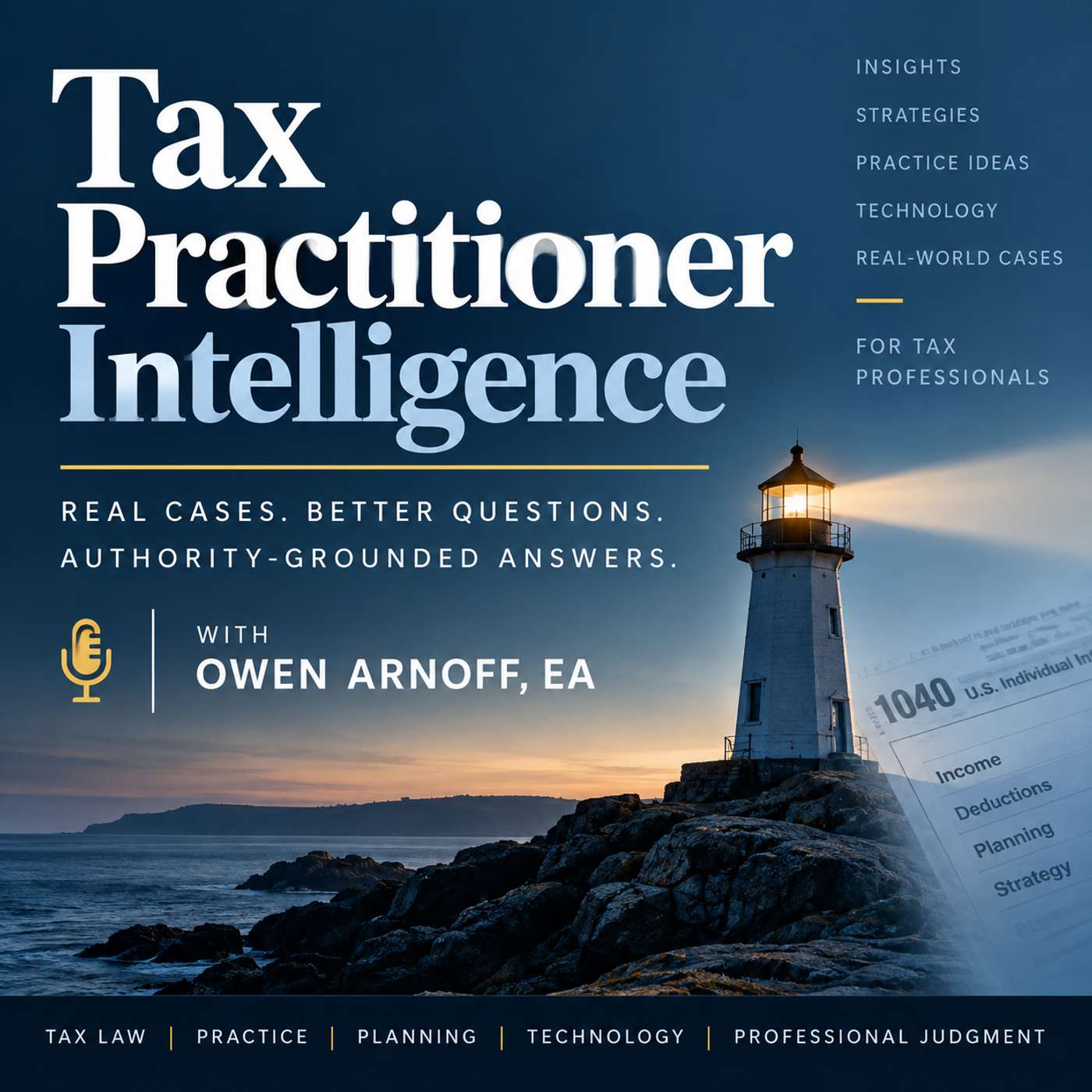
Tax Practitioner Intelligence
Owen S Arnoff, EA, NTPI Fellow
Business & Entrepreneuriat
Business & Entrepreneuriat
Fréquence : 1 épisode/3j. Total Éps: 2

Tax Practitioner Intelligence is a podcast for tax professionals who want to think beyond compliance.
Hosted by Owen Arnoff, EA, the program explores real-world tax planning opportunities, practitioner judgment, research, technology, artificial intelligence, workflow, and the decisions experienced professionals encounter every day.
The focus is not simply on knowing the tax law. It is on recognizing when something deserves a closer look, asking better questions, finding the relevant authority, and turning tax knowledge into practical planning.
Episodes examine real cases, planning strategies, practitioner risk, tax technology, and the evolving role of professional judgment in a rapidly changing profession.
Real cases. Better questions. Authority-grounded answers.
Site
RSS
Apple
Données mises à jour le 07/10/2026
Classements récents
Dernières positions dans les classements Apple Podcasts et Spotify.
Liens partagés entre épisodes et podcasts
Liens présents dans les descriptions d'épisodes et autres podcasts les utilisant également.
Voir plusQualité et score du flux RSS
Évaluation technique de la qualité et de la structure du flux RSS.
Voir plusHistorique des publications
Répartition mensuelle des publications d'épisodes au fil des années.
© My Podcast Data · Projet indépendant · Données issues d'Apple & Spotify