Talking Animal Law – Détails, épisodes et analyse
Détails du podcast
Informations techniques et générales issues du flux RSS du podcast.
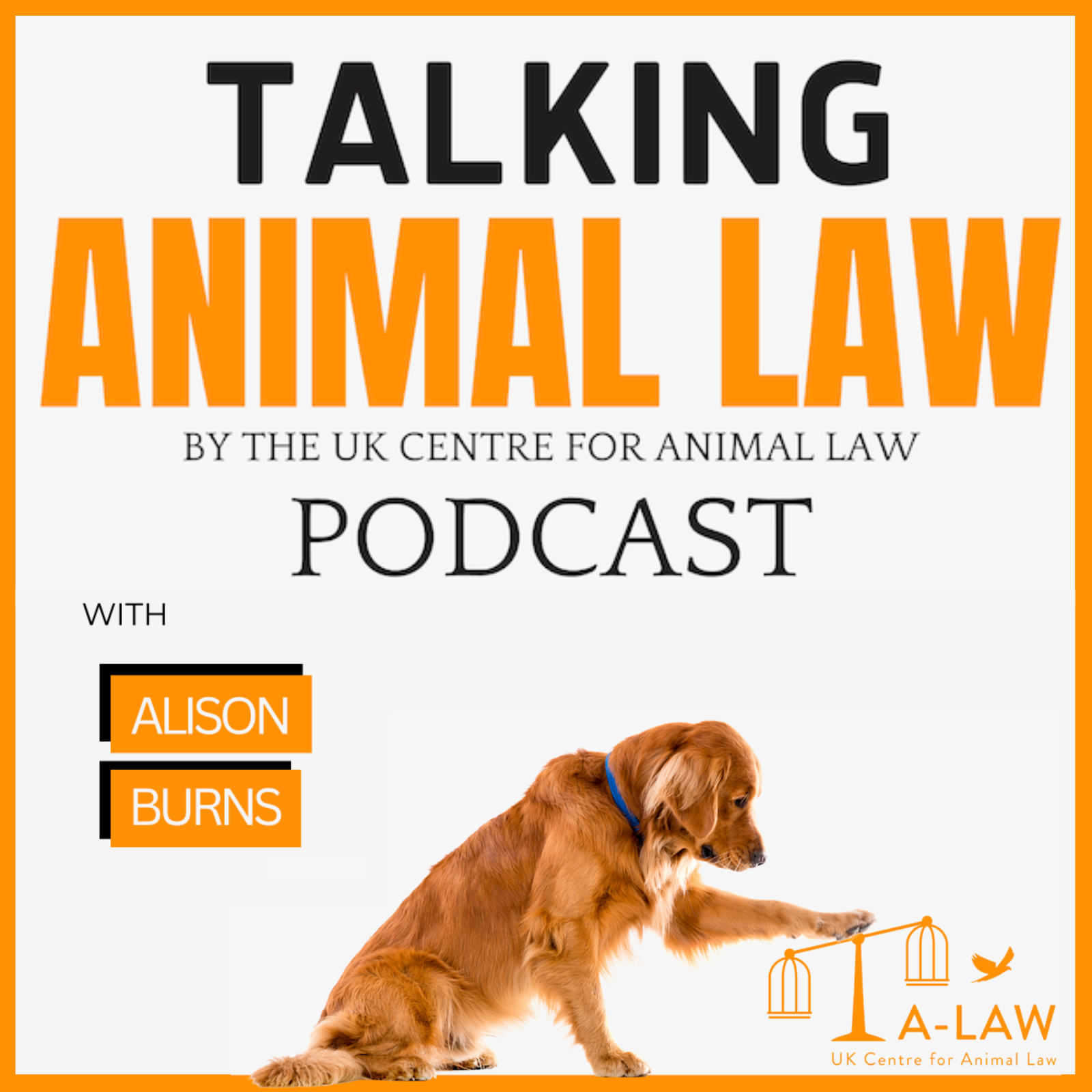
Talking Animal Law
Alison Burns
Fréquence : 1 épisode/52j. Total Éps: 34

Classements récents
Dernières positions dans les classements Apple Podcasts et Spotify.
Apple Podcasts
Aucun classement récent disponible
Spotify
Aucun classement récent disponible
Liens partagés entre épisodes et podcasts
Liens présents dans les descriptions d'épisodes et autres podcasts les utilisant également.
See all- https://www.linkedin.com/
1543 partages
- https://www.nowzad.com/donate
6 partages
- https://www.alaw.org.uk/
5 partages
- http://pettheftreform.com/
1 partage
Qualité et score du flux RSS
Évaluation technique de la qualité et de la structure du flux RSS.
See allScore global : 53%
Historique des publications
Répartition mensuelle des publications d'épisodes au fil des années.
The Hidden Crisis of High-Yield Animal Breeding and Technology with Peter Stevenson OBE
Saison 1 · Épisode 33
mardi 11 novembre 2025 • Durée 42:03
What happens when animals are treated as "machines" to be manipulated by law and technology? We welcome back Peter Stevenson OBE, the Chief Policy Advisor at Compassion in World Farming (CiWF) and a driving force behind major EU welfare bans. In this profound and challenging discussion, Peter dissects the hidden crisis of modern animal agriculture: the relentless pursuit of hyper-productivity through genetic selection and its alarming successor, precision breeding.
Peter reveals how legal gaps, like the lack of a species-specific directive for dairy cows, have allowed suffering to escalate, and he outlines the legislative battle to enforce basic duties, such as the right of animals to "exhibit normal behaviour patterns." This is a must-listen for anyone interested in the future of animal law, policy enforcement, and the ethical conflict between technological innovation and sentience.
Key Topics & Timestamps02:30 | CiWF's Core Mission: The triple disaster of factory farming: cruelty, environmental ruin, and human health problems (type 2 diabetes, heart disease).
03:49 | The Labelling Lie: Why consumers are intentionally kept in the dark about farming methods for meat and milk (especially dairy).
06:09 | The Hidden Crisis of Selective Breeding: Why hyper-productivity is often ignored, and the specific suffering of broiler chickens and their painful leg disorders.
07:38 | The Sow & Piglet Catastrophe: Sows bred for 15-20 piglets per litter, leading to high piglet mortality, starvation, and the cruel practice of routine teeth clipping.
10:35 | The Dairy Cow Exhaustion: How breeding for 10,000+ litres of milk creates "broken" cows, leading to exhaustion, lameness, and metabolic disorders.
13:30 | The Legislative Void: The lack of species-specific law for dairy cows and how broad EU/UK provisions on "unnecessary suffering" are failing.
15:58 | The Untapped Legal Weapon: Using the UK Animal Welfare Act, Section 9 (duty to exhibit "normal behaviour patterns") to challenge intensive practices, citing the example of ducks and their need for water.
21:06 | Metrics for Welfare: The argument for mandatory, measurable metrics (like caps on lameness rates or growth rates) to make general welfare law enforceable.
24:23 | The Threat of Gene Editing: How the new Precision Breeding Act risks entrenching factory farming and repeating the mistakes of past genetic technologies.
26:09 | The Technological Fix Trap: The danger of using gene editing to create "disease resistance" when diseases are caused by crowded, stressful conditions.
28:59 | Sentience vs. Production: The ethical conflict when governments champion technological innovation, ignoring the EU Treaty Article 13 duty to pay full regard to animal sentience.
35:10 | The Fourth Pillar of Sustainability: Peter's argument that Animal Welfare must become the fourth essential pillar alongside Environmental, Social, and Economic sustainability.
38:20 | Actionable Advice: Peter's practical recommendation for individual consumers.
Quotable Moments-
"Factory farming is not just cruel to animals, but that it is a disaster from the point of view of food security and the environment." (02:30)
-
"Governments are very determined to make sure that consumers are not aware of how the animals have been kept. It's probably at its worst with milk." (04:14)
-
"We've actually bred sows that can produce more piglets than they have teats to feed them with. And a number of problems then arise from that." (07:38)
-
"Today's dairy cows... the biggest problem for these cows is just exhaustion... a cow that is broken in body and possibly also in spirit." (11:28)
-
"In general, what we've said is that we're opposed to it [gene editing] unless it can really be shown that... it's not in effect going to entrench factory farming." (26:09)
-
"At the moment it's just been treated as some sort of rather nice window dressing and the EU... in formulating and implementing its agriculture policies at times pays no attention at all to the welfare requirements of animals." (28:59)
-
Peter Stevenson's Contact: Peter@ciwf.org (for specific legal or dairy scheme questions)
-
Compassion in World Farming Website: ciwf.org.uk
-
CiWF Selective Breeding Report: (Referenced at 37:20) Look for the latest report on the problems involved with selective breeding on the CiWF website.
-
Upcoming UK Report: Look out for the report from the UK Animal Welfare Committee on the problem of selective breeding (Referenced at 37:20).
#AnimalWelfareMustLead #AnimalLaw #PeterStevenson #CiWF #FactoryFarming #PrecisionBreeding #GeneticSelection #DairyWelfare #FourthPillar #AnimalSentience #LegalAdvocacy
Animal Personhood: Wayne Hsiung's Legal Battle Beyond the Courtroom
Saison 1 · Épisode 32
mardi 7 octobre 2025 • Durée 53:03
In this inspiring episode, host Alison Burns sits down with Wayne Hsiung, a prominent attorney, co-founder of Direct Action Everywhere (DxE), and the force behind his new initiative, The Simple Heart. Wayne shares his remarkable journey from a top academic and lawyer to a leading animal rights activist. He explains his philosophy that law is not a fixed concept but a dynamic force shaped by social movements.
This conversation explores the pivotal moments that led him to embrace direct action, including a powerful childhood experience with his family's dog and a jarring trip to China. Wayne delves into his strategy of using the courtroom as a stage for public opinion, likening his approach to historical figures like Susan B. Anthony and Martin Luther King Jr.. He also discusses the nuances of legal victories and losses, the significance of his California appeal, and the contrasting approaches of the animal rights movements in the US and the UK. Wayne's insights offer a powerful and hopeful vision for the future of animal law and personhood.
Timestamps
-
00:00 - 02:22 — Introduction of Wayne Hsiung and his background.
-
02:22 - 05:18 — The professional background: How a lawyer sees the law as a social construct.
-
05:18 - 09:58 — The personal reason: A childhood experience with bullying and a pivotal moment with a dog in China.
-
09:58 - 18:48 — The pivotal moments: From a failing vegan outreach to entering a slaughterhouse.
-
18:48 - 25:11 — Using the courtroom as a platform: The strategy of combining legal challenges with public opinion.
-
25:11 - 28:03 — The effectiveness of direct action and the attention-grabbing nature of courtroom drama.
-
28:03 - 34:18 — Legal setbacks as a tool for progress: The strategy behind the California appeal and the concept of credibility-enhancing displays.
-
34:18 - 38:46 — The significance of the Nonhuman Rights Project and the legal argument for animal personhood.
-
38:46 - 41:57 — The concept of the "reasonable person" and the opportunity presented by outdated laws.
-
41:57 - 45:17 — International activism: Differences between the animal rights movements in the US and the UK.
-
45:17 - 47:45 — The future of the movement: The importance of institutional scaffolding and learning from past mistakes.
-
47:45 - 52:22 — A hopeful message for the future of the animal rights movement and actionable advice for listeners.
Topics Covered
-
The Law as a Social Construct: Wayne's legal background and the "mythology" that law is a fixed thing. He argues that social movements, not just legislation or judicial decisions, are the primary drivers of legal change.
-
Personal Motivation: A childhood marked by bullying and racism shaped his worldview. A transformative trip to China, where he saw a dog in a restaurant, made him realize that if a rule is wrong, it must be broken.
-
The Power of Direct Action: Wayne recounts how his early vegan outreach efforts were ineffective. A pivotal experience of walking into a slaughterhouse showed him that these boundaries were not as "impenetrable" as he once believed.
-
Courtroom Strategy: The concept of using the courtroom as a platform for public opinion, drawing parallels with historic figures like Susan B. Anthony and her trial.
-
Losing to Win: Wayne argues that legal losses can be more valuable than victories. He introduces the concepts of
credibility-enhancing displays and the backlash effect, explaining how his incarceration and felony conviction in California have generated enormous public support. -
Animal Personhood: The significance of the Nonhuman Rights Project's amicus curiae brief in his appeal. Wayne challenges the legal idea that animals are "something" rather than "someone," and draws a parallel to the Dred Scott case and the fight for personhood for people of color.
-
International Differences: The contrast between the US movement's focus on legal defense and the UK movement's emphasis on direct action. Wayne highlights the "dishonesty" element in UK theft law as a huge opportunity for activists and lawyers.
-
Hope for the Future: Wayne expresses his confidence that institutionalized animal exploitation will be abolished within his lifetime. He shares his advice for activists: "find your voice, find some friends and fight like hell".
Key Quotes
-
"The primary mechanism to which it's changed has been social movements, political movements."
-
"If this is the rule, this rule must be broken."
-
"There's something about the battle in the courtroom that really draws an enormous amount of attention."
-
"I suspect...that losing in court is more valuable than winning."
-
"If a corporation can be a person, so can an animal."
-
"This is one area where the law just is not in alignment with the basic common sense intuitions that most people have."
-
"I would be stunned if by the end of my lifetime, factory farming hadn't been completely abolished."
#WayneHsiung #AnimalLaw #AnimalRights #DirectAction #TheSimpleHeart #DXE #AnimalAdvocacy #LegalStrategy #SocialJustice #AnimalPersonhood #OpenRescue #LawForAnimals #AnimalCruelty
Forgotten fish - legal protection at the time of killing farmed fish.
Épisode 23
mardi 27 juin 2023 • Durée 24:47
In this episode, we discuss the legal protection of farmed fish with Amro Hussain, Senior Public Affairs Lead at The Humane League. In particular, we focus on the protection of welfare at the time of killing and ask why current legal protections are not sufficient.
Talking Christian Orthodoxy, animals and law
Épisode 22
mercredi 31 mai 2023 • Durée 37:25
Dr Christina Nellist, B.Ed; Ph.D; FOCAE. Eastern Orthodox Theologian, Fellow of the Oxford Centre for Animal Ethics and Editor of Pan Orthodox Concern for Animals, talks about animals and theology. This episode explores how Christian theology has influenced the development of law in the Western hemisphere and how it can help us navigate some of the current dilemas about society's treatment of animals.
Talking Animal Law and trophy hunting
Épisode 21
mercredi 8 mars 2023 • Durée 59:22
This episode is co-hosted with Tamara Bedic, Chair of the Animal Rights Committee of the New York Guild of Lawyers (New York City division). We are talking about trophy hunting with our guests, Eduardo Goncalves, founder of the Campaign to Ban Trophy Hunting in the UK and Professor David Bilchitz, Professor of Fundamental Rights and Constitutional Law at the University of Johannesburg and Professor of Law at the University of Reading.
Talking Animal Law and farrowing crates
Épisode 20
mercredi 22 février 2023 • Durée 29:32
In this episode, we talk to Dr Steven McCulloch, veterinary surgeon and expert in animal welfare about the use of farrowing crates. Dr McCulloch is the author of a recent report called Banning Farrowing Crates in the UK: Transitioning to Free Farrowing to Meet the Welfare Needs of Pigs. We discuss the use of farrowing crates and the call for a ban on animal welfare grounds.
Animals and society in the nineteenth century Britain
Épisode 19
vendredi 22 juillet 2022 • Durée 45:00
Historian Dr Hilda Kean, former Dean of Ruskin College, Oxford, takes us back to nineteenth century Britain, as she discusses the landscape for animals around the enactment of Martin's Act 1822 (named after its sponsor, Richard Martin MP), the first national legislation intended specifically to make animal cruelty an offence.
This episode contains references to animal cruelty, including cat skinning, that some people may find distressing.
How the law can help save Asian elephants
Épisode 18
mercredi 29 juin 2022 • Durée 30:17
In this week's episode we talk to Duncan McNair, CEO of Save the Asian Elephants ('STAE') about elephants, and the impact that unethical elephant tourist attractions have on the welfare of the individual elephant and on the elephant population. Duncan discusses proposals for law reform that would see a ban on the marketing of certain tourist attractions in Asia involving elephants.
The elephant in the court
Épisode 17
mardi 31 mai 2022 • Durée 32:56
Dogs: reducing attacks and promoting responsible ownership
Épisode 16
mercredi 25 mai 2022 • Durée 42:12
Dr Angus Nurse is the author of a Government commissioned report: 'Investigation of measures to reduce dog attacks and promote responsible ownership amongst dog owners with dog control issues in the UK.' 2021. Dr Nurse discusses the report and its implications for dog control policy, law and enforcement.
Podcasts Similaires Basées sur le Contenu