SPILL THE (GREEN) TEA: How to talk about sustainability without getting called out – Détails, épisodes et analyse
Détails du podcast
Informations techniques et générales issues du flux RSS du podcast.
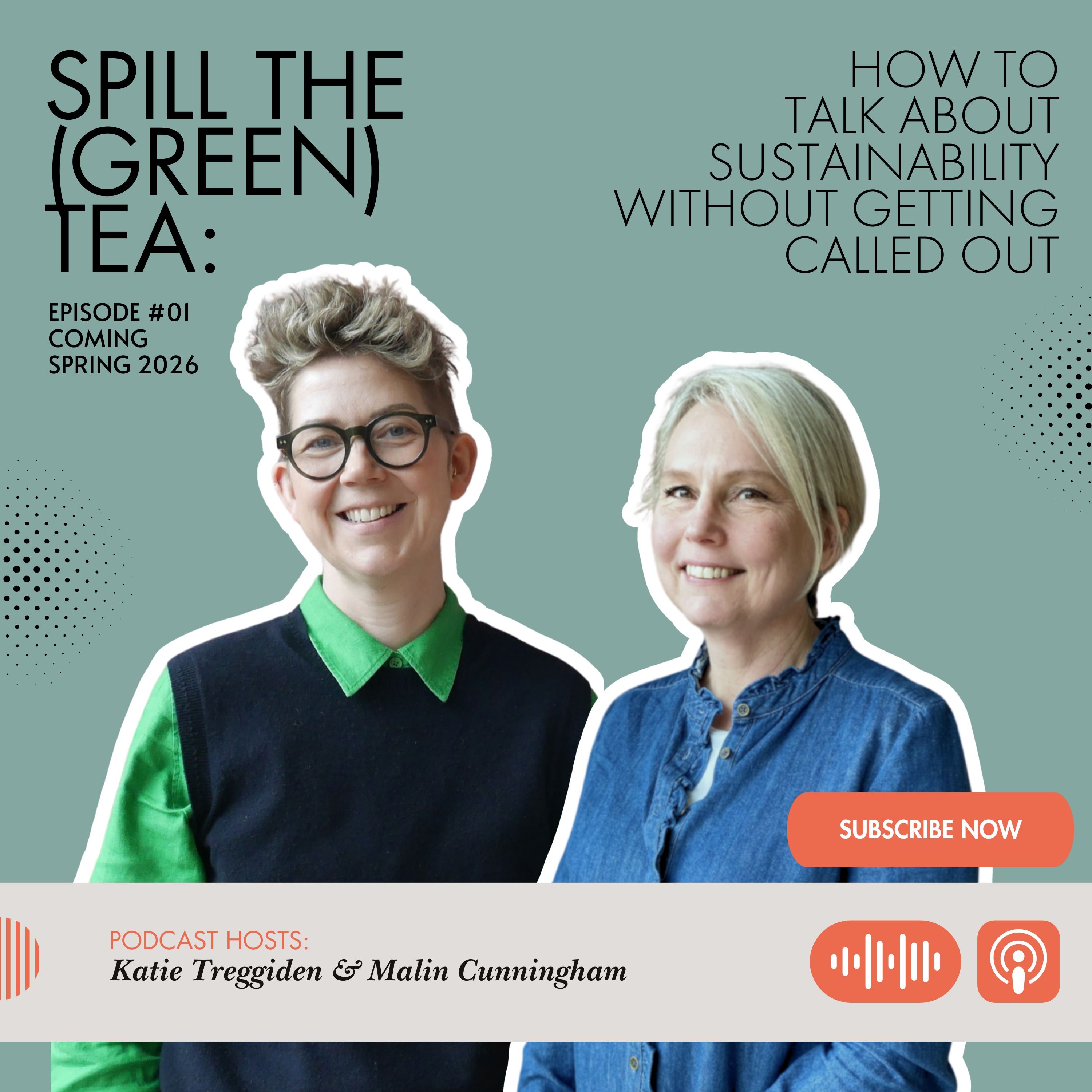
SPILL THE (GREEN) TEA: How to talk about sustainability without getting called out
Katie Treggiden, Malin Cunningham
Fréquence : 1 épisode/52j. Total Éps: 40

Classements récents
Dernières positions dans les classements Apple Podcasts et Spotify.
Apple Podcasts
Aucun classement récent disponible
Spotify
Aucun classement récent disponible
Liens partagés entre épisodes et podcasts
Liens présents dans les descriptions d'épisodes et autres podcasts les utilisant également.
See all- https://www.samaritans.org/
1382 partages
- https://www.mind.org.uk/
844 partages
- https://drawdown.org/
127 partages
- https://www.instagram.com/thecatchgroup
406 partages
- https://www.instagram.com/katietreggiden.1
150 partages
- https://www.instagram.com/tamu.thomas
99 partages
Qualité et score du flux RSS
Évaluation technique de la qualité et de la structure du flux RSS.
See allScore global : 73%
Historique des publications
Répartition mensuelle des publications d'épisodes au fil des années.
In Conversation with... Elle Bower-Johnston
Épisode 36
jeudi 22 août 2024 • Durée 41:48
In this episode, Katie talks to Elle Bower Johnston. Elle (she/they) is a body witch. Their work is the alchemisation of breathwork, somatic, and rest practices with witchcraft and folk magic. She works with creatives, witches, queers, change-makers, weirdos - folks who might not necessarily feel like they belong in ‘wellness’ or ‘spiritual’ spaces - to help them get into deeper their relationship with their body and connect with their magic.
Her work is queer- and trans-centred, trauma-conscious, and rooted in unravelling colonialism and capitalism from the ways we relate to our bodies. They believe that our personal practices can be microcosms of liberation that spiral out and create a better world.
During this Katie & Elle discuss:
- The societal pressure to stay "busy" and how it often undermines our well-being
- How moving through space—whether walking, driving, or traveling by train—enhances mental clarity and creativity.
- Understanding different types of rest and exploring rest from various perspectives—physical, mental, spiritual, and social.
- The liberating power of saying "no" and how starting from a place of refusal can help reclaim energy and create space for true rest.
- The paradox of needing to slow down in an urgent world
You can connect with Elle here
Website: ellebowerjohnston.com
Instagram: @ellebowerjohnston
Free Notion dashboard of rest practices for rebels - Radical Rest Portal
Here are some highlights:
The Pressure of Productivity
"Nobody comes up to me and says, ‘You seem inspired at the moment or happy or well-rested.’ It’s always, ‘Oh my gosh, you’re so busy,’ as if productivity is the only measure of success. But what about asking if my work is bringing me joy?”
Embracing the Chaos of Rest
"Rest isn’t just about napping or yoga Nidra. It’s anything that connects your mind and body, bringing you back to a sense of wholeness. It’s about exploring different layers of self and finding coherence, whether it’s through traditional practices or something as simple as revisiting childhood movies."
The Power of Saying No
"Starting from a place of refusal is a form of reclaiming energy. We often move with this sense of ‘I have to, I have to,’ but by saying no, we allow ourselves to drop back, be present, and reclaim rest as an act of self-care."
The Importance of Listening to the Body
"Listening to your body is key. It’s not just about what your mind wants but also what your body needs. Sometimes, rest is about allowing your body to guide you, trusting its signals, and respecting the need to pause, breathe, and reset."
Books, Podcasts & Articles we mentioned:
Experiments in Imagining Otherwise by Lola Olufemi
Emergent Strategy by Adriene Marie Brown
Making Design Circular Conference – 2024
LEARN HOW TO TALK ABOUT YOUR ECO-EFFORTS WITH CONFIDENCE so you can connect with values-aligned clients and customers without the fear of getting called out.
10 am–5 PM BST Thursday 05 September 2024
A 1-day virtual conference for purpose-driven founders making imperfect progress towards genuine environmental sustainability.
Broken: Mending and repair in a throwaway world
Katie’s sixth book celebrates 25 artists, curators, menders and re-makers who have rejected the allure of the fast, disposable and easy in favour of the patina of use, the stories of age and the longevity of care and repair. Accompanying these profiles, six in-depth essays explore the societal, cultural and environmental roles of mending in a throwaway world.
Cultivating Hope, 3 part mini course: Are you ready to cultivate hope in the face of the climate crisis? Sign up to Katie’s three-part free mini course that will help you move through feelings of helplessness, reconnect with nature and take aligned action.
Making Design Circular membership: An international membership community and online learning platform for environmentally conscious designers, makers artists and craftspeople – join us!
Spread the Word:
Please share Making Design Circular with Katie Treggiden with wild abandon — with your friends, family, and fellow purpose-driven founders of making-based businesses or wherever interesting conversations about creativity happen in your world!
If you love what you’re listening to, show us some love by following Circular with Katie Treggiden in this app and leaving a review. All that good stuff tells the ‘algorithm Gods’ to show the podcast to more people, and that can only be a good thing, right?
Sign up for our my e-newsletter ‘Weekly(ish) Musings for Curious, Imperfect and Stubbornly Optimistic Environmentalists’ - just click here.
And find me on the Interwebs: @katietreggiden (Twitter, TikTok), & @katietreggiden3908 (YouTube) & @katietreggiden.1 (Instagram) – and if you’re a designer, maker, artist or craftsperson, join me on IG @making_design_circular_
About Katie:
Katie Treggiden is the founder and director of Making Design Circular – an international membership community and online learning platform for environmentally conscious designers, makers artists and craftspeople. She is also an author, journalist and podcaster championing a hopeful approach to environmentalism. With more than 20 years' experience in the creative industries, she regularly contributes to publications such as The Guardian, The Observer, Crafts Magazine and Dezeen. She is currently exploring the question ‘Can craft save the world?’ through her sixth book, Broken: Mending & Repair in a Throwaway World (Ludion, 2023), this very podcast.
This is a public episode. If you'd like to discuss this with other subscribers or get access to bonus episodes, visit brackishbykatietreggiden.substack.com/subscribe
More from Katie
- Green, Not Greenwashed: Get the clarity and confidence you need to talk about your eco-efforts without the fear of greenwashing.
- Follow Katie on Instagram @katietreggiden.1
More from Malin
- Greenwashing 101: Green or Greenwashed? Essential insights for sales and marketing professionals to make sense of sustainability and avoid falling into greenwashing's trap.
- Follow Malin on LinkedIn @malin-cunningham
PS Looking for Brackish? That has a new home at https://brackishbykatietreggiden.substack.com/t/podcast
In Conversation with... Rosie Murphy
Épisode 35
jeudi 15 août 2024 • Durée 51:40
In this episode, Katie talks to Rosie Murphy. Rosie is a consummate communicator and connector.
She is just one of a broad ecosystem of architectural workers uniting for greater social justice and environmental consciousness in all aspects of the built environment. She is an advocate for networks such as Black Females in Architecture, HomeGrown Plus and Architects Climate Action Network.
Rosie's work is centred on youth engagement, creating creative opportunities and experiences for children and young people to be empowered, informed and activated citizens of the future. Rosie works collaboratively across boundaries of design, education and activism in the UK and her new community in Aotearoa, New Zealand.
During this Katie & Rosie discuss:
- The importance of a non-linear approach to design thinking
- Collaboration as an expression of hope
- How true collaboration requires honesty about power imbalances and a commitment to sharing power where possible, even when it’s challenging.
- The idea that collaboration can be deeply informed by observing and learning from nature
- Challenges in collaboration
- The importance of integrating cultural identity into design work
You can connect with Rosie here
Website: https://rosiemurphyme.wixsite.com/onlineportfolio
Instagram: https://www.instagram.com/rosiemurphy.me
LinkedIn:https://www.linkedin.com/in/contact-rosiemurphy/
Here are some highlights:
Embracing Non-Linear Design Thinking
"So this non-linear cycle includes points like ideation, reflection, prototyping and testing, so a lot of aspects of the design process that we're very familiar with, but I feel with a greater sensitivity to community, to ancestry and history, and to a great sensitivity to nature and resources, and yeah, in the way that it's laid out in this koru, this spiral which itself is taken from nature."
Understanding Power Dynamics in Collaboration
"…power is absolutely the most important and most essential aspect of collaboration... collaboration is not equal, there are many different forms of collaboration from community engagement to citizen participation, all the way up to citizen empowerment."
Learning from Nature’s Wisdom
"I just wanted to share a quite beautiful Maori proverb or saying that I was just introduced to recently, which is erere kau, mai te awa nui, mai te kahui, maunga ki tangaroa, pō au te awa, pō te awa, pō au. And that means the river flows from the mountain to the sea, I am the river, the river is me. And for me, that is truly understanding the fact that we are not separate to nature, we are not separate to the natural world, that the way that we operate is part of this global environmental system."
Books, Podcasts & Articles we mentioned:
Against the Loveless World by Susan Abulhawa
Drunk Women Solving Crime Podcast with hosts Hannah George and Taylor Glenn
Making Design Circular Conference – 2024
LEARN HOW TO TALK ABOUT YOUR ECO-EFFORTS WITH CONFIDENCE so you can connect with values-aligned clients and customers without the fear of getting called out.
10 am–5 PM BST Thursday 05 September 2024
A 1-day virtual conference for purpose-driven founders making imperfect progress towards genuine environmental sustainability.
Broken: Mending and repair in a throwaway world
Katie’s sixth book celebrates 25 artists, curators, menders and re-makers who have rejected the allure of the fast, disposable and easy in favour of the patina of use, the stories of age and the longevity of care and repair. Accompanying these profiles, six in-depth essays explore the societal, cultural and environmental roles of mending in a throwaway world.
Cultivating Hope, 3 part mini course: Are you ready to cultivate hope in the face of the climate crisis? Sign up to Katie’s three-part free mini course that will help you move through feelings of helplessness, reconnect with nature and take aligned action.
Making Design Circular membership: An international membership community and online learning platform for environmentally conscious designers, makers artists and craftspeople – join us!
Spread the Word:
Please share Making Design Circular with Katie Treggiden with wild abandon — with your friends, family, and fellow purpose-driven founders of making-based businesses or wherever interesting conversations about creativity happen in your world!
If you love what you’re listening to, show us some love by following Circular with Katie Treggiden in this app and leaving a review. All that good stuff tells the ‘algorithm Gods’ to show the podcast to more people, and that can only be a good thing, right?
Sign up for our my e-newsletter ‘Weekly(ish) Musings for Curious, Imperfect and Stubbornly Optimistic Environmentalists’ - just click here.
And find me on the Interwebs: @katietreggiden (Twitter, TikTok), & @katietreggiden3908 (YouTube) & @katietreggiden.1 (Instagram) – and if you’re a designer, maker, artist or craftsperson, join me on IG @making_design_circular_
About Katie:
Katie Treggiden is the founder and director of Making Design Circular – an international membership community and online learning platform for environmentally conscious designers, makers artists and craftspeople. She is also an author, journalist and podcaster championing a hopeful approach to environmentalism. With more than 20 years' experience in the creative industries, she regularly contributes to publications such as The Guardian, The Observer, Crafts Magazine and Dezeen. She is currently exploring the question ‘Can craft save the world?’ through her sixth book, Broken: Mending & Repair in a Throwaway World (Ludion, 2023), this very podcast.
This is a public episode. If you'd like to discuss this with other subscribers or get access to bonus episodes, visit brackishbykatietreggiden.substack.com/subscribe
More from Katie
- Green, Not Greenwashed: Get the clarity and confidence you need to talk about your eco-efforts without the fear of greenwashing.
- Follow Katie on Instagram @katietreggiden.1
More from Malin
- Greenwashing 101: Green or Greenwashed? Essential insights for sales and marketing professionals to make sense of sustainability and avoid falling into greenwashing's trap.
- Follow Malin on LinkedIn @malin-cunningham
PS Looking for Brackish? That has a new home at https://brackishbykatietreggiden.substack.com/t/podcast
Ray Dodd
Épisode 26
mercredi 15 mars 2023 • Durée 01:11:07
In this episode, Katie talks to Ray Dodd a Money Coach who helps those who have traditionally been excluded from making money, to make life-changing amounts of money. All without compromising who they are.
If you’re hearing the term ‘money coach’ and wincing a little – imagining fluffy talk of manifesting millions in your sleep, – prepare to have your fears soothed – because you’re in for a treat. Ray is a money coach with a difference. You won’t hear ‘think good thoughts and watch the money come rolling in’ from her. Ray believes that money, business and intersectional feminism are inextricably linked and that there’s a lot more to making money than simply manifesting it.
During this episode, Katie speaks to Ray about the ways in which your social conditioning is stopping you from having the impact you want to have, whether that's in your creative practice, in your business and money making or in your environmental work.
You can connect with Ray below:
IG: @ray_dodd
Download Ray’s free Pricing with Feeling Guide
Listen to Ray’s podcast, Real You Real Money
Here are some highlights:
Eye Opening Experiences
“All our lives as, particularly as people conditioned as women, we’re told that our bodies aren't good enough, right? That they need, fixing, improving, and all of that. And then as soon as I was pregnant, everyone's like, Oh, my God miracle of life, you just really need to trust your body. And I was like, hang on, you've told me my body is terrible, for the whole of my life, and now you're like glorifying it suddenly… it was just a really eye opening experience in terms of how I'd been conditioned to be and I'm sure we're going to talk a lot about conditioning today, versus what the actual experience in the world is.”
Social Conditioning keeps us small
“I 100% believe that we have been tricked into believing many things are not possible for us that absolutely are. And so we've been tricked by a culture and a society that conditions us to believe that there's only certain spaces that certain people are allowed to occupy… but I really think that we all have these spaces that are perfectly us sized in the world. And so for a lot of the designer makers listening, designing and making will be part of like, it's not just something they like, “oh that seems like a good idea, that's what I'll do”. There's something intrinsic in them that needs to create, needs to be in that cycle of putting work out and having people respond to it. There's something innate in them. And so what can happen, when we have these very narrow spaces to operate in, is we don't believe that the space that is intrinsically ours is even available to us.”
The stigma around coaching
“When you think about the general narrative around power, it's somebody at the top getting it all right, telling us all what to do. And actually having support is its own version of redistributing power. It is a version of saying, you know what, I don't have all the answers I do need help. You don't have to be lost to have coaching. But this conditioning that we've talked about runs so deep, and if we're not careful we recreate things like, we recreate systems that we actually are very, very much against because we're just not conscious of how it plays out in our lives.
Books, Podcasts & Articles we mentioned:
Tomorrow, tomorrow, tomorrow: The word of mouth sensation by Gabrielle Zevin
The Soul of Money: Transforming your relationship with money and life
Serena Hicks is talking about money again
Cultivating Hope, 3 part mini course: Are you ready to cultivate hope in the face of the climate crisis? Sign up to Katie’s three-part free mini course that will help you move through feelings of helplessness, reconnect with nature and take aligned action.
Find out more about The Seed, Katie’s online course to help you Identify your unique contribution to environmentalism – either as a self-paced course or live digital course running in May 2023.
Broken: Mending and repair in a throwaway world.
This new book celebrates 25 artists, curators, designers and makers who have rejected the allure of the fast, disposable and easy in favour of the patina of use, the stories of age and the longevity of care and repair. Accompanying these profiles, six in-depth essays explore the societal, cultural and environmental roles of mending in a throwaway world.
Spread the Word:
Please share Circular with Katie Treggiden with wild abandon — with your friends, family, and fellow designer-makers or wherever interesting conversations about creativity happen in your world!
If you love what you’re listening to, show me some love by following Circular with Katie Treggiden in this app and leaving a review. I’ll be honest, I don’t really understand how it works, but apparently, all that good stuff tells the ‘algorithm Gods’ to show the podcast to more people, and that can only be a good thing, right?
And finally, sign up for our my e-newsletter ‘_Weekly(ish) Musings for Curious, Imperfect and Stubbornly Optimistic Environmentalist_s’ landing gently in inboxes most Fridays - just click here.
And find me on the Interwebs: @katietreggiden (Twitter, TikTok), & @katietreggiden3908 (YouTube) & @katietreggiden.1 (Instagram) – if you’re a designer-maker, DM me a♻️ to be added to my close friends group especially for sustainable craftspeople and check out Making Design Circular at www.katietreggiden.com/membership
About Katie:
Katie Treggiden is a purpose-driven journalist, author, podcaster and keynote speaker championing a circular approach to design – because Planet Earth needs better stories. With 20 years' experience in the creative industries, she regularly contributes to publications such as The Guardian, Crafts Magazine, Design Mil_k and _Monocle24. She is currently exploring the question ‘can craft save the world?’ through an emerging body of work that includes her fifth book, Wasted: When Trash Becomes Treasure (Ludion, 2020), and this podcast.
About our partners:
Inhabit hotels, located in the Bayswater area of London, offer restorative environmentally and socially conscious places to stay in the city. Wellness and well-being also play a major part in the brand's ethos Mindfully designed for the modern traveller, everything at this new hotel has been considered with a genuine commitment to environmental initiatives and meaningful community partnerships. To find out more please check out our Instagram @inhabit_hotels.
Surfers Against Sewage is a grassroots environmental charity that campaigns to protect the ocean and everything that the ocean makes possible. They campaign against everything that threatens the ocean; plastic pollution, the climate emergency, industrial exploitation, and water quality, by taking action on the ground, that triggers change from the top. If like me, you'd like to support surfers against sewage, head over to https://www.sas.org.uk/
This is a public episode. If you'd like to discuss this with other subscribers or get access to bonus episodes, visit brackishbykatietreggiden.substack.com/subscribe
More from Katie
- Green, Not Greenwashed: Get the clarity and confidence you need to talk about your eco-efforts without the fear of greenwashing.
- Follow Katie on Instagram @katietreggiden.1
More from Malin
- Greenwashing 101: Green or Greenwashed? Essential insights for sales and marketing professionals to make sense of sustainability and avoid falling into greenwashing's trap.
- Follow Malin on LinkedIn @malin-cunningham
PS Looking for Brackish? That has a new home at https://brackishbykatietreggiden.substack.com/t/podcast
Matt Hocking
Épisode 25
mercredi 15 février 2023 • Durée 51:38
[Trigger Warning: Matt mentions female genital mutilation (FMG) in this episode, so listener discretion is advised.]
In this episode, Katie talks with Matt Hocking from Leap.eco, an award-winning design studio who has proven it’s possible to create inspiring work which delivers positive outcomes for people, planet and profit.
He has been passionate about working sustainably since long before it was cool. Every project he’s delivered doesn’t just meet a client’s business goals, it helps make the planet a better place – either directly or by changing the way a business thinks and works.
And he’s not kept that knowledge a secret, priding himself on sharing what he’s learnt with the industry – helping define and develop a model for sustainable design and working with creatives across the world to ensure design remains at the forefront of change.
He is committed to building a better future: one that is progressive, collaborative and thoughtful.
We discuss:
- Matt’s development of the Giving Budget, a model where, when you feel called to be generous, and to give something away, you can put certain boundaries around that to make sure that it's a good thing.
- Why it’s important for Matt to not just run a design agency
- The fascinating role creatives can play in asking the difficult questions
- How creativity is one of the three pillars of the change we need in in the world for a better outcome
- The clients he has supported with the Giving Budget and the surprises along the way
Here are some highlights:
Designing for Change
“…using my design skills to sort of make a living making a difference, kind of working with social and environmental issues, challenging projects to amplify what they're saying and what they're changing, the world they're trying to sort of manifest.”
Reframing the transaction of Kindness
“.. we all do free stuff, there's always somebody asking a creative can you do this or friend that saying, help me do this. You know, and a lot of people don't actually value how long that creativity takes or how much industry knowledge and training, I wouldn't want my creativity and a fee to be a barrier to get something great done that would support society to the planet…how do I reframe that while still giving back to say thank you for the creative journey that I'm on, so became our giving budget.”
Be Valued
“Look at what's sustainable for you, everything comes from you and if you break you, then the rest of the change you want to make in the world won't happen. Do you, look after yourself first, be valued, and be really thorough. A lot of people are takers and leeches in business, just really be careful about how this happens, this transaction, this agreement between you both, and do it in a way that works for you.”
Books, Podcasts & Ted Talks we mentioned:
- The Path of the Doer
- The Four Agreements
- Outrage & Optimism
- John Richardson & The Futurenauts
- How to Start a Movement or ‘the lone dancer’
Other interesting things we talked about:
You can find out more about Leap here, and connect with Matt on LinkedIn
Spread the Word:
Please share Circular with Katie Treggiden with wild abandon — with your friends, family, and fellow designer-makers or wherever interesting conversations about creativity happen in your world!
If you love what you’re listening to, show me some love by following Circular with Katie Treggiden in this app and leaving a review. I’ll be honest, I don’t really understand how it works, but apparently, all that good stuff tells the ‘algorithm Gods’ to show the podcast to more people, and that can only be a good thing, right?
And finally, sign up for our my e-newsletter ‘Weekly(ish) Musings for Curious, Imperfect and Stubbornly Optimistic Environmentalists’ landing gently in inboxes most Fridays - just click here. And find me on the Interwebs: @katietreggiden.1 (Instagram), @katietreggiden (Twitter, TikTok), @katietreggiden3908 (YouTube). If you’re a designer-maker, DM me a ♻️ to be added to my close friends group especially for sustainable craftspeople and check out Making Design Circular at www.katietreggiden.com/membership
About Katie:
Katie Treggiden is a purpose-driven journalist, author, podcaster and keynote speaker championing a circular approach to design – because Planet Earth needs better stories. With 20 years' experience in the creative industries, she regularly contributes to publications such as The Guardian, Crafts Magazine, Design Milk and Monocle24. She is currently exploring the question ‘can craft save the world?’ through an emerging body of work that includes her fifth book, Wasted: When Trash Becomes Treasure (Ludion, 2020), and this podcast.
About our partners:
Inhabit hotels, located in the Bayswater area of London, offer restorative environmentally and socially conscious places to stay in the city. Wellness and well-being also play a major part in the brand's ethos Mindfully designed for the modern traveller, everything at this new hotel has been considered with a genuine commitment to environmental initiatives and meaningful community partnerships. To find out more please check out our Instagram @inhabit_hotels.
Surfers Against Sewage is a grassroots environmental charity that campaigns to protect the ocean and everything that the ocean makes possible. They campaign against everything that threatens the ocean; plastic pollution, the climate emergency, industrial exploitation, and water quality, by taking action on the ground, that triggers change from the top. If like me, you'd like to support surfers against sewage, head over to https://www.sas.org.uk/
This is a public episode. If you'd like to discuss this with other subscribers or get access to bonus episodes, visit brackishbykatietreggiden.substack.com/subscribe
More from Katie
- Green, Not Greenwashed: Get the clarity and confidence you need to talk about your eco-efforts without the fear of greenwashing.
- Follow Katie on Instagram @katietreggiden.1
More from Malin
- Greenwashing 101: Green or Greenwashed? Essential insights for sales and marketing professionals to make sense of sustainability and avoid falling into greenwashing's trap.
- Follow Malin on LinkedIn @malin-cunningham
PS Looking for Brackish? That has a new home at https://brackishbykatietreggiden.substack.com/t/podcast
Sarah Fox
Épisode 24
mercredi 1 février 2023 • Durée 56:19
In this episode, Katie talks with Sarah Fox a coach and mentor helping organisations and individuals who are motivated to do good and do well, being drivers of positive social change. Sarah’s mission is to help people who care about the world to live a life of fulfilment, a life that is truly well lived, meaningful, purposeful and creative.
We discuss:
- Sarah’s strive to always do good and her journey with ‘kindness’
- What is means to be good, not just to the natural world but to ourselves.
- Sarah’s values of kindness, compassion, cooperation, collaboration and courage (added during the podcast!)…and how these relate to our self-worth.
- Why this group of people, who are working so hard to look after everybody else and bring about positive change in the world, find it so difficult to take care of themselves.
- Do we need to learn to look after ourselves in order to look after the planet, are those things connected?
- The importance of connecting with nature, observing nature in the human world and reminding ourselves of the bigger picture.
Here are some highlights:
What does it mean to be good?
“Essentially for me, the doing good bit is what it's about it's about leaving the world or trying to leave the world in a better place than you found it. Really stepping into what we can do that somehow contributes positively and whilst doing that, really thinking about how we do well based in terms of quality. But also in terms of our own well-being. When I talk about wellbeing, I'm talking about physical well-being emotional well-being and financial well-being. So how can we bring those things together so that we are making an impact of some kind and we're doing that in a way that is conscious and we have a self-awareness about that. But also, how can we do it so that we're not breaking in the process.”
I have value in the world!
“It’s as much about being kind to ourselves, as it is to everybody else. And if we can hold up a mirror, if we can talk to ourselves in the way that we talk to other people, if we can take action, and be kind to ourselves in the way that we are with other people, then I think the world would be a much better place, because it's coming from people feeling like they are enough already, without having to do all the things.” “if you already feel safe and enough, then you can really focus on delivering benefit in a way that most benefits the people you're trying to serve.”
How can we step into our wise Jedi self?
“I think if we're going to have these regenerative, restorative businesses, there needs to be a complete self-awareness as much as possible. We need to be in our autonomy, not standing in the narrative pattern that we have been in in the past. And how do we kind of step into, I call it the wise Jedi self, rather than that kind of inner critic? How do we step into that? So that we can create these businesses that are making a difference, that is having the impact that we want to have and that we don't get distracted?”
Books & Podcasts we mentioned:
- Consumed by Aja Barber
- Between the Stops by Sandi Toksvig
- The Choice by Edith Eger
- How to Own the Room by Viv Groskop | How To Own The Room on Apple Podcasts
- How to be Hopeful by Bernadette Russell
You can find out more about Sarah here, connect on LinkedIn and listen to her podcast on Spotify or Apple
With reference to our conversation on what is “good” and who gets to decide – here is Alexandra Daisy Ginsberg’s PhD “better”: https://www.daisyginsberg.com/work/better
Spread the Word:
Please share Circular with Katie Treggiden with wild abandon — with your friends, family, and fellow designer-makers or wherever interesting conversations about creativity happen in your world!
If you love what you’re listening to, show me some love by following Circular with Katie Treggiden in this app and leaving a review. I’ll be honest, I don’t really understand how it works, but apparently, all that good stuff tells the ‘algorithm Gods’ to show the podcast to more people, and that can only be a good thing, right?
And finally, sign up for our my e-newsletter ‘Weekly(ish) Musings for Curious, Imperfect and Stubbornly Optimistic Environmentalists’ landing gently in inboxes most Fridays - just click here. And find me on the Interwebs: @katietreggiden.1 (Instagram), @katietreggiden (Twitter, TikTok), @katietreggiden3908 (YouTube). If you’re a designer-maker, DM me a ♻️ to be added to my close friends group especially for sustainable craftspeople and check out Making Design Circular at www.katietreggiden.com/membership
About Katie:
Katie Treggiden is a purpose-driven journalist, author, podcaster and keynote speaker championing a circular approach to design – because Planet Earth needs better stories. With 20 years' experience in the creative industries, she regularly contributes to publications such as The Guardian, Crafts Magazine, Design Milk and Monocle24. She is currently exploring the question ‘can craft save the world?’ through an emerging body of work that includes her fifth book, Wasted: When Trash Becomes Treasure (Ludion, 2020), and this podcast.
About our partners:
Inhabit hotels, located in the Bayswater area of London, offer restorative environmentally and socially conscious places to stay in the city. Wellness and well-being also play a major part in the brand's ethos Mindfully designed for the modern traveller, everything at this new hotel has been considered with a genuine commitment to environmental initiatives and meaningful community partnerships. To find out more please check out our Instagram @inhabit_hotels.
Surfers Against Sewage is a grassroots environmental charity that campaigns to protect the ocean and everything that the ocean makes possible. They campaign against everything that threatens the ocean; plastic pollution, the climate emergency, industrial exploitation, and water quality, by taking action on the ground, that triggers change from the top. If like me, you'd like to support surfers against sewage, head over to https://www.sas.org.uk/
This is a public episode. If you'd like to discuss this with other subscribers or get access to bonus episodes, visit brackishbykatietreggiden.substack.com/subscribe
More from Katie
- Green, Not Greenwashed: Get the clarity and confidence you need to talk about your eco-efforts without the fear of greenwashing.
- Follow Katie on Instagram @katietreggiden.1
More from Malin
- Greenwashing 101: Green or Greenwashed? Essential insights for sales and marketing professionals to make sense of sustainability and avoid falling into greenwashing's trap.
- Follow Malin on LinkedIn @malin-cunningham
PS Looking for Brackish? That has a new home at https://brackishbykatietreggiden.substack.com/t/podcast
Exploring Broken: Mending and repair in a throwaway world
Épisode 23
mardi 31 août 2021 • Durée 14:57
This week Katie is doing something a little different.
As you may have heard her mentioned in the previous episode, her latest book, Broken: Mending and repair in a throwaway world came out in April of this year, and she will be reading you the wonderfully. Thought-provoking introduction to give you a flavour of the book.
Here are some highlights:
Making a statement
“Although any form of mending or repair could be seen as a form of activism in today's single use culture, many of today's artists, menders and remakers are choosing to make a statement with their work. A broken object delivers frustration because it doesn't achieve its functionality says Paulo Goldstein, on page 122. But the same principle applies to a broken system that people profiled in repair as activism are deliberately using repair to point a finger at what is broken.”
Broken World Thinking
“If we want new and better stories, and world orders, ones that are better for all of us, not just a tiny minority, we can't look away any longer. We need to hold the stare with what is broken, with what can be repaired or remade, and what needs to be cleaned up and let go. The act of noticing, of paying attention and asking questions enables us to hold space for two radically different realities. Realities that Jackson describes as a fractal world, a centrifugal world an almost always falling apart world on the one hand, and a world in a constant process of fixing and reinvention, reconfiguring and reassembling into new combinations and new possibilities on the other. He describes our broken world as a world of pain and possibility, creativity and destruction, innovation and the worst excesses of leftover habits and power, and suggests that the fulcrum of those two worlds is repair. The subtle acts of care by which order and meaning and complex socio technical systems are maintained and transformed. Human value is preserved and extended, and the complicated work of fitting to the varied circumstances of organisations, systems and lives is accomplished.”
Broken: Mending and repair in a throwaway world
Katie’s sixth book celebrates 25 artists, curators, menders and re-makers who have rejected the allure of the fast, disposable and easy in favour of the patina of use, the stories of age and the longevity of care and repair. Accompanying these profiles, six in-depth essays explore the societal, cultural and environmental roles of mending in a throwaway world.
Cultivating Hope, 3 part mini course: Are you ready to cultivate hope in the face of the climate crisis? Sign up to Katie’s three-part free mini course that will help you move through feelings of helplessness, reconnect with nature and take aligned action.
Making Design Circular membership: An international membership community and online learning platform for environmentally conscious designers, makers artists and craftspeople – join us!
Spread the Word:
Please share Making Design Circular with Katie Treggiden with wild abandon — with your friends, family, and fellow designer-makers or wherever interesting conversations about creativity happen in your world!
If you love what you’re listening to, show us some love by following Circular with Katie Treggiden in this app and leaving a review. All that good stuff tells the ‘algorithm Gods’ to show the podcast to more people, and that can only be a good thing, right?
Sign up for our my e-newsletter ‘Weekly(ish) Musings for Curious, Imperfect and Stubbornly Optimistic Environmentalists’ - just click here.
And find me on the Interwebs: @katietreggiden (Twitter, TikTok), & @katietreggiden3908 (YouTube) & @katietreggiden.1 (Instagram) – and if you’re a designer, maker, artist or craftsperson, join me on IG @making_design_circular_
About Katie:
Katie Treggiden is the founder and director of Making Design Circular – an international membership community and online learning platform for environmentally conscious designers, makers artists and craftspeople. She is also an author, journalist and podcaster championing a hopeful approach to environmentalism. With more than 20 years' experience in the creative industries, she regularly contributes to publications such as The Guardian, The Observer, Crafts Magazine and Dezeen. She is currently exploring the question ‘Can craft save the world?’ through her sixth book, Broken: Mending & Repair in a Throwaway World (Ludion, 2023), this very podcast.
This is a public episode. If you'd like to discuss this with other subscribers or get access to bonus episodes, visit brackishbykatietreggiden.substack.com/subscribe
More from Katie
- Green, Not Greenwashed: Get the clarity and confidence you need to talk about your eco-efforts without the fear of greenwashing.
- Follow Katie on Instagram @katietreggiden.1
More from Malin
- Greenwashing 101: Green or Greenwashed? Essential insights for sales and marketing professionals to make sense of sustainability and avoid falling into greenwashing's trap.
- Follow Malin on LinkedIn @malin-cunningham
PS Looking for Brackish? That has a new home at https://brackishbykatietreggiden.substack.com/t/podcast
TOAST Renewal: a panel discussion
Épisode 22
mardi 24 août 2021 • Durée 01:01:13
Do we always need to mend? How can mending help to nudge us towards significant behaviour shifts? What are the materials innovations that might help? Are there self-healing materials – or even self-destructing materials?
In this bonus episode, I’m leading a panel discussion with TOAST, including amazing insights from Seetal Solanki, Tom van Deijnen, Celia Pym and Bonnie Kemske.
We discuss:
- The art of kintsugi and what it means within Japanese culture.
- The fine line between repairing invented holes and using repair techniques as embellishment.
- The stories and conversations held within the damage and the process of repairing.
- How a lot of the world’s fashion waste comes from fast fashion and why this is so problematic.
- Who gets to decide when something is ‘broken’ and what that means.
… and more!
Here are some highlights.
How stories come through during the act of mending something
“What I discovered very quickly was that if you ask someone, ‘do you have a hole in your clothing?’ you very swiftly discover an awful lot about a person that you weren't expecting to learn. You learn who their relative is, how the thing got damaged, you learn about maybe someone who's important to them who's died. And I thought, I'm onto something here, 'cause I'm fundamentally quite a nosy person. I'm always, if I'm on a bus, the person who wants to talk to my neighbor. I was very excited and moved to discover that clothing and this invitation to repair clothing would invite all this conversation.” - Celia Pym
Why the cycle of fast fashion is so problematic
“There are so many reasons, and I think a lot of it really comes down to the fact that we don't really care or respect these textiles, the clothing that they become and how they actually adorn our bodies. Because we haven't really formed a relationship to those pieces of clothing in a way where we build a relationship towards care and respect. We actually don't know where they have been derived from because the supply chain of a lot of the textiles being made for clothing is really convoluted and complicated, and deceitful. So it's really quite challenging to understand where things are being made, how they are being made, and where they end up even. We're so disconnected and so far removed from what things are made of, simply.” - Seetal Solanki
Things aren’t meant to last forever
“Not all materials will have a long life span, and I think that really stems down to the fact that there are materials that are meant to naturally bio degrade. And that's actually okay. And we need to be more accepting of the fact that things die. Everything has a birth, a life, a death and a re-birth, and that exists within the material world, human world, animal world, and plant world. We are so fixated on the fact that everything has to be long living, and I think there's a sense of renewal that needs to be understood a bit more, and that really comes down to the natural cycles of materials as well, that we need to kind of address rather than forcing our material to do something that maybe it's not meant to be doing.” - Seetal Solanki
Connect with the panelists:
The books we mentioned:
Why Material Matter – Seetal Solanki
Kintsugi: The Poetic Mend – Bonnie Kemske
Wasted: When Trash become Treasure – Katie Treggiden
Homemade Europe – Vladimir Arkhipov (sorry we could only find the follow-up to Homemade, the book Celia mentioned, and only on Amazon!)
About Katie Treggiden
Katie Treggiden is a purpose-driven journalist, author, podcaster and keynote speaker championing a circular approach to design – because Planet Earth needs better stories. With 20 years' experience in the creative industries, she regularly contributes to publications such as The Guardian, Crafts Magazine, Design Milk and Monocle24. Following research during her recent Masters at the University of Oxford, she is currently exploring the question ‘can craft save the world?’ through an emerging body of work that includes her fifth book, Wasted: When Trash Becomes Treasure (Ludion, 2020), and this podcast.
You can find Katie on Instagram @katietreggiden.1, sign up for her e-newsletter here and if you’re a designer-maker interested in becoming more sustainable, sign up for her free Facebook Group here. If you’d like to support more fantastic content like this, you can buy Katie a ‘virtual coffee’ here in exchange for behind the scenes content and a shout-out in Season Three.
This is a public episode. If you'd like to discuss this with other subscribers or get access to bonus episodes, visit brackishbykatietreggiden.substack.com/subscribe
More from Katie
- Green, Not Greenwashed: Get the clarity and confidence you need to talk about your eco-efforts without the fear of greenwashing.
- Follow Katie on Instagram @katietreggiden.1
More from Malin
- Greenwashing 101: Green or Greenwashed? Essential insights for sales and marketing professionals to make sense of sustainability and avoid falling into greenwashing's trap.
- Follow Malin on LinkedIn @malin-cunningham
PS Looking for Brackish? That has a new home at https://brackishbykatietreggiden.substack.com/t/podcast
Tom of Holland
Épisode 21
mardi 17 août 2021 • Durée 49:51
Is there a trade-off between affordability and disposability? Can we go back to a mindset of mending and repair, without pricing ourselves out? How do we overcome the objections of time, money and skillset to get more people involved in this movement?
On today’s episode, I’m talking to Tom van Deijnen – a self-taught textiles practitioner, founder of The Visible Mending Programme, and a volunteer at the Brighton Repair Café. He says that he likes ‘doing things that take forever’ because that slow pace gives him a deeper understanding of material qualities and traditional techniques.
We discuss:
- Why visibility in mending is important.
- How wearing mended clothes still has associations with poverty for some people.
- His time with Brighton Repair Café and its values and purpose.
- Why mindset shifts are important as we try to move towards a more circular economy.
… and more!
Here are some highlights.
What interests him in the visibility of the mend
“Originally, I was of the very traditional mindset of, ‘Oh, if I repair something, it needs to be invisible, nobody should be allowed to see it.’ It turns out that it is really, really difficult to repair something invisibly! It's just very, very difficult to do that. So I was thinking, if you can kind of see it anyway, then just turn it into a feature and let's not try and hide the fact that it’s mended. I started changing my mind a bit about that, and then I started to enjoy adding something visible and highlighting the fact that my items have been worn. I love the patina of use anyway. I buy shoes that I really like, but I only find them really beautiful once I've worn them in and you get all the nice creases in the leather, that's when I find my shoes most beautiful or my bag or what have you. I enjoy seeing the patina of use and lots of people, for instance, with denim, they wanna see that used look. In fact, you can buy jeans pre-distressed. Obviously, there's a big interest in that. And for me, it's also a way of showing that I care about this item, highlighting the history of it. It's sometimes a conversation starter. I'm not gonna shout “you must mend,” but if somebody asks me, “Oh, I see you've got this patch on there, what's that all about?’ Then I'll explain that I like to look after my clothes and make them last for longer, and this is why I do it. Look, we've had a conversation about it now, maybe if you fancy it, give it a go yourself.”
The popularity of the visible mending movement on social media
“It's great to see. I really like seeing other people's repairs, and I really like the social aspect of social media. The Internet has really allowed people to come together from all over the world, and that's something that I really enjoy. I've met quite a few people through that. People I would never have met otherwise, and yeah, so you start sharing ideas and hear about how people in their own country or their own family look at these things and what they might do and not do, or how they view repairs. Yeah, I find it really interesting and it's very nice to see that so many people have embraced it.”
The importance of understanding how things are made
“I think it's important to realize when I say we should go back to an older mindset, I'm not saying we necessarily need to raise prices, it's more about the way that people would treat these items that I think we should go back to. And the other thing that people often confuse is price versus ethical production. You might spend a lot of money on designer clothes, but that doesn't mean that they have been produced more ethically than a t-shirt from H&M or Next, they can be made even in the same factory, there will just be given higher quality materials to sew with, and they are allowed to spend more time putting it together or use different techniques that are a bit more expensive to use. I think for me, that means even if you did only spend five pounds on a t-shirt because that's what you can afford, try to look at it as if you have spent two weeks worth of wages or a month of wages on it, so you look after it. And I think it is really difficult for people to understand. All clothes are made by hand. They are made by people.”
Amy Twigger Holyroyd's book Folk Fashion in which she talks about open and closed objects/systems/structures: https://amytwiggerholroyd.com/Folk-Fashion
IPCC Sixth Assessment Report: https://www.ipcc.ch/report/ar6/wg1/
Connect with Tom van Deijnen here.
Follow Tom on Instagram here.
About Katie Treggiden
Katie Treggiden is a purpose-driven journalist, author, podcaster and keynote speaker championing a circular approach to design – because Planet Earth needs better stories. With 20 years' experience in the creative industries, she regularly contributes to publications such as The Guardian, Crafts Magazine, Design Milk and Monocle24. Following research during her recent Masters at the University of Oxford, she is currently exploring the question ‘can craft save the world?’ through an emerging body of work that includes her fifth book, Wasted: When Trash Becomes Treasure (Ludion, 2020), and this podcast.
You can find Katie on Instagram @katietreggiden.1, sign up for her e-newsletter here and if you’re a designer-maker interested in becoming more sustainable, sign up for her free Facebook Group here . If you’d like to support more fantastic content like this, you can buy Katie a ‘virtual coffee’ here in exchange for behind the scenes content and a shout-out in Season Three.
This is a public episode. If you'd like to discuss this with other subscribers or get access to bonus episodes, visit brackishbykatietreggiden.substack.com/subscribe
More from Katie
- Green, Not Greenwashed: Get the clarity and confidence you need to talk about your eco-efforts without the fear of greenwashing.
- Follow Katie on Instagram @katietreggiden.1
More from Malin
- Greenwashing 101: Green or Greenwashed? Essential insights for sales and marketing professionals to make sense of sustainability and avoid falling into greenwashing's trap.
- Follow Malin on LinkedIn @malin-cunningham
PS Looking for Brackish? That has a new home at https://brackishbykatietreggiden.substack.com/t/podcast
Lauren Chang
Épisode 20
mardi 10 août 2021 • Durée 55:48
How does conservation differ from repair? How is it similar? How have the tenets and ideas of best practice with conservation changed over time?
On today’s episode, I’m talking to Lauren Chang, a textile specialist, who spins, dyes, weaves, and writes about textiles on her website interstitial-spaces.com. She holds a B.A. in Art and Archaeology from Princeton University and an MA in Textile Conservation from the Textile Conservation Centre in the United Kingdom. Lauren worked as a textile conservator at the National Museum of the American Indian, Smithsonian Institution, the Los Angeles County Museum of Art, the British Museum, and the Art Institute of Chicago.
We discuss:
- How attitudes to repair differ between Chinese and American cultures.
- How the tenets and ideas of best practice with conservation have changed over time.
- The power dynamics at play in conservation between the people orchestrating the conservation and the people deciding what gets conserved and what doesn’t.
- How we can start to repair some of those power imbalances within museums and within conservation.
- The importance of ‘sitting in the discomfort of not knowing’, of holding two conflicting ideas at the same time, of nuance.
… and more!
Here are some highlights.
The difference between textile conservation and domestic repair
“Conservation is quite a rigorous and practical and theoretical discipline. So practically speaking, there are specifics like when you're stitching, you always move your needle or you place your pins through the interstices of the textile., so the spaces between the warps and wefts never split a thread. There’s also really stringent parameters around the material you select, so they don't cause damage just by sitting next to or how they age and degrade. There are also philosophical differences. You don't often choose what you repair. So for example, perhaps you work in a museum, it's usually exhibition driven. So you might be consulted for the choice of them looking at the condition, but the selection is really made by curatorial staff.”
How opinions towards mending and repair have changed
“There's a point in conservation where you learn everything. You learn different techniques, but you realize that no action is neutral, right? So you do one thing and that causes all these other problems, then you do another thing, and it causes another problem. But you still have to move ahead. Maybe you’re repairing to be thrifty or to be respectful of the environment, and I'm learning that my actions have all these different repercussions, but it doesn't mean we just stop. I feel like that's where the conversation is going, and I think it's really important because if you sit in the complexity of the discomfort, I think you understand the frameworks that lead us to this point.”
Preserving the soul and culture of an item (in this case, dance regalia from Northern California)
“It was really tense. But I remember Loren saying, ‘Oh, these pieces haven't been sung to or danced to in a really long time, and that's why they're in such bad shape. So he sang to them. He started telling me about the history and how they were made and how they were used and how that relates to the contemporary traditions in the community. And he moved the pieces as if they would be danced. And towards the end they dressed me in his aunt's regalia, which was such an honor, but also so incredibly moving. And I think these were all acts of preservation and care. And the power had really shifted because I only learned as much as they were willing to share. And they also brought up a lot of ideas about conservation for me because it was clear that I could learn to care for the materials, the physical aspects of the dance regalia, but it was also clear that I could not care for them in a way that actually preserved them. So it raised the question of what is my role as the conservator? What is best care or best practice? What are we conserving? And how do I fulfill my role in providing the best care?”
Connect with Lauren Chang here.
Follow Lauren on Instagram here.
About Katie Treggiden
Katie Treggiden is a purpose-driven journalist, author, podcaster and keynote speaker championing a circular approach to design – because Planet Earth needs better stories. With 20 years' experience in the creative industries, she regularly contributes to publications such as The Guardian, Crafts Magazine, Design Milk and Monocle24. Following research during her recent Masters at the University of Oxford, she is currently exploring the question ‘can craft save the world?’ through an emerging body of work that includes her fifth book, Wasted: When Trash Becomes Treasure (Ludion, 2020), and this podcast.
You can find Katie on Instagram @katietreggiden.1, sign up for her e-newsletter here and if you’re a designer-maker interested in becoming more sustainable, sign up for her free Facebook Group here. If you’d like to support more fantastic content like this, you can buy Katie a ‘virtual coffee’ here in exchange for behind the scenes content and a shout-out in Season Three.
This is a public episode. If you'd like to discuss this with other subscribers or get access to bonus episodes, visit brackishbykatietreggiden.substack.com/subscribe
More from Katie
- Green, Not Greenwashed: Get the clarity and confidence you need to talk about your eco-efforts without the fear of greenwashing.
- Follow Katie on Instagram @katietreggiden.1
More from Malin
- Greenwashing 101: Green or Greenwashed? Essential insights for sales and marketing professionals to make sense of sustainability and avoid falling into greenwashing's trap.
- Follow Malin on LinkedIn @malin-cunningham
PS Looking for Brackish? That has a new home at https://brackishbykatietreggiden.substack.com/t/podcast
Ekta Kaul
Épisode 19
mardi 3 août 2021 • Durée 49:33
Can mending and repair be used as self care? How can the traditions we’ve studied impact our current actions towards sustainability? Are we too disconnected from our past? What drives the culture of mending?
On today’s episode, I’m talking to Ekta Kaul, an award-winning London based artist. Her artistic practice is focused on creating narrative maps that explore places, history and belonging through stitch. A pared back aesthetic coupled with a considered use of graphic marks and lines form the core elements of her work. These are underpinned by a thoughtful approach to making with meaning, a deep interest in heritage and a firm commitment to sustainability.
We discuss:
- What role mending and repair can play in mental health and self-care.
- Her time both at the National Institute of Design in India and her MA in Edinburgh.
- Portrait of Place and why maps interest her so much.
- Her forthcoming book about kantha coming out in Spring/Summer 2023.
- How she learned from her mother and grandmother, and how traditional skills can be modernized.
… and more!
Here are some highlights.
Mending as an act of emotional repair
“I feel that it is also an act of emotional repair. Sewing is so much related to catharsis and this idea of emotional repair for me, particularly within my own practice, this is something that I have come to realize, and I'm kind of reflecting more and more on this. When I am working with stitch, I am instantly connected to my mother, and I'm instantly connected to my grandmother and although they are not here in this world, it just feels that I'm sort of honoring their presence of what they handed down to me.”
Stitching makes meditation accessible
“It is about finding joy in creativity. It is about finding that space, a meditative space where all your worries begin to melt away and you're just focused on the journey that your needle is taking on the cloth. And really, I feel stitching makes meditation so accessible. This idea that sitting down for 20 minutes and listening to an app or focusing on our breathing, I know I do it and I find it so hard as do many people. But I feel that the cloth, the intimacy of the cloth there is something about that, and just this act of holding a needle and making a very simple line can help us access that state so very easily. And also it has a tremendous impact on our sense of well being.”
Teaching our children traditional skills
“I also feel that there is the need to be teaching our children and young people how to mend things, and I imagine that the national curriculum should have a module on that and how they can fix the things that they use every day. And also, I feel that there’s much to be learned from the wisdom of ancient cultures, which at the moment, we have somehow, almost like an amnesia, has happened since the industrial revolution that everything done before that was somehow not right. Or could be improved upon. I'm not against progress, but what I'm saying is that we can re-imagine tradition in contemporary ways. We can apply that wisdom to today's problems.”
Connect with Ekta Kaul here.
Follow Ekta on Instagram here.
About Katie Treggiden
Katie Treggiden is a purpose-driven journalist, author, podcaster and keynote speaker championing a circular approach to design – because Planet Earth needs better stories. With 20 years' experience in the creative industries, she regularly contributes to publications such as The Guardian, Crafts Magazine, Design Milk and Monocle24. Following research during her recent Masters at the University of Oxford, she is currently exploring the question ‘can craft save the world?’ through an emerging body of work that includes her fifth book, Wasted: When Trash Becomes Treasure (Ludion, 2020), and this podcast.
You can find Katie on Instagram @katietreggiden.1, sign up for her e-newsletter here and if you’re a designer-maker interested in becoming more sustainable, sign up for her free Facebook Group here. If you’d like to support more fantastic content like this, you can buy Katie a ‘virtual coffee’ here in exchange for behind the scenes content and a shout-out in Season Three.
This is a public episode. If you'd like to discuss this with other subscribers or get access to bonus episodes, visit brackishbykatietreggiden.substack.com/subscribe
More from Katie
- Green, Not Greenwashed: Get the clarity and confidence you need to talk about your eco-efforts without the fear of greenwashing.
- Follow Katie on Instagram @katietreggiden.1
More from Malin
- Greenwashing 101: Green or Greenwashed? Essential insights for sales and marketing professionals to make sense of sustainability and avoid falling into greenwashing's trap.
- Follow Malin on LinkedIn @malin-cunningham
PS Looking for Brackish? That has a new home at https://brackishbykatietreggiden.substack.com/t/podcast
Podcasts Similaires Basées sur le Contenu