Saturn – Détails, épisodes et analyse
Détails du podcast
Informations techniques et générales issues du flux RSS du podcast.
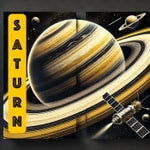

Stay updated with the newest research, space missions, and technological advancements that help us understand Saturn’s complex system. Whether you're a space enthusiast or a curious learner, "Planet Saturn" offers an awe-inspiring and educational experience. Subscribe now and embark on a journey to uncover the secrets of the solar system’s second-largest planet.
For more info https://www.quietperiodplease.com/
Classements récents
Dernières positions dans les classements Apple Podcasts et Spotify.
Apple Podcasts
🇬🇧 Grande Bretagne - astronomy
27/04/2026#100🇬🇧 Grande Bretagne - astronomy
26/04/2026#89🇬🇧 Grande Bretagne - astronomy
25/04/2026#77🇬🇧 Grande Bretagne - astronomy
24/04/2026#73🇬🇧 Grande Bretagne - astronomy
23/04/2026#62🇬🇧 Grande Bretagne - astronomy
22/04/2026#53🇬🇧 Grande Bretagne - astronomy
21/04/2026#84🇬🇧 Grande Bretagne - astronomy
20/04/2026#76🇬🇧 Grande Bretagne - astronomy
19/04/2026#63🇨🇦 Canada - astronomy
09/03/2026#96
Spotify
Aucun classement récent disponible
Liens partagés entre épisodes et podcasts
Liens présents dans les descriptions d'épisodes et autres podcasts les utilisant également.
See all- https://www.quietperiodplease.com/
3680 partages
Qualité et score du flux RSS
Évaluation technique de la qualité et de la structure du flux RSS.
See allScore global : 64%
Historique des publications
Répartition mensuelle des publications d'épisodes au fil des années.
Planety Saturn the Celestial Jewel
lundi 17 juin 2024 • Durée 22:28
- Size: Saturn is the second-largest planet in the solar system, with a diameter of about 116,460 kilometers (72,366 miles), making it nearly 9.5 times wider than Earth.
- Mass: It has a mass of 5.683 × 10^26 kilograms, which is about 95 times the mass of Earth.
- Orbit and Rotation: Saturn orbits the Sun at an average distance of about 1.429 billion kilometers (888 million miles). It takes approximately 29.5 Earth years to complete one orbit. Saturn has a fast rotation period, with a day lasting only about 10.7 hours.
- Ring System: Saturn’s rings are its most distinctive feature. They are composed of countless small particles, ranging from micrometers to meters in size, made primarily of water ice with traces of rocky material. The rings are divided into several main sections (A, B, C, D, E, F, and G rings) separated by gaps and divisions.
- Atmosphere: Saturn’s atmosphere is mostly hydrogen (about 96%) and helium (about 3%), with small amounts of methane, ammonia, and other trace gases. The atmosphere is characterized by strong winds and large storms, including long-lasting features like the hexagonal storm at the north pole.
- Interior: Saturn has a layered interior structure, with a core of rock and metal, surrounded by a layer of metallic hydrogen and an outer layer of molecular hydrogen.
- Magnetic Field: Saturn has a strong magnetic field, though it is weaker than Jupiter’s. The magnetic field creates auroras at the planet's poles and interacts with the solar wind and its moons.
- Moons: Saturn has at least 82 known moons, with Titan and Enceladus being the most notable.
- Titan: Titan is the second-largest moon in the solar system and has a thick atmosphere rich in nitrogen. It features lakes and rivers of liquid methane and ethane, and has a surface that includes hydrocarbon dunes and icy mountains.
- Enceladus: Enceladus is known for its geysers that shoot water ice and organic molecules into space from a subsurface ocean, indicating potential habitability.
- Space Missions:
- Pioneer 11 was the first spacecraft to fly by Saturn in 1979.
- Voyager 1 and Voyager 2 provided detailed images and data during their flybys in the early 1980s.
- Cassini-Huygens was a joint mission by NASA, ESA, and ASI that orbited Saturn from 2004 to 2017, providing extensive data on the planet, its rings, and its moons. The Huygens probe landed on Titan, offering the first direct observations of its surface.
- Density: Saturn is the least dense planet in the solar system; its average density is less than water. If there were a large enough body of water, Saturn would float.
- Storms: Saturn experiences massive storms, some of which are so large they can be seen from Earth with a telescope. The Great White Spot is a periodic storm that appears roughly every 30 Earth years.
- Seasons: Saturn experiences seasons due to its axial tilt of 26.7 degrees, similar to Earth's. Each season lasts over seven Earth years.
Podcasts Similaires Basées sur le Contenu