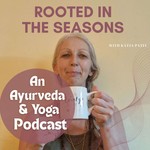
Rooted in the Seasons is a weekly podcast for anyone wanting to feel more balanced, calm, and connected, without overhauling their life.
Hosted by Katja Patel, yoga teacher, Ayurvedic guide, and mum, each episode offers simple ways to support your wellbeing through the seasons. You’ll hear practical tips from Ayurveda, real-life reflections, and small seasonal shifts that make a big difference.
If you’re juggling work, family, and the feeling that life moves too fast, this podcast will help you find steadiness in the middle of it all — with a little more rhythm, ease, and nourishment.
Site
RSS
Apple
Classements récents
Dernières positions dans les classements Apple Podcasts et Spotify.
Liens partagés entre épisodes et podcasts
Liens présents dans les descriptions d'épisodes et autres podcasts les utilisant également.
Découvrez des podcasts liées à Rooted in the Seasons. Explorez des podcasts avec des thèmes, sujets, et formats similaires. Ces similarités sont calculées grâce à des données tangibles, pas d'extrapolations !
In this episode, I explore why this happens from an Ayurvedic perspective — and how simple, practical shifts can help clear congestion and bring your energy back into flow.
We look at the role of Kapha, why mucus builds up at this time of year, and how food, warmth, movement, and daily rhythm can support the body in clearing what it no longer needs.
You don’t need to change everything — just a few small, consistent adjustments can make a noticeable difference.
Keywords
spring congestion
ayurveda
kapha dosha
mucus and congestion
seasonal health
natural remedies
digestion support
energy and fatigue
daily rhythm
holistic health
Key Topics
Why congestion is common in spring (Ayurveda explained)
The role of Kapha and its qualities
How food choices influence mucus and heaviness
Why warmth and movement are essential in spring
A simple daily rhythm to restore energy and clarity
Sound Bites
“Ayurveda balances with opposite qualities”
“Cold drinks increase mucus”
“Movement builds heat and reduces Kapha”
“Think rhythm, not rules”
Chapters
00:00 Why Spring Can Feel Heavy 00:50 Recognising Signs of Congestion 03:30 Understanding Kapha and Mucus 06:30 Food and Warmth as First Support 09:15 Movement and Daily Rhythm 13:00 A Simple Reset to Clear Congestion
If your day feels slightly out of sync — even when everything looks fine on the surface — this episode explores why.
Katja shares how patterns described in yoga philosophy (the kleshas) quietly shape what we repeat, what we avoid, and why familiar habits can keep us stuck.
Through simple, real-life examples, she shows how a loss of rhythm — rather than a lack of effort — often sits underneath stress and overwhelm, and how small, steady changes can help you find your way back.
Keywords
Yoga philosophy, kleshas, daily rhythm, stress patterns, nervous system, Ayurveda, habits and routine, circadian rhythm, mental clarity, seasonal living
Topics
How feeling “slightly off” often links to a loss of rhythm
The kleshas explained in everyday life (Avidya, Raga, Dvesha)
Why familiar habits can feel supportive, even when they’re not
The difference between rest and rhythm
How small, steady anchors help rebuild balance
Sound Bites
“What feels like stress is often a loss of rhythm.”
“We start shaping our day around what feels familiar — not what supports us.”
“Small, steady rhythms matter more than we think.”
Chapters
00:00 Why You Might Feel Slightly Out of Sync 04:30 Avidya — Losing Sight of Natural Rhythm 09:30 When Habit Replaces Rhythm (Raga & Dvesha) 13:00 Why Rest Isn’t Always Enough 14:30 Small Anchors That Help You Find Your Way Back
Self-Doubt and the Mind: A Yogic Map Through Uncertainty
self-doubt, yoga philosophy, mental resilience, rhythm and routine, mindfulness, Ayurvedic lifestyle, stress and the mind, daily rituals, nervous system support, women’s wellbeing
Episode Summary
In this episode of Rooted in the Seasons, Katja Patel explores self-doubt — not the loud, dramatic kind, but the quieter patterns that often return during times of pressure, transition, or fatigue.
Drawing on yoga philosophy and the Yoga Sutras of Patanjali, Katja reframes self-doubt as a familiar movement of the mind rather than a personal failing. Instead of trying to eliminate doubt, the episode offers a grounded way to understand it, work with it, and respond more steadily over time.
Through practical examples and reflective insights, this episode explores how resilience is built through rhythm, repetition, and consistent daily practices — much like strengthening the immune system through ongoing care.
Listeners are gently reminded that understanding takes time, patterns repeat, and that returning to supportive practices again and again is part of the path.
Key Takeaways
Self-doubt often appears quietly rather than all at once
It’s a recurring pattern of the mind, not a personal flaw
Yoga philosophy helps us understand the terrain of self-doubt
Patanjali offers multiple paths — not one rigid solution
You don’t need to work with everything; one steady anchor is enough
Resilience is built gradually, through repetition and rhythm
Consistency matters more than intensity
Self-doubt may return at different life stages — and that’s normal
Daily rituals can help steady the mind and nervous system
Recognising patterns early makes them easier to work with
Winter Vata Imbalances: How to Stay Nourished, Calm, and Grounded in the Cold Months
In this episode of Rooted in the Seasons, Katja Patel explores the Ayurvedic perspective on winter Vata imbalances and why this time of year often brings more dryness, restlessness, digestive issues, and disturbed sleep.
She explains how winter naturally amplifies Vata qualities and why rhythm, warmth, and lubrication matter more than quick fixes during the colder months. Through practical, everyday examples, Katja shares gentle ways to support digestion, skin health, and the nervous system — and why creating a simple, grounding morning routine can help the whole day feel steadier.
This episode is a reminder that winter care isn’t about doing more, but about replacing what the season quietly takes away.
Key Takeaways
Winter Vata imbalance often shows up as dryness, restlessness, digestive changes, or poor sleep
Rhythm and predictability are more regulating than remedies in winter
Warmth and lubrication support digestion, joints, and the nervous system
Simple daily oiling can significantly improve skin and nervous system balance
Rest is not laziness in winter — it’s regulation
A gentle, structured morning routine sets the tone for the entire day
Small, consistent actions matter more than perfection
Seasonal care works best when it’s supportive, not demanding
Episode Title
Winter Vata Imbalances: How to Restore Balance the Ayurvedic Way
Alternatives:
Navigating Winter Vata: Practical Ayurvedic Support
Sleep isn’t something we fix at night — it’s something that emerges when the nervous system feels safe.
In this episode of Rooted in the Seasons, Katja is joined by Miss Meg, founder of Infinite Connection Academy and creator of the Whole Family Regulation method. Together, they explore sleep as a felt experience of safety, the role of rhythm during the day, and how patterns around rest form — and can soften — across all ages.
Rather than focusing on bedtime techniques, this conversation looks at regulation, predictability, and connection as the foundations for rest — from babies and children to adults who feel wired or unable to switch off.
In this episode, Katja Patel explores how breathing changes in winter and why this season asks for a different approach. Drawing on Ayurveda and yoga, she explains how Vata influences the nervous system, digestion, and the breath, and why creating space in the body is essential before working with breathing techniques.
Katja introduces the three-part breath as a foundational practice and reflects on seasonal breathing choices such as gentle Ujjayi and Brahmari (Humming Bee breath). Rather than focusing on mastery, this episode invites a more attentive, responsive relationship with the breath — one that supports steadiness, warmth, and calm through the winter months.
Key Takeaways
Winter breathing is about steadiness, not effort
High Vata can affect the nervous system, breath, and digestion
Diaphragmatic breathing supports relaxation and gut health
Creating space in the body helps the breath deepen naturally
The three-part breath is a reliable foundation in winter
Gentle Ujjayi can build warmth and inner support
Brahmari (Humming Bee breath) soothes and reassures the mind
Seasonal breathing works best when guided by awareness, not force
Sound Bites
"Creating space for the breath is essential."
"The three-part breath is your home base."
"Humming bee breath settles the mind."
“In winter, the breath doesn’t need to be mastered — it needs to be met.”
Sankalpa: Why Intentions Often Fail — and What Yoga Has Always Known
In this episode, Katja Patel explores Sankalpa, an ancient yogic practice often misunderstood as simple intention-setting. Drawing from yoga tradition, lived experience, and modern understanding of the subconscious mind, she explains why so many intentions fail — and how Sankalpa works differently.
Rather than forcing change, Sankalpa reveals the habits, beliefs, and inner patterns that shape our behaviour. When practised with honesty and patience, it becomes a bridge toward real alignment — and eventually, something that can be let go of once it has done its work.
Key Takeaways
Sankalpa is not a goal or wish, but a deep inner commitment
Many intentions fail because they don’t address subconscious conditioning
Sankalpa works by revealing resistance, not overriding it
Resistance, doubt, and fear are signs the practice is reaching depth
Sankalpa is formulated positively and in the present tense — not to pretend, but to speak to the subconscious mind
Change happens through repetition, safety, and awareness, not force
Sankalpa is a temporary bridge: once behaviour changes, it can rest
True transformation is about alignment, not self-improvement
Episode Titles
Sankalpa: Why Intentions Often Fail — and What Yoga Has Always Known
Alternatives:
When Digestion Feels Overloaded: Why I Always Return to Mung Dal
Ayurveda, mung dal, digestion, seasonal eating, digestive rhythm, simple food, Ayurvedic cooking, tridoshic meals, mindful eating, seasonal living
Summary
In this episode of Rooted in the Seasons, Katja Patel reflects on why she always returns to mung dal when digestion feels overloaded or out of rhythm. Drawing on Ayurvedic wisdom and personal experience, she explores how simple, easy-to-digest food can support digestion, restore clarity, and gently bring the body back into balance after periods of richer eating.
Katja explains why mung dal is considered a tridoshic staple in Ayurveda, how it can be adapted to the seasons, and why healing food doesn’t need to be complicated to be effective. This episode is an invitation to listen to the body, eat more simply, and rediscover the quiet power of nourishment.
Takeaways
Mung dal is one of Ayurveda’s most digestible and nourishing staple foods.
When digestion feels overloaded, simplicity is often the most supportive response.
Ayurveda prioritises listening to the body over rigid food rules.
Mung dal is tridoshic and suitable for all constitutions.
Seasonal spices allow the same meal to support digestion year-round.
Eating simply can restore both digestive ease and mental clarity.
Healing food doesn’t need to be elaborate or restrictive.
Rhythm and regularity matter as much as ingredients.
Sound bites
“Sometimes the body doesn’t need fixing — it needs less stimulation.”
“Healing food doesn’t need to be complicated.”
How Food Becomes You: Understanding the 7 Dhatus in Ayurveda
Ayurveda, Dhatus, Digestive Fire (Agni), Digestion, Immunity, Nervous System Health, Hormonal Health, Seasonal Living, Ayurvedic Lifestyle, Women’s Health
Episode Summary
In this episode of Rooted in the Seasons, Katja Patel explores the Ayurvedic understanding of health through the lens of the seven dhatus — the tissue layers that build and sustain the body.
You’ll learn how digestion transforms food into tissues, why nourishment happens in stages, and how energy, immunity, resilience and vitality depend on the quality of these layers over time. Katja also shares why symptoms are not failures to fix, but signals showing which tissue may need support — and how small, intentional shifts in food, rhythm and daily habits can restore balance.
This episode is a gentle but thorough guide to seeing your body through an Ayurvedic lens — grounded, practical and deeply human.
Several listeners have reached out saying this podcast put words to something they’ve been feeling for a while. If that’s you too, I’ve created a Stress Less Workshop with simple practices to help you feel more settled and supported day to day.
Key Takeaways
The dhatus are the seven tissue layers that build the body in Ayurveda.
Health is created by nourishing tissues over time, not by fixing symptoms.
Digestion (Agni) is the foundation of tissue health and immunity.
Food takes about 35 days to fully nourish all seven dhatus.
The Healing Power of Potatoes: How Ayurveda Turns Simple Food Into Deep Nourishment
Ayurvedic Potato Soup: Why This Humble Food Grounds, Warms, and Nourishes Us in Winter
In today’s episode of Rooted in the Seasons, we explore the humble potato — a simple, grounding winter food with surprising Ayurvedic wisdom behind it.
Potatoes are often misunderstood or dismissed, but when prepared the right way, they can soothe the nervous system, support digestion, and bring a deep sense of comfort during the colder months. I share how Ayurveda transforms this everyday ingredient using ghee and digestion-supportive spices, why preparation matters more than the ingredient itself, and how different doshas respond to potatoes.
You’ll also hear practical prep tips for busy days, seasonal insights, and a sensory walkthrough of my favourite Ayurvedic potato soup — a simple recipe that brings warmth and steadiness back into your day.
In this episode, you’ll learn:
How potatoes can be grounding, soothing, and nourishing
Why Ayurveda focuses on how we prepare our food
How ghee, cumin, fennel, and fenugreek improve digestibility
What each dosha gains (or needs to watch) with potatoes
Simple ways to cook fresh, even on busy days
How to adapt the soup with vegetables, lentils, or quinoa
Why seasonal eating strengthens emotional and physical resilience
This episode is a reminder that simple foods can offer deep nourishment — especially when life feels busy or overwhelming.
Soundbites
These work for clips, quotes, or YouTube chapter teasers:
“Potatoes don’t spoil the body — it’s all in the preparation.”
“Simple foods can bring deep nourishment when the season asks for it.”
“Cooking with ghee and spices transforms potatoes into digestive support.”
ChaptersKeywords
Resources
🌿 Free Guide 5 Quick Ayurvedic Fixes to Move from Scattered to Steady → https://pages.zestforyoga.com/5-ayurvedic-shifts
🌿 Live Session When Rest Isn’t Enough → https://www.zestforyoga.com/events/stress-less-live-more-live-workshop
🌿 Read the full blog post → https://www.zestforyoga.com/blog/5-obstacles-yoga-overcome
🎁 Get my free guide: My 5 Quick Ayurvedic Fixes from Scattered to Steady
Practical tips to feel calmer, clearer, and more like yourself — without overhauling your life. 👉 GET THE FREE GUIDE HERE
🎙️ Rooted in the Seasons is created by Katja Patel at Zest for Yoga & Ayurveda. Explore more episodes at zestforyoga.com/podcast
Sound Bites
“Yoga helps us understand the terrain of the mind.”
“Self-doubt isn’t a personal failure — it’s a pattern.”
“Resilience is built through repetition, not intensity.”
Chapters
00:00 – Self-doubt as a quiet, recurring experience 02:36 – Understanding self-doubt through yoga philosophy 07:31 – Resilience, repetition, and steady practice 10:13 – Working with self-doubt through rhythm and daily anchors
Everything discussed in this episode — including the yoga sutras and reflections — is also available in the accompanying blog post linked below, so you can return to it and read at your own pace.
If you’re drawn to the idea of working with patterns rather than fighting them, you may enjoy my Stress Less – Creating Daily Rhythm workshop. It’s an exploration of how rhythm, repetition, and simple daily anchors can help build a steadier relationship with the mind.
Patanjali’s Yoga Sutras (Swami Satchidananda translation) The primary source referenced in this episode.
🎁 Get my free guide: My 5 Quick Ayurvedic Fixes from Scattered to Steady
Practical tips to feel calmer, clearer, and more like yourself — without overhauling your life. 👉 GET THE FREE GUIDE HERE
🎙️ Rooted in the Seasons is created by Katja Patel at Zest for Yoga & Ayurveda. Explore more episodes at zestforyoga.com/podcast
Winter Wellness Through Ayurveda: Balancing Vata with Rhythm
Sound Bites
“Rhythm matters more than remedies.”
“Consistency is more important than perfection in winter.”
“Winter support isn’t about doing more — it’s about replacing what’s missing.”
"Rest is medicine in winter.”
Chapters / Timestamps
00:00 Welcome and Seasonal Context 02:20 Why Winter Amplifies Vata 04:40 How Winter Vata Imbalance Shows Up 07:20 Rhythm Before Remedies 09:55 Supporting Digestion and Warmth 12:30 Calming the Nervous System 15:00 Creating a Grounding Morning Routine 17:30 Final Reflections and Seasonal Takeaways
🎁 Get my free guide: My 5 Quick Ayurvedic Fixes from Scattered to Steady
Practical tips to feel calmer, clearer, and more like yourself — without overhauling your life. 👉 GET THE FREE GUIDE HERE
🎙️ Rooted in the Seasons is created by Katja Patel at Zest for Yoga & Ayurveda. Explore more episodes at zestforyoga.com/podcast
Sound Bites
“Sleep is a felt experience of safety.” “Regulation leads — rhythm follows.” “We can change these dynamics.” “Set everyone up for success.”
Chapters
00:00 Introduction: Sleep, Rhythm, and Regulation 03:22 Parental Leadership and Nervous System Safety 05:47 Preparing Parents Before Birth 08:51 Self-Soothing vs. Crying It Out 12:07 Creating Safety at Bedtime 14:56 Daytime Rhythm and Nighttime Sleep 17:44 Ayurveda and the Three Pillars of Health 21:03 Feeding, Digestion, and Sleep 24:03 Supporting Independence Through Co-Regulation 26:49 Healing Intergenerational Patterns 29:52 Why This Work Applies at Every Age 33:26 Reconnecting with Nature and Regulation 36:34 Communication, Boundaries, and Emotional Safety 39:32 Choices, Consequences, and Learning 43:06 Gentle Takeaways for Parents and Caregivers 45:57 Responding vs. Rescuing 51:32 Creating Meaningful Connection in Small Moments 56:52 Navigating Travel, Time Zones, and Rhythm 01:04:11 Bridging Generational Gaps with Compassion
Explore Further
Want to explore sleep from an Ayurvedic perspective? → How to Get a Good Night’s Sleep with Ayurveda
For support building a morning and evening rhythm that works for your nervous system, we go deeper inside Stress Less, Live More.
🎁 Get my free guide: My 5 Quick Ayurvedic Fixes from Scattered to Steady
Practical tips to feel calmer, clearer, and more like yourself — without overhauling your life. 👉 GET THE FREE GUIDE HERE
🎙️ Rooted in the Seasons is created by Katja Patel at Zest for Yoga & Ayurveda. Explore more episodes at zestforyoga.com/podcast
Chapters
00:00 — Winter Breathing and the Season of Vata
00:34 — How Vata Affects the Nervous System
03:49 — Creating Space for the Breath
07:53 — The Three-Part Breath as a Foundation
08:45 — Choosing the Right Breath in Winter
11:09 — Gentle Ujjayi and Brahmari Practices
13:40 — Supporting the Nervous System Through the Season
Further Breathing Resources
If you’d like to explore some of these practices in more depth, you may find these helpful:
If this is touching something you recognise and you’d like structured support to work with it over time, this is exactly what I teach inside my Stress Less, Live More course.
🎁 Get my free guide: My 5 Quick Ayurvedic Fixes from Scattered to Steady
Practical tips to feel calmer, clearer, and more like yourself — without overhauling your life. 👉 GET THE FREE GUIDE HERE
🎙️ Rooted in the Seasons is created by Katja Patel at Zest for Yoga & Ayurveda. Explore more episodes at zestforyoga.com/podcast
Beyond Intentions: The Deeper Practice of Sankalpa
Sankalpa and the Subconscious: Why Change Can’t Be Forced
When Intentions Fail: A Yogic View on Sankalpa
Sound Bites / Pull Quotes
“This is just how I am — that’s not truth, that’s conditioning.”
“Sankalpa doesn’t override resistance. It reveals it.”
“Sankalpa isn’t about becoming someone else — it’s about stopping living against yourself.”
“Once behaviour changes, Sankalpa has done its work.”
Chapters
00:00 — Why intentions so often fail 04:03 — Habits, conditioning, and the subconscious mind 08:38 — What Sankalpa really is (and isn’t) 13:04 — Resistance as part of the path 17:20 — Sankalpa as a bridge — and when it can rest 20:30 — Integration and gentle reflection practice
🎁 Get my free guide: My 5 Quick Ayurvedic Fixes from Scattered to Steady
Practical tips to feel calmer, clearer, and more like yourself — without overhauling your life. 👉 GET THE FREE GUIDE HERE
🎙️ Rooted in the Seasons is created by Katja Patel at Zest for Yoga & Ayurveda. Explore more episodes at zestforyoga.com/podcast
“Clarity often comes from eating more simply.”
Chapters
00:00 When Digestion Feels Overloaded 02:10 Why I Always Return to Mung Dal 05:00 What Makes Mung Dal So Digestible in Ayurveda 08:10 Seasonal Spices and Simple Adaptations 11:00 Eating Simply to Restore Rhythm
🎁 Get my free guide: My 5 Quick Ayurvedic Fixes from Scattered to Steady
Practical tips to feel calmer, clearer, and more like yourself — without overhauling your life. 👉 GET THE FREE GUIDE HERE
🎙️ Rooted in the Seasons is created by Katja Patel at Zest for Yoga & Ayurveda. Explore more episodes at zestforyoga.com/podcast
Each dhatu has its own qualities, needs and supports.
Immunity is the byproduct of well-nourished tissues, not something separate.
Chronic stress can deplete deeper tissues, especially fat, nerves and reproductive tissue.
Small, steady lifestyle adjustments are often more powerful than drastic changes.
Sound Bites / Quotes
“Ayurveda goes much deeper than that.”
“Each layer depends on the one before.”
“Health isn’t about fixing symptoms — it’s about building strong foundations.”
“Immunity is what’s left over when all tissues are well nourished.”
Chapters
00:00 Welcome to Rooted in the Seasons 01:10 What the Dhatus Are — and Why They Matter 03:45 Doshas vs Dhatus: Function vs Structure 06:10 Digestion and Dhatu Agni — How Food Becomes Tissue 09:30 The 35-Day Journey from Food to Immunity 11:20 Nourishing the Dhatus Through Food and Lifestyle 15:40 A Midway Reflection: Seeing the Body in Layers 17:10 Supporting the Deeper Tissues: Bones, Nerves and Reproduction 22:30 Final Thoughts: Listening to the Body’s Signals
Read the full blog post with all information about suitable nourishment for the individual dhatus.
🎁 Get my free guide: My 5 Quick Ayurvedic Fixes from Scattered to Steady
Practical tips to feel calmer, clearer, and more like yourself — without overhauling your life. 👉 GET THE FREE GUIDE HERE
🎙️ Rooted in the Seasons is created by Katja Patel at Zest for Yoga & Ayurveda. Explore more episodes at zestforyoga.com/podcast
“Seasonal living is not complicated — it’s deeply intuitive.”
00:00 Introduction 00:48 Why Potatoes Matter in Winter 02:10 Ayurvedic Principles of Preparation 03:55 Potatoes & the Doshas 05:05 Time-Saving Ayurvedic Prep Tips 06:10 Cooking the Soup (A Sensory Walkthrough) 08:00 The Bigger Picture: Nourishment & Seasonal Living
https://www.zestforyoga.com/ayurvedic-recipes/potato-soup-ayurveda-style ✨ Download my free guide: 5 Ayurvedic Shifts to Feel Less Overwhelmed in a Week https://pages.zestforyoga.com/5-ayurvedic-shifts 🌿 Join the Sunday Read newsletter for weekly seasonal wisdom and tips.
🎁 Get my free guide: My 5 Quick Ayurvedic Fixes from Scattered to Steady
Practical tips to feel calmer, clearer, and more like yourself — without overhauling your life. 👉 GET THE FREE GUIDE HERE
🎙️ Rooted in the Seasons is created by Katja Patel at Zest for Yoga & Ayurveda. Explore more episodes at zestforyoga.com/podcast