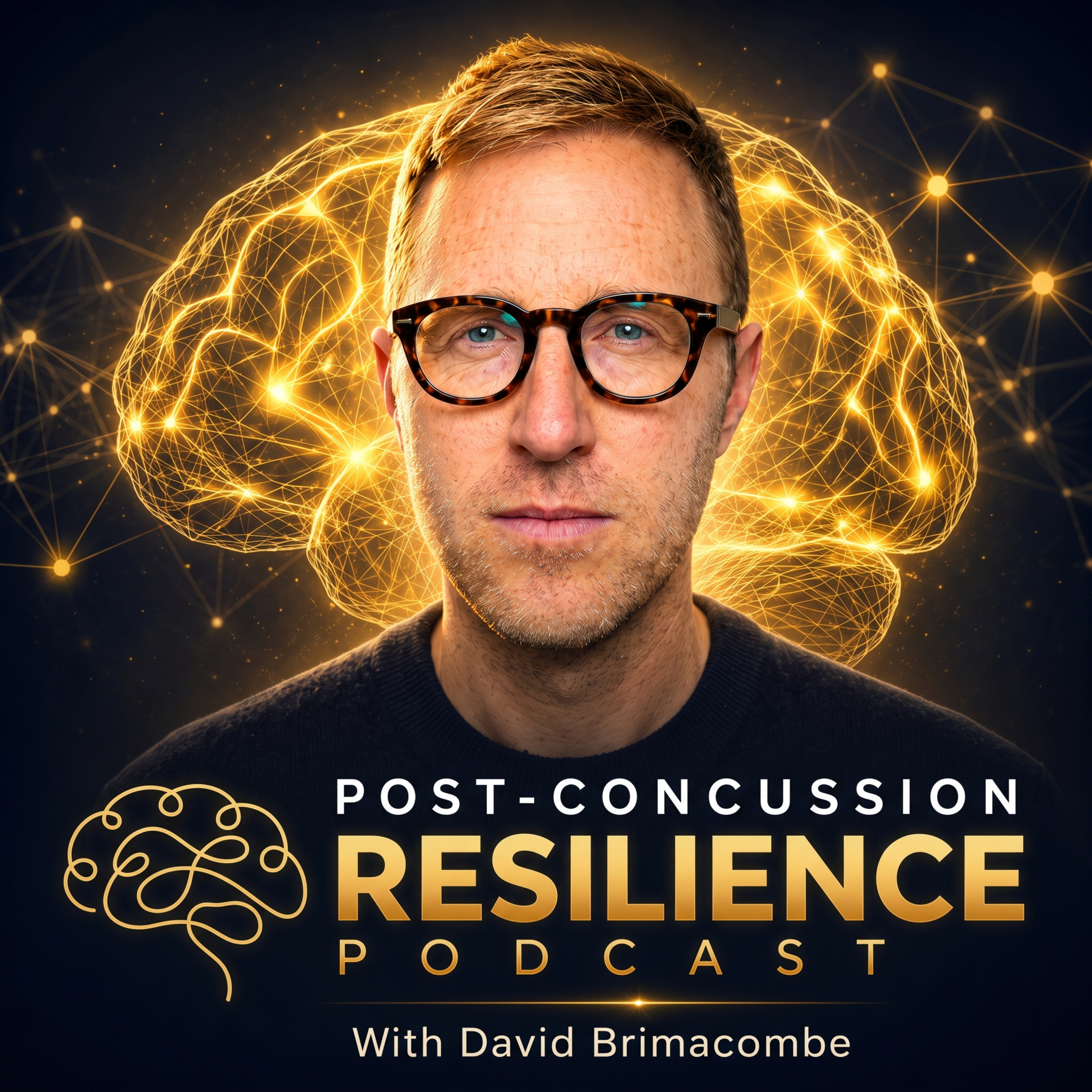
The Post-Concussion Resilience Podcast is for people living with persistent post-concussion syndrome, PCS, chronic PCS, and ongoing concussion symptoms who feel trapped, unsupported, or limited.
Hosted by David Brimacombe, this podcast explores lifestyle-based recovery systems for nervous system regulation, sleep, movement, mindset, nutrition, identity, and self-trust.
This is not about quick fixes. It is about becoming an active participant in your healing.
You are not broken. You are rebuilding.
Site
RSS
Apple
Données mises à jour le 19/10/2026
Classements récents
Dernières positions dans les classements Apple Podcasts et Spotify.
Liens partagés entre épisodes et podcasts
Liens présents dans les descriptions d'épisodes et autres podcasts les utilisant également.
Découvrez des podcasts liées à Post-Concussion Resilience Podcast. Explorez des podcasts avec des thèmes, sujets, et formats similaires. Ces similarités sont calculées grâce à des données tangibles, pas d'extrapolations !
Why New Routines Spike Symptoms in Chronic PCS | Ep. 23
Saison 1 · Épisode 23
dimanche 18 octobre 2026 • Durée 12:12
Do your symptoms spike every time you try something new?
In Episode 23 of The Post-Concussion Rebuild, I talk about why new routines, therapies or activities can sometimes increase symptoms when you are living with chronic PCS or still have post-concussion symptoms years later.
When symptoms flare after a new recovery action, it can feel like you made yourself worse or had another setback. But that spike may not always mean harm. It may mean your brain did not predict the new input and is trying to protect you.
This episode is about understanding the difference between causing damage and creating a prediction error. It is also about learning how sub-threshold training can help you rebuild tolerance without crashing.
In this episode, I cover:
why new inputs can trigger symptom spikes in post-concussion syndrome recovery
the difference between causing harm and creating a prediction error
why hopeful recovery actions can still feel threatening to your nervous system
how your brain’s prediction system can amplify symptoms
how sub-threshold training can help rebuild tolerance
how to find your symptom threshold using a simple 1-10 scale
how to use the 75-80% rule to progress week by week
A symptom spike does not always mean you are broken.
Sometimes it means your nervous system needs a smaller dose, a clearer signal and more repetition before the new path feels safe.
PCS Reset Cheat Sheet: https://david-brimacombe.mykajabi.com/ThePCScheatSheet Two simple tools, PACE and SAFE, to help you respond differently when symptoms spike, your nervous system feels overwhelmed or your mind gets caught in a negative thought loop.
This podcast is for education and support only, and is not medical advice.
You are not broken. You are rebuilding.
Why Your PCS Recovery Routine Needs Less, Not More | Ep. 22
Saison 1 · Épisode 22
mercredi 14 octobre 2026 • Durée 10:57
If your PCS recovery routine keeps falling apart after a few days, this episode may help explain why.
In Episode 22 of The Post-Concussion Rebuild, I talk about why many people with post-concussion syndrome try to change everything at once, then crash when symptoms spike.
You get inspired. You add exercise, meditation, diet changes, supplements, breathwork and lifestyle changes all at once. For a few days, it feels like progress. Then your nervous system gets overloaded, symptoms increase and you end up back in the push, crash, rest and restart cycle.
This episode is about doing less, but doing it better.
Your nervous system does not usually respond well to extremes after concussion. It responds to consistency, safety and small repeatable wins.
Before a recovery habit can improve, it has to exist consistently.
In this episode, I cover:
why recovery habits often collapse after a few days
why doing too much too soon can keep you stuck
how the push, crash, rest and restart cycle develops
why your nervous system needs consistency more than intensity
how to find your symptom threshold
why exercise is not always the problem, tolerance is
how to work below your threshold and scale slowly
why simple habits can create safer progress over time
This is not about giving up.
It is about building smarter.
Small habits. Clear thresholds. Controlled progress. One step better each week.
PCS Reset Cheat Sheet:Two simple tools, PACE and SAFE, to help you respond differently when symptoms spike, your nervous system feels overwhelmed or your mind gets caught in a negative thought loop.
Why Motivation Often Comes After Action in PCS Recovery | Ep. 21
Saison 1 · Épisode 21
dimanche 11 octobre 2026 • Durée 13:11
Motivation comes and goes, especially when symptoms are unpredictable.
In Episode 21 of The Post-Concussion Rebuild, I talk about why waiting to feel motivated can keep you frozen when you are living with chronic PCS or still have post-concussion symptoms years later.
This episode is about why momentum matters more than motivation. When you take one small action, you reduce friction, rebuild identity and make the next good choice easier.
You do not need to overhaul your entire recovery overnight. You need a simple system that helps you start.
In this episode, I cover:
why motivation is often the result of action, not the starting point
how momentum can make good choices easier
why setbacks can feel less scary once momentum builds
why doing everything at once can make it harder to know what is working
how small consistent habits can begin changing your recovery identity
why momentum does not require intensity
a simple 3-step morning framework using the Maui Habit, breathwork and gratitude
If you have chronic PCS, post-concussion syndrome or still have concussion symptoms years later, this episode is for you.
PCS Reset Cheat Sheet: https://david-brimacombe.mykajabi.com/ThePCScheatSheet Two simple tools, PACE and SAFE, to help you respond differently when symptoms spike, your nervous system feels overwhelmed or your mind gets caught in a negative thought loop.
3 Morning Mantras to Kickstart Your PCS Recovery Routine | Ep. 20
Saison 1 · Épisode 20
mercredi 7 octobre 2026 • Durée 09:51
If you wake up with brain fog, dizziness, fatigue or that “today is going to be hard” feeling, your nervous system may be starting the day in threat mode.
In Episode 20 of The Post-Concussion Rebuild, I share 3 morning mantras that can help calm your nervous system, reduce rumination and support your PCS recovery routine before symptoms take over.
After seven concussions, I learned that mornings can become a powerful rewire window. The way you begin your day can either reinforce fear and symptom scanning, or help your brain and body move toward safety, gratitude and action.
In this episode, I cover:
why mornings can become a rewire window for PCS recovery
how morning thoughts can shape your nervous system state
3 prompts that can interrupt rumination
how gratitude can shift the threat loop
why “I am not my thoughts” can help you detach from symptoms
the 4-step method: breathe, mantra, ground, move
how to use this PCS recovery routine for 7 days and notice what changes
This is not about pretending symptoms are not there.
It is about starting your day with a stronger signal than fear.
Try the routine for 7 days. Keep it simple. Let repetition become evidence.
PCS Reset Cheat Sheet: https://david-brimacombe.mykajabi.com/ThePCScheatSheet Two simple tools, PACE and SAFE, to help you respond differently when symptoms spike, your nervous system feels overwhelmed or your mind gets caught in a negative thought loop.
Why Your PCS Recovery Routine Matters More Than Your Goals | Ep. 19
Saison 1 · Épisode 19
dimanche 4 octobre 2026 • Durée 14:37
Are your goals actually holding back your PCS recovery?
In Episode 19 of The Post-Concussion Rebuild, I talk about why recovery is not only about setting better goals. It is about building better systems.
After 7 concussions over 20 years, one of the biggest lessons I learned was that goals can give you direction, but systems create progress. When you are living with post-concussion syndrome, big goals can sometimes create pressure, urgency and disappointment, especially when symptoms flare or progress feels slow.
This episode is about building a simple, scalable PCS recovery routine that supports your nervous system, rebuilds identity and creates momentum one small habit at a time.
Inspired by James Clear’s Atomic Habits, I walk through the morning and nighttime system I used to start rebuilding my recovery from the ground up.
In this episode, I cover:
why goals can fail people with PCS
how goal pressure can make symptoms feel worse
why systems matter more than motivation
what a simple PCS recovery system can look like
the 3-step morning routine that changed everything for me
the Maui Habit and why it can reset your mindset quickly
how breathwork can help calm your nervous system
why identity change is the real engine of PCS recovery
how to scale your routine week by week without overwhelm
PCS Reset Cheat Sheet:Two simple tools, PACE and SAFE, to help you respond differently when symptoms spike, your nervous system feels overwhelmed or your mind gets caught in a negative thought loop.
Your PCS Recovery Journey Starts Smaller Than You Think | Ep. 18
Saison 1 · Épisode 18
mercredi 30 septembre 2026 • Durée 08:11
Your PCS recovery journey may not depend on the perfect supplement, protocol, treatment or breakthrough.
It may depend on what you are doing today.
In Episode 17 of The Post-Concussion Rebuild, I talk about why recovery has to start smaller than most people think.
When you are living with post-concussion syndrome, it is easy to chase the magic fix. You want your old energy back. You want mental clarity. You want patience, confidence and your life back. That vision matters. But the mistake many people make is trying to leap from where they are to where they want to be.
That is where crashes happen.
After seven concussions over 20 years, I learned that recovery is not about forcing your nervous system to become someone new overnight. It is about showing your brain, day by day, that this new version of you is safe.
In this episode, I cover:
why the magic bullet approach can keep people stuck
why big recovery expectations can backfire
how small steps build momentum and belief
why symptoms can be alarms, not proof you are broken
how to connect your future identity with your daily recovery actions
why your big vision is your why, but your small steps are your how
Recovery does not usually come from one massive leap.
It comes from the small, repeatable actions that teach your brain and nervous system a new path forward.
PCS Reset Cheat Sheet: https://david-brimacombe.mykajabi.com/ThePCScheatSheetTwo simple tools, PACE and SAFE, to help you respond differently when symptoms spike, your nervous system feels overwhelmed or your mind gets caught in a negative thought loop.
How One Small Promise Can Rebuild PCS Self-Trust | Ep. 17
Saison 1 · Épisode 17
dimanche 27 septembre 2026 • Durée 10:00
Are you still dealing with post-concussion syndrome and feeling overwhelmed by everything you think you need to fix?
In Episode 18 of The Post-Concussion Rebuild, I talk about why recovery often starts with one small promise you can keep today.
When you still have post-concussion syndrome, it is easy to look at your whole life and feel like you need to repair everything at once: sleep, symptoms, exercise tolerance, stress, food, mindset, routines, work, relationships and identity.
But trying to fix your entire recovery at once can keep you stuck.
This episode is about simplifying the path forward. Not a perfect routine. Not a massive plan. Not a complete life overhaul. Just one promise you keep to yourself today.
In this episode, I cover:
why trying to fix your whole recovery can slow you down
why people with PCS often lose trust in their body
why knowing what to do is not the same as applying it
why habits do not need to be complicated
how small promises rebuild identity
why lifestyle changes work best when they start small
how one gratitude sticky helped change my recovery
why consistency matters more than intensity
how to choose one promise for the next 7 days
If you have post-concussion syndrome years later, chronic PCS or still have ongoing concussion symptoms, this episode is for you.
Your recovery does not need to begin with a giant plan.
It can begin with one action you can actually repeat.
The Symptom-Checking Habit Keeping Chronic PCS Stuck | Ep. 16
Saison 1 · Épisode 16
mercredi 23 septembre 2026 • Durée 14:07
If you are still dealing with post-concussion syndrome years later, this episode may help explain why your symptoms feel so loud.
In Episode 16 of The Post-Concussion Rebuild, I talk about one hidden habit that can keep your brain stuck in recovery: constantly checking, scanning and monitoring symptoms.
When you keep asking, “How do I feel today?” your brain starts looking for evidence that something is wrong. Over time, symptom checking can train your nervous system to stay hypervigilant, making symptoms feel stronger and harder to ignore.
This episode is not about pretending symptoms are not real. It is about understanding how attention, fear and repetition can keep the brain locked onto them.
In this episode, I cover:
why monitoring symptoms can make them feel louder
how the reticular activating system filters what your brain notices
why symptom checking can reinforce hypervigilance
how neural pathways can deepen when you avoid life
why thinking about symptoms all day can make recovery feel harder
the temper tantrum analogy and what it means for PCS recovery
the mindset shift that helped me start living again
Your symptoms may be real, but they do not need to be the centre of your identity, your attention or your future.
The goal is not to fight your symptoms all day.
The goal is to slowly teach your brain that life is safe enough to re-enter.
PCS Reset Cheat Sheet: https://david-brimacombe.mykajabi.com/ThePCScheatSheetTwo simple tools, PACE and SAFE, to help you respond differently when symptoms spike, your nervous system feels overwhelmed or your mind gets caught in a negative thought loop.
How Chronic PCS Steals Your Joy — And How to Get It Back | Ep. 15
Saison 1 · Épisode 15
dimanche 20 septembre 2026 • Durée 09:41
Do the things you used to love suddenly feel flat?
Maybe you still do them, but they do not feel the same. The excitement is gone. Your motivation has disappeared. And after living with PCS for months or years, you may have even started wondering, “What happened to me?”
In Episode 15 of The Post-Concussion Resilience Podcast, I talk about one of the strangest parts of my own PCS recovery: losing interest in things that used to make me feel alive.
After seven concussions over 20 years, I learned that persistent PCS can do more than create physical symptoms. When your world becomes smaller, your nervous system becomes more protective, and your life begins revolving around symptoms and recovery, the things you once enjoyed can start to feel strangely distant.
But that does not necessarily mean those parts of you are gone.
I think of it more like a dimmer switch than an on/off switch.
When your system has spent a long time protecting you, you may need to slowly begin giving it experiences of living again rather than waiting until you completely feel like your old self.
In this episode, I explain why PCS can make life feel flat, what happened to my own interests and motivation during recovery, and why rebuilding your life may begin with small doses of the things that once mattered to you.
You do not have to force yourself back into your old life overnight.
Start small.
Give your brain evidence that these parts of life can still be safe, meaningful and enjoyable.
Then slowly turn the dimmer switch back up.
PCS Reset Cheat Sheet: https://david-brimacombe.mykajabi.com/ThePCScheatSheet Two simple tools, PACE and SAFE, to help you respond differently when symptoms spike, your nervous system feels overwhelmed or your mind gets caught in a negative thought loop.
How PCS Can Become Part of Your Identity | Ep. 14
Saison 1 · Épisode 14
jeudi 17 septembre 2026 • Durée 08:01
If you feel stuck in your PCS recovery routine, this episode may help you understand why.
In Episode 14 of The Post-Concussion Rebuild, I talk about one of the most subtle traps in post-concussion recovery: turning PCS into your identity.
When symptoms become the centre of your attention, it can be easy to start seeing yourself as someone who is broken, limited or always struggling. Over time, that identity can make recovery feel harder, heavier and more out of reach.
This episode is not about ignoring symptoms. It is about learning how to relate to them differently.
In this episode, I cover:
why focusing on symptoms can make recovery harder
how PCS can quietly become part of your identity
how to shift from “struggling with PCS” to “recovering from PCS”
a simple daily exercise to help you take control back
why nature and external focus can reduce symptom intensity
how external meditation can help move attention away from constant symptom scanning
why changing how you think can change how you recover
This is not about doing more. It is about thinking differently, shifting your attention and rebuilding an identity that is bigger than your symptoms.
PCS Reset Cheat Sheet: https://david-brimacombe.mykajabi.com/ThePCScheatSheet Two simple tools, PACE and SAFE, to help you respond differently when symptoms spike, your nervous system feels overwhelmed or your mind gets caught in a negative thought loop.
PCS Morning Blueprint:Start your day with a simple PCS recovery routine that builds safety, clarity and momentum.
This podcast is for education and support only, and is not medical advice.
You are not broken. You are rebuilding.
PCS Reset Cheat Sheet: https://david-brimacombe.mykajabi.com/ThePCScheatSheet Two simple tools, PACE and SAFE, to help you respond differently when symptoms spike, your nervous system feels overwhelmed or your mind gets caught in a negative thought loop.