Mercury – Détails, épisodes et analyse
Détails du podcast
Informations techniques et générales issues du flux RSS du podcast.
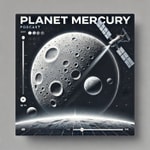

Dive deep into the latest research, space missions, and technological advancements that help us understand this enigmatic planet. Whether you're a space enthusiast or a curious learner, "Planet Mercury" offers a captivating journey into one of the solar system's most intriguing worlds. Subscribe now to stay updated on the latest episodes and join the quest to unveil the secrets of Mercury.
For more info https://www.quietperiodplease.com/
Classements récents
Dernières positions dans les classements Apple Podcasts et Spotify.
Apple Podcasts
🇬🇧 Grande Bretagne - astronomy
26/03/2025#99🇬🇧 Grande Bretagne - astronomy
25/03/2025#93🇬🇧 Grande Bretagne - astronomy
24/03/2025#87🇬🇧 Grande Bretagne - astronomy
23/03/2025#84🇩🇪 Allemagne - astronomy
09/12/2024#100🇩🇪 Allemagne - astronomy
08/12/2024#98🇩🇪 Allemagne - astronomy
07/12/2024#98🇩🇪 Allemagne - astronomy
06/12/2024#97🇩🇪 Allemagne - astronomy
05/12/2024#96🇩🇪 Allemagne - astronomy
04/12/2024#94
Spotify
Aucun classement récent disponible
Liens partagés entre épisodes et podcasts
Liens présents dans les descriptions d'épisodes et autres podcasts les utilisant également.
See all- https://www.quietperiodplease.com/
3616 partages
Qualité et score du flux RSS
Évaluation technique de la qualité et de la structure du flux RSS.
See allScore global : 64%
Historique des publications
Répartition mensuelle des publications d'épisodes au fil des années.
Planet Mercury A World Forged in Fire and Ice
lundi 17 juin 2024 • Durée 16:49
- Size: Mercury has a diameter of about 4,880 kilometers (3,032 miles), making it slightly larger than Earth's Moon.
- Orbit: It has the shortest orbit around the Sun of all the planets, taking only 88 Earth days to complete one revolution.
- Day Length: Despite its quick orbit, a single day on Mercury (one full rotation on its axis) takes 59 Earth days.
- Surface: Mercury's surface is similar to that of the Moon, covered with craters from collisions with meteoroids and comets. It also has large smooth plains and high cliffs.
- Temperature: Due to its proximity to the Sun, surface temperatures on Mercury can reach up to 430°C (800°F) during the day. However, because it has almost no atmosphere to retain heat, nighttime temperatures can drop to -180°C (-290°F).
- Composition: Mercury is composed primarily of rock and metal, with a large iron core that accounts for about 75% of the planet's diameter. This iron core generates a magnetic field, although it is much weaker than Earth's.
- Thin Exosphere: Mercury has a very thin atmosphere, called an exosphere, composed mainly of oxygen, sodium, hydrogen, helium, and potassium. This exosphere is not stable and is constantly being replenished by solar wind and micrometeorite impacts.
- Space Missions:
- Mariner 10 was the first spacecraft to visit Mercury, conducting three flybys in 1974-1975 and mapping about 45% of the planet's surface.
- MESSENGER (MErcury Surface, Space ENvironment, GEochemistry, and Ranging) orbited Mercury from 2011 to 2015, providing detailed maps and data about its surface, composition, and magnetic field.
- BepiColombo is a joint mission by the European Space Agency (ESA) and the Japan Aerospace Exploration Agency (JAXA) launched in 2018. It aims to study Mercury's surface and magnetic field in even greater detail once it arrives in 2025.
- Caloris Basin: One of the largest impact basins in the solar system, Caloris Basin, is located on Mercury. It is about 1,550 kilometers (960 miles) in diameter.
- Ice at the Poles: Despite its scorching temperatures, radar observations have detected ice in permanently shadowed craters at Mercury's poles, where temperatures remain extremely cold.
- Relativity Test: Mercury's orbit provided a crucial test for Einstein's theory of general relativity. The slight shift in Mercury's orbit (perihelion precession) could not be explained by Newtonian physics alone and was accurately predicted by Einstein's equations.
Podcasts Similaires Basées sur le Contenu