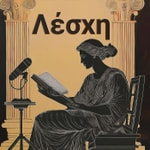
Lesche: Ancient Greece, New Ideas – Détails, épisodes et analyse

Détails du podcast

Informations techniques et générales issues du flux RSS du podcast.
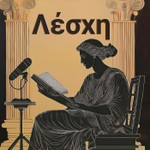
Podcast Lesche: Ancient Greece, New Ideas

Lesche: Ancient Greece, New Ideas

Johanna Hanink

Arts
Histoire

Fréquence : 1 épisode/14j. Total Éps: 49

Hosting podcast Buzzsprout

In Greek antiquity a lesche (λέσχη) was a spot to hang out and chat. Here Brown University professor Johanna Hanink hosts conversations with fellow Hellenists about their latest work in the field.

Site
RSS

Classements récents

Dernières positions dans les classements Apple Podcasts et Spotify.

Apple Podcasts

    Aucun classement récent disponible

Spotify

    Aucun classement récent disponible


Qualité et score du flux RSS

Évaluation technique de la qualité et de la structure du flux RSS.

See all
Qualité du flux RSS
Correct

Score global : 72%


Historique des publications

Répartition mensuelle des publications d'épisodes au fil des années.

Episodes published by month in

Derniers épisodes publiés

Liste des épisodes récents, avec titres, durées et descriptions.

See all

Reappraising the Choruses of Greek Tragedy

Saison 2 · Épisode 35

mercredi 11 février 2026Durée 54:31

Rosa Andújar joins me in the Lesche to discuss her new book, Playing the Chorus in Greek Tragedy (Cambridge, 2025).

Tragedies mentioned

Aeschylus

  • Agamemnon (chorus fragmentation)
  • Seven Against Thebes (use of semi-choruses)
  • Suppliant Women ("choral swarm" with multiple groups)

Sophocles

  • Oedipus Rex (actor-chorus interaction)

Euripides

  • Phaethon ( "augmentation" and secondary choruses)
  • Trojan Women (chorus entering in fragmented small groups)
  • Hippolytus ( subsidiary chorus appears before the main chorus)
  • Orestes (unusual choral divisions)
  • Suppliant Women (exceptional choral activity)

Other ancient texts

  • Aristotle, Poetics (mentioned for lack of interest in the chorus)
  • Aristophanes, Birds (for having a 'differentiated' chorus)
  • Plutarch, On Listening (de Audiendo) 45e-f (Euripides training a chorus; a chorus member bursts out laughing)
  • Antiphon 6 (On the Chorus Boy: I don't mention it by name, but this is the speech regarding the death of a choreute by performance enhancing drugs)

Modern works

  • Azoulay, Vincent and Paulin Ismard. 2020. Athènes 403: une histoire chorale. Paris / 2025. Athenes 403 BC: A Democracy in Crisis, trans. Lorna Coing. Cambridge.
  • Carlson, Marvin. 2003. The Haunted Stage: The Theatre as Memory Machine. Ann Arbor.
  • Diggle, James. 1970. Euripides: Phaethon. Cambridge.
  • duBois, Page. 2022. Democratic Swarms: Ancient Comedy and the Politics of the People. Chicago. 
  • Hegel, Phenomenology of Spirit (on choral powerlessness/inertness)
  • Halliwell, Stephen. 1998. Aristotle's Poetics. Bristol/Chicago.
  • Jackson, Lucy. 2019. The Chorus of Drama in the Fourth Century BCE. Cambridge.
  • Sansone, David. 2016. "The Size of the Tragic Chorus," Phoenix 70: 233-54.
  • Uhlig, Anna. 2019. Theatrical Reenactment in Pindar and Aeschylus. 2019.

About our guest

Rosa Andújar is Associate Professor of Classics and Ancient Studies at Barnard College, Columbia University. She has published widely on Greek drama in its fifth-century Athenian context as well as on its modern global reception, particularly across the Americas. She is the author of Playing the Chorus in Greek Tragedy (Cambridge, 2025) and the editor of The Greek Trilogy of Luis Alfaro (Methuen Drama, 2020), which won the 2020 London Hellenic Prize. 

________________________________

Thanks for joining us in the Lesche!

Podcast art: Daniel Blanco
Theme music: "The Song of Seikilos," recomposed by Eftychia Christodoulou using Sibelius

This podcast is made possible with the generous support of Brown University’s Department of Classical Studies and the John Nicholas Brown Center for Advanced Study.

Instagram: @leschepodcast
Email: leschepodcast@gmail.com
Suggest a book using this form

The Enchanted World of Late Antiquity

Saison 2 · Épisode 34

mercredi 28 janvier 2026Durée 48:29

Michael Satlow joins me in the Lesche to discuss his new book An Enchanted World: The Shared Religious Landscape of Late Antiquity, which will be published on February 3 by Princeton University Press. 

Resources

"Lived Religion Project" at the University of Erfurt's Max Weber Institute 

If you're new to Late Antiquity, the foundational work is Peter Brown's 1971 The World of Late Antiquity: AD 150-750. It's been reissued in various editions, including a 2024 illustrated one from Thames & Hudson (relatively affordable!).

I mention Philogelos joke 203 in the episode introduction. 

About our guest

Michael Satlow is Professor of Judaic Studies and Religious Studies at Brown University. A historian of religion in antiquity, his work explores how Jews, Christians, and others experienced the sacred in everyday life. His new book, An Enchanted World, draws on inscriptions and material culture to reveal a shared religious landscape in Late Antiquity, one filled with gods, angels, demons, and divine presence. 

________________________________

Thanks for joining us in the Lesche!

Podcast art: Daniel Blanco
Theme music: "The Song of Seikilos," recomposed by Eftychia Christodoulou using Sibelius

This podcast is made possible with the generous support of Brown University’s Department of Classical Studies and the John Nicholas Brown Center for Advanced Study.

Instagram: @leschepodcast
Email: leschepodcast@gmail.com
Suggest a book using this form

The Art of Hellenistic Queenship

Saison 2 · Épisode 25

mercredi 24 septembre 2025Durée 54:57

Patricia (Tricia) Kim joins me in the Lesche to discuss the art of Hellenistic queenship -- i.e., art that depicted Hellenistic queens, art patronized by Hellenistic queens, and art that spoke to the construction of queenship across the Hellenistic world. 

Egypt Museum on the "Arsinoe-Aphrodite" statue

Franck Goddio write-up of the statue

Lesche episode 18 is a conversation about Isis Worship in the Greek East (including Egypt) with Lindsey Mazurek.

Ancient passage 

Pliny, Natural History 34.148 (on Timochares' idea for a floating statue of Arsinoe II)

Works mentioned

  • Historical work by Sheila L. Ager, Elizabeth Carney, Sabine Müller, et al. on Hellenistic queenship.
  • Najmabadi, Afsaneh (2006) "Beyond the Americas: Are Gender and Sexuality Useful Categories of Analysis?" Journal of Women's History 18: 11-21.
  • Parmenter, Christopher Stedman (2024) Racialized Commodities: Long-Distance Trade, Mobility, and the Making of Race in Ancient Greece, C. 700-300 BCE. Oxford.
  • Seaman, Kristen (2020) Rhetoric and Innovation in Hellenistic Art. Cambridge.
  • Smith, R.R.R. (1989) Hellenistic Royal Portraits. Oxford.
  • Stewart, Andrew (1993) Faces of Power: Alexander's Image and Hellenistic Politics. University of California.
  • Waywell, Geoffrey B. (1978) The Free-Standing Sculptures of the Mausoleum at Halicarnassus in the British Museum. London.

About our guest

Patricia Kim is assistant professor at New York University and author of The Art of Queenship in the Hellenistic World (Cambridge University Press, 2025)—the first book-length study on the visual and material cultures of queenship from the 4th-2nd centuries B.C.E, across the eastern Mediterranean and western Asia. She is guest-curator of a forthcoming exhibition on ancient queenship at the Cincinnati Art Museum and the Getty Villa (2027). 

________________________________

Thanks for joining us in the Lesche!

Podcast art: Daniel Blanco
Theme music: "The Song of Seikilos," recomposed by Eftychia Christodoulou using Sibelius

This podcast is made possible with the generous support of Brown University’s Department of Classical Studies and the John Nicholas Brown Center for Advanced Study.

Instagram: @leschepodcast
Email: leschepodcast@gmail.com
Suggest a book using this form

Why Classicists Should Care about Byzantium, with Anthony Kaldellis

Saison 2 · Épisode 24

mercredi 10 septembre 2025Durée 01:12:01

Anthony Kaldellis joins me in the Lesche to discuss an in-progress edited volume about the transmission of classical texts in the East Roman Empire (aka Byzantium), and why, more generally, classicists should be better informed about the Greek Middle Ages, aka the Byzantine Millennium.

Anthony is the host of a wonderful podcast called Byzantium and Friends, which was (and still is) a major inspiration for Lesche.

Ancient texts mentioned

  • Photius, Bibliotheca
  • Eustathius of Thessalonica's commentaries on the Iliad and the Odyssey

Some bibliography

  • Anthony has written a huge amount. During this episode we mention in particular:
    • his "minigraph" Byzantium Unbound (Arc Humanities 2019)
    • his groundbreaking article "The Byzantine Role in the Making of the Corpus of Classical Greek Historiography: A Preliminary Investigation," in the 2012 issue of the Journal of Hellenic Studies (vol. 132).
  • Baukje van den Berg, Homer the Rhetorician: Eustathios of Thessalonike on the Composition of the Iliad. (Oxford 2022).
  • Elizabeth Jeffreys, "We need to talk about Byzantium: or, Byzantium, its reception of the classical world as discussed in current scholarship, and should classicists pay attention?" Classical Receptions Journal 6 (2014) 158-74.
  • Filippomaria Pontani, "Scholarship in the Byzantine Empire (529-1453)," in F. Montanari, ed., History of Ancient Greek Scholarship: From the Beginnings to the End of the Byzantine Age (Brill 2020).
    • Listen to Anthony's "Byzantium and Friends" podcast episdoe, in which he and Pontani discuss the article, here.
  • L.D. Reynolds and N.G. Wilson, Scribes and Scholars: A Guide to the Transmission of Greek and Latin Literature. 4th edn. Oxford 2013.

About our guest

Anthony Kaldellis is a professor of Classics at the University of Chicago. He has published many books and articles on the history, culture, and literature of Byzantium, ranging from the fourth to the fifteenth centuries. His most recent book is a comprehensive history of the eastern Roman empire: The New Roman Empire: A History of Byzantium (Oxford, 2023). He is also the host of the academic podcast “Byzantium & Friends.”

________________________________

Thanks for joining us in the Lesche!

Podcast art: Daniel Blanco
Theme music: "The Song of Seikilos," recomposed by Eftychia Christodoulou using Sibelius

This podcast is made possible with the generous support of Brown University’s Department of Classical Studies and the John Nicholas Brown Center for Advanced Study.

Instagram: @leschepodcast
Email: leschepodcast@gmail.com
Suggest a book using this form

SPECIAL: Literary Sources for the Roman House

Saison 1 · Épisode 104

mardi 12 août 2025Durée 38:41

Marden Fitzpatrick Nichols joins me in the Lesche to discuss her new book How to Make a Home: An Ancient Guide to Style and Comfort, a curated collection of passages (by Cicero, Juvenal, Ovid, Pliny, Vitruvius, and others) that relate to the design, decor, and ideology of the ancient Roman house and home. The book is part of Princeton University Press's "Ancient Wisdom for Modern Readers" series.

Preview the book's Table of Contents here.

Read Yung In Chae's 2020 article (in the Princeton Alumni Weekly) about the "Ancient Wisdom for Modern Readers" series.

Ancient authors (selection)

  • Bibaculus fragments 1 and 2
  • Cicero, Epistulae ad familiares and de Officiis
  • Juvenal Satires 3; 8
  • Ovid, Metamorphoses 8 (Baucis and Philemon scene)
  • Pliny the Younger, epistles. Marden also mentions Christopher Whitton's 2013 "Green and Yellow," Pliny the Younger: Epistles Books II (Cambridge).
  • Velleius Paterculus, History of Rome 2.13-14
  • Vitruvius, de Architectura (various passages)

Also mentioned

About our guest

Marden Nichols is Provost’s Distinguished Associate Professor and Chair of the Classics Department at Georgetown University. She is a scholar of ancient Roman literature, art, and architecture, whose work situates Vitruvius’ De architectura within the literary, cultural, and intellectual contexts of the ancient world. She is the author of Author and Audience in Vitruvius’ “De architectura” (Cambridge University Press, 2017) and translator of How to Make a Home: An Ancient Guide to Style and Comfort, a collection of ancient Roman writings about home design and decoration that has just appeared from Princeton University Press.

________________________________

Thanks for joining us in the Lesche!

Podcast art: Daniel Blanco
Theme music: "The Song of Seikilos," recomposed by Eftychia Christodoulou using Sibelius

This podcast is made possible with the generous support of Brown University’s Department of Classical Studies and the John Nicholas Brown Center for Advanced Study.

Instagram: @leschepodcast
Email: leschepodcast@gmail.com
Suggest a book using this form

Homer's Bronze Age Women

Saison 1 · Épisode 23

mercredi 23 juillet 2025Durée 54:27

Emily Hauser joins me in the Lesche to discuss the lives of the real Bronze Age women remembered in Homeric epic, the subject of her new book Penelope's Bones: A New History of Homer's World through the Women Written Out Of It (UK title: Mythica). We also discuss the popularity of feminist retellings of Greek myth, and why (it's good) they're not going anywhere anytime soon.

This is the last regular episode of Lesche's first season. We'll be back with a second season on September 10. 

Ancient texts

  • Homer, Iliad and Odyssey

Also mentioned

  • Beard, Mary, Women & Power: A Manifesto (Norton/Liveright 2017).
  • Cline, Eric, 1177 B.C.: The Year Civilization Collapsed (Princeton 2014/revised edn. 2021) and After 1177 B.C.: The Survival of Civilizations (Princeton 2024).
  • Emily Hauser's own Golden Apple Trilogy (Penguin Random House): For the Most Beautiful (2016); For the Winner (2017); For The Immortal (2018).
  • Haynes, Natalie, No Friend to This House (Pan Macmillan forthcoming 2025).
  • Hewlett, Rosie, Medea (Random House 2024).

About our guest

Dr Emily Hauser is Senior Lecturer in Classics and Ancient History at the University of Exeter and the Times bestselling author of Mythica: A New History of Homer's World through the Women Written Out Of It (Penelope's Bones in the US). She also wrote a trilogy of novels reworking the women of Greek myth, including For the Most Beautiful (published in 2016). She has a PhD in Classics from Yale and was Junior Fellow at Harvard before returning to the UK.

________________________________

Thanks for joining us in the Lesche!

Podcast art: Daniel Blanco
Theme music: "The Song of Seikilos," recomposed by Eftychia Christodoulou using Sibelius

This podcast is made possible with the generous support of Brown University’s Department of Classical Studies and the John Nicholas Brown Center for Advanced Study.

Instagram: @leschepodcast
Email: leschepodcast@gmail.com
Suggest a book using this form

Symbola (Monetiform Tokens)

Saison 1 · Épisode 22

mercredi 9 juillet 2025Durée 57:57

Clare Rowan and M.E. (Mairi) Gkikaki join me in the Lesche to discuss the use of monetiform tokens in Greek (and a bit of Roman) antiquity. Clare was the PI on the ERC-funded project "Token Communities of the Ancient Mediterranean." Mairi was a postdoctoral researcher on the project, and her edited volume Tokens in Classical Athens and Beyond was published (open-access) with Liverpool University Press in 2023.

See here for the project's Database of Token Types.

Ancient texts (selection)

  • Aristophanes, Ekklesiazousai (Assemblywomen)
  • Aristotle, Athenaion Politeia
  • Herodotus 6.86 (story of Glaucus)
  • IG I3 34, the "Cleinias Decree"
  • IG II3 4 76 (mention of tribal token distribution at line 79)
  • Philochorus (Atthidographer)
  • Plato, Symposium (Aristophanes' speech)

Also mentioned (selection)

  • Kroll, J.H. and Mitchel, F.W. 1980, "Clay Tokens Stamped with the Names of Athenian Military Commanders," Hesperia 49, pp. 86–96. 
  • Lang, M. 1959, "Allotment by Tokens," Historia: Zeitschrift für Alte Geschichte 8, pp. 80–89. 
  • Lang, M. and M. Crosby. 1964, The Athenian Agora X. Weights, Measures and Tokens. ASCSA/Princeton.
  • M.I. Rostovtzeff's work on tokens
  • Svoronos, I.N. 1900, "Κατάλογος των Μολύβδινων Συμβόλων του Εθνικού Νομισματικού Μουσείου," Journal International d 'Archéologie Numismatique 3, pp. 322-343.
    • See further work by Svoronos on tokens (εἰσιτήρια) in the Journal International d’Archéologie Numismatique. 

About our guests

Clare Rowan is an Associate Professor in the department of Classics and Ancient History at the University of Warwick. She specialises in ancient numismatics, in particular ancient tokens, iconography and small change. She was the principal investigator on the European Union Research Council-funded project "Token Communities of the Ancient Mediterranean" (2016-2021).

M.E. Gkikaki is an honorary research fellow at the Department of Classics and Ancient History, University of Warwick, where she has been a Marie Skłodowska-Curie Research Fellow (2018–21) and a team member of the ERC-funded project "Token Communities of the Ancient Mediterranean" (2016–18). She is editor of the volume Tokens in Classical Athens and Beyond (Liverpool University Press 2023). Her monograph Symbola: Athenian Tokens from Classical to Roman Times will soon be appearing with Liverpool University Press. 

________________________________

Thanks for joining us in the Lesche!

Podcast art: Daniel Blanco
Theme music: "The Song of Seikilos," recomposed by Eftychia Christodoulou using Sibelius

This podcast is made possible with the generous support of Brown University’s Department of Classical Studies and the John Nicholas Brown Center for Advanced Study.

Instagram: @leschepodcast
Email: leschepodcast@gmail.com
Suggest a book using this form

Classical Athenian Funerary Sculpture

Saison 1 · Épisode 21

mercredi 25 juin 2025Durée 59:18

Seth Estrin joins me in the Lesche to discuss Classical Athenian funerary sculpture -- the largest single corpus of classical sculpture -- and his emotion-based readings of it. Seth is the author of Grief Made Marble: Funerary Sculpture in Classical Athens (Yale University Press 2024).

A couple of images that accompany this episode are on Instagram: https://www.instagram.com/leschepodcast/

If you're interested in hearing more about Athenian funerary practice, check out this Lesche episode on The Athenian Funeral Oration.

Ancient texts

  • Aristotle (see esp. Parts of Animals 640b35-641a8 on homonymy)
  • Athenian funerary epigrams, as in Tsagalis (see below)
  • Athenian tragedy, including Euripides' Alcestis

Also mentioned

  • Shear, T. Leslie (2016) Trophies of Victory: Public Building in Periklean Athens. Princeton.
  • Tsagalis, Christos (2008) Inscribing Sorrow: Fourth-Century Attic Funerary Epigrams. De Gruyter. 

Also recommended

  • Arrington, Nathan (2018) Ashes, Images, and Memories: The Presence of the War Dead in Fifth-Century Athens. Princeton.
  • Hunter, Richard (2022) Greek Epitaphic Poetry: A Selection (a "Green and Yellow"). Cambridge.

About our guest

Seth Estrin is an Assistant Professor in the Department of History of Art and Architecture at Harvard University, where he specializes in the art, archaeology, and visual culture of ancient Greece. His scholarship and teaching explore the lived experience of art objects—their sensuous properties, their entanglement with felt experiences, and their place in shaping intersubjective encounters and personal histories. His work foregrounds interconnections across subfields of Classics, including those between archaeological, literary, and epigraphical sources.

________________________________

Thanks for joining us in the Lesche!

Podcast art: Daniel Blanco
Theme music: "The Song of Seikilos," recomposed by Eftychia Christodoulou using Sibelius

This podcast is made possible with the generous support of Brown University’s Department of Classical Studies and the John Nicholas Brown Center for Advanced Study.

Instagram: @leschepodcast
Email: leschepodcast@gmail.com
Suggest a book using this form

Monsters in Classical Myth

Saison 1 · Épisode 20

mercredi 11 juin 2025Durée 57:09

Debbie Felton and Carolina López-Ruiz join me to discuss monsters -- and what they mean and represent -- in classical mythology. Debbie is the editor of the new Oxford Handbook of Monsters in Classical Myth, to which Carolina contributed a chapter on the Sphinx.

Ancient sources

Also mentioned

  • Cohen, Jeffrey Jerome (1996) Monster Theory: Reading Culture. Minneapolis. (Debbie specifically mentions Cohen's famous essay in the volume, "Monster Culture: Seven Theses")
  • Mittman, Asa Simon and Peter J. Dendle (2013) The Ashgate Research Companion to Monsters and the Monstrous. Routledge.
  • Various chapters in the Oxford Handbook of Monsters in Classical Myth

About our guests
Debbie Felton, Professor of Classics at the University of Massachusetts Amherst, specializes in ancient folklore. Her books include Haunted Greece and Rome: Ghost Stories from Classical Antiquity, Monsters and Monarchs: Serial Killers in Classical Myth and History and the edited volumes A Cultural History of Fairy Tales in Antiquity and The Oxford Handbook of Monsters in Classical Myth. She has appeared in various media in the U.S. and Europe, including Coast to Coast AM, Weird Tales, and CBS Mornings, and she also runs "The Ancient Monsters Blog" (https://websites.umass.edu/felton).

Carolina López-Ruiz is Professor at the University of Chicago Divinity School, Classics Department (of which she is also chair) and member of ISAC (Institute for the Study of Ancient Cultures). She specializes in ancient Mediterranean mythology, religion, Greek and Near Eastern cultural exchange, and Phoenician culture. Her latest books are Phoenicians and the Making of the Mediterranean (2021) and Greek Mythology: From Creation to First Humans (2025). She co-directs an excavation in the Phoenician site of Cerro del Villar in Malaga, Spain.

________________________________

Thanks for joining us in the Lesche!

Podcast art: Daniel Blanco
Theme music: "The Song of Seikilos," recomposed by Eftychia Christodoulou using Sibelius

This podcast is made possible with the generous support of Brown University’s Department of Classical Studies and the John Nicholas Brown Center for Advanced Study.

Instagram: @leschepodcast
Email: leschepodcast@gmail.com
Suggest a book using this form

Athens, 403 BC: A Choral History

Saison 1 · Épisode 19

mercredi 28 mai 2025Durée 57:20

Vincent Azoulay and Paulin Ismard join me in the Lesche to discuss their study of the restoration of democracy in Athens in 403 BC, in which they examine the Athenian civil war through the prism of chorality. A translation of their 2020 book Athènes 403: une histoire chorale (Flammarion, Paris) has just appeared in an English translation by Lorna Coing with the title Athens, 403 BC: A Democracy in Crisis? (Cambridge University Press).

Ancient sources

  • Aristophanes, Frogs
  • Aristotle, Politics Book 3
  • Fragments of poetry by Critias (accessible in Brill’s New Jacoby: 338a; see also this Oxford bibliography)
  • IG II2 10, Honors for foriegners who had supported the democracy against the Thirty (401/0). Online here
  • Xenophon, Hellenica, esp. 2.4.20-22 (speech of Cleocritus)

Also mentioned

  • Anderson, Greg (2018) The Realness of Things Past: Ancient Greece and Ontological History. Oxford University Press.
  • Keesling, Catherine M. (2012) "Syeris, Diakonos of the Priestess Lysimache on the Athenian Acropolis (IG II2 3464)," Hesperia 81: 467-505.
  • Loraux, N. (1997) La cité divisée : l'oubli dans la mémoire d'Athènes. Payot: Paris. Translated by Corinne Pache and Jeff Fort as The Divided City: On Memory and Forgetting in Ancient Athens. Zone/Princeton University Press 2002/2006.

About our guests

Vincent Azoulay is Director of Studies at the École des Hautes Études en Sciences Sociales, Paris. He is a former member of the Institut Universitaire de France and the current director of the international bilingual journal Annales. Histoire, Sciences Sociales. He has been awarded several prizes, including the Prix du Sénat du Livre d'Histoire (2011). He is the author of several books already translated into English: Pericles of Athens (2014), The Tyrant-Slayers of Ancient Athens (2017) and Xenophon and the Graces of Power (2018).

Paulin Ismard is Professor of Ancient History at Aix-Marseille University. His work focuses on the history of democracy in antiquity and the history of slavery in a comparative perspective. His publications include L'événement Socrate (Flammarion, 2013), Democracy’s Slaves (Harvard, 2017), La cité et ses esclaves. Institution, fictions, expériences (Seuil, 2019), Le miroir d'Œdipe (Seuil 2023), and, with Vincent Azoulay, Athens, 403 BC. A Democracy in Crisis? (Cambridge University Press, 2025).

________________________________

Thanks for joining us in the Lesche!

Podcast art: Daniel Blanco
Theme music: "The Song of Seikilos," recomposed by Eftychia Christodoulou using Sibelius

This podcast is made possible with the generous support of Brown University’s Department of Classical Studies and the John Nicholas Brown Center for Advanced Study.

Instagram: @leschepodcast
Email: leschepodcast@gmail.com
Suggest a book using this form


Podcasts Similaires Basées sur le Contenu

Découvrez des podcasts liées à Lesche: Ancient Greece, New Ideas. Explorez des podcasts avec des thèmes, sujets, et formats similaires. Ces similarités sont calculées grâce à des données tangibles, pas d'extrapolations !
Podcast Lesche: Ancient Greece, New Ideas
Podcast No Dumb Questions
© My Podcast Data