It's a Theory – Détails, épisodes et analyse
Détails du podcast
Informations techniques et générales issues du flux RSS du podcast.
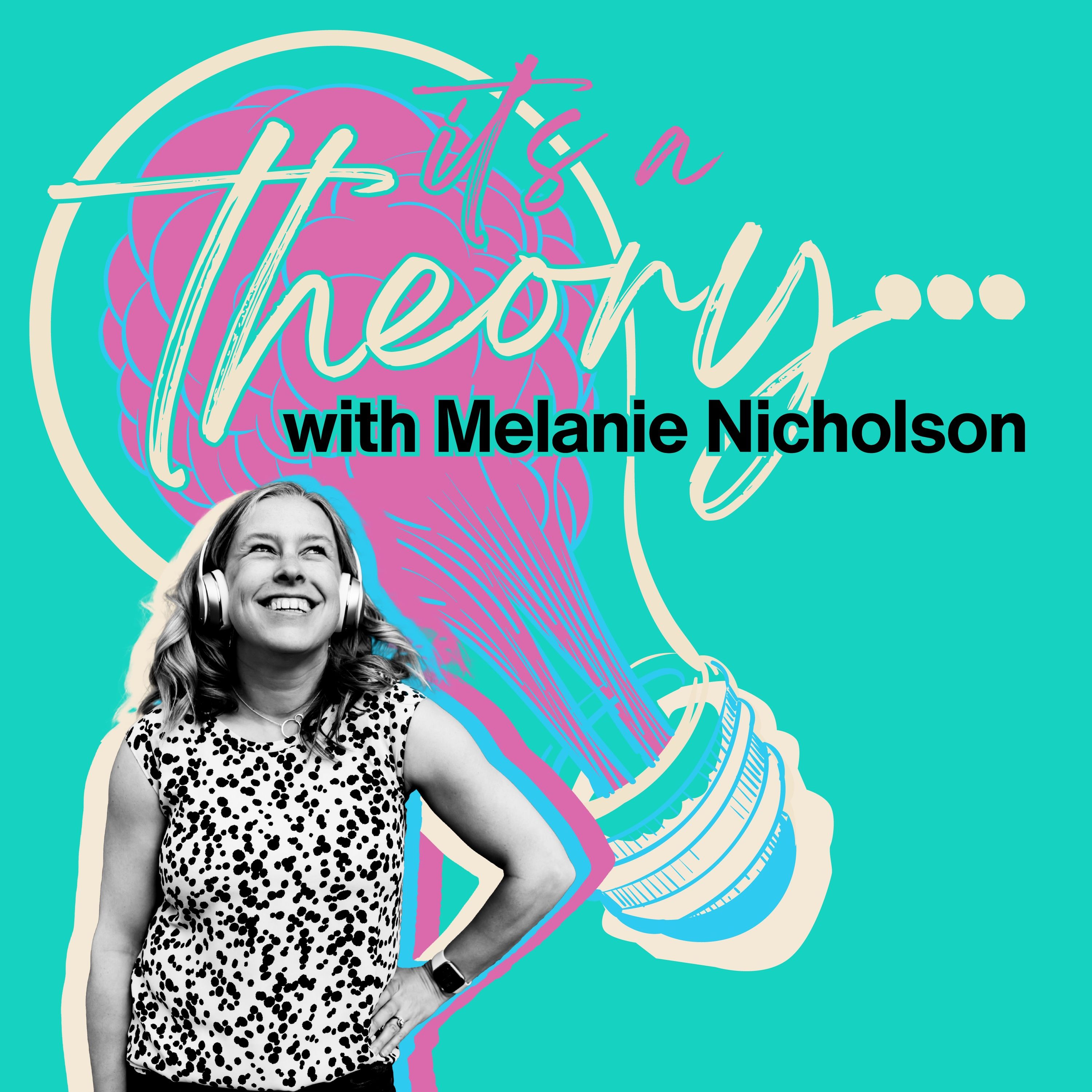
It's a Theory
Melanie Nicholson
Fréquence : 1 épisode/17j. Total Éps: 13

Classements récents
Dernières positions dans les classements Apple Podcasts et Spotify.
Apple Podcasts
🇨🇦 Canada - marketing
01/02/2026#81🇨🇦 Canada - marketing
31/01/2026#50
Spotify
Aucun classement récent disponible
Liens partagés entre épisodes et podcasts
Liens présents dans les descriptions d'épisodes et autres podcasts les utilisant également.
See all- https://www.ccab.com/
13 partages

- https://www.melanielynncommunications.com
12 partages
- https://www.instagram.com/mlcsocial
14 partages

- https://twitter.com/mlcsocial
14 partages
- https://twitter.com/lyricalpitbull
4 partages
- https://twitter.com/adoreyourbirth
1 partage
Qualité et score du flux RSS
Évaluation technique de la qualité et de la structure du flux RSS.
See allScore global : 83%
Historique des publications
Répartition mensuelle des publications d'épisodes au fil des années.
The Benefits of Cannabis with Dr. Rob Sealey
Saison 1 · Épisode 12
mardi 31 octobre 2023 • Durée 34:03
Melanie Nicholson welcomes Dr. Rob Sealey, Cannabinoid Medicine Specialist, to the show to discuss the benefits of cannabis in a medical use capacity. Dr. Sealey breaks down misinformation and differentiates between recreational and medicinal cannabis use for listeners.
Dr. Sealey recounts how he was initially a GP but found his way into cannabinoid medicine through the encouragement of a particularly challenging patient who wanted to be the first to use cannabis medically in 2001. Through his experience advocating for her, everything he learned about cannabis and the benefits he witnessed in his cannabinoid patients, he eventually left his family practice to focus on cannabinoid medicine full time. Dr. Sealey explains how cannabis can work with the body’s endocannabinoid system to help with receptors otherwise overloaded or unresponsive, thus shutting down pain from various ailments. He clarifies the many differences between rfull-timeecreational cannabis and medical cannabis and discusses how cannabinoid medicine can assist with arthritis, chronic pain, epilepsy, and a host of other issues. He is informative and passionate about how far research into cannabis can go in helping people manage pain.
“And we're starting to look at the endocannabinoid system, when it breaks down, it's implicated in fibromyalgia, irritable bowel syndrome, migraines, PTSD, asthma, osteoporosis... The list is going on and on. We're finding out that the missing link of why we're unable to manage a lot of these conditions is endocannabinoid dysfunction. It just goes haywire or it gets depleted. And that's why the opportunity to use cannabis in a variety of conditions is there.” - Dr. Rob Sealey
About Dr. Rob Sealey
Born in Saskatoon, Saskatchewan, Dr. Robert Sealey, B.Sc, M.D, attended the University of Nebraska on an athletic scholarship where he graduated with a Bachelor of Science in Biology. He then returned home to complete his medical degree at the University of Saskatchewan followed by a rotating internship in Akron, Ohio.
Since 1991, Dr. Sealey has had a full service family practice including hospital and long term care facilities in Victoria, British Columbia. Besides his work in General Practice, he has volunteered his services around the world including South Africa, Kenya, Vanuatu (South Pacific) and the Dominican Republic. He was also co-host of the nationally syndicated radio program “WiseQuacks” for over eight years.
As an active member of the peer sharing group Physicians for Medicinal Cannabis along with the Canadian Consortium for the Investigation of Cannabinoids, the International Cannabinoid Research Society and the International Association for Cannabis, Dr. Sealey has been involved in both the clinical and research aspects of Medical Cannabis since 2001.
With this background, he is acknowledged as an expert in cannabinoid medicine and accepts referrals from other physician colleagues including general practitioners, nurse practitioners, pediatricians, nephrologists, cardiologists, gastroenterologists, respirologists, oncologists, neurologists, rheumatologists, physiatrists, orthopedic surgeons, pain specialists, addictionologists, psychiatrists and geriatricians.
As well, sensing a void in knowledge among his peers regarding the use of Medical Cannabis in clinical practice, Dr. Sealey has travelled extensively around the world as one of the few instructors in this field of medicine. With the legalization of recreational marijuana across Canada in 2018, he is also an invited keynote speaker at public and professional events for his opinion on the potential implications of this ground breaking decision.
Dr. Sealey resides in Victoria with his wife Lana.
__
Contact Melanie Nicholson | Melanie Lynn Communications Inc.
- Website: MelanieLynnCommunications.com
- Instagram: MLCSocial
- Twitter: MLCSocial
- Facebook: MLCSocial
- Email: info@melanielynncommunications.com
Contact Dr. Rob Sealey
__
Transcript
Melanie Nicholson: [00:00:03] Hey, everyone, and welcome to It's A Theory. I'm Melanie Nicholson, and I'm taking you inside the world of leaders and entrepreneurs who are taking ideas and concepts and putting them into action. What really happened when they put theory into practice? Today we're talking about medical cannabis as a method of harm reduction with Dr. Rob Sealey. Harm reduction is an evidence-based strategy focused on safer use or managed use of drugs or substances, meeting people where they're at and not necessarily requiring people to completely stop using a substance. Dr. Sealey has been involved in both the clinical and research aspects of medical cannabis as a substitute for opioids and other substances since 2001. He's a big advocate in tackling misinformation regarding medical cannabis in clinical practice, and he currently practices in Victoria, BC on Vancouver Island. Let's chat with Dr. Sealey. Thank you for joining me today, Rob. I want to start with a bit of your background. I love your story. How did you end up specializing in medical cannabis?
Rob Sealey: [00:01:10] This is a question my mom asked me all the time. She said, what the heck happened? You took a wrong turn somewhere in the back. But, you know, I started out as a GP, so I trained over 30 years ago, went through the usual, you know, medical school and all the rest of it and set up a family practice. And I was doing that for probably about five, seven years before I came across a patient that challenged me. And not that I didn't have a lot of patient challenges, but this one particularly stood out because she was a patient that had chronic back pain and she was on disability. And there became a time when my only function was basically seeing her every couple of months to refill her opiates and she was on high-dose morphine, getting all the side effects related to it. She wasn't eating, she was nauseous. And the other aspect that I was doing was just simply filling out her insurance. And I knew that my role was pretty limited and I was pretty discouraged. And she certainly was as well. But one day she came to me back in 2001, maybe it was late 2000, and said, you know, Rob, Canada is going to have this incredible opportunity to be one of the first countries to allow cannabis for therapeutic purposes to be legal. And I went, Oh, okay, well, that's interesting, but I don't know what that has to do with me. And she said, Well, I want to be one of the first patients, if not the first patient in Canada, to go through the process. And I thought she was joking because I didn't know anything about cannabis.
Rob Sealey: [00:02:37] And I, you know, I still had the stigma growing up, you know, hearing about Cheech and Chong and going to the movies and all the rest of it. You know, it was an illegal substance and we were afraid of it. And we certainly didn't know much about it in the medical world. But she had sort of dabbled underground at that time and was having some success. And she wanted to come out of the shadows and become this patient, this advocate for others. And I said, well, you know what? I have no idea what you're talking about. I have no experience. And she said, Don't worry, Rob, I'll teach you. And I thought, Wow, that was pretty interesting. I mean, she said, I'll come along the journey with you and we can learn together. And I still put her off, you know, for a couple more visits. And she was very, very persistent. And she, you know, got the application in front of me. It took major hurdles, took nine months. We had to get second opinions. We had to get a passport photo. Anyway, she did become one of the first patients. And I was amazed at her response to using cannabis for her back pain was able to get her off of her opiates and get her back to work after she was off work for over six years at that point in time. And this was very, very unusual when a person's been on that long of a disability. So anyways, I did learn from her and after that point I kind of tried it in a few other patients here and there, but I stayed pretty underground.
Rob Sealey: [00:04:02] I didn't want to be that pot doc that, you know, my colleagues would frown upon. And so I kind of quietly did it underground for a while. And then some of my colleagues started to hear that I was doing this and some of them actually complained to the college, thought I should have my license taken away. And I continued to persevere, though, and more and more of my patients were starting to get some benefits. And I started to have some of my colleagues send me their patients. And so I did this kind of referral basis while still trying to keep a family practice going at the same time. So I was sort of seeing patients end of the day or weekends for cannabis, and it became a point where I had such a huge demand. I mean, this is, you know, in the last five, seven years ago that I decided, you know, I can't do both. I'm going to do just cannabinoid medicine. So from there, I'm full-on cannabinoid specialist in regard, there is no such thing. I make it up. I'm probably the only cannabinoid specialist. I've decided that it should be its own specialty. And so I take referrals from all sorts of other physicians and nurse practitioners, whether it be for pain management or addiction medicine. Even the oncologists are sending me some of their patients. So it's become a really interesting field of medicine that I kind of found this niche all because of this patient who really challenged me. And I was very, very thankful that she did that in the first place.
Melanie Nicholson: [00:05:30] And when you think about across the country, like is this specialty still just very, very tiny?
Rob Sealey: [00:05:37] It is. There's a number of cannabis clinics where physicians, nurses, counselling staff will gather together and they'll help navigate patients through the system and coach them on dosing and administration methods and that sort of thing. So there tends to be those aspects of clinics that exist, but there's not too many that I know of standalone cannabinoid medicine specialists. There's a number of my colleagues, there's still not a great number, but you know, a number that will be anesthetists or pain medicine specialists or rheumatologists who will also see patients for cannabis medicine. But this is my full-time gig and I believe I'm one of the very few that does it that way. And again, it's very, very rewarding. But I kind of put all my eggs in one basket to do just that as a specialty. And again, it doesn't really exist as a specialty, but in my world, in my mind, I think it should be, yeah.
Melanie Nicholson: [00:06:39] What's the difference between medical cannabis and recreational cannabis for someone who's struggling to stillphysicians' see the difference?
Rob Sealey: [00:06:47] Well, you know, that's so interesting because even physicians at this point in time, I mean, again, cannabis has been around for 5000 years. We know evidence that it's been through various cultures and various archeological digs that it's been around and purported that it works for this, that and the other thing. But in physicians minds, a lot of them still think it's fairly new. And I think that they believe that because it was legalized recreationally five years ago, just under five years ago, that they believe that was the moment that, okay, now it's legal, we can talk about it. But again, Canada sort of took the bold step way back in 2001. The difference that I see is intent, right? What are you trying to achieve? It's the same plant, but are you trying to use it for fun and for recreation? Much as you know, people would socialize? Versus are you truly using it as a medicine, as a therapy where you want to know a predictable outcome? You don't want surprises. People experiment with recreational marijuana, but when they're using it as medical cannabis, so different terminology, you're looking for a consistent, precise response. Very predictable. No surprises.
Rob Sealey: [00:08:08] I feel bad for a lot of patients out there that don't get the support that they should have from their physicians. And that's for a variety of reasons. A number of physicians still don't feel comfortable with understanding the plant and the different components and dosing, etcetera. And so they'll just say, well, you know, it's legal. Why don't you just go down to the local store and get some? You don't need me. You can just go ahead. But in essence, people end up fending for themselves. And this is not a, you know, necessarily a good thing, especially in seniors with arthritis going down to the local store. And if they're given a product that might actually have more risk of side effects, you know, that's not how we should be doing medicine, really. Like we wouldn't say to people with hypertension or asthma, Well, you know, you can go down to the pharmacy and see what they've got and, you know, treat yourself. So why should we feel the same way just because it's legal recreationally? We should give better guidance when we're using it as a therapy.
Melanie Nicholson: [00:09:13] You mentioned seniors. Is that one of the primary demographics that is using medical cannabis? I think...
Rob Sealey: [00:09:20] It is, yeah.
Melanie Nicholson: [00:09:22] So I wonder, is there a disconnect there that people don't realize that we're talking about my parents' age and forth, pain and arthritis.
Rob Sealey: [00:09:31] It's the number one driving demographic for using cannabis for medicine. Seniors have been around the block and more and more they're not able to get there as fast anymore. With arthritis and aging and all sorts of things that happen to us. And, you know, seniors have tried the various pharmaceutical medications and have either had intolerable side effects or ineffectiveness, and they might have kind of been exposed to cannabis previously and said, Well, you know what, my friend uses it. We talk about it over bridge and there isn't many good treatments for run-of-the-mill arthritis, for instance. Osteoarthritis wear and tear arthritis is pain management. And so more and more rheumatologists and the Arthritis Society of Canada says, well, maybe cannabis might be an option that's better than anti-inflammatories. It can upset the stomach, get bleeding ulcers or, you know, cause renal damage, kidney damage, increase blood pressure. So maybe cannabis might be an alternative option as an analgesic, as an anti-inflammatory in a safer manner. And those seniors with these types of conditions, again, are the number one demographic in, I live in Victoria on the West Coast where people come to retire and I like to say live with their grandparents, like it's a very, you know, we're a prehistoric society on the West Coast here, and there's a lot of individuals that develop arthritis. And so I've got kind of a biased practice on the West Coast because most of my patients are seniors. My oldest patient's 102, but my average-age patient is probably 80. And again, most of those with arthritis and chronic pain.
Melanie Nicholson: [00:11:19] The theory behind harm reduction is that you're sort of meeting people where they're at when it comes to that pain and not necessarily pushing them to stop a form of treatment, like they may be on opioids or something like that, but to give them the alternatives. You mentioned the doctors sometimes there's still a little uneasy on that. There's still a lot of mixed views on harm reduction in general, which medical cannabis falls into. Do you have any thoughts on that?
Rob Sealey: [00:11:50] Oh, don't get me started.
Melanie Nicholson: [00:11:53] We have so many minutes.
Rob Sealey: [00:11:54] We have three, we have three hours. Harm reduction, I think, is a fascinating topic with this. I mean, we used to think of, again, stigma. Cannabis or marijuana was a gateway drug. Right? Oh once you start down the slippery slope, you're going to end up on the street with illicit substances, etcetera. We're now using it the opposite way as an anti-gateway drug, not only from substances that could be, you know, harmful, and, you know, we're even looking for alcohol, tobacco, street drugs, using cannabis to intervene, basically help people feel better through their brain chemistry. And they're not looking for other substances to, you know, give them that feeling. But also there's a huge opportunity for cannabis substitution and polypharmacy. So, so many individuals get stuck into this system where, and again, I was guilty as charged as a family practitioner, a person comes in with, for example, pain. So what do we tell them? Well, Tylenol or Advil, you know, ibuprofen, if that doesn't work, we've got prescription anti-inflammatories. If that doesn't help, perhaps we might go the opiate route. And now people are getting upset stomach or nausea, so we give them an antacid. Wait a minute, the pain is so bad you're not sleeping so let's give you a sedative and maybe a muscle relaxant, you know? So you get into this system of having polypharmacy and every drug has a potential side effect.
Rob Sealey: [00:13:28] Now, put 7 or 8 together, not only their additive side effects, but their drug interaction possibilities. So you can clean up the medicine cabinet by using cannabis for a variety of those symptoms at the same time. And I think that was the big mystery. And I think that was what challenged us as physicians for years, is when people said, I use it for migraines and I use it for epilepsy, I use it for my Crohn's disease. It was almost like, wait a minute, you have an ingrown toenail, does that work for that too? Like, it's like too good to be true? It's snake oil. It's a travelling salesperson. Here we go again, right? Because there was not the evidence of how, you know, this worked. And then the code started to get cracked by scientists in Israel. And in their process of trying to figure out how cannabis interacts in our body, they uncovered a completely unknown system in our body. They discovered for the first time in the 1990s that we have a system called the endocannabinoid system. And I like to geek out and describe it a little bit because if we understand how important the system is, we understand how cannabis interacts with it, all of a sudden it makes sense why we can use cannabis for a variety of symptoms and conditions and again, why people will say they have success with it.
Rob Sealey: [00:14:50] So the endocannabinoid system is the chief operating officer of our body. That's a good way to think about it. We think about the cardiovascular system and the respiratory system and the neurological. All the organs belong to a single system, but the overarching endocannabinoid system - which again was not discovered until 1990s and is only now being taught in medical school, it's that new - its whole job is to make sure all the other systems are working properly. And how it does that is through a system of receptors that are everywhere, whether they be in the brain, the spinal cord, the gut, the heart, lungs, even our skin. These receptors kind of sense the local environment. And if everything's working properly, the receptors are quiet. Everything, everybody is happy. But if it senses that there's pain, there's arthritic pain in the left knee, those receptors will light up and they'll send a message that we need to protect ourselves. We need some help over in this area. And our body responds by producing what are called endocannabinoids, which are neurotransmitters or chemical messengers that rush out to those receptors, attach and shut the door. It shuts the gate on signals that are trying to harm us, like pain, inflammation, anxiety. Well, you can imagine arthritis doesn't just stop there. It's a progressive disorder.
Rob Sealey: [00:16:16] So we keep knocking on the door of the endocannabinoid system to say, help, help, help. And we're trying our best to protect ourselves and produce these endocannabinoids. But eventually we get pooped out. We can't produce enough, our supply gets depleted and in comes, the door breaks down, in comes pain, inflammation, insomnia, anxiety, all the symptoms that happen with chronic pain. Well, where does cannabis fit in? Well, it turns out in the cannabis plant, there's over 500 ingredients of which the most active ingredients are called phytocannabinoids. So plant-based cannabinoids, they kind of have the same size and shape, they interact with the same receptors that we have inside our body. So if our receptors are saying we have a problem in our left knee and our own body can't protect ourselves, we can isolate cannabinoids from the plant and basically supplement, shore up the defenses, and shut the door and signals that are trying to harm us. Well, if you can imagine if those receptors are lighting up in various parts of our body, those cannabinoids can help out in different areas. And that's why it can be useful for everything from epilepsy to migraines to even skin problems. It's that aha moment is if we have a system that basically needs help, we can supplement it with cannabinoids from the plant. And it's funny because people hear about THC and CBD and those are only two of the Phytocannabinoids.
Rob Sealey: [00:17:52] There's 144 cannabinoids. So there's other parts of the plant, you know, terpenes and flavonoids, and they all do a delicate dance. We're starting to learn more and more how they interact. It's an extremely complicated science, but so is the endocannabinoid system. And we're starting to look at endocannabinoid system when it breaks down, it's implicated in fibromyalgia, irritable bowel syndrome, migraines, PTSD, asthma, osteoporosis... The list is going on and on it. We're finding out that the missing link of why we're unable to manage a lot of these conditions is endocannabinoid dysfunction. It just goes haywire or it gets depleted. And that's why the opportunity to use cannabis in a variety of conditions is there. And if we understand how it interacts in our body, all of a sudden it makes sense. It's not just try this mango-pineapple gummy, it tastes great, try a bath bomb, go off in all directions and fend for yourself. That's experimenting. If we actually make it boring, make it predictable, we can isolate the cannabinoids from the plant and basically help out, wait a minute we need help in this area, this is what we would do. That's how medicine works. It's not just, like I say, well, this one's on sale, let's try it. Let's try this one, it's sugar-free. You know, that's too much experimentation and recreational.
Melanie Nicholson: [00:19:18] Is it challenging for people to see it because the science is, I guess in the grand scheme of things, relatively new?
Rob Sealey: [00:19:27] I think it is. A lot of physicians still, like I do a fair amount of lectures and I'll go out and I'll ask, what's one of the questions I say, Okay, put your hand up if you've heard of the endocannabinoid system. And five years ago, no hands would go up. And still at this point, I would say more patients know about the endocannabinoid system because they Google. They have this thing on the Internet called Google.
Melanie Nicholson: [00:19:48] I've heard of it.
Rob Sealey: [00:19:49] Yeah. No, it is. It's amazing.
Melanie Nicholson: [00:19:51] It's fascinating.
Rob Sealey: [00:19:52] Not everything, by the way, is true on the Internet. I just found that out, too. Yeah, somebody told me that yesterday. But apparently if you type in endocannabinoid system, so people when they're researching for their, when they're advocating for their own health, and they've heard from their neighbor that, you know, I take CBD and that and they'll start to research and they'll read about the endocannabinoid system and start going down that rabbit hole. I find more patients do that. Physicians don't necessarily have the time to go down the rabbit hole, so they're listening, you know, they're reading as much journals as they can. And this is still relatively new. Again, not being taught in medical school. So patients will often be further ahead in understanding the science of it than my physician colleagues, for instance. So that's a challenge, right? That's a real big challenge. Yeah.
Melanie Nicholson: [00:20:42] Practically speaking, you write a prescription, do you write a prescription for a patient?
Rob Sealey: [00:20:50] Practically speaking, you would think so, but it's actually not. So technically so, it is not called a prescription. It's called an authorization. And the reason that is, is because it's plant-based. So most of the cannabis that I'm talking about comes from a plant and it's isolated, these cannabinoid ingredients. I mean, there are some prescription synthetic cannabis, but for the most part, what we're talking about when you go down to the store or you have a cannabis oil, CBD oil and that sort of thing, it's plant-based, right? It's isolated from the plant. Because it's plant-based, under the system it does not have what's called a DIN, which is a Drug Identification Number. Those are what pharmaceuticals have. So they, every drug, every blood pressure pill, antidepressant, opiate, all have a DIN. That's an assigned number, makes it very specific. Because it's plant-based, there is no drug identification number and therefore it's not considered a prescription. It's technical terminology, but it's considered an authorization. So if a patient wants to use cannabis for therapeutic purposes, they are supposed to get an authorization from a physician. It's like a valid certificate, which then allows them to purchase cannabis from a medical licensed producer. Now, the vast majority of patients do not do that. 72% of patients just go directly to their local store. But again, you're kind of fending for yourself.
Rob Sealey: [00:22:28] And I'm not throwing shade at the local stores. I mean, it's a good access place. Easy. You don't need a physician. You don't need this authorization paper. You can just go down and see it and talk to the local person. But here's where it gets a little bit murky. The local person is working in a recreational dispensary. So think of it this way: If you had arthritis and you were 85 years old, would you go down to the liquor store and ask them which bottle of Merlot would help with your inflammation? Right? It's the same thing.
Melanie Nicholson: [00:23:06] 100%.
Rob Sealey: [00:23:06] So the other part of that equation is these individuals that are working in the recreational dispensaries don't necessarily have a lot of background in the use for therapy in medicine. They're not healthcare professionals. They, again, are akin to working in a liquor store. Now, some of them know quite a bit. I'll give them that credit for sure. But here's where they're shackled. Under Health Canada rules if a person goes into one of these recreational dispensaries and said, Can you help me with my arthritis and that individual behind the counter, the budtender, says, Oh yeah, take this and take that, they could actually lose their license.
Rob Sealey: [00:23:46] They're not supposed to give medical advice. So again, this is the challenge of when a patient's fending for themselves, they go to the local store where they may or may not get advice. They're not supposed to get advice and who knows what the advice is like. And I've been a fly on the wall in some of these places, and the advice is very variable if it's given at all. So again, the route that patients are supposed to go, and I think works well, is being under the supervision of a physician who can help manage their care, much as we do with asthma, hypertension, diabetes, etcetera. Why not have a health care professional monitor, you know, your care and give you suggestions as required? But I think that people don't understand. Physicians don't understand. A lot of them still will say, well, it's legal, you can, again, just go to your local store. They can help you out. That's not actually the way it should be done. But I think a lot of people still don't understand that you can go through this other channel under a physician or a cannabis clinic and get the authorization, get it from a medical supplier, and be very precise with no surprises.
Melanie Nicholson: [00:25:04] Do insurance companies understand what the authorization paper is versus a prescription? Like can I, if I'm paying out of pocket for medical cannabis for a treated illness or injury, can I submit that to insurance?
Rob Sealey: [00:25:20] That's a great question. So probably only 5 or 6 years ago there were no insurance companies in Canada that would consider the coverage of medical cannabis. That's changed. There was one insurance company that made the bold step after lots of pressure from its members to say, We will cover it under certain circumstances. And then it became a domino effect. Right now, there are 17 different insurance companies in Canada that will consider it under exceptional circumstances. Even insurance, like we have auto insurance in British Columbia, you know, WorkSafe or worker's compensation, they're covering it under certain circumstances. So the world is changing. But when you say exceptional circumstances, there can be some challenges there.
Melanie Nicholson: [00:26:05] What does that even mean?
Rob Sealey: [00:26:06] What does that mean? Some of the insurance companies will come back and say, Give us the DIN. Give us that drug identification number.
Melanie Nicholson: [00:26:13] Great, here's the plant.
Rob Sealey: [00:26:13] Knowing full well that it doesn't have a DIN.
Melanie Nicholson: [00:26:17] Right.
Rob Sealey: [00:26:17] So they'll say to patients, You can provide the DIN, we will consider covering it. Most of them will consider covering it under certain circumstances where nothing else has worked. So you kind of got to go through the hurdles. So, for instance, chronic pain. So if individuals have tried this, that and the other thing and again, either ineffectiveness or intolerable side effects, and you've proven that they've tried all these things and that they've had a positive response to cannabis, that's usually, you know, an avenue that it will be covered. The other aspects of the insurance company to look for is, they say, level of evidence. They'll say, you know, cannabis is used for all of these things, for instance, sleep and anxiety. We know a lot of individuals, I'm sure you've talked to people say, it works for my sleep. It calms me down for anxiety. Right? We've heard this.
Rob Sealey: [00:27:11] But if you actually look through the literature and say, show me the double-blinded, randomized clinical trials with placebo, we don't have that for sleep. We don't have that for anxiety. So a lot of times the insurance companies will say we need the best quality evidence before we're going to consider covering this. Where does the best quality evidence lie? It happens in four conditions, and these are the ones that insurance companies will usually cover, again, if you've gone through all the other standard therapies. Chronic pain, that's by far the number one, especially nerve-related pain. chemotherapy-induced nausea and vomiting. So people undergoing chemotherapy and they're sick, we've got great evidence about how cannabis can be useful for that. Spasticity and multiple sclerosis. Again, lots of evidence. And most recently added are specific types of epilepsy. Some of these childhood epilepsies where no other medications will work, we're seeing better benefits with the use of cannabis. So those are kind of the ones that insurance companies usually, that's what I get, people send me a form and say, my insurance company said, if you fill out this form, they'll consider it. Well, again, they sometimes just say, what's the DIN? Which tells me right away, No. Or they'll say, does the person have one of these four conditions? And if so, what medications have been tried previously? At the very least, patients can keep their receipts as a medical expense on their tax return. If they go through the channel of getting the authorization and purchasing from a licensed producer of medical. Not if they go down to the local store. The CRA kind of frowns on the mango-pineapple chewies. They want to see the medical stuff before they consider it an expense.
Melanie Nicholson: [00:29:04] Where do you go now? What is the next five years look like for this, for this space in terms of education? Is it more research, more science? Like where do we go now?
Rob Sealey: [00:29:16] All of the above. All of the above. I'm so, as you can probably gather, I'm so excited about this field. Every day there's new, interesting research. And I think that's the part, the missing link again it's been the science, and you hadn't had the opportunity to research. It was illegal to research. And in still many countries it remains that way. So the research that we are getting is starting to happen. And so it's basically proving what we thought, which is kind of nice, is we were on the right track and I get together with some of my, I like to call them cannabinerds, and these colleagues around the world. And we basically blog or we share our thoughts or we might have an online webinar, do some research papers together. And it fascinates me that in places like Australia and Israel and Germany, even though we're spaced so far apart, and we're kind of doing it where there's only a few of us in these places, we're on the same path. We're seeing the same things and we're sharing it. It's really exciting to see that, yeah, that's what I see, and that's what you're doing. And this is of course, this is why we do it. And it's nice to have that sort of backup and that reassurance that we are on the same path. But I think the research is only going to get better. And I think what's exciting is, again, we only talk about THC and CBD. If there's 142 other cannabinoids, you're going to start hearing about, if you haven't already, CBN and CBG and CBC, not just the network, but these are all cannabinoids that have their own aspects of how they interact with those receptors.
Rob Sealey: [00:31:00] And we're looking at specifics. What about CBG on the prostate? And so we're getting more pinpoint as far as which organ has these types of receptors and then the fascinating world of the endocannabinoid system and again, unlocking the potential there. And it might not just be cannabis, by the way. The more we understand endocannabinoid system, there might be a better way to alter, or help, or supplement the endocannabinoid system, might be enzyme blockers. And this is what the pharmaceutical companies are looking at. They say, well, cannabis works, you know, but it's kind of a shotgun approach. Can we be more precise and work at the enzyme at this level in the endocannabinoid system? So I think that's exciting. But the future is unlimited. Then there's even looking in petri dishes in the lab, you know, what is it doing to cancer cells? Well, we know that certain tumors have a lot of these endocannabinoid receptors. And so the National Cancer Institute is using cannabis to see what happens. And we're seeing some pretty interesting stuff in the lab. Then we're seeing it in animals. We haven't taken it full, you know, protocols in humans yet, but we certainly are hearing that humans are using it and getting some interesting results. So I think the future is unlimited. I think it's very, very exciting. And I can't wait to see what happens tomorrow because I think it's just happening that fast. Anyways, don't get me, don't get me going.
Melanie Nicholson: [00:32:39] Well, and congratulations for being on the forefront of this space. I mean, you've really been involved from the beginning. You've led the charge. And I think, I can imagine it's so exciting and interesting to see how it's going to progress. So thank you so much for sharing today and helping educate because I think, I mean, I'm a huge proponent of education and information. And I think the more we know, the less scary something might be. And hopefully this helps with that, too.
Rob Sealey: [00:33:07] Thank you very much. That was great.
Melanie Nicholson: [00:33:12] Such a fascinating conversation. And I love hearing about the research that's happening around medical cannabis and also how there's different things coming up. And then we apply it in a different way. And I think we sometimes forget that pharmaceuticals like Tylenol and Advil that we're all so comfortable with, they were there, too, and they started through this process. And it's an important process. Research and science, it's all rooted there. So important. Thank you, Dr. Sealey, for joining us today. Thank you for listening. Please like, subscribe and consider giving us a five-star rating on Apple Podcasts, Spotify or wherever you listen to your favorite podcasts. We'll catch you next time on It's A Theory.
Solving the Crisis of Homelessness with Sandra Clarkson
Saison 1 · Épisode 11
mardi 24 octobre 2023 • Durée 29:00
Melanie Nicholson addresses the big topic of homelessness with guest Sandra Clarkson, Executive Director of the Calgary Drop-In Centre, in this episode. Sandra is focused on creating opportunities for long-term systemic improvements for Canadians in need, and paints a clear picture of what is being done and why so much more is needed.
Sandra started her career in the nonprofit sector doing frontline work with sexually exploited minors which made her realized she loved working with vulnerable populations. That led to a journey of working with issues of homelessness and marginalized populations throughout Canada and the US before starting her own consulting company and eventually winding up at the Drop-In Centre. Sandra is very clear that there is no one type of person experiencing homelessness. She describes people from 18 to 90 years of age, women, men, non-binary, Indigenous, refugees, and so many more, all people who access the DI’s services with various needs. What Sandra provides Melanie is a very thorough picture of what housing means to homeless individuals, how the right house is as important as just having a house, the importance of interconnected support systems, and what everyone can do immediately to start viewing affordable housing and homeless individuals as neighbors instead of ‘other’. It’s a vital conversation on shifting the homeless dynamic of our cities.
“You know, we hear a lot of talk and words around inclusive communities and community for all. They're really just words, I think, when you look at the amount of nimbyism that comes up for any development that even mentions affordable housing. There's so much stigmatization and mythology, quite frankly, around who needs affordable housing and what what affordable housing would bring to a community. And I think what we really need to focus on is moving from nimby to yimby so that communities are saying, Yes, in my backyard. We want to have diverse socioeconomic statuses in our neighborhood. We want people of all shapes and sizes and abilities in our neighborhood.” - Sandra Clarkson
About Sandra Clarkson
Sandra Clarkson is the Executive Director of the Calgary Drop-In Centre. With 25 years of experience working with vulnerable populations, Sandra brings a wealth of experience as an advocate for marginalized Canadians, a champion of community collaboration, and an expert in operational excellence. Sandra’s vision is to create opportunities that result in long-term systemic improvements for citizens in need.
In addition to serving on several non-profit boards, Sandra has provided strategic planning, assessment and other management consulting services to non-profits through her own business, MSH Strategies Inc.
Resources mentioned in this episode:
__
Contact Melanie Nicholson | Melanie Lynn Communications Inc.
- Website: MelanieLynnCommunications.com
- Instagram: MLCSocial
- Twitter: MLCSocial
- Facebook: MLCSocial
- Email: info@melanielynncommunications.com
Contact Sandra Clarkson
__
Transcript
Melanie Nicholson: [00:00:03] Welcome to It's a Theory. I'm your host, Melanie Nicholson, and today is a big topic. We are talking about the theory behind ending chronic homelessness in a city. Sandra Clarkson has been with the Calgary Drop-In Center since January 2017 and is committed to ending chronic homelessness in the city through the power of collaboration, transparency and accountability. Sandra is also co-chair of the Canadian Shelter Transformation Network with a focus on propelling the movement to housing-focused emergency shelters as the standard for front-line homeless service across Canada. Above all, she's focused on creating opportunities that result in long-term systemic improvements for citizens in need. Sandra has a theory and a clear vision of where communities can go when we're talking about housing-focused emergency shelters. We get really candid and frank about this issue, and it really demonstrates what can happen when you put theory into practice. Let's talk.
Melanie Nicholson: [00:01:05] Sandra, welcome to the podcast.
Sandra Clarkson: [00:01:07] Thank you. I'm happy to be here.
Melanie Nicholson: [00:01:10] I'm really excited for this conversation. I think it's such an important conversation to have and I want to start a bit with your story so people who don't know you, how did you end up at the Drop In Center Calgary? Everyone knows it as the DI but for people listening outside of Calgary, how did you get there?
Sandra Clarkson: [00:01:28] Well, it was a long journey. You know, I started my career in the nonprofit sector as doing frontline work with sexually exploited teens or minors. And that was really kind of my first foray into frontline work and exposure to, you know, working with really vulnerable populations and absolutely loved it. And then I ended up leaving that work and joining a group of anonymous donors that were granting their funds throughout Western Canada and the Midwest, US. And they were looking for somebody who was networked in the nonprofit sector in the city of Calgary. Somehow I landed that, spent the next 16 years of my career working with that group, learned a lot around issues of homelessness, vulnerable people, marginalized populations throughout both Canada and the US. From there, I started my own consulting company called MSH Strategies and really focused on the nonprofit sector, worked on building capacity, did a lot of strategic planning pieces, a number of interim executive director roles, really, you know, problem-solving, troubleshooting and did a lot of work with a great colleague of mine, Dr. Susan McIntyre. We did a lot of partnerships together. And from there, the former executive director at the Calgary Drop-In Center, Debbie Newman, had approached me to see if I was interested in coming on as associate executive director as part of her succession planning.
Sandra Clarkson: [00:03:12] And, you know, I never thought I would be an employee again, having my own consulting gig. But what intrigued me about the work at the DI was, you know, the size and the scope of the organization and the reach and the potential that it could have. I knew I was not going to get bored anytime soon and that there was lots of amazing opportunities for the agency in terms of really expanding its reach, its breadth, its depth and its impact. And so that is what brought me to the DI. I think, you know, throughout all of my career, I've been really focused on marginalized populations, even as a funder, you know, homelessness was one of the areas of my specialization through those portfolios. And just have always been drawn to working with populations that traditionally have not really had much of a voice. And it's just, it's something that's really, really important to me. And so that's how I got here.
Melanie Nicholson: [00:04:26] You talked about the size of the space, and I want to talk on that. The DI was labelled the largest shelter in North America. Is that notoriety that you want to have as a shelter? Is is, is that good? Is that bad? What does that look like when you're coming into a big space?
Sandra Clarkson: [00:04:42] You know it, I believe, it currently is the second largest in North America. There is one other that has a bit higher capacity. I think, you know, ideally we want to be known as the most effective housing-focused emergency shelter in the country and North America for that matter. So I think, you know, the size, there's certainly economies of scale that come with the ability to shelter a thousand people on any given night. Is it ideal? No. You know, I think we've worked really, really hard to house a number of our long-term shelter stayers to get our numbers down. And, you know, now right now, we're averaging around 450 individuals on any given night. On any given 24-hour period, it's closer to 700 because people do access services here that don't sleep. But I think, you know, if we could do it all over again, probably would look at doing it differently. You know, large, crowded congregate settings are really difficult to make personalized individual connections with everybody. So I think we do a great job working with what we've got at the moment. But, you know, I think as we look future-focused, I think we have to ask ourselves, Are there better ways? And I think that there are.
Melanie Nicholson: [00:06:09] And I want to talk about that. But before we do, what I'd love for you to do is give us a sense of who these people are. I think so often when you read about the social sector, if you're not in the social sector - it's the term, I mean we use it, I use it too - individuals and people, and it's a very high-level term as opposed to this is the actual story of these people. Can you give us a sense of the type of people and maybe some specific examples of who's coming in there? Because I think that there's a misperception of everyone's an addict or everyone's this or everyone's that. Who is using the drop-in center?
Sandra Clarkson: [00:06:48] Well, I mean, I wish I could answer that question in a concise way. I think, you know, you're exactly right. People in general, I think, think of homelessness or individuals experiencing homelessness as this like homogeneous group that have a lot of similarities. Well, I can tell you it's extremely diverse. There is no typical person that accesses our services. We have people of all different age groups over the age of 18 up to, you know, we've had people in their 90s come to us. There are, gosh, if you were to like really look at the sort of the sub-sections of those using the services, I mean, there's at least 10 to 12 different types of groups of people that all have very different needs. Right? We've got men and we've got women. We've got, you know, like I say, all the different age groups. We've got non-binary individuals, we have Indigenous folks, we have refugees, we have, you know, new Canadians. There is no typical scenario. One thing that is important to note that, you know, a vast majority of the people that access our services are in and out very quickly. Most of them are able to self-resolve their experience with being unhoused. We're here to provide a soft landing pad, ability for them to regroup, get their bearings back straight, and get back out into community.
Sandra Clarkson: [00:08:30] But then there is, you know, 20% of the population who are much more complex. We do see a lot of mental health, undiagnosed or misdiagnosed untreated mental health issues. With that often comes some pretty acute and chronic addiction issues. I think one of the things that is, I feel confident in saying, is a common theme for those that are with us for any length of time is experience with some pretty significant trauma. So I think if there was going to be one sort of common theme, I think honestly it really comes down to experiencing trauma, whether that be, you know, childhood neglect, abuse, sexual abuse, experience as a child soldier, you know, violence, all sorts of different experiences that are really impactful on people. And when you have lost your support system or didn't have a strong support network or system in the first place, it's really hard to do that on your own, to work through that trauma. So we're here to help guide people on that journey as best we can. We can't be everything to all people. So we really rely on our partnerships with other organizations who can provide some of that more professional assistance where needed. But there is no typical picture of people that walk through our doors, and it's different on any given day.
Melanie Nicholson: [00:10:20] Which is challenging to deal with because you can't just take a cookie cutter solution and move it forward. So then if we talk about the concept of ending chronic homelessness, cities have said they've done it before and then they end up back. How, when we talk about, we're talking about taking ideas and theories and putting them into practice, how do you end or at least mitigate this chronic homelessness when we're dealing with trauma and we're dealing with these mental health challenges, what's the approach?
Sandra Clarkson: [00:10:50] Well, the approach is housing first and foremost. You know, cities and communities need to be willing to support and accept deeply affordable housing. To support, fund, and accept the support services that need to go along with it. To support, fund, and accept the health services that need to go along with it. All with the aim of helping people exit their experience of homelessness. If there is no housing available, you will never solve homelessness. It's actually a very simple concept and often gets, you know, people aren't looking at it as what has to come next. Right? So I think, you know, deeply affordable housing and affordable housing is the number one, should be the number one strategy.
Melanie Nicholson: [00:11:44] When you look across the country, I mean, that's the problem everywhere.
Sandra Clarkson: [00:11:48] Yeah. And it's just getting worse. And then, you know, people complain that homelessness is becoming more visible as cities become less affordable. Well, I'm not sure what you expect.
Melanie Nicholson: [00:11:59] Absolutely.
Sandra Clarkson: [00:12:00] Right? Like it's really not rocket science. Sorry to sound a bit condescending, but it really is... It's... Homelessness is a very complex issue, but there are pretty simple solutions to it and it really comes down to a lack of affordable and deeply affordable housing. Now, some people will always need extra supports that go along with that, right, in order to help them maintain their housing. Say, for instance, you know, people with brain injury may need to be in a long-term care setting. So it's not just a matter of giving everybody keys to a home and you're done. It is more complicated than that for some, but for many, all that's needed is assistance with some financial barriers that they've encountered and their, you know, rapid rehousing works. And yeah, the answer ultimately comes down to housing.
Melanie Nicholson: [00:13:03] How do we move the needle there when we talk about, and not just in Calgary, but when we talk about, let's talk about nationwide. You're dealing with cities of different sizes and scope, but it's all, as you've articulated very well, it's the same problem. So how do we start? Does it start with the community getting a better understanding? Does it start with more advocacy? How do we start to move that needle and help people understand the greater issue?
Sandra Clarkson: [00:13:32] Well, if I had that figured out, wouldn't that be great?
Melanie Nicholson: [00:13:36] Right?
Sandra Clarkson: [00:13:38] But I think, you know, from a community perspective... You know, we hear a lot of talk and words around inclusive communities and community for all. They're really just words, I think, you know, when you look at the amount of nimbyism that comes up for any development that even mentions affordable housing, here's so much stigmatization and mythology, quite frankly, around who needs affordable housing and what what affordable housing would bring to a community. And I think what we really need to focus on is moving from Nimby to Yimby so that communities are saying, yes, in my backyard. We want to have diverse socioeconomic statuses in our neighborhood. We want people of all shapes and sizes and abilities in our neighborhood. And how we do that, I'm not sure yet, but I think we just have to keep talking and we have to keep sharing positive impact on the community as a whole. When people are living in their own homes as opposed to in tents, on the street, or in a shelter.
Melanie Nicholson: [00:15:06] It changes the entire dynamic.
Sandra Clarkson: [00:15:08] 100%.
Melanie Nicholson: [00:15:11] Can you share with us? I imagine over your experience in years, you've worked with people that have been in this state of struggle and have found their way into housing and how their life has changed. Can you share with us some of those so people can start to grasp their, wrap their head around what that can look like for someone and how it can change their entire trajectory?
Sandra Clarkson: [00:15:35] Wow. Well, there's, you know, there's lots of great stories. There's one individual in particular that always comes to mind for me. This individual had, you know, I'm not even going to call them a shelter stayer, they, you know, the DI had become their residence, had become their home. He had resided here in shelter for many, many, many, many years. And he is a very gifted, talented, articulate, smart man. He's an artist. He's a carpenter. He's a beautiful soul. And I first met him actually, was long before my tenure as an employee here at the DI. He came and did some carpentry work for me at my home just through some connections that I had and got to build a relationship with him. And, you know, he knew my kids and made art for them, made, you know, paper, you know, art paper. Yeah. Just beautiful, beautiful stuff. He's a writer, musician, like you name it, he can do it. And, you know, his struggle was really an issue with alcohol. And it really held him back in a lot of ways. And I think until we made our shift to be a very housing-focused emergency shelter, we really worked very intentionally with those people who had been here for a long time to get them housed. He'd given up on the idea of even thinking he would ever have his own place, like it just wasn't in the cards for him.
Sandra Clarkson: [00:17:22] This was as good as it gets, and I guess I'll be happy with it. You know, we really pushed him to move into his own apartment. You know, he needs, he has supports that come along with it. But the level of alcohol consumption has gone down considerably. He has set up a little artist studio on his balcony. He still plays music. Pre-COVID there was a piano, a public piano downtown, and he would go every morning and play the piano as people were entering the office buildings to go to work. And that was one of the things that he loved doing. But yeah, he's thriving. He's thriving in his new place. He still, we still stay in touch. We text each other every couple of months just to check in and say hello. And you know what? He is really, truly my inspiration in many ways to keep going because this work is really, really difficult. I think it's probably some of the hardest work that there is. And I think of all it takes is one, all it takes is one to keep you going. And we have, certainly have many more than one.
Melanie Nicholson: [00:18:41] Well. And if the focus of the DI has shifted to that housing focus model, then hopefully you see more and more and more and more.
Sandra Clarkson: [00:18:51] Yeah, I think, you know, since we made our shift, really in 2018 was when it really started to pick up some steam. And, you know, we've housed over 2200 people since that time and our return to shelter rate is less than 5%. So.
Melanie Nicholson: [00:19:08] That's amazing.
Sandra Clarkson: [00:19:09] Yeah, it's phenomenal. And that's a real testament to the work of the frontline staff who are working with individuals, getting to know what their personal needs are, what their personal desires are, and really taking the time to get to know them, to match them to the right housing program or in community so that they have the opportunity to thrive. It's not just about getting people out and into a house. It's about--
Melanie Nicholson: [00:19:35] It's the right one?
Sandra Clarkson: [00:19:36] It's the right one. And you know, for us, getting someone housed is, it doesn't stop there. What has to happen once they're housed is they need to integrate into their new community. So they need to have, you know, a medical home. They need to have a family doctor. They need to know what amenities are in the neighborhood. You know, ideally help them to connect to volunteer opportunities so they can meet more people in the neighborhood and really encourage them to access the services that are available where they are now, not come back to the DI to get what they need. That's not helpful. What they need to do is work within their new community to establish their roots, just like you or I do.
Melanie Nicholson: [00:20:26] I was just going to say, just as anyone, you move into a new neighborhood, so how do you feel more settled into that community? What's the wrong, I think this is important for people to understand that it's not just, it's not good enough to just say, here's a house, let's put anyone into the house, the right house matters. What is the wrong house for someone or housing option for someone, where things can go wrong and people don't follow that?
Sandra Clarkson: [00:20:54] Well, I think, you know, where I mentioned, you know, some people that come through have some really complex needs that, you know, that they're not able to live independently without supports. So, you know, there's there's waiting lists for those, that type of housing. And that's just the way it is. But I think it's about making sure that, you know, whoever that operator is or service provider is in that housing program, has a really clear understanding of what the needs are for this person and that we make sure that like, staying in shelter is not ideal. But I would much rather that we waited for the right placement and the right program rather than set people up to fail and have to come back again.
Melanie Nicholson: [00:21:49] So it's more sustainable.
Sandra Clarkson: [00:21:51] Yeah. And you know, we work with, you know, other housing providers and we'll, we want to do warm handoffs and make sure that that continuity of care is there. And, you know, quite frankly, the reality is also that there's types of housing and programs that are needed that just don't exist right now. At the drop in center, we really are the catchall of really all the failures of numerous systems converging together. We are the catchall. And so we've got some really, really challenging folks here. But we do what we can with what we have to try to meet their needs. There's certainly... You know, some days I really think of the DI in some ways as a de facto psychiatric institution without the appropriate supports and care that people deserve. And we can do, we're continuing to advocate for, you know, closing those gaps and those housing programs that don't currently exist or that there aren't enough of.
Melanie Nicholson: [00:23:01] What's one that doesn't exist that you'd like to see exist, that could exist, if the, I mean, obviously anything can exist with resources and the right people at the table. But if you could pick one that doesn't exist right now in our community that could, what would you like to see?
Sandra Clarkson: [00:23:19] Well, I think one thing that's really missing is that really high needs intensive supportive housing where there's 24-hour supports on-site. Yeah, that's a big gap. That's a big, big gap. And you know, with the appropriate, like, mental health supports and physical health supports and social supports, emotional supports, spiritual supports, you know, there are, we've got probably 150 people that we're aware of that currently could use that type of housing here at the DI.
Melanie Nicholson: [00:24:00] When we look at systemic improvements across the country, can Calgary be a leader here?
Sandra Clarkson: [00:24:08] I think we already are. To be honest, I think, you know, one of the great things about this city and this nonprofit sector is the level of collaboration, information sharing, open sourcing of resources. It's unlike I've seen in other cities. And, you know, as I mentioned in my previous career, I've been in a lot of different jurisdictions dealing with this type of issue or these types of issues. And Calgary is really unique in terms of the spirit of collaboration and putting the client first, not about the agency, it's about the client. And, you know, many of us share the same people. You know, people will often be referred to as a DI client, but rest assured they are also accessing services in many other organizations. They just happen to rest their head here.
Melanie Nicholson: [00:25:02] Right.
Sandra Clarkson: [00:25:03] So I think that we are on the forefront in that way. And I think, you know, with the DI being, quote-unquote, one of the largest homeless shelters in North America, our shift, our transformation to being housing-focused, I have to believe, has played a part in Calgary being one of the only cities in the province of Alberta that's actually seen a decrease in the numbers of homeless people. At that point in time count this year.
Melanie Nicholson: [00:25:36] Well, congratulations on the work you've done. It's incredible. And I, it's a story I've followed. And one I continue to want to follow because I think it's so important as a greater community that we know how we can support and what people can do. So that is how I'd like to end. My question to you is what can people do today? Not necessarily people working in the sector, but general population of Calgary? How can we as a community help with this challenge? And whether it's learning more or advocating, what can we do to help our collective neighbors succeed?
Sandra Clarkson: [00:26:13] Well, I think, you know, of course, there are the first things that come to mind about, you know, share your time, share your talent, share your treasure, donate, volunteer, get involved with the community-based organizations that are of interest to you. Those things are always welcome and much needed as it's an under-resourced sector. But I think I would also challenge people to don't just walk past someone. You know, say hello. Engage. Connection. Connection is key. We need to start seeing everybody as human beings and not looking at the unhoused as 'other'. Or 'those people'. That's something that doesn't cost anybody a thing and is really impactful. I think, you know, get to know if there's developments going up in your neighborhood and there's affordable housing, get to know the provider, ask the questions. Don't just blanket no, no, no. Think about how those developments can actually enrich and add to your community. Yeah. Learn. Learn to say yes more and no less, I think, are some key pieces. And if we want to have and be inclusive communities, then we have to just stop saying the words and put action behind it.
Melanie Nicholson: [00:27:51] And inclusivity starts with saying yes.
Sandra Clarkson: [00:27:53] Yes, it does.
Melanie Nicholson: [00:27:55] Perfect. I think that's such a beautiful place to end. Sandra, thank you so much for this conversation. It's so important. I'm such a big believer of education and the more you know, the more you feel informed and can then make more educated decisions. So this is what these conversations are about. So thank you so much for participating.
Sandra Clarkson: [00:28:15] My pleasure. It has been a real treat to have this conversation with you today. Thank you.
Melanie Nicholson: [00:28:23] Affordable housing and looking at people and remembering that they are people, so important. My mind is whirring from that conversation. So many profound pieces of insight from Sandra. Sandra, huge thank you for joining us today. Thank you for listening. Please like, subscribe, and consider giving us a five-star rating on Apple Podcasts, Spotify or wherever you listen to your favorite podcasts. We'll catch you next time on It's a Theory.
The Expression of Art with Wakefield Brewster and Stacey Walyuchow
Saison 1 · Épisode 2
mardi 5 septembre 2023 • Durée 26:30
Melanie Nicholson welcomes Calgary poet laureate Wakefield Brewster and mixed media artist Stacey Walyuchow to the show for a conversation about connections, accessibility and the power of art to facilitate both. Wakefield and Stacey each share insights and glimpses into their mindsets, and how they use their art to communicate directly with their audiences.
Stacey shares the story of how she and Wakefield first met and how Wakefield’s performance changed her opinion of poetry while moving her to tears. Wakefield addresses how poetry is perceived as “old white European male” and that people often have an adverse reaction to it. He communicates very specific messages through his poetry that he says are translated by his performance. When Stacey considers how people perceive her art, she acknowledges the messages she intends but that people may interpret her work differently. Each of the artists talk about how COVID changed the opportunities in their careers and offered new ways of reaching people. The importance of art to society is significant, it’s how we collectively communicate and interpret, it facilitates accessibility. This episode explores the varied expression in art with two brilliant artists whose work you will want to experience for yourselves upon listening.
“Regardless of what the material is or how it's been crafted, my delivery is going to be the translator because even if you don't get it, I'm probably going to make you feel it. And that's even more important in some ways.” - Wakefield Brewster
“I think a lot of artists do not have gallery representation and you have to find another way to sell your work and to get it seen. And so though social media can be the bane of my existence some days, and that of everybody else's, it is free and it is necessary.” - Stacey Walyuchow
About Wakefield Brewster
Since January 1999, Wakefield Brewster has been known as one of Canada’s most popular and prolific Performance Poets. He is a Black man born and raised in Toronto, by parents hailing from the island of beautiful Barbados, and he has resided in Calgary since 2006. He has spoken across Canada, and several States, and makes countless appearances on a regular basis in a variety of ways, for a myriad of reasons, throughout each and every single year. In 2022 he was appointed Calgary’s 6th Poet Laureate, the Calgary Poet Laureate produces literary work that is reflective of Calgary’s landscape, cityscape, and civic identity and that may raise awareness of local issues.
About Stacey Walyuchow
Stacey Walyuchow is a mixed media collage artist in Calgary, Alberta. The theme of her work is is the human search of identity and recollection of memories, most often using female imagery and animals as symbols. Stacey works with a technique of hand colouring fragile pieces of paper and attaching them to canvas or panel to create the narratives. She intentionally leaves any imperfection that might occur in the process, as they reflect the imperfections, or perhaps the beauty, of such flaws in human beings. She believes the whole process of blending delicate pieces of paper to sturdy surfaces is a wonderful illustration of the exceptional durability of human beings, women in particular.
__
Contact Melanie Nicholson | Melanie Lynn Communications Inc.
- Website: MelanieLynnCommunications.com
- Instagram: MLCSocial
- Twitter: MLCSocial
- Facebook: MLCSocial
- Email: info@melanielynncommunications.com
Contact Wakefield Brewster
Contact Stacey Walyuchow
__
Transcript
Melanie Nicholson: [00:00:03] Welcome to It's a Theory. I'm your host, Melanie Nicholson, and today we're diving into the arts. I'm so excited to welcome two guests today for a conversation around making poetry accessible and the power of art to communicate around tough issues. Joining us, we have Wakefield Brewster, Calgary, Alberta's sixth poet laureate. Wakefield has honed his craft through 20 years of writing and performing and engaging audiences of all ages with his powerful words and captivating performances. Over the years, he's performed at a wide range of events, including schools, festivals, fundraisers, rallies, corporate functions and literary development events. His passion for poetry and storytelling is evident in every performance, making each one a truly memorable experience. Wakefield is considered a poet of the people. And Stacey Walyuchow, she is a mixed media artist who creates stories and situations that break the passivity of the viewer by developing scenes that don't follow logical criteria. She bases her work on impactful situations from her own life experiences, but leaves each piece with room for people to interpret on their own. Mixed media and poetry. We're talking about the power of connections, accessibility, and how art is changing the game. Let's dive in.
Melanie Nicholson: [00:01:24] It is first thing on a Monday morning. This is such a fun way to start the week. I feel like we're having coffee with friends very early in the day.
Wakefield Brewster: [00:01:32] We are.
Melanie Nicholson: [00:01:33] I love it.
Stacey Walyuchow: [00:01:34] My third coffee. So it's good.
Melanie Nicholson: [00:01:36] Third coffee of the day. I haven't had any caffeine yet, actually. So it's going to be.. we'll see. I'm a little foggy. Can you start? I want to know how the two of you know each other.
Stacey Walyuchow: [00:01:48] There is a fabulous little space in the East Village called Loft 112 that sadly is no longer there, but hosted beautiful poetry events and one of which was People's Poetry Festival. And I've thought about this because I was trying to recall exactly what event it was that I first heard Wakefield perform, and it actually was People's Poetry Festival. As somebody who's always been a little afraid of poetry, I think, I just never thought it was - I know that sounds weird, but sometimes you would read it and you always, admittedly equate it to, like, Shakespeare and the stuff that you would read in high school, and I just never could wrap my head around, Oh, it's way more than that. So not that there's anything wrong with Shakespeare. Oh, my gosh. But, um, let's be clear. Anyways. I go to this event and I was kind of like sitting here, I have no idea what I'm in for. And everybody was lovely and fabulous, and then this guy gets up there. And I think I said this the other day, like, I think my hair just went, like, whipped right back. I was completely blown away by the words, obviously, and the delivery and the performance. I am a crier, as anybody who knows me knows, Mel you know this. So tears form when this man performs. And I, and so, um, it's a lovely human being as well. That's why I think it's so beautiful that you're in this position now, Wakefield, as poet laureate, because you can go up to Wake and have a conversation. You made it easy to come and talk to you and ask a question about the poetry or just say it was amazing and what he says? Thank you.
Wakefield Brewster: [00:03:32] Wow.
Stacey Walyuchow: [00:03:33] That's it. Just thank you. Like, super humble. So that is how we know each other.
Melanie Nicholson: [00:03:39] Beautiful. I love it. Thank you, Stacey, for sharing that story. I think it is beautiful. Wakefield, do you remember when you met Stacey?
Wakefield Brewster: [00:03:47] I do remember meeting Stacey. I do remember meeting her at Loft 112. I do remember it being the People's Poetry Festival, and I think it had been a few years where the People's Poetry Festival had a bit of a hiatus. So I think it was probably the first year back in circulation and it was my first time meeting Stacey. So anyone who is connected to Lisa Murphy Lamb is golden. So right away, right away, Stacey - I'm cool with her. I delivered my poetry the way I do with everything I've got, and it isn't common to see someone get emotional. So I noticed and it was pleasantly distracting. I was, I too was blown away that there was especially someone who hadn't experienced me before feeling what I was sharing. So she's connected to Lisa Murphy Lamb, she's connected to the Loft 112, she's an artist of many years. And I mean, that's a trifecta for connection in my world. So it is the world of the arts that brought us together. And it is love that has kept us together.
Stacey Walyuchow: [00:05:06] Yes.
Melanie Nicholson: [00:05:07] Oh, that's beautiful. And I think one of the things, Stacey, you said, which was poetry wasn't your thing. And I think. Let's talk about that. I mean, Wakefield, in terms of part of your mandate as poet laureate is to make poetry more accessible, accessibility and reducing the barrier and making it more open and helping people understand it. Is that, how is that going? What has that been like for you?
Wakefield Brewster: [00:05:35] The answer is yes. I have been doing all those things. I do believe it's my charge, my duty, and it's also my will, my, without ego, it is my will. I wish to give poetry to everyone. I believe that it belongs to everyone. Just as speech and communication belong to everyone, regardless of your medium. But what it comes down to is a lot of people, especially within my generations of perception, before and after me, I hear the same lament as Stacey just began with, which is I never, I don't really dig it. Some people are actually quite adverse, have an adverse reaction to it. Technically, it's called metrophobia. And generally we will find in the language arts of the populace, most people don't embrace poetry. It does evoke the first reactions, responses and perceptions of Elizabethan and Shakespeare and theatre. It does make people recall, especially our generations and before, just being handed down a whole bunch of stuff that was old, white, European male poetry, because we can all relate to that.
Melanie Nicholson: [00:07:06] Everyone in this room.
Wakefield Brewster: [00:07:08] Everyone in this room when it came to, okay, here's a piece of poetry, let's understand it, dissect it, inspect it, whatever. Well, if we get it, we get it. And if you don't get it, you can interpret it any way you want and you're correct. Give me a fucking break. Because when I say yellow, I mean yellow. Not canary, not banana, not sunlight, not coward. Fucking yellow. So if you got any of those other answers, you're fucking wrong. So since communication is never as linear as we would like to believe, when I get on stage and tumble out with these pieces of poetry, sometimes I'm very direct with language. Sometimes it's quite, I call it Wake Word. It's the way words come to me. I don't try to translate it. I juggle the juxtaposition and I put it down. Sometimes it's very cipher, very cryptic. Regardless of what the material is or how it's been crafted, my delivery is going to be the translator because even if you don't get it, I'm probably going to make you feel it. And that's even more important in some ways. So that's the long way around some of how I perceive the world perceives it. How I believe I can help reframe it. And I believe it's done primarily through performance because I have a 25-year career and I don't have anything published.
Melanie Nicholson: [00:09:11] But, and that's an interesting... I mean, when you think about it, when I think about my exposure to poetry growing up and I mean, I was in speech arts and drama and I was very well versed in the old white man poetry space.
Wakefield Brewster: [00:09:25] That's all there was.
Melanie Nicholson: [00:09:26] But to your point, the performance side you just didn't see, you didn't... Where I wasn't, I wasn't forced to interpret it myself. It was just there and I could feel the story. And then it just made sense and it clicked, which is sort of what you're talking about, Stacey, in terms of that click. And then on the flip side, we've got Stacey doing the same thing from a mixed media art. And that's what I love about this conversation of the two of you together, because we've got poetry and we've got mixed media art, and they're both profound ways of communication. Stacey, how are you taking stories from your world and putting them onto canvas?
Stacey Walyuchow: [00:10:07] As I listen to Wakefield, there's a lot of parallels because it is the arts. And though with poetry he was talking about the word yellow and it can't be canary or, oftentimes with mine, it's okay. They can interpret it a little bit differently, that's okay. I think that similarly, there's definitely one main meaning or thought behind each piece that I create, for sure, that is come out of my brain. It's my part of my story or composition that I came up with. However, it is going to be interpreted a million different ways. I'm okay with that in the sense that I kind of want my work to speak to people, something relatable to them in their lives potentially, or just evoke a feeling, like Wake said with the poetry as well. It might not totally get what I was coming forward with with the art, but they will have some sort of feeling that is evoked from being able to look at it. And I'm good with that.
Melanie Nicholson: [00:11:14] I want to hear from both of you about, we talked a bit about accessibility. In terms of again, we've looked at traditional art and the sharing of traditional art and art forms, when we look at online, I mean, Covid obviously forced everything online, Wake, you talk about performance being your primary medium, without rooms of people, you had to flip. What was that experience like for you and how did you continue to make, to focus on poetry being accessible to people through an online space?
Wakefield Brewster: [00:11:51] You are now looking at the result of it. When the pandemic hit, everything shut down, went online. What's the one thing artists always claim they don't have to be successful, and it's not money, it's time. So there I am as a massage therapist, spending 20 hours on transit, 40 hours somewhere, that's 60 hours a week, we get shut down for three months, that equates to 7200 hours. I said to myself, I have 72 consecutive hours. I've never had this in my life. What am I going to do with this? In my opinion, artists fell in three categories, just like people. There's something to do. You're either going to - and this happened because of age, so the older artists, elders who never embraced technology, they dug in their heels and didn't want to do it. They weren't ready to learn it. They weren't ready to go virtual. Then there's others who just, regardless of generation, just don't want, didn't want to. Just people just don't want to do shit sometimes. Then there's the middle band, which is most people, and they put in a half-assed effort and they get a half-ass result. They went to the gym for two weeks. They don't look like Arnold. They give up. Then there's those freaks like me in the third class, which is now I can be right where you see me right now, and I can be anywhere I want around the clock building my career. I didn't know how it was going to happen and I didn't have any straight lines. I decided to make myself my own epicenter and simply radiate online. Everyone was online and nowhere else. So if you had a presence online, you still had a performance presence. So that's what happened the two years before 2022. So 2020 to 2022. That's when I hit online and I was literally everywhere. I did fundraisers, I did community stuff, I did featured readings. I did open mics and I did them across the country and a few across the world because it's right here. So it was really easy to come out of Covid, that lockdown, and have a bunch of options during that interruption and new norms beginning. I totally can say the pandemic turned my career around 180 because we could go virtual. It was really hard for me to have this much reach in my own city unless you ended up at a show. Now places are asking me in because they've heard of me. It's a good presence. It's a dynamic performance and it's online. So sometimes in chaos there's opportunity, and sometimes disorder is a ladder. Unfortunately, the pandemic turned my career around.
Melanie Nicholson: [00:15:04] What was the most surprising thing through that period of time, through the online, was there anything that really just threw you off or surprised you that you had to sort of make any adjustments, or for you was it just, I am here and this is my space?
Wakefield Brewster: [00:15:18] I grew into the space. I didn't know what it entailed moving into the virtual space, but I knew it was still an interactive space, a communicative space, a performance space, an exhibition space. That's what I do live. That's what I'll do virtually. It was a, it's an adjustment, it's an adaptation, but it's really kind of a parallel shift. We used to watch The Flintstones and then we watched The Jetsons. We are living The Jetsons life. We just don't have a Rosie robot. Yes, we do. It's called a Roomba.
Melanie Nicholson: [00:15:55] I was like, uh...
Stacey Walyuchow: [00:15:57] That's what I call my Roomba. It's Rosie.
Wakefield Brewster: [00:16:01] It's right here and now and doing things hybrid and virtually it has, it has an exponential impact on your presence.
Melanie Nicholson: [00:16:16] Stacey, is the print, is art going that way? I mean, you have people buying your art from Europe. Is it because they can find you online?
Stacey Walyuchow: [00:16:27] Absolutely. I, just to kind of echo what Wake was saying about 2020, it was probably the best year I've ever had. Um, art sales. I was freaking out a little bit because...
Wakefield Brewster: [00:16:42] I saw it. Sold, sold, sold.
Stacey Walyuchow: [00:16:44] So I decided to make postcards for free because I needed something to do. And it's a really good exercise for me to do these little smaller things to imagine larger pieces. So I was making postcards and mailing them out for free to anybody that wanted them. And by doing that, it's like forced marketing, really. Like, maybe I should have done that a long time ago, but put in the situation with everybody else with this pandemic, that was what I needed to do for my own sanity. And then doing so, anytime I would produce a piece, they did sell relatively quickly. So it was, yeah, it was fantastic. And I think a lot of artists do not have gallery representation and you have to find another way to sell your work and to get it seen. And so though social media can be the bane of my existence some days and that of everybody else's, it is free and it is necessary. And if you use it properly, I think you can do a good job. And I'm still thinking I could probably use it a lot better than I do, as you know. But um, yeah, predominantly my sales come from Instagram.
Melanie Nicholson: [00:18:01] Good old Instagram.
Wakefield Brewster: [00:18:02] I applaud that. Thank you for saying that was so beautifully said. It absolutely was.
Stacey Walyuchow: [00:18:09] Thank you, sir.
Melanie Nicholson: [00:18:10] So it's 2023. Wakefield, you've got another year as poet laureate of Calgary, is that correct?
Wakefield Brewster: [00:18:19] Yes. Until April.
Melanie Nicholson: [00:18:20] What does that look like? What's your next...?
Wakefield Brewster: [00:18:24] It looks... this is the plan.
Melanie Nicholson: [00:18:28] I'm ready.
Wakefield Brewster: [00:18:30] It took 22 years to get to here. Now I get two years here. I work with numbers in a weird way because they show up. I'm going to put 22 years, that effort, into these two years. And hope I have 22 years of opportunities to work with later. I have to believe that on the way to becoming poet laureate, it's because I had the presence as a poet of the people. If I never became poet laureate, I, over time, may have made this much impact. It may have taken five more years. But I was never going to stop doing what I'm doing. So what else can I tell you? Except for I believe that after poet laureate-ship is over, I'm still always going to be Calgary's poet of the people because I tell our stories, not only mine. And I'm sticking around to tell our stories. I have never felt so at home. Nor have I ever been so embraced.
Melanie Nicholson: [00:19:43] What would you say, what would be your challenge to people who are unsure about poetry and that it's new for them? It's a, it's a different space for them. How would you challenge someone to open their purview and consider it in a different way?
Wakefield Brewster: [00:20:01] Please use the internet for things more than bully fights, cats and porn. Go and listen to a bunch of fucking poets who are... oh, I'm swearing all over the place. Is that okay?
Melanie Nicholson: [00:20:11] It's fine.
Wakefield Brewster: [00:20:12] Holy Freakonomics. Sorry. Didn't check in.
Melanie Nicholson: [00:20:16] You're fine.
Wakefield Brewster: [00:20:17] This is me. All right. Use the internet and go check out a bunch of poetry and stop reading it. Why don't you go and check out dynamic performance poets, not slam poets. Stop pigeonholing. Slam is a competition. It's just like a rap battle. Those poets that you see in slam atmospheres are like me, performance poets. We are a conduit to energy and we help you feel it poetically. Those are poets you want to engage in. No one is like me and no one is like anyone else. Sooner or later you're going to find stuff that appeals to you. That's generally it. Now, okay with any one thing in this world, because nothing is absolute, it might be like cilantro because people who don't like it, they never ever like it. I hear it's genetic. It will always taste like soap. They never want it.
Melanie Nicholson: [00:21:10] That's what I hear.
Wakefield Brewster: [00:21:11] Okay. I'm going to have to say there are some people that will never like it, but it is about language. I believe they've never heard their poetry. Do you get what I'm saying? They've never heard what speaks to their heart poetically yet. So you have to find it. You have to look for it. Do you really want it? You'll probably find it. Think of everything in life you wanted to find. Really wanted to find. It's a thing about being open to. And if your heart is not in it, it won't happen. So if you believe that listening to some loudmouthed poet say, Listen, I believe that you have a poetic heart and somehow your ear just hasn't heard those particular words, please get online and look for the poets that speak to people and maybe you'll hear your poet.
Melanie Nicholson: [00:22:09] And are we all better off if we try and listen to different things and expose ourselves to different concepts and ideas in the grand scheme of things?
Wakefield Brewster: [00:22:17] Yes. Considering I never wanted to be a poet.
Melanie Nicholson: [00:22:21] What did you want to be?
Wakefield Brewster: [00:22:25] Since I was six, I wanted to be one of the only black classical concert pianists playing in Europe and amphitheaters. Hundreds of white people on pianos that cost more than cars. That is a really weird dream for a black kid in the 70s of Toronto. And I don't know what it was about classical music. But I was drawn to it. And that's where I began. It's just, we're supposed to be living in this day and time and age where we're sharing stories. And words and actions may move at the speed of light now. And because we are becoming so more aware, we're having these quote/unquote tough conversations, due conversations, necessary conversations, and yeah, they're all fucking hard. I find that the arts, every single medium, the arts is the great translator. Because people can handle harder messages when translated through an art form. They don't always want the stem delivery of misogyny. Because it may just rattle their bones, but they can take a slight shaking when the theme of misogyny is inside of an art form that they can more easily bring themselves to. That is one of the greatest things I believe Stacey does, that I do and every artist does, is we attempt to be the great translators for every and all conversations. And that's really who I think we as artists are.
Melanie Nicholson: [00:24:37] But it's beautiful. And you really have just pivoted that into still being a performer and sharing an art form in a different way. It's amazing.
Stacey Walyuchow: [00:24:47] It sounds just as beautiful to anybody listening. It's amazing.
Wakefield Brewster: [00:24:50] Oh, that's kind.
Melanie Nicholson: [00:24:52] I love it. Stacey, what's next for you?
Stacey Walyuchow: [00:24:56] Oh, I'm just painting my face off. That's all. Painting. It's all I can do, you guys, it's all I can do.
Melanie Nicholson: [00:25:04] I love it.
Stacey Walyuchow: [00:25:05] Yeah. Just working away.
Melanie Nicholson: [00:25:07] I love it. Thank you both. I think, I'm a firm supporter of the arts. I love the arts. I love the different ways as a communicator, I love how the arts is a way to communicate to different people and help people understand different challenges and social issues. And I think that it becomes such an important tool within our communities to help people understand tough issues in a different way. And I love, I love that. So thank you both for the work you do and how you're communicating and just all of it. Thank you both.
Wakefield Brewster: [00:25:46] Thank you so very much. Thank you both.
Melanie Nicholson: [00:25:52] What an incredible conversation. I, as I said in the conversation with Wakefield and Stacey, I am a firm supporter of the arts. I believe in the power of art to communicate, to help break through some of these tough conversations. Wakefield talked about that as well. So grateful to be able to have that candid conversation. Thank you, Wakefield and Stacey, for joining us today. Thank you for listening. Please, like subscribe and consider giving us a five-star rating on Apple Podcasts, Spotify or wherever you listen to your favorite podcasts. We'll catch you next time on It's a Theory.
Staying Nimble in Business with Kristi Stuart
Saison 1 · Épisode 1
mardi 5 septembre 2023 • Durée 33:14
Melanie Nicholson welcomes Kristi Stuart - co-founder of Barre Belle Studios, Nutrition Coach, and Personal Trainer - to the show to talk about how she helped guide her business through Covid and what it looks like to take steps in a new direction after. Kristi is always accomplishing new goals and sets an example by never stopping in defeat.
Kristi shares the story of Barre Belle’s pivot into online to survive Covid and describes how it felt like she and her partners were “learning to fly as they built the plane”. She credits the willingness of her partners and the incredible community of support built around Barre Belle for making their new directions successful. However, Kristi admits to Melanie that she struggled with depression later in the pandemic and wanted to do something new. Melanie learns how Kristi dove back into school to study nutrition and dig deep in the lack of information surrounding perimenopause experiences for women. Kristi’s ability to push through adversity and never rest on laurels drives her to new successes and she is a testament to listening to yourself and pursuing what truly makes you complete.
“I would have absolutely made the same business decisions. I think we had advisors and we made the best decisions we had with the information that we had at the time. And I still am 100% happy with those decisions. What I might have done differently is I might have been a bit more open with the community as to how I was feeling because I'm very much an open book. You ask me any question and I'll tell you the answer. And I did have my guard up for the first time I felt, in my life, with my community, I had my guard up a bit because I was so terrified and there was so much uncertainty.” - Kristi Stuart
About Kristi Stuart
Kristi Stuart is certified as a Nutrition Coach and Personal Trainer and has a BSc in Cell and Molecular Biology. She is currently studying to become a Certified Menopause Support Practitioner.
We talk a lot about lifespan but Kristi wants to focus on health span. Health span is “the period of life spent in good health, free from the chronic diseases and disabilities of aging.” She wants to help you increase your health span so you can live the life you’ve always imagined.
__
Contact Melanie Nicholson | Melanie Lynn Communications Inc.
- Website: MelanieLynnCommunications.com
- Instagram: MLCSocial
- Twitter: MLCSocial
- Facebook: MLCSocial
- Email: info@melanielynncommunications.com
Contact Kristi Stuart
__
Transcript
Melanie Nicholson: [00:00:03] Hey, everyone, and welcome to It's A Theory. I'm Melanie Nicholson, and I'm taking you inside the world of leaders and entrepreneurs who are taking ideas and concepts and putting them into action. What really happened when they put theory into practice? Let's find out. Today, we're talking with an award-winning entrepreneur, Kristi Stuart. Kristi grew her first business, Barre Belle, to become one of the 5% of female-founded companies that had multi-million dollar revenues and became Canada's largest female-founded and owned fitness brand. And then there was a pandemic which forced an extreme pivot both personally and professionally. We're going to talk to Kristi about all of this and about the launch of two new companies in the last year and a half. Kristi has a BSc in molecular biology and biochemistry. She's a certified menopause support practitioner and has completed her certification in both personal training and nutrition coaching from the National Academy of Sports Medicine. I also have first-hand experience of doing an online workout with Kristi, and let me tell you, she will make you work. So excited to have Kristi on the podcast today. Let's dive in.
Melanie Nicholson: [00:01:14] Kristi, welcome to the podcast. I'm so excited to have you here. My colleague and I were saying we both feel like we know you and that you're already our friend because we've both taken your workout classes before. But I want to start there because I think while your journey has been one so inspiring to watch, I think it also highlights that social media only tells part of the story. We don't really know, so we feel like we know you, but I think we know zero about you in reality. So I'm excited to learn more. But I wanted to start with have you always wanted to be an entrepreneur? Was that something that you always saw yourself doing or did you just land there?
Kristi Stuart: [00:01:50] Literally just landed there? Never once thought about it. I thought I would have a stable job. I frankly didn't think I had the constitution for it. And sometimes I still wonder if I have the constitution for it.
Melanie Nicholson: [00:02:04] Oh I feel that every day.
Kristi Stuart: [00:02:06] Yeah. So, no, it was... it was never, never a plan.
Melanie Nicholson: [00:02:11] You started Barre Belle, you're a co-founder of Barre Belle, in 2016. Do I have that right? Doing so well. Everything was there. But I want to go back to early 2020 because I think that was really when there was a big, the big shift that a lot of you running a fitness organization, everything shuts down. What happened there? You went online. Were you already online? How did you navigate the early stage of the pandemic?
Kristi Stuart: [00:02:39] Yeah, so we were fortunate in that we had originally gone online in late 2018. Now it wasn't streaming. It was we had gone and we had filmed videos just because we had had clients who would go away for the summer and they loved the workout so much they wanted to still be able to keep up with their fitness level while they were gone. So we went and we filmed, so we had some online content available and then 2020 hit. And so it was very much all of a sudden kind of the fitness community in Calgary came together and just said, Holy crap, what are you doing? What are you doing? And we were on this email chain and talking about Zooms and it was very much - because we didn't do Zooms before when we had previously done a recording - so I remember sitting with my team and we'd be on Zoom and we were trying to figure out how do you play music while you talk without cutting it in the background, just like these simple things, but that were extremely important, right? And you know, at the beginning everyone was very, very forgiving. And, you know, like you'd, you were just very much winging it. And I still, like when I think back to kind of when the pandemic happened, it was very much sheer panic on one hand. And just like really and truly not quite comprehending the gravity of what was happening while at the same time holding on to dear life and being like, okay, we've got to put something out there for our clients because there has to be some sense of normalcy with what we're doing or we're just - me, can't speak for anybody else - just gonna fall apart. So it was the weirdest time ever.
Melanie Nicholson: [00:04:17] And I think that when you really, it's not just the business side, you're also trying to hold your personal life together. And when, because no one knew what was going on.
Kristi Stuart: [00:04:25] I remember messaging my kid's teachers and saying, you know, I know they've got homework. I know tests are coming up, but my business is falling apart and I'm barely keeping it together. So if my kids don't - at the time they were maybe eight and ten, ten and twelve, it all who knows, right, it all blends in at that time - but messaging them and saying, I can't support my kids at all during this time because I have the capacity to do one thing right now because my life is crumbling around me. And so this is going to give. And I just I never in my life would have sent an email like that. But it was very much, oh, my God, like my world was just falling apart around me. And it was I need to focus on something or I'm literally going to going to fall apart. And that was, you know, not that you could do your business at the expense of your family, but it was at online school and they were in elementary school. So I'm like, you know what? It's very low risk to be like, oh, you guys are doing your online school? Or who knows? Who knows what you're doing.
Melanie Nicholson: [00:05:27] Somewhere over there.
Kristi Stuart: [00:05:29] But I'm like, I'll make sure you feed. I'll make sure you've got your basic needs met. And whether you're online playing video games with your friends or doing school, that's like, I couldn't I'm like, I can't control that. I can't micromanage that. Something's got to give. And that gave.
Melanie Nicholson: [00:05:42] You can't do everything all the time, all at once. It's not the movie. What's the movie title? Everything, Everywhere, All At Once. It's so wrong. It's impossible. So I think, thank you for being honest about how hard that was, because I think a lot of people don't realize how that navigation, it was so different for everyone and so hard in different ways. One of the things you said to me previously is that you were learning a new business as it was happening. Is that like when you look at that online space like, is that essentially a new business? I mean, you've got the fitness, the fitness studios, the in-person, is it essentially relearning the whole game then?
Kristi Stuart: [00:06:22] Absolutely. And it was really, it was I have to say, that was the one, if there was anything exciting about Covid, what was, that was it because all of a sudden we were accessing people who had followed us online or knew who we were, but maybe lived in Saskatchewan or maybe lived somewhere in Calgary even, or, you know, at one point we were streaming in 20 different countries around the world. That was the neatest thing, seeing people who discovered us, who didn't know us before Covid or had never taken a Barre Belle class, and all of a sudden we were sweating alongside with them. And that to me was the coolest thing. So you were learning, you were learning, you know, not only how do you make a really good product, an online product that has great production value, but also then how do you get it out into the world and the costs associated with that? And it was a brand new business and we were you know, I like to say with Barre Belle, we were flying the plane while we were making it, and the online was almost like we were like on a rocket ship while we were building it.
Melanie Nicholson: [00:07:25] The trajectory would have just been straight up.
Kristi Stuart: [00:07:27] It was. And I think because we had had the, we'd had the infrastructure already there, because we'd previously done videos, we were at a bit of an advantage in the sense that it was very easy for us to pivot into this new realm because we had had experience in it before. So we were lucky in that capacity. And also, you know, our community is the best community and they were all missing us so much. So they all jumped online as well with us and brought their friends in. And it was nice because, you know, remember when early pandemic when you'd have like drinking parties with your friends on Zoom like, right, and this was another way to connect with people because we were like, what do you mean we can't see you in person? And especially because ours are in person, you know, like people would come in and they didn't know each other and all of a sudden they're best, like they became best friends. And all these really phenomenal relationships were established and people were really missing that community aspect. So too, we wanted our one of our main goals, in addition to, you know, making a great video, was how do we then replicate the community that we had online and keep that going for people who desperately need it? Because we were all like stunned, like dazed and confused for so long.
Melanie Nicholson: [00:08:43] And how do you do that? How did you do that?
Kristi Stuart: [00:08:46] It was really challenging because, you know, like right now we're talking face to face, but there's something missing when you're not in person with one another, right? And so it was very much getting comfortable being in front of the camera, like really comfortable imagining as though you're there. Because one of the things that I always do is I always tell stories while I'm teaching. And so it was telling stories while you're in front of the camera and then connecting. So, okay, we put this video out. Well, then when people would respond, it'd be like, Oh my gosh, I love it. And then you get into a conversation with them. So it was really trying to engage to say, you know, you still need this community, we still need you, let's continue it. And I think initially it was very natural for people to do that because everyone was missing that contact so much that they were very much willing to, okay, Well, let's start this conversation online through a platform.
Melanie Nicholson: [00:09:40] It sounds easy in the grand scheme of things, but it's not. And I know it's not. And it's, but what was presented as someone who also followed, it looked seamless. It looked like, oh, hey, we've flipped online and now we're this and here's the community and it's just all happening. But it can't have been that easy.
Kristi Stuart: [00:10:01] Oh, it was. I like to say, like, you know, one thing that we, that my partner and I and our entire team were so good at, were creating community. And I still believe that that's why we were successful so quickly off the bat was because we created this incredible space that people really wanted to become a part of. And so while it wasn't easy to make that community online, it did come naturally. What didn't come naturally, what was really hard behind the scenes, was how literally everything else felt like it was falling apart and you had to put that forward face on to say it's okay, because so many women, we had so many messages from people saying, You guys are what's keeping me sane during this pandemic. And so, you know, we had many discussions where we just felt, you know, we can't fall apart. Like, you know, you want to be honest and authentic to who you are. But at the same time, there was a lot of things behind the scene that like, legally we couldn't talk about, but that were, you know devastating. So it was nice to have that. You know, you don't want to say you're putting on a performance, but you almost were and like I was. And it took me out of that, Oh, my God, like, I'm falling apart here too. I'm doing this for my community because they need it. And so it gave me a purpose when my previous purpose had just imploded. So I was, on one hand, it was very easy and because it was like the only good thing that was happening at that point, because everything else was just kind of, I don't want to say falling apart, that's too dramatic, but...
Melanie Nicholson: [00:11:40] Confusing and uncertain.
Kristi Stuart: [00:11:43] Uncertain, uncertain. Yeah.
Melanie Nicholson: [00:11:46] Is there anything you would have done differently through that transition period?
Kristi Stuart: [00:11:51] I would have absolutely made the same business decisions. I think we had advisors and we made the best decisions we had with the information that we had at the time. And I still am 100% happy with those decisions. What I might have done differently is I might have been a bit more open with the community as to how I was feeling because I'm very much an open book. You ask me any question and I'll tell you the answer. And I did have my guard up for the first time I felt, in my life, with my community, I had my guard up a bit because I was so terrified and there was so much uncertainty. And I did feel that if I started sharing, I like wouldn't be able to stop. And also, I don't like when people feel sorry for me. And I was getting a lot of and it was all very genuine, We feel so badly for you. And people did, right, and I appreciated that. But I also didn't want to be a victim and I didn't want, I don't like when people feel sorry for me. And so I felt, you know, if I'm truly honest and sharing how I'm feeling and what's going on, then I'm going to get that outpouring, and I just don't, it just makes me very uncomfortable.
Melanie Nicholson: [00:13:09] But I also think that, like, whether you intend to be an entrepreneur or not, every single person I know that is an entrepreneur, there is some level of that in their gut where it's like, I will figure this out. Just give me a minute. Don't talk about it because I might, because I might cry, but I will find my way. I just need a minute and I need the right people to help me work through. Here's my concept now I need to get it over here.
Kristi Stuart: [00:13:37] It's so true that you say that because you're, you want to be like, never say die. And also, yeah, I don't... I'm a very vulnerable person. But there are certain things like, you know, the business it was so great and it was really changing due to Covid and I felt a lot of responsibility. And even though, you know, I didn't create Covid, you know, our business was set up, we ran it a specific way that Covid was really detrimental to us. But so I felt, oh my God, how did I not have a problem solve for this? Why didn't I see a pandemic and plan for it? Come on, Kristi, be better. Be better.
Melanie Nicholson: [00:14:25] I was just gonna say. Unacceptable.
Kristi Stuart: [00:14:26] Unacceptable. So I did. I felt like a lot of shame and responsibility and, like, I should have had answers because as the leader, you know, you don't have all the answers, but you can always say, you know what, I'm going to think about this and I'm going to get back to you and we're going to figure it out. But you couldn't figure out Covid. You couldn't get back to people with an answer. And so that I felt, I did feel like I was letting a lot of people down. And I really struggled with that. And so I felt, you know, if I was truly saying what was going on behind the scenes for myself, that I just, that I just couldn't. There was just something in me, I just couldn't because I didn't want to fall apart, I guess.
Melanie Nicholson: [00:15:08] And then did you hit a moment where you knew it was time for some change for you from a business, from a personal, I mean, you're still involved with Barre Belle, you're still a co-founder, but you have made some changes. When did you know you needed to make a change?
Kristi Stuart: [00:15:25] So it was about early 2022. We had gone through the ringer, gone through the ringer with Barre Belle, and I noticed that I felt like I was still in survival mode or had all of a sudden gone back into survival mode, where I couldn't - and Barre Belle truly is the greatest thing I've ever done in my life. I am so proud of what we created. It is an amazing company but I was starting to feel like I couldn't, I wasn't contributing in the way that I previously had. I just, I was really depressed, like, you know, when we had opened because, you know, we had nine studios pre-Covid, we had to permanently close eight of them. And then in January 2022, we opened up a new one in Calgary. So we had one left over in Toronto and one in Calgary. And so it was like, okay, well we should be like back to normal and good to go when I think because all of a sudden it was like - I don't know if it was all of sudden the adrenaline crash or what happened - but I just realized I was like, Man, I'm like, really not well mentally. I realized I was like, I was very depressed and I was not sure where to go. And I felt like I wasn't bringing my best self to Barre Belle anymore.
Kristi Stuart: [00:16:45] And I couldn't continue doing that because I didn't want to have any negative impact on the company or on the brand. And so on my own, I just started, I said, I need a couple of things for myself now. And so I got my nutrition certification and I started doing, like, personal training and that was great. And then I start like, you know, like I was really exploring, like, this sounds odd, like my body and the way I was feeling. And that's when I kind of realized I was experiencing a lot of, like, perimenopausal symptoms. I was like, I was going for like, I was going crazy and all these things. And so I spent a lot of time really like researching. And then I realized I wanted to do a course in perimenopause. And so talk to my partners, and, you know, like we have a very open communication and relationship. And, you know, we were all like, no one was thriving. But everyone, you know, you kind of, I guess that's the good thing about having, one of the great things about having partners, is, you know, like how they say in a marriage, if you don't get divorced, it's because no one wanted to get divorced at the same time.
Melanie Nicholson: [00:17:59] Because everyone's working, you balance each other out.
Kristi Stuart: [00:18:03] Exactly. And so we all, when I was low, they were high. When I was high, you know, like we all really balanced each other out. And I was at a point where I was like, you know what, guys? I just need a bit of a breather because I'm not my best self right now and I need to get back there. And they were just so incredibly supportive as I knew they would be. And so, um, yeah, so I stopped teaching at the studio for a bit and filmed a bit online, but really focused on schooling.
Melanie Nicholson: [00:18:37] Good for you.
Kristi Stuart: [00:18:38] Yeah. Yeah. Thank you.
Melanie Nicholson: [00:18:39] And did that give you that refocus, that moment to sort of redirect into a different way?
Kristi Stuart: [00:18:46] It really did. It felt as though when I started school late last year, I was like, Oh, there's that, there's Kristi again. Like, I'm a very optimist, like, I'm annoyingly happy. I'm, you know, I'm glass half-full. Like always, We'll find a solution.
Melanie Nicholson: [00:19:06] Energy to burn. If I recall from taking, I've taken some of your classes lying on the floor of my office. I'm like, She'll be fine without me. I'll just lie here.
Kristi Stuart: [00:19:19] 100%. And all of a sudden I was like, back to that girl and maybe not fully back, but getting back. And I was like, okay. And it gave me new, just like a new drive and a new I just started to feel like myself again. And that was really nice because I was worried, you know, when you're in a state of stress for so long, that is this who you are now and can you, you know, I am fully a new person than I was pre-COVID. 100%. But the core of like my happy-go-lucky optimism has come back.
Melanie Nicholson: [00:20:00] Has success changed for you? Like, does that look different to you now as well, or is that still there, that core feeling of what success is for you?
Kristi Stuart: [00:20:10] It's funny that you were saying that because I was thinking about that this morning, because my problem is I am like - excuse my language - balls to the wall like 100% I want to be successful. I want to be, everything I do, I want to be the best at. And I remember, like with Barre Belle talking to our instructors and was like, you guys, yes, we have high expectations, but no one is held to a higher expectation than me. I hold myself to the highest and I do that with everything that I do. And I can't just, so like with my new supplement company, it's doing really well and I'm thrilled. And I'm like, Well, why isn't it better? How can I make it better? Like, just like I just, and I'm like, Kristi, relax. Like, you've been selling for two months now.
Melanie Nicholson: [00:20:57] I was gonna say, we're... last Friday.
Kristi Stuart: [00:21:01] Exactly.
Melanie Nicholson: [00:21:02] Basically.
Kristi Stuart: [00:21:03] Yeah. And it's like, be proud of what you've accomplished. And so I do, I struggle with the balance of living in the moment. I was really bad at that at Barre Belle. And I'll never forget there was a client and she's a fellow entrepreneur here in Calgary and we had just opened our ninth studio and we'd become the biggest female-founded and owned fitness brand in Canada. And that was like a big goal for us. And yeah, and she was like, Kristi, are you taking like, congratulations? How does it feel? Are you taking it all in? And I was like, No, not taking it all in, like next goal, on to the next thing. And I just, I'm not good at, I'm good at being in the moment outside of work. But when I'm like, okay, all the like psychologists that are listening are like, oh...
Melanie Nicholson: [00:21:50] You should call me.
Kristi Stuart: [00:21:53] I know. Like, I know how to help you. It's like you know how you hear like when you hit one level and it's like, okay, well, what's the next level you want to hit? And realizing that you keep trying to find those milestones and the milestones themselves, it's the journey, right? And guess I'm not good at really enjoying the journey. And that's like a huge work in progress for me that clearly I'm like not working at. So I'm recognizing it. Isn't that the first thing when you have a problem?
Melanie Nicholson: [00:22:21] I was just gonna say, that's how I feel, like 75% right there. But I am aware I am a problem.
Kristi Stuart: [00:22:29] Exactly.
Melanie Nicholson: [00:22:29] Let's move on. I want to talk about the supplements. I want to talk about it. You and I are both early 40s. To me, it's very interesting from a fitness nutrition perspective when we think about Barre Belle and a lot of fitness trends very geared towards that 20 to 30 year old crowd, trendy gyms, organizations are really engaging in that group, which is great, works really well for them. I think in my opinion, there's also a really big push for what I call active retirement, which my parents would be in. And then there's this gap and you're really aligning now into essentially our age group. And what I want to know is, is it because it's easier to connect of people with similar age as we're going through similar things? Or did you see that it was an unsupported area? Is it, maybe it isn't an unsupported area. In my opinion, it might be. Like, how did you end up there?
Kristi Stuart: [00:23:30] So it was interesting. So I remember I made a post last year on Instagram basically just saying, Hey guys, I'm going back to school. I'm learning about perimenopause because every single woman, if you're a woman and you survive above the age of 50, you're going through menopause, every single one of us. And yet it's almost impossible to find accurate information that tells you what the heck is going on in your body. And I found that really unacceptable. And the amount of feedback I got from that one post, I was like, Oh, I'm on to something. And I thought that I would, because I'm finished my schooling, I'm certified. I can, you know, I could open up a practice or I could work with, you know, whatever to counsel perimenopausal women and help them go through. But I wasn't planning on doing supplements, but I did on one hand, yes, I did, you know, my core values, I love learning and I love passing on that knowledge in whatever capacity that is, whether it's through fitness, nutrition or now this perimenopause. And when I got all that feedback that people were like, Yes, please. And so I started making these videos online just every time I'd learn something new, I was like, okay, everybody deserves to know this because it's factual and it's science-based.
Kristi Stuart: [00:24:52] And if you're experiencing this, you should have an idea of what's happening. And so I'd post these videos and like, they're kind of tragic. Like it's me sitting, like I'm like not great at, I'm not polished is the word on Instagram whatsoever. But I still like, people are writing me and they're like, Kristi, thank you. Like we need this information and that really drove me because I knew people were finding value in it. So then I would just like, I dove into learning even more and, you know, always spending every spare minute because, you know, having teenagers, they don't want to hang out with you. So I have more time on my hands. So I'm, you know, just like always learning, always learning and sharing that information. And that has been, so connecting with the community and seeing that there was a huge market where - and again, I wasn't anticipating I would do supplements, I thought I would open some sort of practice and see patients and help them with nutrition and fitness and perimenopause, get them through perimenopause and go from there. So a little bit of both.
Melanie Nicholson: [00:25:59] And did the idea for the supplements, where did that, did that come from the course? Did it come from like, how did you get to that?
Kristi Stuart: [00:26:06] Yeah. So I was working with nutrition clients and I was learning. And, you know, when you were, I followed like the world's foremost experts on hormones. And as I, and you know through my school that I did online we would hear lectures from people all across the world. So it was really cool to hear everybody's perspective. And all the top hormone experts said if you don't have your fitness, your nutrition, and your supplementation dialed in, hormones aren't going to be great for you. And I was like, Huh? And every single person kept saying that. And I'm like, okay, so I would look into the supplements and I would look into research studies because what I would find is, you know you would, okay, well, you know, vitamin B6, really important for perimenopause. And I'd look at supplements and I couldn't find the correct quantity from the scientific paper. And so I kept running into this where you'd see supplementation that would be offered for a woman that would help. And then I'd go look to see what the market had to offer, and it wasn't in the quantity to make a difference. And so I started recommending, so at one point I was like, okay, guys, these supplements - and you need to take this much - so typically you were taking kind of, you know, like one pill was essentially half the dose. So at one point to my clients and myself, I had like, you know, those old lady pill containers, like the AM PM. I was taking like 22 pills a day.
Melanie Nicholson: [00:27:38] Oh, my God.
Kristi Stuart: [00:27:39] And I'm like, so, you know, it's, so you'd eat your dinner and then you're like, okay, gotta buckle down and like, take all these, have like another meal of pills. And, you know, like in the morning you'd have like ten. And I was like, How do you live like this? And I'd recommend this to my clients. And they're like, Are you kidding? They're like, We'll do it, but this is a lot. But then the moment they would do it and do the quantities that I said, they're like, Holy crap, I really feel good.
Melanie Nicholson: [00:28:05] Like they can feel the difference.
Kristi Stuart: [00:28:06] They can feel the difference. And then I'm like, okay, so, if only I could make a supplement company where I could put all these in the little, that would just make it easier. And so down that rabbit hole I went, and yeah.
Melanie Nicholson: [00:28:22] Is that where you Google how to start a supplement company?
Kristi Stuart: [00:28:25] Truly, Truly. You Google.
Melanie Nicholson: [00:28:26] Because where do you, where do you even begin? The theory is over here.
Kristi Stuart: [00:28:33] That's Google. Where do you make supplements? How does one find a supplement manufacturer?
Melanie Nicholson: [00:28:38] Well, yeah. That's amazing.
Kristi Stuart: [00:28:41] Google. I think, I don't know how we lived before Google.
Melanie Nicholson: [00:28:44] The library. Encyclopedia.
Kristi Stuart: [00:28:46] Exactly, right? Where's the encyclopedia for How do you make a supplement company?
Melanie Nicholson: [00:28:50] I don't know. Good question. These are good questions. So where to next? Where do you go? That was, you started in May 2023.
Kristi Stuart: [00:29:01] Yeah. Launched them in May. And now, um, you know, I want to, I want to keep the growth. I want to grow really big because the initial feedback has been phenomenal. People are, and I knew they would feel good, but it's also terrifying. But they're feeling great. And so, you know, I want to, I've got some other products in the pipeline that I want to make. And I was like, okay, my founding principles are it's got to be science-backed and it's got to be able to help someone with a symptom they're feeling. And with those two guiding, I'm like, okay, we can, I can do this. So, you know, I want to be, I'd love to have a wholesale business, I'd love to continue with DTC and then hopefully sell to, I don't know who you would sell it to, but, you know, sell in five, six, seven years and just, again, kind of go big or go home, as seems to be my motto.
Melanie Nicholson: [00:29:55] Do you still feel like you're building the plane as you're flying it?
Kristi Stuart: [00:29:58] 100%. 100%. Like I'm reaching out.
Melanie Nicholson: [00:30:02] So you're doing it right?
Kristi Stuart: [00:30:03] Yeah, exactly. Like, so I'm like, what is? I'm, like, direct to consumer. I know nothing about direct-to-consumer. So just, you know, and what I have found is my, like, way back in the day, my first jobs were in sales. So I have no problem asking for help or asking, you know, asking. And so I've been reaching out to founders of good CPG brands, Canadian ones, because, you know, and female-founded and everyone has been so kind and willing to have a conversation with me. And yeah, that I really appreciate because you know there's, you can learn - like I always say, you know, I always, nothing against an MBA at all, but what we learned going starting Barre Belle through the pandemic after, you could never have learned that in school. And so by talking to people who've been through it, that's how you get the best advice and the best way to move forward. So I'm trying to you know, I'm trying to grow and all while being a startup too, you know, and cash flow is tight and all, you know.
Melanie Nicholson: [00:31:11] I do. It's the standard business problems but I think you probably will find, I'm going to guess, that there's going to be things that you learned during that Barre Belle experience that you don't even know that will come up later where you're like, wait a second. Hey, that happened, I actually know what to do.
Kristi Stuart: [00:31:32] Exactly. Yeah, exactly. Yeah. Know what? Absolutely. Absolutely.
Melanie Nicholson: [00:31:37] Thank you so much for sharing your story today. I, like I said at the beginning, I've loved following you. I love your story. And I think that you are a testament to try again and pivot and figure it out as we go. And sometimes you can have the best, most solid business plan in the world, but sometimes you have to just build a plane while you fly.
Kristi Stuart: [00:32:00] Exactly. Exactly.
Melanie Nicholson: [00:32:02] Thank you so much.
Kristi Stuart: [00:32:03] Oh, thank you so much, Melanie, for having me. This has been an awesome conversation.
Melanie Nicholson: [00:32:10] A huge thank you to Kristi for joining us today. A perfect example of how you can be building something and get so focused, so in the weeds on making the concept work that you can forget yourself and forget about your mental health and wellness. And it's a challenge for many entrepreneurs. I'm so grateful for Kristi sharing her story so honestly with us today. You can follow Kristi on Instagram @KristiStuart and check out her website BlueprintByKristi.com. And thank you so much for listening. Please like, subscribe and consider giving us a five-star rating on Apple Podcasts, Spotify or wherever you listen to your favorite podcasts. We'll catch you next time on It's A Theory.
Trailer: It's a Theory
Saison 1
mercredi 12 avril 2023 • Durée 00:57
The road from theory to reality is filled with bumps and sharp corners. But it’s through that journey, from theory to execution — with every misstep and hail Mary — that we create the beautiful, colourful, nuanced layers that form our personal and professional stories and, often, feel inspired to try again. So…what’s your theory?
—
Contact Melanie Nicholson | Melanie Lynn Communications Inc.
Repairing Workplace Culture with Michael Sondermann
Saison 1 · Épisode 10
mardi 17 octobre 2023 • Durée 38:05
Melanie Nicholson welcomes workplace investigator, educator, and trainer Michael Sondermann to the show to talk about repairing toxic workplace culture. Michael has more than 20 years of senior management experience and he helps organizations identify, investigate, and respond to workplace conflict. He discusses what that looks like.
Michael Sondermann identifies toxic workplace cultures as being dysfunctional, containing harassment, abusive, and unethical but also points out that a place does not create the culture, the people do. A workplace culture is the collective behaviors of individuals in an organization. He describes to Melanie how that guides his work in repairing the environment. Everyone has to be involved in identifying the root causes of the toxicity. It can often be from the top, the leadership level, but that isn’t always the case. Michael investigates all aspects of a workplace culture, from the public-facing sides to the interactions nobody else ever sees, and then works to get everyone communicating and creating solutions. This conversation is a valuable aspect of toxic workplaces that is often overlooked when addressing the identification of toxicity - namely, what happens next? How can that toxicity and negativity be repaired?
“I think there's a way that you go and you resolve all of your problems, but it requires a lot of trust and faith in each other in an organization to do it. And one of the major ways that you do it is you put aside those prototypical job expectations that don't exist on paper in your job description. So no one at a company is expecting a boss to be a bulletproof, genius, ascendant, flawless human being. No one expects their boss to know everything. So get rid of that. Open yourself up to the possibility that you have created some things or done some things that have prevented your organization from being where you want it to be. And then open up and ask the people in your place what the problems are. And more valuably, ask how they can be repaired.” - Michael Sondermann
About Michael Sondermann
Michael Sondermann is a dynamic leader with more than 20 years of senior management experience in law, business and higher education.
As a partner at Method Workplace Investigations, Michael helps organizations identify, investigate and respond to workplace conflict. With a people-first approach to health, safety and wellness, he works to empower employers with the training and tools they need to effectively investigate and resolve workplace issues that affect their business.
Michael has spent over a decade in a variety of strategic leadership roles at higher education institutions. From Legal and Risk Management Coordinator to Associate Registrar and Director of Student Services, he focused on developing an empowered and respectful workplace by conducting more than 400 investigations of student and staff conduct. During this time, he also restructured and improved policies and procedures, and led several committees to achieving success on a myriad of complex issues.
__
Resources mentioned in this episode:
__
Contact Melanie Nicholson | Melanie Lynn Communications Inc.
- Website: MelanieLynnCommunications.com
- Instagram: MLCSocial
- Twitter: MLCSocial
- Facebook: MLCSocial
- Email: info@melanielynncommunications.com
Contact Michael Sondermann
__
Transcript
Melanie Nicholson: [00:00:03] Hey, everyone, and welcome to It's a Theory. I'm your host, Melanie Nicholson and today we're talking about repairing broken workplace cultures. There has been so much conversation around toxic workplaces, bullying, harassment at work and more. So somewhere is identified as toxic. Great. Well, then what? What happens to actually deal with the problem? Today we're talking with Michael Sondermann. Michael is a dynamic leader with more than 20 years of senior management experience in human resources, law, business, and higher education. As a workplace investigator, he’s helped organizations identify, investigate and respond to workplace conflict. Michael is currently the manager of human relations at the Tsuut’ina Nation Police Service. And while this conversation does stand on its own, I really encourage you to also listen to our chat with psychologist Jennifer Berard where we talk about the impact of trauma at work and the opportunity for employers to be more trauma-informed. These two episodes together are invaluable for anyone who has a team of people that they're responsible for. Today, Michael is sharing more about what it's like to walk back into a broken work environment and how they work to slowly put things back together. Let's dive in.
Melanie Nicholson: [00:01:28] Michael, welcome to the podcast. Thanks for being here today.
Michael Sondermann: [00:01:32] Thanks for having me, Mel.
Melanie Nicholson: [00:01:33] This is an interesting topic, and I've always been curious about the theory behind repairing broken cultures. So we hear about them being broken, getting broken. But I think we hear less about coming out the other side. And when we're talking about a toxic workplace, we're talking about one that's disrespectful, non-inclusive, abusive, unethical. I've seen cutthroat in the mix. But I was reading a poll recently on fortune.com that said 64% of respondents have experienced a toxic work environment and 44% blamed the entire leadership team. It sounds low.
Michael Sondermann: [00:02:14] So 64 and 40 does seem low to me, but I'm not particularly surprised at and I think a lot of it is because where we start off in our lives, right? So we generally as teenagers or young adults start off in minimum wage service jobs and those tend to be really toxic by their nature. So, you know, I think that that's where some of those bigger numbers come from. It's not always the case that as we get older and get into our real jobs in the real world, um, that things are as bad as they are necessary. That's part of the reason why people talk about, why So many people talk about having been in a toxic work culture at some point.
Melanie Nicholson: [00:03:03] Yeah. I mean, I would argue everyone has in some way, shape or form at some point in their career working.
Michael Sondermann: [00:03:10] Yeah, because because of what the nature of what workplace culture is, right?
Melanie Nicholson: [00:03:15] Absolutely.
Michael Sondermann: [00:03:16] And, you know, you've framed this those numbers in this conversation in a really interesting way because those things that you talk about, you know, dysfunction, toxicity, harassment, all of those things are elements of a larger culture that allows those things, that propagates them, that allows them to continue, that oftentimes rewards people that do those sorts of things, right? So lots of us have been in terribly dysfunctional cultures, but we may not have experienced those things, those elements of those cultures. But, you know, the fact that people are taught to that degree, talking about those kinds of culture, things that destroy us as individuals, is pretty disturbing about work, right? Because, you know, one of the things that we know, for example, about work is that the bad things that happen to us at work have a greater impact on our lives outside of work than those terrible things that happen outside of work have in our work lives, right? So once you begin to have that toxicity at work, it begins to destroy us as human beings too.
Melanie Nicholson: [00:04:32] It's fascinating that it's not reversed.
Michael Sondermann: [00:04:34] I know I was surprised by that too. And one of the things I think is because work is oftentimes viewed as a safe haven and a place to go to escape those stresses and pressures of life. And as you get older, you know, life is full of so many stresses anyway. If your work is not one of those places you can escape then, you know, you get caught up in this terrible cycle where you begin to really question yourself and really begin to traumatize us into damage. And there is, I think, something too about the nature of work that when we experience high levels of toxicity at work or abuse or harassment, it begins to eat us as individuals. Right? And that is something that we take into other relationships outside of work.
Melanie Nicholson: [00:05:23] You're going into these workplaces when there I would say at the lowest of lows, they've realized they have a problem there. They're bringing in support to help fix a problem. Can you describe for us what that mood is like when you first get there? I know you've worked with first responder organizations, municipalities and large-scale organizations. When you first arrive, what's the mood like?
Michael Sondermann: [00:05:50] Uh, that completely depends. So it depends on who I'm dealing with. Generally speaking, the mood of the people who are retaining me. So your executive director, CEO, president level, head of HR is hopeful, um, sometimes panicked. Um, you know, it's interesting to walk in or have a conversation with somebody who leads an organization who has just found that people in their organization have been tremendously damaged. It's an interesting eye-opening experience. Sometimes, most of the times it's hopeful, with the people that I'm interacting with that I've been retained with. Another emotion, once you begin to talk to the people who have been damaged is that there's oftentimes a feeling of hopelessness. Um, there is a really palpable sense of the damage to individuals that has been done at work. It's amazing how often people I speak to cry within the first five minutes of meeting me, and it's not anything to do with me, I don't think. Someone said to me not long ago, you know, you're a heck of a good guy and I hate talking to you, which is a good thing, right?
Melanie Nicholson: [00:07:08] Right. No kidding.
Michael Sondermann: [00:07:09] And then, you know, if, you know, depending on the nature of the contract that I'm there for, and the nature of the interaction, once you begin to talk to people who have been accused of contributing to the environment, you oftentimes get defensiveness or aggression. That's, I think, a fascinating sort of dynamic as well. When you begin to talk to those people who have contributed to the dysfunction in an organization, who will remain, um, that's really where the plot of work is.
Melanie Nicholson: [00:07:51] And the theory is that cultures can be repaired. You can get an organization back to some place of a safe, positive working environment, correct?
Michael Sondermann: [00:08:04] Yeah, absolutely. I mean, I think you have to go back to first principles. So what's a workplace culture, right? A workplace culture is simply the collective behaviors of individuals in an organization. So first of all, let's get rid of the notion that there is a culture at Tesla or there's a culture at Amazon. We remove the people and the culture will be completely different. Okay? So what we're dealing with are personal interactions, and we know from our personal lives that we can go down bad roads with personal relationships, we can go down bad roads with our working relationships too. And if workplace culture is a product of the behaviors of people in your organization, those things can be repaired. I think one of the theories about workplace culture historically has been that they can't be repaired while retaining all the people in an organization. So, you know, there's lots of scholarly articles about the impossibility of repairing a culture without firing the boss, for example. Right. But that's...
Melanie Nicholson: [00:09:19] Which you don't hear about very often. You often, I mean on the more public-facing ones, you often hear about the CEO stepping down.
Michael Sondermann: [00:09:27] Yeah. And, you know, being invited to step down and encouraged to step down. Right? And that's a completely valid thing. If the dysfunction in the toxicity in an organization was caused, allowed, not stopped by that individual. Right? But, you know, one of the other first principles, I think, and one of the ways that the views of workplace culture are changing is that workplace culture is not the product of the boss. Right? The workplace culture is created by the behaviors, thoughts and actions of everyone in an organization. So if you go in to an organization and you look at the culture without looking at every level of the organization, and you don't do any work on trying to figure out what the root cause of the dysfunction is or what the root causes and the foundations of the culture are, then you will never be successful in remediating the culture because you don't know what the problem is. Right? So where in an organization is the problem? And oftentimes it's at the top. If you're a sports fan and your team is not performing well, well, who do you get? Who do you get after? Who do you cut? You get rid of the boss and you assume everything will change over that. But you don't know what the components of that culture are privately and behind the scenes that you don't see. Right. And that is another aspect of culture that we forget about. You know, and one of the things that people like me spend a lot of time trying to figure out.
Michael Sondermann: [00:11:16] So, you know, you and I could walk into a building across the street and we could stand there and talk about what kind of place is this just by the feeling we get. Is it an architectural beauty building? Is it ostentatious? Is the art on the wall the drawings of all the kids in the company? It's a great company in Calgary that features children's art, right? Or is this something that's been bought, a gallery? How do people dress? Do they address each other by their titles? So you've talked about the work that I've done in uniformed services, right? It's very common to walk into a place and say, Chief Inspector, you know, whatever. So we gather these things and these are the public elements of the culture. We also look at things like websites. So websites look like a modern audience. That's not really what, that doesn't tell the whole story. The culture is like an ice, like so many things, is an iceberg. What are the unwritten rules? Right? So, you know, if I call the, if I call my boss 'chief' and he refers to me as constable or firefighter or whatever, that gives us an idea of public culture. But what if what I don't know is what happens if he's in a meeting and says something I disagree with? And I get up and walk out? That says an awful lot about the culture too. You and I never see that.
Melanie Nicholson: [00:12:46] Right.
Michael Sondermann: [00:12:46] What's the culture about acknowledging each other as humans? Do we talk about our personal lives? Is that off the table? How are performance reviews handled? Do you say hi to me when you walk by me in the hallway, or do you just keep going? These are the kinds of elements of culture that we forget about sometimes. And those things are reciprocated, right? I mean, I've seen enough instances where a very senior person walks in and is completely shunned by staff. That's an element of culture, too. So removing that individual doesn't change the culture because those individuals who shun that leader are doing this. What's to say they aren't going to shun the next one?
Melanie Nicholson: [00:13:30] Right. And it's, they as a collective could be that root cause and the other person could be delightful.
Michael Sondermann: [00:13:38] Right. And we've seen that happen where people are constructing, in some cases, an alternative reality in order to achieve an end benefit. You know, and one of the easiest ways to do that is you allege your boss as a harasser.
Melanie Nicholson: [00:13:56] So how do you go through that process to repair conversations, figuring out the root cause? How can an employer have faith that there is an opportunity to repair? Like, what do you actually do to create bridges and remove some of these problem gaps?
Michael Sondermann: [00:14:17] Um, it's really strange to say because you're going to wonder why I get paid to do this. But, um, so often the root cause is that there is no communication between.
Melanie Nicholson: [00:14:28] And people wonder why I have a job.
Michael Sondermann: [00:14:31] Whoa. I know. I once explained, you know, we were sort of joking before, I guess we call it off camera, right? Sort of joking before this about my 22 year old said about what I do for a living, or doing this podcast, rather, and once I explained to him what I was doing with the group and he goes, Dad, like, are they all in grade four? Right? So, you know, but we forget sometimes the basic foundational things about how we communicate and we also find ourselves, I think, in ruts about how we communicate things and we find ourselves just completely going by rote sometimes and not listening and not paying attention. And sometimes it's as basic as getting back to those foundational things about communication. But, you know, the question that you ask me, I don't know, like we have four days to record this, right?
Melanie Nicholson: [00:15:23] Yeah.
Michael Sondermann: [00:15:24] Oh, great. Awesome.
Melanie Nicholson: [00:15:25] It's an eight-series episode.
Michael Sondermann: [00:15:27] Okay. I'll be in six more of those. You know, how do you repair a culture? Well, it depends what the problem is, right? So once you do that root cause analysis, you start chipping away at what those root causes are. So what causes the dysfunction? Now, sometimes one of the things that you have to ask yourself is, can this be done? Should it be done? You know, if you have a situation which someone very close to me was dealing with, where they essentially found that there was a group of individuals creating an alternative reality that was demonizing someone at work, you know, why are you, like, do you spend any time repairing that or is this or is the repairing of that the severing of the employment relationship? Right? So people have to leave. One of the things that we make sure that we talk about if we're doing investigations, for example, into those kinds of things, is to ensure that whoever's remaining, that there's work done with them to to get them back because so many people who have been damaged at work are now gun-shy. So managers, if they've been abused are gun shy about managing anyone. You know, if you've been abused throughout a performance management process or with a boss, what is your willingness to work collaboratively and cooperatively with your next boss? So these are the reasons why getting to these root cause issues is really important, because if you don't address the root causes, you don't identify them. And then the issue will continue. And you can't repair someone in a workplace. So sometimes what we do is we'll remove someone from a workplace. But that doesn't mean the damage stops at that point.
Melanie Nicholson: [00:17:21] Because people feel broken and defeated and, I mean, having been in some of those environments. But I want to go back just because I'm a communications person, you were talking about communications, and one of the things that I think people forget as organizations is in this world of being terrified of something going on social media or getting out before they're ready to talk, people automatically go to cold statements and facts. And that's important but I think it's also so crucial from a risk management perspective, from a workplace culture perspective, is that compassion is in there as well. And empathy and understanding in your communication before you start listing the bullet points of this is what happened and these are the facts. I think there needs to be some semblance of connection because from my experience, when people are communicated, when I'm expressing concern and you're responding to me with a list of facts, do I feel heard? Not necessarily. And I think that's partly where the communications becomes a really big challenge in a culture that's already broken. And then you get that level of communication.
Michael Sondermann: [00:18:43] So, you know, you and I've talked about this in the past, right? You and I, if my recollection is correct, worked on some of these kinds of responses. Look, here's part of the problem. Who are you, if you're a communications person - so I'll speak to you and I'll speak to those people in your audience who are part of communications - I think that people who work in an organization where an event happens and let's say it becomes public, they would read a holding statement. Uh, and they would call bullshit on it regardless of the content of it.
Melanie Nicholson: [00:19:27] Absolutely.
Michael Sondermann: [00:19:27] But, and then, you know, so many holding statements or the, 'I'm sorry, but we can't comment on matters before the courts or in litigation' or something like that, 'We are aware of a complaint, we are working diligently', you know, whatever the statement is. But you hit the nose on the head or the, you hit something.
Melanie Nicholson: [00:19:47] Nail on the head? Nail on the head?
Michael Sondermann: [00:19:48] I'm not. I'm not into my idioms today. Um, listen, you had ultimately, you know, the way to have a really good workplace culture is to be empathetic all the time. Right? To understand that people in your organization would be different to you, they are allowed to think and feel differently about things so long as you're pulling in all the same direction. You really care about what your person's religion are or what their approach is to certain things. Right? Assuming those approaches are within workplace boundaries. But ultimately speaking, if you begin to create messages and crises without understanding that you're also communicating to those individuals in the crisis, you're missing the point, right? So too often what I find that communications professionals do wrong is they're communicating to the wider world without communicating to the people that are most impacted by what's...
Melanie Nicholson: [00:20:55] Absolutely. Because I think there's such a paranoia now about, well, I need to make sure that the wider world knows my holding statement. And there's more concern about that than let me talk to my person in the room and make sure they're okay and that they understand what's going on. And to me, that's become a huge problem from a communications perspective that's directly impacting these cultures.
Michael Sondermann: [00:21:20] Absolutely. And, you know, here's the problem that you, I think, and all other communication professionals know as well: You can be perfect in your communication and it's still misunderstood by people.
Melanie Nicholson: [00:21:32] I mean, that's the world we're living in. You live in a group of people and I say one sentence to ten people with the best of intentions and everyone's going to interpret it differently. And that's okay. It's just being open and understanding that that's going to happen.
Michael Sondermann: [00:21:46] Yeah, absolutely. And the other thing is, you know, if you were to lead with a statement, for example, you know, 'Acme Widgets Corp puts safety and health of its employees before all else we are aware of' and then you go on to the rest right? Listen, if Acme investigates, does whatever they're going to do, and it doesn't go with what person ABC wants, person ABC will go, Well look at the crap that they're putting out, they don't really care anyway, right? So I think, so I think, you know, communicating - well, you know this - is almost impossible to communicate effectively to the right people. Not everybody is really happy about what they are being told. They're not happy with the outcome. You know, and you asked earlier about how do you repair culture? One of the more difficult things is when you go into a place where there's very little willingness based on unhappiness with change. Right? So, you know, one of the things that we have to be really attentive to is what is the willingness and the receptiveness of our audience.
Melanie Nicholson: [00:22:59] You mentioned change. How of all of the investigations and reparations that you have done, how often is change one of the root causes of strife in an organization? Where people just struggle with change, like does that come up a lot?
Michael Sondermann: [00:23:18] Yeah. Yeah, it does. And, um, you know, when I think it's a, for me anyway, what I've noticed is it's a little bit of an age-related and tenure-related thing that the older person has. The longer they've been in an organization, the more resistant they are to change and the more impactful change is on them. I think that younger people are a little bit more resilient in terms of change, largely because they drive so much of it. And I also think that younger generations are more comfortable living in a world of change, just simply because of the rate of change that they've experienced throughout the course of their lives, right? Whereas people...
Melanie Nicholson: [00:24:00] So different.
Michael Sondermann: [00:24:02] Sorry, people, you know, your older age, you know, it's a little bit slower back then. Right? And so, you know, I think that change is one of those fundamental things that people don't like. And there's a lot of elements to change, too, right? So is it, um, you know, we changed and I didn't get the job I should have gotten that I was entitled to? Is it oh my God, I'm worried about my job because of artificial intelligence? Is it change just because I just can't handle change at all? And you know, you're not at this point yet, but I'm going to tell you that, you know, once your kids become older and become adults, you know, this rate of change, you know, you become immersed in this rate of change and you can't escape the rate of change at work. And you're going home to deal with these teenagers and adults like just change all around you. And that's really stressful for some people. So it is the cause quite a bit of what we run into this as being root cause problems, of challenges to culture and workplaces.
Melanie Nicholson: [00:25:07] What can employers do right now if you were to give them 1 or 2 tangible things to do at their workplace so that they can avoid getting to the point where they need to have someone come in and investigate and rebuild? What is something that someone could do, change today, at their organization to rebuild a breaking culture?
Michael Sondermann: [00:25:33] So one of the things that I have been hugely impressed by is the number of leaders that I run across who aren't afraid to tackle that real issue and how many are not welcoming but are open to the possibility that some of this comes from them. Right? So first thing you should, well, the first thing you can do, ask your people what the problems are. Now, this is going to tell you a lot about your culture, because if you have no psychological safety, ain't no one telling you anything.
Melanie Nicholson: [00:26:15] I was just going to say, so if you get zero answers and everyone says things delightful, then you have a big problem?
Michael Sondermann: [00:26:23] Yeah, you have a huge problem. Listen, I think I have a way to develop this, right? Like, I think there's a way that you go and you resolve all of your problems, but it requires a lot of trust and faith in each other in an organization to do it. And one of the major ways that you do it is you put aside those prototypical job expectations that don't exist on paper in your job description. So no one at a company is expecting a boss to be bulletproof, genius, ascendant, flawless human being. No one expects their boss to know everything. So get rid of that. Open yourself up to the possibility that you have created some things or done some things that have prevented your organization from being where you want it to be. And then open up and ask the people in your place what the problems are. And more valuably, ask how they can be repaired. And in fact, you know, now that I said all of that, forget asking about what the problems are, just ask how they can be repaired, because everybody sort of knows what the problems are. Although some leaders don't, right, like if you know everybody's sort of on the same page, just say, listen, how are we going to get through this?
Melanie Nicholson: [00:28:05] And ultimately that's communicate with your people.
Michael Sondermann: [00:28:08] Yeah, yeah, yeah. So, you know, I'm working with a client at the moment where things have gotten off the rails. So thankfully I'm working with people that have no ego, so they're like, We screwed up, I don't know how we got here. How do we get out? So what we're going to do, relatively small workgroup in a large organization, but it's nine people, so it's fairly substantial. I've done this with up to 117 people. We're going to spend a day and we're going to sit around a table and we're going to ask some very detailed, pointed questions. And what the leader has committed to doing is that the product at the end of those days is going to be the direction of that moving forward. So what have I just told you? I've just told you that the leader at the end of this - and the leader's taking part in this conversation, right, because everybody is an employee, everybody has the right to speak. The leader never has to get buy-in for this because it's the ten of them together that have created their future. Right? So, okay, everybody, what are the, where is the way forward? What are we going to do tomorrow and next week and then next month to fix where we're at, to improve where we're at? We're going to spend the day talking about this in a really collaborative way. They will co-create this future for themselves. You never once have to get buy-in. Right?
Melanie Nicholson: [00:29:54] That is amazing.
Michael Sondermann: [00:29:54] One of the strongest things that you can do. But in order to do that, a leader has to give up some control. Although I say to every leader, like I've been through this a lot, I've seen what workgroups come up with. Some really inventive kinds of things. Never have before has a group said, Well, we want the boss fired and we as a collective want to make every decision from here on in. Right? Everybody, everybody understands that boss is there for a purpose. Everybody understands, too, because we do some prep work to get them here, everybody understands, too, that there's an external environment around us that limits what we can do, creates that playing field at work. So we just can't say we need 64 more people. We can't conjure them out of thin air. So let's talk about what the playing field is, the boundaries of what we're doing, understand what's possible and in those boundaries co-create the vision for the future and what's the vision for the future? It's how do you want to be. It can be how you want it to be organized? How do you want to interact with each other? How do we, know what is the job function that each of us will do? And it's different for every engagement that I do because the problems are different every engagement. But you can sit down together as a collective and talk about this because ultimately your workplace is your workplace, regardless of what your rank is, what your title is, what your position is, and you should have the ability to contribute to that.
Melanie Nicholson: [00:31:29] And co-create a vision for the future. I love that so much. We started with when you get to a broken workplace, the mood. When you leave, and I know from talking to you some of these projects you're working on to support these companies are months and months and months, but when you reach a resolution and you get to that place of a repaired culture, what does it feel like, both for you and for the people there?
Michael Sondermann: [00:31:59] So, you know, it depends, right, completely on the workplace. But generally speaking, what you hear and what I can see, I can see the temperature in a room drop. So I had an engagement where when I walked in I sat in front of the staff and heard what the problems were. It was a little bit like I was sitting in a gale-force wind and I was getting blown backwards and it was 150 degrees in that room. It was so uncomfortable. When I walk in there now, it's normal conversation. And even those things that are super passionate about and really emotional about related to work, it's a completely different level. So you can have a palpable sense that the place is just different. Individuals will tell you that they are being heard for the first time ever or for the first time in a long time, that they feel valued. You see conversations happen between different levels of an organization that you weren't seeing before. So, you know, I tell leaders, if I'm coaching someone, for example, you know, you have to talk to your people. You have to talk to them all the time. And sort of a perfect work meeting is two thirds, one third - two thirds business, and then the other third let's talk about hockey, fishing, your kids, you know, flying to Spain, what's the cool things that you've done? Get to know them as individuals. I've walked into some places where, you know, the leaders sit on one side and staff sit on the other and never speak. And so what you begin to see is as the time goes on, they'll walk in together or they'll leave together.
Michael Sondermann: [00:33:55] And they're beginning to have those two thirds, one third conversations. And at the end of the day, what you'll see as a leader from this, are a whole host of things that you probably never would have thought that you would see in terms of being able to quantify. So you're going to get less time off, you're going to have less requests for sick leave, you're going to have fewer people booking off, you know, those days, you know, if you're in a union environment and everybody gets ten sick days, oftentimes what you're going to see is not everybody's taking ten. You're going to see a different approach to work. You're going to see people coming up with solutions on their own because they're going to talk to you about, and they feel safe about, coming up with alternatives. You're going to see that you are more productive. You are going to see that the people in your organization, if it's a workgroup in an organization, you're going to find out that you're easier to deal with, that you get along more seamlessly with those other work organizations. Your clients and your customers are going to see that you are easier to deal with because every day they're dealing with engaged people who feel valued in their jobs. And it doesn't matter what your job is, it doesn't matter what your job title is, people sense if they're dealing with people who are engaged. So those are some of the things that we see as we work with clients and customers. And, you know, we never go in there and say at the end of this, you will experience nirvana. We're not going to dance. We're not going to sing Kumbaya together. But you will see these small moves towards things. And they are small moves because as you said, you know, like some of our engagement are months or years, because very rarely do we get called in to fix something that just happened yesterday. Right?
Melanie Nicholson: [00:35:58] It's been simmering for years, probably.
Michael Sondermann: [00:36:00] Years. So one of the things that I say to leaders, you know, one of your jobs is to when you find out this is happening, is to stop. And if you haven't for five years, part of this is on you and you have to wear it. But, you know, if it's been simmering for five years, you can't change it in five days. Probably aren't going to change it in five months either. Right?
Melanie Nicholson: [00:36:27] But I think the key is that it's never too late to make a change of a culture. And I think that's what I hope people take away, is that we do not have to accept that the workplace is toxic and that's just the nature of the beast. I think we need to get out of that headspace because I've been there too, where we just all were like, Well, this is what it is, which is horrible. And now I look at it very different where it's, it didn't have to be that way. And change can start at any point. So I hope, um, employers can see that. Thank you so much for shining some insights onto this and to sharing some of your stories. And I hope people can take this information and apply it directly. So I really appreciate the conversation today.
Michael Sondermann: [00:37:17] You're welcome. Thanks for having me, Mel.
Melanie Nicholson: [00:37:21] Thank you, Michael, for joining us today. I think the biggest takeaway that employers need to hear from today is that it is not too late. If your culture feels broken or toxic and is struggling, it is not too late to make a change. Michael, thank you so much. I mentioned in the intro, if you're an employer and you haven't yet listened to our conversation with Jennifer Berard about trauma-informed workplaces, I highly recommend you tune into that episode as well. Thank you so much for listening. Please like, subscribe and consider giving us a five-star rating on Apple Podcasts, Spotify or wherever you listen to your favorite podcasts. We'll catch you next time on Its a Theory.
Thriving During Trying Times as a Doula with Lindsey Bowns
Saison 1 · Épisode 9
mardi 10 octobre 2023 • Durée 24:01
Melanie Nicholson is joined by Lindsey Bowns, owner of Adora Birth + Wellness and a certified doula, to talk about exactly what a doula is and what a doula does. Lindsey explains the original theory behind being a doula and why having one can be so helpful, as well as how she made her business thrive during the pandemic.
Lindsey did not start her career in anything related to birth, she started in marketing for research and development. When she had a doula for her own birth, however, it was so impactful that, combined with the physiology and psychology knowledge she gained about birth, it moved her to change careers. Lindsey and Melanie discuss the impact having a doula can make, including reduction in caesareans, and how the information they give can help cut through all the conflicting pieces of advice available. Lindsey understands what is needed in a birthing situation, the emotional safety required as well as the physical safety, and throughout the conversation, a greater understanding and admiration for the work of doulas is fostered.
“You know, even we as doulas say and feel that we need to be doula'd through things because when you are in the medical world and when you are mired in the feelings that come with all these big changes that are happening to you or to your person or to your family, you get so deep in the emotional side and thinking about how it's going to change your life that it can be really hard to navigate. So to have a person in your scenario who can be a guidepost as to making care decisions, knowing all your options, presenting you with additional information that could improve things, I would highly recommend taking advantage of that in whatever form you can access it.” - Lindsey Bowns
About Lindsey Bowns
Lindsey Bowns is a Certified Doula and Birth Photographer in Calgary. She's also a girl-mom, a self-proclaimed sour candy sommelier, and a sweat-enthusiast. Need proof? She wore running shoes during her own labor, WITH her hospital gown!
Her excitement about birth, parenthood, and genuine friendships led her to doula work in 2019. Her modern, judgement-free outlook makes her feel like a safe place to land as your friend who is cool with discussing placentas during pedicures and breastfeeding over brunch.
—
Contact Melanie Nicholson | Melanie Lynn Communications Inc.
- Website: MelanieLynnCommunications.com
- Instagram: MLCSocial
- Twitter: MLCSocial
- Facebook: MLCSocial
- Email: info@melanielynncommunications.com
Contact Lindsey Bowns | Adora Birth + Wellness
__
Transcript
Melanie Nicholson: [00:00:03] Welcome to It's a Theory. I'm your host, Melanie Nicholson, and I love hearing about entrepreneurs who are not only building a business, but also making waves in an industry as well. Which is why I wanted to talk to Lindsey Bowns, the owner of Adora Birth and Wellness. Lindsey is a certified doula and birth photographer in Calgary. She's also a girl mom, a self-proclaimed sour candy sommelier and a sweat enthusiast. Need proof? She wore running shoes during her own labor with her hospital gown. Lindsey's excitement about birth, parenthood and genuine friendships led her to doula work in 2019. She's built a massive following on Instagram with a modern judgment-free approach to birth and babies and the whole space. Today, we're diving into the original theory behind being a doula. Why it matters and how Lindsey's working to change the game, all through a pandemic, no less. Let's talk. Uh, Lindsey, welcome to the podcast.
Lindsey Bowns: [00:01:07] Thank you. I'm so excited to be here.
Melanie Nicholson: [00:01:09] I'm so excited to have you here. I have known Lindsey a very long time. We'll tell you a bit about our cross-parallel stories as we go through this conversation. I want to start, we're talking about the theory behind being a doula, why it matters, some of the work Lindsey's done there. But I do want to start, for people who do not know, what is a doula? Especially when you think about doulas and midwives and the different pregnant support people. What is a doula?
Lindsey Bowns: [00:01:39] In its simplest form, the word doula is of Greek origin and it means one who serves or a woman who serves, so in the context of birth and postpartum, now, obviously that can cover a wide range of topics, and so I like to relate it back to being like a concierge, for myself, more so birth, pregnancy and birth, providing information, providing referrals to practitioners, suggesting things to buy or not buy, helping you with decision making, anything that is feeling mentally taxing on you during your pregnancy or birth experience is something that I would be able to help you with.
Melanie Nicholson: [00:02:19] How did you get there? You were in marketing?
Lindsey Bowns: [00:02:22] I was.
Melanie Nicholson: [00:02:23] In post-secondary, in research and development. How do you go from that space to being a doula?
Lindsey Bowns: [00:02:30] Yeah, that's a great question. And I think before the time of being in marketing, there was always something that resonated with me about physicality. And, you know, I had different aspirations of getting into chiropractic or massage therapy kinesiology. And so that was always in the back of my mind. And then as part of my own birth experience, I had a doula. This was very impactful to my birth story. And between putting together kind of that physiology and psychology knowledge about my birth, as well as working with a doula and knowing how that impacted my story, it made sense to pair those two things together and be able to give this back to other people.
Melanie Nicholson: [00:03:15] I want to talk about that for a second. You and I were pregnant at the same time. Our children are three weeks apart. You had a doula. I did not. The amount of misinformation, confusion, mixed messages, it is exhausting and it is stressful. I remember one day over the course of four hours, I had two different doctor's appointments because I had two different clinics. That's a whole other story. But in the space of four hours, one of them told me that my weight was too high and one of them told me my weight was too low and they gave over, the whole doctor's appointments, each of them were so contradictory. And so I came home and, well, I stopped and bought cookies on the way home because I was sad about life and I was confused and I was overwhelmed. And I felt like that the whole pregnancy, it can be a very overwhelming experience. Is that where you can come in and help? Like, is that part of where you help that?
Lindsey Bowns: [00:04:15] Absolutely. You know, Dr. Google provides us so much information but also gives us so much incorrect information or leads us down these paths with mommy bloggers and mom Facebook groups and these places that can give us poor information or make us feel bad about ourselves or can validate misinformation that we've already received. You know, from your doctor's appointment, you probably could have gone online and researched that, oh, you were underweight or you were overweight and that wouldn't have left you in any better of a place. So I always recommend to my clients that instead of Dr. Googling and going down the rabbit hole, they reach out to me and we start in a place of evidence and also start in a place of uncovering their feelings about any given topic. Something that was so impactful to my birth experience was that when certain interventions were recommended to me, rather than respond immediately with a like, Oh, that's too bad, or Oh, that's great news, my doula's first response was to say, okay, well how do you feel about that? And that would always recenter me on okay, how do I feel about that? What do I even know about this to shape my feelings about it? And lots of times we haven't even had space to think about that because people start layering on us like, Oh, that's unfortunate. Oh, that happened to me and it was fine. People are putting a tint on the information that we're receiving. So to be able to pull it back and go, okay, what does this mean to me? And is it problematic and something that I want to rectify or like apply some kind of change to, or is it something that I'm happy about, or happy to sit with, that can change things?
Melanie Nicholson: [00:06:00] What do most people get wrong about doulas and the entire profession?
Lindsey Bowns: [00:06:05] I think the most common misconception is that we are pregnancy care providers, that we are someone who comes in place of a midwife and that we provide medical care in the birth space. We do not. You would still have a medical care provider, a doctor, an OB-GYN or a midwife, looking after the medical, the safety aspects of your pregnancy. Is baby safe on the inside? How is their heart rate? How's your heart rate? Blood pressure, rashes, nausea, morning sickness, all these things that come up during pregnancy, they're there for that. We are there for the social, emotional side and more of the logistical learnings that will play into your birth experience and afterwards.
Melanie Nicholson: [00:06:51] But you're still really focused on science and research. And that's one of the things I really want to talk to you about in terms of how you're really changing the narrative around being a doula that, yes, it's that social emotional support, but you have built a business, mostly using Instagram, with science and research at the foundation. What does that look like and was that strategic or was that accidental, how you made that leap?
Lindsey Bowns: [00:07:17] I think it was a little bit strategic in that it is very easy to find that misinformation and be peppered with that. And so to make it equally as easy to find the good information was important to me. To make it bite-sized and accessible, easy to understand. I also find, and maybe you had found as part of your pregnancy as well, that when we go to these medical appointments, people like to talk to us as if we're from the medical field or as if we're doctors. And so they use a lot of jargon. They often don't throw around even the backstory or the statistics. They just give you the recommendation. And because it's coming from a medical practitioner, you're supposed to resonate with that and go like, Oh yeah, of course. And as much as we trust doctors, midwives, care providers, when that information is being thrown at us and on us, as opposed to having a chance to kind of distill it within your own mind and body and go, Yeah, that makes sense, it doesn't feel the same. And so part of me putting out this evidence-based information was to give people that time and space to go through the decision-making or the information understanding process and get to that same point of, Yeah, that makes sense and I agree.
Melanie Nicholson: [00:08:48] One of the things you've talked about quite frequently that I've seen over the last several years is the ability of doulas to reduce cesarean sections, and the percentages are quite high. How does that work? What, how does the support of a doula actually reduce caesareans? Because caesareans, if I recall, are one of the top surgery, the most practiced surgery in our province in Alberta. So how does having a doula reduce that?
Lindsey Bowns: [00:09:14] We can take it quite far back into conversations prenatally about things that are going to come up as part of your birth experience. I have many clients who come to me around that 30 week time frame saying, Well, my doctor says that from the ultrasound, my baby is looking really big. We should schedule an induction or we should schedule a caesarean to make sure that baby doesn't get too big and have an easier birth experience. And the evidence just doesn't necessarily support interventions in that way or through that kind of prescriptive method. And so when we can take it back to, okay, well, the evidence says that if we do X, well, then Y and then Z, and it may lead us - that early, early induction for a big baby - may lead us towards a cesarean. There are things like that that in understanding the evidence and slowing down that decision-making process, giving you latitude to feel like you can say, well, could we wait a few extra weeks to see if I spontaneously go into labor? What actually is the risk of me not being able to birth such a big baby when we can slow that down? That in itself can help us avoid interventions and reduce caesareans. And I think not all doulas have an equal understanding of the physiology of birth, but for those who have kind of a more advanced understanding of physiology and birth positioning, our application of different positions in Labor can make Labor easier and have baby in a better position to be able to exit the traditional way and not through the sunroof. So that is another way that we can support a reduction of caesareans.
Melanie Nicholson: [00:10:55] You launched your business. You had, what? A year under your belt? Maybe two. And then it was a pandemic.
Lindsey Bowns: [00:11:01] Even less, actually. I took my doula training just one year before COVID hit, and I had about three births under my belt before COVID.
Melanie Nicholson: [00:11:11] So they closed hospitals. Extra support staff aren't allowed in. Let's talk about that. I mean, we're talking about implementing ideas. You've got this idea, you've got this business plan and you're ready to roll with it. And three births later, the world shifts, especially when it comes to healthcare access. What was that experience like for you and how did you, not to overuse the word pivot, but how did you pivot your way into being able to continue to provide support in a different way?
Lindsey Bowns: [00:11:41] Yeah. You know, when I launched my business, obviously ahead of COVID and with no context of how that was going to change things, my underlying idea of how this was going to be successful, having a background in marketing and sales a little bit, was that I was going to make this successful by winning the Internet. And once COVID hit, that still was at the core of my business because now everything was on the Internet. So my best play was still to win the Internet, to be the best information, to be the most up-to-date information, the most up-to-the-minute, easily accessible. That was my play. And so when everything shut down, people, everybody was panicked, obviously, we have all felt that sense of panic out of restriction and the grief and loss that came with that. But especially people who are pregnant, they were so fearful for how that was going to change their birth experience. Were they going to be separated from their birth partner, their baby? Were they going to be forced to give birth at home because they had a sore throat? So to be able to take the information we had at the time and be so easily accessible when all people were doing was being tethered to their phone or a screen, and marry that together, that was where we went.
Melanie Nicholson: [00:13:02] And you walked a very fine line, I would say, in the political sphere during COVID, because the politics was heavy, both nationally, provincially, locally. Everyone was dealing with it in different ways. We had vaccine mandates. There was different perspectives, different opinions. You were trying, and we watched it, walk a very fine line. How do you navigate that? Are you happy with how you navigated that in terms of subtly calling people out? Did you directly call people out? Did you, where did you land there? And how did you, do you feel about where you ended up?
Lindsey Bowns: [00:13:43] Yeah. You know, I think the most direct calling out that I did was actually a bit of an anti-calling out. It was the calling out of the people who were laying judgment upon the other side in one way or another. Part of my methodology in helping people access good quality information, even when the answer is maybe what they don't want to hear, is with kindness and understanding of where they are currently at. And so, for example, when the labor and delivery unit at Rocky View Hospital was exposed due to some visitors like Labor support people coming in knowing that they were COVID-positive and not disclosing that information so that they could come in, rather than just shame that perspective on social media, I actually came out and did a video and presented the other perspective of like, okay, well, you need to put yourself in the shoes of this person who was going to leave their birth partner behind. They were going to miss the birth of possibly their only baby. And it didn't really matter what the risk was to the unit. These are the things that they were feeling, and it doesn't justify their actions, but if you put yourself in their shoes, how does that feel? We can understand maybe why that happened. And so it was always with this overarching leading with kindness and an understanding of the other perspective or allowing you to feel like this complexity of where you were at, Oh, I feel like I'm scared to get vaccinated, but I want to do it because I know it's the right thing, but I'm still scared and I'm stuck in that tug of war. There was a lot of that with respect to who should I see, where should I go, what kind of risk should I take or should I not take? So meeting people where they were at in terms of those big feelings.
Melanie Nicholson: [00:15:45] It's almost like we've lost, as a society, a level of empathy for pregnancy and for mom, because the mother before, who's been through it, and the mother over here who's been through it, and grandma's done it and I gave birth to ten times and over here... and so it's if someone is struggling and if someone isn't sure or feeling emotional, is that fair to say? Like, are you running into that? Like is empathy harder to come by these days?
Lindsey Bowns: [00:16:16] I would say that it is. And there's often this element of smoothing over. I see it in labor rooms all the time that, oh, healthy mom, healthy baby. Oh, I know this isn't what you wanted, but it's the safest choice. I know this isn't what you wanted, but you're okay. It'll be okay. And there's this acknowledgment of what is to come and how that is a negative and how it's not maybe what we wanted, but it must be a good thing, a fine thing, because it's going to lead us to a safe outcome. But physically safe is not the only factor. There's this psychologically safe and emotionally safe perspective as well. So that's also where a doula comes into play, is being the person to be able to slow that down and bring the empathy of what you're feeling in this moment. I very often send clients who have gone as far as getting fully dilated, they push for 2 or 3 hours and we decide that baby is just not coming, maybe we should go to a C-section, I very often send them out of the room with a hug and a like, This sucks and it's okay to feel like it sucks and you're going to be happy to meet your baby. Of course you are. And you're going to be happy that they're safe. But you can also feel disappointed at the way that that went down. So to not just smooth that over and like, yeah, but we have a healthy mom, healthy baby. So you had a successful birth experience.
Melanie Nicholson: [00:17:45] 100%. And I mean, you've been vocal about choice. I think choice is so important. And obviously safety does come to play. And I think making sure mothers know they have choices when it comes to their birth. And I know you're there to help advocate for them. Have you experienced moments where a mom was not listened to when it was safe to continue the direction they were going? Do you run into that? Is it, are we seeing that in certain pockets? What does that look like?
Lindsey Bowns: [00:18:17] I think what more often we see is people being sort of subtly shamed for the choices they have already made. Times that we go to the hospital and someone gives them like a, oh, you know, you're 41 weeks and 6 days. Like, why didn't we see you a week ago for an induction? Oh, well, you're so late-term and there's meconium in your amniotic fluid, of course there is. Maybe we should have come in a little earlier. Next baby maybe we come in for an induction. Next baby, if you haven't had them by 39 and 5. So again, that leads into that smoothing over of feelings of, Well, but we're here now and we're safe. And you should be grateful that we're safe with no acknowledgment of the feelings that led them to make those choices.
Melanie Nicholson: [00:19:11] Where do you go from here when you think about what you've built so far? I mean, you've built this huge following on Instagram. You've got a very well-respected client base. People come back to you because of their experience the first time around. So where do you go and what does success look like for you in this industry?
Lindsey Bowns: [00:19:32] Yeah, I am in such a privileged position to be fully booked and I don't really have to fight for clients or do much advertising anymore. So that leaves me in a place where obviously I am happy and excited to continue coming back and just doing the work of going to births. But it also gives me more capacity to share the role of a doula with other families. I'm on the board of the Doula Association of Alberta and as part of this position, have taken a closer role with Alberta Health Services in the integration of doulas within their world. And I think there's space for that to happen more on a provincial, on a national level as well. I'd love to pursue some conversations with more insurance companies about having doula services covered. I'd love to pursue conversations about setting up grants or foundations to be able to provide these services to more people who could really use them. Through my training organization, one of the tenets that we have agreed to as being certified doulas is a doula for every person who wants one and I think a doula is still very much, in this time and space and economy of where we are right now today, a luxury service. There are many people who land in my DMS on Instagram saying I would love to work with you, but I just can't afford it. And from the perspective of someone who will, you know, rub your back and take your picture, of course, that's more of a luxury, but from the perspective of someone who can help your birth be more physiological, who can reduce your risk of cesarean by up to 30%, who is associated with better statistical health and psychological wellness of both mom and baby, that feels like something that we should, we as a society should be able to provide to more people. And so I think that is part of my upcoming trajectory, is figuring out how I can make that a reality.
Melanie Nicholson: [00:21:42] Access.
Lindsey Bowns: [00:21:44] Absolutely.
Melanie Nicholson: [00:21:45] 100%. I love it. Is there anything else you'd like to share with us before we go?
Lindsey Bowns: [00:21:49] I think just for anyone who is new to the world of birth or even the world of health care, if you're pursuing some kind of personal issue for yourself or your family that feels complex, I would recommend reaching out to a doula or finding some sort of family support advocate who can help slow things down for you in that process. You know, even we as doulas say and feel that we need to be doula'd through things because when you are in the medical world and when you are mired in the feelings that come with all these big changes that are happening to you or to your person or to your family, you get so deep in the emotional side and thinking about how it's going to change your life that it can be really hard to navigate. So to have a person in your scenario who can be a guidepost as to making care decisions, knowing all your options, presenting you with additional information that could improve things, I would highly recommend taking advantage of that in whatever form you can access it.
Melanie Nicholson: [00:23:05] Thank you so much for being part of the conversation today.
Lindsey Bowns: [00:23:08] Thanks for having me.
Melanie Nicholson: [00:23:13] I love hearing how people are taking science and research and applying them into a business space, how they're walking a fine line from a political space, how they are continuing to push through and find different ways. I love Lindsey's focus on empathy and accessibility and really, where do we go from here? Huge thank you to Lindsey Bowns for joining us today. Thank you for listening. Please like subscribe and consider giving us a five star rating on Apple Podcasts, Spotify or wherever you listen to your favorite podcasts. Catch you next time on It's a Theory.
Setting Up Families For Success with Krista Flint
Saison 1 · Épisode 8
mardi 3 octobre 2023 • Durée 26:52
Krista Flint, Executive Director of Highbanks Society, joins host Melanie Nicholson to talk about how organizations can break the cycle of trauma. Krista speaks about how the research-based model of Highbanks works through education, community support, and the deep dive of staff members in supporting young mothers.
Krista notes that Highbanks Society operates differently from traditional nonprofits in the sector due in part to the deep dive of ongoing involvement in family care. Education is a focus in Highbanks because they are ultimately working to break the cycle of trauma and poverty for future generations. Krista and Melanie discuss how Highbanks’ focus on research and academic undergirding gives a very real learning base from which to pivot their model if change is needed. They address how breaking the cycle is effective, the fundraising that Krista spearheads to maintain Highbanks, how leaders who hire for brilliance in others realize success, and the ways in which Krista envisions Highbanks growing. This conversation illuminates how a community-minded approach to support and education with young families can break cycles of trauma and give fresh starts to those in need.
“Many of our families come from, you know, situations where there is no consistency, there is no predictability. And so the very sort of bottom line of our model is the provision of emotionally corrective experiences in real-time. So consistency, predictability, those are important. … What happens is it's that daily provision of those experiences.” - Krista Flint
About Krista Flint
Krista Flint has spent 25 years in the field of asset-based community development and non-profit culture. She is a mom, an advocate, a writer, and a thankful participant in the non-profit community in Canada. She has served as Executive Director at The Canadian Down Syndrome Society and at Calgary Alternative Support Services, and as Manager of Social Marketing at The Developmental Disabilities Resource Centre.
Krista has extensive experience in curriculum creation and facilitation and has created models and workshops for training in the areas of Social Marketing, Social Justice, New Parent Training, and the Power Differential Evidenced in Paid Service Delivery Models.
Krista has worked with non-profit organizations across North America to help them create strategic plans, conceptualize civic and economic goals, and has become innately successful uncovering and illuminating the social capital that exists in human service when combined with a compelling narrative. She is widely published in the non-profit and mainstream literature, and is a founding member of The Belonging Initiative, a pan-Canadian initiative, which seeks to eliminate isolation and loneliness in the lives of Canadians who are often marginalized and face systemic barriers to an authentic community life.
Krista has 3 “grownish” boys Oliver, Simon and Charlie – she believes they are the most creative thing she has ever done. She loves watching them blossom into citizens who understand their responsibility to each other, to their communities and to the world at large.
__
Contact Melanie Nicholson | Melanie Lynn Communications Inc.
- Website: MelanieLynnCommunications.com
- Instagram: MLCSocial
- Twitter: MLCSocial
- Facebook: MLCSocial
- Email: info@melanielynncommunications.com
Contact Krista Flint
- Krista Flint on LinkedIn
- Highbanks Society
- Highbanks Society on Instagram
- Canadian Down Syndrome Society
__
Transcript
Melanie Nicholson: [00:00:03] Hey, everyone, and welcome to It's a Theory. I'm Melanie Nicholson, and I'm taking you inside the world of leaders and entrepreneurs who are taking ideas and concepts and putting them into action. What really happened when they put theory into practice? Let's find out. Today we're talking everything from failing fast to staying motivated through periods of growth and transformation. Our guest today is Krista Flint, the executive director of the Highbanks Society. Krista has spent 25 years in the field of asset-based community development and nonprofit culture. She's a mom, an advocate, a writer, and a thankful participant in the nonprofit community in Canada. She has served as executive director at the Canadian Down Syndrome Society and at Calgary Alternative Support Services and as manager of social marketing at the Developmental Disabilities Resource Center. Krista has extensive experience in curriculum creation and facilitation and has created models and workshops for training in the areas of social marketing, social justice, new parent training and the power differential evidenced in paid service delivery models. Krista has worked with nonprofits across North America to help them create strategic plans, conceptualize civic and economic goals, and has become innately successful in covering and illuminating the social capital that exists in human service when combined with a compelling narrative. She is widely published in the nonprofit and mainstream literature and is a founding member of the Belonging Initiative, a pan-Canadian initiative which seeks to eliminate isolation and loneliness in the lives of Canadians who are often marginalized and face systemic barriers to an authentic community life. Let's talk to Krista. Krista, welcome to the podcast. Thank you so much for being here.
Krista Flint: [00:01:50] Thank you for having me.
Melanie Nicholson: [00:01:51] I would like if you could start by telling us about Highbanks. What is Highbanks? Why are you here? And a little bit about the story.
Krista Flint: [00:02:01] Sure. So we actually are 20 years old this year. And we're a small organization. So we're kind of, we've kind of hit our light under a bushel for quite some time. And I think that's changing now. Our organization serves young mothers, pregnant and parenting young women between the ages of 16 and 24 who are leaving situations of violence, poverty and homelessness. And I think what's super unique about our program is that all of our mothers have to be enrolled in school in order to qualify for our program. And that's really because we know that ongoing education is the single greatest determining factor for long-term socioeconomic success. So at Highbanks, we are sort of interrupting that intergenerational cycle of trauma because all of our moms come - certainly in early in life pregnancy is trauma in and of itself - but all of our mothers, you know, again, have additional and pretty deeply wounding trauma as well. So we're currently serving 17 families. We provide them residential support. So we have 17 units, five of which are on-site at our West Hillhurst Sunnyside Building, which we're right with Dairy Lane there. And the other 12 are located in housing developments through our partners like Norfolk, Calgary Housing and Horizon Housing.
Melanie Nicholson: [00:03:17] And the school thing is interesting to me because in the past, I guess my question is, was the automatic if a young lady got pregnant, then they just drop out of school. And then was that really the first step that always happened?
Krista Flint: [00:03:32] So often and certainly 20 years ago when we first started, and our founder, Bette Mitchell, and her husband, Dr. Phil Mitchell, really sort of conceptualized this program. There was an education program for pregnant and parenting teens, and that is Louise Dene School. So Louise Dene School is it houses the pregnant and parenting program for the Calgary Board of Ed, so it's a public school program and it's located about six blocks from us, which is really sort of helpful. So that has existed for quite some time. But it meant that young mothers who wanted to continue with their education either, you know, felt compelled to or were routed to that particular school. And that's why we're located where we are now.
Melanie Nicholson: [00:04:17] So we're talking about theories. We're talking about taking concepts into execution. Can you talk about the original? I mean, you've touched on it a bit, but what does that look like in terms of actually executing that intergenerational, that break in the cycle in terms of providing that care and support? And where do these girls end up?
Krista Flint: [00:04:39] That's exactly what we're doing. We're working with cycle breakers. You know, we often say to our moms, you know, it stops with you. So, you know, many of our families identify as Indigenous, for example. Those young women, their parents are often folks who are part of the 60s scoop in Canada. And their grandparents actually very often were part of the residential school system that was really in, you know, functioning fully up until 1979 in this country. When we talk about sort of cycle breakers and this theory, our theory was if we help families ensure that their basic needs are met so they have a safe place to live, that they know that there's going to be enough to eat for them and their child, that then we could free up sort of that brain space that they had to focus on, you know, the more, you know, in Maslow's hierarchy of needs, it sort of helps them focus on education and self-actualization and who they're going to be in the world and that role that they're going to play. So that's really sort of the theory is if we take care of the bottom part of that pyramid and we then provide support to families that include psychological services, then we will be in fact creating that pathway, that change in trajectory for them and that then these young mothers, and more importantly, their children will not be on the social services safety net in the long term. It's certainly important from a social justice standpoint, and it's the right thing to do, but it's also the economically savvy thing to do as a community, to invest in these young lives so that they can become taxpayers and renters and homeowners and contribute economically to community, which is what we want.
Melanie Nicholson: [00:06:19] What was the most surprising thing to you or the biggest challenge that you ran into? Sort of if you think about those early days that forced you to pivot a bit and think differently.
Krista Flint: [00:06:31] Yeah. So I started - I've been at Highbanks for five years - and when I started they had had this already, this really wonderful history of interrupting that intergenerational cycle of trauma. But it was really based on sort of the goodwill and the personality and some of the values of our founding, our founder, Bette Mitchell, and her family, which thankfully, you know, that it did because we've been able to sort of pull that stuff forward. But there was a real lack of sort of research foundation to what we were doing. So we knew it was working because we had these great outcomes and we'd started to track them. But there was very little connection between what we were doing and sort of the academic undergirding of the program. So we created an actual model that connects all the things and it's called Moving The Fulcrum. And that was really our theory, and that's based in the notion of brain science and the traumatized brain. And so we're trying to put more weight or more emphasis on the positive experiences, even if they're few and far between, than the negative experiences, which often are sort of, you know, unbelievably and so many of them. Right? So for me, I guess the biggest surprise was when we started to create this academic undergirding. And we started to really think about the ways in which we were supporting families. All of the academic studies supported what was happening. And so there was this natural alignment as I say, like, we are not a faith-based organization. There's lots of great organizations that are and do wonderful work in this in this sector. That's not us. We want it to be based on research, peer-reviewed, double-blind empirical studies about what interventions worked in the long term. And that's where we came up with the notion of Moving The Fulcrum. And when I started, Highbanks had been through a huge transition. And so most of the folks who had been working there left about the time that I was hired. And so I got to build a team and we got to sort of suspend things and spend time creating the actual model. And I'm not sure that had happened before in Highbanks history.
Melanie Nicholson: [00:08:33] So when you look at that model in terms of the execution of it, is it a time-based model? Is it okay we reevaluate every year or two? Is it a... What do you, I mean, you're dealing with families. So how do you model, how do you manage the model?
Krista Flint: [00:08:51] First and foremost, we are a learning organization. The studies and the research around this information, these trauma-informed interventions, there's so much of it right now. It's very, very sexy in the sector. Everybody's talking about trauma-informed this and that. It's like drinking from a fire hose. So while we were creating this model, we started with the notion that it had to be fluid. And as the research changed and we learned new things about what working with this vulnerable population would look like, we had to be prepared to pivot, to be nimble, to be like, okay, we're going to stop doing that because the research says this is more effective in the long term. So before we even got to sort of creating the real foundation around it, we decided that it was going to be fluid and that we would constantly reevaluate everything from policies and procedures to the actual day-to-day case management and crisis intervention and support that we did for families. So that was really important. And before we created the actual 'this is what we should do' in order to support families, we spent some time thinking about what our guiding principles were. And so what's great about that is we have these 13 statements about the work and the young women we support and their children that capture for us, you know, the broader notion of the importance of the giftedness that these families have to bring to community. And so now even if we get down in the weeds, we can say, okay, is this getting us towards some of those principles that we originally said? And if the answer is no, then we stop and we pivot because it is easy to get down in the weeds on a daily basis with our families, as you can imagine.
Melanie Nicholson: [00:10:27] Yeah. And I was just going to say, how do you stay, how do you and your team stay motivated through that? I mean, change is good. Change is so important, but change can also be exhausting when it's constant and constantly, every day and every hour, it's this reevaluation. How do you keep motivated through change like that?
Krista Flint: [00:10:49] You know, I think for us, we learned a long time ago that change was in our DNA, that, you know, we were being called upon to walk in the lives of these young women and their children and that we were sort of bearing witness to nothing but change. And so the idea is that if we expect that level of change within the families that we support, then it behooves us to also be prepared to make those changes as we learn more. I think the problem often with organizations, especially larger organizations, is we get really tied up in bureaucracy and policy and do we have enough insurance to drive mom to her doctor's appointment? We learn very quickly that we didn't want to be that, we wanted one of our principles is whatever it takes, which is not easy on a daily basis, but it works. And we are also, you know, we are a, you know, we do a deep dive with families. So in other sectors, you know, case management or caseloads might be like 35 to 60 per staff member. We don't do that. We do such a deep dive with families that each of my team, my family support team, they have sort of six people that they work with and that really works. It really sort of works. We teach and build new skills through the development of relationships.
Melanie Nicholson: [00:12:04] Because you're giving them essentially a structure, a social support structure that they would maybe have never had before.
Krista Flint: [00:12:11] Yeah, you're not wrong. Many of our families come from, you know, situations where there is no consistency, there is no predictability. And so the very sort of bottom line of our model is the provision of emotionally corrective experiences in real-time. So consistency, predictability, those are important. And it's not these great big changes that we see happen that all of a sudden, you know, there's this monumental change in their experience. What happens is it's that daily provision of those experiences. So how was your math test? Smelling food when you come into our building, right, on our programming nights. Having, when we appoint apartments for our families, having four plates and four bowls that match, now, you know, they are from Canadian Tire, but they match.
Melanie Nicholson: [00:12:59] And that seems so simple to me. But is that so profound for someone?
Krista Flint: [00:13:06] It is, especially if you've never had a space of your own before.
Melanie Nicholson: [00:13:09] With matching dishes.
Krista Flint: [00:13:11] And everything we do, we try to be really deliberate. So when we have an opportunity to connect with a family on a number of different levels, we are very deliberate about it. So everything we do from the way we speak to the way that we connect with families to the way we appoint their apartments, to how our building smells, sounds, looks... We try to take advantage as one more opportunity to demonstrate the investment that we know that these families are worthy of, and these young women are worthy of, and for many of them, it is the very first time in their entire lives that anybody has connected with them on that level and said, We see you and we're glad you're here and you have an important contribution to make. It's not sexy. It's slow and it's dogged, you know, and sometimes you say, how is your math test? And they don't answer. You know.
Melanie Nicholson: [00:14:03] It sounds like a teenager.
Krista Flint: [00:14:05] Right? But we're there the next day. We're going to ask the same question and we're going to fuss over your baby because fussing over your baby is really, again, fussing over you.
Melanie Nicholson: [00:14:15] And then where have you seen, what have been some of the wins that you've seen then? How profound is it for you then, after providing this level of support and care and resilience building for a young mother to see them graduate, to see them, like, how does that, that must feel amazing.
Krista Flint: [00:14:36] It does. And again, our job is to, you know, I'm not the face or the voice of this organization. It's the greatest privilege in the world to be able to position our young mothers to tell their own story. So there's therapeutic and clinical benefits to being the protagonist in your own story. One of the things that we get to do for families who have an interest in this is position them to tell their own stories to other people. Whether that's other young mothers that are coming along sort of behind them or it's to donors or other members of the community that we're trying to advocate with to change policy. So we have one particular mom who got pregnant when she was 14. We really can't serve a young mom until they're 16 because of the rules around the Residential Tenancy Act in Alberta. But she came to us the day that she turned 16 with this one year old, and she lived on-site for a while and then moved off-site and finished her secondary school through Louise Dean and then went on to do Mount Royal University and just graduated with a degree in physical literacy and not for profit management. I tried to talk her out of it, but so, you know, those are the wins and sometimes - so that's a big win and we get to have a grad and we get to, you know, all of that.
Melanie Nicholson: [00:16:01] Demonstrating the cycle break because she now will go on to do amazing things and her kid gets to watch that.
Krista Flint: [00:16:08] Exactly. Exactly. So that's an important one. But some of the other ones are just, they're smaller and you don't really notice until, you know, sometime down the road to be able to say, oh, that's what was happening then. And, you know, when families first come to us, you know, they often come from situations where they're not sure that there's going to be enough to eat, for example. And so we have like a shared pantry in our main space and our fridge. And I can see sometimes because many of our, all of our, community spaces are we have video surveillance in our community, of course, not in their apartments, but we do that because many women are leaving situations of intimate partner violence, so we're a secure facility. But we will often see women coming downstairs in the middle of the night and filling their arms with canned goods and dried pasta to take up to their apartments and I think, okay, like that's fine because, but here's the thing. Everything in there is yours. You don't have to take it like just come down and take what you need.
Melanie Nicholson: [00:17:05] You don't have to come at two in the morning, you can come at 10 AM.
Krista Flint: [00:17:08] Exactly. But that to me demonstrates this change from a real scarcity paradigm that almost all of our moms have lived with. Whether that's emotional scarcity, connective scarcity, food and basic needs scarcity. But this idea that my life is so chaotic, I don't know what's coming next. I need to make sure that I'm holding on to everything so tightly, to an abundance paradigm, which is what we're trying to create with and for our families. There is enough and there's very little we can't do to help you. What do you need? A couch. We can help you with that, you know? And there's four plates and four glasses that match in your apartment. So it takes a long time for families to feel safe when they first come to us. And that's our job one, when they come to us, before anything else, is to make sure they feel safe.
Melanie Nicholson: [00:17:55] You mentioned donors. How do you connect with donors when you're talking about what some would say is stigmatized?
Krista Flint: [00:18:03] Oh, absolutely.
Melanie Nicholson: [00:18:04] I mean, you're talking about young, pregnant mothers. How do you make that connection and help people understand and get them to understand the theory behind what you're doing?
Krista Flint: [00:18:17] Well, it's not easy because it's a complex issue. You know, it doesn't exactly go on a billboard very well, you know, but for the most part, we don't receive government funding. So we currently have just received a very small grant through family and community social services, which is essentially the province. We're very grateful for that. But 90% of our funding comes from private fundraising. And so we've got a couple of ways that we go about it. We have our Standing Among Sisters Circle that we're very proud of. What we've tried to do is connect with women, primarily, in the community who have a bit of a shared experience with some of our families. So it could be a woman who has experienced an early in life pregnancy who's gone on to become a leader in community. Or it could be another, a different kind of a leader in community, a female, like a woman who has overcome some really significant obstacles. We find that connecting with those women and having them see the value of our work is not very difficult because for the most part they get it because they've been there. But the private and the fundraising, it's a hustle, right? I find the challenge of my role as CEO is because we're so small and we're so nimble, I do things like empty the dishwasher and, you know, change diapers. And I love that. I wouldn't want it any other way. Except that a certain amount of my time has to be devoted to simply telling our story and creating that support in community for it and the interventions that we provide. So I feel it's hard. We are at that moving from a grassroots sort of organization to an organization that has a bit more influence in the sector and can support more families. And as you know, that change from being very small and grassroots to occupying a different space in the sector is wrought with challenges.
Melanie Nicholson: [00:20:00] Talk more about that. What is that? I mean, that's, you've mentioned you're at 17 families now. You're navigating a very big period of growth. So what, how do you do that? How do you navigate that?
Krista Flint: [00:20:12] One of the big things that we do that we found to be most successful is when we're looking at our team and the folks that I have the tremendous privilege of working with every day. First of all, I need to hire people who are smarter than me and surround myself with folks that have a whole host of skills and giftedness. When I think good leaders realize that they don't have to be able to do everybody's job, we just have to be able to recognize sort of brilliance in other people and help position them in a place where they can bring that brilliance to bear every day. We hire for culture, we hire for fit. You don't have to be a mother to understand this work, but you do have to have a sense of sort of nurturing. And, you know, if you can't answer the phone with a baby on your hip, then we're probably not the right organization for you. This is where sort of those 13 cultural touchpoints became really, really important for us. You know, we believe women, which is also something that, you know, it's not my job or my organization's job to investigate the situations that family comes from. We believe them. Whatever they tell us, we believe them. We also, like, we don't stand in our job descriptions, which I think is really important in organizations.
Melanie Nicholson: [00:21:22] Which people get stuck on a lot.
Krista Flint: [00:21:24] Yeah. We've also invested in some real giftedness in terms of our marketing and communications. We have just recently in the last four months, hired a brilliant young woman who is doing our marketing and communications and has really sort of harnessed the power of social media. You know, I'm, it's not my giftedness. You know, I have really no business doing that. And I did it for a while and it was not good. So, you know, we've learned that the investment in certain parts of our work that maybe we're not as familiar with in our history have become more and more important. And we've gotten more and more comfortable with investing in those kinds of things because we have the outcomes to support it. So fully 86% of our families that we support go on to own their own homes or pay market rent. That's unheard of in the sector.
Melanie Nicholson: [00:22:14] That's amazing.
Krista Flint: [00:22:15] Yeah. And so for us, you know, if people say, well, you seem to be a little staff heavy, you got a lot of people there for only 17 families. We say all I have to do is point to our outcomes and be able to say it works. So this approach of a deep dive with families really works for the long term.
Melanie Nicholson: [00:22:33] You've said to me before impact, scale, and durability.
Krista Flint: [00:22:37] Yeah.
Melanie Nicholson: [00:22:38] Those are your three. So you've got your 13 values as an organization. Those are your three. Why are those your three?
Krista Flint: [00:22:44] So I think because we, like in terms of impact for us, if we're not at the same time as we're supporting families in lots of important ways, we have to also be sort of trying to influence the sector that families exist within. So we've had the opportunity lately to be part of housing tables and bureaucracy and policy influence. We've worked very closely with our MLA around changing and affecting policy in a way that can really change the way our young families operate within community. So impact for us is not just these mums having a change in trajectory for their lives, but it's also we like the idea of influencing sort of the bureaucracy that surrounds them. You know, scale, this has been a big one for us. You know, we need to think about are we scalable? So this growth, you know, so 17 families, the staff component, we have the investment we make in families in terms of their homes and their needs, we've spent a lot of time thinking about how do we grow. And it seems like the most responsible way is not for us to enter into a capital campaign where we make another building. We've had to really think differently about that, you know, and our theory is if we are able to create this whole like what Highbanks does, how we do it, why we do it, all of that from our hiring practices to our programming, and then we could provide it to other communities, other organizations to have them replicate it. So that's, that was a bit of a switch for us from, you know, we just need to support more families, bigger houses, more units, more buildings.
Melanie Nicholson: [00:24:22] Which is the standard way your brain would go.
Krista Flint: [00:24:24] Yeah. And there's days that I still think, Oh God, wouldn't it be nice to have like a huge... But when I think about it, I think the magic that is Highbanks is hard to replicate if you're serving 150 families. You know, it's very difficult for this magic that we do with families on a daily basis, it's hard to replicate that. And then durability. Are we hiring for succession planning? Are we imagining times in which, you know, other communities, other sectors could be influenced by us? And are we doing things in a financially sustainable and responsible way that says - I mean, as I say, like the fundraising is a hustle, it's a constant pressure - but are we doing things like setting up reserve funds? Are we doing, Covid was tough. You know, we posted our first deficit in 20 years for one of the years of Covid. I'm happy to say that we've come through it. But not every organization in the city has. And the need for us is increased so much, so significantly during and since Covid because of the mental health cost that we're only starting to understand now. So that's, for me those are the three sort of areas - that impact, scale, and durability - is what I try to think about every day when I try to get to that view from 60,000ft, which is not easy.
Melanie Nicholson: [00:25:44] It's high.
Krista Flint: [00:25:46] It's way up there.
Melanie Nicholson: [00:25:47] It's really high. This has been so lovely. I have been so inspired by the work that you're doing at Highbanks. I feel like I've learned so much about impact being not traditionally what we thought it would be and the different ways. So thank you for sharing your story and the work Highbanks is doing and for joining us today.
Krista Flint: [00:26:08] Not at all. I was so happy to be here. Thank you so much, Mel.
Melanie Nicholson: [00:26:14] Impact, scale, durability, those three things I think all of us can incorporate in some way, shape or form. So happy to have Krista on the podcast today. Thank you for listening. Please like, subscribe and consider giving us a five-star rating on Apple Podcasts, Spotify or wherever you listen to your favorite podcasts. Catch you next time on It's a Theory.
Unifying Corporate and Indigenous Culture with Colby Delorme
Saison 1 · Épisode 7
mardi 26 septembre 2023 • Durée 38:35
Melanie Nicholson welcomes Colby Delorme, president of the Imagination Group of Companies and co-founder of Influence Mentoring Society, into a conversation about Indigenous inclusion into business. Melanie and Colby discuss unifying Canada with Indigenous history and culture, how corporations can take the lead, and the differences between equity and equality.
Colby Delorme has twenty-eight years of experience in business and, as a Metis person, a personal viewpoint on Indigeneity and inclusion. He addresses Truth and Reconciliation with the idea that many people think the truth part is over when all groups and people are at different stages of truth-telling and many are floundering on reconciliation. Colby and Melanie explore how corporations can include Indigenous people, communities, and businesses into company policies and procedures, how Canada as a whole is not unified and interested in its Indigenous history, and why none of us should wait for a government-led reconciliation effort. It’s an important, and ongoing, conversation that everyone should be part of.
“I think Canada would be better positioned to do the work we're doing today if as a nation we were proud of our Indigenous heritage. I think the problem that we have is that in Canada we believe that we are a free country, we are a leader in the world of representing how good a country can be or is. And we haven't been honest with ourselves in understanding our own heritage and our own history and being able to come to grips with the fact that some of these atrocities that have occurred here, we actually taught other countries how to do it. And I think that has put this really difficult barrier in us being able to say, Well, who are we?” - Colby Delorme
About Colby Delorme
Mr. Delorme has built multiple businesses and is currently president of Imagination Group of Companies. Mr. Delorme’s experience has spanned the construction industry, brand development and marketing, a certification practice, franchise development, tobacco manufacturing, and business consulting.
Mr. Delorme is also a celebrated industry leader; in 2010, he was inducted into the Calgary Top 40 Under 40 and won the Big Idea 2. In 2014, Mr. Delorme received the Dr. Douglas Cardinal Award from the University of Calgary. He has a long and varied career in not-for-profit and corporate governance, sitting on many boards over the past 15 years.
His latest venture has been co-founding Influence Mentoring Society, a non-profit focused on creating mentoring relationships for post-secondary Indigenous students. Mr. Delorme holds an Institute of Corporate Directors Designation from the Rotman School of Management and was recently awarded the Queen’s Platinum Jubilee award in Alberta.
He remains passionate about creating new and sustainable opportunities in business and for Indigenous peoples.
—
Resources discussed in this episode:
- Truth and Reconciliation Commission of Canada
- Canadian Council for Aboriginal Business
- Equity vs. Equality cartoon
__
Contact Melanie Nicholson | Melanie Lynn Communications Inc.
- Website: MelanieLynnCommunications.com
- Instagram: MLCSocial
- Twitter: MLCSocial
- Facebook: MLCSocial
- Email: info@melanielynncommunications.com
Contact Colby Delorme | Influence Mentoring Society
__
Transcript
Melanie Nicholson: [00:00:03] Hey, I'm Melanie Nicholson and welcome to It's a Theory. This is such an important conversation we're having today. We're talking with Colby Delorme, the president of Imagination Group of companies and the co-founder of Influence Mentoring Society. Colby's experience has spanned the construction industry, brand development and marketing, a certification practice, franchise development, tobacco manufacturing and business consulting. Colby is a celebrated industry leader. In 2010, he was inducted into the Calgary Top 40 Under 40 and won The Big Idea Two. In 2014, he received the Dr. Douglas Cardinal Award from the University of Calgary. He has a long and varied career in not-for-profit and corporate governance, sitting on many boards in the past 15 years. Colby co-founded Influence Mentoring Society, a nonprofit focused on creating mentorship opportunities and relationships for post-secondary Indigenous students. He holds an Institute of Corporate Directors designation from the Rotman School of Management and was recently awarded the Queen's Platinum Jubilee Award in Alberta. Colby is passionate about creating new and sustainable opportunities in business for Indigenous peoples, and I am excited to dive into the theory behind incorporating Indigenous culture and learnings into a corporate culture with Colby. How does it work? Is it actually working and what can companies do to move their way forward into an Indigenous space? This is a must-listen-to conversation for HR professionals and managers who are really working to gain a better understanding of how to not just talk about Indigenous initiatives, but to embed them into your company. Let's talk.
Melanie Nicholson: [00:01:47] Colby, thank you so much for joining me today. I'm really excited about this conversation. I think it's an important conversation and I wanted to start with the Truth and Reconciliation Commission. So there was a clear call out, I believe it's call out 92, that the corporate sector should make more of a commitment to meaningful consultation, building respectful relationships, education to management and staff around the history and legacy of residential schools and more. There's training involved here. There's learning and growing when it comes to Indigenous engagement in the changing environment in Canada for businesses. What does this look like? Are we seeing this happening? Are we seeing this call to action taking place?
Colby Delorme: [00:02:33] Yeah, Thanks so much for having me on, Melanie. You know, I think when we hear about all of these different things, we are, we're contemplating what they mean to us. What is it that we need to do, how are we to position ourselves so that we're doing the right thing, fulfilling our fiduciary duty to our corporations, ensuring that we're being inclusive and I think in a lot of ways, we're making the correlation back to creating equitable spaces for women, maybe 25 years ago, and trying to see how that reflects to where we're at today. And what were some of those best practices? Were they good enough? Were they not? Probably navigating something in a more, maybe in a more difficult space today. We've got sort of this tentative approach where people are trying to figure out what's the right thing to say, how are we supposed to do this? And I think when you look at TRC and the calls to action, these are really difficult conversations and they are just gigantic when you look at the actual calls to action. I think for a lot of people, your end corporations, you're learning about what the history was and you're learning about what needs to be done to not correct history, but to correct things moving forward to ensure that there's equity for Indigenous people within Canada. So when you wrap all of this together, I think it becomes a really big task that people just can't figure out how to get into it. And I don't, I don't think that excludes the Indigenous community either. My community is trying to figure out what, and how do we move forward. But when is the right time? So when we talk about truth and reconciliation, these are two separate things.
Colby Delorme: [00:04:49] So there's the truth-telling. And I think a lot of people felt that the truth-telling actually happened during all of those TRC sessions across the country where people came forward and they talked about their experience and the residential school system. And then they, you know, we finished that. We made the calls to action. So now we're in reconciliation. But that's not what it is and that's not what we are figuring out. And I think Indigenous people have been asking that question too. So how long is the truth phase and when do we move into reconciliation? And this is really tough because we are still in the truth phase. You're probably seeing in the news that there's a group of Metis, Cree Metis people in Saskatchewan, who have just taken the Canadian government to court because they are excluded from all of these settlement cases around the effects of being in residential schools. They don't qualify under the specific rules that were set forward. So my elder happens to be from that community. He was in residential school. He dealt with some incredibly arduous and difficult situations. And, you know, whatever the genocide, whatever it is you want to, however you want to describe it. So he's going through this. So for him, he's still in that truth phase. He hasn't been able to get through that. And I think more than anything, what's occurring is we have got a community that is on the path to reconciliation. We have champions in Canada who have put themselves on the path as well and have decided that they need to do something. And we're all navigating what that is moving forward. So it's not a great answer to your question, but it's probably the reality of where we're currently at.
Melanie Nicholson: [00:07:04] It's that truth and reconciliation are happening at the same time in different stages for different groups and different people. Is that fair to say then?
Colby Delorme: [00:07:11] Yeah. So what we're seeing, the way I look at TRC and the calls to action in a corporate setting, and I don't know what the term is, but about every five years we go through a cycle of what corporations have been doing as what we would now call a part of their ESG strategies. Right? So we're looking at, there has been times where we've looked at environment. Most recently we've been looking at TRC. From TRC we moved into EDI. I'm pretty sure the next five-year window will move into specifically environment with some really hard-hitting things, and corporations sort of take these on as their pet projects and don't mean that to be belittling of the efforts, but it's definitely what we see in the corporate world. I think we see it all around the world. But you know, definitely in North America we go through these five-year cycles. I don't know how good of a job we do with keeping a legacy of the work that we've done. But TRC would drag on the heels of EDI. So it got this, it continued to move along. So when we're, when we're looking at the path that I think corporate Canada's taking, it is in lockstep with what's happening in the Indigenous community around TRC, where it's within its sort of five-year window of incorporating it into corporate Canada, into corporations, into businesses. But everyone is definitely at a different place and people are deciding, well, how do we actually move forward? Typically the best way to evoke change in a corporate environment is to incorporate it into policies and procedures.
Colby Delorme: [00:09:15] So a lot of corporations, that's what they're doing, and they're trying to create or join environments where they can engage with Indigenous people. The two major things that we're seeing right now is, there's organizations like CCAB, the Canadian Council for Aboriginal Business. Corporations are joining that organization as members, non-Indigenous members, and they are gaining their PAR certification. So through that process, what they're doing is they're kind of going like through a B Corp certification process where they're ensuring that all of their, all of their policies and procedures, their procurement strategies, everything is inclusive of the Indigenous people, communities and Indigenous-owned businesses. On the other side of it, they are, because they have to do that, say for PAR or, you know, do it just to play into what the call 92 is from TRC, they kind of work together. Some corporations are not going for PAR certification. They are just working on the policies and their procedures. So through that process, they are navigating what they need to do. Most of them are engaging in external party, hopefully it's an actual Indigenous person or an Indigenous organization, to help them along this path. It's no different than changing policies to ensure there's an inclusive environment for women in the work space. Now it's a whole culture, it's a whole people and there's inequities within that as well. So they're trying to navigate all of that and it's not, I don't think there's a rule book.
Melanie Nicholson: [00:11:12] No, but policies and procedures are important. And that's a great first step. How do we then go to that cultural space where you're changing the culture of an organization so it's not just the policy and the procedure, but it becomes part of the company and part of the culture. How do we get from that action step forward so that it's not just, I mean, environmental space they talk about greenwashing. It's great to have a policy, but do you actually action it? How do we action this into culture within companies?
Colby Delorme: [00:11:48] I think that's the big question. For me, where I've seen it done well, and you and I've had this conversation before, I've seen it done well in New Zealand. You see Indigenous people in government, you see Indigenous people in business. You see a country that has taken Indigenous and Maori culture as its own. They live and breathe it there. There's pride within the fact that that is the Indigenous culture for their country. I think Canada would be better positioned to do the work we're doing today if as a nation we were proud of our Indigenous heritage. I think the problem that we have is that in Canada we believe that we are a free country, we are a leader in the world of representing how good a country can be or is. And we haven't been honest with ourselves in understanding our own heritage and our own history and being able to come to grips with the fact that some of these atrocities that have occurred here, we actually taught other countries how to do it. And I think that has put this really difficult barrier in us being able to say, well, who are we? And we hear this a lot when we go to other, like we go to Europe and we see old buildings and we see old churches, we say, Yeah, in Canada it's such a young place, we don't have any of that.
Colby Delorme: [00:13:33] Well, of course that's a Western construct, a Western construct of the idea of what history is. Yet we're not looking at the thousands of years of history that were here prior to. And some of that history was destroyed. Even when we talk about us having an oral history in Canada as Indigenous people, we also had written histories, but that was all destroyed. So we've lost those things. I think we've got to find a way to either create that interest in Indigenous history and culture being Canada's culture in order to move that forward. And if we can't do that as a society, whatever it is that makes that unique sort of driver and that pride, that's what we have to plug into corporations. And there again, I would say that's a really high-level concept. But what's the difference in the concept that someone like a Martin Luther King projected? This was really projecting a new way of thinking, you know, how do we move forward together? And a big part of that is we're getting a big group of people in Canada who want to move forward. But I wouldn't say collectively, both sides are saying we all want to move forward together.
Melanie Nicholson: [00:15:04] And to your point, is there, because the idea is so big and so robust, then you've got a company trying to figure out how to take a call to action and implement it into tangible, tactile things that their teams and their people can understand so that collectively we can move forward. How can a company take some of these larger ideas and learnings which are so important and parcel them into smaller pieces that they can start to educate and start to train and start to move forward? Is there a way to make it into littler pieces?
Colby Delorme: [00:15:50] Well, I think there's two parts to this. One, I think there's a stigma around this conversation, that this should be a government of Canada who does this work, that it shouldn't be pushed down into corporate Canada and having to take on these difficult conversations and try to create these collective agreements, whatever, whatever the different approaches might be. So you've got, people are saying, well, we're not really being guided, you know, where are we supposed to go? And those are the biggest questions. Anytime I speak at an event, those are the questions. How can I do this? Exactly the question you just asked. But I think the first part is understanding the Government of Canada is probably never going to be the one who's going to say, here's the guidelines, here are the hard and fast rules. This is what you need to do. So you need to get over that part. If you can get over that, you're probably halfway to being able to implement. The other part is, I don't think from a cultural standpoint, we love the idea of saying we need to figure out what the benefits are in order to figure out how to incorporate some sort of strategy. But I think if we were to look at business, most businesses run in some sort of Western philosophy.
Colby Delorme: [00:17:17] I think even Indigenous businesses run in the same way. And if you look at anything that gets implemented effectively, there's some benefit to the corporation in doing it. So if you look at a corporation in the future who is trying to reduce carbon emissions, they are going to get some sort of tax relief for making some major impact on it. My organization, we have a tobacco, ceremonial tobacco, manufacturing facility. We put solar on that building. We use a fair bit of power when we run the equipment. So I look at it and say, I want to do something good for the earth. I don't know that this is going to be the best way to do it in the future, but it's what I can do today in a cost-effective way. It's still kind of expensive, but I actually have a benefit every month because I'm not spending electricity. I'm paying my panels off, but I'm doing something where this was an energy that was just pulled out of thin air, like literally pulled out of thin air. So I think the same thing has to be true to large corporations, the ones that we're really going to hear that they're doing this work. So I think if you look at telecommunications companies, one of the major issues that Indigenous people have in Canada in rural areas is connectivity.
Colby Delorme: [00:18:51] They don't have access to fiber. A lot of them don't have access to really good cell service. So there is a barrier to entry into education. There's a barrier to entry into business employment during COVID. This would be massive issues, as most of us are working from home. Well, there's a benefit to telecommunications companies running fiber or putting cellular into areas. Because they can tell the story that we've made a difference. We've removed the connectivity issue, but they also make money immediately on those individuals paying on service. Do they make money back as quickly as they normally would? No, but there is a benefit to it. So even over time, they could say the ROI on this is 10, 15, 20 years, but we will make our money back. And in the meantime, we'll have an amazing story. We've done something good and we'll feel good about ourselves having done it. I think if we're going to push the needle, that's going to be the approach, whether it's an individual in Canada, a corporation in Canada, a proprietorship, and I think even the government. What do I get out of this as I move forward?
Melanie Nicholson: [00:20:12] But I would also argue that how many hours a week do we spend at work? We spend the majority of our week at work engaged with a company. So if the company is taking a leadership role and taking steps to be more inclusive and to bring the culture into the workplace, does that not then have the impact on the individual? More so than potentially a government announcement.
Colby Delorme: [00:20:41] Yeah I think so. I think that's a really good point. I think when we look at corporations, we've always had this belief, maybe misconception, that best practices are being had in corporations and that everything is, you know, we do it the right way and we've got the best of intentions. And we had this rude awakening over the last 40 years and say, no, we've been polluting. We've been, you know, we've been marginalizing people around the world. We've implemented NIMBYism. And, you know, we'll do anything we possibly can to not be faced with sort of the outcomes of the outputs that we're creating. So I think you're absolutely right. We're in the workplace the majority of the time. This pressure seems to be building. We tend to only have really specific rules and guidelines in the workplace and in the government, whether we're paying taxes or driving our vehicles. But in the workplace, we're getting paid. So there's another thing saying, well, I got to follow the rules, but I'm getting paid to follow the rules. And I think with a corporation, they more easily can reflect the cost-benefit to doing these things. And whether it's recycling or it's putting in energy-efficient light bulbs or maybe incorporating Indigeneity into their, into their policies and procedures and hopefully into the people that they employ, that we will have a better understanding. And I think that's why so many of these organizations that are helping to bridge between these two different worlds, that we try to describe them as two different worlds, are really trying to bring people together to say, are we that different? You know? And I would argue - because I'm a Metis person, I'm riding both worlds - I would argue that we're not that different. We probably have a different way of approaching some things, but fundamentally, we're not that different. And probably the corporate environment, like you said, if you're there for 8 or 10 hours a day or 40 hours a week, you're probably more likely to see those similarities in an environment like that.
Melanie Nicholson: [00:23:06] You've said the Indigenous community and other marginalized individuals are currently experiencing what you've called a transformational wave of change. What does that look like to you? Tell me more about that.
Colby Delorme: [00:23:20] I believe right now that we are on, if you're sitting on the shoreline, you see a wave form way out in the distance, right? When you watch surfers in a competition, they're sitting on the surfboards and they're watching. Right? And they can see the roller coming. They know if it's going to be a big one or a small one. You know, they made some decisions. We can see that roller happening and it's just some movement in the water. I think what we have been seeing, so I've been in business for 28 years. Indigenous engagement with Indigenous people in business has been going on for well over 30 years. Some people would argue hundreds of years if you look at the Hudson's Bay Company and groups like that, but I think in terms of a more equitable environment, we, you know, we look over 30 years, set aside things of that nature that first came out were probably at a place where I'd say maybe it's a little bit stagnant, where there was some movement but was for a very select few. This movement in terms of a number of people and, you know, a greater part of the community being a part of it, I think is really been over the last 10 or 15 years. And we are on a rolling wave. We're riding the wave. There's movement. Maybe we're still kicking, too, in order to stay on the wave. But the wave is moving forward, and it's getting to a point where we're starting to see a crest.
Colby Delorme: [00:24:59] I don't think it's a full-blown crest that's crashing over and everything's moving at a fast pace, but it's moving. I think it's not only Indigenous people, it's the black community. I think women are still on that wave. I think trying to find equity in Canada or North America, even amongst blue collar or the farming community and, you know, white collar, the business community, I still think we're trying to find equity there and seeing how we're equal, how we all play a role in moving forward. But that conversation is there. You know, when we look at, say, the push for B Corp certification or we're looking at ESG. That conversation doesn't seem to be going away. And I think people more than ever have got more power to say, maybe I don't want to buy your product because you're not on this journey. You're not on this journey that we're on. I don't think my age groups, I'm 47, I don't know that my age group is really pushing the envelope. I think we are a part of the city at the board table and having those conversations may be a part of the decision-makers. I think the people right now who are really pushing the envelope are these the millennials, people who are, you know, that 20 to up to 40, I think they're the ones who are drawing a line in the sand. I'm not exactly certain if they understand the intricacies of everything, but I definitely believe that they will be the most likely to invoke the change as quickly as it could be made or it should be made.
Colby Delorme: [00:26:54] I think we're all together, but we're all trying to fight for that wave. We're all fighting to drop into the wave and say it's my wave versus saying, let's spread out on the wave. Let's all ride it. Let's all decide to go the same direction so we can all ride it as long as we can. And hopefully we get to the point of saying we've evoked change. The conversation of equity is one that is just talked about as a theory and a place we used to be, and we are now in this end state that continues to evolve. But I think when we talk about, we've got Black History Month, you know, we have Orange Shirt Day, we have Indigenous Awareness Month, we have all these different things, we're still doing it in silos. I don't think we're talking about it as a collective. And I think this is the problem for whether you want to call it the old guard or maybe individuals who are concerned that, well, all people are equal. You know, whoever's going to make that kind of statement, they probably feel like they are bombarded with this idea that, well, now it's my turn to be recognized. You know, now things need to be equal and really not understanding that we're all starting from different areas. Have you ever seen that, uh...
Melanie Nicholson: [00:28:23] The cartoon, right? The cartoon with the different... And I saw a different variation the other day actually, that had, that also incorporated a wheelchair and a whole different space and I think that's the most visual representation that people can understand. So I want to describe this cartoon really quickly just so everyone knows what we're talking about. So there's the one that's been around for a long time. There's a fence and there's three children that are standing on boxes to look over the fence to watch a baseball game. And it says on the left side, equality and the the boxes are the same. The kids are all different heights. So there's still a child that cannot see over the fence. And then they've got the equity side where you've got one person without a box because they can see over just fine. One person with two and one person with one. There's also a variation that has a ramp up for a wheelchair, and I think it's a really beautiful representation for people who still don't quite grasp the concept between equality and equity.
Colby Delorme: [00:29:28] Absolutely. And, you know, I don't know how it is I can just naturally understand that, it just made so much sense when I saw it. But I even know as an Indigenous and black person, that with my European heritage as well, that I start at a different place. I'm not as black as my black community. I'm not as Indigenous as my Indigenous community in physical appearance. I grew up with a mother who, you know, came from poverty and from an area where she had to really create opportunity. But she created that opportunity and allowed me to start from a very different place. So even though I come from marginalized communities, I'm a very privileged person. I'm well aware of that. I went to a conference for two days last week that I spent $3,000 for two days to be in a conference with other groups of people who all spent the same amount of money, 1500 of us. And if anyone there argued with me that we weren't all privileged to be there, that's probably a miscarriage of justice and not understanding that, you know, we are all in a different place.
Melanie Nicholson: [00:30:49] I want to end with what is a tangible, if a company or an individual, they want to move forward, they want to stay on the wave - we talked about trying to stay on the wave kicking forward - what's one thing someone can do today to help continue the movement of the wave and the momentum forward?
Colby Delorme: [00:31:14] I think there's a couple of things. One. When we look at how most organizations implement any kind of strategy, they're doing it through a strategic process, whether it's strategic planning or they put a marketing strategy in place, a communication strategy. They do it because those become the KPIs for them. They make real actionable items that move them a little bit closer to their goals or their KPIs. I think until you do that, until you take a real specific move and say this is something we are going to achieve this year or over the next five years, you're never, it's never going to be on your list, right? Where, you know, we make grocery lists and we say we're absolutely making nachos tonight. So we have to have cheese and nacho chips and salsa and all these different things. And we, and we know we're going to get it. We're going to make it happen. But I think the strategic processes are exactly the same. So this is where corporations or even small businesses, I think we think about all this has to be small business. It doesn't. It should be so big business, small business, medium-sized business. Everyone should be playing a role in this.
Colby Delorme: [00:32:39] And I think the first step is, you know, making or ensuring to review policies and procedures so that you have the tools in order to implement or to Indigenize your organization. I think the other part is to create and keep the conversation alive. If you don't have an Indigenous person there, how can your organization learn about that? What do you need to implement? Well, in many corporations they implement things like sexual harassment training. You know, they say everyone's got to take this. You know, we've got to learn about these different things. Well, maybe we have to put in place Indigenous awareness training, not to try to make people feel bad, not to create problems, but just for people to get this base level of knowledge and understanding so that maybe their curiosity can be evoked so that there is this place of understanding how to move forward and maybe to demystify what that, what this really is. Because I think that's another problem, is that we've heard our elders in the past tell us certain stories. Well, this is what it is. And we've got all these stereotypes that we don't understand. And I think it comes from both sides.
Melanie Nicholson: [00:34:04] So generational messaging is a huge component in how we grow up.
Colby Delorme: [00:34:09] Yeah, absolutely. Look at countries in the Middle East, these are groups of people who have been warring for 2000 years. And it's like, I really wonder if anyone could truly explain why. You know, why is that still occurring? So I think those are two tangible steps to move forward, and maybe a third is to actively go out and engage in Indigenous ceremony. What most people don't realize is the Indigenous community is so open to non-Indigenous people coming to ceremony, powwows, round dances, sweats, powwows, all of these different things and just go and experience it. Just get some appreciation for how unique this is. The number of people who I hear say, Oh, I just love the haka when that's done before the All Blacks play. Or you see people doing it in like a TikTok meme or something like that. Well, that's identical to the types of things that we do in Canada. And you get this appreciation. I'm someone who's a part of the traditional side of our community, and I think I'm a junior traditionalist. But, you know, even I see things and I'm like, that's so amazing. And you just have to get exposure to it. And we don't get any appreciation without that exposure. I think that's why so many of us love traveling. We love just seeing something we've never seen before.
Melanie Nicholson: [00:35:41] Which is amazing. And I think that to your point, we can continue to expose and keep the conversation going. I think where I always get stuck is there's these days, as you referenced, there's Orange Shirt Day, there's Truth and Reconciliation Day, but it shouldn't just be a conversation on the day. It needs to be all year round. And it just needs to be part of our community conversation, which I think is so important.
Colby Delorme: [00:36:06] Absolutely. And I think that idea where we say we have to do a certain spend with Indigenous people or an Indigenous business, I think that's great. I think those should be in place. But look at all of this. Most of us in business get business because we're friends with someone or someone likes us or they have, we have something in common. Well, can you imagine approaching engagement from a lens of respect and appreciation? You wouldn't have to have a rule or a KPI to do a certain Indigenous spend. You would do it because it's just the person you want to do business with and it would just happen to be an Indigenous person who's fantastic at delivering their product or service. I think that's the part we need to move to.
Melanie Nicholson: [00:36:59] And I think that through conversations like this, I hope, I hope we can get there. I think it's so important. Thank you for taking the time to have the conversation today.
Colby Delorme: [00:37:09] Oh, no problem. Thanks for having me. I wouldn't call myself an expert, so take everything I delivered with a grain of salt. But, you know, I think all these different perspectives are really important. It really creates that whole picture.
Melanie Nicholson: [00:37:25] And it brings different community groups together to be open-minded and having conversations about something you might not understand. And that's okay. I think that's what people need to realize, that it's okay if you don't get it. Try and learn and we'll continue to grow together.
Colby Delorme: [00:37:41] Absolutely.
Melanie Nicholson: [00:37:42] So, thank you so much.
Colby Delorme: [00:37:44] Thank you.
Melanie Nicholson: [00:37:49] Thank you so much to Colby for joining us today. This is such an important conversation around incorporating Indigenous culture into our workplaces. I think it's a conversation we need to keep having over and over and over again. I really am so grateful to be able to have such a candid conversation with Colby today. So thank you to Colby again. Thank you for listening. Please like, subscribe and consider giving us a five-star rating on Apple Podcasts, Spotify or wherever you listen to your favorite podcasts and we'll catch you next time on It's a Theory.
Diversifying Arts and Culture with Alex Sarian
Saison 1 · Épisode 6
mardi 19 septembre 2023 • Durée 38:31
Melanie Nicholson welcomes President and CEO of Arts Commons in Calgary, Alex Sarian, to the show for a conversation around building community and ensuring diversity in arts programming. Alex is dedicated to ensuring that all communities and audiences find connections that matter to them in the arts.
Shortly upon arriving in Calgary, Alex Sarian realized that the city boasts a truly diverse array of communities but that many of those communities were not attending Arts Commons events. He asked the question of how Arts Commons could engage those communities in cultural experiences that aligned with their definition of their cultural identity. This is the foundation of what drives diversifying the arts, according to Alex: asking the right questions and living in that question. Alex and Melanie discuss the opportunities that Covid created, how programming can be inspired by engagement with external community artists, who is coming to arts events, and why Alex considers that audience perception may outweigh artist intent where performing arts centers are concerned. Join Melanie for an inspiring look into Arts Commons and the arts community she fervently supports.
“... So on the one hand, it's managing expectations and saying what worked in New York is not going to work in Calgary. And just because we had the answers in New York doesn't mean we're going to have the answers in Calgary. But what we do know how to do is how to ask different questions. So if we can ask different questions and surround ourselves with the right people, and if we're open to what the possibility of the answer to that question might look like, then we will truly figure out a way for Calgary to develop its own approach to engaging more people.” - Alex Sarian
About Alex Sarian
From Buenos Aires to Shanghai to New York City, Alex has worked with artists and arts organizations in fifteen countries spanning five continents. As an executive, he spent the past seven years at Lincoln Center for the Performing Arts, where—most recently—he led the institution’s grant-making, global consulting, community engagement, education, and artistic programming for young audiences and families.
In January 2020, Alex was appointed President & CEO of Arts Commons, Canada’s third largest performing arts center, and home to institutions such as the Calgary Philharmonic Orchestra and Theatre Calgary. Occupying 10 acres, the Arts Commons complex features 560,000 square feet of world-class performance venues, rehearsal studios, production workshops, education spaces, art galleries, restaurants, and public community areas.
Welcoming more than 600,000 visitors to 2,000 events annually, Arts Commons is embarking on a $450M expansion campaign, which will double the institution’s footprint in downtown Calgary.
Resources mentioned in this episode:
__
Contact Melanie Nicholson | Melanie Lynn Communications Inc.
- Website: MelanieLynnCommunications.com
- Instagram: MLCSocial
- Twitter: MLCSocial
- Facebook: MLCSocial
- Email: info@melanielynncommunications.com
Contact Alex Sarian
__
Transcript
Melanie Nicholson: [00:00:03] Hey, everyone, and welcome to It's a Theory. I'm your host, Melanie Nicholson and today we're talking about what it looks like to transform an arts community into one that is community-minded and inclusive for everyone. Alex Sarian is the president and CEO of Arts Commons in Calgary, Alberta, which is the largest arts center in western Canada and the third largest facility in the country. He's one of the youngest CEOs to oversee a major performing arts center in North America. And prior to being in Calgary, Alex spent 18 years in New York City, the last seven at the Lincoln Center for the Performing Arts. Alex has worked on cultural projects in 15 countries, spanning five continents. Alex and I have a shared love of storytelling and the importance of that when it comes to building a community, strengthening relationships, and the opportunity to rethink the way art is presented in a community. Today, you're really going to get a sense of how one idea might not work everywhere and while you might have the same theory going in, the outcomes are going to vary. But it really comes down to asking questions. Let's dive in.
Melanie Nicholson: [00:01:13] Alex, welcome to the podcast. Thank you so much for joining us today.
Alex Sarian: [00:01:17] Thanks, Melanie. It's my pleasure to be here. Happy Friday.
Melanie Nicholson: [00:01:19] Happy Friday. I love recording on a Friday. We're talking art today. I'm excited about it, I love art. Arts Commons. It's one of the largest facilities in the country. You're deep into transforming this space. Before we get to where you want to go, I want to start with you arrived from New York City. When you first got here what was your impression of Arts Commons, of the arts scene in Calgary?
Alex Sarian: [00:01:46] So I had done, obviously, I'd done a lot of research before making the trip out here, even for the interviews. And you know, Calgary does a really good job of pushing out certain messages. You know, we're one of the largest cities, we're the third most diverse, and all of that is true. But one of the things I realized when I got here was - so I'll be honest, I got here on like a Wednesday night at like 10 p.m. and I dropped my bags off at the hotel and I snuck into Arts Commons as all these theatre shows and concerts were letting out. So I got a chance to talk to like hundreds and thousands of people as they were leaving their experiences and seeing the smiles on the faces and seeing just how people were not just coming together, but leaving together and going back into their lives and seeing the impact that this experience had just had on them was so beautiful and so wonderful. But I will be honest, one of the things that I noticed the most is, you know, I had read a lot about how Calgary is the third most diverse city in Canada. And I remember sitting there in the lobby of Arts Commons or in one of the Jack Singer predominantly, and looking around and saying, Oh, this doesn't feel like the diversity that I read about. And what was interesting over the three-day period that I was in Calgary, I did a lot of stuff. I spend most of my time at Arts Commons, but I spent 2 or 3, I went to the downtown public library 2 or 3 times in my very short stay. And even though we're just two blocks away, I was able to sit in the atrium of the downtown public library and think to myself, Oh, here's the diversity that Calgary's been talking about.
Alex Sarian: [00:03:33] Here's the diversity that I've been reading about. And it's not accidental. And you look at the downtown library and it's just so beautiful in its design, it's so intentional in its programming. And I said to myself, if Calgary can do this with a library, it can do this with the arts. And so this is a very long-winded way of answering your question, which is to say there is so much opportunity, there are so many beautiful things here and there's so much low-hanging fruit in the sense that there's so many wins that could, that are easily available. So like the people are there, the communities are there, they're hungry for opportunities. If only we can build and design and rethink these institutions that are meant to be truly for everybody. And if we truly are meant to be for everybody, what does it look like to redesign ourselves, to rethink ourselves, to change the DNA of our organizations so that we can be this destination for truly every Calgarian. So we're talking about transformation, and certainly, we're talking about physical transformation because we're building the largest art center in Canada. But at the core, what we're transforming is our relationship with community. And one of the things I realized when I came to Calgary is just how wide a variety of communities make up Calgary, how hungry they are for opportunities to come together, and what a great opportunity we have as Arts Commons in downtown Calgary to design a city that is truly for everyone.
Melanie Nicholson: [00:05:06] How do you, you've mentioned rethink multiple times, and like you say, there's the building, but there's changing that mindset. How do you go about doing that? Like when you take your idea, the concept you're working from is let's rethink the entire framework of art in this city. How do you do that? Where do you start?
Alex Sarian: [00:05:26] You know, honestly and maybe I'm not that smart, but I don't think it's that difficult. And I was very clear when I came here, like everybody was like, oh my God, you're from New York City. This is amazing. And I had to manage expectations and I had to say to people, yes, I'm from New York City, but I need you to know that what works in New York City is not going to work in Calgary. And I was able to, I learned that lesson very quickly because one of my jobs, when I was in New York at Lincoln Center, was doing international consulting. And so you have all these clients from around the world, government agencies, cultural organizations, that are flying you out to their corner of the world assuming that because you work at Lincoln Center, you're going to know what success looks like in Shanghai or Mexico City or Barcelona. And you are very quickly disabused of that notion because so much about arts and culture needs to be hyper-local. It's how do the local community celebrate cultural identity and no two cities or communities will ever look the same. So on the one hand, it's managing expectations and saying what worked in New York is not going to work in Calgary. And just because we had the answers in New York doesn't mean we're going to have the answers in Calgary. But what we do know how to do is how to ask different questions. So if we can ask different questions and surround ourselves with the right people, and if we're open to what the possibility of the answer to that question might look like, then we will truly figure out a way for Calgary to develop its own approach to engaging more people. And I'll give you an example. So, obviously I move here and the pandemic hits and everything gets turned upside down, including arts and cultural organizations, who are designed to, especially in the live performing arts, were designed to literally cram people into a venue for these cultural experiences, most of which are people singing and spitting and, you know, so like literally every...
Melanie Nicholson: [00:07:21] Breathing on people.
Alex Sarian: [00:07:22] Breathing on people, like literally everything that was wrong with the pandemic we were all of a sudden guilty of. And so we shut down because there's, you know, that's the first thing to do. And I'm glad we did. And it's the responsible thing to do. But then very quickly, we said, okay, how do we bring the benefits of arts and cultural experiences to Calgarians if we can't do it in these settings? And one of the things we did when we first got here, I asked the team, I said I want to look at a heat map of where people come to Arts Commons from. Our single ticket buyers, our subscribers, our, you know, our loyal patrons and donors. Where from within the city are they coming to us from? And I will say that one of the things that impressed me the most about Arts Commons is how many Calgarians come to us from all four quadrants. So when you look at a heat map of Calgary, there wasn't necessarily anything wrong with the visual. But you start visualizing these pockets of where people are coming to you from and more importantly, where they're not coming to you from. And, you know, you look at a quadrant like the northeast, which I have now come to learn is probably the most diverse in terms of ethnic, like ethnic diversity.
Melanie Nicholson: [00:08:35] It's beautiful.
Alex Sarian: [00:08:35] It's stunning. But we had the least amount of people coming to us from the northeast. And so one might look at that map and say, oh, there's a cultural desert in the northeast, but all you need to do is like go into these communities and realize that they're probably the most culturally diverse, culturally vibrant, culturally rich. And so the fact that people were not coming to Arts Commons from the northeast is a problem for me. And so we said, okay, how do, that becomes the question. How do we engage these communities in cultural experiences that align with how they define and celebrate their own cultural identity? So one of the things we did is we launched immediately this pop-up concert series. So like before anybody was doing these outdoor pop-up concerts, we launched this program, summer of 2020, called Arts Expeditions. And the whole premise was that there were these expeditions where people could chase or find these cultural moments across Calgary at the drop of a hat. Now, what wasn't so clear because it was part of the magic we were working behind the scenes is we were being very intentional in terms of where we were deploying these opportunities and who we were populating them with. So we said, okay, we're going to deploy across the four quadrants. But we're going to focus on certain communities where we knew we didn't have relationships.
Alex Sarian: [00:10:06] And we're not going to go into these communities with an Arts Commons banner and with artists that we think they need. We're actually going to engage in a conversation and say, How do you define cultural identity? How do you celebrate cultural identity? Are there artists within your community that are already doing that? And can we come in and partner with you and provide a platform and a safe gathering place outdoors where all we're doing is Arts Commons is being the conduit between local artists, local audiences, and provide these cultural experiences safely for communities on their terms and on their turf. And really build those relationships in people's backyards. And then if we're lucky, as the world reopens to say, okay, we now want to thank you for your generosity, we want to thank you for your hospitality, but we also want to return the favor. So you welcomed us into your neighborhood, into your school and to your park, now we would like to do the same for you. And so we were able to take all the things we learned from being welcomed into that community and we were able to tweak programming on our end. And we were able to leverage those relationships to say, okay, now you have a home at Arts Commons. And if we've done our jobs right, you will be able to come have a cultural experience that is an extension of who you are and how you identify, but you'll be able to do it within the confines of these beautiful venues, these beautiful assets, these beautiful facilities, which even though we've been around for 40 years, we haven't always belonged to everybody.
Alex Sarian: [00:11:50] So, I'm giving you, I mean, we're never going to get there. It's not, you know, you don't arrive. This is a constant evolution. It's constantly asking questions. So, you know, in sharing the story, I don't want to give your listeners the impression that, like, oh, we solved it. We're never going to solve it. But it's always a work, like we're always working towards it. And I find that when you live in the question rather than trying to have the answer, and let's be honest, it's all about the journey. It's all about relationship building. It's all about, it's all about stopping, like there are too many arts organizations that say, What are we good at? As opposed to asking, What are we good for? And when you ask the question, what are we good for, the answer is not up to me, the answer is up to others. And so it forces a level of humility. Personally, professionally, institutionally, that I find most arts organizations don't have.
Melanie Nicholson: [00:12:50] What's interesting to me, and I mean, there's, we can talk about everyone had such a different experience with Covid, but what I've really loved is that what Covid did on the plus side is it did give organizations, it forced organizations into a space of let's think about something a bit different. Let's explore a different avenue. We had Wakefield Brewster on the podcast, Calgary's poet laureate, and one thing he talked about was that instantly the reach was further, the inclusivity was further. And someone who might not have had the opportunity to experience the arts or wasn't feeling confident enough to go to an arts venue because they weren't sure what to expect, all of a sudden they could do that in a safe space, in a less pressured space. And now as you come out, like you say, they're more inclined. And to me, that's a beautiful outcome of a challenging situation where people were exposed - I mean, even if you look at other things outside of the arts - people were exposed to things that they might not have been before.
Alex Sarian: [00:13:57] Yeah. And I find that regardless of the sector, you will have organizations or companies or institutions or frankly, even people, like, you will have organizations that just sat back and said, we're going to wait it through. Those are the organizations that are struggling. It's the organizations that look that challenge in the face and said, we're going to come out of this different that, I mean, listen, everybody's struggling. Everybody's trying to figure out what the new normal is or the new future is. But I find that organizations like you're talking about, organizations that were able to lean in and say, how do we come out of this pandemic differently than how we went into it, those are the organizations that I'm loving watching their journey. Hopefully Arts Commons is one of those. And I know all of the work that went in during the pandemic that has challenged us to rethink who we are and who we want to be. But yeah, you know, there are too many organizations that sort of sat back and said, You know, if we can't gather, then we can't do it. So we're going to just lay low. And those are the organizations that are struggling because they haven't doubled down on their relationships. They haven't figured out how to build new ones. And you know, I'll tell you this about the arts. The arts we've had across the world a problem of declining relevance for decades. And so there are too many arts organizations that are looking at the pandemic and blaming the pandemic. And I'm like, guys, we've been having this problem for at least 20 years.
Alex Sarian: [00:15:35] The pandemic has accelerated. And it's a problem of our own making. Right? So like this idea of declining relevance, like the idea of relevance alone, is predicated on this back and forth, on having dialogue. If organizations stop being relevant, then I'm willing to argue you've not done your job figuring out what your value proposition is to the people and communities that surround you. And what they need. So there are too many arts organizations, and get I get in trouble for saying this, there are too many arts organizations out there right now saying, oh, people aren't coming back. Audiences are not returning with the same level of rigor and vigor that we need them to. And I'm like, that's not a pandemic problem. That's not an audience problem. That's a you problem. And at what point do we stop blaming audiences? At what point do we stop, like they're just... and like this, we're getting real now, but like arts organizations have - we and I include myself in that because I'm part of the community - we have this tendency to say, Oh, audiences are not coming back fast enough, or we have a tendency to say there's donor fatigue, or we have a tendency to say, you know, audience development needs to be... And I'm like, no, if we focus on being relevant and having our finger on the pulse of what communities want and how we are uniquely equipped to engage with them, to provide it to them, then audiences will come back in droves. I mean, look at Stampede. Stampede is probably going to be like the second...
Melanie Nicholson: [00:17:13] One of the biggest ones they've had, I think, isn't it? But doesn't it all really go back to the asking questions like, do we get so caught up as a society, and focused on, Well, I'm pretty sure I know what we want. We need to do this, this and this, and that's going to create the transformational change without forgetting to ask questions.
Alex Sarian: [00:17:36] Yeah, and who are we doing it for? Right? And so there's, I always ask this question and it's a trick question by design, but the question is, what's more important, the intent of the artist or the perception of the audience? And that's a trick question by design because it essentially polarizes these two. Right? And I think the problem that we have as a sector is that for decades, the answer has unapologetically been the intent of the artist.
Melanie Nicholson: [00:18:10] But perception matters.
Alex Sarian: [00:18:12] Well, perception is absolutely, I mean...
Melanie Nicholson: [00:18:14] It's everything.
Alex Sarian: [00:18:14] It's everything. And so, and I get in trouble for saying this because in my position, and it's a spectrum, right? It's not one or the other, but from where I'm sitting, in my job, I see the answer having to be closer to the perception of people. And I'll give you two examples of these two extremes, right? So on the side of the spectrum that leans towards the intent of the artist, I always talk about this one conversation I had with an artistic director of a theatre company in Berlin maybe 10, 12 years ago. And he said to me, you know, he said, I could plan an entire season of plays by Bertolt Brecht, who's this, like, old, you know, wonderful but very traditional - well, it depends who you ask - but a very traditional German playwright. And he says to me, I can plan an entire season of Brecht shows, not sell a single ticket, and the government will still give me all my money.
Melanie Nicholson: [00:19:20] Oh, interesting.
Alex Sarian: [00:19:22] So that's an organization who focuses on the intent of the artist, will focus an entire season on honoring the work of a particular artist and doesn't necessarily care or have to care or is even being held accountable to whether people buy tickets because they want to see stuff. Right? So that's one end of the spectrum. The other end of the spectrum, I'm fascinated, like sociologically, with these like VidCon, like these YouTube conferences.
Melanie Nicholson: [00:19:52] Yes.
Alex Sarian: [00:19:53] Where you essentially have these producers that find these content creators, they don't call them artists, they call them content creators, and essentially what they do is they find these content creators. If you as a content creator, have a YouTube following of more than 2 million people, they will call you and say, Hey, Melanie, I'm going to give you 15 minutes of stage time to do in person in front of thousands of people what you would normally do in front of your webcam at home. And the amount of money that is made because these teenagers from across North America, I mean I've been to these things because I needed to witness them firsthand. Young people in the United States, when given the option of going to this conference or going to DisneyWorld as a graduation trip, will go to these conferences.
Melanie Nicholson: [00:20:46] Fascinating.
Alex Sarian: [00:20:47] Fascinating. And so the reason I highlight this as an example of the other end of the spectrum is because that, to me, you are giving somebody literally what they want. And there's no dialogue in terms of the artist or the content creator challenging the perception of the audience. So both extremes are unhealthy.
Melanie Nicholson: [00:21:12] Yeah, but can you not find somewhere in the middle?
Alex Sarian: [00:21:14] You find somewhere in the middle. And I think where, all of this to say, I think my middle will always lean closer to perception because people will tell you what they want, whether they vote with their feet, they vote with their wallets, you know, if it doesn't, you know, Arts Commons could bring in one of the greatest artists in the world. But if nobody comes was it a successful experience? I'd be willing to say no.
Melanie Nicholson: [00:21:44] How do you navigate that when you're dealing with, I mean, whether here or there, anywhere as an organization, when you've got a group of people focused on intent and you're trying to pull towards perception, how do you, because I imagine that's probably one of the - correct me if I'm wrong - one of the hardest parts of transformational change is sort of moving that needle. Is that fair to say?
Alex Sarian: [00:22:10] Absolutely. And I think what happens is 20 years ago, an artistic director would literally sit in their office and decide this is who we're bringing in, and they would design these seasons in a vacuum. What programmers are doing now, and what I'm proud that Arts Commons is doing now, when you look at our programming team, these are people that are embedded in community and in different communities. So these are not people that are coming to me saying we need to present these artists because I say so. They say to me, we need to present these artists because they are reflective of something that is happening within community. And so we try to find those artists that are the manifestation of larger conversations, whether they're societal, whether they're civic. And you try to it's this really fine balance between saying we're not the arbiters of excellence, we're not the tastemakers, we are engaging in conversation and saying, okay, tell me about, like, one of the things that our programming team does really well is they embed themselves in community. And not like they're spies, like they're part of community, like they're...
Melanie Nicholson: [00:23:24] Skulking around.
Alex Sarian: [00:23:26] But they put their finger on the pulse of like, okay, what are people interested in? What is keeping people up at night? And are there artists out there that are speaking to that? And so the process of programming has evolved and has become a reflection and an answer to these dialogues rather than somebody saying you're going to love them because I say so.
Melanie Nicholson: [00:23:52] We're in Calgary. When I think of the arts, to me, it's not a geographical element, I think about, because there's so much connection around the world. How can what you're doing here spread for global impact? How can other cities of different sizes, how can they incorporate more inclusivity into the arts? What do you want to see as a global community member?
Alex Sarian: [00:24:22] I want to, so two things: I want to see organizations ask themselves, Who isn't coming and why? I think as organizations, we tend to get too happy with the people that come. And we tend to forget or even ask about the people that don't and why aren't they coming? And you know, at Arts Commons, we have the benefit, we are a performing arts center. We're not a dance company, we're not a theatre company, so there's a nuance difference. Like a theatre company that has a five-show season, your inventory is only five shows. When you're a performing arts center, our inventory is 2000 events per year. And those events are rock concerts and jazz concerts and National Geographic speakers, and, you know, it just... When you have the footprint of a performing arts center, and it doesn't have to be as big as Arts Commons, but performing arts centers by sheer virtue of how they're designed, you have a responsibility to be more things to more people. And I'll give you a perfect example. When I came to Arts Commons, Arts Commons has incredible resident companies. We have incredible community partners. We have an incredible team that does so many activations within our facility, but all the people programming - and this is internal and external partners - we never zoomed out and looked at the whole picture. So what was happening accidentally is you had an organization like Arts Commons with a footprint of 2000 events per year probably chasing after the same 50,000 Calgarians. And I'm like, when you have an inventory of 2000 events per year and your pie is that big, you better make sure that you have more pies, like more slices for more people. And so the question for us is who is not coming and why? And then how do we rethink our offerings to make sure that we're creating different entry points for different people? And once we have different entry points, how do we then cross-pollinate audiences? So that's the first question, is why aren't people coming and what are we doing about it? The second question, and you're right, we are this international community, but we are uniquely placed within Calgary. And so there's this term which I hate, but I can't find a replacement for it, and it's called glocal. Don't know if you've heard of it before.
Melanie Nicholson: [00:26:54] I have. But I agree. There's got to be a better word.
Alex Sarian: [00:26:57] There's got to be a better way. But what I love about the word is that it starts, it taps into the tension between local and global impact. And the reason I like glocal as a concept but hate it as a word, conceptually I like it because too many organizations will say, Oh, I have a hyper-local impact or I have a global impact. And I'm like, no, you can't, like these need to be in a relationship with one another. And I learned this really interestingly when I was in Boston. I was consulting with a company there, with an arts organization there that was very well-loved around the world. And this company would go do performances in Paris and would come back to Boston with the front page of a Parisian newspaper and say, Look at us, aren't we great? And what they very quickly realized is that people in Boston didn't care. So, you look but you look at the DNA of a city like Boston. Right? Like Boston Proud is literally a term. You look at the hospitals in Boston, you look at the sports team in Boston, you look at the universities in Boston, they all have a global reputation because of what they do locally. And so the premise for this client or this partner was to say, the only reason Boston will care about you is because of what you do with and for Boston, not because of what you're doing in Paris.
Alex Sarian: [00:28:34] And so all of this, this is a very long-winded way to answer your question, which is I do believe that Calgary will continue to have a global reputation and will continue to grow a global reputation. In the three years that I've been here, I've seen Arts Commons develop this larger platform for telling a story, like people around Canada and North America and the world are starting to pay attention to Arts Commons because of the project that we're embarking on. But we cannot forget that we are of and for Calgary first. And so that relationship between being this, having global aspirations but needing to measure our impact locally, is super important. So at Arts Commons we say all the time, how do we balance the need to welcome international artists to Calgary while also providing local Calgary artists with an international platform and bringing it together and like literally manifesting the tension and the complexity between being this conduit between somebody like Wakefield who is a global, and like Wakefield is now going to be our incubator fellow and he's designing next year's season for us. And so how do we bring local incredible talent, like, you know, like Wakefield, into these beautiful, internationally renowned venues and give local artists this platform while at the same time allowing local Calgary audiences and communities to experience some of what the world has to offer? It's not that complicated.
Melanie Nicholson: [00:30:12] So there we go. We've solved the problem.
Alex Sarian: [00:30:15] We've solved it.
Melanie Nicholson: [00:30:15] Everything's perfect. When you look for the next 1 to 2 years, I mean, we've talked about there's no end game, really. We're on a journey. What is that next 1 to 2 years look like when you think about sort of top priorities when it comes to increasing access, inclusivity, do you have some big buckets you're trying to accomplish over the next couple of years?
Alex Sarian: [00:30:39] Yeah, I would say three big ones. The first one is revealing the design for our new campus, breaking ground on the new campus, getting people excited about what this means, not just for the arts but for Calgary. The second thing is we are deeply, we're moving very deeply in the process of creating an Indigenous reconciliation strategy. And so a lot of that work is just happening behind the scenes and it's slowly manifesting itself in different ways operationally from a governance perspective. So not necessarily something that people would see outward facing, but it's helping to change the DNA of who we are internally. And then, again, if we change the DNA of who we are internally, we will manifest differently. And then the third one is really about rethinking our strategy around programming. And being more responsive. There was a research study that came out last December that tracked audience behavior of 300,000 arts goers over the three years of the pandemic. And, now this is a snapshot of last December, so mind you, like things have changed. But people were asked, 300,000 people across North America were asked, what their three main barriers were for returning to in-person experiences. And people could choose more than one and they could rank them. In third place and increasing, this was between 30 and 40%, was people were worried about inflation and discretionary income. Will I be able to afford going to a concert? And so in third place but growing was financial barriers. 30 to 40? No, 40 to 50%, so in second place but declining, was concerns around health and Covid and pandemic. And I think we've seen that decline continue. People are a little more comfortable across the board. But in first place, at a whopping 70 to 80% and staying flat, was this notion that we weren't giving people a good enough reason to leave their couch. And so when I look at those three barriers, I think to myself, well, listen, the financial barrier has always been there. We'll continue to chip away at it. I can bore you to tears in terms of what we've done from a health perspective within Arts Commons. But that first one is essentially, the way I interpret it is, we have not, we have not evolved. And we are not giving people compelling programming that will compete for other decisions they're making in terms of their personal time or financial like...
Melanie Nicholson: [00:33:43] Yeah, that makes them be like, This is worth it for me.
Alex Sarian: [00:33:47] Yeah. And so literally I go back to my team and I say of all the three barriers, that one's literally the one that we can, we can, like, that's our job.
Melanie Nicholson: [00:33:55] Yeah, that's an uphill slog when you've got that big of a bucket of people feeling that way.
Alex Sarian: [00:34:02] But the other thing it tells me is if there's ever a time to take risk, if there's ever a time to double down, it's got to be now.
Melanie Nicholson: [00:34:09] Yeah.
Alex Sarian: [00:34:10] And so that's why to me, when I see that survey result and then I look at organizations that are just doing like status quo, like guys, this is, that's not what people are asking us for.
Melanie Nicholson: [00:34:25] It's fascinating to me as an arts goer because I feel like, I mean, it's the programs that draw me off the couch. And I always find they always end up at the same time. And so I ended up last fall, when was that, in the spring, where all of a sudden two things I wanted to see landed on the same weekend. And I spent my whole weekend at Arts Commons and it was fantastic. And I felt so alive after because that's what live performance does to me. And I think, but to your point, it's the right one. It's the one that connects.
Alex Sarian: [00:34:57] Well and it's healthy competition. And what I've said to my team, and like, and I think everybody in Calgary now sees it and now with Stampede even more, like if you have a free night during the week, you probably have a good 3 to 4 options of things to do.
Melanie Nicholson: [00:35:10] Yes.
Alex Sarian: [00:35:11] What I told my team is we're not looking at that situation and withdrawing our programming. We're going to raise the bar and make sure that when the next time you have three options in front of you, you're going to pick the Arts Commons option because it's the best one.
Melanie Nicholson: [00:35:27] Yeah, because it ticks all the boxes. It is financially viable, I can get there, it's interesting to me - all the things.
Alex Sarian: [00:35:35] So when we look at that healthy competition, to me it's exciting because think it says something about Calgary. But it also helps raise the bar and can go to my team and say, Guys, this is now like, we need to make sure that the next time somebody is faced with three options, they pick ours. And that's exciting.
Melanie Nicholson: [00:35:57] And that's what makes the power of local become global.
Alex Sarian: [00:36:02] And those, and that's, you know, we're getting phone calls from people around the world saying, oh my God, look at what's happening at Arts Commons. Look what's happening in Calgary. We're not doing it to impress anybody other than Calgarians. You know? And that's what's, like, I learned very quickly that if you want to upset a Calgarian, all you need, like, just make sure you're trying to impress somebody from Toronto.
Melanie Nicholson: [00:36:29] I was just going to say or Edmonton.
Alex Sarian: [00:36:31] Or Edmonton.
Alex Sarian: [00:36:33] Now we're getting attention from Edmonton and Toronto, but not because we're playing to them, but because of what we're doing here. And so, like this tension between local and global is not that hard to unpack as long as you have your priorities and your values straight. And to me, values always need to be locally aligned because that's who you're serving.
Melanie Nicholson: [00:36:56] And I think that's a perfect place to call it a day. This has been incredible. I, as I've mentioned over and over, people have heard me, I'm a big supporter of the arts. I think arts play such an important role in the fabric of a community. Whether you attend a ton or not, whether you drop in or not, whether you're a seasoned subscriber or not, I think that it matters to the fabric of the community. So thank you so much for sharing and being part of the conversation today.
Alex Sarian: [00:37:25] Thank you for having me and for sharing your platform with me and with Arts Commons.
Melanie Nicholson: [00:37:29] My pleasure.
Melanie Nicholson: [00:37:34] Well, we'll work on another word for glocal, but I love the concept. We're focusing local with the global element always there. That beautiful synergy of the two together is where the power comes to play. Alex, thank you so much for joining us today. Such a beautiful conversation about the importance of arts in the community, the inclusivity of arts and how it's really rooted in our community and making sure that everyone in our community can access it and feel connected with the arts, is so important and powerful. Thank you so much for listening today. Please like, subscribe and consider giving us a five-star rating on Apple Podcasts, Spotify or wherever you listen to your favorite podcasts. We'll catch you next time on It's a Theory.
Podcasts Similaires Basées sur le Contenu