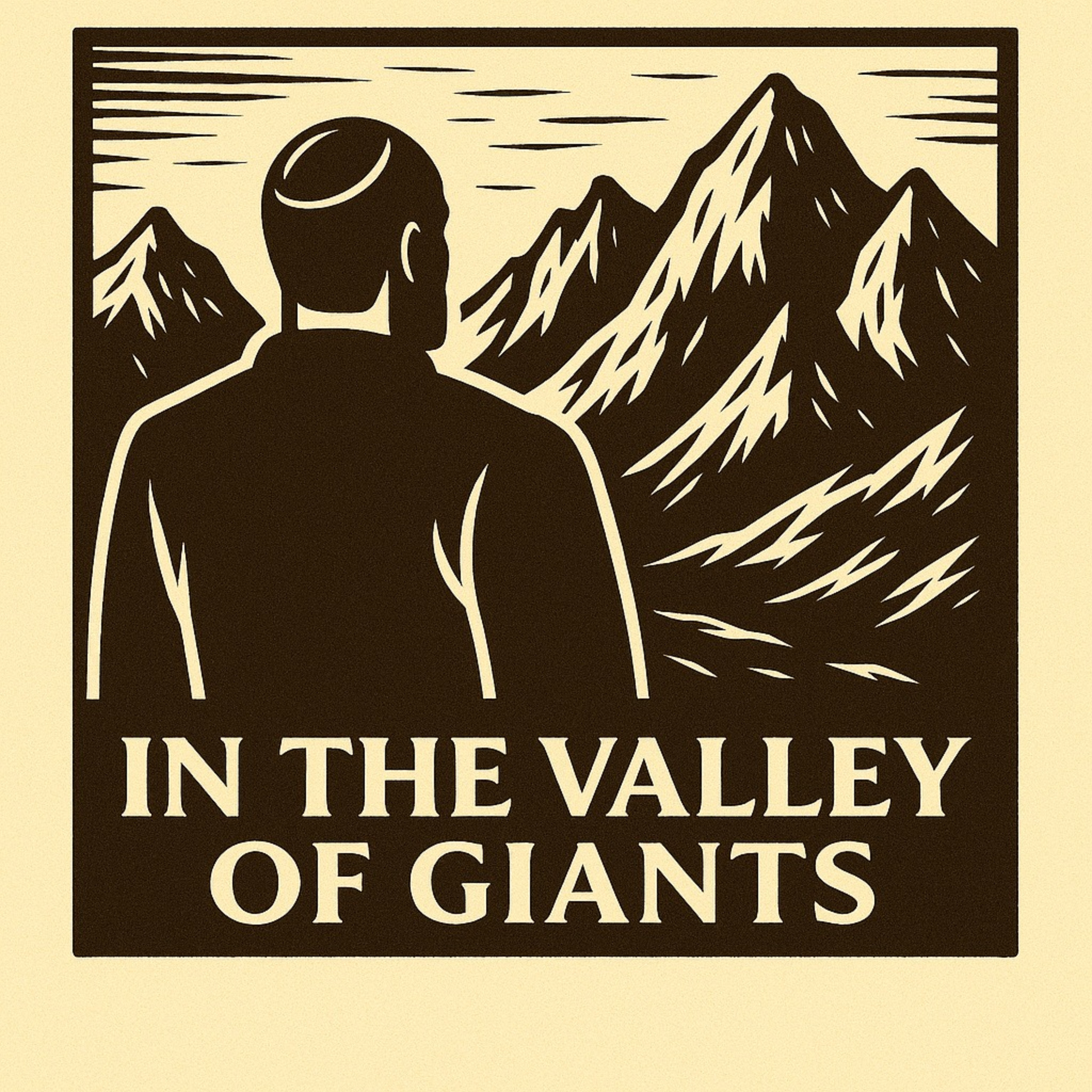
In the Valley of Giants is a podcast for serious conversation in an age of noise—where Torah, philosophy, psychology, art, technology, and modern life meet in deep, long-form dialogue. Hosted by Rabbi Yonatan Dorfman, each episode features conversations with this generation’s giants: thinkers, creators, and leaders exploring meaning, truth, faith, and creativity through the lens of ancient wisdom and contemporary life.
Site
RSS
Apple
Données mises à jour le 01/08/2026
Classements récents
Dernières positions dans les classements Apple Podcasts et Spotify.
Liens partagés entre épisodes et podcasts
Liens présents dans les descriptions d'épisodes et autres podcasts les utilisant également.
Is GLP-1 the G-d Drug? | Dr. Brian Fertig | ITVOG #38
Épisode 38
jeudi 30 juillet 2026 • Durée 01:22:14
Tune in to learn why GLP-1 drugs are being called some of the most important therapies of the 21st century.How GLP-1s Impact Weight, Metabolism, and Addiction with Dr. Brian FertigIn this episode, Dr. Brian Fertig breaks down the science behind GLP-1 drugs and why they’ve become such a major breakthrough in weight management, metabolism, and even addiction treatment. He explains how these medications work beyond appetite suppression — affecting the brain, gut, inflammation, and long-term health.Key topicsWhy leptin therapy failed and how GLP-1s work differentlyHow GLP-1s reduce hunger, cravings, and emotional eatingThe role of gut bacteria and bile acids in metabolismHow these drugs may affect inflammation, neurodegeneration, and agingWhat side effects and safety concerns to understand before useWhy GLP-1s may influence addictive behaviors like smoking and alcohol use
Timestamps
00:00 Intro
00:36 Leptin and weight regulation
01:52 How GLP-1s work
03:20 Appetite control and food intake
05:16 Muscle mass and metabolism13:09 Gut microbiota and metabolism
Most companies overlook one of the most profound ethical dilemmas in modern warfare—how to fight with integrity while preserving innocent lives. Shalom Lamm, a military historian and founder of Operation Benjamin, reveals groundbreaking stories that challenge the way we view war, sacrifice, and honor.
From transforming military graves to correcting decades-old misidentifications, his work uncovers the unheard stories of Jewish soldiers, lost and forgotten, buried under crosses or concealed by silence.
In this compelling episode, you'll discover how a simple act of replacing crosses with Stars of David honors fallen heroes and restores dignity—one headstone at a time. Shalom shares untold stories from WWII and WWI, highlighting how tragic mistakes and bureaucratic neglect have hidden Jewish sacrifices in history.
You'll hear about the extraordinary efforts to find descendants, rectify graves, and rekindle the memory of heroes whose identities were erased or ignored. These stories demonstrate a profound duty to honor memory, fight anti-Semitism, and uphold moral responsibility—at a time when such integrity is desperately needed.
You’ll also explore the broader issues of international law’s double standards, the ethics of warfare, and how societal ignorance allows hatred to fester.
Shalom delves into the cultural and bureaucratic obstacles hindering Israel’s housing crisis, revealing how entrenched interests, red tape, and corruption keep vital progress out of reach.
His perspective goes beyond policy—this is a call for active citizenship and reform, emphasizing that simple solutions, powered by genuine competition and political will, can transform entire nations.
This episode challenges you to think differently about history, morality, and the power of individual action. Perfect for anyone committed to preserving memory, fighting injustice, or seeking practical ways to strengthen faith and community.
The Modern-Day David's Lyre | Lenny Solomon | ITVOG #36
Épisode 36
jeudi 16 juillet 2026 • Durée 01:03:14
In this episode:
Lenny Solomon, the pioneer of modern Jewish parody music and founder of Shlock Rock, joins me for a wide-ranging conversation on music, creativity, faith, and the future of art.
We discuss:
The difference between adaptation and assimilation in Jewish culture.
How Lenny pioneered modern Jewish music by respectfully incorporating secular musical styles.
The legal and creative process behind the creation of Shlock Rock.
Why music is one of the most powerful tools for education, inspiration, and spiritual connection.
The criticism he faced—and how his work eventually gained acceptance.
Whether AI-generated music is a threat to artists or simply another creative tool.
Why meaningful lyrics and storytelling matter more than overproduction.
How melody, harmony, and musical patterns connect to personality and the soul.
His vision for future projects, including a musical based on the Book of Daniel.
Topics & People Mentioned
Shlock Rock
NCSY
Alan Sherman
Napster
AI-generated music
Jewish music
Songwriting
Creativity & storytelling
Timestamps
00:00 – Introducing Lenny Solomon 00:30 – Adaptation vs. assimilation 01:05 – Pioneering modern Jewish music 03:09 – The birth of Shlock Rock 05:02 – Building 43 albums and an international career 06:54 – Rabbinic criticism and eventual acceptance 09:12 – Inspiration and the songwriting process 15:02 – Music's spiritual and emotional power 17:21 – Storytelling in music 19:23 – AI and the future of creativity 25:05 – Why musical patterns resonate with us 29:23 – Music, personality, and the soul31:33 – AI: Tool or replacement?33:00 – From Napster to streaming37:31 – Authenticity in art42:25 – Adapting to technological change46:14 – Divine inspiration and creativity50:03 – Funding ambitious creative projects54:12 – What's missing in today's Jewish music59:04 – Rabbi Noah Weinberg's influence60:02 – Final reflections
From Kotor II to Fallout: How great stories change us | Chris Avellone | ITVOG #35
Épisode 38
jeudi 9 juillet 2026 • Durée 01:26:53
Deep inside storytelling and game design, Chris Avellone reveals how to craft narratives that resonate on a spiritual and psychological level—and how those principles can transform your own life. Discover the hidden philosophies behind iconic characters and stories, from Star Wars to Fallout, and learn to see the world through a richer, more plausible lens. Whether you're a storyteller, gamer, or just curious about the art of meaningful narratives—prepare to challenge your assumptions and ignite your imagination.Chris Avellone, a legendary game designer known for his work on Knights of the Old Republic II and Jedi Fallen Order, shares the secrets of creating stories that compel us to think deeply. You'll learn how real-world philosophy influences the most memorable characters and factions, like Kreia or Caesar's Legion, and how exploring complex moral themes leads to richer, more impactful storytelling. We dive into his innovative approach to character agency, the importance of philosophical depth over simple goals, and why making hard choices is central to authentic narratives. Plus, get insights on how to incorporate plausible human behavior into fiction and why the best stories reflect our innermost truths.We dive into:The art of crafting characters who challenge and elevate our thinkingHow stories can reveal our values about free will, morality, and the universe itself.The significance of agency and choice in making stories compelling and meaningful.The role of philosophical frameworks—like the nature of the Force or human flaws—in shaping stories that last.Why even antagonists have blind spots, and how understanding their flaws can make your stories more nuanced.This episode is perfect for writers, game developers, philosophers, or anyone seeking to understand how storytelling can shape perceptions and inspire growth. If you're tired of shallow narratives and crave depth, curiosity, and authenticity—this episode will change the way you see stories forever.Doesn't matter if you want to be a better video game designer, teacher, or parent- this episode will change your life.Timestamps:00:00 — Introduction to guest Chris Avellone and the life experiences that shaped him02:01 — Kreia’s character in Knights of the Old Republic II and her philosophy05:07 — The complexity of charity, morality, and ethical choices in games07:58 — The depth of storytelling and cultural/spiritual elements in narratives09:55 — The perspective of ordinary citizens in Star Wars and philosophical discussions11:23 — The importance of “the philosophy of existence” within storytelling14:09 — The plausibility of Jessica Jones and the realism of its characters16:46 — Character growth and narratives built around cooperation23:41 — The limitations of Jedi: Fallen Order and the intentions behind its design25:38 — Kreia’s role and the philosophical purpose behind her character33:48 — Kreia’s goals and an explanation of her flawed approach39:43 — The relativity of moral good and evil and the nature of humanity45:22 — Philosophies that inspire change and cultivate personal agency52:49 — The political themes and cultural reflections of Fallout: New Vegas58:40 — The evolution of storytelling in modern games and future possibilities64:52 — Kreia’s ultimate goal and her blind spots67:49 — The connection between philosophy and self-awareness72:36 — The importance of dialogue, empathy, and gaming as a bridge between people74:39 — Future projects and writing opportunities81:34 — Changes in the industry and the renewed value of storytelling84:45 — Innovation in game design and proposals for future evolution88:16 — Closing remarks and thanks between participantsSay thank you: https://buymeacoffee.com/itvogpodAnd yes, Chris let us release the last few minutes :)#starwars #kotor2 #videogame #story #storytelling #fallout #prey
Ask Rabbi Dorfman #1: On location at the Temple of Poseidon
Saison 1 · Épisode 1
jeudi 9 juillet 2026 • Durée 20:11
Most people think prophecy and ancient texts are too vague to matter — but what if understanding them could transform how you see faith, purpose, and the future?
In this eye-opening episode, undercover host Rabbi Dorfman and our special guest Aharon Shalom take you on a compelling journey through complex biblical prophecies, including Isaiah 53 and the significance of the Second Temple. Using rich stories, scholarly insights, and bold questions, they confront the real meaning behind these ancient words and why they matter today—even when the answers aren't straightforward.
You'll discover how the interpretation of prophecy varies across tradition and how our understanding of peace, suffering, and the messianic age influences your spiritual outlook.
Why does the Second Temple’s legacy seem so contrasting to its prophecy? What does "greater" truly mean when describing sacred spaces? And how can prophetic ambiguity offer you insight and hope in challenging times? We break down: Why Isaiah 53 isn’t just about Jesus — and how prophecy remains shrouded in mystery, inviting humility and curiosity.
The deeper significance of the Second Temple and whether its grandeur was physical or spiritual. How to interpret ancient texts on peace, suffering, and messianic timing amid historical struggles and modern realities. The importance of "delighting within parameters" and balancing faith with practical action, especially when children go astray or peace seems distant. The pitfalls of superficial solutions like "mowing the lawn" versus profound, heartfelt change in personal and societal growth.
This episode matters because, whether you're deeply religious, curious about faith, or navigating life's uncertainties, understanding prophecy and tradition can reshape your perspective on hope, purpose, and the divine plan. Staying rooted in faith while confronting contradictions isn’t easy, but it’s where true growth begins.Perfect for seekers, believers, and skeptics alike—if you’re ready to challenge assumptions and find deeper meaning in ancient words, this episode is your guide to a more enlightened tomorrow.
Storyteller of the Infinite | Rav Nachman Seltzer | ITVOG Ep. 34
vendredi 3 juillet 2026 • Durée 57:33
In this episode of In the Valley of Giants, host Yonatan Dorfman sits down with prolific author Nachman Seltzer to explore the inner workings of professional Jewish digital content creation and literature. The conversation dives deep into the high standards of biographical storytelling, the intentional boundaries of Torah-based writing, and the statistical reality of finding artistic success within a smaller community. Ultimately, Seltzer shares a powerful message on personal purpose and discipline, urging aspiring creators to step out of their comfort zones, embrace their distinct talents, and actively take the first step toward making a lasting impact.
Chapters:
0:00 The Call to Action: Showing Hashem
3:11 The Numbers Game: Jewish Representation in Writing
6:03 The Quality of Jewish Art: Mediocrity or Potential?
8:57 The Limits of Jewish Writing: Topics and Sensitivity
11:48 The Challenge of Writing Historical Figures
15:08 The Balance of Writing and Life: A Writer's Discipline
28:44 Inspiration from Unlikely Success Stories
31:27 The Creative Process and Overcoming Writer's Block
33:54 The Importance of Authentic Biographies
36:46 Finding Your Purpose in Writing
40:58 Encouraging Self-Discovery and Personal Growth
Where the People Are Going | Dr. Brian Asquith | ITVOG Ep. 33
jeudi 25 juin 2026 • Durée 56:37
In this insightful interview, economist Brian Asquith discusses the complex relationship between population decline and economic health, exploring cultural, technological, and policy factors influencing fertility rates worldwide. The conversation delves into moral considerations, the impact of AI, and potential societal shifts needed to address demographic challenges.
Dr. Brian Asquith is an applied microeconomist at the W.E. Upjohn Institute for Employment Research, a 501(c)(3) nonprofit organization where he analyzes labor market trends, demographic shifts, and urban housing policies to advise policymakers. His research heavily focuses on the macroeconomic impacts of population declines, an aging workforce, housing supply challenges, and rent stabilization. Prior to this role, he built a rigorous background as a Postdoctoral Fellow at both the National Bureau of Economic Research (NBER) and Harvard Medical School. He holds a Ph.D. and M.A. in Economics from the University of California, Irvine, and his award-winning doctoral dissertation on housing regulations received first prize for the prestigious Homer Hoyt Doctoral Dissertation Award.
Support us here:
https://buymeacoffee.com/itvogpod
Chapters:
0:00 Introduction to Population and Economic Decline
2:54 The Connection Between Population and Economic Output
5:50 Case Study: Hungary's Population Challenges
8:53 Cultural Shifts and Their Impact on Birth Rates
11:54 The Role of Religion in Population Trends
15:00 Historical Perspectives on Fertility Decline
17:10 The Complexity of Modern Family Dynamics
19:59 Moral Considerations for Economists
22:53 The Future of Population and Economic Sustainability
Architect of the New World's Foundation | Rabbi Steven Burg | ITVOG Ep. 32
jeudi 18 juin 2026 • Durée 56:37
In this episode, the host sits down with Rabbi Steven Berg, CEO of Aish HaTorah, to explore how modern Jewish outreach has transformed from the physical truth-seekers of the 1970s into the fast-paced era of social media scrollers. Rabbi Berg breaks down how Aish is leveraging cutting-edge technology through "Aish University," an innovative digital platform utilizing artificial intelligence to tailor a classic Torah curriculum directly to individual user backgrounds]. Finally, the discussion addresses the shifting tides of the post-October 7th propaganda war, clarifying why strategic organizational focus must remain intensely dedicated to reclaiming and intellectually engaging unaffiliated Jews worldwide.
Rabbi Steven Burg spent the first 22 years of his career with NCSY, rising through regional management roles in the Midwest and West Coast before serving as the international head of the teen outreach organization for eight years. Concurrently, he served as the Managing Director of the Orthodox Union (OU) for five years and briefly worked with the Simon Wiesenthal Center, building a robust background in executive management for major Jewish institutions. For the past 11 years, he has served as the CEO of Aish HaTorah, where he stabilized the organization by clearing millions of dollars in legacy debt and revolutionized its global footprint through large-scale social media strategies and AI-driven educational initiatives.
Support us here:
https://buymeacoffee.com/itvogpod
Chapters:
0:00 Harnessing AI for Outreach Education
5:07 The Evolution of Outreach Strategies
10:12 Engaging with Modern Media and Culture
15:03 The Role of Community and Leadership in Outreach
20:12 Navigating Challenges in Modern Jewish Identity
28:21 Engaging the Unaffiliated: Online Outreach Strategies
29:46 The Battle for the Israel Narrative: Propaganda and Perception
The Past Lives Through Us | Rabbi Mordechai Becher | ITVOG Ep. 31
jeudi 11 juin 2026 • Durée 01:03:09
In this episode, Rav Yonatan Dorfman sits down with historian Rabbi Mordechai Becher to explore how the Jewish people historically managed to survive and thrive after the traumatic destruction of the Second Temple. Rabbi Becher highlights the incredible foresight of the Men of the Great Assembly, who prepared the nation for exile 400 years in advance by standardizing prayer, democratizing Torah study, and fostering communal adaptation. The discussion also delves into the concept of spiritual decline across generations (Yeridat HaDorot) and the powerful role that both emotional inspiration and deep textual learning play in contemporary Jewish identity.
Rabbi Mordechai Becher is an accomplished educator, author, and lecturer who serves as an instructor at Yeshiva University and a senior lecturer for the Gateways organization. He received his rabbinic ordination from the Chief Rabbinate of Israel and holds an MA in Medieval Jewish History. In addition to teaching globally and presenting the Talmud class Dimensions of the Daf on the Jewish Broadcasting Service, he authored the widely published book Gateway to Judaism.
Support us here:
https://buymeacoffee.com/itvogpod
Chapters:
0:00 The Resilience of the Jewish People
6:55 The Role of the Great Assembly
13:45 Prayer and Torah Study as Pillars of Survival
In this interview, Haredi powerlifter and coach Elchanan Brody discusses how he views weightlifting as a healthy physical and mental vessel that actually enhances his Torah study, rejecting the Greek philosophy that the body itself is the ultimate purpose. He outlines his competitive powerlifting achievements, his strict natural stance against performance-enhancing drugs, and how his personal battle with Crohn's disease shaped his perspective on health transparency. Finally, Brody and Rav Yonatan Dorfman address the cultural taboos surrounding physical fitness and mental illness within the Haredi community, emphasizing the critical religious and practical importance of prioritizing overall well-being.
Elchanan Brody is a competitive Haredi powerlifter and professional coach who transitioned into digital training after years of studying in kollel. He manages an international online coaching business dedicated entirely to drug-free natural athletics, strictly refusing to train clients who utilize performance-enhancing drugs. He utilizes his platform to advocate for physical fitness, nutrition, and mental health transparency within the religious community.
Support us here:
https://buymeacoffee.com/itvogpod
Chapters:
0:00 Introduction: Greek Philosophy vs. Jewish Thought on the Body
0:57 The Body as a Vessel & Powerlifting in Yeshiva
2:33 Identity, Halachic Boundaries, and Finding a Physical Outlet
4:31 Chasing Strength Over Aesthetics & The Reality of Genetics
7:34 Competition PRs vs. Training Numbers
11:38 A Strict Anti-PED Stance and Cultivating a Clean Sport Culture
14:03 The Morality of Health: Steroids vs. Cigarettes and Ice Cream
17:37 Transitioning from Kollel to a Global Online Coaching Business
Whether you're a military enthusiast, a history buff, or simply curious about how ethical warfare can evolve, Shalom Lamm’s insights will inspire you to take action—no matter how small—to honor those who served and to build a better world.
00:00 Ethical warfare and Israel’s war in Gaza
01:40 Introducing Shalom Lamm and Operation Benjamin
02:12 Proportionality, civilian casualties, and the laws of war
12:02 Antisemitism and the battle for public opinion
17:35 What Operation Benjamin does
18:05 How the mission began in Normandy
28:57 Expanding the work beyond Normandy
31:56 Leaving real estate to lead the mission full time
34:44 Finding forgotten Jewish soldiers and working with families
41:43 World War I, Operation Levy, and overlooked graves
42:29 The search for Lt. Nathan Baskin
49:05 Restoring the identities of German Jewish soldiers
50:46 How people can support Operation Benjamin
53:38 Why housing in Israel is so expensive
58:59 What meaningful housing reform could look like
1:08:04 The response from military and cemetery partners
1:12:00 A closing message: remembering those who came before us
#music #Jewishmusic #LennySolmon #Schlock Rock
Join us for a conversation that’s as provocative as it is inspiring—because the greatest revelations often come when we embrace the unknown.
To come on the podcast or recommend a guest, contact our manager at: Danimarcus@itvogpod.com
Podcasts Similaires Basées sur le Contenu
Découvrez des podcasts liées à In the Valley of Giants. Explorez des podcasts avec des thèmes, sujets, et formats similaires. Ces similarités sont calculées grâce à des données tangibles, pas d'extrapolations !