In Our Backyard Podcast – Détails, épisodes et analyse
Détails du podcast
Informations techniques et générales issues du flux RSS du podcast.
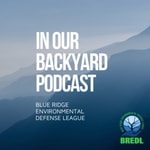
In Our Backyard Podcast
Jenn Galler
Fréquence : 1 épisode/12j. Total Éps: 192

Classements récents
Dernières positions dans les classements Apple Podcasts et Spotify.
Apple Podcasts
🇺🇸 États-Unis - nonProfit
02/06/2026#88🇺🇸 États-Unis - nonProfit
01/06/2026#51🇺🇸 États-Unis - nonProfit
31/05/2026#63🇺🇸 États-Unis - nonProfit
30/05/2026#88🇺🇸 États-Unis - nonProfit
25/05/2026#87🇺🇸 États-Unis - nonProfit
24/05/2026#40🇺🇸 États-Unis - nonProfit
23/05/2026#68🇺🇸 États-Unis - nonProfit
21/05/2026#82🇺🇸 États-Unis - nonProfit
19/05/2026#87🇺🇸 États-Unis - nonProfit
18/05/2026#40
Spotify
Aucun classement récent disponible
Liens partagés entre épisodes et podcasts
Liens présents dans les descriptions d'épisodes et autres podcasts les utilisant également.
See all- https://soundcloud.com/mbbofficial
1089 partages
- https://vote.gov/
408 partages
- https://en.wikipedia.org/wiki/United_States
96 partages
- https://en.wikipedia.org/wiki/San_Francisco
39 partages
- https://en.wikipedia.org/wiki/California
33 partages
- https://www.youtube.com/c/mbbmusic
120 partages
Qualité et score du flux RSS
Évaluation technique de la qualité et de la structure du flux RSS.
See allScore global : 68%
Historique des publications
Répartition mensuelle des publications d'épisodes au fil des années.
67. Protecting Tennessee Native Plants and Insects that Allow them To Survive
vendredi 8 novembre 2024 • Durée 26:04
Karen Hill is the President of the Tennessee Native Plant Society. The Tennessee Native Plant Society mission is to conserve and celebrate native plant communities and their habitats through education. From the Appalachian Mountains to the floodplains of the Mississippi, Tennessee’s native plant communities make one of the most botanically diverse and interesting states in the nation.
With Karen we talk about what plants are native to the TN region, which are endangered, how insects play a vital role, and efforts they make to help bring native plants back.
Connect: TNPS@myripples.org https://www.tnps.org/
66. Championing the Southeast and Seeing its Full Potential
Saison 7 · Épisode 66
vendredi 25 octobre 2024 • Durée 31:03
Abigail Franks who is the Membership and Policy Manager and Alexander Easdale who is the Executive Director at Southeast Climate and Energy Network.
The Southeast Climate and Energy Network has a mission to confront the climate crisis by creating strategic alignment, growing capacity, and building power among member organizations and their communities in the Southeast. They have a huge focus on grassroots work that prioritizes and uses the knowledge that southerners already have. They know that there are challenges in the South, but there are people on the ground who have the solutions.
Contact: abigail@scen-us.org and alex@scen-us.org
All the information we talked about can be found: https://www.scen-us.org/
57. What to Know About Your Drinking Water
Saison 7 · Épisode 57
vendredi 29 mars 2024 • Durée 15:39
Lisa Sorg is the Assistant Editor and Environmental Reporter at NC Newsline. She helps manage newsroom operations while covering the environment, climate change, agriculture and energy. She talks with me in two other so listen to episodes 8 and 11 to hear more from her.
Within the episode we mostly reference NC drinking water suppliers, although you can apply this same information to your own area. According to the EPA, there are approximately 150,000 public water systems that provide drinking water to most Americans. Customers that are served by a public water system are able to contact their local water supplier and ask for information on contaminants in their drinking water, and are encouraged to request a copy of their Consumer Confidence Report. This report lists the levels of contaminants that have been detected in the water, including those by EPA, and whether the system meets state and EPA drinking water standards. Then about 10 percent of people in the United States rely on water from private wells. Private wells are not regulated and people who use private wells need to take precautions to ensure their drinking water is safe.
Contact or connect with Lisa: lsorg@ncnewsline.com
Consumer Confidence Report: https://www.epa.gov/ccr/ccr-information-consumers
Drinking water info: https://www.epa.gov/ground-water-and-drinking-water/basic-information-about-your-drinking-water
9. Using Your Voice: Energy Democracy in Appalachia
Saison 2 · Épisode 9
vendredi 12 mars 2021 • Durée 24:17
Brianna Knisley is TN Field Coordinator for the Energy Democracy Program at Appalachian Voices. Bri’s passion for rural solutions was formed through her upbringing in a community struggling with economic, social and environmental issues faced by many rural places across the U.S.
In the episode we talk about, “Energy Democracy” which is local people having control of how their electricity is produced and distributed to ensure everyone has access to affordable and clean power.
Two decades into the 21st century, advances in solar panels, battery storage, modernized electric grids and other technologies are revolutionizing how our electricity can be produced and distributed. But large utility companies with monopoly control over the market are keeping us locked into using increasingly expensive polluting fuels like coal and fracked gas to generate our electricity.
But a movement toward Energy Democracy is growing across Appalachia and throughout the country. Local individuals and groups are standing up to demand a seat at the table with decision makers to ensure we transition to a system that is affordable and fair, provides community wealth and jobs, and is built on clean, renewable energy.
With Brianna we discuss what energy democracy is and its importance, what’s going on with energy democracy in TN - specifically with Tennessee Valley Authority (TVA), actions they do, suggestions to the Biden Administration’s transition team, and how you can support their work.
Appalachian Voices: https://appvoices.org/energydemocracy/tennessee/
Energy Democracy FB group:
Bull Run Plant Closing and next steps: https://www.power-eng.com/coal/tva-offers-qa-on-issues-surrounding-coal-fired-bull-run-closure/#gref https://insideclimatenews.org/news/14022019/tva-coal-power-plants-shut-down-vote-trump-mcconnell-pressure-paradise-kentucky-bull-run-tennessee/
TVA Coal Ash: https://www.nrdc.org/stories/hundreds-workers-who-cleaned-countrys-worst-coal-ash-spill-are-now-sick-and-dying
8. Environmental Attorneys in Grassroots Campaigns
Saison 2 · Épisode 8
vendredi 5 mars 2021 • Durée 17:04
John Runkle who is a retired Attorney at Law. Over the many years, John shared his legal skills to many BREDL campaigns – with communities all over North Carolina. Including landfills, coal ash, nuclear plants and more. Some fights were won, others lost, but John was there to make sure folks had legal protection against being trampled by polluters or various government agencies.
Our Executive Director, Lou Zeller has said “John’s the best environmental attorney in the state, bar none,” “What he understands that many attorneys do not is how community organizing campaigns work. He will tell you if that’s a bad idea and won’t work. When we do get into a campaign John is willing to work with us side by side.”
With John we discuss the BREDL campaigns he’s worked on, how to work with attorneys in grassroots campaigns, and challenges he’s seen in his work.
Contact and connect with John: jrunkle@pricecreek.com
Highlighting John’s work:
https://www.ncwarn.org/2018/12/john-runkle-celebrating-a-lifetime/
https://www.coastalreview.org/2014/07/coastal-sketch-john-runkle/
Attorneys in Grassroots Campaigns: https://www.grassrootslaw.org/
7. Chatham Citizens Against A Coal Ash Dump
Saison 2 · Épisode 7
vendredi 26 février 2021 • Durée 33:27
This episode we honor Judy Hogan who is retiring as President of Chatham Citizens Against Coal Ash Dump. She has played a critical role in BREDL campaigns with CCAAD which includes victories such as Dec.16, 2020: the Administrative Law Judge Melissa Owens-Lassiter reversed her decision which had allowed coal ash to be disposed of in Chatham and Lee Counties, the communities are announcing another victory. Charah, Inc.- the company that owns the two sites, has dropped their appeal of the 2019 ruling and has agreed that no coal ash will go to Lee and Chatham County.
I also speak with Diana Hales who is a Vice Chair of the Chatham County Commissioners who has worked closely with Judy. And then Debbie Hall who is a member of Environmental Lee or ELEE for short, where she and the two chapters have worked together on past campaigns.
First I talk with Diana Hales about Judy and her work from the County Commissioners perspective. Then I speak with Debbie Hall on her personal experience and organizing with Judy. I then speak with Judy herself, and we discuss her time as President, her victories, and what this work meant to her.
Judy, Diana, and Debbie: judyhogan@mindspring.com, diana.hales@chathamcountync.gov, debhall@windstream.net
Chatham County Commissioners: https://www.chathamcountync.gov/government/board-of-commissioners/commissioner-contacts-bios#hales
Judy’s Books:
6. Sam Tesh: Throughout the Years
Saison 2 · Épisode 6
vendredi 19 février 2021 • Durée 11:13
Sam Tesh is BREDL’s co-president of the board of directors of BREDL
Sam has been a part of BREDL for several decades and now serves as our Board of Directors Co-President. He has been a critical part of past BREDL campaigns such as fighting ThermalKEM’s hazardous waste incinerator He’s also worked with organizations such as GreenPeace and Sierra Club.
With Sam we discuss his background within the environmental realm, some of the BREDL campaigns he’s worked on, what the biggest problems he sees regarding the environment today, and why he keeps with this work.
Contact and connect with Sam: wtesh@surry.net
See updates and what we're doing: BREDL.org
Background Music Credits:
https://www.youtube.com/c/mbbmusic
5. The Path of an Environmental Justice Attorney
Saison 2 · Épisode 5
vendredi 12 février 2021 • Durée 24:54
Cathy Cralle Jones is a Senior Litigation Associate at the Law Offices of F. Bryan Brice, Jr. She focuses her practice on environmental litigation and has represented many property owners, business operators, and citizen groups in matters involving mold, groundwater and soil contamination, regulatory compliance, toxic torts, and land use matters. Her experience includes cases involving CERCLA, RCRA, OPHSCA, the Clean Water Act, NEPA, and the Endangered Species Act.
Cathy has been crucial in our environment justice fights in Lee, Chatham County, and surrounding counties in NC. She has written articles regarding the resolution of the challenge to the Coal Ash Fill permits in Chatham and Lee Counties.
With Cathy we discuss her journey to become an environmental attorney, campaigns she’s worked on with BREDL, 2020 victories, patterns she sees, and what keeps her coming back to this work.
Contact and connect with Cathy: http://attybryanbrice.com/our-professionals/attorneys/cathy-cralle-jones/
F Bryan Brice: http://attybryanbrice.com/ https://www.facebook.com/Law-Offices-of-F-Bryan-Brice-Jr-138332119643031/
4. Whatever It Takes: How NC Defeated a Hazardous Waste Incinerator
Saison 2 · Épisode 4
vendredi 5 février 2021 • Durée 19:50
Michael Arnold was front and center in the campaign to halt ThermalKEM’s incinerator.
On May 22th, 1989, North Carolina Senate Bill 324 (Hazardous Waste Management) was ratified by a bipartisan majority of elected representatives. North Carolina joined a five-state compact that would commit the state to site – and build – a hazardous waste incinerator for ThermalKEM, a private company. This occurred against the backdrop of a notorious incinerator that had been allowed to dangerously operate in Caldwell County with virtually no oversight by the state.
In 1990, the State of North Carolina proposed two sites in Granville County as locations for the incinerator. Residents organized with friends and supporters from around the state and – after eight months of marches, fund-raising, lawsuits, public hearings, civil disobedience, and arrests – succeeded in stopping the incinerator from being built.
Whatever It Takes is a pictorial history of the successful protest campaign. The book’s title comes from the protesters’ pledge to do “whatever it takes” to defeat the incinerator.
With Micheal we discuss his experience in this fight, what impacts a hazardous waste incinerator has, actions they did, and what led to this successful victory.
IAP (Incinerator Archive Project)
https://www.youtube.com/channel/UCDir5d8Yy14AA54YeHHxd2w https://www.youtube.com/channel/UCDir5d8Yy14AA54YeHHxd2w
Website
Whatever It Takes (eBook...1,900 + pages. 500MB download)
https://drive.google.com/file/d/0B8YiD_nYU28NMEZ6bFNrRU5kVGs/view?usp=sharing
There's more links/information at the other video:
https://www.youtube.com/watch?v=Gd-xhinazp0&list=PLbfZIkjeDwoNrDYiBsTZmGA89obAMxG76&pbjreload=101
Park: https://www.youtube.com/watch?v=Gd-xhinazp0&list=PLbfZIkjeDwoNrDYiBsTZmGA89obAMxG76
3. Conservation of Bald Eagles Through Photojournalism
Saison 2 · Épisode 3
vendredi 29 janvier 2021 • Durée 29:34
Doc Ellen Tinsley who is a photojournalist. She is a retired veterinarian of equine medicine (horses), who’s best known for her Jordan Lake bald eagle photos and videos.
The Bald Eagle's recovery is an American success story. Forty years ago, the bald eagle, our national symbol, was in danger of extinction throughout most of its range. Habitat destruction and degradation, illegal shooting, and the contamination of its food source, due to use of the pesticide DDT, decimated the eagle population. Habitat protection afforded by the Endangered Species Act, the federal government’s banning of DDT, and conservation actions taken by the American public helped Bald Eagles make a remarkable recovery. Bald eagles no longer need Endangered Species Act protection because their population is protected, healthy, and growing. You can find them throughout most of North American and they can be observed and awed by the public.
With Doc Ellen we discuss, what got her into photojournalism, patterns she sees in Bald Eagles through her work, prescribed burning, proper etiquette to observe eagles and what this work means to her.
Contact and connect with Doc Ellen:
https://www.facebook.com/docellen/
https://docellentinsley.smugmug.com
dreamingsongsphotos@icloud.com
http://community-sports-news.com/who-is-doc-ellen/
Prescribed Burning: https://www.nps.gov/articles/what-is-a-prescribed-fire.htm https://www.fs.usda.gov/managing-land/prescribed-fire
Eagle Etiquette: https://www.fws.gov/midwest/eagle/viewing.html https://www.nationaleaglecenter.org/eagle-viewing/
Bald Eagle history: https://www.fws.gov/midwest/eagle/history/index.html
Podcasts Similaires Basées sur le Contenu