Gospelbound, hosted by Collin Hansen for The Gospel Coalition, is a podcast for those searching for firm faith in an anxious age. Each week, Collin talks with insightful guests about books, ideas, and how to navigate life by the gospel of Jesus Christ in a post-Christian culture.
Site
RSS
Apple
Données mises à jour le 21/10/2026
Classements récents
Dernières positions dans les classements Apple Podcasts et Spotify.
Liens partagés entre épisodes et podcasts
Liens présents dans les descriptions d'épisodes et autres podcasts les utilisant également.
Last month marked 20 years since my Christianity Today cover story “Young, Restless, Reformed.” And last year we recognized 20 years since the founding of The Gospel Coalition. During TGC’s most recent Colloquium, a private meeting of our Council, president Mark Vroegop asked me to reflect on the “Not-So-Young, Restless, Reformed.” I took his prompt as an occasion to reflect on four eras that have unfolded over those 20-plus years, noting distinctive characteristics of ministry amid the changing tides. Then I reflected on the perspective we bring to cultural change, with an emphasis on the benefits of focusing on the deeper structures that don’t change as often. The result, I hope, helps church leaders understand the times without over-reacting to superficial trends—all the while staying focused on God’s unchanging promises.
Learn more at downlinememphis.com/virtual-institute or email info@downlineministries.com for group pricing and discounts.
Check out The Pour Over Podcast — politically neutral news for people who want the facts without the spin, and with a brief biblical perspective
Hosted by Simplecast, an AdsWizz company. See pcm.adswizz.com for information about our collection and use of personal data for advertising.
How North Korea Became the Most Religious Place on Earth (with Jonathan Cheng)
Épisode 195
mardi 6 octobre 2026 • Durée 01:16:32
What if I told you that one of the most powerful evangelical revivals of the 20th century, and one of the greatest missionary success stories of all Christian history, gave way in one generation to the most enduring, notorious, oppressive, anti-Christian communist personality cult of all time?
Now you know why I say that Jonathan Cheng’s new book, Korean Messiah: Kim Il Sung and the Christian Roots of North Korea’s Personality Cult, is one of the most important books I’ve ever read. I wrote about the famous 1907 Pyongyang revival for my 2010 book A God-Sized Vision: Revival Stories that Stretch and Stir. I knew that Presbyterian missions in Korea contributed to the large number of Korean Americans who attend and lead Presbyterian churches today. And I knew of course that Pyongyang is the capital of communist North Korea today, so something bad must have happened.
But the missionary success story was so much greater, and the fall from grace was so much farther, than I imagined. Jonathan Cheng worked on this book for more than 10 years, and the depth of research shows. Originally from Toronto, Cheng lives in Beijing and works as the China bureau chief for The Wall Street Journal. Before that he worked as the Korea bureau chief, covering both North and South Korea. He’s one of my most helpful people to follow on X, for news from and about China. Let’s dive in to this fascinating and horrifying story about the Christian origins of North Korea’s Kim dynasty.
Editor’s Note: Please note that due to a technical issue during recording, the video quality becomes choppy towards the end of the episode. The audio was mostly unaffected, so we chose to keep the full conversation for listeners to enjoy.
How Do You Want Your Children to Remember You? (with Michael Keller)
Épisode 194
mardi 22 septembre 2026 • Durée 58:40
I want to tell a story about how I learned something that changed my life. It was the first Keller Center retreat in 2023. Our inaugural fellows, a couple dozen of them, didn’t know each other well. We had just finished a team-building scavenger hunt crisscrossing Manhattan. We settled into a Sunday school room at Redeemer West Side on W 83rd Street. We were about to do a Zoom call with Tim from his hospital room. It was the last time many of us spoke with him. He would die within weeks. He left us notes on what he wanted to see from the center.
In that exercise before we talked to Tim, I led a discussion on the Great Dechurching, the unprecedented decline in Christian practice in the United States since the year 2000. I’ve led this exercise many times before and since, without incident. The goal is to identify what events and trends really shift culture. In this case, a majority of Americans had the internet in their homes by 2000. Add smartphones and social media and now AI and you can see that the dawn of the information age is perhaps the biggest story of the 21st century so far. But the exercise didn’t sit well with many of our fellows. We weren’t yet comfortable with each other. Some wanted to dig a lot deeper with ideas and a lot further back in history. Others saw the internet more as a vehicle rather than the driver of cultural change. Some just misunderstood the exercise altogether.
I’ll never forget Michael Keller’s response. He pulled some of his dad’s notes on how to share the gospel in our current age. He described various overlapping and conflicting cultural narratives that help us make sense of the world, apart from God. And then he showed how Jesus critiques and ultimately completes those narratives. It was brilliant work.
The whole center rallied around this idea. We recorded and wrote the group study Making Sense of Us: Exploring Six Stories that Shape How We Live. Michael Keller wrote the foreword. And we rallied behind a new book, The Stories We Live By: Seven Cultural Myths That Fail Us and the Story That Never Will, published by Zondervan. It’s written by Michael and his father, Tim, based on those notes we saw in 2023. Ever since that day I’ve adapted what I learned into my own teaching, not just about cultural narratives, but about how we think about the various deep levels of cultural change. And I’m eager to talk now about this book with Michael on Gospelbound. We’ll also discuss another new book Michael recently wrote, . He wrote that book with Rebekah Hannah and published it with New Growth Press.
Why AI Will Write Your Next Sermon
Épisode 193
mardi 8 septembre 2026 • Durée 45:54
Like many others, generative AI has become a nearly daily part of my life in the last couple years. I’ve found help for home repairs. Diet and exercise plans. Meal preparation. Trip planning. Personal health assessments. Footnote formatting. Even baseball swing and pitching advice for my son. Combine the best of Google and YouTube, tailored to my specific needs and situations from changing windshield wipers to fixing sump pumps, and that’s how I’ve used AI so far. I know I’m not even scratching the surface of what agentic AI can and will eventually do. I’ve seen friends spin up websites it would have taken years and hundreds of thousands of dollars to build just five years ago.
But do you know the most common use? It’s not one I’ve employed myself. And it’s not one I’d recommend. But according to Harvard Business Review, it’s remained perched on the top from 2025 to 2026 even as other common uses have wildly fluctuated up and down the charts.
It’s therapy and companionship.
If you’re like me, you’re probably wondering about how AI chatbots could be the reasons companies like OpenAI have been valued at $852 billion. Or why AI has become the widely and quickly adopted new technology in human history. Isn’t AI supposed to revolutionize business? Upend every profession and transform entire economies?
Perhaps.
The trend is clear. It looks like many others have been turning to AI for help in fixing their toilets. (Claude was wrong in my situation, by the way.) More commonly, AI is less of a computer interface and more of a, well, human face. A friend to share jokes and silly pictures. An imaginative storyteller. A trusty counselor to assess your new relationship. A medium who can predict your future. And a wise confidant who promises not to lead you astray (or tell you what you don’t want to hear).
Given the wild predictions about AI’s unparalleled value, how can these cases be the most common ways we employ the technology? Is your daily horoscope worth $852 billion?
Now, what if I told you this is exactly what the builders of AI expected us to do?
Why Pascal’s Wager Still Pays Off (with Graham Tomlin)
Épisode 192
mardi 25 août 2026 • Durée 01:03:45
The patron saint of cultural apologetics is Augustine of Hippo, author most famously of City of God and Confessions. Second place is up for debate. But you’ll get a lot of votes for a 17th-century disciple of Augustine, the Frenchman Blaise Pascal.
Graham Tomlin describes Pascal as the “man who made the modern world” in a new biography. Tomlin is the director of the Centre for Cultural Witness in Oxford, England. He writes of Pascal that “it is hard to think of anyone who has impacted so many fields of human endeavour in such a short time.”
Here’s a taste from Tomlin about Pascal’s accomplishments: he basically invented probability theory; proved the existence of the vacuum; laid the foundations of integral calculus; conducted the first modern scientific experiment; developed theory that made possible the hydraulic press; demonstrated that air has weight; designed and built the first mechanical calculating machine, which led to what we know as the computer; set the trend of wearing wrist watches; and built the first public urban transportation system in Europe.
And did I already mention he was one of the most effective and enduring cultural apologists of all time, perhaps second only to Augustine? Tomlin writes, “His was a Christianity founded in a profound experience of God, an intense devotional life and a form of faith that offered a radical alternative to the comfortable assimilation to culture that the Church of his day often seemed to promote.”
Let’s talk to Graham Tomlin about this remarkable man, who lamented man’s inability to sit quietly by himself, who observed, “The heart has its reasons of which reason knows nothing.”
In This Episode:
00:00 – Pascal’s wager and living as if Christianity is true
00:49 – Introducing Blaise Pascal, the cultural apologist who helped make the modern world
02:36 – Pascal’s remarkable inventions, including public transportation and the Pascaline
05:42 – Augustine’s influence on Pascal’s theology of desire, fallenness, and grace
08:11 – Why Pascal trusted reason in science but not as the starting point for faith
10:46 – Pascal’s “Night of Fire” and encounter with the living God
16:43 – Why Pascal went to war with the Jesuits
20:20 – Jansenism, Calvinism, and Pascal’s understanding of grace
25:51 – The hiddenness of God as an argument for faith
32:38 – How human misery points toward human greatness
39:46 – What Pascal’s Wager actually means
48:45 – Pascal, Jonathan Haidt, and the psychology of belief
49:05 – “Make it attractive”: Pascal’s enduring strategy for cultural apologetics
51:59 – How Pascal anticipated both the modern and postmodern worlds
59:22 – What Pascal would say about modern science and scientism
1:01:43 – Why Pascal’s faith speaks to people who have looked into the abyss
1:03:21 – Outro
How Kevin Vanhoozer Bridges Biblical Studies and Theology
I had the blessing of studying under Dr. Vanhoozer at Trinity Evangelical Divinity School. And I was challenged in this book just as I was challenged and encouraged in his courses. Mere Christian Hermeneutics helps all of us who live on the far side of the “demise of biblical civilization.” When Westerners want to tell the story of the world, we no longer open the Bible. Vanhoozer aims to reconnect us with Scripture as our means of enjoying “covenant fellowship with the triune God.” I loved this summary in the book: “How an unholy people can come into the presence of a holy God is the chief complication in the biblical narrative to which the gospel is the solution.”
So let’s get into mere Christian hermeneutics, reading the Bible spiritually, the Transfiguration, and much more.
In This Episode: 00:00 – The transfiguration of Jesus and the way Christians read Scripture 00:39 – Introducing Mere Christian Hermeneutics 01:58 – What makes this approach to hermeneutics “mere”? 03:26 – How different reading cultures divide Christians 05:01 – Polarization among Protestants, Catholics, and Orthodox Christians 06:52 – The loss of Christianity’s cultural influence in the West 07:46 – Does Catholic authority solve Protestant interpretive pluralism? 10:43 – What does it mean to interpret the Bible spiritually? 13:23 – How the transfiguration guides Christian interpretation 16:08 – Why Christians should not separate Jesus from the Bible – Johannes Oecolampadius and Scripture’s Christ-centered scope – Bridging the divide between biblical scholars and theologians – Kant, critical thinking, and the rise of biblical criticism – The hidden assumptions modern readers bring to Scripture – Trinity Evangelical Divinity School and teaching systematic theology – Cultural hermeneutics and the formative power of culture – The current state of theological interpretation of Scripture – Potential dangers in theological retrieval – Protestant catholicity and unity amid secondary disagreements – Vanhoozer’s work with the Alexandrian Institute – His four-volume systematic theology project – Brahms, young theologians, and reasons for hope – What pastors can learn from Henry James – Outro
Jen Wilkin Wants to Help You Age Wisely
Épisode 190
mardi 28 juillet 2026 • Durée 01:01:31
Only a couple years out of college, I told my coworkers that I looked forward to being old. They weren’t just dismissive of that comment. They were indignant. On one level, I know why. I understood little to nothing at age 23 about the hardships of aging and caring for the dying. I hadn’t yet suffered many of life’s inevitable pains.
At the same time, I looked forward to greater wisdom, maybe even defeat of some sins and temptations. I was excited about all I could learn if the Lord granted me years. Maybe I even had a couple Bible verses in my head, like Proverbs 16:31: “Gray hair is a crown of
glory; it is gained in a righteous life.” Or Job 12:12: “Wisdom is with the aged, and understanding in length of days.”
Both those verses are cited by Jen Wilkin in her excellent new book, Dust to Dust: Aging Wisely in an Anti-Aging World, published by Crossway. If you take my youthful naiveté at its best, I was recognizing what Jen distinguishes in her book: the world says to age is to diminish. But the Bible says to age is to deepen. Now in middle age, however, I experience the good and bad: the invisibility because no one would possibly notice my appearance. But also the freedom: because I have that middle-age dad’s superpower of not caring what other people think of my appearance.
I didn’t realize how much I needed Jen’s book, and I’m eager to ask a whole bunch of questions now on Gospelbound.
In This Episode:
00:00:00 – Jen Wilkin reflects on her mother’s death and the symmetry of life
00:00:49 – Why Collin has long looked forward to old age
00:01:20 – Introducing Dust to Dust and the contrast between cultural decline and biblical deepening
00:02:31 – Why modern culture values youth over old age
00:03:55 – Jen’s first moments of realizing she was aging
00:05:46 – How aging feels different for men and women
00:07:49 – Why many people fear becoming a burden
00:10:08 – Assisted suicide, dependency, and surprising cultural opposition
00:14:47 – The “chiasm of life” and how beginning and end mirror each other
00:21:02 – Why midlife offers a unique vantage point for perspective and wisdom
00:24:50 – Caring simultaneously for children and aging parents
00:29:12 – Why caregiving is not a season but a default setting of life
00:32:10 – How modern longevity has changed the experience of family and aging
00:36:25 – “You will not surely die”: the anti-gospel of age denial
00:37:52 – How suffering narrows our priorities
00:40:34 – Honoring parents and the fuller meaning of the fifth commandment
00:45:44 – Retirement, crystallized knowledge, and later-life vocation
00:50:46 – A theology of aging before a debate about anti-aging practices
00:55:33 – Jen’s regrets, sanctification, and learning to honor parents well
01:00:26 – Final reflections on aging, family, and hope
01:01:07 – Outro
How AI Plays a Gospel Imitation Game (with Christopher Watkin)
Épisode 189
mardi 21 juillet 2026 • Durée 01:00:01
You might think AI is the most exciting technological development of all time, and you’ve been vibe coding before the rest of us had ever heard the term.
Or maybe you think AI is the most dangerous technological development of all time, and you’re desperately hoping someone will step up to stop autonomous weapons and programs powerful enough to thwart any existing security system.
Or maybe you’re somewhere in the middle. Maybe you still don’t know what all the fuss is about.
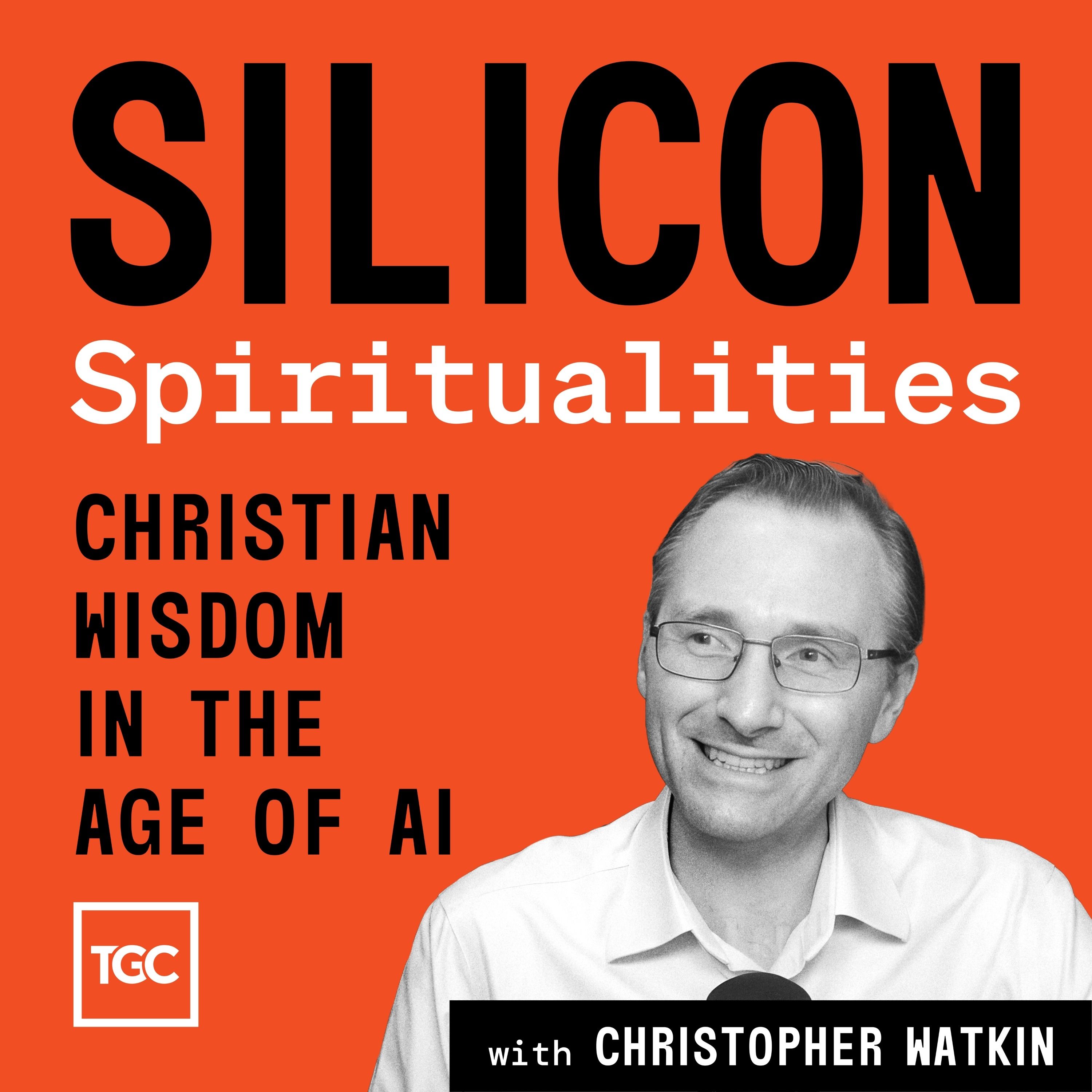
No matter where you are, I know I can recommend a new single-season TGC podcast called Silicon Spiritualities, hosted by Christopher Watkin, a fellow at The Keller Center for Cultural Apologetics. My friend Chris also contributed two chapters to the forthcoming book I edited with Skyler Flowers, titled The AI Apocalypse: A Survival Guide for Humanity. I love hearing Chris teach on just about anything. But his reflections on AI have been especially insightful for me, and I’m eager to welcome him back to Gospelbound to discuss these two new projects.
In This Episode:
00:00 – The hidden human cost of AI training
00:36 – Introducing Christopher Watkin, Silicon Spiritualities, and The AI Apocalypse
01:48 – The gospel story Silicon Valley tells about AI
06:01 – Investor hype, idolatry, and AI religions
08:09 – Data workers, exploitation, water use, and the wider AI industry
12:03 – Avoiding both AI doom and AI hype
14:26 – Is AI more like the internet, electricity, or agriculture?
17:20 – Why Christian anthropology is not threatened by AI intelligence
21:01 – Why a frictionless life can become passive rather than free
25:30 – Using AI with integrity in writing and creative work
27:16 – Watkin’s practical uses of AI at home and in his work
29:34 – AI companionship and the desire to be known and loved
34:10 – Mutuality, reciprocity, and what AI cannot share with us
39:19 – Consciousness, imitation, and participation
41:51 – Transhumanism and the temptation to outgrow humanity
45:22 – Why studying AI has made Watkin more excited about God
48:29 – AI, existential risk, and the problem of the human heart
54:31 – Alignment, sycophancy, Her, and the imitation game
59:37 – Closing remarks
Andrew Wilson Wants to Help You Pursue Happiness
Épisode 188
mardi 30 juin 2026 • Durée 50:02
Andrew Wilson is one of the happiest guys I know. So it only makes sense that he would write a book called Happiness: What It Is, Where to Find It, and How to Make It Last Forever, published by Crossway. He’s the expert. I’m delighted when I see Andrew at a TGC conference, or a retreat for The Keller Center for Cultural Apologetics. I look forward to every chance to spend time with him. He writes in this book, “Nothing is more honoring to a friend, a child, or a spouse than saying they make you happy. Nothing is more demeaning to them than telling them they don’t.” I can say, with no reservation, Andrew makes me happy when we’re together.
Ok. But where does that leave the rest of us? If we’re not naturally happy? If we’re not feeling happy right now? If we’re not hanging out with Andrew? The Declaration of Independence, 250 years ago, put happiness at the center of life’s aim: “We hold these truths to be self-evident, that all men are created equal, that they are endowed by their Creator with certain unalienable Rights, that among these are Life, Liberty and the pursuit of Happiness.”
Andrew covered that statement in his excellent earlier book, Remaking the World: How 1776 Created the Post-Christian West. Given the anniversary, I plan in this interview to sneak in a question or two about that fateful year. And we’ll discuss much more, including the difference between joy and happiness, whether God promises happiness, and why millennials grew up to be sad.
In This Episode:
00:00 – What makes us genuinely happier
00:40 – Why Andrew Wilson wrote a book about happiness
04:29 – Happiness, sorrow, and biblical examples of deep joy
07:26 – Is joy different from happiness?
11:53 – Does God promise happiness to Christians?
13:35 – Why millennials became less happy as adults
19:41 – Freedom, responsibility, and the limits of liberation
23:21 – The “problem of superfluous happiness”
26:01 – How pursuing happiness helps us fight sin
29:23 – Why virtue, gratitude, and humility make us happier
32:53 – Compassion versus empathy
34:15 – Turning delights into disciplines
37:06 – Remaking the World and America’s 250th anniversary
39:48 – What makes the United States unique?
47:08 – Discovery, defense, temperament, and optimism
48:55 – Closing and book recommendations
New Resources Help You See God by Connecting Scripture (with Ben Gladd)
Épisode 187
mardi 16 juin 2026 • Durée 01:05:43
Different preachers get excited about different aspects of the sermon. Some collect and deploy excellent illustrations. Others just nail the application week after week. Others can really reach your heart.
What really fires me up are the connections between the Old and New Testaments, the way God’s plan of redemption unfolds in familiar and new ways from Genesis to Revelation. So you know I’d be excited about an excellent new resource, the CSB Connecting Scripture New Testament, edited by G. K. Beale and Benjamin Gladd. This study Bible includes a robust cross reference system that will help you see Old Testament quotations, allusions, and parallels within the New Testament so you can see all 66 books as a unified story from God. You’ll also find book introductions, study note commentary, articles, charts, and infographics.
In This Episode:
00:00:00 – Why continuity between Old and New Testament wording matters
00:00:41 – Introducing the CSB Connecting Scripture New Testament
00:01:53 – Ben Gladd and the mission of the Carson Center
00:04:06 – Why another study Bible?
00:07:06 – Green and blue fonts: changing the reading experience
00:08:24 – Quotations, allusions, and the “connective tissue” of Scripture
00:11:06 – Why Old Testament allusions matter for Bible study
00:12:46 – John 6, grumbling, and Israel in the wilderness
00:13:46 – Mark 1, John the Baptist, and the burning bush
00:15:41 – “Fishers of men” and Jeremiah 16
00:18:55 – Reading Revelation through Old Testament “emojis”
00:22:07 – John 1:1, Genesis 1:1, and Christology
00:27:47 – How the apostles read the Old Testament
00:31:19 – Guardrails for identifying legitimate allusions
00:35:36 – Do English translations obscure biblical connections?
00:42:27 – How pastors can use the study Bible in sermon preparation
00:44:19 – Why pastors should use the Old Testament for illustrations
00:48:31 – The Carson Center’s Concise Bible Commentary
00:53:44 – Learning from Don Carson and G. K. Beale
01:00:11 – Dictionary of the New Testament Use of the Old Testament
01:00:44 – Biblical Theology Briefing podcast
01:02:34 – A future Connecting Scripture Old Testament
01:05:19 – Closing
In This Episode: 00:00 – Why the best gospel presentation cannot save your children 00:58 – How an early Keller Center retreat shaped The Stories We Live By 05:02 – How Michael and Tim Keller began the book together 07:11 – The seven cultural stories shaping modern life 09:37 – Why identity may be the defining cultural narrative of our age 11:10 – Cultural narratives as Christian heresies 13:52 – The strengths and failures of expressive individualism 15:58 – What Michael hopes The Stories We Live By changes in the church 18:15 – How cultural narratives shape Christians too 20:27 – What remains in Tim Keller’s unpublished notes 23:06 – How Michael handles ongoing criticism of his father 25:35 – Tim Keller, “third way” criticism, and diagonalization 26:50 – What church planting taught Michael that he could not learn secondhand 29:56 – Redeemer’s transition after Tim Keller 30:49 – Why the best way to honor Tim Keller is not to imitate him 32:28 – Introducing Talking to Kids About Hard Things 35:09 – Why Michael was skeptical of parenting books 36:36 – “Your kids need your repentance more than your perfection” 38:25 – Why apologizing to your children matters 40:14 – The gospel in action through forgiveness and repentance 41:40 – Why technique cannot produce saving faith 44:01 – How to help children feel safe asking hard questions 45:17 – Teaching like Jesus by asking questions 47:53 – How parenting reveals who we really are 49:18 – Control, repentance, and what parenting exposed in Michael 51:52 – How Michael wants his daughters to remember him 53:27 – Collin on integrity between public ministry and private family life 54:58 – Integrity, not perfection 57:29 – Final reflections and recommended books 58:16 – Outro
Learn more at downlinememphis.com/virtual-institute or email info@downlineministries.com for group pricing and discounts.
Check out The Pour Over Podcast — politically neutral news for people who want the facts without the spin, and with a brief biblical perspective
Hosted by Simplecast, an AdsWizz company. See pcm.adswizz.com for information about our collection and use of personal data for advertising.
That’s the vision behind a new book, The AI Apocalypse: A Survival Guide for Humanity, which I edited along with Skyler Flowers and The Keller Center for Cultural Apologetics. I spoke on my introduction from the book at a recent TGC regional chapter meeting in Nashville.
Thank you to TGC Nashville and Edgefield Church for hosting and recording this podcast in front of a lively and engaged audience. You could have heard a pin drop when I talked to these (mostly) pastors about why AI will write their next sermon. Now is the time to work through the ethical implications together and decide where to draw the line.
In This Episode:
0:00 AI's Unexpected Role as a Human Companion and Counselor
7:21 AI, Love, and the Lessons from Her
13:37 The Role of AI in Defining Human Purpose
20:17 The Impact of AI on Literacy and Human Creativity
28:51 The Irreplaceable Human Touch in Preaching Amid AI Advancements
38:39 Navigating AI Ethics in Church, Family, and Education
40:41 The Impacts of AI on Society and Economy
Learn more at downlinememphis.com/virtual-institute or email info@downlineministries.com for group pricing and discounts.
Check out The Pour Over Podcast — politically neutral news for people who want the facts without the spin, and with a brief biblical perspective
Hosted by Simplecast, an AdsWizz company. See pcm.adswizz.com for information about our collection and use of personal data for advertising.
Podcasts Similaires Basées sur le Contenu
Découvrez des podcasts liées à Gospelbound. Explorez des podcasts avec des thèmes, sujets, et formats similaires. Ces similarités sont calculées grâce à des données tangibles, pas d'extrapolations !