Five-Minute AI Catch-up with Eileen – Détails, épisodes et analyse
Détails du podcast
Informations techniques et générales issues du flux RSS du podcast.
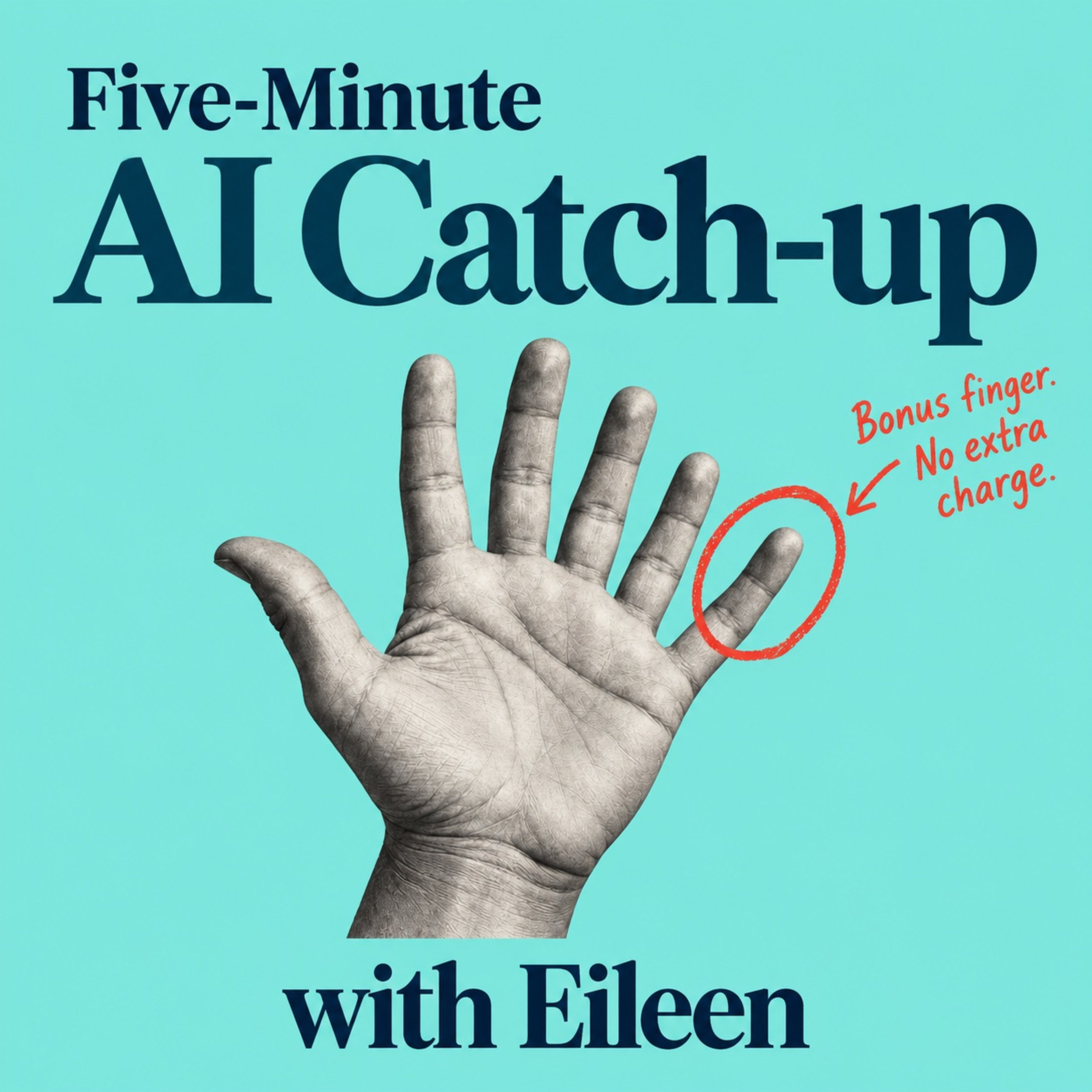

AI is moving fast. You've been busy. Let's catch up.
Eileen follows AI to where it lands: work, school, community, and public decisions. She separates evidence from promises, explains the technology in plain language, and keeps a little humor handy. The name says five minutes. Some stories need more.
Written and reviewed by Eileen, with AI-assisted narration using a replica of her own voice.
Questions, ideas, or AI nonsense worth investigating? Email wtf@aiwitheileen.com
Site
RSS
Apple
Données mises à jour le 10/10/2026
Classements récents
Dernières positions dans les classements Apple Podcasts et Spotify.
Liens partagés entre épisodes et podcasts
Liens présents dans les descriptions d'épisodes et autres podcasts les utilisant également.
Voir plusQualité et score du flux RSS
Évaluation technique de la qualité et de la structure du flux RSS.
Voir plusHistorique des publications
Répartition mensuelle des publications d'épisodes au fil des années.
© My Podcast Data · Projet indépendant · Données issues d'Apple & Spotify