Diverse Thinking Different Learning – Détails, épisodes et analyse
Détails du podcast
Informations techniques et générales issues du flux RSS du podcast.
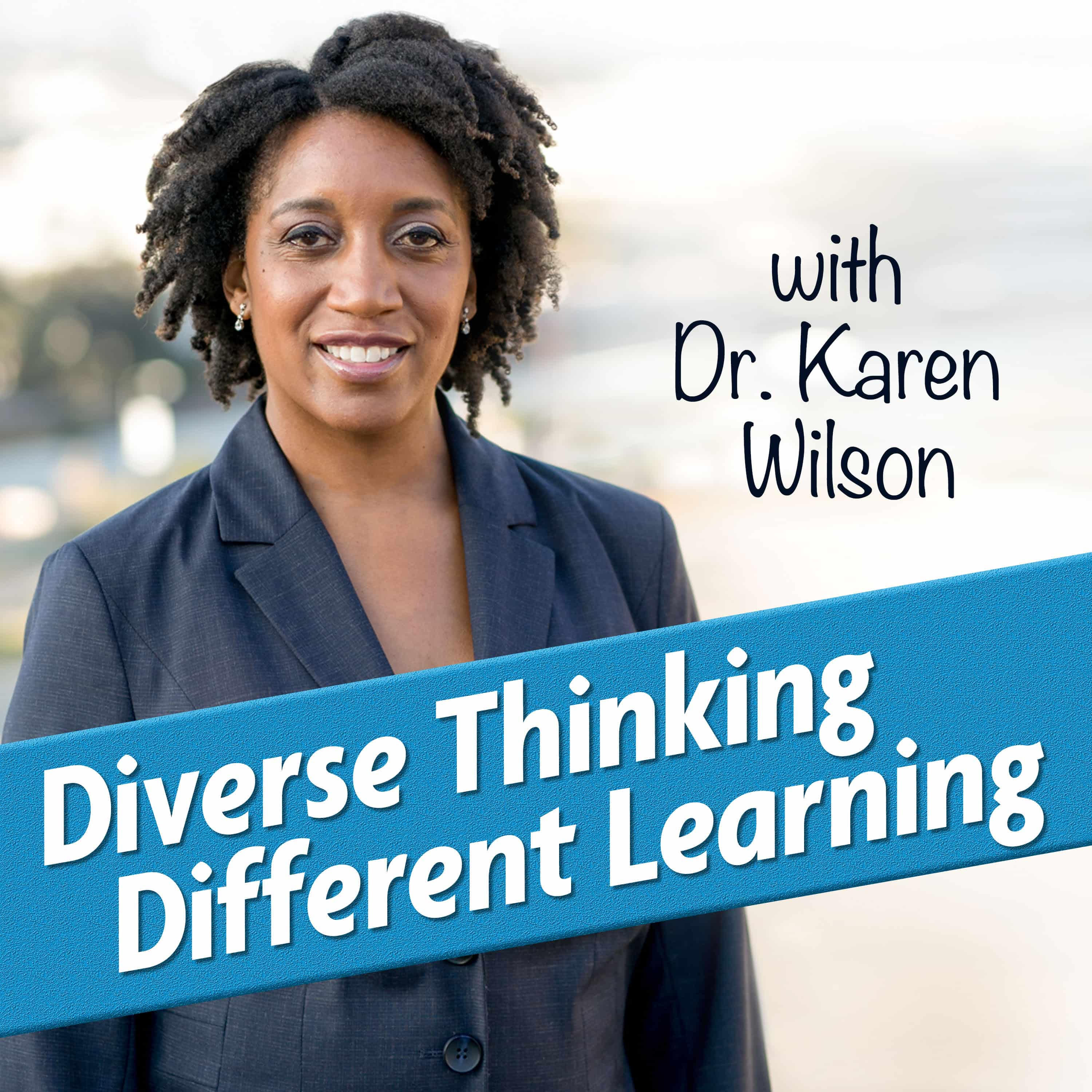
Diverse Thinking Different Learning
Dr. Karen Wilson
Fréquence : 1 épisode/8j. Total Éps: 256

Classements récents
Dernières positions dans les classements Apple Podcasts et Spotify.
Apple Podcasts
Aucun classement récent disponible
Spotify
Aucun classement récent disponible
Liens partagés entre épisodes et podcasts
Liens présents dans les descriptions d'épisodes et autres podcasts les utilisant également.
See all- https://5calls.org/
828 partages
- https://twowritingteachers.org/
330 partages
- https://www.childnexus.com/consultation
288 partages
- https://www.instagram.com/atpeaceparents
109 partages

- https://www.instagram.com/allisonlovesmath
46 partages
- https://www.facebook.com/groups/397107501264265
218 partages
- https://www.facebook.com/AllisonLovesMath
43 partages
- https://www.facebook.com/LDadvisory/
9 partages
Qualité et score du flux RSS
Évaluation technique de la qualité et de la structure du flux RSS.
See allScore global : 53%
Historique des publications
Répartition mensuelle des publications d'épisodes au fil des années.
Ep. 250: Reimagining Learning: The Evolving Power of 1:1 Learning in 2025 with Jaime Porras
mardi 16 décembre 2025 • Durée 41:59
We are happy to welcome back Jaime Porras for this episode! Jaime Porras is the District Vice President for Fusion Academy, overseeing nine campuses across Los Angeles and Santa Barbara. With more than two decades in education (including fourteen years at Fusion), he has held roles from teacher to Head of School and is passionate about fostering student-centered, relationship-driven learning environments. He holds an MA in Education with a focus on Social Justice from Antioch University Los Angeles and a BA in English from Ohio State University. A proud Buckeye and Culver City resident, Jaime enjoys sports, travel, literature, and discovering the best tacos in L.A., where he lives with his wife and daughter.
Jaime joins us for this episode to discuss how the 1:1 learning model at Fusion Academy has become increasingly important in recent years as students have faced growing challenges with anxiety and depression, and disengagement. He explains that the pandemic drastically worsened many students' struggles with executive functioning and social anxiety but how, in a 1:1 setting, Fusion is able to provide a safe, supportive space where students can rebuild their confidence and reconnect with learning. By removing the pressure and comparison of a traditional classroom, students feel safer to take risks, make mistakes, and grow.
Jaime highlights the importance of building a strong mentor-student relationship in which the teacher can truly understand and cater to each individual's unique needs, interests, and learning style, a personalized approach that also helps address issues around executive functioning, as Fusion teachers break down assignments into manageable steps while also explicitly modeling positive behaviors and social-emotional skills. Jaime notes that the 1:1 environment allows students the space to process feelings of failure in a healthy way without judgment from their peers.
At the same time, Fusion works to build a sense of community and belonging via shared social spaces and activities, although the focus remains on creating an environment customized for each student's needs. Jaime believes that this model will only become more important in the years ahead as schools grapple with the lasting impacts of the pandemic on student mental health and engagement.
Our conversation highlights how the 1:1 approach at Fusion Academy empowers students to rebuild their confidence and reconnect with their strengths even in the face of significant challenges. As the education landscape continues to evolve, this model may serve as an important blueprint for supporting the diverse needs of today's learners!
Show Notes:
[2:27] - Jaime describes how post-pandemic isolation worsened student anxiety and depression while boosting demand for 1:1 learning.
[5:59] - 1:1 environments reduce social pressure and allow teachers to address each student's unique needs.
[9:00] - Jaime stresses that individualized settings can lead to belonging, safety, and feelings of mattering.
[12:08] - Learning begins with love and rapport, creating trust before taking on executive functioning challenges.
[14:01] - Jaime explains how executive functioning develops with maturity, so Fusion Academy celebrates incremental progress.
[17:11] - Jaime notes how 1:1 settings allow students to process failure safely and quickly recover.
[19:41] - Fusion removes traditional school obstacles, focusing on individualized support without judgment.
[22:37] - 1:1 learning suits kids who need safety, personalization, and emotional comfort.
[23:08] - Jaime highlights Fusion's flexibility to adjust instantly for each student's needs.
[25:21] - Jaime compares Fusion's structure to private lessons that separate focused learning from broader social experiences.
[27:46] - Small-group environments let students more easily build real friendships and resolve conflicts.
[29:48] - Jaime criticizes traditional schools for pressuring kids into activities that adults rarely pursue.
[31:53] - Hear Jaime share a student's gradual growth from isolation to leadership, proving that patience and personalization can lead to confidence.
[35:19] - Jaime predicts that 1:1 education will shape all schooling by highlighting growth over conformity.
[38:30] - Where can Jaime be reached?
Links and Related Resources:
-
Episode 52: How a 1:1 Instruction Model Helps Students with Jaime Porras and Vailet Yarijanian
-
Episode 189: The Private School Option for Kids with Learning Differences with Collette Bowers Zinn
Connect with Jaime Porras:
Ep. 249: Using Technology to Support Neurodivergent Students with Joan Green
mardi 2 décembre 2025 • Durée 31:24
For this edition of the show, we warmly welcome Joan Green! Joan Green, M.A., CCC-SLP, is a speech-language pathologist, assistive technology specialist, and founder of Innovative Speech Therapy in the Washington, DC area. For nearly 40 years, she has helped people of all ages (especially neurodiverse learners) use technology to enhance communication, learning, and independence. Passionate about accessibility and innovation, Joan also educates families and professionals on how everyday tech and AI can change our daily lives.
Our conversation explores how technology, including AI-powered tools, can be used to help support neurodivergent students in learning, communicating, and thriving, with Joan explaining that her passion for this work began in the 1980s when she saw how early computer software could dramatically improve outcomes for her adult patients with neurological conditions. She then expanded her focus to helping families and students, motivated in part by her own experiences as a parent.
We highlight how many accessibility features and free tools built into common devices and platforms can provide incredibly crucial support for students who struggle with reading, writing, organization, or focus, with Joan stressing the importance of tailoring solutions, whether it's adjusting text-to-speech settings or finding the proper app or extension. She cautions against oversimplifying the process, as each student's needs are unique.
Our discussion also touches upon the complex role of AI and advanced technology in education. Joan sees tremendous potential for AI to personalize learning and free up teachers to focus on higher-level instruction. She also voices some concerns about overreliance on it. Her approach is to position AI as a "thought partner" that can enhance and augment human learning rather than replace it.
Throughout the conversation, Joan also shares some practical tips and resources, including her free 15-minute consultations and her ongoing Tech Life Inner Circle program, which provides weekly training and collaborative problem-solving sessions. Our conversation in this episode truly highlights the power of technology to bridge gaps and amplify the voices of neurodivergent students - but only when used with intention and mindfulness!
Show Notes:
[2:31] - Hear how Joan began using early computer software with stroke patients and saw technology speed up recovery.
[5:11] - Joan stresses the importance of beginning with free, built-in assistive tools such speech-to-text, read-aloud, and captions.
[7:45] - Hear how Joan helps people choose the right reading and speech tools and offers free tech consultations.
[11:17] - Joan believes that AI can aid in learning when used thoughtfully, but worries about shortcuts and privacy concerns.
[13:32] - While Joan values AI as a creative learning tool, she also stresses the importance of actual understanding and critical thinking.
[15:02] - AI can be a great way to personalize learning.
[17:04] - Hear how Joan uses AI to personalize lessons around students' interests while still thinking critically herself.
[18:55] - Joan explains how she offers collaborative one-on-one tech sessions, which identify struggles.
[20:47] - Joan runs the very affordable Tech Life Inner Circle, providing weekly tutorials, recordings, and live tech brainstorming.
[23:53] - Tech Possibility Academy teaches essential, easy-to-implement tools for parents, educators, and lifelong learners.
[26:42] - Joan stresses technology's necessity for independence while also acknowledging its downsides.
[29:39] - Where can Joan be reached?
Links and Related Resources:
-
Episode 142: How to Help Neurodivergent Kids Manage Social Media
-
Episode 177: How Understanding the Adolescent Brain Helps Us Better Support Teens
-
Episode 241: How to Be a 'Screen-Smart Parent with Jodi Gold, MD
Connect with Joan Green, M.A., CCC-SLP:
Ep. 240: Using the Summer Months to Advance Reading Skills with Dr. Steve Truch & Devan Kublik
mardi 15 juillet 2025 • Durée 38:33
We have not just one but two guests for you this week - Dr. Steve Truch and Devan Kublik! Steve has over 50 years of experience in education, beginning as a junior high school English teacher and then working as a school psychologist, ultimately founding The Reading Foundation clinics across North America to provide one-on-one therapy for students with learning difficulties. He is the primary author of the Discover educational programs used at the clinics and has written several books and articles on reading and cognitive assessment. His work reflects a continued commitment to aligning educational methods with current research, particularly in the science of reading.
Devan Kublik holds a Bachelor of Arts in Linguistics and has been with The Reading Foundation since 1999, currently serving as Director of Standards across all locations. She has held leadership roles in multiple clinics and has contributed to nearly every aspect of the organization, including training, program development, and student assessment. Outside of work, she enjoys traveling, reading, and mountain activities.
In our conversation, we discuss the issue of reading proficiency among U.S. students, where only 35% of 4th graders are considered proficient readers. We explore how reading instruction methods have changed and evolved over time, from the whole language method to the current emphasis on the science of reading and phonics. Dr. Truch explains how the speech-to-print method, focusing on teaching the phonemic structure of words and their corresponding visual representations, can be a more effective way to help students learn to read.
Devan also highlights the importance of "dosage" (the intensity and duration of intervention) in speeding along the process, especially during the summer when students are not constrained by the school schedule. She shares how the Reading Foundation's programs offer individualized and immersive instruction customized to each student's unique needs, often leading to remarkable changes in their confidence and academic performance.
Devan and Dr. Truch stress that while reading instruction has been a longstanding challenge for the education system, solutions that are backed by research are available, and that the key is connecting families with the right resources to help their children overcome reading difficulties and unlock their full potential. So, whether your child is a reluctant reader or has faced persistent challenges, this episode offers valuable insights and a glimmer of hope.
Show Notes:
[2:55] - Dr. Truch argues that teaching methods for reading often ignore science and harm struggling learners.
[5:20] - Traditional phonics rules are inconsistent, but speech-to-print offers a more logical alternative.
[8:49] - Dr. Truch adds that teaching children sound-to-spelling connections can lead to better results than relying on abstract rules.
[12:11] - Summer can accelerate reading gains for struggling students via structured but individualized intervention.
[15:46] - Proper intervention speeds along progress, especially when it is intensive, customized, and monitored.
[18:04] - Summer also allows for customized literacy support based on a student's specific needs.
[19:14] - Dr. Truch points out how effective reading intervention depends on both program dosage and using the correct method.
[21:37] - Untreated reading struggles often leave lasting emotional damage, sometimes even resembling symptoms of PTSD.
[23:29] - When parents lack the training to lead interventions, both they and the children can get frustrated.
[25:45] - Rapid emotional changes happen once children experience early success via reading intervention.
[27:24] - Early, focused instruction can boost lifelong success for struggling readers, as is backed by data and expert recognition.
[30:01] - Hear how, with the right tools, one shy girl gained confidence and began reading aloud at school.
[32:17] - Dr. Truch explains how targeted assessments can help pinpoint delays.
Links and Related Resources:
-
Episode 208: Overcoming Dyslexia and Addressing The Reading Crisis with Sally Shaywitz, MD
-
Episode 215: How to Support Students Who Struggle with Reading Comprehension – with Dr. Emily Levy
-
"Reading with Your Child: Teaching Key Concepts and Building Habits of Mind"
Connect with Us:
Connect with the Guests:
Ep. 150: Vision-Related Learning Difficulties with Dr. Juanita Collier, MS, OD, FCOVD
mardi 12 septembre 2023 • Durée 30:19
In her book, The Hidden Link Between Vision and Learning, Wendy Beth Rosen cited a study by Ohio State University. That research study found that 69% of students with IEPs identified as having treatable vision problems, yet would pass a typical school screening. Most people only associate vision with eyesight, but today's guest explains that there is so much more to the visual system and even a child with great eyesight could be struggling with vision-related learning difficulties.
Today's guest is Dr. Juanita Collier and she is here to discuss these vision related learning difficulties. A parent actually recommended this interview after her experience finding the help her child needed. I am so glad they reached out. This interview is so informative for all parents and Dr. Collier provides us with some great tips and guidelines to help the development of a child's visual system.
Show Notes:
[2:57] - 10% of children have a vision-related problem that interferes with learning.
[3:22] - Vision is how you are taking in anything through your visual system. It is more than eyesight.
[4:33] - Most screenings test distance vision, but near vision isn't frequently checked in children.
[5:46] - Kids don't know how to explain that their vision is poor, especially if that is how it has always been for them.
[8:43] - Dr. Collier describes the different parts of a vision test and how she is able to determine if the challenges a child is having are due to their vision.
[11:56] - In addition to eyesight, visual processing needs to be evaluated.
[13:50] - Dr. Collier explains what visual therapy entails and how it can positively impact students with vision-related learning difficulties.
[16:03] - For children who didn't crawl, parts of their vision hasn't been fully developed.
[18:23] - Currently, we are teaching children to read before their visual system is ready.
[21:03] - Excessive screen time can create some problems.
[23:19] - We are losing the need for a lot of skills that used to develop naturally because of excessive screen use.
[25:05] - Eye strain is a concern. Adults will take a break when they have eye strain from screen time, but children don't have that regulation.
[26:09] - What is the 20-20-20 Rule?
[28:23] - Dr. Collier shares information on concussions in children due to sports.
About Our Guest:
Dr. Collier is a leading Behavioral Optometrist and the founder of 4D Vision Gym. She specializes in post-concussion care, vision-related learning difficulties, visual rehabilitation and visual development for patients of all ages. She is one of only a few Optometrists in Connecticut to have earned Fellowship status by the International Examination & Certification Board (IECB) of the College of Optometrists in Vision Development. Dr. Collier has lectured extensively to physicians, therapists, school faculty, healthcare professionals and students on the importance of visual functioning, and advocates to make vision rehabilitation accessible to individuals of all ages and abilities.
Connect with Dr. Collier:
-
(860) 632-8243
Connect with Us:
The Diverse Thinking Different Learning podcast is intended for informational purposes only and is not a substitute for medical or legal advice, diagnosis, or treatment. Additionally, the views and opinions expressed by the host and guests are not considered treatment and do not necessarily reflect those of ChildNEXUS, Inc or the host, Dr. Karen Wilson.
Ep. 149: Supporting Children and Teens' Mental Health via Nutrition
mardi 5 septembre 2023 • Durée 12:40
Lately, we've been focusing on preparing students who think and learn differently for a transition back to school. But today's topic is an interesting and often overlooked aspect of mental health - nutrition. Studies show that what we eat can significantly impact our mental wellbeing. The same is true for children and teens and we can help support their mental health through their diet.
Show Notes:
[1:34] - Emerging research is showing that our dietary choices play a role in our mental health.
[3:07] - Avoiding processed options is best but Americans get most of their calories from processed foods.
[4:10] - How does nutrition impact our brains?
[5:19] - Improving nutrition can have positive effects on depression and ADHD.
[8:49] - Embrace whole foods.
[9:04] - Variety is key.
[9:20] - Consider a culture of mindful meals.
[9:50] - Minimize processed foods.
[11:14] - Everyone is different. It is important to consider a personalized approach.
Connect:
-
Adolescents prone to poor dietary choices, leading to changes in the brain
-
Food and mood: how do diet and nutrition affect mental wellbeing?
-
That salad isn't just good for your nutrition - it may help stave off depression
The Diverse Thinking Different Learning podcast is intended for informational purposes only and is not a substitute for medical or legal advice, diagnosis, or treatment. Additionally, the views and opinions expressed by the host and guests are not considered treatment and do not necessarily reflect those of ChildNEXUS, Inc or the host, Dr. Karen Wilson.
Ep. 148: How Sleep Affects Academic Performance and Mood
mardi 29 août 2023 • Durée 25:07
As we get started and accustomed to a new academic year for students, we need to take a moment to talk about sleep. How much sleep do children and adolescents actually need? What are signs that they are getting quality sleep or insufficient sleep? Many adults track their own sleep, but are you monitoring your child's?
When children and adolescents don't get enough sleep it impacts their ability to focus, remember information, and regulate their emotions - all things that are critical to their wellbeing on any given day. In today's episode, we're discussing this crucial piece to a child's health. So listen to find out if your child is sleeping enough, getting quality sleep, and some tips to improve sleep if it is a struggle.
Show Notes:
[3:00] - Transitioning from a summer with little sleep schedule to a new school year with a routine can be very difficult for children.
[5:04] - How much sleep do kids actually need?
[8:13] - What are the signs of sleep deprivation in kids?
[10:18] - Insufficient sleep can cause issues with memory, mood, and stress.
[11:26] - Early sleep issues are predictive of ADHD symptoms later.
[13:51] - School schedules have an impact on sleep and some school districts start later in the morning to allow for students to sleep longer durations.
[15:19] - Kids with ADHD are more likely to challenge parents and have behavioral problems around bedtime.
[19:11] - Lights from screens can suppress melatonin and can delay the onset of sleep.
[19:56] - Having a dark and cool room is best for quality sleep.
[20:50] - Always talk about sleep patterns with your child's pediatrician.
[21:35] - Making sleep a priority for yourself is modeling the importance of sleep in a healthy lifestyle for your children.
Connect:
-
Episode 40: Lifestyle Activities That Can Improve ADHD Symptoms with Dr. Joel Nigg
-
Episode 147: 5 Tips to Help Students Transition Back to School
The Diverse Thinking Different Learning podcast is intended for informational purposes only and is not a substitute for medical or legal advice, diagnosis, or treatment. Additionally, the views and opinions expressed by the host and guests are not considered treatment and do not necessarily reflect those of ChildNEXUS, Inc or the host, Dr. Karen Wilson.
Ep. 147: 5 Tips to Help Students Transition Back to School
mardi 22 août 2023 • Durée 12:27
A new school year is upon us! This can be an exciting time but it can also be challenging for parents and their children especially for those who think and learn differently. This quick episode is designed to help ensure a smooth start for these students and their families. These five tips can help navigate this period successfully. It's not an exhaustive list, just a few tips to get the ball rolling for a great new school year.
Show Notes:
[1:52] - Tip #1: Establish a predictable routine.
[3:02] - Plan for adequate amounts of sleep.
[4:20] - Tip #2: Prepare well in advance.
[6:14] - Tip #3: Foster open communication. Schedule a meeting with your child's teacher.
[8:08] - Trust your gut. Don't hesitate to take an active role.
[8:35] - Tip #4: Break tasks into manageable steps.
[9:52] - Tip #5: Focus on strengths and self-care. Celebrate success and encourage hobbies.
Connect:-
Episode 146: How Parents and Educators Can Collaborate to Help Students Thrive with Shelley Lawrence
-
Episode 142: How to Help Neurodivergent Kids Manage Social Media
The Diverse Thinking Different Learning podcast is intended for informational purposes only and is not a substitute for medical or legal advice, diagnosis, or treatment. Additionally, the views and opinions expressed by the host and guests are not considered treatment and do not necessarily reflect those of ChildNEXUS, Inc or the host, Dr. Karen Wilson.
Ep. 146: How Parents and Educators Can Collaborate to Help Students Thrive with Shelley Lawrence
mardi 15 août 2023 • Durée 34:11
For many families, it is hard to hear that your child has been struggling in school. Some parents may already know or have a feeling their child is struggling. They have even received assessment results, only to feel worried about the negative stigma or sharing that information with their school. Today, we are re-airing a discussion about the importance of collaboration between parents, families, and educators.
Today's guest is Shelley Lawrence and she comes to us with two decades worth of experience as a school administrator. In this episode, her experience shines and she shares her knowledge of how evaluations are used in schools, what to expect after an evaluation is completed, and she really drives home the need for developing a team. Feeling worried is absolutely a normal reaction, but communicating the needs of your child to schools and educators can make a world of difference in their educational progress.
Show Notes:
[2:03] - The parent/educator relationship is so important.
[4:36] - It's not about a diagnosis. The purpose is to better understand why a child is struggling.
[6:24] - Shelley shares a story of a student she worked with and demonstrates how the teachers' knowledge of weaknesses helped him.
[7:56] - Phrasing this information in a certain way can bolster student confidence.
[8:45] - Strengths and weaknesses are harder to determine in some students.
[9:56] - As an administrator, Shelley has found that many parents are worried about the negative stigma of having an IEP or 504 plan.
[11:40] - When an evaluation is recommended, Shelley explains that many parents are worried about going through with it.
[13:31] - It is normal to feel worried, but educators can rephrase the need for an evaluation.
[14:47] - Every family Dr. Wilson and Shelley have worked with do not regret the assessment process and getting their child the support they need.
[17:29] - After completing an evaluation, it is important to break it down based on priorities.
[18:51] - Everyone needs to be working together, including the parents and teachers.
[20:43] - Some parents are also concerned about making more work for teachers, but teachers want and need to know how to help their students.
[22:20] - What should parents expect from the school after an evaluation?
[25:01] - Look beyond the IEP goals. Parent and teacher observations are markers of progress as well.
[27:50] - Sometimes progress is very slow. Different interventions can be implemented.
[29:20] - The point is to make sure the child is learning rather than spinning their wheels.
[32:20] - Emphasizing that it is a team that helps the child can make things more impactful for parents and educators.
About Our Guest:
As an Independent School administrator for two decades, Shelley Lawrence had the unique experience of working with families of students who were striving to succeed in school. She is adamant in her belief that, with the proper supports in place, all children can succeed in school. Shelley brings her passion for children, her strong connections with outside providers in the community, her keen observation and listening skills and her understanding of the complexities of learning, to help families navigate the school journey with their child. In addition, Shelley is a trained advocate who can help families navigate the IEP process.
Connect with Shelley Lawrence:
-
Phone: (310) 251-5908
The Diverse Thinking Different Learning podcast is intended for informational purposes only and is not a substitute for medical or legal advice, diagnosis, or treatment. Additionally, the views and opinions expressed by the host and guests are not considered treatment and do not necessarily reflect those of ChildNEXUS, Inc or the host, Dr. Karen Wilson.
Ep. 145: Advocating for Children with Special Needs with Heather Zakson
mardi 8 août 2023 • Durée 51:49
Are you concerned about whether your child has made meaningful progress over the last year in school? Today's guest is an incredible special education attorney who is passionate about advocating for children and adults. You can hear the passion in her voice throughout this entire episode and she brings to light a lot of concerns as we begin the transition to heading back to the brick and mortar classroom environment.
Our guest, Heather Zakson, is a special education attorney. She answers a plethora of questions in this episode, shares staggering statistics, explains legislation and federal funding, and encourages all parents to strongly advocate for their children.
Show Notes:
[3:01] - The transition going back to school is a front and center concern for a lot of families.
[5:10] - Distance learning unlocked more tools and opportunities for many students.
[7:57] - Data is our stock and trade in special education. We need the information to compare data over time to see what's working.
[8:59] - A lot of work is done on screen and not kept in a paper format. Heather recommends always taking a screenshot of work to archive a child's progress.
[11:49] - Don't think of assessments as something dictated only by schools.
[12:46] - A psychological assessment will give us information on what intervention and support is needed.
[13:44] - When seeking a private assessment, you have the control on who to conduct the testing and who to share the information with.
[14:33] - If you are unable to have a private assessment done, Heather explains how it works through the school system. You can ask for a second opinion.
[17:20] - Although we have seen the good things that have come from distance learning, there are many students who have suffered with great educational loss.
[18:25] - Heather advises that if you think there is something wrong, follow your gut.
[19:40] - All public schools have the ability to assess.
[21:38] - When a child is behind, moving forward without support will just make them fall farther behind. Early intervention is crucial.
[23:10] - When you are out there advocating for your child, don't take no for an answer.
[27:53] - We know how to support children with social difficulties and with appropriate support, they can have a completely different educational experience.
[30:54] - Heather explains what recoupment means and how this affects the near future of special education.
[32:46] - Children with learning disabilities are legally entitled to remediation.
[34:22] - When there is a reading and/or language delay, there needs to be evidence-based targeted reading instruction.
[37:18] - Information doesn't hurt anyone. It doesn't put labels on anyone.
[40:28] - Dyslexia screening should be a mandatory part of assessment early on for every student.
[41:10] - What is SB 488 and how will it affect university programs for teachers?
[44:50] - The Right to Read Project and Decoding Dyslexia are highly recommended to look into by both Heather and Karen.
[46:27] - Every year is different when it comes to funding. Heather explains the push for federal funding for special education.
[48:19] - The real test of our educational system is how we support our students who struggle the most.
[49:02] - Every child is entitled to an appropriate education and remediation of learning disabilities when appropriate.
About Our Guest:
Heather Zakson represents children and adults in special education, Regional Center and discrimination cases and provides expert consultation on complex custody and guardianship matters. She is widely recognized for her creativity and tenacity on behalf of those whose rights have been violated and needs have gone unmet. She is a graduate of UCLA School of Law and Brandeis University, and has been practicing law for 18 Years.
Connect with Heather Zakson:
-
Phone: (424) 369-9529
Join our email list so that you can receive information about upcoming webinars - ChildNEXUS.com
Ep. 144: Raising Differently Wired Kids with Joy and Confidence with Debbie Reber
mardi 1 août 2023 • Durée 35:11
If you have a child who thinks, learns, or experiences the world differently than others, this episode is for you. Parents of differently wired kids may face a negative stigma, uncertainty, and may make decisions from a place of fear, especially in regards to education. But today's guest shares her experience and encourages parents to change their mindset and make decisions from a place of possibility.
I am thrilled to welcome Debbie Reber as today's guest on the Diverse Thinking Different Learning Podcast. Debbie inspired me to begin this podcast journey and as a parent of a differently wired child herself, she comes to the podcast today with personal stories, many years of experience, and open arms to welcome other parents on the same journey. Debbie is a parenting activist, author, keynote speaker, and founder of TiLT Parenting. The resources and community she offers through TiLT Parenting are helping parents around the world connect and support each other in raising differently wired children.
We could talk for hours, but on today's episode with Debbie we focus on what it means to be "differently wired," how Debbie grew from making decisions from fear to making decisions from love and possibility, and how parents can use their voices to make positive change in the education of their children.
Show Notes:
[1:35] - Debbie really leans in to embracing the fact that your child may be differently wired.
[3:26] - Debbie never intended to walk this path, but as her son received diagnoses, it made things more challenging.
[5:01] - Sharing the challenge in finding the right environment for her son, Debbie explains that they bounced around to different schools and then homeschooled for 6 years.
[6:00] - This experience was the catalyst for her to start her own podcast and help other parents in similar situations.
[7:58] - As she observed her son learning at home, Debbie made the realization of why traditional schooling had not been a success.
[9:16] - There needs to be a shift in how we educate children.
[11:00] - Debbie demonstrates that the traditional school model does not teach kids to be critical thinkers.
[15:57] - Learning loss is of course a concern, but Dr. Wilson believes that social, emotional, and mental health support is more important.
[18:49] - Debbie talks about her book Differently Wired: Raising an Exceptional Child in a Conventional World.
[20:04] - There is no clear path for parents, especially when raising a differently wired child.
[21:07] - Debbie provides some reflection questions to ask yourself as a parent to find out more about choosing love and possibility.
[22:23] - If we, as parents, have a negative idea of what a child with a diagnosis looks like, we will not make decisions that are best for the child.
[24:38] - The idea behind Debbie's podcast and the community she has built is to help support parents.
[28:21] - Dr. Wilson and Debbie talk about the IEP process and the changes that need to be made to the educational system.
[30:10] - Debbie references a book that she recommends called The End of Average by Todd Rose and how there really isn't any such thing as "average."
[31:23] - Karen highly recommends Debbie's book and her TEDtalk.
About Our Guest:
Debbie Reber is a parenting activist, New York Times bestselling author, keynote speaker, and the founder of TiLT Parenting, a top podcast, community, and educational resource for parents raising differently wired children. Her book, Differently Wired: Raising an Exceptional Child in a Conventional World, came out in June 2018. After living abroad in the Netherlands for five years, Debbie, her husband, and 16-year-old son relocated to Brooklyn, NY in 2019.
Connect with Debbie Reber: Links and Related Resources:
Join our email list so that you can receive information about upcoming webinars - ChildNEXUS.com
Podcasts Similaires Basées sur le Contenu