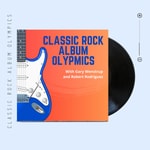
The CLASSIC ROCK ALBUM OLYMPICS is a podcast celebrating the most popular albums of the 1960s, 70s and 80s. In each episode music historians Gary Wenstrup and Robert Rodriguez will pull a classic rock album off the shelf and discuss which songs earn our gold, silver and bronze medals. It's a fun, insightful and passionate journey through some of the greatest albums of all-time. Let the games begin!
Site
RSS
Apple
Données mises à jour le 11/11/2026
Classements récents
Dernières positions dans les classements Apple Podcasts et Spotify.
Liens partagés entre épisodes et podcasts
Liens présents dans les descriptions d'épisodes et autres podcasts les utilisant également.
In this episode of Classic Rock Album Olympics music historians Gary Wenstrup and Robert Rodriguez toy with The Pretenders' 1984 release Learning to Crawl and select the three tracks that earn their gold, silver and bronze medals.
After a turbulent period that included the deaths of two original band members, guitarist James Honeyman-Scott and bassist Pete Farndon, Chrissie Hynde rebuilt the group and delivered one of the stronger albums of the 1980s.
The album's title was particularly appropriate. Learning to Crawl suggested starting over, finding one's footing and moving forward after personal tragedy. Musically, it combined the band's original mix of punk attitude, rock energy and pop craftsmanship with a more mature and emotionally revealing sound.
The album was produced by Chris Thomas, whose credits included work with the Sex Pistols, the Beatles and Roxy Music. The newly assembled Pretenders lineup featured:
Chrissie Hynde – lead vocals, guitar
Martin Chambers – drums, backing vocals
Robbie McIntosh – guitar
Malcolm Foster – bass, backing vocals
Additional musicians included Billy Bremner and Tony Butler on guitar and bass, Andrew Bodnar on bass, and Paul Carrack on keyboards and vocals. Some tracks also feature contributions from former members James Honeyman-Scott and Pete Farndon from earlier recording sessions.
Learning to Crawl was a major commercial success reaching #5 on U.S. Billboard 200 and produced several important singles, although two of its biggest songs had actually appeared before the album's release.
"Back on the Chain Gang" – Released September 1982. Reached No. 5 on the U.S. Billboard Hot 100.
"2000 Miles" – Released November 1983 in the UK. Reached No. 15 in the UK.
"Middle of the Road" – Released November 1983 in the U.S. Reached No. 19 on the Billboard Hot 100.
Learning to Crawl is widely regarded as one of The Pretenders' finest albums and one of the standout rock records of 1984. Its importance goes beyond its commercial success. The deaths of Honeyman-Scott in 1982 and Farndon in 1983 had threatened the band's very existence. Hynde's decision to continue was both a personal and artistic statement. Rather than attempting to recreate the original lineup, she assembled a new group and produced an album that retained the band's toughness while demonstrating greater emotional depth.
Ultimately, Learning to Crawl demonstrated that The Pretenders could survive devastating losses and emerge creatively stronger. It reaffirmed Chrissie Hynde's position as one of rock's most distinctive songwriters and performers.
In this episode of Classic Rock Album Olympics music historians Gary Wenstrup and Robert Rodriguez examine Joe Jackson's Look Sharp! and award gold, silver and bronze medals to their favorite tracks.
In this episode of Classic Rock Album Olympics music historians Gary Wenstrup and Robert Rodriguez open The Doors' L. A. Woman, select their favorite tracks and award their gold, silver and bronze medals accordingly.
Heart Like A Wheel by Linda Ronstadt...Episode #32
mardi 29 septembre 2026 • Durée 55:49
In this episode of Classic Rock Album Olympics music historians Gary Wenstrup and Robert Rodriguez roll Linda Ronstadt's Heart Like A Wheel to select their favorite tracks and award their gold, silver and bronze medals accordingly.
In this episode of Classic Rock Album Olympics music historians Gary Wenstrup and Robert Rodriguez analyze R.E.M.'s Automatic For The People add award their gold, silver and bronze medals to the album's strongest tracks.
Released in October 1992, Automatic For The People is widely regarded as one of the defining albums of the 1990s and a peak artistic statement in R.E.M.'s career. Following the massive success of Out of Time, the band moved away from jangly college rock toward a more introspective and melancholic sound. The album's themes revolve around mortality, aging, loss and memory, giving it a reflective tone that feels both intimate and cinematic.
The album was produced by Scott Litt alongside R.E.M. A defining feature of the record is its use of orchestral instrumentation arranged by John Paul Jones (of Led Zeppelin). The production emphasizes acoustic guitars, piano, mellotron, strings, and restrained percussion, marking a stark contrast from the more energetic sound of their earlier work.
R.E.M. at this time consisted of Michael Stipe, whose abstract, emotionally direct lyrics and distinctive vocal delivery anchor the album; Peter Buck, whose guitar work shifted toward mandolin, acoustic textures, and subtle melodic layering; , whose bass lines and harmony vocals provide emotional depth; and , whose understated drumming supports the album's slower, more contemplative pacing. Together, the band created a unified sound that prioritizes mood and atmosphere over traditional rock dynamics.
Moondance by Van Morrison...Episode #30
mardi 25 août 2026 • Durée 01:04:49
In this episode (#28) of Classic Rock Album Olympics music historians Gary Wenstrup and Robert Rodriguez turn their attention to Moondance by Van Morrison and award their gold, silver and bronze medals for the strongest tracks.
Released in January 1970, it was Morrison's third solo album and transformed him from a critically admired cult artist into a major commercial success. While his previous album, Astral Weeks, had been celebrated for its poetic ambition and jazz-influenced experimentation, Moondance struck a perfect balance between artistic sophistication and accessibility. Blending rock, soul, jazz, folk, blues, rhythm and blues, and Celtic influences, the album showcased Morrison's extraordinary songwriting while introducing a warmer, more up-tempo sound.
Medal Winners – Remarkably Gary and Robert picked the exact same 3 songs in the exact same order – a first and probably a last…
Dissatisfied with having limited creative control during the making of Astral Weeks, Morrison assumed responsibility for producing Moondance, carefully shaping the arrangements and performances. The result was a polished yet organic recording that featured tight ensembles, memorable horn arrangements, and an effortless blend of jazz improvisation and pop craftsmanship. The album marked the beginning of Morrison's long career as a self-directed recording artist and established the musical style that would define much of his greatest work.
Van Morrison and John Platania played guitar with Jack Schroer and Collin Tilton on horns, Jef Labes on keyboards, John Klingberg on bass and Gary Mallaber on drums. The musicians created an intimate, swinging sound that perfectly complemented Morrison's soulful voice songwriting.
Remain In Light by Talking Heads...Episode #29
mardi 11 août 2026 • Durée 01:01:39
In this episode of Classic Rock Album Olympics music historians Gary Wenstrup and Robert Rodriguez turn on Remain In Light by Talking Heads and award gold, silver and bronze medals to their favorite songs.
Remain In Light, released in the fall of 1980, was the band's fourth studio album and was an artistic leap as they blended new wave, funk, African polyrhythms, electronic music, and experimental rock into a new sonic texture.
Building on ideas first explored on Fear of Music, the album challenged conventional rock songwriting by emphasizing rhythm, layered textures, and hypnotic grooves over traditional verse-and-chorus structures.
The album was produced by Brian Eno, whose creative partnership with Talking Heads reached its peak during these sessions. Rather than recording songs in the traditional manner, the band developed many of the tracks through extended group improvisations that were edited into intricate rhythmic patterns before lyrics and melodies were added.
Inspired by the work of Nigerian musician and activist Fela Kuti, as well as electronic pioneers and minimalist composers, Eno and the band crafted a dense, layered production that pushed the boundaries of what a rock album could be.
Talking Heads consisted of David Byrne, lead vocals, guitar, and many of the album's lyrics; Jerry Harrison, keys and guitar; Tina Weymouth, bass and Chris Frantz, drums.
Commercially, Remain in Light became Talking Heads' highest-charting album to that point. It reached #19 on the Billboard 200 and earned widespread critical acclaim upon release. Two singles were issued from the album. "Once in a Lifetime" became the band's signature song, though it only reached #103 on the Billboard Hot 100. It became a cultural phenomenon thanks to its groundbreaking music video and has since become one of the defining songs of the MTV era. The second single, "Houses in Motion," did not chart.
What's Going On by Marvin Gaye...Episode #28
mardi 28 juillet 2026 • Durée 51:39
In this episode of Classic Rock Album Olympics music historians Gary Wenstrup and Robert Rodriguez take Marvin Gaye's What's Going On for a spin and award gold, silver and bronze medals for their favorite tracks.
The album was released in the summer of 1971 and is widely regarded as one of the greatest albums ever made. It marked a dramatic artistic transformation for Marvin Gaye and for Motown itself. Rather than focusing on romantic love songs, Gaye created a deeply personal concept album that addressed war, poverty, racial injustice, environmental concerns, police brutality, drug abuse, and spiritual renewal. Inspired in part by conversations with his brother Frankie, who had recently returned from service in Vietnam, What's Going On captured the hopes, frustrations, and uncertainty of America during one of the nation's most turbulent periods.
What's Going On was produced by Marvin Gaye, making him one of the first Motown artists to exercise complete creative control over a major project. Recording sessions took place at Detroit's Hitsville U.S.A. studio and at Golden World Studios, also in Detroit. Gaye experimented with layered vocals, sophisticated orchestration, jazz-influenced harmonies, and seamless transitions between songs, creating one of the first truly unified concept albums in soul music.
Marvin Gaye handled the lead and background vocals and worked with Motown's famous house band – The Funk Brothers. They included bassists James Jamerson and Bob Babbit, drummer Chet Forest, percussionist Jack Ashford, keyboardist Earl Van Dyke and guitarists Robert White and Joe Messina The album's lush orchestral arrangements and rich vocal textures combined elements of soul, jazz, classical music, gospel, and rhythm and blues into a sound unlike anything Motown had previously released.
The Band by The Band...Episode #27
mardi 7 juillet 2026 • Durée 55:33
In this episode of Classic Rock Album Olympics music historians Gary Wenstrup and Robert Rodriguez turn their attention to the self-titled album by The Band and award their gold, silver and bronze medals accordingly.
Released in the fall of 1969, the album arrived roughly a year after the group's acclaimed debut, Music From Big Pink. At a time when psychedelic rock and hard rock dominated popular music, The Band looked backward instead of forward, drawing inspiration from American folk traditions, country, blues, gospel, and early rock and roll to create a sound that helped lay the foundation for what would later become known as Americana.
The album was produced by John Simon, who had also produced Music From Big Pink. Recording sessions took place primarily in a converted pool house at a rented home in the Hollywood Hills before moving to The Hit Factory in New York City to complete the project.
The Band consisted of Robbie Robertson who served as the principal songwriter and lead guitarist. Levon Helm played drums, mandolin, and sang many of the group's most memorable lead vocals. Rick Danko handled bass guitar, fiddle, and shared lead vocal duties with his expressive tenor voice. Richard Manuel contributed piano, drums, and soulful lead vocals that ranged from tender ballads to powerful rock performances. Garth Hudson, regarded by many as one of rock's greatest keyboardists, supplied the album's organ, piano, accordion, saxophone, and other instrumental textures that gave the music its distinctive character.
Station To Station by David Bowie...Episode #26
mardi 23 juin 2026 • Durée 54:26
In episode #26 of Classic Rock Album Olympics music historians Gary Wenstrup and Robert Rodriguez award their gold, silver and bronze medals for songs from David Bowie's Station To Station.
Released in January 1976, Station to Station represented Bowie's transition away from American soul influences toward the avant-garde European sensibilities that would define his late-1970s work with Brian Eno.
Station To Station introduced Bowie's mysterious "Thin White Duke" persona — elegant, detached, and emotionally fractured. Recorded in Los Angeles during a turbulent period of Bowie's life, the album blended art rock, funk, krautrock influences, and hypnotic electronic textures into one of his most acclaimed works.
The album reached #3 on the US Billboard 200, making it the highest charting album of Bowie's career. The major single from the album was Golden Years which peaked at #10 on the Billboard Hot 100. Second single TVC 15 reached #64.
The musicians on the album formed one of Bowie's most celebrated backing bands. Guitarist Carlos Alomar anchored the music with sharp funk rhythms. George Murray and Dennis Davis created the sleek rhythmic foundation that would continue into Bowie's Berlin recordings. Keyboardist Roy Bittan of E Street Band fame and guitarist Earl Slick played roles as well. Producer Harry Maslin helped shape the album's polished sound.
Culturally, Station to Station became enormously influential on post-punk, new wave, gothic rock, and alternative music. Its cold elegance and rhythmic experimentation inspired artists ranging from Joy Division and Talking Heads to later musicians such as Nine Inch Nails and Radiohead.
Joe Jackson released his debut album, Look Sharp! in early 1979. The album introduced Jackson as one of the most exciting new voices in British new wave, combining punk's energy with sharp pop melodies, angular guitar work and clever, often cynical lyrics.
Produced by David Kershenbaum, the album features Jackson on vocals, piano and harmonica, Gary Sanford on guitar, Graham Maby on bass and David Houghton on drums. The band's tight, energetic playing gives the record its distinctive sound.
The album's best-known song, "Is She Really Going Out with Him?," was released as a single reaching #21 on the U.S. Billboard Hot 100. "Sunday Papers" and "One More Time" were also released as singles, but did not chart.
Look Sharp! reached #20 on the U.S. Billboard 200 album chart.
The album's significance lies in how it helped define British new wave at the end of the 1970s. Jackson combined the rebellious attitude of punk with a sophisticated sense of melody and a sharp eye for human behavior. "Sunday Papers" satirizes sensationalist journalism, while "Happy Loving Couples" and "Fools in Love" examine romantic relationships with wit and skepticism.
The black-and-white cover, featuring Jackson's white shoes against a dark background, became an iconic image of the period.
Look Sharp! launched a career that would soon take Jackson into reggae, jazz, swing and sophisticated pop, but this debut remains one of his most immediate and influential records.
Released in 1971,L.A. Woman is the sixth studio album by the Doors and the last album recorded with Jim Morrison before his death on July 3, 1971. It stands as one of the band's finest achievements, a gritty, blues-based return to the sound of their early years after the more elaborate production of albums such as The Soft Parade.
The album emerged during a difficult period for the band. Morrison's legal troubles following the infamous 1969 Miami concert had damaged the Doors' reputation and concert prospects, while his increasingly unpredictable behavior created tension within the group. Yet musically, the band was reconnecting with its roots, drawing heavily on Chicago blues, boogie, and the loose, spontaneous feel of a live performance.
A key change was the departure of longtime producer Paul A. Rothchild, who had worked on the band's previous studio albums. Rothchild reportedly became dissatisfied with the sessions and the band's performances, leading him to leave the project. The Doors then produced the album themselves with their longtime engineer, Bruce Botnick, recording much of the music in a relaxed, informal atmosphere at their own Workshop studio in Los Angeles.
The resulting album is rawer and more direct than much of the Doors' earlier work. Morrison sounds particularly comfortable singing the blues, while Robby Krieger's guitar and Ray Manzarek's keyboards weave around John Densmore's flexible, jazz-influenced drumming. Two additional musicians helped shape the sound. Jerry Scheff, best known for his work with Elvis Presley, played bass throughout the album, providing a remarkably strong foundation that gave the Doors' music a more conventional blues-rock groove. Marc Benno added rhythm guitar on a handful of tracks.
The album reached No. 9 on the U.S. Billboard 200. The first single, "Love Her Madly," was released in March 1971, ahead of the album, and peaked at No. 11 on the Billboard Hot 100. The second single, "Riders on the Storm," was released in June 1971 and reached No. 14. It was the last song Morrison recorded with the band before his death.
L.A. Woman is significant because it captured the Doors at a moment of artistic renewal. The band had stripped away much of the elaborate studio polish of earlier records and rediscovered the blues-based chemistry that had made them compelling in the first place.
Released in November 1974, Heart Like a Wheel was Linda Ronstadt's fifth solo studio album and the record that made her into a major pop superstar. The album was produced by Peter Asher, who had also become Ronstadt's manager and was instrumental in establishing the polished yet emotionally powerful sound that would define her great albums of the 1970s.
The musicians were an extraordinary collection of Los Angeles studio players and Ronstadt associates. Andrew Gold played guitar, piano, electric piano, drums and percussion and became one of the album's most important musical architects, while Kenny Edwards, Ronstadt's former Stone Poneys bandmate, played bass.
The singles were particularly successful. "You're No Good" reached No. 1 on the Billboard Hot 100, giving Ronstadt her first No. 1 pop single and "When Will I Be Loved" reached No. 2 on the Hot 100. The album itself was an even bigger success. Heart Like a Wheel became Ronstadt's first No. 1 album on the Billboard.
Its impact went far beyond sales. Heart Like a Wheel helped establish the template for the sophisticated country-rock/pop crossover that would dominate much of Ronstadt's career and influence artists who followed. She demonstrated that an album could move effortlessly between rock, country, R&B, folk and pop without sounding stylistically confused. Just as importantly, Ronstadt became a major interpreter of songs by emerging writers such as J.D. Souther, Lowell George and Anna McGarrigle, often bringing their work to audiences far larger than those they could reach themselves.
Ultimately, Heart Like a Wheel was the album that established the Linda Ronstadt formula: an extraordinary singer, first-rate musicians, carefully chosen songs, country roots and rock muscle, all held together by Peter Asher's elegant production. It was both a commercial breakthrough and an artistic statement—and the beginning of one of the most successful recording careers by an American female artist of the 1970s.
Commercially, Automatic for the People was a major worldwide success. It reached #2 on the Billboard 200 in the United States and charted highly across Europe, including #1 in the UK Albums Chart. The album produced several major singles. "Drive" became a top 30 hit in the United States and a standout track on alternative radio. "Man on the Moon" became one of the band's signature songs, reaching #30 on the Billboard Hot 100. "Everybody Hurts" became one of R.E.M.'s most emotionally powerful and enduring songs, receiving extensive airplay worldwide and becoming an anthem for empathy and resilience.
The cultural significance of Automatic for the People lies in its ability to bring introspective, even somber themes into mainstream rock at a massive commercial scale. At a time when alternative rock was becoming dominant in popular culture, R.E.M. demonstrated that vulnerability and emotional honesty could coexist with chart success.
Commercially, Moondance became Van Morrison's breakthrough album. It reached #29 on the Billboard 200 in the U.S., #32 on the UK Albums Chart while remaining a steady seller for decades. Come Running was the only single released from the album and reached #39 on the charts. Over time, however, "Moondance," "Into the Mystic," "Caravan," and "And It Stoned Me" became FM radio staples.
Moondance has influenced generations of musicians across rock, folk, jazz, Americana, and soul, including Bruce Springsteen, Bonnie Raitt and Elvis Costello. More than fifty years after its release, Moondance remains a beloved album, celebrated for its effortless musicianship and timeless melodies. It is consistently ranked among the greatest albums ever and stands as the defining work in Van Morrison's remarkable career.
The cultural significance of Remain in Light is immense. It helped introduce African musical concepts to mainstream rock audiences in a respectful and creatively transformative way while demonstrating that experimental music could also be accessible.
Remain In Light influenced artists across alternative rock, electronic music, art rock, indie rock, and even hip-hop including Radiohead, Peter Gabriel and Arcade Fire. The album consistently ranks among the best albums ever made, celebrated for its experimentation, intellectual depth, and rhythmic vitality.
Commercially, the album became one of the biggest successes of Marvin Gaye's career, reaching #6 on the Billboard 200. Three singles emerged from the album. The title track, "What's Going On," reached #2 on the Billboard Hot 100, "Mercy Mercy Me (The Ecology)" climbed to #4 and became one of popular music's earliest environmental anthems. "Inner City Blues (Make Me Wanna Holler)" reached #9.
The cultural significance of What's Going On is difficult to overstate. It transformed expectations of what soul music could address and demonstrated that pop music could also confront serious social and political issues. The album challenged Motown's traditional business model, expanded creative freedom for recording artists, and influenced generations of musicians across soul, R&B, jazz, rock, hip-hop, and pop.
Artists ranging from Stevie Wonder to Prince, Bruce Springsteen, D'Angelo, and many others have cited it as a landmark achievement. More than five decades after its release, What's Going On continues to appear near the top of virtually every list of the greatest albums ever recorded and remains a timeless statement about empathy, justice, faith, and our shared humanity.
Commercially, The Band was a significant success. It reached #9 on the Billboard 200 album chart in the United States. Two singles were released from the album. "Up on Cripple Creek" became the band's biggest American hit, climbing to #25 on the Billboard Hot 100 and "Rag Mama Rag" reached #57.
At a time when rock music often celebrated excess and experimentation, The Band created an album rooted in history, tradition, and compelling storytelling. Its songs explored themes of community, hardship, faith, work, and the changing American experience, helping redefine what rock music could accomplish artistically.
The album became influential on later generations of musicians, inspiring artists such as Eric Clapton, Elvis Costello, Wilco, and countless Americana, country-rock, and folk-rock performers.
Découvrez des podcasts liées à Classic Rock Album Olympics. Explorez des podcasts avec des thèmes, sujets, et formats similaires. Ces similarités sont calculées grâce à des données tangibles, pas d'extrapolations !