Blazin' Grazin' And Other Wild Things – Détails, épisodes et analyse
Détails du podcast
Informations techniques et générales issues du flux RSS du podcast.
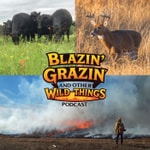
Blazin' Grazin' And Other Wild Things
AgNow Media LLC
Fréquence : 1 épisode/14j. Total Éps: 18

Classements récents
Dernières positions dans les classements Apple Podcasts et Spotify.
Apple Podcasts
🇺🇸 États-Unis - howTo
18/11/2025#97🇺🇸 États-Unis - howTo
17/11/2025#60🇺🇸 États-Unis - howTo
16/11/2025#47🇺🇸 États-Unis - howTo
15/11/2025#61🇺🇸 États-Unis - howTo
20/07/2025#98🇺🇸 États-Unis - howTo
04/04/2025#93🇺🇸 États-Unis - howTo
03/04/2025#57🇺🇸 États-Unis - howTo
29/03/2025#100🇺🇸 États-Unis - howTo
28/03/2025#53🇺🇸 États-Unis - howTo
27/03/2025#37
Spotify
Aucun classement récent disponible
Liens partagés entre épisodes et podcasts
Liens présents dans les descriptions d'épisodes et autres podcasts les utilisant également.
See all- https://www.ok-pba.org/
8 partages

- https://www.opjv.org/
4 partages
Qualité et score du flux RSS
Évaluation technique de la qualité et de la structure du flux RSS.
See allScore global : 73%
Historique des publications
Répartition mensuelle des publications d'épisodes au fil des années.
What Decades of Research Reveal About Deer - BGWT 103
Saison 1 · Épisode 3
lundi 10 mars 2025 • Durée 43:25
We discuss Ken's extensive background, from his early experiences with prescribed burns and wildlife research to his insights on deer behavior and habitat management, offering listeners a blend of practical knowledge and entertaining anecdotes.
Key Insights
- The importance of Bois d'Arc or Osage Orange as a year-round deer food plant, with dried leaves maintaining high protein content even in winter.
- The limitations of the Severinghaus method for aging deer, suggesting it's only reliable for categorizing deer into fawns, yearlings, and adults.
- The value of prescribed burns as a wildlife management tool, emphasizing the need for landowner involvement and continuous learning through experience.
- Insights into deer movement and behavior, debunking common myths and highlighting the significance of individual animal studies.
Find all resources at BlazinGrazinWildThings.com
Talking Turkey: Predator Control and Nest Success - BGWT 102
Saison 1 · Épisode 2
lundi 10 mars 2025 • Durée 40:31
Turkey populations are not doing as well as we would like.
Many states have noticed declines in various metrics, including poults per hen.
Oklahoma has seen similar trends, with reduced poults per hen numbers and some evidence of reduced harvest.
Five Essential Key Takeaways
Turkey populations are declining: Across the southeastern U.S., turkey populations are not thriving as they once did, prompting extensive research efforts to identify the causes and potential solutions.
Habitat changes impact turkey populations: Subtle landscape changes, such as cedar encroachment in western Oklahoma, can significantly reduce the suitability of roosting and nesting sites for turkeys.
Hen survival is crucial: Research indicates that adult female survival is the most critical factor influencing turkey population growth, as hens must survive to reproduce successfully.
Predator management is complex: While predator control can be a consideration, its effectiveness is variable, and it is often expensive and labor-intensive, making it challenging for smaller landowners.
Brooding cover is essential: Providing adequate brooding cover, which offers both food (insects) and safety for young poults, is emerging as a key habitat management strategy for improving turkey survival rates.
Find all resources at BlazinGrazinWildThings.com
Meet The Hosts - BGWT 101
Saison 1 · Épisode 1
lundi 10 mars 2025 • Durée 34:24
Key Takeaways From This Episode
- Fire is Essential for Healthy Grasslands: I realized that without fire, grasslands transition into woodlands and eventually forests. Fire is a natural and necessary component for maintaining these ecosystems.
- Oklahoma's Plant Diversity is Astounding: I was fascinated to learn that Oklahoma is the second most diverse state in the nation for plant species, ranging from Ponderosa pine to loblolly pine, creating a unique environment for land management.
- Integrating Livestock and Wildlife Management: It struck me how the synergy between livestock and wildlife management is growing. Landowners are increasingly recognizing the benefits of both for recreational and ecological purposes.
- Eastern Red Cedar is a Major Target: I found it interesting that controlling eastern red cedar is a primary reason for prescribed burns in the Great Plains, highlighting its impact on water quality, human health, and overall ecosystem health.
- Grazing Distribution Matters: Laura's insights on how animal behavior affects grazing distribution, even in smaller pastures, were eye-opening. Using supplement placement and fire can manipulate grazing patterns effectively.
- Cartoon Bears vs. Reality: I had to laugh when John mentioned fighting against the negative perception of fire perpetuated by cartoon bears. It underscored the importance of educating the public about the beneficial role of fire in land management.
Find all resources at BlazinGrazinWildThings.com
Grasslands Thrive Where Prescribed Fire Lives - BGWT 104
Saison 1 · Épisode 4
lundi 24 mars 2025 • Durée 39:30
In this episode, we're joined by Cole Fagen, the coordinating biologist for the Oaks and Prairies Joint Venture, and Ken Gee, a conservation delivery specialist. Together, they work with landowners to implement wildlife habitat management, focusing primarily on upland and grassland birds in southern and northern Oklahoma and central Texas.
In this episode, we dive into how technical and financial assistance is helping landowners across Oklahoma and Texas implement prescribed fire and other habitat management practices that restore native grasslands and improve wildlife habitat. The Oak and Prairies Joint Venture plays a vital role by providing boots-on-the-ground training, one-on-one support, and connections to trusted partners like burn associations and conservation specialists.
We also explore how proper grazing management—including reducing overstocking—can dramatically increase rangeland productivity while creating safer, more effective fuel loads for controlled burns. Changing attitudes from landowners and volunteer fire departments are paving the way for wider acceptance of prescribed fire as a critical land management tool. You'll hear inspiring success stories, like the restoration of the Wheellock property, and learn how using indicator species like Bobwhite quail helps measure habitat health and engage landowners in long-term conservation efforts. For more information and tools, visit Oklahoma Prescribed Burn Association and Oaks and Prairies Joint Venture.
Find all resources at BlazinGrazinWildThings.com
Hack, Spray, & Blaze: Enhancing Oklahoma’s Wildlife Habitats - BGWT 112
Saison 1 · Épisode 12
lundi 14 juillet 2025 • Durée 50:04
In this episode, John Weir, Dr. Laura Goodman, and Dr. Mark Turner sit down for a conversation about Forest Stand Improvement (FSI) and how it plays a big role in shaping better wildlife habitats for deer, turkey, and quail—especially right here in Oklahoma.
They swap stories and share how FSI differs from Timber Stand Improvement (TSI), and why even folks without marketable timber can still benefit from these management techniques.
You’ll hear plenty of real-world advice—how to get more sunlight to the forest floor, which trees to keep or cut, and what tools make the job easier (spoiler: PlantNet and iNaturalist apps get some love).
They also dig into strategies like girdling, hinge cutting, and selective herbicide use. And of course, no land management talk would be complete without prescribed fire. It's not just about burning—it’s about building a better future for your land.
10 Takeaways:
- Set clear wildlife goals—know if you're managing for deer, turkey, quail, or all three.
- FSI is about habitat, not harvest—focus on diversity, not timber value.
- Sunlight on the forest floor is key to encouraging beneficial plants.
- Learn your trees—ID skills help you decide what to cut and what to keep.
- Apps like PlantNet and iNaturalist are handy for identifying flora.
- Girdling and herbicide are go-to methods for thinning unwanted trees.
- Hinge cutting adds instant structure that wildlife, especially deer, love.
- Fire isn't the end—it's a tool to keep your habitat strong and Cedars at bay.
- Don't fear killing a few oaks—it's sometimes necessary for a better habitat.
- Mix and match your methods—it's okay to combine tools and tailor your strategy.
Timestamps:
00:00 – Introduction to episode and host
02:07 – Forest Stand Improvement (FSI) explained
04:39 – Defining wildlife management objectives (deer, turkey, quail)
07:05 – Importance of considering property size and surrounding landscapes
09:52 – Tools and apps for plant identification (PlantNet, iNaturalist)
12:12 – Recommended guidebooks and Oklahoma State Extension web resources
14:33 – Importance of ongoing plant identification and landowner education
17:11 – Initial steps in forest management: assessing sunlight and tree density
18:25 – Explanation of basal area in forest management
20:01 – Techniques for tree management: girdling and herbicide application
22:29 – Herbicide mixtures and their proper application
26:00 – Advantages and considerations of girdling versus hack-and-squirt methods
27:01 – Explanation of hinge cutting and its benefits for wildlife habitats
32:28 – Special considerations for managing habitats specifically for quail
34:55 – Description and application of hack-and-squirt herbicide method
35:32 – Aerial herbicide application for large-scale forest management
37:18 – Importance of creating variable canopy density
38:33 – Prescribed fire: its crucial role in habitat maintenance
40:24 – Managing fire risks and considerations for snags (standing dead trees)
42:26 – Fire rotation and management practices to minimize wildfire risks
45:00 – Transforming leaf-litter fuel types to herbaceous plants through prescribed fire
46:22 – Historical context of fire management in Oklahoma’s forests
48:01 – Risks of cedar encroachment on turkey roosting trees and forest health
50:00 – Episode wrap-up and summary
Find all resources at BlazinGrazinWildThings.com
Green Up and Burn Down: Growing Season Prescribed Burns - BGWT 111
Saison 1 · Épisode 11
lundi 30 juin 2025 • Durée 56:39
In this episode of Blazin' Grazin' and Other Wild Things, hosts John Weir, Dr. Laura Goodman, and Dr. Mark Turner dig deep into the value of growing season burns.
They discuss how summer fires, often underused due to misconceptions about safety, can be the most effective tool for land managers dealing with eastern redcedar, poor forage quality, and wildlife habitat degradation.
Drawing on years of OSU Extension research and firsthand experience, they reveal how fire during the warmer months can be slower-moving and safer than many think.
Listeners will learn how these burns enhance plant nutrition for both cattle and wildlife, why concerns about risk and liability are overblown, and how to plan burns that align with weather and vegetation goals.
From practical strategies like creating wide firebreaks and managing brush piles to the science behind fire behavior and plant responses, this episode delivers insights that could reshape your approach to land stewardship.
Key Takeaways:
- Growing season burns are highly effective at controlling larger eastern redcedar trees.
- Livestock and wildlife benefit from increased forage quality post-burn.
- Liability concerns around prescribed fire are largely based on perception, not data.
- Most spot fires are small and manageable; large escapes are extremely rare.
- Summer burns produce lower flames and slower-moving fires, enhancing safety.
- Wind and humidity are key parameters in planning a successful burn.
- Summer burns can expand the burning window, offering more flexibility for landowners.
- Proper planning, equipment, and training minimize risks and maximize effectiveness.
- Fire improves not only plant quality but also diet diversity for cattle and wildlife.
- Growing season fires offer better results than dormant burns in many cases.
Timestamps:
[00:02:00] What is a prescribed fire? Terminology and misconceptions
[00:04:00] The main reasons people burn in the Great Plains
[00:08:00] Forage quality and fire's impact on plant nutrition
[00:13:00] Liability and risk—what the data says about escapes and claims
[00:29:00] Cedar variability and how to burn effectively
[00:36:00] Comparing dormant vs. growing season burns
[00:43:00] Safety and practicality of summer burns
[00:48:00] Rain timing, regrowth, and maximizing burn effectiveness
Find all resources at BlazinGrazinWildThings.com
Public Range, Prescribed Flames - BGWT 110
Saison 1 · Épisode 10
lundi 16 juin 2025 • Durée 37:48
Oklahoma’s public lands don’t stay healthy by accident. In our latest episode, Jeff Pennington—Central Region Supervisor for the Oklahoma Department of Wildlife Conservation—details how his team shepherds more than 125,000 acres of WMAs with a heavy dose of prescribed fire, targeted grazing, and common-sense biology.
Deer now headline the habitat bill, but everything from quail coveys to moist-soil wetlands benefits when fire keeps brush in check.
Jeff shares what it takes to ignite 16,000-plus acres a year on a three-year rotation, why summer flames can be gentler than winter ones, and how ODWC’s burn crews coordinate like a home-grown fire association.
If you manage land, hunt state ground, or simply enjoy Oklahoma’s prairies and oak breaks, Jeff’s mix of hard data and front-line stories—yes, including flaming pants—offers a master class in turning careful burns into better wildlife for all.
Key Takeaways
- ODWC manages ~125k public acres across central OK.
- Prescribed fire averages 16–17k acres annually.
- Three-year intervals balance forage, fuel, and brush.
- Deer now drive most WMA habitat goals.
- Cross Timbers require different tactics than limestone prairies.
- Growing-season burns boost forbs, move cattle, and add diversity.
- Smoke-dispersion planning is critical near OKC & Tulsa.
- Burn crews act like an internal “PBA,” sharing gear and labor.
- Hunters largely support more fire; complaints come when work stops.
- Private landowners should lean on PBAs and agency tech assistance.
Timestamps
00:00 – 00:45 Show open and light banter
00:46 – 03:30 Jeff’s background and 30-year ODWC career
03:31 – 06:15 Overview of Central-Region WMAs (≈ 125 k acres across five regions)
06:16 – 08:45 Deer now “king”; quail decline and shifting habitat priorities
08:46 – 11:30 Prescribed-fire program burning 16–17 k acres per year
11:31 – 14:15 Key habitat types: Cross Timbers and limestone prairies
14:16 – 17:30 Three-year burn rotation and grazing synergy
17:31 – 20:30 Expanded dormant-season burn window and timing logic
20:31 – 23:15 Growing-season burns—benefits, limits, and wildlife response
23:16 – 26:00 Crew logistics: ODWC’s “internal burn association” approach
26:01 – 29:00 Smoke-dispersion planning near OKC and Tulsa metro areas
29:01 – 31:15 Hunter perceptions then vs. now; increased support for fire
31:16 – 34:30 Landowner tips: Prescribed Burn Associations and agency assistance
34:31 – 36:45 Memorable burns, including the famous “pants-on-fire” moment
36:46 – 39:00 Final takeaways, thank-yous, and episode wrap-up
Find all resources at BlazinGrazinWildThings.com
Better Habitat on Private Land - BGWT 109
Saison 1 · Épisode 9
lundi 2 juin 2025 • Durée 36:42
In this episode of Blazin’ Grazin’ and Other Wild Things, Josh Richardson from the Oklahoma Department of Wildlife Conservation unpacks the challenges and triumphs of managing wildlife habitat on the state’s overwhelmingly privately owned lands.
With a background in both private and migratory species work, Josh brings a wealth of experience to the table—from quail tracking with GPS to helping landowners realistically match goals with land capacity.
He highlights the importance of passion, persistence, and partnerships in building thriving ecosystems.
Listeners will hear stories of grassroots conservation in action—friends clearing cedars, landowners creating firebreaks, and people even seeking to attract beavers.
Josh walks through how to tap into Oklahoma's Wildlife Habitat Incentive Program (WHIP), explains how free assistance works, and reminds us that no acreage is too small to make a difference.
Whether you’re new to land ownership or part of a multi-generational ranching family, this episode is filled with tools, tips, and inspiration for stewarding the land well.
Timestamps
00:02:00 – Introduction to Josh Richardson and his role
00:03:50 – Background in wildlife and education
00:05:17 – Quail research and hunter behavior
00:07:26 – Private land conservation challenges
00:10:26 – Most requested wildlife species
00:13:46 – Social dynamics and landowner collaboration
00:15:04 – Case study: local habitat success story
00:17:33 – Recommendations for new landowners
00:22:36 – WHIP and cost-share programs overview
00:25:23 – Practices covered and custom project examples
00:31:38 – Misconceptions about cedar as habitat
00:34:54 – Program accessibility and how to get involved
Key Takeaways
- 95% of Oklahoma's land is privately owned—making private landowners vital for wildlife conservation.
- The ODWC Private Lands team is small but highly active, providing free technical assistance statewide.
- Interest in wildlife-friendly land management is growing, especially among recreational landowners.
- Cost-share programs like WHIP support practices such as cedar removal, firebreaks, and wetland creation.
- Josh emphasizes the value of realistic goals and working with local context and constraints.
- Collaborative landowner efforts, like buddy systems for cedar cutting, can lead to large-scale impact.
- Misconceptions about cedar trees being prime wildlife cover persist but often mislead habitat goals.
- Absentee landowners can be easier to work with due to fewer entrenched practices or local norms.
- Even small-acreage landowners are eligible for help—no size limit for assistance.
- Good habitat work spreads through communities when neighbors see successful results.
Find all resources at BlazinGrazinWildThings.com
Managed Chaos: Fire & Grazing Unite In The Tallgrass Prairie Preserve - BGWT 108
Saison 1 · Épisode 8
lundi 19 mai 2025 • Durée 50:57
In this episode of Blazin' Grazin' and Other Wild Things, we travel through the story of the Tallgrass Prairie Preserve with Bob Hamilton from The Nature Conservancy.
Bob shares how this iconic Oklahoma landscape transitioned from a failed federal park plan to a flagship private conservation project.
He recounts the acquisition of the land, the reintroduction of bison, and the development of a dynamic management model that utilizes fire and grazing to simulate natural prairie processes.
Joining Oklahoma State University’s John Weir and Dr. Laura Goodman, Bob discusses how fire behaves on the prairie, how patch-burn grazing supports a variety of wildlife, and how GPS tracking has helped compare cattle and bison behavior.
From historic land surveys to present-day fireline strategies, this conversation highlights decades of dedication to restoring and maintaining Oklahoma’s native grasslands.
Ten Things You'll Learn
- The Tallgrass Prairie Preserve was established following a failed federal plan, leading to private conservation leadership.
- Bob Hamilton played a pivotal role in land acquisition and ecosystem restoration.
- The preserve uses a “managed chaos” approach to mimic natural fire-grazing interactions.
- Bison were reintroduced in 1993 with a genetically diverse, disease-free starter herd.
- Patch-burn grazing creates varied habitats that benefit different wildlife species.
- Historical vegetation maps indicate that the Cross Timbers forest existed in 1872 and remains extant today.
- Prescribed fires are conducted without traditional firebreaks, instead using water and topography to create a safe environment.
- GPS-collared studies show that cattle and bison gravitate toward recently burned areas due to the improved forage quality.
- Collaborative research with OSU has refined patch-burn grazing models and invasive species control.
- Diversity in prairie structure supports nesting birds, small mammals, and native plants.
Find all resources at BlazinGrazinWildThings.com
Blazing Trails for Quail Across the Great Plains - BGWT 107
Saison 1 · Épisode 7
lundi 5 mai 2025 • Durée 38:51
In this fiery new episode of Blazin' Grazin' and Other Wild Things, we bring the heat with special guests from Quail Forever—Tanner Swank and Adam Ray.
They join host John Weir and Dr. Mark Turner to discuss how fire, community collaboration, and science-based management are revitalizing Oklahoma's native grasslands and Cross Timbers.
Learn how Quail Forever's landscape-level work benefits not only game species like bobwhite and pheasant, but also pollinators, deer, and the entire ecosystem.
From confronting cedar invasion to empowering landowners through prescribed burn associations, this episode dives deep into practical strategies and inspiring partnerships.
Whether you’re a land manager, Extension professional, or outdoorsperson, you’ll leave with a renewed appreciation for the power of fire and the people who wield it wisely.
- Fire is essential to maintaining grassland and oak woodland ecosystems.
- Quail Forever uses birds as indicator species to assess ecosystem health.
- Eastern redcedar encroachment threatens both forest and grassland systems.
- Prescribed burn associations are the backbone of landowner-led conservation.
- Fire helps restore balance in plant communities and increases biodiversity.
- Landowners benefit from collaborative burning to manage larger tracts effectively.
- Cross Timbers forests are under-managed and underutilized.
- Private lands are critical to restoring native habitats across the Great Plains.
- Native shrubs are necessary for quail habitat—but trees like cedar are not.
- The “Torch Bunnies” highlight the social and cultural side of prescribed fire.
Timestamps
00:00 – Welcome and guest introductions
01:00 – What is Quail Forever and its mission in Oklahoma
04:00 – Tanner and Adam’s background and love for fire ecology
06:00 – Managing the Cross Timbers and upland oak forests
13:00 – Common management prescriptions for landowners
18:00 – Wildlife benefits from habitat restoration
19:00 – Great Plains Grassland Initiative and fire strategy
22:30 – Prairie chickens, woody encroachment, and indicator species
25:00 – Shrub vs. tree encroachment: what quail really need
29:00 – Why private landowners are key to large-scale restoration
31:00 – Building large-scale burn units with neighboring landowners
35:00 – Partnerships and prescribed burn associations
38:00 – Resources and how to get involved
39:30 – Secret society of the "Torch Bunnies"
40:57 – Closing remarks
Find all resources at BlazinGrazinWildThings.com
Podcasts Similaires Basées sur le Contenu