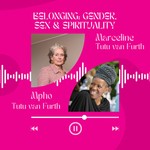
When Law Erases Culture: What Ghana’s Anti-LGBTQ+ Bill Threatens
In this week's episode of Belonging: Gender, Sex and Spirituality, we had the privilege of speaking with a Ghanaian traditional priestess and healer whose story has stayed with me.
Her words challenge one of the most persistent—and harmful—claims shaping current
debates in Ghana: that queerness is “un-African.”
It is not.
Within many indigenous spiritual traditions, gender and sexuality have long been
understood as fluid, relational, and deeply connected to the spiritual world. As she explained, spiritual embodiment can include same-sex intimacy, gender variance and roles shaped by one’s relationship with a deity.
In her words:
“It has been like that before Christianity came, before colonization came.”
This matters.
Because the proposed anti-LGBTQ+ legislation in Ghana is not only about regulating identity—it risks criminalizing indigenous knowledge systems and spiritual practices thatpredate colonial influence.
It is important to name this clearly: much of the stigma now directed at LGBTQ+ communities is itself a legacy of colonial-era Christianity, which labeled traditional practices as “evil” and reshaped cultural norms accordingly.
Today, that history is being codified into law.
And the consequences are real.
The communities most at risk include traditional practitioners—many of them women—who already face marginalization, limited access to formal education, and vulnerability to exploitation. As fear grows around the pending bill, so too does the risk of violence, surveillance, and silencing.
“If this bill should be passed, we don’t know what will happen… a lot of bad things will be happening to us.” Naa Busuafi told us.
At stake is more than policy.
At stake is whether a society remembers its own cultural and spiritual complexity—or allows it to be erased.
At stake is whether belonging is defined narrowly through law, or more expansively
through history, humanity, and relationship.
For those of us working in fields like leadership, human rights, healthcare, education, and faith communities - this moment calls for thoughtful engagement.
It calls for: Listening to indigenous voices, recognizing the layered impacts of colonial history.
Supporting those working on the ground to educate and protect vulnerable communities and perhaps most importantly, it calls for humility.
Because sometimes the most important thing we can do is not to speak for others—but to ensure that their voices are heard.
#Belonging #HumanRights #Leadership #Inclusion #Africa #LGBTQ #CulturalHeritage