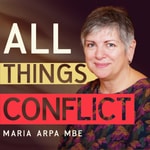
Who doesn't have conflict in their lives? Whether at work, at home or somewhere out in the world we are all affected by conflict even when it is indirect. The impact of poorly managed conflict can devastate lives. With 30 years’ experience mediating conflict and training peacemakers, Maria has held people’s hearts through everything from workplace hostility, board room battles, belligerent teenagers, separated parents at loggerheads to neighbours at war, street gang rivalries, threats to life and business deals gone wrong. In this podcast Maria lifts the lid on why we fight and how we can resolve conflict and design it out of our lives. Maria’s mission is to reduce unnecessary human suffering through conscious awareness, facilitated dialogue and trauma healing, using her communications tool, the Dialogue Road Map.
Site
RSS
Apple
Données mises à jour le 23/09/2026
Classements récents
Dernières positions dans les classements Apple Podcasts et Spotify.
Liens partagés entre épisodes et podcasts
Liens présents dans les descriptions d'épisodes et autres podcasts les utilisant également.
All Things Conflict, podcast de Maria Arpa MBE - Statistiques, épisodes et classements - My Podcast Data
Qualité du flux RSS
Correct
Score global : 79%
If you had the keys to the Ministry of Justice and you could make one change today, what change would you make? Part 2
Saison 3 · Épisode 49
mardi 22 septembre 2026 • Durée 14:44
In this final, roundup episode of the Justice Redesigned series on All Things Conflict, host Maria Arpa poses a single, transformative question to a panel of expert podcast guests: "If you had the keys to the Ministry of Justice and could make one immediate change, what would it be?"
The responses offer a multi-perspective blueprint for overhaul and reform across the legal and penal landscapes. Guests tackle critical issues including dedicated funding for legal defense and future judges, mandatory pre-court mediation to divert cases from overwhelmed courtrooms, and giving formerly incarcerated individuals a central role in justice policy consultation.
The conversation spans systemic reforms—such as replacing punitive prisons with Nordic/Dutch dignity models, ending early-stage trauma in family court, introducing sentence reductions for positive mentorship, and cracking down on unproven expert witness testimony to prevent wrongful convictions.
Key Takeaways
Dedicated Legal Funding Streams: Safeguarding resources for criminal defense representation, court infrastructure, and judicial training ensures equal access to justice regardless of wealth.
Mandatory Pre-Protocol Mediation: Requiring mediation before filing court claims reduces litigation friction and keeps avoidable disputes out of overloaded courtrooms.
Policy Consultation with Lived Experience: Involving individuals who have navigated the penal system ensures justice policies reflect real-world conditions rather than bureaucratic theory.
Dignity-Based Incarceration: Shifting to Dutch and Nordic prison models—which prioritize privacy, humanity, and normal living standards—directly lowers reoffending rates.
Early Mediation in Family Disputes: Creating an in-between diversion stage for private children's cases prevents children from suffering multi-year court battles and social care friction.
Reforming Expert Witness Standards: Tightening oversight on courtroom expert testimony is essential to eliminate pseudo-scientific claims and prevent wrongful convictions.
Timestamops
00:00 – Introduction
02:22 –Dedicated Funding for Criminal Defence & Future Judges
03:29 – Mandating Pre-Protocol Mediation Before Court Claims
03:48 – Consulting People with Lived Experience in System Policy
04:14 – Setting Clear Boundaries & Open Dialogue Behind Bars
04:58 – Stripping Away Bureaucracy to Reconnect on a Human Level
06:14 – Proposal 6: Mandatory Empathy, Empire, & Structural Bias Education
07:08 – Transitioning to Nordic and Dutch Dignity-Based Prisons
08:14 – Creating Pre-Court Diversion Stages in Family Law Cases
09:38 – Sentence Reductions & Mentorship Incentives for Inmates
10:40 – System-Wide Restorative Justice & Post-Release Housing
12:12 – "Punishment Is Not a Resolution"
12:20 – Overhauling Expert Witness Verification in Criminal Courts
13:16 – Call to Action: Share Your Views & Join the Conversation
Surviving Childhood Violence: Corruption, Trauma, and the Search for Safety with Luke Appleyard
Saison 3 · Épisode 48
mardi 15 septembre 2026 • Durée 45:37
In this deeply moving episode of All Things Conflict, Maria Arpa is joined by Luke Appleyard for an unvarnished conversation on what happens when child victims of domestic abuse are left without safety, support, or a voice.
Luke shares his raw, lived experience of witnessing horrific domestic violence as a child, fleeing with his mother to a safe house, and the terrifying reality of being tracked down when corrupt local networks and police connections protected his abuser. He breaks down the lifelong, compounding toll of unhealed childhood wounds—explaining how early instability led to severe mental health breakdowns, neurodivergent challenges, suicidal ideation, and intense isolation in adulthood.
Together, Maria and Luke discuss the societal stigma surrounding male victims of domestic abuse, the severe lack of male-focused refuges, and why public services must abandon cold, bureaucratic box-ticking in favor of heart-to-heart human connection.
Key Takeaways
Systemic Failure and Cover-Ups: How corrupt local networks and police ties can protect violent abusers, leaving victims trapped in continuous cycle of fear.
The Long-Term Impact of Childhood Trauma: Lacking safety in early childhood directly shapes adult wiring, contributing to severe mental health struggles, adult breakdowns, and neurodivergence.
The Invisible Male Victim: The urgent need to address the stigma surrounding men and boys who experience domestic abuse, and the stark lack of male refuges.
The Healing Power of Lived Experience: How stepping forward to share a raw, honest story can help break the isolation for others going through similar trauma.
Human-Centered Support: Why councils, police, and support agencies must move past bureaucratic spreadsheets to offer safe, non-judgmental spaces for individuals to be heard.
Key Timestamps
00:00 – Introduction
01:42 – Luke Appleyard’s Story: Witnessing Childhood Abuse
04:26 – Escaping to a Safe House & Living Under Threat
07:39 – Police Ties, Freemasonry, and Cover-Ups
12:36 – The Statistics: 3.8 Million Affected & The Trauma-Neurodiversity Link
14:13 – Mental Health Crises, Adult Breakdowns, and Suicidal Ideation
17:30 – Seeking Help: Historical Abuse & Systemic Rejection
20:20 – The Loss of Family Support and the Search for Male Role Models
27:17 – The Hidden Toll of Loneliness and Lack of Companionship
31:18 – Rebuilding: Finding the "Circle of Trust"
35:15 – Breaking the Stigma: Why We Need Male Domestic Abuse Refuges
41:10 – Replacing Bureaucracy with Heart-to-Heart Listening
Social Links
www.centreforpeacefulsolutions.org
www.peacefulsolutions.org.uk
www.workplacehuddle.com
https://mariaarpa.com/
If you had the keys to the Ministry of Justice and you could make one change today, what change would you make?
Saison 3 · Épisode 47
mardi 8 septembre 2026 • Durée 29:13
In this roundup episode of the Justice Redesigned series on All Things Conflict, host Maria Arpa poses one transformative question to a panel of expert podcast guests: "If you had the keys to the Ministry of Justice and could make one immediate change, what would it be?"
The responses offer an unvarnished, multi-perspective masterclass on fixing a broken justice system. From defence solicitors advocating for an immediate public-interest amnesty to clear massive court backlogs, to former incarcerated leaders calling for lived experience at top policymaking levels, this episode explores where current systems fail and how to fix them.
Topics range from re-categorizing sex offenders to lower reoffending rates, replacing punitive incarceration with Nordic and Dutch dignity models, confronting leadership shadow traits, introducing mandatory pre-court mediation, overhauling self-regulated expert witnesses, and expanding restorative justice.
Key Takeaways
Public Interest Amnesties: Dropping minor, low-level offences where prosecution does not serve the public interest would immediately clear years of court backlog and free up resources for serious crimes.
Lived Experience in Leadership: Integrating formerly incarcerated individuals into decision-making roles brings realistic, grounded insights that career bureaucrats lack.
Leadership Retraining: Mandatory self-reflection and shadow work for systemic leaders can expose unhealed wounds, blind spots, and toxic connections to domination culture.
Restorative Justice Over Punishment: Punishment alone does not bring resolution or reduce crime; structured, educational, and restorative alternatives give individuals a reason to change.
Dignity-Based Prison Models: Emulating Dutch and Nordic prison systems—which prioritize privacy, humanity, and community integration—directly correlates with better behaviour and lower reoffending.
Overhauling Expert Witness Standards: Tightening the criteria for court-admitted experts is essential to prevent self-regulated, unproven testimony from causing wrongful convictions.
Social Links
www.centreforpeacefulsolutions.org
www.peacefulsolutions.org.uk
www.workplacehuddle.com
https://mariaarpa.com/
Rethinking Trauma: Unhealed Wounds, Systemic Punishment, and the Myth of Personality
Saison 3 · Épisode 46
mardi 1 septembre 2026 • Durée 24:24
In this thought-provoking episode of All Things Conflict, host Maria Arpa challenges mainstream assumptions surrounding "trauma-informed practice". Moving past buzzwords and medicalized labels, Maria introduces a deeper framework: viewing trauma not as a fixed identity, but as a series of unhealed wounds and emotional responses that shape how we navigate the world.
Maria questions the very concept of human "personality," proposing that what we consider personality traits are often protective masks and armor built to shield our core vulnerabilities. She breaks down how early childhood experiences of love and safety—or the lack thereof—can cause people to repeatedly seek out abusive or toxic dynamics in adulthood.
The conversation expands into a critique of domination culture and authority. Maria turns the traditional trauma lens on its head: instead of solely examining the unhealed wounds of those being punished (such as prisoners or students), she asks us to analyze the unhealed wounds of the enforcers—the teachers, police, lawyers, and corporate leaders who seek out roles granting them power over others. Drawing from her intense field project in West Virginia, Maria exposes how systemic institutions like the criminal justice system gaslight individuals and invalidate lived experiences, proving that true healing requires more than individual therapy; it demands systemic transformation.
Key Takeaways
Unhealed Wounds vs. Trauma Responses: Rather than relying on generic labels, emotional responses often stem from unhealed wounds that continuously react until properly addressed.
The "Personality" Armor: What we call personality is often a collection of masks and defense mechanisms constructed to protect our vulnerability.
Early Definitions of Love: The very first care an infant receives after birth is interpreted as love; if that initial contact involves neglect or coldness, individuals may grow up seeking out abusive relationships as their baseline for love.
The Trauma of the Enforcer: Domination culture relies on unnatural authority dynamics; we must start examining the unhealed wounds that lead authority figures to seek out roles involving punishment and enforcement.
Systemic Gaslighting: Institutions like the criminal justice system corrupt the concept of true "witnessing" and invalidate individuals' lived experiences through legalistic theater.
Healing Beyond the Individual: Quick-fix therapies (such as EMDR or Havening) only go so far if individuals remain trapped within punitive environments that continually reopen their wounds.
Timestamps
00:00 – Introduction
02:05 – Physical Trauma vs. Emotional Trauma Responses
03:47 – Defining Personality as Armor and Protection Masks
04:18 – How Infancy and Early Contact Shape Our Search for Love
07:20 – "Tragic Expressions of Unhealed Wounds"
08:55 – Domination Culture and the Unnatural Construct of Authority
10:01 – Looking at the Enforcers: Why Do People Choose Punitive Jobs?
11:46 – Why Punishment Has No Place in Indigenous Cultures
12:43 – You Can't Heal a Wound While It's Still Being Inflicted
14:47 – The Pupil Referral Unit: Why Adding More Rules Fails Troubled Kids
16:38 – Lessons from West Virginia: Vicarious Trauma and Deep Marginalization
22:19 – Stepping Out of the Drama and Recognizing Triggers
23:26 – Why Individual Therapy Fails Without Systemic Relief
24:10 – The Criminal Justice System as the Ultimate Gaslighter
25:51 – Redesigning Society: Requiring Leaders to Heal Their Own Wounds
Social Links
www.centreforpeacefulsolutions.org
www.peacefulsolutions.org.uk
www.workplacehuddle.com
https://mariaarpa.com/
Beyond Uniforms and Labels: Humanising Conflict Resolution in HMP Dartmoor
Saison 3 · Épisode 45
mardi 25 août 2026 • Durée 01:04:54
In this episode of All Things Conflict, host Maria Arpa sits down with Lee Middleton, a former prison officer who spent 17 years at HMP Dartmoor. Lee served as the key internal coordinator for the Peaceful Solutions Dialogue Roadmap (DRM) project, which ran inside Dartmoor Prison.
Maria and Lee explore what happens when you break down traditional institutional barriers and train prison officers and incarcerated individuals side-by-side. Lee candidly shares how human connection, active listening, and confidential 1-on-1 peer support transformed the atmosphere on the wings—reducing violence, self-harm, and bullying while building genuine, professional respect. They discuss the power of moving past labels, the importance of "listening to listen rather than to respond," and how learning to sit with discomfort can change how we navigate conflict in everyday life.
Key Takeaways
Human Connection Over Labels: True respect in high-tension environments is built on authentic human connection rather than enforced authority or titles.
Joint Training Dynamics: Training staff and incarcerated individuals together breaks down perceived barriers, fostering mutual empathy and a safer, more cooperative environment.
The Impact of 1-on-1 Listening: Confidential, peer-led listening sessions provided a rare space for individuals in custody to feel heard without judgment, directly contributing to a drop in wing violence and self-harm.
Self-Efficacy and Language: Giving people the tools and language to identify their own feelings and needs empowers them to find pro-social ways to address their challenges.
Listening to Listen, Not to Respond: A key shift in handling conflict is slowing down to truly hear and reflect on what another person is expressing, rather than immediately trying to fix the problem or give advice.
Timestamps
00:00 – Introduction: Reconnecting with Former Dartmoor Prison Officer Lee Middleton
02:01 – "Less Experts, More Human Connection": Lee’s First Introduction to the Dialogue Roadmap
04:41 – Officers and Incarcerated Individuals Training Side-by-Side
06:18 – Earned Respect vs. Forced Authority on the Prison Landing
09:35 – Dehumanization and Breaking Down Assumptions Behind the Uniform
13:08 – Boundaries, Rules, and the Power of Clear Communication
16:18 – Operating on the "Bank of Goodwill" in High-Security Environments
18:38 – How the Peaceful Solutions Project Was Built at Dartmoor
21:28 – The Measurable Impact: Drops in Wing Violence, Bullying, and Self-Harm
23:48 – Confidentiality, Trust, and Managing Disclosures
28:45 – Giving People Language to Understand Their Own Needs
31:38 – Avoiding "Numbness": Maintaining Sensitivity in Systemic Environments
38:50 – Case Studies: Personal Transformation and Parole Board Successes
42:00 – Personal Growth: How the Project Changed Lee as a Person and an Officer
52:00 – The Necessity of Facilitator Supervision and Support
56:25 – Final Reflections: "Listen to Listen, Don't Listen to Respond"
Social Links
www.centreforpeacefulsolutions.org
www.peacefulsolutions.org.uk
www.workplacehuddle.com
https://mariaarpa.com/
HOST BIO
Maria founded the Centre for Peaceful Solutions in response to the fatal shooting of a 7 year old in her neighbourhood. She developed a model of conflict resolution for violent crime using her brainchild, the Dialogue Road Map (DRM).
Over 30 years she has mediated everything from threat to life gang disputes to high stakes business deals gone wrong, Maria empowers people to resolve conflict without reliance on experts. So she trains violent prisoners to be facilitators, leaders to be effective communicators, teenagers to be peer mediators and neighbours to be tenant listeners within their respective communities.
This Podcast has been brought to you by Disruptive Media. https://disruptivemedia.co.uk/
Why Every System We Trust Is Actively Failing Us
Saison 3 · Épisode 44
mardi 18 août 2026 • Durée 23:01
In this compelling solo episode of All Things Conflict, host Maria Arpa takes a hard, critical look at why our core societal institutions—from the NHS and state education to the penal system, healthcare networks, and modern workplaces—are systematically failing us. Instead of serving as engines of resolution, these systems frequently generate public harm, widespread dissatisfaction, and toxic environments for both service users and frontline workers.
Maria dissects the fundamental gap between well-intentioned top-down policy creation and what actually gets delivered on the ground. She examines how rigid, punitive hierarchies force staff into a box-ticking survival mindset focused on avoiding humiliation from superiors rather than genuinely caring for people. Drawing on major UK institutional failures, including the Post Office Horizon and Windrush scandals, Maria explores how blind adherence to rigid procedures strips away human empathy. She outlines how the Dialogue Roadmap provides a practical, localized framework for catching alarm bells early, restoring compassion, and bringing true resolution to broken organizational processes.
Key Takeaways
The Delivery Gap: Policies designed by top-tier committees and consultants often lose their original human purpose by the time they cascade down to frontline delivery.
The Box-Ticking Trap: Frontline staff in healthcare, job centers, and schools are routinely forced to focus on administrative compliance to avoid upper-level punishment, rather than serving human needs.
Institutional Blindness: Scandals like Windrush and the Post Office Horizon case highlight what happens when rigid bureaucratic policies prioritize self-preservation over basic human empathy and truth.
Disconnected Management: Modern administrative teams often operate from isolated spreadsheets, disconnecting decision-makers from the real-world conditions at the grassroots level.
Early Alarm Systems: Implementing localized dialogue frameworks enables organizations to catch systemic failure signals early, preventing minor grievances from escalating into massive public scandals.
Timestamps
00:00 – Dialogue Roadmap Training Overview
01:42 – Why Are Our Core Public Systems Failing Us?
02:36 – The Original Purpose of Systems vs. Current Realities
05:01 – Hostility on the Frontline: The Toll on Teachers and Healthcare Staff
07:35 – Toxic Top-Down Hierarchies: Box-Ticking Over Compassion
10:58 – Spreadsheet Management: Why Decision-Makers Are Disconnected
12:14 – Lessons from National Scandals: The Post Office & Windrush Failures
15:45 – Localizing Systems: Reclaiming Humanity in Daily Operations
17:35 – Using the Dialogue Roadmap to Catch Alarm Signals Early
19:33 – Redesigning Processes for Real Resolution and Healing
Social Links
www.centreforpeacefulsolutions.org
www.peacefulsolutions.org.uk
www.workplacehuddle.com
https://mariaarpa.com/
HOST BIO
Maria founded the Centre for Peaceful Solutions in response to the fatal shooting of a 7 year old in her neighbourhood. She developed a model of conflict resolution for violent crime using her brainchild, the Dialogue Road Map (DRM).
Over 30 years she has mediated everything from threat to life gang disputes to high stakes business deals gone wrong, Maria empowers people to resolve conflict without reliance on experts. So she trains violent prisoners to be facilitators, leaders to be effective communicators, teenagers to be peer mediators and neighbours to be tenant listeners within their respective communities.
This Podcast has been brought to you by Disruptive Media. https://disruptivemedia.co.uk/
The Role of the Mediator SPECIAL – with David Ellis
Saison 3 · Épisode 43
mardi 11 août 2026 • Durée 17:46
In this insightful episode of All Things Conflict, Maria Arpa welcomes back her husband and seasoned mediator, David Ellis. Together, they explore the deep internal mechanics of conflict resolution, the hidden power of mediator self-care, and why extensive pre-mediation preparation is the ultimate key to success.
David shares vulnerable, real-world stories from the frontlines of mediation—from investing unpaid hours into building rapport to halting a case when triggering dynamics surfaced. The episode dives into managing unbridled anger, navigating aggressive hatred between legal representatives, recognizing normalized family violence, and using self-awareness as a crucial barometer during intense dialogues.
Whether you are a professional dispute facilitator or simply looking to improve how you handle difficult conversations in your personal life, this episode offers a grounded blueprint for holding space safely and effectively.
Key Takeaways
Self-Care as a Professional Responsibility: Effective mediation starts with the facilitator’s own preparation and internal grounding; a resourced mediator can offer genuine presence and empathy.
The Power of Unpaid Preparation: Investing 3 to 5 hours in individual pre-mediation sessions helps allay client fears, establish trust, clarify goals, and identify personal trigger points before entering the main room.
Attacks as "Dire Expressions of Need": Viewing anger not as an enemy, but as a dire expression of unmet needs or a defense mechanism for underlying vulnerability, shifts how facilitators manage high-conflict rooms.
Real-Time Human Check-Ins: When high-conflict exchanges escalate, stepping back to reflect the room's energy and asking, "Is this conversation working for you?" encourages clients to refocus.
Setting Ego-Free Boundaries: Recognizing personal limits and tolerances is essential; stepping back or ending a case when necessary protects both the clients and the mediator.
Social Links
www.centreforpeacefulsolutions.org
www.peacefulsolutions.org.uk
www.workplacehuddle.com
https://mariaarpa.com/
HOST BIO
Maria founded the Centre for Peaceful Solutions in response to the fatal shooting of a 7 year old in her neighbourhood. She developed a model of conflict resolution for violent crime using her brainchild, the Dialogue Road Map (DRM).
Over 30 years she has mediated everything from threat to life gang disputes to high stakes business deals gone wrong, Maria empowers people to resolve conflict without reliance on experts. So she trains violent prisoners to be facilitators, leaders to be effective communicators, teenagers to be peer mediators and neighbours to be tenant listeners within their respective communities.
This Podcast has been brought to you by Disruptive Media. https://disruptivemedia.co.uk/
Beyond "Stranger Danger": Reexamining Safeguarding, Public Health, and Child Sexual Abuse
Saison 3 · Épisode 42
mardi 4 août 2026 • Durée 53:51
In this deeply critical and sensitive episode of All Things Conflict, host Maria Arpa is joined by investigative journalist and author Alex Renton. Drawing from both his extensive research and his personal lived experience as a survivor of child sexual abuse at a private boarding school, Alex offers an unvarnished look at how society fails to keep children safe—and what must change to fix it.
Together, Maria and Alex dismantle the widespread myth of "stranger danger," revealing that over 50% of recorded child sex crimes occur within the victim's own home or trusted family circle. They confront the gaps in public policy, the failure of the UK penal system—where less than 11% of incarcerated sex offenders receive therapy to prevent reoffending—and explore international models like Germany's Dunkelfeld initiative, which treats attraction as a public health issue to prevent crimes before they occur.
This episode challenges viewers to look past media outrage, re-evaluate how we listen to children, and consider evidence-based strategies that actually protect future generations.
Key Takeaways
Dismantling "Stranger Danger": Over half of all recorded child sex offenses take place within the home or trusted family circle, yet society continues to focus on "strangers in vans" because it is a less uncomfortable narrative to accept.
The Failure of In-Prison Rehabilitation: Out of thousands of sex offenders in custody, less than 11% receive therapy or rehabilitation programs designed to prevent reoffending upon release.
Prevention vs. Post-Offense Action: Current safeguarding spending heavily favors post-offense policing, while virtually no structural funding goes toward early-stage public health intervention to stop offenses before they occur.
The German Dunkelfeld Model: Germany’s proactive public health campaign encourages individuals experiencing inappropriate attraction to seek confidential psychotherapy before a crime is committed.
Restoring "Student Voice": Removing children's input from regulatory standards (such as Ofsted) strips young people of agency, making them more hesitant to speak out or report abuse.
The Healing Power of Being Believed: Historically, children who attempted to disclose abuse were dismissed as "malicious" or untruthful; listening to and trusting children is the baseline of effective safeguarding.
Timestamps
00:00 – Introduction: Investigative Journalist and Survivor Alex Renton.
02:10 – Asking "Why?": Turning Personal Trauma into Investigative Journalism.
03:52 – The "Stranger Danger" Fallacy: Why Abuse Happens Close to Home.
06:22 – 20,000 Offenders in Custody: The 11% Rehabilitation Reality.
07:05 – Stopping Crimes Before They Happen: Germany’s Dunkelfeld Program.
09:12 – Why Public Hatred and Shaming Push Offenders Underground.
11:00 – Boarding Schools and Institutions: The Legacy of Institutional Cover-ups.
13:40 – Trauma, Cognitive Dissonance, and Undoing the Cycle of Abuse.
16:00 – The Historical Context of Legal Protections for Children.
18:10 – Stripping Away "Student Voice": Why We Must Listen to Children.
21:05 – Victim Blaming, Class Bias, and Systemic Failures in Family Courts.
24:30 – Big Tech's Role in Online Sexual Abuse Material.
26:15 – Moving Past Outrage: Evidence-Based Public Health Solutions.
Social Links
www.centreforpeacefulsolutions.org
www.peacefulsolutions.org.uk
www.workplacehuddle.com
https://mariaarpa.com/
HOST BIO
Maria founded the Centre for Peaceful Solutions in response to the fatal shooting of a 7 year old in her neighbourhood. She developed a model of conflict resolution for violent crime using her brainchild, the Dialogue Road Map (DRM).
Over 30 years she has mediated everything from threat to life gang disputes to high stakes business deals gone wrong, Maria empowers people to resolve conflict without reliance on experts. So she trains violent prisoners to be facilitators, leaders to be effective communicators, teenagers to be peer mediators and neighbours to be tenant listeners within their respective communities.
This Podcast has been brought to you by Disruptive Media. https://disruptivemedia.co.uk/
Maria Arpa’s Giraffe Language Secret: How to navigate difficult conversations
Saison 3 · Épisode 41
mardi 28 juillet 2026 • Durée 10:00
In this special segment of All Things Conflict, Maria Arpa opens up about the secret framework behind her calm delivery and mindful communication style: Giraffe Language.
Maria explains why the giraffe serves as the ultimate symbol for de-escalation—possessing the largest heart of any land mammal and a tall neck that allows it to see the bigger picture. By learning to put on your "giraffe ears," you can train yourself to listen to others through a loving lens, transforming how you navigate workplace disputes, family friction, or everyday conversations.
This episode breaks down common communication traps that back us into defensive corners, including the danger of emotional "ambushes" and the use of sweeping generalizations. Maria also introduces her practical Giraffe Lessons, highlighting a simple, one-page guide designed to help you defuse arguments with a single phrase.
Key Takeaways
The Symbolism of the Giraffe: Giraffes have the largest heart of any land mammal and a tall neck to see the broader picture, symbolizing empathy and perspective in dialogue.
Listening with "Giraffe Ears": Putting on "giraffe ears" allows you to listen to challenging statements through a compassionate lens, keeping conversations grounded.
Avoiding the "Ambush": Blurting out grievances the moment you feel triggered can shock the other person, placing them on the defensive and making constructive dialogue impossible.
Seeking Alignment Over Compliance: Entering a conversation with the sole goal of forcing someone to bend to your will creates a zero-sum game; sustainable progress requires finding common ground first.
Eliminating Absolutes: Phrases like "you always" or "you never" create instant defensiveness because the listener rarely recognizes themselves in sweeping generalizations.
Defusing Escalation Quickly: Utilizing structured phrases from Giraffe Language can help you step back, set boundaries, and defuse heated arguments before they spiral.
Timestamps
00:00 – Introduction: Revealing the Secret Behind Mindful Communication
00:31 – Why Giraffes? Big Hearts and Big Pictures
01:37 – Listening with "Giraffe Ears"
02:18 – Giraffe Lesson #1: Defusing Conflict with One Phrase
03:04 – Mindful Preparation: Asking the Right Questions Before You Speak
04:02 – Alignment vs. Compliance: Avoiding Zero-Sum Games
04:56 – Container Building: Why You Should Never Ambush Someone
05:53 – The Trap of "You Always" and "You Never"
07:13 – How to Connect and Access the Giraffe Language Sheets
Beyond Activism: Practical Legal Disruption and Community Defense with Courtney Teasley
Saison 3 · Épisode 40
mardi 21 juillet 2026 • Durée 32:23
In this powerhouse episode of All Things Conflict - Justice Redesigned, Maria Arpa sits down with the ultimate "legal disrupter," Courtney Teasley. With over 20 years of experience navigating the front lines of the American criminal defense network, Courtney realized that a critical, foundational education was completely missing for the general public—leaving individuals to frantically learn how the legal system works on the fly only after being arrested.
Together, Maria and Courtney expose how the modern legal apparatus functions as a mechanical "sausage factory," systematically stripping bewildered defendants of their agency and forcing them to hand their power over to experts who rarely have their best interests at heart. They confront the shocking financial mechanics behind mass incarceration, sharing a sobering first-hand account of how police officers can comfortably secure six-figure salaries, commendations, and promotions simply by milking overtime budgets through targeted, repetitive arrests of minority citizens.
From discussing the profound psychological trauma of children fearing the police to charting historical blueprints of community resistance like the UK's legendary Mangrove Nine, this conversation dives deep into Courtney's mission to arm communities with the "missing curriculum" and tangible defense tools needed to demand absolute legal accountability.
Key Takeaways
The Systemic Sausage Factory: The modern legal machine is structured to push disempowered, bewildered individuals through a standardized, bureaucratic assembly line. Stripped of structural guidance, defendants routinely surrender their internal agency to legal experts and institutional players who exploit their lack of knowledge.
The Overtime Scam Exposed: Mass incarceration is fueled by severe, underlying financial incentives. Maria shares a chilling account from a Black police officer revealing that individual cops can build highly decorated, lucrative careers out of repeatedly targeting a handful of young minority individuals to artificially maximize state overtime payouts.
The Psychological Weight of Systemic Fear: The deep-seated trauma of aggressive policing directly impacts the youngest members of marginalized communities. Maria recounts a heartbreaking conversation where a 7-year-old Black child stated his dream superpower would be the ability to automatically turn white whenever a police officer approached him.
The Magic of Communal Defense: True legal disruption requires moving past the capitalistic trap of individual isolation. When an individual is surrounded by an organized community that actively packs courtrooms, scrutinizes the background of judges, and takes meticulous notes, the balance of power shifts dramatically.
The Legacy of the Mangrove Nine: Maria highlights the vital history of the Mangrove Nine in the UK, showcasing how a group of Black protesters successfully challenged a structurally biased court, demanded a jury of their actual peers, and proved the historical blueprint for the power of collective legal resistance.
Timestamps
00:00 – Introduction
03:36 – The Broken Framework: Why Black communities are disproportionately targeted by the penal line.
04:58 – Surrendering Agency: Facing the dangers of the legal "expert" model.
05:54 – Institutional Blueprints: Analyzing Netflix’s look at the Central Park Five.
08:00 – Careerism on Black Bodies: The chilling reality of police overtime scams.
09:37 – Humanizing the Bench: Examining the legacy of Judge Fleisher in Texas.
10:52 – The Sausage Factory: Why bewildered individuals are pushed through without empowerment.
11:56 – Rechanneling Personal Trauma: Turning systemic anger into a meaningful community contribution.
12:21 – The Missing Curriculum: Bringing grassroots legal education directly to the pavement.
14:51 – "I Wish I Was White": The devastating trauma hardwired into minority children.
20:17 – Beyond the Noise: Moving past basic online outrage to deliver practical legal tools.
24:39 – Flooding the Court: How organized neighborhood groups enforce judicial scrutiny.
26:54 – The Black Panthers UK: Remembering the radical fight for a jury of true peers.
27:38 – Defending Yourself: Tracing the dramatic historical impact of the Mangrove Nine.
29:40 – Kindred Spirits: Embracing collaboration, mutual recognition, and the long road ahead.
Social Links
www.centreforpeacefulsolutions.org
www.peacefulsolutions.org.uk
www.workplacehuddle.com
https://mariaarpa.com/
HOST BIO
Maria founded the Centre for Peaceful Solutions in response to the fatal shooting of a 7 year old in her neighbourhood. She developed a model of conflict resolution for violent crime using her brainchild, the Dialogue Road Map (DRM).
Over 30 years she has mediated everything from threat to life gang disputes to high stakes business deals gone wrong, Maria empowers people to resolve conflict without reliance on experts. So she trains violent prisoners to be facilitators, leaders to be effective communicators, teenagers to be peer mediators and neighbours to be tenant listeners within their respective communities.
This Podcast has been brought to you by Disruptive Media. https://disruptivemedia.co.uk/
Apple Podcasts
Spotify
Aucun classement récent disponible
Podcasts Similaires Basées sur le Contenu
Découvrez des podcasts liées à All Things Conflict. Explorez des podcasts avec des thèmes, sujets, et formats similaires. Ces similarités sont calculées grâce à des données tangibles, pas d'extrapolations !